
The Complete Guide to How Wind and Rain Damage Your Roof
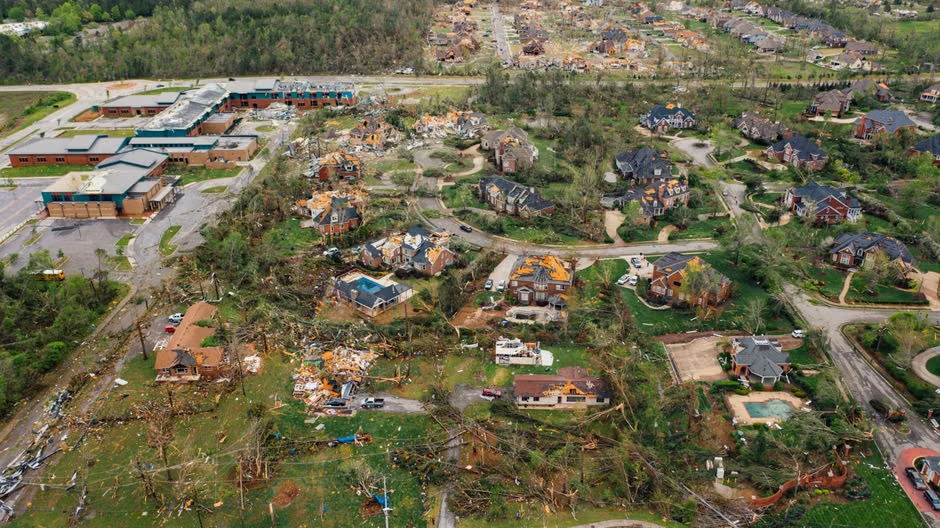
Why Understanding How Wind and Rain Damage Your Roof Could Save You Thousands
How wind and rain damage your roof is rarely as obvious as a missing shingle in the yard or a water stain on the ceiling. More often, the real destruction happens silently — a broken adhesive seal here, a lifted piece of flashing there — until the next storm turns a $300 fix into a $10,000 problem.
Here is a quick breakdown of the core damage mechanisms:
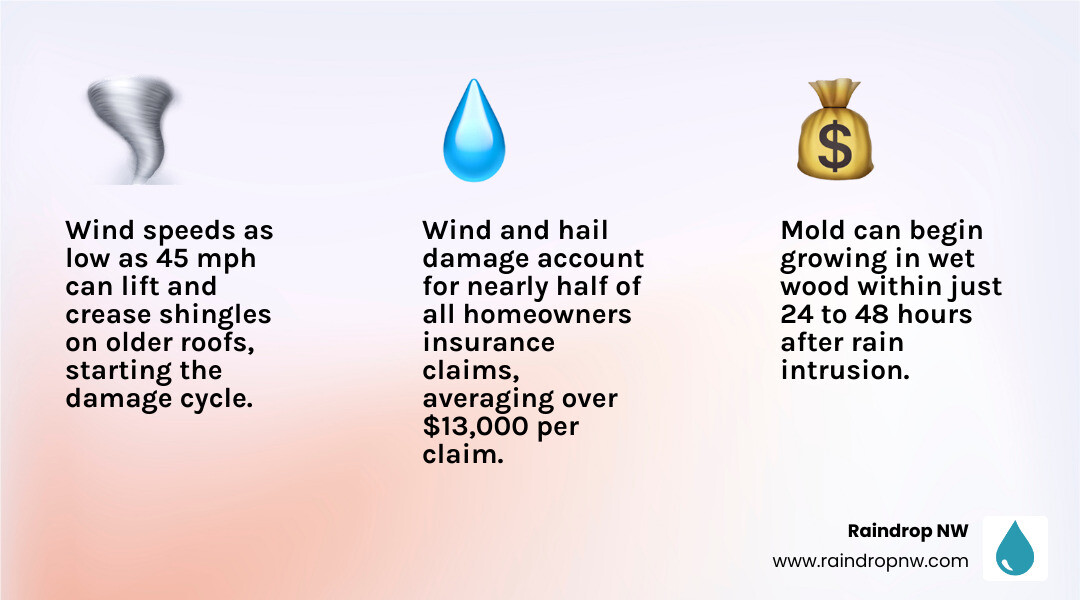
- Wind creates uplift pressure that lifts, creases, and tears shingles — starting at wind speeds as low as 45 mph on older or improperly installed roofs
- Wind-driven rain is pushed horizontally, forcing water into areas of your roof never designed to handle it — like soffit vents, ridge vents, and flashing seams
- Rain alone rarely causes immediate structural failure, but it exploits every weakness wind leaves behind, seeping into exposed underlayment and wood decking
- The compounding effect is where real damage occurs: wind breaks the seal, rain finds the gap, and mold can begin growing in wet wood within just 24 to 48 hours
- Vulnerable zones include roof edges, valleys, flashing around chimneys and vents, and ridge caps — all areas where wind pressure concentrates
Wind and hail damage alone account for nearly half of all homeowners insurance claims in the U.S., with an average payout of over $13,000 per claim. For homeowners in the Pacific Northwest — where persistent rain, seasonal windstorms, and older housing stock combine — understanding this damage cycle is not just useful. It is essential.
I’m Torrey Yungeberg, owner of Raindrop Roofing NW, and after years of inspecting storm-damaged roofs across the Portland metro and SW Washington, I’ve seen how wind and rain damage your roof in ways most homeowners never catch until it’s too late. Keep reading and I’ll walk you through exactly what to look for, what it means, and what to do about it.
The Science of How Wind and Rain Damage Your Roof
To understand how storms slowly systematically destroy a roof, we have to look at the physics of environmental exposure. A roof is not a single, solid shield; it is a complex assembly of interlocking parts designed to shed water under normal conditions. However, when we introduce high wind speeds and relentless precipitation, the materials face stresses they were never engineered to survive indefinitely.
The threshold at which damage occurs is highly dependent on three main factors: roof age, shingle quality, and the precision of the initial installation. Over time, UV radiation from the sun dries out the essential oils in asphalt shingles, making them brittle and less flexible. This natural aging process directly degrades the shingle’s wind resistance. While a brand-new, high-quality architectural shingle might easily handle a major windstorm, an aging, brittle shingle can fail under relatively mild gusts.
Furthermore, minor installation mistakes can have catastrophic consequences when a storm hits. For example, a single “high nail” — a common installation error where a roofer places a nail above the designated nail line — can reduce a shingle’s wind rating by up to 50%. When you combine aging materials with subtle installation flaws, you create the perfect environment for wind and water to begin their destructive work. To explore this dynamic in greater detail, you can read about How Wind Storms and Ice Affect Your Roof.
Understanding How Wind and Rain Damage Your Roof at Different Wind Speeds
Roof damage is progressive, and the severity of the damage scales directly with wind velocity. By categorizing wind speeds into distinct brackets, we can better understand what is happening to our roofs during different types of storms:
- 45 to 55 MPH (Minor Threshold): At these speeds, minor wind damage can begin, particularly on older, brittle, or poorly sealed roofs. You may not see shingles flying through the air, but the wind is strong enough to lift loose shingles and break the thin adhesive seals that bond them together.
- 60 to 70 MPH (Moderate Threshold): This is where noticeable physical damage occurs. Standard 3-tab shingles (which are often only rated up to 60 mph under ASTM D3161 Class A) will begin to curl, crease, or lose entire tabs. The wind bends the shingles back on themselves, leaving a horizontal crease line that permanently weakens the fiberglass mat.
- 75+ MPH (Severe Threshold): At this velocity, entire shingles and ridge caps can be torn away completely, exposing the synthetic underlayment or the raw wood roof decking underneath. Flashing around chimneys and valleys can loosen, and gutters may bend or detach under the combined force of the wind and flying debris.
The Physics of Wind Uplift and Pressure Differentials
To understand why wind damages roofs, we have to look at the Bernoulli principle—the same aerodynamic force that allows airplanes to fly. When strong winds blow over a home, the wind speed increases as it rises over the roofline. This fast-moving air creates a zone of negative pressure (suction) directly above the roof surface.
Meanwhile, the air inside your attic remains relatively still, exerting positive pressure upward. This pressure differential creates a powerful suction effect known as wind uplift.
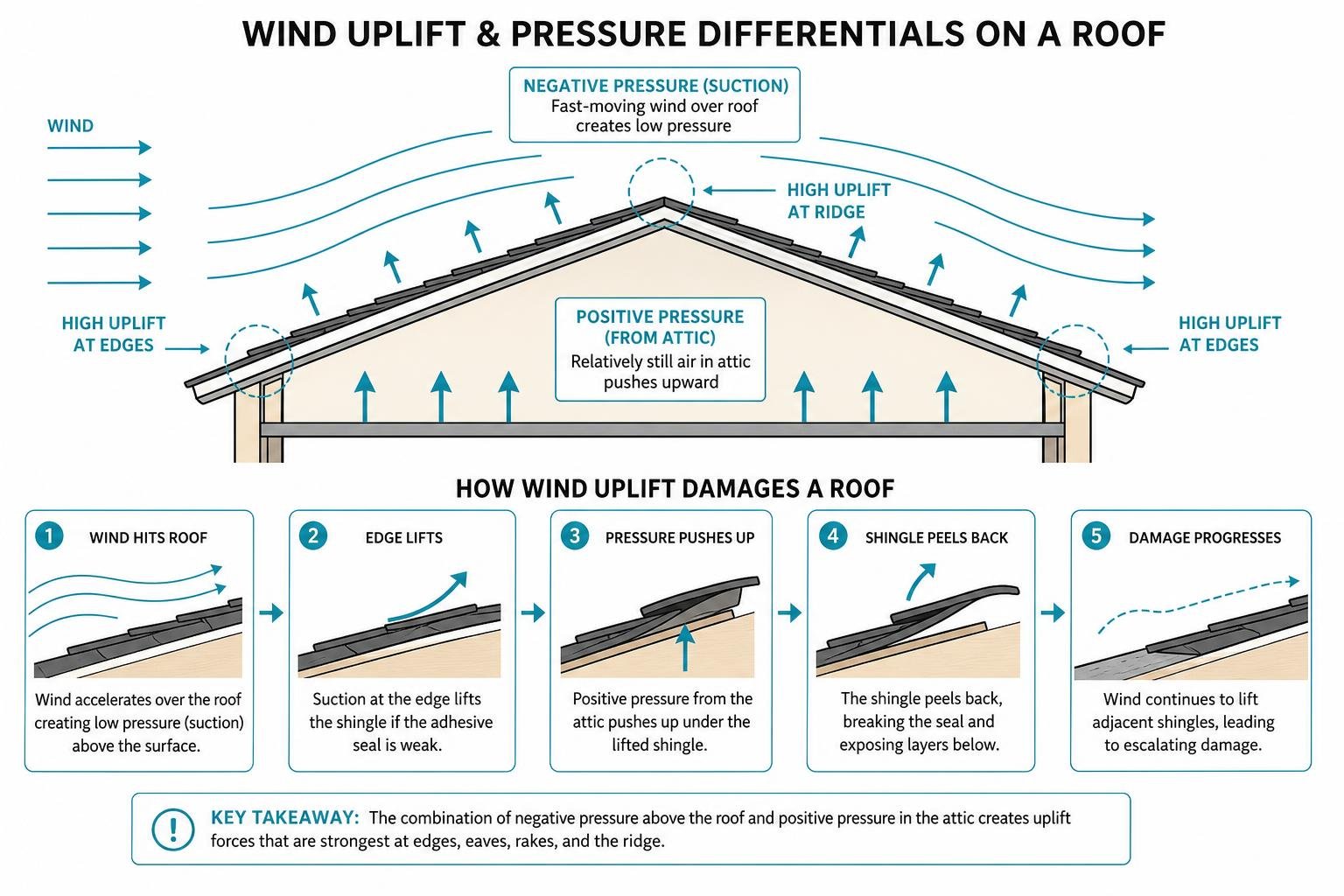
As shown above, wind uplift does not hit the roof uniformly. The suction force is highly concentrated at the roof edges, eaves, rakes, and ridge caps. As wind accelerates over the vertical walls of your home, it grabs the edges of the shingles. If the adhesive seal is weak, the wind lifts the shingle edge, allowing positive pressure to push underneath it. This creates a peeling effect that can rapidly strip a roof of its protection.
Wind-Driven Rain vs. Regular Rain: Why Horizontal Storms Are More Destructive
Most roofs are designed to handle gravity. When rain falls straight down, the overlapping design of shingles, flashing, and underlayment works beautifully to shed water down the slope and into the gutters. Regular rain is a vertical threat that relies on the natural pitch of your roof to escape safely.
Wind-driven rain, however, is a completely different animal. When rain is accompanied by 30 to 70 mph winds, the water no longer falls vertically. Instead, it travels horizontally or even upward at sharp angles. This horizontal force allows water to bypass gravity-reliant defenses. It is pushed directly under shingles, behind siding, and into seams that would otherwise remain completely dry.
This is a particularly persistent issue in our region. To understand how our local environment compounds these issues, you can read about How Persistent Rain and Humidity Stress Your Roof and see how the unique How Portland Metro Climate Affects Your Roof can dramatically accelerate wear. Over time, these conditions play a massive role in How Portland Weather Affects Roof Lifespan.
How Wind-Driven Rain Penetrates Vulnerable Roof Edges
Because wind-driven rain moves horizontally, it targets areas of your home that were never engineered to act as primary water barriers. These vulnerable entry points include:
- Soffit and Ridge Vents: Designed to let air flow freely out of your attic, these vents can easily swallow horizontal rain during a high-wind storm, soaking your insulation.
- Fascia Gaps: The tiny space between your roof edge and your gutters can become an entry point when wind forces rainwater upward under the drip edge.
- Siding Channels: Water can be driven behind siding panels and corner posts, traveling laterally until it finds a seam in the house wrap.
The style of your roof also dictates how well it handles these horizontal forces. For a detailed comparison of design strengths, check out our guide on Which Roof Style Is Better for Rain.
The Role of Capillary Action and Water Pooling
Once water gets past the outer layer of shingles, it doesn’t always run straight down. Instead, it often exploits a physical phenomenon known as capillary action. This is the ability of a liquid to flow in narrow spaces without the assistance of, and even in opposition to, external forces like gravity.
When water gets trapped in the tiny gaps between overlapping shingles or degraded flashing, capillary action can pull the moisture upward and sideways. This allows water to travel deep into your roofing system, bypassing the shingles entirely and soaking the underlayment.
On low-slope or flat areas, this moisture can lead to water pooling. When water sits on a roof surface instead of draining, it puts constant, heavy pressure on the roofing membrane, eventually finding even the microscopic imperfections in the seals. You can learn more about these specific structural vulnerabilities by reading our Flat Roof vs Pitched Roof Comparison and exploring the unique Flat Roof Challenges in the Pacific Northwest.
Identifying the Signs: Spotting Storm Damage Before It Escalates
The most dangerous roof leak is the one you don’t know exists. Many homeowners assume their roof is fine because they don’t see water actively dripping from their living room ceiling. However, insulation can hold water like a massive sponge for days or even weeks before it finally saturates the drywall below.
By the time a brown water ring appears on your ceiling, the wood rot and mold colonization are already well underway. This is why proactive inspections are so critical. To understand how weather patterns should dictate your maintenance schedule, read about How Weather Events Trigger the Need for Inspections. Catching these issues early is the single best way to protect your home, which is why we emphasize How Regular Inspections Catch Problems Early to show How Inspections Prevent Costly Repairs.
Identifying How Wind and Rain Damage Your Roof From the Ground
You don’t need to climb a dangerous ladder to check your roof after a major storm. In fact, we strongly advise staying on the ground and using a pair of binoculars to safely inspect your roofline. Here is what you should look for:
- Missing or Detached Shingles: Look for clean, dark patches on your roof where shingles have blown away completely.
- Curled, Lifted, or Creased Edges: Scan the edges of your roof and the ridge caps. If you see shingles pointing upward or showing a distinct dark line across the middle (a crease), the wind has broken their seals.
- Granule Loss and Gutter Buildup: Check your downspouts and gutters for a heavy accumulation of dark, sand-like granules. When wind and rain scour shingles, they wash away these protective granules, leaving the underlying asphalt exposed to rapid UV breakdown.
To keep your roof in peak condition, it helps to understand How Often Should You Have Your Roof Inspected and the recommended Roof Inspection Frequency for Pacific Northwest Homes.
Hidden Attic Indicators of Water Intrusion and Mold
The attic is the ultimate truth-teller when it comes to roof health. After a major wind-driven rain event, grab a flashlight and head up into your attic space to check for these hidden warning signs:
- Wet or Matted Insulation: Feel the insulation directly beneath roof valleys, chimneys, and vents. If it feels damp or looks compressed, water has bypassed your shingles.
- Water Stains on the Sheathing: Look at the underside of your roof deck (the plywood sheathing). Dark stains, white powdery mineral deposits, or active dripping are clear signs of a leak.
- Musty Odors: If your attic smells damp or musty, mold is likely colonizing the wood framing. Mold can grow on wet wood within 24 to 48 hours of water exposure.
- Daylight Gaps: If you turn off your flashlight and see pinpricks of daylight shining through the roof boards, you have an open pathway for wind and rain.
Proper airflow is your best defense against this hidden moisture. Learn more about How Proper Ventilation Extends Roof Life and How Ventilation Reduces Moisture Damage. If you are curious about what a professional looks for during this process, read our guide on What Happens During a Professional Roof Inspection.
The Compounding Threat: How Wind Damage Leads to Water Intrusion
Wind and rain rarely work in isolation; instead, they act as a tag-team that systematically dismantles your roof’s defenses. Wind acts as the breach-maker, physically lifting shingles and breaking their waterproof seals. Once those barriers are compromised, rain steps in to exploit the gap, seeping past the underlayment and soaking the wood structure below.
This compounding cycle is why immediate action is required after a storm. To safeguard your home, you can read our comprehensive guide on How to Protect Your Home from Water Damage Through Your Roof and check out these practical Water Damage Prevention Tips for Pacific Northwest Homeowners.
The Sequential Breakdown of Roofing Materials
The destruction of a roof typically follows a highly predictable, step-by-step sequence:
- Seal Failure: High winds lift the edges of a shingle, breaking the thin line of adhesive sealant that bonds it to the shingle below.
- The Zipper Effect: Once a single seal is broken, the wind can easily get underneath the adjacent shingles, peeling them up one by one in a rapid chain reaction.
- Exposed Underlayment: With shingles torn away or lifted, the synthetic underlayment or felt paper is left directly exposed to the elements.
- Water Saturation: Wind-driven rain tears or bypasses the underlayment, soaking the plywood roof decking (sheathing).
- Structural Decay: Over the next 24 to 48 hours, mold begins to grow, followed quickly by wood rot, which compromises the structural integrity of your roof rafters.
Vulnerable Areas: Flashing, Valleys, and Gutters
While shingles cover the majority of your roof, the real battle against wind and rain is fought at the joints, edges, and transitions.
- Roof Flashing: These thin metal strips seal the transitions around chimneys, dormers, skylights, and vent pipes. Because flashing sits at sharp angles, it is highly susceptible to wind uplift. Once loose, wind-driven rain can easily bypass the flashing and run straight down your interior walls. You can read about How Proper Flashing Prevents Leaks to see why this component is so critical.
- Valleys: Roof valleys channel massive amounts of water during a downpour. If wind-driven debris clogs a valley, or if wind lifts the shingles lining the valley, water will back up and seep under the roof deck.
- Gutter Systems: Your gutters are responsible for carrying water safely away from your roof and foundation. High winds can bend gutter brackets, while windblown leaves and debris can clog downspouts, causing water to pool at the roof’s edge.
To understand why these drainage components are so vital, explore our articles on Gutter Systems and Why They Matter for Your Roof and Gutter Maintenance and Its Impact on Your Roof. Keeping your gutters clear also protects the rest of your property, as explained in How Gutter Maintenance Prevents Foundation Damage, and you can use these Gutter Maintenance Tips for Homeowners to keep your system running smoothly.
Repair vs. Replacement: Making the Right Decision After Storm Damage
When your roof suffers wind and rain damage, you face a critical decision: should you perform a targeted repair, or is it time for a complete roof replacement? Making the wrong choice can be incredibly costly. Patching a roof that has widespread structural damage is simply throwing money away, while replacing a roof that only needed a minor flashing repair is an unnecessary expense.
| Decision Factor | Opt for Targeted Repair | Opt for Full Roof Replacement |
|---|---|---|
| Scope of Damage | Localized (less than 25% of the roof area is affected) | Widespread (more than 25% of a single slope is damaged) |
| Roof Age | Young roof (less than 10–12 years old) | Aging roof (approaching or exceeding 20 years of age) |
| Material Condition | Shingles are flexible, intact, and retaining granules | Shingles are brittle, curling, bald, or showing widespread seal failure |
| Shingle Availability | Matching shingles are readily available | Original shingles are discontinued (cannot match for repairs) |
| Structural Integrity | Roof deck and rafters are dry, solid, and mold-free | Roof deck is sagging, waterlogged, or shows extensive rot |
To help you navigate this choice, we have put together several detailed resources. You can read our analysis on Should I Repair or Replace My Roof, learn When Should You Replace Your Roof, and find out Is It Worth Fixing an Old Roof.
When a Targeted Repair Is Sufficient
If your roof is relatively young, has been well-maintained, and the storm damage is isolated to a specific area, a targeted repair is usually the smartest and most cost-effective path forward. For example, if a localized wind gust peeled back a few shingles on a single slope, a certified roofing contractor can carefully slide out the damaged pieces and install matching shingles without compromising the rest of the system.
Taking care of these minor issues quickly is a great way to extend the overall lifespan of your system. To learn more, read our tips on How to Extend the Life of Your Roof in Rainy Climates and check out our general guide on How to Extend the Life of Your Roof.
When to Opt for a Full Roof Replacement
There are several scenarios where a patch job simply won’t cut it, and a full roof replacement is the only safe option:
- The 25% Rule: In many municipal building codes throughout Oregon and Washington, if more than 25% of a roof slope is damaged, the entire slope (or even the entire roof) must be replaced to meet current safety standards.
- Widespread Seal Failure: If high winds have broken the adhesive seals across multiple sections of your roof, the entire system is structurally compromised. Even if the shingles look flat, they will lift and leak during the next moderate storm.
- Aging Materials: If your roof is near the end of its natural lifespan, spending money on repairs is a short-term band-aid. The surrounding shingles will likely crack or tear when the roofer attempts to lift them to slide a new shingle underneath.
If you do need a replacement, choosing the right material is key to long-term storm resistance. Explore the differences in Metal Roof Durability vs Shingle in Oregon Rain and read our Asphalt Shingle vs Metal Roof Comparison. For local recommendations, check out our guide on the Best Roofing Materials for Portland Area Homes.
Frequently Asked Questions about Storm Roof Damage
What wind speed can damage a roof?
While many manufacturers rate high-quality architectural shingles to withstand wind speeds up to 110 or even 130 mph, real-world damage can begin at much lower thresholds. On older, brittle, or improperly installed roofs, wind speeds as low as 45 to 50 mph can easily lift shingles and break their adhesive seals. Standard 3-tab shingles are particularly vulnerable and often begin to fail at 60 mph, whereas modern architectural shingles use a heavier multi-layered design and a wider nailing zone to resist much higher uplift forces.
Does homeowners insurance cover wind-driven rain?
Yes, most standard homeowners insurance policies cover sudden and accidental damage caused by wind-driven rain—but there is a major catch. Insurance companies typically draw a very sharp line between storm damage and gradual wear and tear. If a windstorm rips shingles off your roof, allowing rain to pour into your attic, the damage is usually covered.
However, if water enters your home because of old caulking, pre-existing rot, or a neglected roof that should have been replaced years ago, the claim may be denied due to lack of maintenance. To learn more about navigating this complex process, read our articles on Does Insurance Cover Roof Replacement, see How Roof Age Affects Your Insurance Claim, review our guide on How to File a Roof Damage Insurance Claim, and read our breakdown on Understanding Your Insurance Policy and Roofing Coverage.
How quickly does mold grow after a roof leak?
Mold is incredibly fast-moving and can begin to colonize wet wood, drywall, and attic insulation within 24 to 48 hours of water exposure. Once spores find a damp, warm environment with a food source (like plywood sheathing or paper-faced insulation), they multiply rapidly. This is why treating a storm leak as an emergency is so important; the longer water sits in your attic, the higher the risk of severe indoor air quality issues and expensive structural remediation.
Conclusion
When a major wind and rain storm sweeps through our area, your roof takes the brunt of the impact. Protecting your home from the long-term, hidden damage that follows requires a combination of quick action, regular maintenance, and professional expertise.
At Raindrop Roofing NW, we believe in doing things the right way. We are a truly local, independently owned, multi-generational family business based right here in Beaverton, Oregon. Unlike many roofing companies that have been bought out by out-of-state private equity firms, we live in the communities we serve. Our commitment is to long-term service, certified workmanship, and absolute accountability.
Whether you need a quick post-storm inspection, a targeted repair, or a complete roof replacement, our team is here to provide clear, honest guidance and exceptional craftsmanship. We invite you to explore our residential roofing services and schedule a free inspection with us today. Let us help you keep a safe, dry, and reliable lid over your home.




Leave a Reply
Want to join the discussion?Feel free to contribute!