
Seal the Deal with Proper Roof Flashing

What Is Roof Flashing and Why Does It Matter for Your Oregon Home?
How proper flashing prevents leaks is one of the most important things an Oregon homeowner can understand about their roof. Here’s the short answer:
- Flashing is thin, waterproof material — usually metal — installed at vulnerable transition points on your roof
- It directs water away from joints, edges, and intersections before it can seep into your home
- Without it, even brand-new, high-quality shingles cannot stop water from entering at chimneys, valleys, vents, and walls
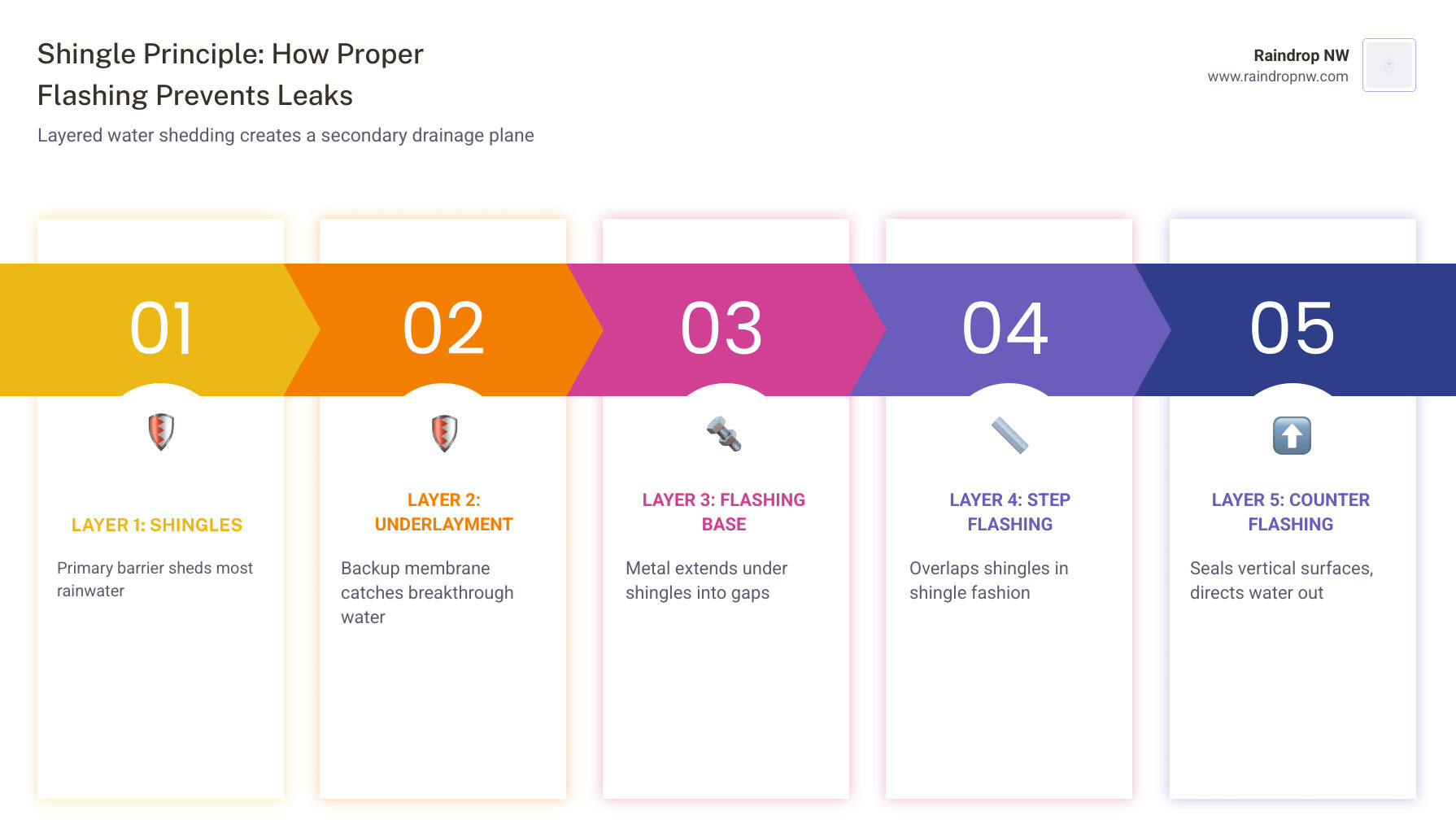
- Proper installation follows the “shingle principle” — each layer overlaps the one below, so water always flows toward the exterior
- Routine flashing inspections can prevent up to 90% of major leaks before they become costly structural problems
The National Roofing Contractors Association (NRCA) identifies improper flashing as one of the leading causes of premature roof system failure — and in Oregon’s wet climate, that’s not a risk worth taking. Water doesn’t need a big opening to cause big damage. A small gap, a cracked sealant line, or a missing piece of metal at the wrong spot can quietly rot your decking, soak your insulation, and invite mold into your walls — sometimes for months before you notice a single stain on your ceiling.
I’m Torrey Yungeberg, owner of Raindrop Roofing NW, and after years of inspecting and repairing roofs across Oregon and Southwest Washington, I’ve seen how understanding how proper flashing prevents leaks is the difference between a roof that lasts decades and one that fails prematurely. Let’s walk through exactly what you need to know to keep your home protected.
Introduction: What is Roof Flashing?
Think of your roof as a suit of armor. Your shingles are the plates, but no matter how strong those plates are, there are always joints where the pieces meet—around the neck, the shoulders, and the waist. In roofing, those “joints” are the valleys where two roof planes meet, the spots where a chimney pokes through, or where the roof meets a vertical wall.
Roof flashing is the specialized material used to seal those vulnerable gaps. In 2026, roofing standards have evolved to account for heavier rainfall and wind patterns, making these transition points more critical than ever. When we talk about how proper flashing prevents leaks, we are talking about creating a secondary drainage plane. This ensures that even if water gets past the primary roofing material, it is immediately caught and channeled back out to the gutters.
Common Flashing Materials
Not all flashing is created equal. The material choice depends on your home’s aesthetic, your budget, and the specific demands of our Pacific Northwest climate. When we perform residential roofing installations, we typically look at these four heavy hitters:
- Galvanized Steel: This is the most common choice for modern homes. It’s durable, cost-effective, and usually coated with zinc to resist the relentless Oregon rain.
- Aluminum: Lightweight and easy for installers to bend into custom shapes. It’s naturally resistant to corrosion, though it shouldn’t be used in direct contact with masonry or treated lumber due to chemical reactions.
- Copper: The “gold standard” of flashing. It is incredibly durable, lasting 50 to 70 years, and develops a beautiful green patina over time. It’s often used on historic homes in Portland or Lake Oswego.
- Lead or Rubber (Neoprene): Often used for pipe boots (the seals around vent pipes). While effective, neoprene has a shorter lifespan than metal and usually needs replacing every 15–20 years due to UV resistance issues.
How Proper Flashing Prevents Leaks and Protects Your Home

The magic of how proper flashing prevents leaks lies in physics. Water is a sneaky traveler; it uses gravity to pull itself down, but it also uses “capillary action” to suck itself sideways or even upward into tight gaps. Proper flashing breaks that cycle.
By acting as a secondary drainage plane, flashing ensures that water never reaches the wooden roof deck. If a shingle edge lifts during a windstorm in Beaverton, the flashing underneath catches the water and directs it back onto the surface of the next shingle. This is why roof inspections and certifications are so vital—we check to make sure that “shingle-fashion” layering is still intact and that wind hasn’t compromised the metal.
Protecting Attic Insulation and Energy Efficiency
Many homeowners are surprised to learn that flashing affects their monthly bills. When flashing fails, moisture enters the attic and soaks the insulation. Wet insulation loses its “R-value” (its ability to resist heat flow), meaning your furnace has to work much harder in the winter.
By staying on top of repairs and maintenance, you keep that insulation dry. Dry insulation keeps your home warmer and prevents wood rot in the rafters, which can be an incredibly expensive structural fix if left unaddressed.
Maintaining Manufacturer Warranty Compliance
Here is a professional tip: if your flashing is installed incorrectly, your shingle manufacturer might actually void your warranty. Most major brands require that flashing meets specific NRCA standards to guarantee their products.
Working with a manufacturer certified roofing contractor ensures that every piece of metal is installed according to the book. At Raindrop NW, we prioritize this long-term accountability because we know that a “shortcut” today is a leak tomorrow.
Critical Areas: Where Your Roof Needs Protection Most
Your roof isn’t just one flat surface; it’s a complex geometry of angles and penetrations. Here are the high-risk zones where we focus our attention:
- Drip Edges: Installed along the eaves to keep water from wicking back under the shingles and rotting the fascia boards.
- Vent Pipes: Every house has them for plumbing and HVAC; they require “boot” flashing to seal the round pipe to the flat roof.
- Headwalls: Where a roof slope meets a vertical wall (like the front of a dormer).
- Kickout Flashing: A crucial piece at the end of a wall that “kicks” water away from the siding and into the gutter.
When we install new replacement roofs, we pay extra attention to these junctions because they are where 90% of leaks originate.
How proper flashing prevents leaks around chimneys and skylights
Chimneys are notorious for leaking because they are large obstacles that “dam” the flow of water. To fix this, we use a “cricket” or “saddle”—a small peaked structure behind the chimney that splits the water flow.
We then use a two-part system: base flashing (which goes under the shingles) and counter-flashing (which is tucked into the mortar joints of the brick). This allows the chimney and the roof to move independently as temperatures change without breaking the seal. This level of detail is also applied to waterproof deck surfaces where they meet house walls.
How proper flashing prevents leaks in roof valleys
Valleys handle a massive volume of water because they collect runoff from two different roof planes. There are two main ways to handle them:
| Feature | Open Valley Flashing | Closed Valley Flashing |
|---|---|---|
| Material | Heavy-gauge W-profile metal | Shingles woven over the valley |
| Debris | Sheds needles and leaves easily | Can trap debris in the “fold” |
| Durability | High; metal resists ice dams | Moderate; shingles can wear faster |
| Best For | High-rainfall areas (Oregon!) | Aesthetic preference |
For our residential roofing services in the Northwest, we often recommend open metal valleys. They are superior at handling the heavy slush and pine needles common in areas like Tigard and Hillsboro.
Best Practices for Installation and Long-Term Maintenance
Installation is an art form. According to ARMA (Asphalt Roofing Manufacturers Association) guidelines, flashing should never be a single long strip. Instead, it should be “step flashed”—individual L-shaped pieces that overlap each other with every course of shingles.
We also provide owner resources to help you understand that fasteners (nails) should never be placed in the “water path.” If a nail is exposed to the rain, it will eventually rust and create a hole exactly where you don’t want one.
Signs of Flashing Failure and Damage
You don’t always need to climb a ladder to see if your flashing is failing. Keep an eye out for:
- Rusted Metal: If the protective coating on steel has worn away, holes are soon to follow.
- Cracked Sealants: Caulking is a secondary defense, but if it’s drying and peeling, water can get behind the metal.
- Water Stains: Look at your ceilings, but also check your exterior siding. Peeling paint under a roof corner often means the kickout flashing is missing.
- Loose Sections: High winds in the Columbia Gorge can sometimes lift flashing away from the wall.
If you see any of these, it’s time for roof inspections and certifications to assess the damage.
Routine Maintenance and Seasonal Checks
A little prevention goes a long way. Our repairs and maintenance team recommends a “Spring and Fall” schedule.
- Clear Debris: Pine needles and leaves trap moisture against the flashing, accelerating corrosion.
- Trim Trees: Overhanging branches can scratch or dent metal flashing during a storm.
- Check Sealants: If we find cracked solar-seal or silicone, we reapply it before the winter rains hit.
Frequently Asked Questions about Roof Flashing
Can I reuse old flashing when getting a new roof?
We generally advise against it. When you invest in new replacement roofs, you want the entire system to last 30+ years. Old flashing often has “metal fatigue,” hidden rust, or old nail holes that won’t align with the new shingles. Replacing it ensures the structural reliability of the whole system.
Why is professional installation recommended over DIY?
Roof flashing requires precision bending and custom fabrication. A “DIY disaster” we often see is homeowners using too much caulk to try and stop a leak. Caulk is a temporary fix; proper metal layering is a permanent one. A manufacturer certified roofing contractor has the tools to bend metal to the exact angle of your roof, ensuring a watertight fit.
How long does roof flashing typically last?
It depends on the material. Galvanized steel usually lasts 20–30 years, while copper can go for 70. However, in 2026, we see environmental factors like increased UV and heavier storms wearing down sealants faster. With routine maintenance, your flashing should last as long as your shingles. Check our owner resources for more on material lifespans.
Conclusion
At Raindrop NW, we believe that a roof is only as good as its weakest point. Understanding how proper flashing prevents leaks is the first step in protecting your biggest investment. Whether you are in Beaverton, Portland, or Vancouver, you deserve a roofing system that stands up to the unique challenges of the Northwest.
We are a truly local, independently owned company. Unlike the big firms bought out by out-of-state investors, we live in the communities we serve—from Tualatin to Camas and everywhere in between. We are committed to long-term service and accountability. If you’re worried about a potential leak or it’s just been a while since your last check-up, reach out to us for your residential roofing needs. We’ll make sure your home stays dry, one piece of flashing at a time.




Leave a Reply
Want to join the discussion?Feel free to contribute!