• Link to X
  • Link to Instagram
  • Link to Youtube
  • Link to Facebook
  • Link to WhatsApp
CALL: (503)526-3887 or EMAIL: info@raindropnw.com
RAINDROP ROOFING NW | PORTLAND, OR
  • Home
  • About Us
    • About Raindrop Roofing NW
    • Our Team
    • Areas We Serve
    • Who We Support
    • Our Commitment to a Greener Future
    • Careers
    • Blog
  • Residential Roofing
    • Services
      • New / Replacement Roofs
      • Repairs and Maintenance
      • Remodels and Additions
      • Balconies, Patios, and Flat Decks
      • Roof Inspections and Certifications
    • Financing
    • Roof Gallery
    • Roof Types and Products
    • Manufacturer-Certified Roofing Contractor
    • Owner Resources
  • Commercial Roofing
    • Services
      • New and Replacement Roofs
      • Estimates and Inspections
      • Warranties
      • Real Estate Partnerships
      • Roof Certifications
    • Commercial Gallery
    • Roof Types and Products
    • Featured Project
  • Reviews
  • Contact Us
  • Menu Menu
You are here: Home1 / Gutter Maintenance

What to Expect When You’re Inspecting: A Homeowner’s Guide

Gutter Maintenance

Why Regular Roof Assessments Are Essential for Your Home

What happens during a professional roof inspection is something every homeowner in Oregon should understand before scheduling one. Here’s a quick overview:

  1. Exterior evaluation – The inspector walks the roof surface, checking shingles, flashing, ridges, hips, valleys, gutters, and all penetrations
  2. Interior/attic assessment – They enter the attic to check for moisture, mold, insulation levels, ventilation, and structural integrity of rafters and decking
  3. Advanced technology – Tools like drones, infrared scanners, and moisture meters help detect hidden damage not visible to the naked eye
  4. Documentation – The inspector photographs findings and compiles a written report with prioritized repair recommendations
  5. Debrief – A qualified inspector walks you through the findings and outlines next steps

The whole process typically takes one to three hours, depending on your roof’s size and complexity.

Most homeowners don’t think about their roof until water shows up on the ceiling — and by then, what started as a minor flashing gap or a cracked pipe boot has quietly become a much bigger problem. That’s not a knock on homeowners; roofs are easy to ignore. They do their job silently, day after day, through Oregon’s relentless rain, wind, and freeze-thaw cycles — until they don’t.

The good news is that most serious roof damage is entirely preventable. A thorough professional inspection catches the small stuff before it becomes the expensive stuff. And understanding what that process actually looks like helps you get more out of it — and ask the right questions when the inspector hands you their report.

I’m Torrey Yungeberg, owner of Raindrop Roofing NW, and knowing exactly what happens during a professional roof inspection is something I’ve built my business around — from walking roofs across Oregon and Southwest Washington to leading industry conversations as Secretary of both the Oregon Chapter of National Women in Roofing and the Associated Roofing Contractors of Oregon and Southwest Washington. Let’s walk through the full process together so you know exactly what to expect.

Infographic showing step-by-step overview of what happens during a professional roof inspection - what happens during a

Why Regular Roof Assessments are Essential for Your Home

Your roof is the primary line of defense for your home. In the Pacific Northwest, where we deal with everything from moss-inducing humidity to heavy snow loads and high winds, a “set it and forget it” mentality can be dangerous. Think of a roof inspection like a yearly physical for your house. It is a systematic assessment designed to identify deterioration, structural deficiencies, and code compliance gaps before they escalate into interior damage or safety failures.

At Raindrop NW, we specialize in residential roofing that stands the test of time. We’ve seen that proactive maintenance is the single most effective way to extend the life of your roofing system. Without it, small issues like a single backed-out nail or a clogged gutter can lead to rot in your decking, which eventually compromises the entire structure.

When to Schedule Your Next Visit

The ideal roof inspection timeline is at least once per year. As we head into April 2026, many homeowners are looking back at the winter’s impact. Spring is a fantastic time for an assessment to catch damage from winter storms, while fall is great for ensuring your home is ready for the upcoming rainy season.

You should also schedule an inspection:

  • After major storms: High winds and hail can create hidden fractures in shingles or lift flashing.
  • When your roof hits the 10-year milestone: Most asphalt shingle roofs start showing their age around a decade in; this is when granule loss and seal failure become more common.
  • Before buying or selling: A professional report provides buyer confidence and helps sellers avoid last-minute negotiation hurdles.

The Role of a Qualified Inspector

Not all inspections are created equal. A “ground-level glance” from a general handyman isn’t a professional inspection. A qualified inspector should have proper licensing, comprehensive insurance, and industry-specific certifications.

Technical expertise matters because the inspector needs to understand how different components interact. For example, they need to know if your attic ventilation meets the IRC R806 standard (typically 1 square foot of net free area per 150 square feet of attic floor). At Raindrop NW, we pride ourselves on our roof inspections and certifications, ensuring that every assessment is backed by deep local knowledge and professional standards.

What Happens During a Professional Roof Inspection: A Step-by-Step Walkthrough

A thorough professional roof inspection usually lasts from one to three hours. We don’t just show up and start pointing at things; we follow a systematic approach to ensure nothing is missed. We often start with a perimeter check from the ground to look for sagging or obvious debris, but the real work happens up close.

Our goal is to provide a clear picture of your roof’s health so you can plan for repairs and maintenance rather than reacting to an emergency leak in the middle of a November downpour.

Exterior Surface and Component Evaluation

The first major phase involves getting onto the roof surface. We examine the condition of your shingles or roofing material with a fine-toothed comb. One critical threshold we look for is granule loss. If more than 30% of the surface aggregate on a given slope has shed away, it’s a recognized sign of accelerated aging. These granules aren’t just for color; they protect the underlying asphalt from UV rays.

Next, we look at the flashing. Industry data shows that 90% of leaks are from penetrations and roof-to-wall flashings. We check:

  • Pipe boots: Rubber boots around plumbing vents usually last only 10-15 years, often failing before the shingles do.
  • Chimney flashing: We look for cracked caulk or separated counter-flashing.
  • Valleys: These handle the highest volume of water and are prone to wear.

If the damage is widespread, we might discuss new replacement roofs, but often, catching these “penetration” issues early allows for targeted repairs that save you thousands.

The Interior Phase: What Happens During a Professional Roof Inspection in the Attic

You can’t fully understand a roof’s condition without looking at it from the inside. The attic tells the truth that shingles might hide. During the interior phase, we check:

  • Rafter health: We look for dark stains, damp spots, or “white rot” that indicates long-term moisture exposure.
  • Ventilation balance: We ensure your intake (soffit) vents aren’t blocked by insulation and that your exhaust vents are functioning. Poor ventilation is a leading cause of warped shingles and ice dams.
  • Moisture detection: Sometimes, we see “daylight” where we shouldn’t, signaling an emergency breach in the decking.
  • Insulation: We check for dark spots in insulation, which often indicate air leaks or dust filtration from a compromised roof.

Advanced Technology and Tools in Modern Roofing

While the “eyes on the roof” approach is essential, modern technology has significantly improved the accuracy of our assessments. We use a variety of high-tech tools to find what the human eye might miss. For example, waterproof deck surfaces and flat roofs often require specialized moisture meters or infrared scanners to detect trapped water beneath the surface.

Precision Mapping and Measurements

  • Drones: Drones allow us to capture high-resolution photography of steep or inaccessible areas without the safety risk of walking on fragile materials.
  • Infrared Scanners: These detect temperature variations. Since water holds heat differently than dry wood, thermal imaging can “see” a leak inside a wall before it ever stains your drywall.
  • Satellite Imagery: This helps us get accurate pitch calculations and digital measurements for the entire roof square footage (one “square” in roofing equals 100 square feet).

Common Problems Found During a Professional Roof Assessment

During our years serving the Beaverton and Portland Metro area, we’ve found that certain problems pop up more than others. Identifying these early is the key to successful remodels and additions and general home upkeep.

Problem Area Minor Maintenance (Monitor) Major Issue (Action Needed)
Shingles Minor granule loss, slight curling Missing shingles, bald patches (>30% loss)
Flashing Aged sealant, minor surface rust Cracked rubber boots, missing step flashing
Drainage Small amount of leaf debris Standing water >48 hours, sagging gutters
Attic Dusty insulation, minor air leaks Mold growth, water stains on rafters

One rule of thumb we use for flat or low-slope roofs: Standing water exceeding 48 hours post-rain indicates inadequate slope or blocked drainage. This “ponding” water is a major red flag that requires immediate attention.

Identifying Hidden Structural Damage

Beyond the surface, we look for structural red flags. A sagging ridgeline or a visible dip in the roof deck often indicates compromised trusses or rotted decking (sheathing). We also look for evidence of biological growth. In our humid climate, moss isn’t just a cosmetic issue; it can grow root-like structures that physically lift shingles and trap moisture against the wood.

Professional Expertise vs. DIY Inspections

We often get asked, “Can’t I just use a ladder and look myself?” While we encourage homeowners to be observant, a DIY check is not a replacement for a professional assessment.

First and foremost is safety. Professional inspectors use OSHA-compliant fall protection and have specialized training to walk on various pitches without damaging the materials. Walking on an old roof can actually cause shingles to crack or seals to break if you don’t know where to step.

Furthermore, we provide owner resources that help you understand the long-term health of your home. A professional can spot “high or low nails” — shingles that were installed improperly from day one — which might not cause a leak today but will certainly cause one in five years.

The Value of an Unbiased Specialist

Hiring a specialist ensures you meet manufacturer warranty requirements. Many shingle warranties actually require periodic professional inspections to remain valid. We provide the detailed documentation needed for insurance claims, helping you substantiate damage after a storm with photo evidence that a claims adjuster can’t ignore.

The Final Report: What Happens During a Professional Roof Inspection Documentation Process

Once we climb down and finish our attic crawl, the job isn’t done. We compile everything into a comprehensive digital report. This isn’t just a “thumbs up” or “thumbs down.” Whether it’s for a home you live in or a commercial roofing project, the report should include:

  • High-resolution photos of all deficiencies.
  • A prioritized list of repairs (Immediate vs. Maintenance).
  • An estimated remaining lifespan for the roof.
  • A summary of ventilation and insulation health.

Benefits for Real Estate and Insurance

This report is a powerful tool. For home buyers, it provides peace of mind. For sellers, providing a recent “clean bill of health” or a certification can actually increase buyer confidence and speed up the closing process. In insurance situations, having a professional report from a local company like Raindrop NW can be the difference between a denied claim and a full roof replacement coverage after a storm.

Frequently Asked Questions about Roof Inspections

How long does a typical professional roof inspection take?

A standard residential inspection usually takes between 45 minutes and 2 hours. If the home is particularly large, has multiple roof levels, or has a complex attic space, it may take up to 3 hours.

Can an inspection help with my insurance claim after a storm?

Absolutely. We provide the photo documentation and professional assessment of “wind uplift” or “hail impact” that insurance companies require. Having a professional report ready can significantly speed up the claims process.

What specific components are checked in the attic?

We look at the underside of the roof decking for water stains, the condition of the rafters and trusses, the thickness and condition of insulation, and the functionality of all vents (soffit, ridge, and gable vents) to ensure proper airflow.

Conclusion

Understanding what happens during a professional roof inspection empowers you to be a more proactive homeowner. At Raindrop NW, we believe in long-term service and accountability. We are a truly local, independently owned company serving Beaverton and the surrounding communities, including Portland, Lake Oswego, Hillsboro, and Tigard.

Unlike many competitors who have been bought out by out-of-state investment firms, we live and work in the same neighborhoods we service. We treat every roof as if it were over our own families’ heads. If you haven’t had your roof checked recently, or if the recent Oregon storms have you worried about your home’s integrity, don’t wait for the drip.

Schedule your professional roof inspection today and let us give you the peace of mind you deserve.

https://www.raindropnw.com/wp-content/uploads/2026/05/photo-1772415383334-66c2631a924e.jpeg 720 1080 SEO Stats https://www.raindropnw.com/wp-content/uploads/2024/05/logo-raindrop-space-300x92.png SEO Stats2026-05-18 12:35:232026-05-18 12:35:23What to Expect When You’re Inspecting: A Homeowner’s Guide

Stop Foundation Fails by Keeping Your Gutters Clean

Gutter Maintenance

Why Understanding How Gutter Maintenance Prevents Foundation Damage Could Save Your Home

How gutter maintenance prevents foundation damage is simpler than most homeowners expect — and ignoring it is one of the most expensive mistakes you can make.

Here’s the short answer:

  • Gutters collect rainwater from your roof and channel it away from your home’s base
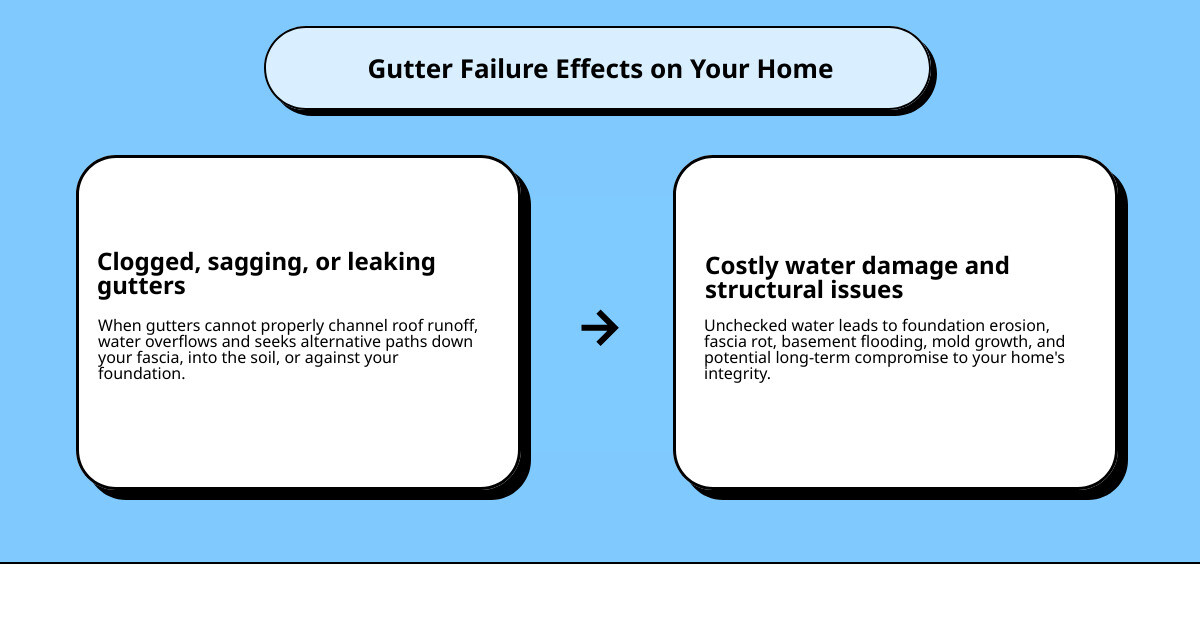
  • Clogged or broken gutters let water overflow and pool directly against your foundation
  • Pooling water saturates the soil, which either expands and pushes inward on your foundation walls or erodes away, causing your home to settle and shift
  • Clean, well-maintained gutters with properly extended downspouts keep that water moving away — protecting your foundation from cracking, bowing, and flooding
  • Regular cleaning, inspections, and downspout checks are the core tasks that keep the whole system working

It sounds straightforward. But in the Pacific Northwest, where rainfall is relentless and clay-heavy soils hold water like a sponge, even a partially clogged gutter can quietly set off a chain of damage that ends in a very costly foundation repair bill.

Water build-up around your home can do tens of thousands of dollars’ worth of damage — and in many cases, the root cause traces back to a gutter that just wasn’t maintained.

I’m Torrey Yungeberg, owner of Raindrop Roofing NW, and after years of inspecting roofs and gutter systems across Oregon and Southwest Washington, I’ve seen how how gutter maintenance prevents foundation damage is one of the most overlooked — yet most important — parts of protecting a home. Let’s walk through exactly what’s happening and what you can do about it.

Infographic showing roof-to-foundation water flow: rain hits roof, enters gutters, travels to downspout, discharges away

The Science of How Gutter Maintenance Prevents Foundation Damage

To understand why a few handfuls of maple leaves in your gutters can lead to a cracked basement wall, we have to look at the physics of water and soil. Your foundation is designed to support the massive downward weight of your home. It is generally very good at this. However, it is not designed to withstand the lateral (sideways) pressure of thousands of pounds of water-logged soil.

When gutters fail, they stop being a drainage system and start acting like a waterfall. Instead of the water being carried safely to a splash block ten feet away, it dumps directly onto the soil right next to your foundation.

Hydrostatic Pressure: The Silent Wall-Cracker

As of April 2026, we’ve seen an increasing number of structural issues in older homes across Portland and Beaverton due to shifting weather patterns. When water pools near your foundation, it creates hydrostatic pressure. Water is heavy — about 8.34 pounds per gallon. When the soil becomes oversaturated, that weight pushes against your foundation walls. If the pressure becomes great enough, the concrete can bow inward or develop horizontal cracks.

Erosion and Settling

Erosion is the primary cause of a settling foundation. When water overflows from a height, it doesn’t just sit there; it carves out the soil. This creates “voids” or empty pockets under your foundation. Without solid ground to rest on, the heavy concrete begins to sink. This is why More info about residential roofing always includes a discussion about proper drainage; a roof is only as good as the system that carries the water away from the base.

Basement and Crawl Space Flooding

Even if your walls don’t crack immediately, water is persistent. It will find tiny pores in the masonry or gaps in the joints. This leads to basement dampness, mold growth, and rotting floor joists. In the Pacific Northwest, a damp crawl space is a recipe for wood-destroying organisms that can compromise your home’s structural instability.

How Gutter Maintenance Prevents Foundation Damage by Controlling Soil Saturation

In areas like Hillsboro, Tigard, and Lake Oswego, we deal with a lot of clay-heavy soil. Clay is “expansive,” meaning it behaves like a sponge. When it gets wet, it swells significantly, exerting up to 5,500 pounds per square foot of uplifting pressure. When it dries out during our rare summer droughts, it shrinks and cracks.

This constant cycle of expansion and contraction puts immense stress on your home. By keeping your gutters clean, you ensure that the soil around your foundation maintains a more consistent moisture level. You aren’t “shocking” the soil with a sudden deluge of 500 gallons of roof runoff during a Saturday afternoon storm. Proper gutter care prevents that lateral pressure from reaching critical levels, keeping your structural shifting to a minimum.

How Gutter Maintenance Prevents Foundation Damage During Severe Weather

We all know the Pacific Northwest isn’t just about “light drizzle.” We get intense thunderstorms and heavy “atmospheric river” events. During these times, your gutters are under maximum stress.

If your gutters are even 20% clogged with pine needles or shingle grit, they will fail during a heavy downpour. This storm overflow can erode your topsoil in a matter of minutes. Once that protective layer of soil is gone, water has a direct path to the base of your house.

Our team at Raindrop NW often performs Repairs and maintenance specifically to address these runoff management issues. Preservation of your topsoil is vital; it’s the “envelope” that keeps your foundation dry. Without it, you’re looking at rapid erosion control failure.

Identifying Gutter-Related Foundation Warning Signs

Sometimes the damage is already happening, but it’s subtle. You need to be a bit of a home detective. If you notice any of the following, your gutters might be failing your foundation:

  1. Sticking Doors and Windows: If your front door suddenly sticks in the frame, or a window that used to slide easily is now jammed, your foundation may have shifted slightly due to soil saturation.
  2. Hairline Cracks: Look for stair-step cracks in exterior brickwork or small vertical cracks in the concrete foundation.
  3. Uneven Floors: If you feel like you’re walking slightly uphill in your own living room, that’s a major red flag for settling.
  4. Efflorescence: This is a fancy word for those white, powdery salt deposits you see on basement walls. It’s a sign that moisture is moving through the concrete.
  5. Landscape Scouring: If you see “trenches” in your mulch or dirt directly under the gutter line, your gutters are overflowing.
  6. Siding Rot or Peeling Paint: Water bouncing off the ground and hitting your siding causes premature rot and mold.

If you see these signs, it’s time for Roof inspections and certifications. Catching a drainage issue early can mean the difference between a simple gutter cleaning and a $20,000 foundation piering job.

Essential Maintenance Steps to Protect Your Home’s Structure

Maintaining your gutters is one of those “tedious but necessary” chores. It’s gross, it’s wet, and it involves ladders. But it is the single best ROI task for home maintenance.

The Seasonal Schedule

In the Beaverton and Portland area, a “once a year” cleaning usually isn’t enough. We recommend a biannual approach:

  • Spring (May): To clear out the “helicopters” (maple seeds), spring pollen, and blossoms that can sludge up your downspouts.
  • Fall (November): To clear out the heavy leaf drop before the winter rains truly set in.

If you have heavy evergreen cover (looking at you, Boring and Sandy residents), you might need a third cleaning in late summer to remove fallen needles.

DIY vs. Professional Maintenance

While many homeowners choose the DIY route, there are significant benefits to professional service.

Task DIY Professional (Raindrop NW)
Safety High risk of ladder falls Fully insured, safety-trained pros
Debris Removal Often messy, leaves clogs in downspouts Thorough cleaning plus downspout flushing
Inspection May miss subtle leaks or sags Expert eye for pitch, hangers, and seals
Tools Basic trowel and hose Industrial vacuums and high-pressure flushers
Documentation None Maintenance log for insurance/resale

Maintaining Downspouts and Gutter Guards

Your gutters are just the “collection” part of the system. The downspouts are the “transport” part, and they are where most failures occur.

The 10-Foot Rule: Ideally, your downspouts should discharge water at least 10 feet away from your foundation. At a minimum, aim for 6 feet. If your downspouts drop water right at the corner of your house, you are essentially feeding a pool into your foundation. Use extensions or splash blocks to carry that water further away.

Gutter Guards: Are they worth it? Generally, yes, but they aren’t “set it and forget it.” They are excellent for reducing the frequency of cleanings, especially in areas with heavy deciduous leaves. However, “reverse-curve” or “helmet” style guards can struggle with pine needles, which can slip through the gaps. We often point homeowners to More info about owner resources to help them choose the right guard for their specific tree cover.

Ensuring Proper Gutter Installation and Slope

A gutter that looks clean might still be failing if the “pitch” is wrong. Water doesn’t flow uphill.

  • Pitch Accuracy: Gutters should have a 1/4-inch slope for every 10 feet of run toward the downspout.
  • Sagging Repair: Over time, heavy snow or ice (like we occasionally see in Gresham and Camas) can pull hangers loose, causing the gutter to sag. This creates standing water, which breeds mosquitoes and causes the metal to rust or pull away from the fascia.

When we install New replacement roofs, we always ensure the gutter system is properly integrated. We prefer seamless aluminum gutters. Why? Because every seam is a potential leak point. Aluminum typically lasts 20 years or more, making it a fantastic long-term investment for foundation protection.

Beyond the Gutters: Grading and Professional Inspections

Even the best gutters in the world can’t save a foundation if your yard is sloped toward your house. This is called grading.

The 6-Inch Drop: Your soil should slope away from your foundation at a rate of 6 inches of drop over the first 10 feet. If your flower beds have “mounded” over the years, they might be trapping water against the siding.

In some cases, especially in low-lying areas of Vancouver or Tualatin, you might need a French drain. This is an underground trench filled with gravel and a perforated pipe that redirects groundwater away from the structure.

When you look at different Roof types and products, consider how they shed water. High-profile shingles might shed water differently than a flat roof system. A professional assessment will look at the “whole home” ecosystem — from the ridge cap down to the soil grade.

Frequently Asked Questions about Gutter Care

How often should gutters be cleaned to protect the foundation?

At a minimum, twice a year: once in late spring and once in late fall. However, if you live in a heavily wooded area like Lake Oswego or Southwest Portland, you should check them every three months. Always inspect them after a major windstorm or heavy snowfall, as debris can accumulate quickly.

Do gutter guards eliminate the need for foundation-related maintenance?

No. While they significantly reduce the amount of large debris (leaves and twigs) that enter the system, small particles like shingle grit and pollen can still get through. You should still have your gutters inspected once a year to ensure there is no “sludge” buildup blocking the downspouts.

How far should downspouts extend from the house?

To truly protect your foundation, downspouts should discharge water 6 to 10 feet away from the base of the home. If your yard doesn’t allow for this, consider an underground bubbler system or a dry well to manage the runoff.

Conclusion

At the end of the day, your home is likely your biggest investment. Protecting it starts from the top down. By understanding how gutter maintenance prevents foundation damage, you can avoid the “nightmare scenario” of structural failure and massive repair bills.

At Raindrop NW, we’re not just another roofing company. We are truly local, independently owned, and based right here in Beaverton. We don’t answer to out-of-state investment firms; we answer to our neighbors in Portland, Tigard, Vancouver, and beyond. We believe in long-term accountability and service that keeps your home standing strong for decades.

Don’t wait for the next atmospheric river to find out your gutters are failing. Take a proactive step for your home’s health.

Schedule your professional gutter maintenance today and let us help you keep your foundation on solid ground.

https://www.raindropnw.com/wp-content/uploads/2026/05/photo-1762363145055-3d75459401e4.jpeg 720 1080 SEO Stats https://www.raindropnw.com/wp-content/uploads/2024/05/logo-raindrop-space-300x92.png SEO Stats2026-05-06 14:31:592026-05-06 14:31:59Stop Foundation Fails by Keeping Your Gutters Clean

Animals That Like to Build Nests in Gutters

Gutter Maintenance, Roofing, Roofing Services

Gutters are a vital component of any home, channeling rainwater away from the structure and helping prevent water damage. However, these practical systems can unintentionally become prime nesting spots for animals looking for shelter. In areas like Beaverton, OR, where local wildlife is abundant, it’s not uncommon to find animals settling in your gutters. Knowing which creatures are likely to take up residence, and how to deter them, can save you from costly damage and health hazards.

Squirrels: The Agile Climbers

Squirrels are nimble and curious, often taking advantage of the seclusion gutters offer. These elevated spaces provide an ideal nesting environment. Unfortunately, squirrel nests can block water flow, leading to overflow and structural damage. Additionally, squirrels may become aggressive when disturbed and can carry diseases like rabies. It’s important to remove any squirrel nests promptly and safely.

Mice and Other Rodents: The Unseen Invaders

Rodents such as mice thrive in gutters filled with leaves, twigs, and other debris. Their presence poses serious health concerns, including the spread of disease. They also chew through various materials, including electrical wiring, which increases the risk of fires. Keeping gutters clean and free of debris is a key deterrent against these small but dangerous invaders.

Birds: The High Nesters

Birds are naturally drawn to high, sheltered areas for nesting. Gutters often provide the protection they seek, especially during spring and summer. While they may appear harmless, bird nests can clog gutters and cause rainwater to overflow, potentially damaging fascia boards, siding, or even your home’s foundation. Installing gutter guards is a simple and effective way to prevent birds from nesting.

Stinging Insects: The Hazardous Hive Builders

Wasps, bees, and hornets are attracted to moisture and quiet, undisturbed areas like clogged gutters. In addition to posing a danger through stings, their nests can restrict water flow. To avoid infestations, perform regular gutter inspections, and if you discover a hive, contact a professional for safe removal.

Chipmunks: Small Guests with Big Effects

Though small and often overlooked, chipmunks can cause big problems. Like squirrels, they may build nests in gutters, contributing to blockages and water damage. Chipmunks are also known to dig around foundations, which can lead to further structural issues. Consistent gutter maintenance is crucial for deterring these guests.

Prevention and Maintenance: Your Best Strategy

The most effective way to keep animals out of your gutters is through routine maintenance. Remove leaves and debris regularly, especially during fall and early spring. Installing gutter guards adds an extra layer of protection, minimizing the chances of wildlife intrusion while ensuring proper water flow.

Ready to Protect Your Gutters in Beaverton, OR?

At Raindrop Roofing NW, we understand the unique challenges posed by local wildlife in Beaverton, OR. Our team offers professional gutter cleaning, maintenance, and gutter guard installation to keep your home protected. Call us today at (503) 526-3887 or fill out our online form to schedule your service. Let’s keep your gutters clean, clear, and critter-free.

https://www.raindropnw.com/wp-content/uploads/2025/09/gallery_raindrop-1-2_1753978619.jpg 483 724 Ryan Bowen https://www.raindropnw.com/wp-content/uploads/2024/05/logo-raindrop-space-300x92.png Ryan Bowen2025-09-05 13:02:002025-09-08 13:04:53Animals That Like to Build Nests in Gutters
Search Search
  • Modern Single EntryJuly 15, 2015 - 3:48 pm
  • Classic Single EntryJuly 15, 2015 - 3:48 pm
  • Classic Single Entry #2July 15, 2015 - 3:46 pm
  • MacBook PRO & SSDJuly 15, 2015 - 3:41 pm

Categories

  • Chimneys
  • Gutter Cleaning
  • Gutter Maintenance
  • Gutters
  • Low Slope Roofing
  • News
  • Personal
  • Residential Roofing
  • Roof Inspections
  • Roof Leak Repair
  • Roof Maintenance
  • Roof Replacement
  • Roofing
  • Roofing Services
  • Shingle Roofing
  • Uncategorized

CLICK FOR A FREE ESTIMATE

CLICK NOW

Phone: (503)526-3887
Email:
info@raindropnw.com

Mon–Fri: 9:00am – 5:00pm
8305 SW Cirrus Dr.
Beaverton, OR 97008

Raindrop Roofing NW LLC BBB Business Review

 
Previous Previous Previous Next Next Next

©2026 Copyright - RAINDROP ROOFING NW | PORTLAND, OR
  • Link to X
  • Link to Instagram
  • Link to Youtube
  • Link to Facebook
  • Link to WhatsApp
Scroll to top Scroll to top Scroll to top