
What to Expect When You’re Inspecting: A Homeowner’s Guide
Why Regular Roof Assessments Are Essential for Your Home
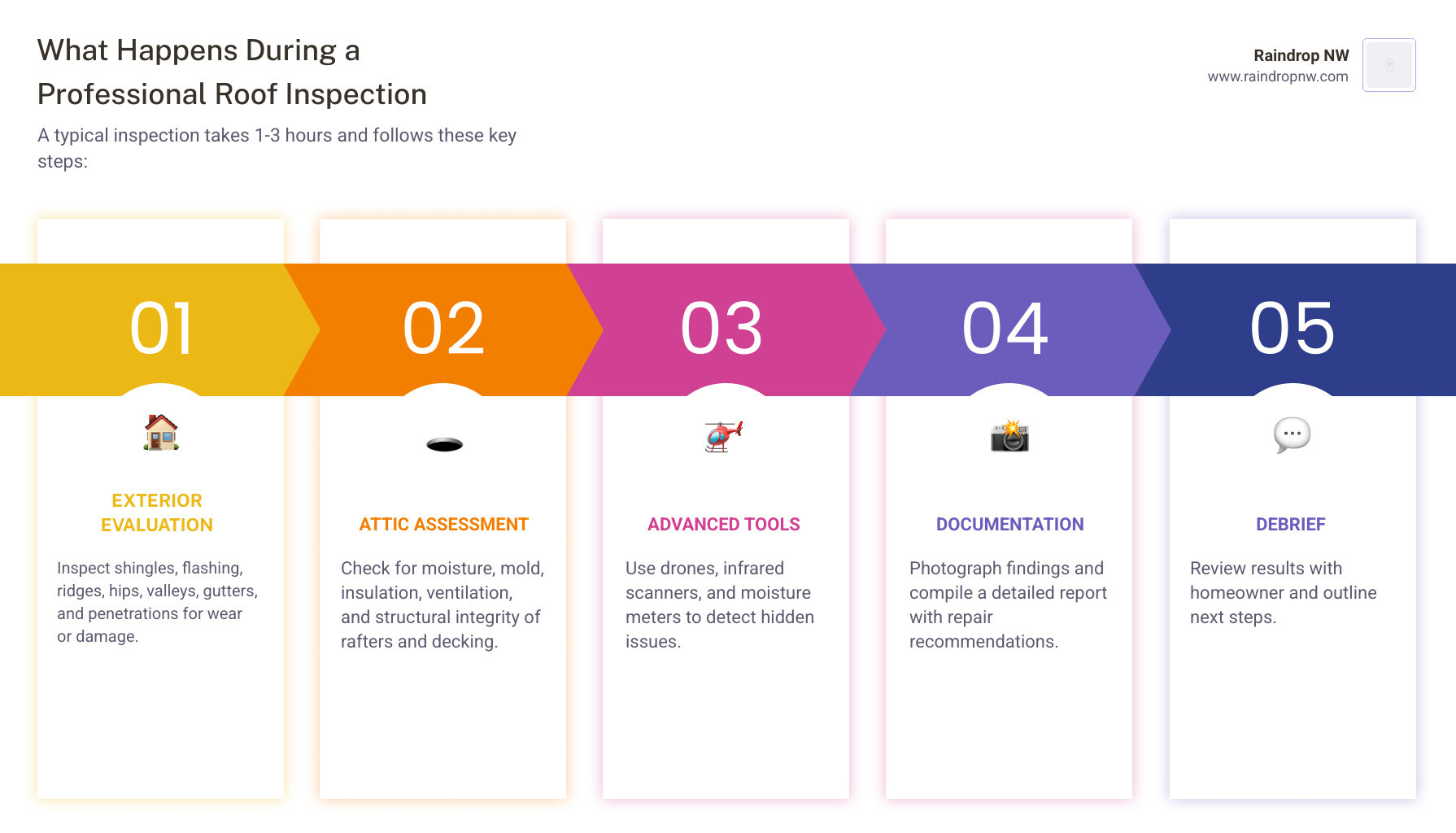
What happens during a professional roof inspection is something every homeowner in Oregon should understand before scheduling one. Here’s a quick overview:
- Exterior evaluation – The inspector walks the roof surface, checking shingles, flashing, ridges, hips, valleys, gutters, and all penetrations
- Interior/attic assessment – They enter the attic to check for moisture, mold, insulation levels, ventilation, and structural integrity of rafters and decking
- Advanced technology – Tools like drones, infrared scanners, and moisture meters help detect hidden damage not visible to the naked eye
- Documentation – The inspector photographs findings and compiles a written report with prioritized repair recommendations
- Debrief – A qualified inspector walks you through the findings and outlines next steps
The whole process typically takes one to three hours, depending on your roof’s size and complexity.
Most homeowners don’t think about their roof until water shows up on the ceiling — and by then, what started as a minor flashing gap or a cracked pipe boot has quietly become a much bigger problem. That’s not a knock on homeowners; roofs are easy to ignore. They do their job silently, day after day, through Oregon’s relentless rain, wind, and freeze-thaw cycles — until they don’t.
The good news is that most serious roof damage is entirely preventable. A thorough professional inspection catches the small stuff before it becomes the expensive stuff. And understanding what that process actually looks like helps you get more out of it — and ask the right questions when the inspector hands you their report.
I’m Torrey Yungeberg, owner of Raindrop Roofing NW, and knowing exactly what happens during a professional roof inspection is something I’ve built my business around — from walking roofs across Oregon and Southwest Washington to leading industry conversations as Secretary of both the Oregon Chapter of National Women in Roofing and the Associated Roofing Contractors of Oregon and Southwest Washington. Let’s walk through the full process together so you know exactly what to expect.
Why Regular Roof Assessments are Essential for Your Home
Your roof is the primary line of defense for your home. In the Pacific Northwest, where we deal with everything from moss-inducing humidity to heavy snow loads and high winds, a “set it and forget it” mentality can be dangerous. Think of a roof inspection like a yearly physical for your house. It is a systematic assessment designed to identify deterioration, structural deficiencies, and code compliance gaps before they escalate into interior damage or safety failures.
At Raindrop NW, we specialize in residential roofing that stands the test of time. We’ve seen that proactive maintenance is the single most effective way to extend the life of your roofing system. Without it, small issues like a single backed-out nail or a clogged gutter can lead to rot in your decking, which eventually compromises the entire structure.
When to Schedule Your Next Visit
The ideal roof inspection timeline is at least once per year. As we head into April 2026, many homeowners are looking back at the winter’s impact. Spring is a fantastic time for an assessment to catch damage from winter storms, while fall is great for ensuring your home is ready for the upcoming rainy season.
You should also schedule an inspection:
- After major storms: High winds and hail can create hidden fractures in shingles or lift flashing.
- When your roof hits the 10-year milestone: Most asphalt shingle roofs start showing their age around a decade in; this is when granule loss and seal failure become more common.
- Before buying or selling: A professional report provides buyer confidence and helps sellers avoid last-minute negotiation hurdles.
The Role of a Qualified Inspector
Not all inspections are created equal. A “ground-level glance” from a general handyman isn’t a professional inspection. A qualified inspector should have proper licensing, comprehensive insurance, and industry-specific certifications.
Technical expertise matters because the inspector needs to understand how different components interact. For example, they need to know if your attic ventilation meets the IRC R806 standard (typically 1 square foot of net free area per 150 square feet of attic floor). At Raindrop NW, we pride ourselves on our roof inspections and certifications, ensuring that every assessment is backed by deep local knowledge and professional standards.
What Happens During a Professional Roof Inspection: A Step-by-Step Walkthrough
A thorough professional roof inspection usually lasts from one to three hours. We don’t just show up and start pointing at things; we follow a systematic approach to ensure nothing is missed. We often start with a perimeter check from the ground to look for sagging or obvious debris, but the real work happens up close.
Our goal is to provide a clear picture of your roof’s health so you can plan for repairs and maintenance rather than reacting to an emergency leak in the middle of a November downpour.
Exterior Surface and Component Evaluation
The first major phase involves getting onto the roof surface. We examine the condition of your shingles or roofing material with a fine-toothed comb. One critical threshold we look for is granule loss. If more than 30% of the surface aggregate on a given slope has shed away, it’s a recognized sign of accelerated aging. These granules aren’t just for color; they protect the underlying asphalt from UV rays.
Next, we look at the flashing. Industry data shows that 90% of leaks are from penetrations and roof-to-wall flashings. We check:
- Pipe boots: Rubber boots around plumbing vents usually last only 10-15 years, often failing before the shingles do.
- Chimney flashing: We look for cracked caulk or separated counter-flashing.
- Valleys: These handle the highest volume of water and are prone to wear.
If the damage is widespread, we might discuss new replacement roofs, but often, catching these “penetration” issues early allows for targeted repairs that save you thousands.
The Interior Phase: What Happens During a Professional Roof Inspection in the Attic
You can’t fully understand a roof’s condition without looking at it from the inside. The attic tells the truth that shingles might hide. During the interior phase, we check:
- Rafter health: We look for dark stains, damp spots, or “white rot” that indicates long-term moisture exposure.
- Ventilation balance: We ensure your intake (soffit) vents aren’t blocked by insulation and that your exhaust vents are functioning. Poor ventilation is a leading cause of warped shingles and ice dams.
- Moisture detection: Sometimes, we see “daylight” where we shouldn’t, signaling an emergency breach in the decking.
- Insulation: We check for dark spots in insulation, which often indicate air leaks or dust filtration from a compromised roof.
Advanced Technology and Tools in Modern Roofing
While the “eyes on the roof” approach is essential, modern technology has significantly improved the accuracy of our assessments. We use a variety of high-tech tools to find what the human eye might miss. For example, waterproof deck surfaces and flat roofs often require specialized moisture meters or infrared scanners to detect trapped water beneath the surface.
Precision Mapping and Measurements
- Drones: Drones allow us to capture high-resolution photography of steep or inaccessible areas without the safety risk of walking on fragile materials.
- Infrared Scanners: These detect temperature variations. Since water holds heat differently than dry wood, thermal imaging can “see” a leak inside a wall before it ever stains your drywall.
- Satellite Imagery: This helps us get accurate pitch calculations and digital measurements for the entire roof square footage (one “square” in roofing equals 100 square feet).
Common Problems Found During a Professional Roof Assessment
During our years serving the Beaverton and Portland Metro area, we’ve found that certain problems pop up more than others. Identifying these early is the key to successful remodels and additions and general home upkeep.
| Problem Area | Minor Maintenance (Monitor) | Major Issue (Action Needed) |
|---|---|---|
| Shingles | Minor granule loss, slight curling | Missing shingles, bald patches (>30% loss) |
| Flashing | Aged sealant, minor surface rust | Cracked rubber boots, missing step flashing |
| Drainage | Small amount of leaf debris | Standing water >48 hours, sagging gutters |
| Attic | Dusty insulation, minor air leaks | Mold growth, water stains on rafters |
One rule of thumb we use for flat or low-slope roofs: Standing water exceeding 48 hours post-rain indicates inadequate slope or blocked drainage. This “ponding” water is a major red flag that requires immediate attention.
Identifying Hidden Structural Damage
Beyond the surface, we look for structural red flags. A sagging ridgeline or a visible dip in the roof deck often indicates compromised trusses or rotted decking (sheathing). We also look for evidence of biological growth. In our humid climate, moss isn’t just a cosmetic issue; it can grow root-like structures that physically lift shingles and trap moisture against the wood.
Professional Expertise vs. DIY Inspections
We often get asked, “Can’t I just use a ladder and look myself?” While we encourage homeowners to be observant, a DIY check is not a replacement for a professional assessment.
First and foremost is safety. Professional inspectors use OSHA-compliant fall protection and have specialized training to walk on various pitches without damaging the materials. Walking on an old roof can actually cause shingles to crack or seals to break if you don’t know where to step.
Furthermore, we provide owner resources that help you understand the long-term health of your home. A professional can spot “high or low nails” — shingles that were installed improperly from day one — which might not cause a leak today but will certainly cause one in five years.
The Value of an Unbiased Specialist
Hiring a specialist ensures you meet manufacturer warranty requirements. Many shingle warranties actually require periodic professional inspections to remain valid. We provide the detailed documentation needed for insurance claims, helping you substantiate damage after a storm with photo evidence that a claims adjuster can’t ignore.
The Final Report: What Happens During a Professional Roof Inspection Documentation Process
Once we climb down and finish our attic crawl, the job isn’t done. We compile everything into a comprehensive digital report. This isn’t just a “thumbs up” or “thumbs down.” Whether it’s for a home you live in or a commercial roofing project, the report should include:
- High-resolution photos of all deficiencies.
- A prioritized list of repairs (Immediate vs. Maintenance).
- An estimated remaining lifespan for the roof.
- A summary of ventilation and insulation health.
Benefits for Real Estate and Insurance
This report is a powerful tool. For home buyers, it provides peace of mind. For sellers, providing a recent “clean bill of health” or a certification can actually increase buyer confidence and speed up the closing process. In insurance situations, having a professional report from a local company like Raindrop NW can be the difference between a denied claim and a full roof replacement coverage after a storm.
Frequently Asked Questions about Roof Inspections
How long does a typical professional roof inspection take?
A standard residential inspection usually takes between 45 minutes and 2 hours. If the home is particularly large, has multiple roof levels, or has a complex attic space, it may take up to 3 hours.
Can an inspection help with my insurance claim after a storm?
Absolutely. We provide the photo documentation and professional assessment of “wind uplift” or “hail impact” that insurance companies require. Having a professional report ready can significantly speed up the claims process.
What specific components are checked in the attic?
We look at the underside of the roof decking for water stains, the condition of the rafters and trusses, the thickness and condition of insulation, and the functionality of all vents (soffit, ridge, and gable vents) to ensure proper airflow.
Conclusion
Understanding what happens during a professional roof inspection empowers you to be a more proactive homeowner. At Raindrop NW, we believe in long-term service and accountability. We are a truly local, independently owned company serving Beaverton and the surrounding communities, including Portland, Lake Oswego, Hillsboro, and Tigard.
Unlike many competitors who have been bought out by out-of-state investment firms, we live and work in the same neighborhoods we service. We treat every roof as if it were over our own families’ heads. If you haven’t had your roof checked recently, or if the recent Oregon storms have you worried about your home’s integrity, don’t wait for the drip.
Schedule your professional roof inspection today and let us give you the peace of mind you deserve.




Leave a Reply
Want to join the discussion?Feel free to contribute!