
How to Keep Your PNW Home Dry During the Rainy Season
Why Water Damage Is the Biggest Threat to Pacific Northwest Homes
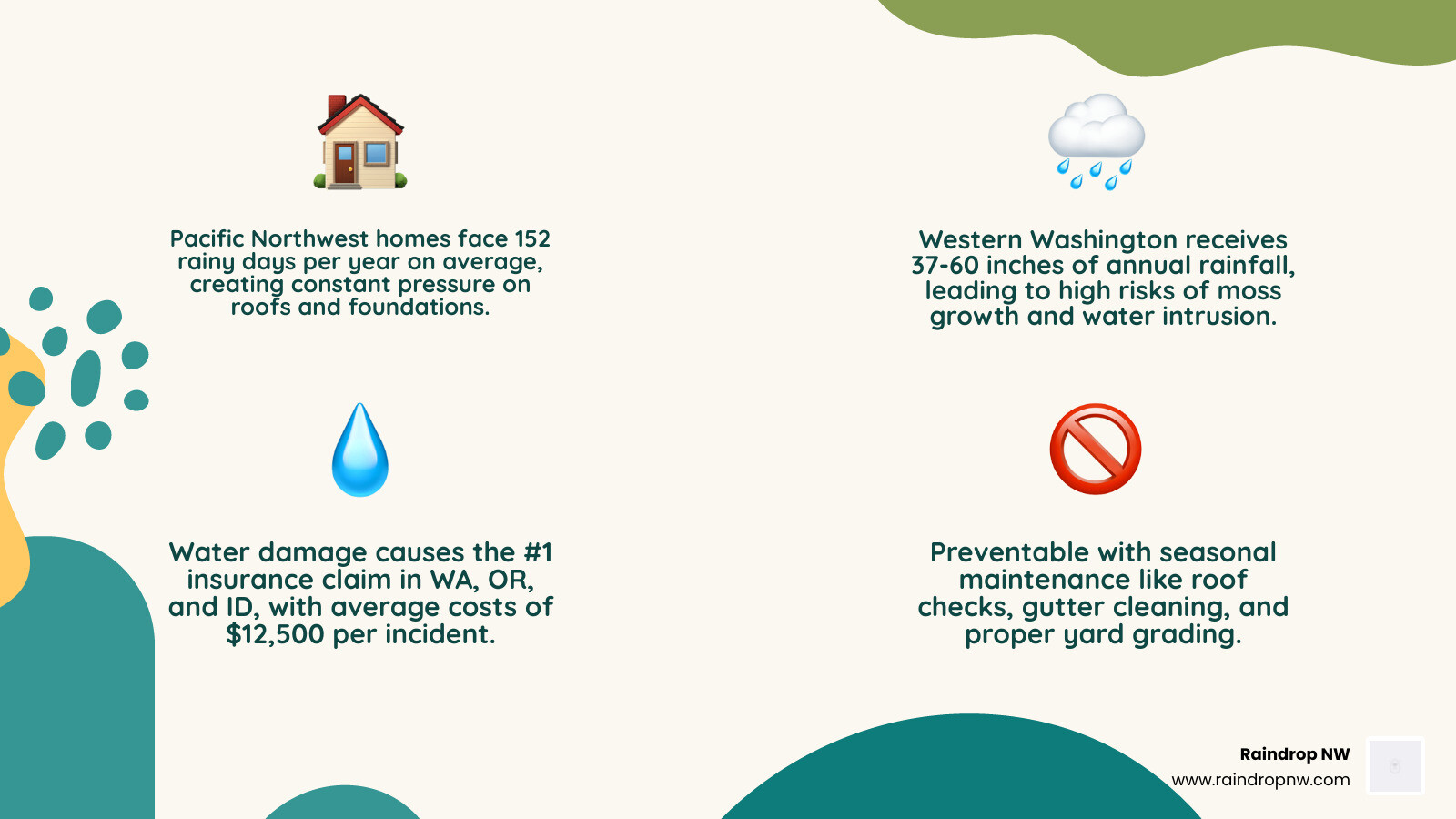
Water damage prevention tips for pacific northwest homeowners are some of the most important home maintenance knowledge you can have — because in this region, the rain doesn’t let up. Seattle averages 152 rainy days per year, Western Washington gets 37 to 60 inches of rainfall annually, and cities like Beaverton regularly see more than 40 inches. That persistent moisture doesn’t just make for lush greenery. It creates real, ongoing pressure on your home’s roof, foundation, walls, and crawl space.
Here’s a quick overview of the most effective ways to protect your PNW home from water damage:
- Maintain your roof — inspect twice yearly, remove moss, seal flashings, and replace damaged shingles promptly
- Clean gutters and extend downspouts — at least twice a year (spring and fall), and direct water 5–10 feet from your foundation
- Grade your yard properly — soil should slope 6 inches away from your foundation over a 10-foot span
- Install a sump pump with battery backup — especially critical during power outages from windstorms
- Add a vapor barrier or encapsulate your crawl space — to control moisture, prevent mold, and protect wood framing
- Seal windows, doors, and foundation cracks — use caulk, weatherstripping, and hydraulic cement where needed
- Monitor indoor humidity — keep levels between 30–50% using exhaust fans, dehumidifiers, or an HRV system
- Inspect plumbing regularly — watch for musty smells, wall discoloration, sudden bill spikes, or low water pressure
- Know where your main water shut-off valve is — especially if you own a vacation or second home
- Document and prepare for emergencies — keep an emergency contact list and act within 24–48 hours to prevent mold
Water damage is the most common home insurance claim in Idaho, Washington, and Oregon, according to the National Association of Insurance Commissioners — and the average claim runs around $12,500. The good news? Most of it is preventable with consistent, seasonal maintenance.
I’m Torrey Yungeberg, owner of Raindrop Roofing NW, a family-owned business based in Boring, Oregon, and I’ve spent years helping homeowners across Oregon and Southwest Washington put practical water damage prevention tips for pacific northwest homeowners into action — starting from the roof down. In the sections below, I’ll walk you through exactly what to do, season by season, inside and out.
Essential Exterior Water Damage Prevention Tips for Pacific Northwest Homeowners

When it comes to the Pacific Northwest climate, your home’s “exterior envelope” is its primary defense. With annual precipitation in Western Washington and the Portland metro area often exceeding 40 to 60 inches, the sheer volume of water hitting your house is staggering. In Beaverton and Southwest Washington, we see weather patterns that can dump several inches of rain in a single weekend. If your exterior isn’t prepared, that water will find its way in.
Preventing intrusion starts with high-quality Residential Roofing Services. Because the PNW is a maritime climate, we don’t just deal with rain; we deal with high humidity and wind-driven moisture that can push water into the tiniest cracks. Regular seasonal maintenance is the only way to ensure your siding, windows, and roof remain a cohesive barrier against the elements.
Roof Maintenance and Moss Control for Water Damage Prevention Tips for Pacific Northwest Homeowners
In our region, moss isn’t just a charming green aesthetic; it’s a roof killer. Moss acts like a sponge, holding moisture against your shingles and lifting their edges. This allows wind-driven rain to blow underneath, leading to rot in the roof deck. Experts suggest that heavy moss accumulation can shorten a roof’s lifespan by 3 to 5 years.
To combat this, we recommend:
- Moss Removal and Prevention: Use zinc strips at the roof peaks to create a mild environment that inhibits moss growth. Never pressure wash your shingles, as this strips away the protective granules.
- Checking Flashing and Seals: Most leaks don’t happen in the middle of a shingle; they happen at the “penetrations.” Check the flashing around chimneys, vents, and skylights.
- Professional Oversight: Scheduling Roof Inspections and Certifications is the best way to catch small issues before they become $10,000 repairs.
- Prompt Repairs: If you see missing shingles or sagging areas, seek Roof Repairs and Maintenance immediately. In April 2026, we are seeing more frequent “atmospheric river” events, making even a small leak a major liability.
Gutter Cleaning and Downspout Extensions
Our beautiful Douglas firs and Western red cedars are iconic, but they are the natural enemies of a functional gutter system. Pine needles and fir debris are small enough to bypass many basic gutter guards and create dense, waterproof “dams” in your downspouts.
We advise a strict twice-yearly cleaning schedule: once in late spring (after the trees drop their pollen and seeds) and once in late autumn (after the final leaf drop). If your gutters overflow, water pools at the foundation, which is the leading cause of basement flooding and crawl space moisture. Ensure you have splash blocks or, better yet, 5-to-10-foot downspout extensions to direct that water far away from your home’s footings.
Protecting Your Foundation and Crawl Space
The soil in the Pacific Northwest, particularly in the Tualatin River basin and parts of the Willamette Valley, can become incredibly saturated. This creates “hydrostatic pressure”—basically, the weight of the water in the soil pushes against your foundation walls. If there is a crack, the water will find it.
Beyond the foundation, protecting your exterior living spaces is just as vital. Using Waterproof Deck Surfaces can prevent water from seeping into the structural framing of your home where decks are attached.
Yard Grading and Sump Pump Maintenance
If you notice puddles forming near your house after a storm, your grading is likely the culprit. The gold standard for yard grading is a 6-inch drop over a 10-foot span. This ensures gravity does the work for you. If you have foundation cracks, they should be sealed immediately with hydraulic cement or epoxy injections.
For many homes in low-lying areas or locations with high water tables (like near Commonwealth Lake Park), a sump pump is a necessity. However, a sump pump is only as good as its power source. PNW windstorms frequently knock out power right when the rain is heaviest. A battery backup system is non-negotiable. Test your pump twice a year by pouring a bucket of water into the pit to ensure the float switch triggers correctly. If you’re planning upgrades, consider how Residential Roofing Remodels and Additions might impact your home’s overall drainage footprint.
Vapor Barriers and Crawl Space Encapsulation for Water Damage Prevention Tips for Pacific Northwest Homeowners
About 50% of the air you breathe on the first floor of your home comes from the crawl space. If that space is damp, you’re breathing mold spores. A high-quality 6-mil polyethylene vapor barrier is the minimum requirement to keep ground moisture from rising into your floor joists.
For chronic moisture issues, full crawl space encapsulation—sealing the vents and adding a dedicated dehumidifier—is the “gold standard.” This prevents the humid maritime air from condensing on your cool wooden beams. Professionals use moisture meters and thermal imaging to detect “hidden” moisture that might be trapped behind insulation, allowing for a proactive approach to wood rot prevention.
Indoor Strategies and Plumbing Safeguards
While we often focus on the rain outside, internal plumbing failures and high humidity cause a significant portion of water damage claims. In the damp PNW winters, indoor humidity can easily spike above 60%, leading to “slow-motion” water damage like rotting window sills and mold growth behind furniture.
We recommend keeping a hygrometer in your home to monitor levels. Your target should be 30–50%. Use bathroom exhaust fans for at least 20 minutes after every shower and ensure your kitchen hood vents to the outside. For more tips on maintaining your home’s integrity, check our Owner Resources.
Plumbing Inspections and Leak Detection for Water Damage Prevention Tips for Pacific Northwest Homeowners
If your home was built between the 1950s and 1980s, you might still have galvanized steel pipes. These are notorious for rusting from the inside out, leading to pinhole leaks that can go undetected for months.
Essential plumbing checks include:
- Supply Lines: Replace old rubber washing machine and toilet hoses with stainless steel braided lines. These are much less likely to burst.
- Water Heater: Most tanks last 10–12 years. If yours is older, check the bottom for rust or dampness.
- Smart Technology: Install smart leak sensors near high-risk appliances. These can alert your phone the second moisture is detected. Some systems even include an automatic shut-off valve.
- The Main Valve: Every person in your household should know exactly where the main water shut-off valve is located. If a pipe bursts, fumbling for the valve for ten minutes can mean the difference between a small mop-up and a total floor replacement. This is especially critical for vacation homes that may sit empty during a “silver thaw” or freeze event.
Emergency Preparedness and Insurance Considerations
According to the Insurance Information Institute, water damage accounts for more than a quarter of all homeowners insurance claims nationwide. In the Pacific Northwest, it is consistently the #1 claim. With the average cost sitting at $12,500, being prepared isn’t just about safety—it’s about financial protection.
If water does intrude, you have a 24-to-48-hour window to get things dry before mold begins to colonize.
- Stop the source: Shut off the water or tarp the roof.
- Document everything: Take clear photos and videos of the damage before you start cleaning. This is vital for insurance adjusters.
- Call professionals: Use high-grade dehumidifiers and air movers.
- Check your policy: Most standard policies do not cover flood damage from rising groundwater; you may need a separate flood insurance policy.
If a major storm causes unexpected damage, we offer Residential Roofing Financing to help homeowners manage the costs of urgent repairs without delay.
Frequently Asked Questions about PNW Water Damage
How often should I clean my gutters in the Pacific Northwest?
You should clean your gutters at least twice per year. The first cleaning should happen in late spring to clear out “helicopter” seeds and blossoms. The second must happen in late autumn after the leaves have fallen. If you live in a heavily wooded area with Douglas firs or pines, you may need a third cleaning in mid-winter to remove needle buildup.
What are the signs of a hidden plumbing leak?
The most common signs are a sudden, unexplained spike in your water bill, musty odors in specific rooms, or warped baseboards. You might also notice “hot spots” on the floor (indicating a hot water line leak) or a slight drop in water pressure. If you suspect a leak, turn off all water and check your water meter; if the dial is still moving, you have a leak.
Why is a battery backup essential for my sump pump?
In the Pacific Northwest, heavy rain is often accompanied by high winds that knock out power lines. Without a battery backup, your sump pump will stop working exactly when the groundwater is rising the fastest. A backup ensures your basement stays dry even during a multi-day power outage.
Conclusion
Preventing water damage in the Pacific Northwest is a year-round commitment, but it doesn’t have to be overwhelming. By following these water damage prevention tips for pacific northwest homeowners, you can protect your investment and ensure your home remains a dry, healthy sanctuary.
At Raindrop NW, we understand the specific challenges of our local climate because we live here too. Whether you are in Beaverton, Portland, or Vancouver, our team is committed to providing the long-term accountability that only a truly local, independently owned company can offer. We don’t answer to out-of-state investment firms; we answer to you.
If your roof has seen better days or you want to get ahead of the next rainy season, we are here to help with New Replacement Roofs and expert maintenance. Stay dry out there!




Leave a Reply
Want to join the discussion?Feel free to contribute!