• Link to X
  • Link to Instagram
  • Link to Youtube
  • Link to Facebook
  • Link to WhatsApp
CALL: (503)526-3887 or EMAIL: info@raindropnw.com
RAINDROP ROOFING NW | PORTLAND, OR
  • Home
  • About Us
    • About Raindrop Roofing NW
    • Our Team
    • Areas We Serve
    • Who We Support
    • Our Commitment to a Greener Future
    • Careers
    • Blog
  • Residential Roofing
    • Services
      • New / Replacement Roofs
      • Repairs and Maintenance
      • Remodels and Additions
      • Balconies, Patios, and Flat Decks
      • Roof Inspections and Certifications
    • Financing
    • Roof Gallery
    • Roof Types and Products
    • Manufacturer-Certified Roofing Contractor
    • Owner Resources
  • Commercial Roofing
    • Services
      • New and Replacement Roofs
      • Estimates and Inspections
      • Warranties
      • Real Estate Partnerships
      • Roof Certifications
    • Commercial Gallery
    • Roof Types and Products
    • Featured Project
  • Reviews
  • Contact Us
  • Menu Menu
You are here: Home1 / Roof Maintenance

Stop Your Roof From Retiring Early With These Maintenance Tips

Roof Maintenance

Is Your Roof Aging Faster Than It Should?

How to extend the life of your roof starts with a few consistent habits that most homeowners overlook until it’s too late. Here’s a quick summary:

  • Schedule annual professional inspections — catch small problems before they become expensive ones
  • Keep gutters clean — clogged drainage is one of the fastest ways to damage your roof and foundation
  • Trim overhanging branches — branches rubbing your roof cause wear, debris, and moisture buildup
  • Maintain attic ventilation and insulation — heat and moisture trapped inside destroy shingles from underneath
  • Address moss and algae early — especially critical in NW Oregon’s wet climate
  • Repair damaged shingles promptly — small fixes now prevent major structural damage later
  • Consider roof rejuvenation — for aging asphalt shingles that still have life left in them

Most roofs don’t fail overnight. They wear out gradually — through skipped maintenance, ignored minor damage, and the kind of slow deterioration that’s easy to miss until water is dripping through your ceiling. Here in the Portland metro and greater NW Oregon, our rainy winters, freeze-thaw cycles, and persistent moisture create conditions that are especially hard on roofing systems. The reality is that an asphalt shingle roof has an average lifespan of just 15 to 20 years — but neglect can cut that number down significantly, while consistent care can push it well beyond that range. A full roof replacement can run into the tens of thousands of dollars, which means every year you can safely add to your roof’s life is money staying in your pocket.

I’m Torrey Yungeberg, owner of Raindrop Roofing NW and a lifelong member of Oregon’s roofing community, and I’ve seen how the right maintenance habits can dramatically change how long a roof lasts. In this guide, I’ll walk you through exactly how to extend the life of your roof — from the basics of gutter care to attic ventilation, professional inspections, and modern rejuvenation treatments — so you can make smart, informed decisions about protecting one of your home’s most valuable assets.

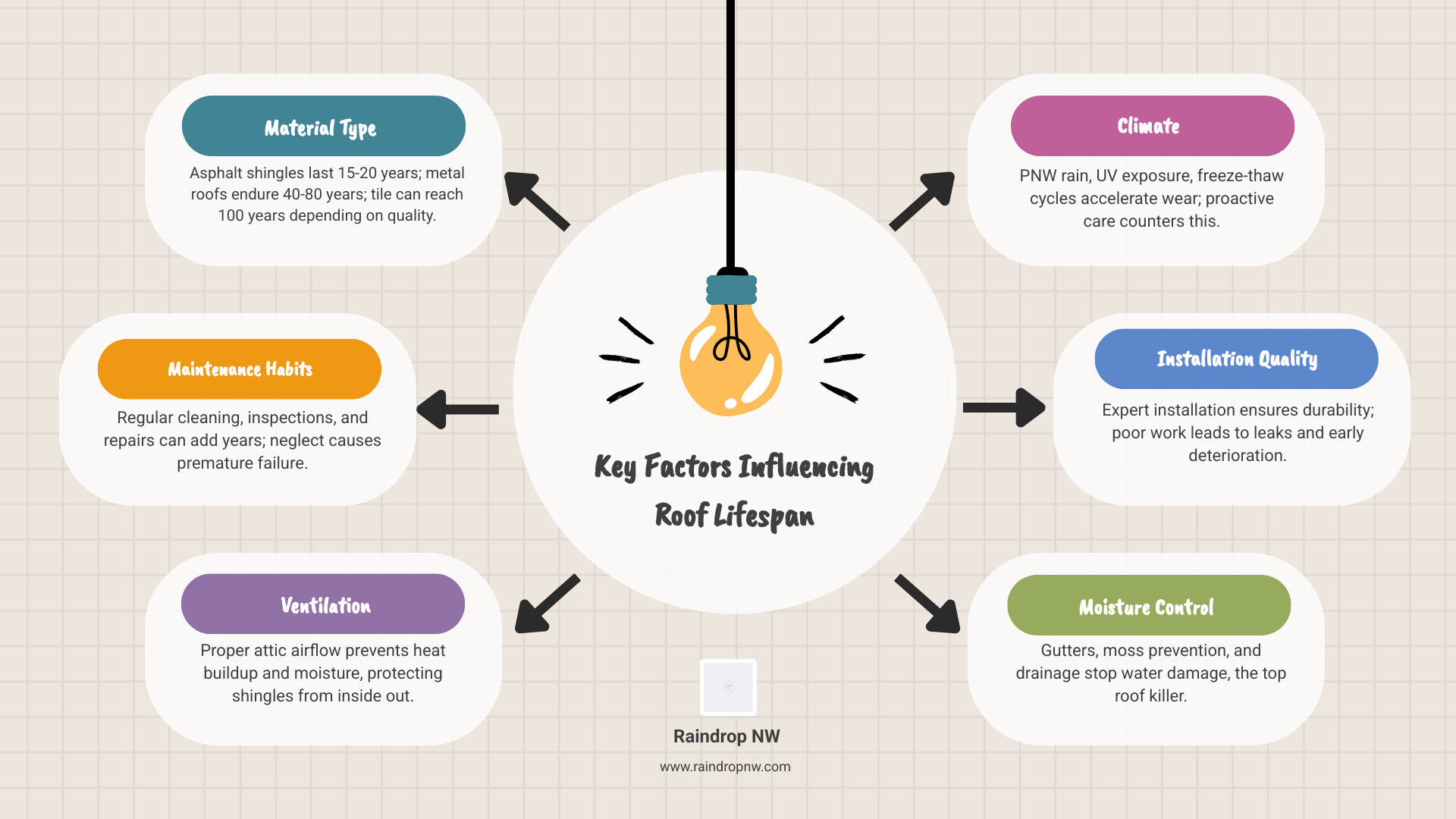
Infographic showing key factors that influence roof lifespan including material type, maintenance habits, ventilation

How to Extend the Life of Your Roof Through Proactive Care

homeowner inspecting their roof from the ground with binoculars - how to extend the life of your roof

When we talk about how to extend the life of your roof, we are really talking about a shift in mindset from “reactive” to “proactive.” Most homeowners in Beaverton or Portland don’t think about their shingles until they see a puddle in the attic. By then, the damage has already moved from the surface into the structural decking.

The longevity of your roof is determined by three main pillars: the quality of the original installation, the materials used, and the consistency of maintenance. Whether you have standard asphalt shingles or a high-end metal system, the Pacific Northwest climate is constantly working against you. Our heavy rainfall, high humidity, and occasional windstorms mean that a roof in Tigard or Lake Oswego faces different challenges than one in a dry climate. More info about residential roofing can help you understand how these systems are designed to work together as a complete shield for your home.

What is the average lifespan of a roof in Beaverton?

In our local area, the material you choose sets the baseline for expectations.

  • Asphalt Shingles: These are the most common. While many are rated for 30 years, the real-world average in the NW is often 15–20 years due to moisture and moss.
  • Metal Roofs: These are incredibly durable, often lasting 40–80 years. They handle our heavy rains and snow loads with ease.
  • Slate, Concrete, or Clay Tiles: These are the “forever” roofs, often lasting 100 years or longer, though they require specialized maintenance to ensure the heavy structure remains sound.

Weather is the ultimate equalizer. Even the best materials will struggle if they aren’t cared for. In places like Hillsboro or Gresham, the freeze-thaw cycles can cause shingles to expand and contract, eventually leading to cracks if the material has become brittle with age.

Why do some roofs fail prematurely?

It’s a frustrating reality: some roofs designed to last 30 years start failing in as little as 7 to 10 years. Why does this happen?

  1. Reduced Asphalt Content: Over the last two decades, many shingle manufacturers have reduced the asphalt content in their products by up to 40%. This makes them lose their natural oils faster, leading to early granule loss and brittleness.
  2. Poor Installation: If a roof isn’t “fortified”—meaning it lacks proper flashing, the right nailing patterns, or high-quality underlayment—it will fail regardless of the shingle quality.
  3. UV Damage and Moisture: Even in cloudy Portland, UV rays break down the chemical bonds in shingles. When combined with moisture retention from moss or debris, the shingles “rot” from both sides.

Essential Maintenance Tasks for NW Oregon Homeowners

If you want to know how to extend the life of your roof without spending a fortune, look at your gutters and your trees. These are the “low-hanging fruit” of roof care. In communities like Camas, Vancouver, and Oregon City, we are surrounded by beautiful greenery, but that greenery can be a roof’s worst enemy. More info about repairs and maintenance is vital for staying ahead of these environmental stressors.

The importance of gutter cleaning and tree trimming

Clogged gutters are a primary cause of roof rot. When water cannot flow freely off the roof, it backs up under the eaves and the bottom row of shingles. This leads to fascia rot, mold growth, and can even damage your home’s foundation. We recommend cleaning gutters at least twice a year—once in late autumn after the leaves have fallen and once in the spring.

Tree trimming is equally vital. Branches should be kept at least 6–10 feet away from the roof surface. Why?

  • Physical Damage: In high winds, branches act like giant scrub brushes, scraping off the protective granules from your shingles.
  • Debris Buildup: Overhanging trees drop needles and leaves that trap moisture against the roof, creating a perfect nursery for moss.
  • Pest Access: Trees are highways for squirrels and raccoons looking to find a weak spot in your attic.

Preventing moss growth and ice dams in the PNW

Moss isn’t just an aesthetic issue; it’s a structural one. Moss behaves like a sponge, holding water against the shingles and eventually lifting them up, allowing water to reach the wooden deck. To prevent this, consider installing zinc or copper strips near the roof ridge. When it rains, these metals release ions that kill moss spores before they can take root.

Ice dams are another winter concern in areas like Sandy or Battle Ground. They form when heat from your attic melts snow on the roof, which then refreezes at the cold eaves. This “dam” of ice forces liquid water under the shingles. Using a roof rake to clear snow from the edges of your roof can help, but the real solution lies in what’s happening under the roof.

The Role of Attic Health in Roof Longevity

Many people are surprised to learn that how to extend the life of your roof has as much to do with your attic as it does with your shingles. A roof needs to “breathe.” If heat and moisture are trapped in your attic, they bake the shingles from the inside out. More info about roof types and products can give you a better idea of how modern ventilation systems integrate with different roofing materials.

How to Extend the Life of Your Roof with Proper Attic Ventilation

Proper ventilation requires a balance between intake (usually at the soffits or eaves) and exhaust (usually at the ridge or through gable vents).

  • In the Summer: Ventilation allows scorching air to escape, preventing shingles from reaching temperatures that make them brittle.
  • In the Winter: It removes moisture from cooking, showering, and breathing that can condense on the underside of your roof deck and cause wood rot.
Ventilation Type Location Function
Intake (Soffit Vents) Under the eaves Draws cool, fresh air into the attic space.
Exhaust (Ridge/Gable) Peak of the roof Allows hot, moist air to escape naturally.
Powered Fans Roof surface Forcefully removes air; useful for difficult roof shapes.

Insulation and its impact on shingle health

Good insulation keeps your living space heat where it belongs. This prevents the “hot roof” syndrome that leads to ice dams. Proper insulation can also bring your energy bills down by up to 15%. However, be careful with recessed lighting or cathedral ceilings. If these aren’t properly insulated, they create “hot spots” on the roof that melt snow prematurely, leading to localized moisture damage.

Recognizing Signs of Wear and When to Repair

You don’t need to be a pro to spot trouble, but you do need to know where to look. We often tell our neighbors in Tualatin and West Linn that a pair of binoculars is a homeowner’s best friend. You can see a lot from the safety of the ground without ever climbing a ladder. More info about roof inspections and certifications is available if you suspect your roof needs a closer look.

How to Extend the Life of Your Roof with Professional Inspections

While a ground-level check is great, a professional inspection should be scheduled once a year or after any major storm. A professional roofer will check:

  • Flashing: The metal bits around chimneys and vents are the most common leak points.
  • Granule Loss: If your gutters look like they are full of coffee grounds, your shingles are losing their UV protection.
  • Nail Pops: Nails that have backed out can create tiny holes that invite leaks.
  • Structural Integrity: Checking for sagging areas that might indicate water-damaged decking.

When to repair versus replace your roof

This is the $30,000 question. Generally, if your roof is under 15 years old and the damage is localized (like a few missing shingles from a windstorm), a repair is the way to go. However, if you see widespread curling, “balding” shingles, or if you’ve already had multiple leaks, you might be throwing good money after bad. A roof that is 20+ years old is usually a candidate for replacement, especially if it’s a single-layer asphalt roof.

Advanced Protection and Rejuvenation Strategies

In recent years, new technology has emerged to help homeowners who are caught in the middle—their roof isn’t “dead,” but it’s definitely showing its age. This is where rejuvenation comes in. More info about new replacement roofs is always an option, but for some, a treatment can buy valuable time.

Understanding roof rejuvenation and restoration

Roof rejuvenation involves applying bio-based, soy-oils to aging asphalt shingles. As shingles age, they lose “maltenes”—the oils that keep them flexible. This makes them brittle and prone to cracking.

  • How it works: The treatment uses methyl esters to soak into the shingles, restoring their flexibility and helping the protective granules stay in place.
  • Effectiveness: Some treatments can add 5 to 15 years to a roof’s life, depending on the product and how many times it’s reapplied.
  • Restoration: For flat roofs, silicone coatings can create a seamless, waterproof barrier that reflects UV rays and prevents leaks without a full tear-off, which also keeps old roofing material out of our local landfills.

Frequently Asked Questions about Roof Longevity

How often should I have my roof professionally inspected?

We recommend a professional inspection once a year, ideally in the spring to check for winter damage. You should also call for an inspection after any significant weather event, such as a windstorm with gusts over 50 mph or a heavy hailstorm.

Can power washing my roof extend its life?

Actually, we strongly advise against power washing asphalt shingles. The high-pressure stream can blast away the protective granules and force water under the shingles, potentially voiding your manufacturer’s warranty. Instead, use “soft washing” techniques or a simple broom and leaf blower for debris.

What are the first signs that my roof is failing?

Look for “the big three”:

  1. Curling or cupping shingle edges.
  2. Bald spots where granules have washed away.
  3. Interior signs like dark spots on your ceiling or musty odors in the attic. If you see any of these in your Portland or Beaverton home, it’s time to call a professional.

Conclusion

At Raindrop Roofing NW, we believe that a roof shouldn’t be a source of stress. As a family-owned, multi-generational company based right here in Beaverton, we’ve built our reputation on being a truly local neighbor you can trust. While out-of-state investment firms are buying up roofing companies across Oregon, we remain independently owned and committed to the long-term health of our community’s homes.

Knowing how to extend the life of your roof is about more than just saving money—it’s about protecting your family and your peace of mind. Whether you need a simple gutter cleaning, a complex repair, or a full replacement, we provide transparent, expert service across the entire Portland-Metro area, from Forest Grove to Camas.

Don’t wait for a leak to tell you your roof is in trouble. Contact us today for a free inspection and let us help you keep your roof over your head for years to come. More info about residential roofing is just a click away.

https://www.raindropnw.com/wp-content/uploads/2026/05/pexels-photo-5502227.jpeg 529 940 SEO Stats https://www.raindropnw.com/wp-content/uploads/2024/05/logo-raindrop-space-300x92.png SEO Stats2026-05-14 10:17:492026-05-14 10:17:49Stop Your Roof From Retiring Early With These Maintenance Tips

Why Routine Maintenance is the Secret to a Long-Lasting Roof

Roof Maintenance

Why Understanding How Regular Inspections Prevent Costly Repairs Could Save Your Roof — and Your Wallet

How regular inspections prevent costly repairs comes down to one simple idea: small problems caught early cost a fraction of what they cost after they’ve had time to grow. Here’s a quick breakdown of how that works in practice:

  • Early leak detection – A minor roof leak addressed promptly can cost a few hundred dollars to fix. Left alone, that same leak can spread into water damage, mold, and structural decay costing tens of thousands.
  • Avoiding emergency rates – Emergency repair calls typically run 3 to 4 times the cost of planned maintenance. Scheduled inspections keep you out of that situation.
  • Extending roof lifespan – Regular checks catch worn flashing, loose shingles, and gutter issues before they accelerate the aging of your entire roof system.
  • Protecting your insurance coverage – Documented maintenance records support insurance claims and can prevent denials based on alleged neglect.
  • Increasing property value – A well-maintained roof with a clear inspection history gives buyers and appraisers confidence.

The pattern is consistent across every property type: proactive maintenance wins over reactive repairs — financially, structurally, and in terms of peace of mind.

Here in Oregon and Southwest Washington, that reality hits especially close to home. Pacific Northwest weather — heavy rainfall, moss-friendly humidity, and seasonal temperature swings — puts roofs under stress year-round. Waiting for a visible problem to show up inside your home often means the damage outside has already been building for months.

I’m Torrey Yungeberg, owner of Raindrop Roofing NW, and after years of inspecting roofs across the region, I’ve seen how regular inspections prevent costly repairs by catching what most homeowners simply can’t see from the ground. In the sections ahead, I’ll walk you through exactly what a smart inspection program looks like — and why getting ahead of problems is always the better investment.

The Financial Logic: How Regular Inspections Prevent Costly Repairs

When we talk about property maintenance in April 2026, we aren’t just talking about “keeping things pretty.” We are talking about a sophisticated financial strategy. Many property owners view an inspection as an added expense, but the data tells a completely different story. Research shows that proactive inspections typically save property owners 3 to 5 times the cost of the inspection itself by identifying small issues before they snowball.

To put this in perspective, consider the “Rule of 1-3%.” Professionals recommend budgeting 1–3% of your home’s total value annually for maintenance. By investing a small portion of that budget into regular professional eyes, you ensure the rest of that money is spent effectively rather than being burned on emergency fixes.

Maintenance Type Typical Cost Level Long-term Impact
Proactive Inspection Low Identifies issues at the $200 stage
Scheduled Repair Moderate Fixes wear and tear before failure
Emergency Repair Very High 3-4x standard rates; occurs at $5,000+ stage
Reactive Replacement Extreme Premature total system failure

The mathematics are undeniable. Buildings that implement quarterly proactive inspections average 67% lower annual repair expenses compared to those that only fix things when they break. This isn’t just a “good idea”—it’s a proven way to keep more money in your bank account. For a deeper look at what these assessments entail, you can find More info about roof inspections.

Catching Minor Leaks: How Regular Inspections Prevent Costly Repairs to Your Attic

In the Pacific Northwest, water is our greatest friend and our roof’s greatest enemy. A tiny gap in your flashing or a single cracked shingle might let in only a few tablespoons of water during a Portland drizzle. However, over a few months, that moisture accumulates in your attic insulation.

By the time you see a brown spot on your bedroom ceiling, you aren’t just looking at a roof repair. You are looking at:

  1. Mold Remediation: Mold can begin growing within 24–48 hours of moisture exposure.
  2. Structural Decay: Constant moisture rots the wooden rafters and roof decking that hold your house together.
  3. Insulation Replacement: Wet insulation loses its R-value, sending your heating bills skyrocketing.

How regular inspections prevent costly repairs in this scenario is simple: we find the cracked sealant or the slipped shingle while the attic is still dry. Fixing a shingle is a minor task; remediating a mold-infested attic can cost $15,000 or more. If you’re wondering how to stay on top of these small fixes, check out More info about maintenance services.

Extending System Lifespan: How Regular Inspections Prevent Costly Repairs to HVAC and Roofing

Your roof and your HVAC system are the two most expensive components of your property. They also share a “domino effect” relationship. For example, if your roof has undetected leaks or poor ventilation, your HVAC system has to work significantly harder to regulate indoor temperatures.

Properly maintained systems—where filters are clean, vents are clear, and the “envelope” of the building is sealed—use 15–25% less energy than neglected ones. Beyond monthly utility savings, regular inspections prevent “cascading failures.” A worn bearing in a motor or a small patch of rust on a roof seam are easy fixes. If ignored, they lead to total system shutdowns.

For business owners in Gresham or Hillsboro, this is even more critical. Unplanned downtime can cost massive amounts in lost productivity. Regular asset inspections prevent these losses by ensuring your building’s “vital organs” are functioning at peak efficiency. Learn more about protecting your business assets with More info about commercial inspections.

Essential Systems to Include in Your Inspection Program

technician checking roof flashing and cleaning gutters - how regular inspections prevent costly repairs

A comprehensive inspection program isn’t just about looking at shingles. It’s about understanding how the different systems of your home interact. While we focus heavily on the roof, a true proactive approach looks at the “Big Five”:

  1. The Roof and Gutters: This is your primary shield. We look for shingle integrity, flashing seals, and gutter drainage.
  2. HVAC Systems: Checking for leaks, airflow blockages, and mechanical wear.
  3. Plumbing: Identifying slow leaks under sinks or in crawlspaces that lead to rot.
  4. Electrical: Looking for flickering lights or overloaded circuits that pose fire risks.
  5. Foundation: Monitoring for cracks or drainage issues that could lead to structural shifting.

Understanding the specific materials used in your home can help you know what to look for. You can find More info about roof types and products to see how different materials age and what their specific maintenance needs are.

Warning Signs to Monitor Between Professional Visits

While we recommend professional eyes at least once or twice a year, you are the “first responder” for your property. How regular inspections prevent costly repairs often starts with a homeowner noticing a small change. Keep an eye out for these “red flags”:

  • Granule Loss: If you see what looks like dark sand in your gutters, your shingles are losing their protective coating.
  • Missing or Curled Shingles: These are “open doors” for water.
  • Ceiling Stains: Even a tiny yellow ring indicates a leak that needs immediate attention.
  • Moss and Algae: In our region, moss is common, but its roots can lift shingles and trap moisture against the roof deck.
  • Rising Energy Bills: If your usage hasn’t changed but your bill has, your home may be losing conditioned air through the roof or windows.
  • Musty Odors: This often signals hidden mold growth in walls or attics.

Monitoring these signs ensures that you call us before the next big storm hits. For more tips on what to look for, visit our More info about owner resources page.

Establishing a Proactive Inspection Schedule for 2026

Consistency is the secret sauce of maintenance. In 2026, we suggest a “staggered” approach to inspections to spread out the costs and ensure nothing falls through the cracks.

  • Residential Properties: We recommend a professional roof inspection twice a year—once in the spring to assess winter damage, and once in the fall to prepare for the rainy season.
  • Commercial Properties: Because commercial roofs (like TPO or EPDM) often have flat surfaces that collect debris, quarterly checks are the gold standard. This prevents “ponding” water from causing structural stress.
  • Rental Properties: Landlords have a legal obligation to maintain safe housing. Conducting inspections during move-ins, move-outs, and mid-lease can prevent tenant disputes and identify damage early.

In the Pacific Northwest, timing is everything. Cleaning your gutters in late November after the last leaves have fallen can prevent ice dams in December. Similarly, checking your roof seals in July ensures you’re ready for the autumn downpours. For commercial property managers, staying ahead of these cycles is vital; see More info about commercial roofing for specialized scheduling.

Choosing a Qualified Professional Inspector

Not all inspections are created equal. A “quick look” from a ladder isn’t enough to truly understand how regular inspections prevent costly repairs. You want someone who provides a detailed, documented report.

When hiring, look for:

  • Certifications: Check for industry-recognized credentials like InterNACHI or ASHI.
  • Manufacturer Certification: A contractor who is certified by the companies that make the roofing materials (like GAF or Owens Corning) knows exactly what “failing” looks like for that specific product.
  • Advanced Tools: Modern inspectors use thermal imaging to find “cold spots” (moisture) behind walls and drones to safely inspect steep pitches.
  • Comprehensive Reporting: Your report should include photos, a priority list of repairs, and an estimate of the remaining lifespan of your systems.

At Raindrop NW, we pride ourselves on being a truly local, independently owned company. We aren’t an out-of-state firm looking for a quick buck; we’re your neighbors in Beaverton, and we’re committed to long-term accountability. You can find More info about certified contractors to see why our local expertise matters.

Beyond Cost Savings: Safety, Compliance, and Property Value

While the financial return is the most obvious benefit, regular inspections offer “hidden” value that is just as important.

Safety and Liability Faulty wiring, structural weaknesses, and mold aren’t just expensive—they’re dangerous. Regular inspections identify fire hazards and slip-and-fall risks (like moss-covered walkways or sagging porch roofs) before they lead to injuries.

Insurance and Compliance In April 2026, insurance companies are becoming increasingly strict. Many policies now include clauses that allow them to deny claims if the damage is deemed a result of “deferred maintenance.” Having a documented history of professional inspections is your best defense. If a storm rips off your shingles, you can prove the roof was in good condition prior to the event, making the claim process much smoother.

Property Value and Resale If you decide to sell your home in Lake Oswego or West Linn, a “certified” roof is a massive selling point. Buyers are wary of “fixer-uppers” with questionable roofs. A documented maintenance history provides “investment confidence,” often allowing you to command a higher sale price. To see how professional certification can boost your property’s standing, check out More info about roof certifications.

Frequently Asked Questions about Property Maintenance

How often should I have my roof inspected in the Pacific Northwest?

For residential homes in areas like Portland, Beaverton, and Vancouver, we recommend a professional inspection twice a year. The combination of heavy rain and high humidity makes our roofs age differently than those in drier climates. If your roof is over 10 years old, these bi-annual checks are essential to catch deteriorating flashing and moss growth.

Can I perform these inspections myself or do I need a professional?

You can (and should!) do basic visual checks from the ground or a sturdy ladder. However, a professional has the training to spot “hidden” issues like failing seals around vent pipes, internal shingle damage (bruising from hail), and structural sagging. We also have the safety equipment to traverse roofs that might be slippery or steep.

Do regular inspections help with insurance claims?

Absolutely. One of the most common reasons for a denied insurance claim is “gradual wear and tear.” If you have a report from six months ago showing your roof was in great shape, and then a windstorm causes damage, the insurance company cannot claim the damage was pre-existing neglect. It’s your best form of “insurance for your insurance.”

Conclusion

At the end of the day, your property is likely your most significant investment. Treating it with a “fix it when it breaks” mentality is a gamble where the house usually loses. How regular inspections prevent costly repairs is a simple matter of being proactive rather than reactive.

At Raindrop NW, we’ve built our reputation on being a local, independently owned company that stands by our work. We aren’t owned by a distant investment firm; we live and work in the same communities you do, from Tigard to Camas. We believe in long-term service and the kind of accountability that only a neighbor can provide.

Don’t wait for a leak to tell you there’s a problem. Protect your home, your family, and your wallet by making routine maintenance a priority this year. For more information on how we can help protect your home, visit our More info about residential roofing page or give us a call to schedule your 2026 inspection. We’re here to give you the peace of mind that comes with a truly long-lasting roof.

https://www.raindropnw.com/wp-content/uploads/2026/04/photo-1635424824849-1b09bdcc55b1.jpeg 720 1080 SEO Stats https://www.raindropnw.com/wp-content/uploads/2024/05/logo-raindrop-space-300x92.png SEO Stats2026-04-28 11:20:142026-04-28 11:20:14Why Routine Maintenance is the Secret to a Long-Lasting Roof

What to Do When You Need Emergency Roof Maintenance in Aloha

Roof Maintenance

When Your Roof Can’t Wait: Emergency Roof Maintenance in Aloha, OR

Emergency roof maintenance in aloha, or is something no homeowner wants to deal with — but when Aloha’s relentless rain, wind, and moss-friendly humidity do their worst, waiting even a few hours can turn a manageable problem into a costly disaster.

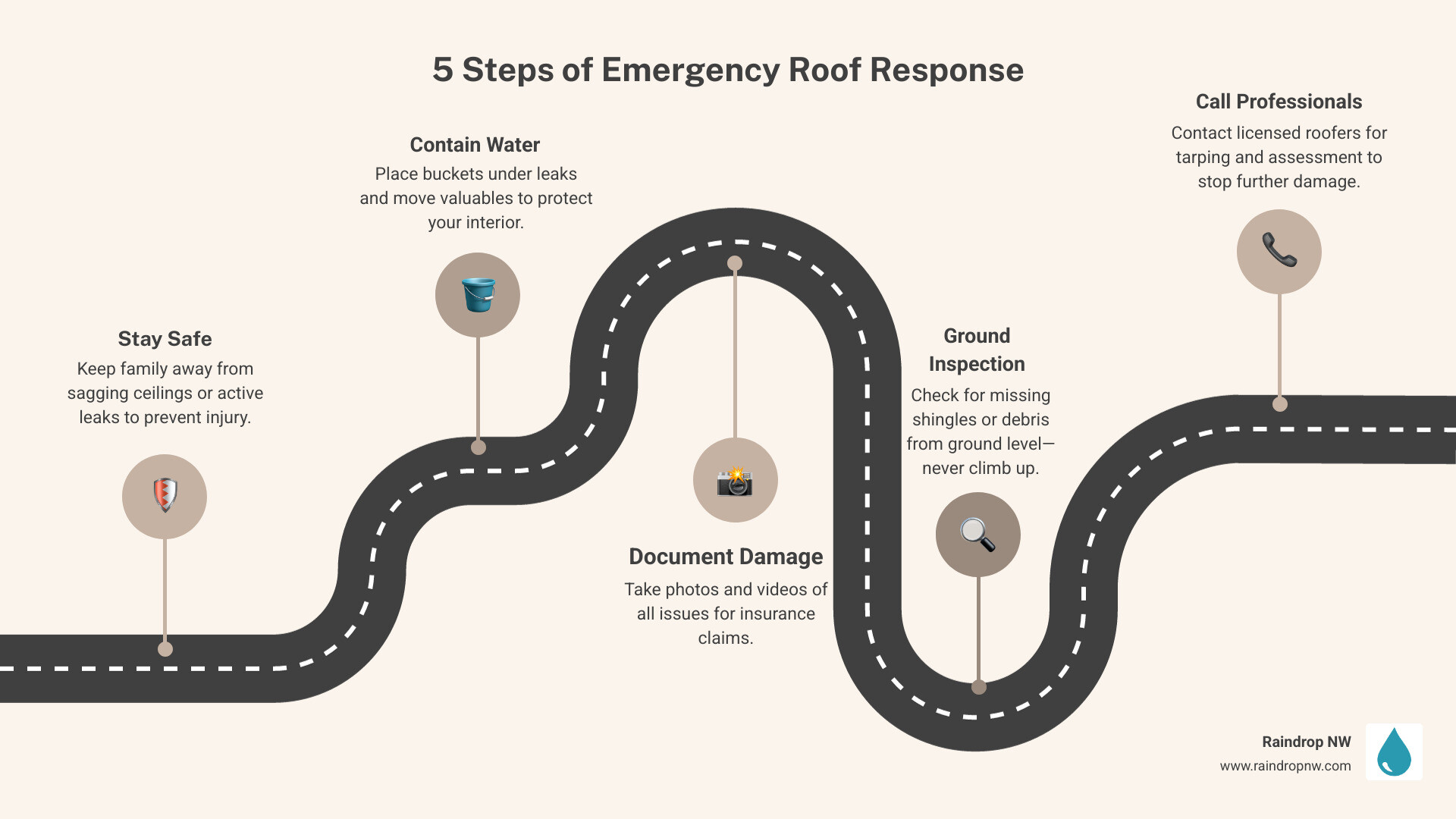
Here’s what to do right now if your roof is in trouble:

  1. Stay safe — keep everyone away from areas with ceiling bulges, sagging, or active dripping
  2. Contain interior water water damage — place buckets and move valuables away from the affected area
  3. Document everything — take photos and video of all visible damage for your insurance claim
  4. Do a ground-level visual check — look for missing shingles, debris, or damaged flashing without climbing up
  5. Call a local, licensed emergency roofer — a CCB-licensed contractor can assess damage and apply temporary tarping to stop further water intrusion

Aloha’s wet winters and unpredictable storms mean roof damage can escalate fast. A small leak ignored overnight can soak insulation, rot structural wood, and invite mold — turning a repair into a full replacement. The sooner you act, the better your outcome.

I’m Torrey Yungeberg, owner of Raindrop Roofing NW, and I’ve spent years helping Oregon homeowners navigate exactly these kinds of urgent roofing situations — including emergency roof maintenance in Aloha, OR — with honest assessments and dependable, family-owned service. In the sections ahead, I’ll walk you through everything you need to know to protect your home right now and prevent the next emergency before it starts.

5 steps of emergency roof response infographic for Aloha OR homeowners - emergency roof maintenance in aloha, or infographic

Identifying an Emergency Roof Maintenance Situation in Aloha, OR

Not every missing shingle is an immediate catastrophe, but in the Tualatin Valley, the line between “minor repair” and “emergency” is thinner than a layer of felt paper. Identifying a true emergency is the first step in protecting your property. Generally, an emergency is any situation where the structural integrity of the roof is compromised or water is actively entering the living space.

If you see water dripping from a light fixture, a ceiling sagging under the weight of trapped moisture, or daylight peeking through your attic rafters, you are in the middle of a roofing crisis. Other clear indicators include large sections of shingles being ripped away by wind or a tree limb puncturing the roof deck. For a deeper look at what qualifies as an urgent fix, check out our emergency roof repair beaverton or guide which covers the specific criteria we use to prioritize calls.

In some cases, the damage is more subtle but no less dangerous. Damaged flashing around chimneys or skylights can allow water to seep behind siding and into wall cavities long before you see a puddle on the floor. This is why specialized attention is required; our specialty roofing/emergency roof repair beaverton or services focus on these technical failure points that often go unnoticed during a casual glance.

Common Causes of Urgent Roof Failure

In Aloha, our roofs face a unique set of environmental “bullies.” Understanding these can help you spot trouble before it’s an emergency:

  • Heavy Rainfall: We all know the Oregon “mist,” but it’s the torrential downpours that test a roof’s drainage system. If gutters are clogged, water backs up under the shingles.
  • High Winds: The Willamette Valley can see significant wind gusts that catch the edges of aging shingles, peeling them back like an orange skin.
  • Moss Accumulation: This isn’t just an aesthetic issue. Moss acts like a sponge, holding moisture against the shingles and roots can actually lift them, allowing water to bypass the primary barrier.
  • Aging Materials: Most roofs have a lifespan of 20-30 years. As they age, they lose granules and become brittle, making them far more susceptible to storm damage.
  • Pest Infestation: Local critters like squirrels or raccoons can chew through softened wood or plastic vents, creating entry points for rain.

Learning about repairing your roof after a storm and preventing future damage is essential for every homeowner in the 97003 and 97006 zip codes.

Why You Shouldn’t Delay Emergency Roof Maintenance in Aloha, OR

The “I’ll deal with it when it stops raining” mentality is the most expensive mistake an Aloha homeowner can make. Because our humidity stays high throughout the winter, a wet roof never truly dries out.

Delaying a repair leads to:

  1. Mold and Mildew: Mold can begin to grow within 24 to 48 hours of water exposure, leading to respiratory issues and expensive remediation.
  2. Electrical Hazards: Water traveling along rafters often finds its way to junction boxes or recessed lighting, creating a significant fire risk.
  3. Structural Rot: Constant moisture turns sturdy plywood and rafters into soft, “punky” wood that can no longer support the weight of the roof.
  4. Insulation Failure: Once fiberglass or cellulose insulation gets soaked, it loses its R-value (insulating power) and often has to be completely removed and replaced.

If the damage is severe enough, you might find yourself looking at an emergency roof replacement in portland or rather than a simple patch job.

Immediate Steps to Take During a Roofing Emergency

When the rain is coming down and your ceiling is leaking, panic is natural. However, a systematic approach can save you thousands of dollars in interior damage. Your first priority is safety. Never walk on a wet, steep, or damaged roof yourself. The risk of a fall or a structural collapse is too high.

Inside the house, your goal is “containment.” If you see a bulge in the ceiling, it’s often helpful to poke a small hole in the center with a screwdriver to let the water drain into a bucket. This prevents the weight of the water from bringing down the entire sheetrock ceiling. Move furniture, electronics, and heirlooms to a dry room.

Next, you need to document the situation. Before the repair crew arrives, take clear photos of the leak, any fallen debris, and the interior damage. This documentation is gold when dealing with insurance adjusters. For more detailed instructions on managing these moments, our roof repair in beaverton or guide provides a comprehensive checklist.

Once you’ve stabilized the interior, call for professional help. We provide residential roofing/services/repairs and maintenance that include emergency tarping. A heavy-duty, professionally secured tarp can protect your home for days or even weeks while a permanent repair is scheduled and insurance claims are processed.

Assessing Storm Damage Safely

We always tell our neighbors in Aloha: Keep your feet on the ground. You can perform a very effective damage assessment using a pair of binoculars from the sidewalk or backyard.

Look for:

  • Shingle “Shadows”: Dark patches where shingles used to be.
  • Granule Piles: Large amounts of sand-like granules at the base of your downspouts.
  • Lifted Flashing: Metal strips around the chimney that look bent or loose.
  • Debris: Tree branches or even neighbors’ shingles that have landed on your roof.

By avoiding ladders during a storm, you prevent personal injury while still gathering the information needed for our residential roofing/roof repair beaverton or team to give you an accurate assessment.

How Aloha’s Climate Contributes to Urgent Roof Issues

Aloha sits in a geographic “sweet spot” for roof wear and tear. We experience rainy, temperate winters followed by scorching summers. This cycle causes roofing materials to expand and contract constantly. Over time, this “thermal shock” loosens nails and cracks sealants.

Our high humidity also means that moss and algae thrive here. Unlike drier climates, a roof in Aloha can stay damp for weeks at a time during the winter months. This constant moisture softens the asphalt in shingles and can lead to rot in the roof deck. We often see this damage extending to other exterior surfaces, such as balconies patios and flat decks damaged in aloha or, where standing water becomes a major structural threat.

Being a local company, we understand the specific micro-climates of the locations/aloha or area. From the wind-prone hills near Cooper Mountain to the older, tree-heavy neighborhoods near Tualatin Hills Nature Park, we know exactly what challenges your roof is up against.

Essential Questions for Emergency Roof Maintenance in Aloha, OR

When you’re calling for help, ask these critical questions to make sure you’re working with a qualified professional:

  1. Are you CCB Licensed, Bonded, and Insured? In Oregon, this is non-negotiable for your protection.
  2. How quickly can you get a crew here for a temporary seal? In an emergency, hours matter.
  3. Do you provide a written warranty for the repair work? Even emergency work should be backed by a guarantee.
  4. Do you have experience with commercial properties? If you own a business, you’ll need someone familiar with the aloha or commercial roof replacement guide standards.
  5. What is your cleanup protocol? You don’t want to find roofing nails in your driveway for the next six months.

Preventing Future Emergencies Through Routine Care

The best way to handle emergency roof maintenance in aloha, or is to prevent the emergency from ever happening. We recommend a “proactive” rather than “reactive” approach. A typical roof inspection takes only about 15-20 minutes, but it can identify a cracked pipe boot or a loose shingle that would have caused a major leak in the next storm.

Regular maintenance should include clearing debris from “valleys” (where two roof planes meet), cleaning gutters to prevent water backup, and treating for moss. If you have an older home, checking the attic ventilation is also key; poor airflow can cause heat to build up, “cooking” your shingles from the inside out and making them brittle.

For business owners, we provide ultimate commercial estimates inspections aloha to ensure your inventory and operations stay dry. We also handle peripheral structures, so if you’re wondering my patio was damaged who can i call to fix balconies patios and flat decks in aloha or, the answer is a comprehensive roofing and exterior specialist.

Comparison: Reactive vs. Proactive Maintenance

Feature Reactive Repair (Emergency) Proactive Maintenance (Scheduled)
Timing During a storm / After a leak On a clear day / Twice a year
Stress Level Extremely High Very Low
Collateral Damage Ceiling, drywall, floors, mold None
Documentation Urgent / Insurance focused Detailed health reports / Photos
Lifespan Shortens roof life due to rot Extends roof life by years

Frequently Asked Questions about Aloha Roofing

How long does a typical roof inspection take?

A professional inspection usually takes between 15 and 20 minutes for a standard residential home. During this time, we look at the shingle condition, flashing, gutters, and chimney seals. If there is an active leak, we may also need access to your attic to trace the water path, which can add a few minutes to the process.

Can commercial properties access emergency services?

Absolutely. Commercial roofs, especially flat TPO or EPDM systems, often face different emergency issues like ponding water or membrane punctures. We understand that a leak in a retail space or warehouse can disrupt operations, so rapid response is important to help protect the building and limit further damage.

What should I look for in an emergency roofer?

Look for a roofing company with a CCB license, strong local reviews, and a clear presence in the community. It’s also important to confirm they are insured, experienced with emergency repairs, and able to communicate clearly about the condition of your roof and the next steps.

Conclusion

When it comes to emergency roof maintenance in aloha, or, time is your biggest enemy. Whether you are dealing with a sudden tree fall or a persistent drip that finally broke through the ceiling, taking immediate action is the only way to safeguard your home. At Raindrop NW, we pride ourselves on being a truly local, independently owned company. We don’t answer to out-of-state investors; we answer to you, our neighbors in Aloha, Beaverton, and the surrounding areas.

We believe in long-term accountability and providing service that lasts well beyond the next rainstorm. If you’re facing a roofing crisis or just want to make sure your home is ready for the next Oregon winter, don’t wait for the water to start falling inside. Contact our Aloha roofing experts for immediate assistance and let us provide the peace of mind you deserve.

https://www.raindropnw.com/wp-content/uploads/2026/04/45665ce3599d5538a5034deac5a943e906c5bd5f.jpg 1024 1536 SEO Stats https://www.raindropnw.com/wp-content/uploads/2024/05/logo-raindrop-space-300x92.png SEO Stats2026-04-15 01:40:212026-04-15 01:40:21What to Do When You Need Emergency Roof Maintenance in Aloha

Emergency Roof Maintenance in Newberg for Stormy Situations

Roof Maintenance

When Your Roof Can’t Wait: Emergency Roof Maintenance in Newberg, OR

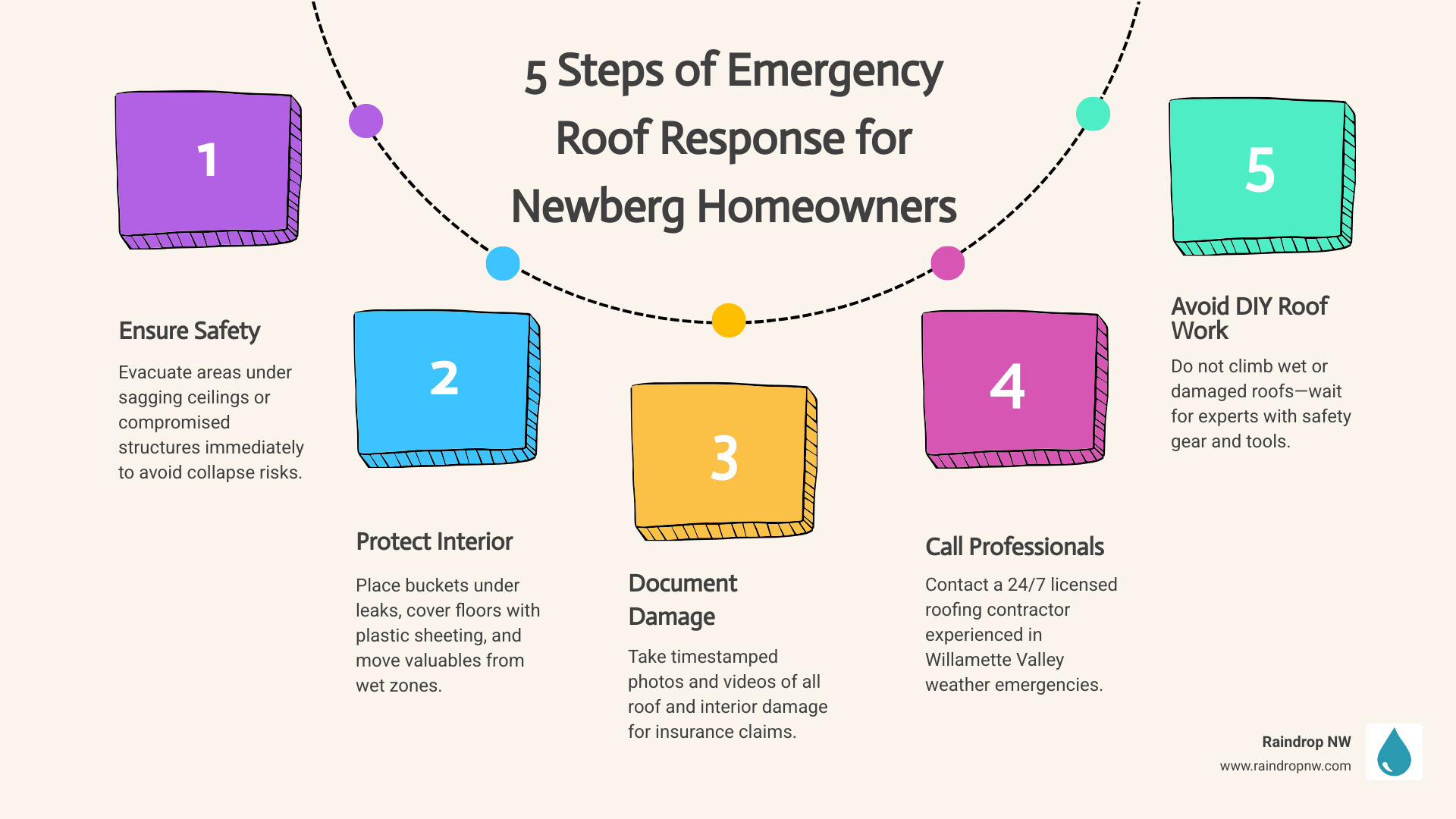
Emergency roof maintenance in Newberg, OR means acting fast when storms, fallen trees, or sudden leaks put your home at risk. Here’s what to do right now:

  1. Get everyone to safety – Move away from sagging ceilings or structurally compromised areas immediately.
  2. Protect the interior – Place buckets under active drips and move valuables away from wet areas.
  3. Document everything – Take clear photos of all visible damage before any cleanup.
  4. Call a licensed local roofer – Contact a 24/7 emergency roofing contractor serving Newberg as soon as possible.
  5. Do not climb the roof yourself – Wet or damaged roofs are extremely dangerous without proper equipment.

Newberg sits in the Willamette Valley, where heavy rainfall, strong winds, and occasional ice events are a normal part of life. That combination puts real, year-round stress on residential roofs. When something goes wrong – a shingle tears off in a windstorm, a tree limb punches through the decking, or a slow leak suddenly turns into a waterfall – waiting even a few hours can turn a manageable repair into a much bigger structural problem. Water doesn’t wait, and neither should you.

I’m Torrey Yungeberg, owner of Raindrop Roofing NW, and with years of hands-on experience handling emergency roof maintenance in Newberg, OR and across the Pacific Northwest, I’ve seen how quickly a small breach can spiral into costly damage when left unaddressed. Read on for a full breakdown of exactly what to do, what to expect, and how to protect your home when a roofing emergency strikes.

5 steps of emergency roof response infographic for Newberg OR homeowners - emergency roof maintenance in newberg, or

Identifying a Roofing Emergency in Newberg, OR

Not every missing shingle is a “drop everything” emergency, but in the rainy climate of the Willamette Valley, the line between a minor repair and a crisis is thin. A roofing emergency is generally defined as any situation where the structural integrity of your home is compromised or where water is actively entering the living space.

In Newberg, we frequently see emergencies caused by fallen trees or heavy limbs. With our lush canopy of Douglas firs and oaks, a high-wind event can easily send debris crashing onto a roof. This doesn’t just damage shingles; it can crack rafters and create massive holes that let in gallons of rainwater. Other critical situations include wind-lifted shingles—where entire sections of your roof are peeled back like a sardine can—and severe, localized leaks that threaten electrical systems or ceilings.

Safety is the absolute priority. If you see a sagging ceiling or hear creaking after a structural impact, evacuate that area of the home. For a deeper look at how to handle these high-stress moments, our Emergency Roof Repair Beaverton OR Guide offers universal principles that apply perfectly to Newberg residents facing sudden damage.

Common Signs of Urgent Damage

Sometimes the signs of an emergency are subtle before they become catastrophic. Keep an eye out for these “red alert” symptoms:

  • Sudden Water Stains: Large, dark spots appearing on your ceiling or walls during a rainstorm indicate an active breach.
  • Sagging Ceilings: This is a sign that water is pooling on top of your drywall. This is a collapse hazard and requires immediate drainage.
  • Missing Flashing: If the metal strips around your chimney or vents have been torn away, your roof is wide open to leaks.
  • Daylight in the Attic: If you can see the sky from inside your attic, water can definitely see your insulation.

When these issues arise, specialized knowledge is required to navigate the different materials involved, whether you have a standard shingle roof or Specialty Roofing.

When to Call for Emergency Roof Maintenance in Newberg, OR

You should call for emergency roof maintenance in Newberg, OR the moment you realize the damage cannot wait for a clear, sunny day. If there is an active leak that buckets can’t keep up with, or if your roof decking is exposed to the elements, you need a 24/7 response.

Post-storm assessments are also critical. Even if you don’t see water dripping in your kitchen, a quick look from the ground might reveal significant shingle loss. We provide rapid response through our Specialty Roofing / Emergency Roof Repair Beaverton OR services to ensure Newberg homeowners aren’t left exposed. Our team is available around the clock because we know that Oregon weather doesn’t stick to a 9-to-5 schedule.

Immediate Steps for Homeowners During a Roof Crisis

While you wait for the professionals to arrive, there are several things you can do to minimize the damage to your property. First, prioritize interior protection. Move furniture, electronics, and heirlooms out of the affected room. If a ceiling is bulging with water, you can carefully poke a small hole in the center of the bulge with a screwdriver to drain the water into a bucket; this prevents the entire ceiling from collapsing under the weight of the trapped water.

Documentation is your best friend when it comes to insurance. Take photos of the damage from multiple angles, but do so from the ground or from inside. Never attempt to climb onto a roof during a storm or after a structural impact. The surface will be slick, and the structure may be unstable. For a full list of how we handle these situations, check out our Residential Roofing / Services page.

Homeowner Emergency Kit Checklist

  • Heavy-duty buckets: To catch active leaks.
  • Plastic sheeting or tarps: To cover furniture inside.
  • Flashlight with extra batteries: For inspecting dark attics safely.
  • Contact info for your roofer and insurance agent: Keep these on the fridge.
  • Duct tape: For securing plastic sheeting over interior items.

Temporary Mitigation Strategies

If it is safe to do so, you can perform minor mitigation from the ground. Clearing debris from downspouts can help water flow off the roof rather than backing up under the shingles. However, most mitigation—like tarp installation—should be left to pros. Tarping a roof in the wind and rain is incredibly dangerous. A professional crew has the harnesses and specialized “roof boots” necessary to secure a tarp without becoming a casualty of the storm themselves.

Essential Emergency Services and Repairs

When we arrive for an emergency call in Newberg, our goal is “stabilization first.” This usually involves:

  1. Leak Detection: Using moisture tracing to find where the water is actually entering (it’s rarely directly above the drip).
  2. Emergency Tarping: Securing a heavy-duty, UV-resistant tarp over the damaged area to stop water entry immediately.
  3. Shingle and Flashing Repair: Replacing missing components if the weather allows for a quick permanent fix.
  4. Gutter Stabilization: Ensuring heavy, water-logged gutters don’t pull away from the fascia and cause further damage.

Our Storm Damage Repair Beaverton OR expertise ensures that these temporary fixes are done correctly so they don’t blow off in the next gust of wind.

Navigating Newberg’s Unique Weather Risks

Newberg homeowners face a specific set of environmental challenges. We don’t just deal with rain; we deal with “atmospheric rivers” that can dump inches of water in a matter of hours. This volume of water tests every seam and seal on your roof. High winds in the valley can also cause “shingle uplift,” where the seal between shingles is broken, allowing water to be blown upward underneath the roofing material.

Then there are ice dams. While rare, when Newberg gets a silver thaw or a sudden freeze, ice can build up at the eaves, preventing melting snow from draining. This water then backs up under the shingles and into your walls. Moss growth is another “slow-motion emergency.” Moss acts like a sponge, holding moisture against the shingles and roots into the granules, eventually causing premature failure that leads to emergency leaks.

To help you understand the path forward, here is a comparison of how we handle different repair needs:

Fix Type Purpose Duration When to Use
Emergency Tarping Stop active water entry Temporary (weeks) During active storms or until materials arrive
Sealant/Mastic Plug small holes/flashing gaps Short-term Minor leaks or as a stop-gap
Shingle Replacement Restore shedding capability Permanent After storm passes and roof is dry
Flashing Re-installation Protect roof penetrations Permanent When metal is warped or missing

For ongoing protection against these local risks, our Roof Maintenance Beaverton OR services are designed to catch these issues before the clouds turn grey.

Winter and Bad Weather Repair Protocols

Can you repair a roof in the middle of a Newberg winter? Yes, but it requires a different approach. Modern asphalt shingles are designed to be flexible, but in near-freezing temperatures, they can become brittle. We use specialized cold-weather techniques, such as hand-sealing shingles with roofing cement because the standard sun-activated adhesive strips won’t bond in the cold.

Safety protocols are also ramped up. We use extra fall protection and monitor weather windows closely to ensure we aren’t opening up a roof right as a squall hits. Maintaining your roof during these months is part of our Residential Roof Maintenance Beaverton OR commitment to local homeowners.

Preventing Future Emergencies with Routine Care

The best way to handle emergency roof maintenance in Newberg, OR is to prevent the emergency from happening in the first place. Most “sudden” leaks are actually the result of long-term neglect. A small crack in a pipe boot or a bit of moss lifting a shingle might not leak in a light drizzle, but it will fail during a major storm.

We recommend annual inspections to clear debris from valleys and check the integrity of all penetrations. For more DIY-friendly advice, see our Roofing Maintenance Tips Every Homeowner Should Know or download The Ultimate Roof Maintenance Checklist for Homeowners.

What to Expect During an Emergency Inspection

When a Raindrop NW technician arrives at your Newberg home, they won’t just glance at the roof. We perform a comprehensive assessment to ensure we aren’t just treating a symptom.

We use moisture tracing and sometimes thermal scanning to see where water has traveled behind the walls. This helps us determine if there’s a risk of mold or structural rot that needs to be addressed alongside the roof repair. We provide a detailed damage assessment that you can provide to your insurance company. Our Roof Inspections and Certifications process is thorough, and for those worried about their roof’s health after a big storm, we offer a Free Roof Inspection Beaverton OR to give you peace of mind.

The Repair Process and Timelines

The timeline for an emergency repair usually follows two phases:

  1. Phase One: Stabilization (1-4 hours): We secure the site, stop the leak with tarps or temporary sealants, and ensure the home is safe.
  2. Phase Two: Permanent Repair (1-3 days): Once the weather clears and materials are staged, we perform the final fix.

During this process, we adhere strictly to Newberg building codes. For minor repairs, permits are often not required, but for larger structural fixes or full replacements, we handle all the paperwork and inspections required by the city. You can learn more about what we look for during our Roof Inspection Beaverton OR visits.

Frequently Asked Questions about Emergency Roof Maintenance

Can repairs be done during active rain or snow?

While we can’t perform a full roof replacement or complex shingle work in a downpour, we absolutely can perform emergency tarping and sealing. We use “wet-patch” sealants that are designed to bond even under standing water. Our goal is to stop the damage immediately and return for the permanent fix when it’s dry. For a broader look at seasonal care, see The Ultimate Guide to Roof Care in Portland Oregon.

Does insurance cover emergency roof maintenance in Newberg, OR?

In most cases, yes—provided the damage was caused by a “sudden and accidental” event like a storm or a fallen tree. Insurance companies actually require you to take “reasonable steps” to prevent further damage, which includes hiring a professional for emergency tarping. We assist with the claims process by providing photo evidence and detailed documentation of the storm damage to help your adjuster understand the scope of the work.

How long do emergency repairs typically take to complete?

Stabilization is almost always a same-day service. We aim to have a crew on-site within hours of your call to secure the roof. The permanent restoration timeline depends on material availability and weather windows, but most residential repairs are completed within 24 to 48 hours after the storm subsides.

Reliable Local Care for Newberg Homeowners

When your roof is failing, you don’t want a “storm chaser” or an out-of-state corporation that sees you as just another number. You want a neighbor. At Raindrop NW, we are a truly local, independently owned company. We live and work in the same communities we serve, from Newberg to the rest of the areas we serve.

Our commitment is to long-term accountability. We don’t just want to fix your leak today; we want to ensure your home is protected for the next twenty years. If you’re facing a roofing crisis or just want to make sure your home is ready for the next Oregon winter, give us a call. We’re here to help you weather the storm.

https://www.raindropnw.com/wp-content/uploads/2026/04/pexels-photo-4170441.jpeg 528 940 SEO Stats https://www.raindropnw.com/wp-content/uploads/2024/05/logo-raindrop-space-300x92.png SEO Stats2026-04-15 01:38:292026-04-15 01:38:29Emergency Roof Maintenance in Newberg for Stormy Situations

Tigard Emergency Roof Maintenance Fast Fixes for Sudden Leaks

Roof Maintenance

What to Do When Your Roof Fails in Tigard, OR

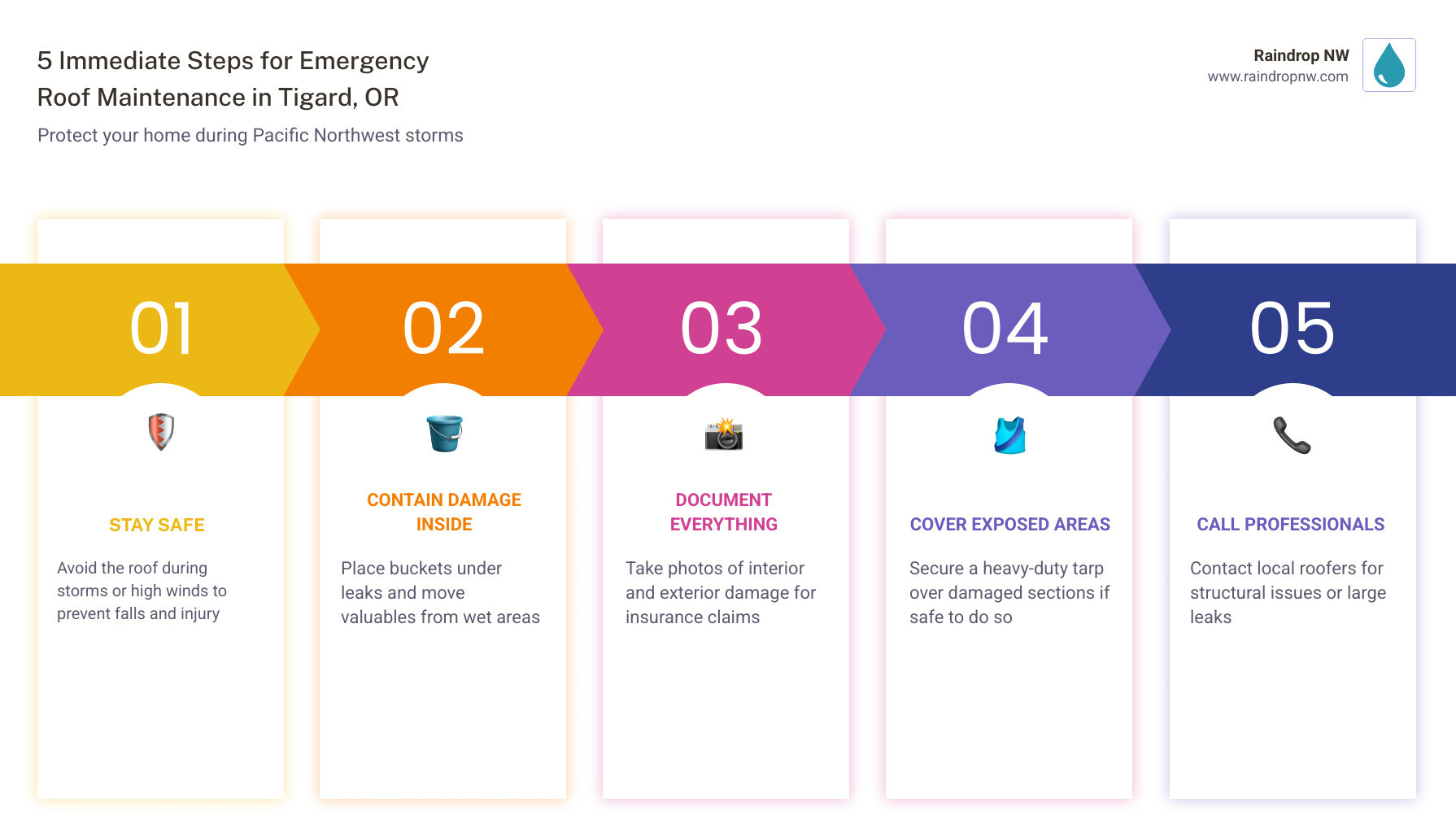
Emergency roof maintenance in tigard, or is something no homeowner wants to face — but Tigard’s Pacific Northwest weather makes it more common than you’d think. Here’s what to do right now if your roof is failing:

  1. Stay safe — stay off the roof during active storms or high winds
  2. Contain the damage inside — place buckets under leaks and move valuables away from wet areas
  3. Document everything — take photos of visible damage inside and out for your insurance claim
  4. Cover exposed areas if safe to do so — a heavy-duty tarp can slow water intrusion until a pro arrives
  5. Call a local roofing professional — especially for structural damage, large leaks, or fallen debris

Tigard’s heavy winter rains, gusty winds, and freeze-thaw cycles put real stress on roofs year-round. A small leak or a few missing shingles can escalate into a much bigger problem within hours when a storm is actively moving through. Acting fast — and knowing what to do — makes all the difference.

I’m Torrey Yungeberg, owner of Raindrop Roofing NW and a lifelong Oregon trades professional with deep roots in the Pacific Northwest roofing industry — including hands-on experience with emergency roof maintenance in Tigard, OR and the specific weather conditions that cause it. Read on for a step-by-step guide to protecting your home when it matters most.

Infographic showing 5 immediate steps for emergency roof maintenance in Tigard OR during a storm - emergency roof

Identifying an Emergency Roof Maintenance Situation in Tigard, OR

Not every drip from a ceiling requires a midnight call to a roofing crew, but in the 97223 area, certain situations demand immediate intervention. An emergency is generally defined as any event that compromises the structural integrity of your home or poses an immediate threat to the safety of its inhabitants.

In Tigard, we frequently see emergencies triggered by severe Pacific Northwest storms. These weather events bring heavy downpours that can overwhelm aging drainage systems or exploit tiny cracks in your flashing. When a tree limb falls or high winds peel back several rows of shingles, your home’s “envelope” is broken. This allows water to pour into the attic, saturating insulation and eventually causing ceilings to collapse.

If you are dealing with storm damage repair, time is your biggest enemy. Water doesn’t just sit; it travels along rafters and down wall studs, potentially damaging electrical systems and sparking mold growth within 24 to 48 hours. Identifying the crisis early is the first step toward a successful “fast fix.”

Common Signs of Urgent Roof Damage

Recognizing the early warning signs of a roofing crisis can save you thousands of dollars in interior repairs. Keep an eye out for these red flags:

  • Active Water Intrusion: If you see water dripping from a light fixture or a dark, spreading stain on your ceiling, you have an active leak that needs immediate attention.
  • Daylight Through Rafters: If you go into your attic during the day and see “stars” (points of light) coming through the roof deck, your shingles or underlayment are compromised.
  • Sagging Roofline: A visible dip in the ridge or the slope of your roof suggests structural failure, often caused by long-term water damage or excessive weight from snow or fallen debris.
  • Granule Loss: Finding a “sandcastle” of asphalt granules at the base of your downspouts after a storm indicates that your shingles have lost their protective layer and are prone to cracking.

How PNW Weather Triggers Emergency Roof Maintenance in Tigard, OR

Tigard’s climate is unique, and our roofs bear the brunt of it. The constant moisture of the Pacific Northwest creates a breeding ground for moss. While it might look charmingly “Oregon,” moss holds moisture against shingles, causing them to rot and lift. Once lifted, high winds can easily catch the edge of the shingle and rip it away.

Ice dams are another culprit. During our occasional deep freezes, snow melts on the upper parts of the roof and refreezes at the cold eaves. This creates a dam that forces liquid water back up under the shingles. Understanding why annual roof maintenance is cost-effective is crucial here; a well-maintained roof with clear gutters and zinc treatments is far less likely to succumb to these weather-related emergencies.

Immediate DIY Steps for Temporary Roof Fixes

If you discover a leak in the middle of a storm, your goal isn’t a permanent repair—it’s damage control. First, manage the water inside. Use a screwdriver to poke a small hole in the center of a sagging ceiling “bubble” to drain the water into a bucket; this prevents the entire ceiling from collapsing under the weight.

For the exterior, tarping is the gold standard for temporary fixes. If the rain has paused and it is safe to climb up, a heavy-duty woven plastic tarp can bridge the gap until a professional arrives. Ensure the tarp extends over the ridge of the roof so water cannot run underneath the top edge. Use wooden “furring strips” to nail the edges of the tarp down, rather than nailing through the tarp alone, which can tear in high winds.

While you’re up there, check for clogged valleys. Sometimes an “emergency” leak is simply caused by a pile of pine needles and leaves backing up water. Clearing this debris can often stop a leak instantly. For more tips on keeping your roof in top shape, check out the ultimate roof maintenance checklist for homeowners.

Essential Safety Precautions for Homeowners

We cannot stress this enough: your safety is worth more than your roof. Every year, homeowners in the Tigard and Beaverton area are injured in falls. If you must attempt a temporary fix, follow these rules:

  1. Never go on a roof during a storm: Wind and wet shingles are a lethal combination. Wait for the weather to clear.
  2. Use the right gear: Wear non-slip, rubber-soled shoes and a safety harness if you have one.
  3. Ladder safety: Ensure your ladder extends at least three feet above the roof edge and is set on firm, level ground. Always maintain three points of contact.
  4. Watch for power lines: In Tigard’s older neighborhoods with mature trees, power lines often run close to roofs. A metal ladder touching a line is a fatal mistake.
  5. Work with a partner: Never climb onto a roof alone. Have someone on the ground to steady the ladder and call for help if needed.

When to Call a Professional for Urgent Repairs

While DIY tarping is a great stopgap, it is not a solution. You should call for professional emergency roof maintenance in tigard, or if you encounter structural damage, such as a roof deck that feels “spongy” or visible cracks in the rafters. Steep pitches or multi-story homes also require professional equipment and training to navigate safely.

If you have persistent leaks that you can’t locate, or if large sections of shingles are missing, it’s time to consult an emergency roof repair guide and get an expert on-site. Professionals have thermal imaging cameras and moisture meters that can find hidden water paths that the naked eye misses.

Professional Solutions for Emergency Roof Maintenance in Tigard, OR

When we arrive for an emergency call, our first priority is stabilization. We provide rapid response tarping and “shrink-wrap” services that are far more durable than DIY methods. Our team uses specialized residential roof maintenance services to identify the root cause of the failure.

For those dealing with roof leak repair, we offer comprehensive solutions including:

  • Leak Detection: Finding the “entry point” which is often far from where the drip appears inside.
  • Debris Removal: Safely clearing fallen trees or heavy branches that could cause further collapse.
  • Structural Bracing: If a tree has impacted the home, we can provide temporary bracing to keep the structure safe.
  • Insurance Documentation: We provide the detailed reports and photos your adjuster will need to process your claim.

Preventing Future Roofing Emergencies in Tigard

The best emergency is the one that never happens. In Tigard, “winterizing” your roof should be an annual tradition. This includes cleaning gutters to prevent backups and applying zinc treatments to stop moss in its tracks.

Trimming overhanging tree limbs is perhaps the most effective way to prevent storm damage. A heavy Douglas fir limb over your bedroom is a liability during an Oregon windstorm. Keeping these branches at least 10 feet away from your roofline significantly reduces the risk of impact damage. You can find more annual roof maintenance benefits by staying proactive with your home’s exterior.

Proactive Maintenance Strategies

A proactive approach involves more than just a quick glance from the driveway. We recommend a “ground-up” inspection after every major wind event. Look for shingles in the yard or “tabs” that look slightly out of alignment. Check your flashing — the metal bits around chimneys and vents — as these are the most common failure points in Pacific Northwest homes.

For a deeper dive into long-term protection, read the ultimate guide to residential roofing in Tigard, OR. Regular professional inspections every 2-3 years can identify “soft spots” or aging sealant before they turn into a 2:00 AM emergency.

Frequently Asked Questions about Emergency Roof Maintenance in Tigard, OR

What should I do first if my roof starts leaking during a storm?

Prioritize safety. Move furniture and electronics away from the leak and use buckets to catch the water. If the leak is causing the ceiling to bulge, carefully poke a small hole to release the pressure and prevent a large-scale collapse. Do not attempt to go on the roof until the wind and rain have subsided.

How can I tell if a fallen branch caused structural damage?

Look for cracks in the ceiling drywall, doors that suddenly won’t close or stick in their frames, or a visible “sag” in the roofline from the outside. If you hear creaking or popping sounds coming from the attic, the structural integrity may be compromised, and you should evacuate that area of the house immediately.

Does homeowners insurance cover emergency roof repairs?

In most cases, yes—if the damage was caused by a “sudden and accidental” event like a windstorm or a fallen tree. However, insurance typically does not cover leaks caused by lack of maintenance (like moss rot or old age). This is why documenting the storm damage with photos is essential for your claim.

Conclusion

When the clouds gather over Bull Mountain or the Tigard Triangle, you shouldn’t have to worry if your roof will hold. At Raindrop NW, we believe in the power of local expertise. We aren’t a massive corporation run by out-of-state investors; we are your neighbors, committed to long-term accountability and the highest standards of craftsmanship.

Whether you need a fast fix for a sudden leak or a comprehensive plan to avoid future crises, we are here to help. Our deep understanding of the local climate and building codes ensures that your repairs aren’t just fast—they’re right. Protect your Tigard home with expert maintenance and give yourself the peace of mind you deserve.

https://www.raindropnw.com/wp-content/uploads/2026/04/pexels-photo-6904530.webp 627 940 SEO Stats https://www.raindropnw.com/wp-content/uploads/2024/05/logo-raindrop-space-300x92.png SEO Stats2026-04-15 01:36:492026-04-15 01:36:49Tigard Emergency Roof Maintenance Fast Fixes for Sudden Leaks

What Happens to Seeds and Debris Left in Your Gutters? Why Cleaning Gutters Is Important

Gutter Cleaning, Roof Maintenance, Roofing

As homeowners, we often think of gutters as just another part of the roofing system, occasionally remembering to check if they’re clear. Yet gutters play a critical role in protecting our homes from water damage. When seeds and debris accumulate in your gutters and aren’t promptly removed, they can create a host of problems, some of which may compromise the structural integrity of your home. Understanding what happens to seeds and debris left in your gutters, and why cleaning them is crucial can save you significant time, money, and stress in the long run.

The Consequence of Neglected Gutters

When gutters are neglected, debris such as leaves, twigs, and seeds builds up over time. This accumulation can form blockages, causing water to overflow. The overflowing water doesn’t simply disappear; it can seep through your roof, siding, and foundation, resulting in potential damage to each area. Additionally, the added weight of waterlogged debris can cause gutters to pull away from your home, leading to further damage and costly repairs.

Seeds Lead to Unwanted Growth

Seeds that land in gutters can germinate, resulting in plant growth within the gutter system itself. While this might seem harmless at first, plants can root deeply, dislodge gutter segments, and retain additional moisture. This increased moisture not only heightens the risk of water damage but can also accelerate wear and tear on your gutters, shortening their lifespan and necessitating earlier replacement.

Attracting Unwanted Pests

Debris-filled gutters can become a breeding ground for pests. Mosquitoes thrive in stagnant water, while rodents and birds may be drawn to gutters for shelter or nesting materials. These pests can pose health risks and may eventually find their way into your home, creating additional problems for homeowners.

The Importance of Regular Gutter Cleaning

Cleaning your gutters regularly at least twice a year, typically in late spring and early fall can prevent these issues. Regular maintenance ensures that water flows freely away from your home, protecting your roof, walls, foundation, and landscape from potential water damage. Clean gutters are also less likely to attract pests and will not support unwanted plant growth. This simple maintenance task plays a significant role in extending the lifespan of your gutters and safeguarding your home’s structural integrity.

Protect Your Home with Raindrop Roofing NW

Ensuring your gutters are free from seeds and debris is essential for the health of your home. At Raindrop Roofing NW, we understand the unique challenges faced by Beaverton, OR homeowners. Our professional gutter cleaning and maintenance services are designed to protect your home from the rainy Pacific Northwest weather, ensuring water flows efficiently away from your property without causing damage.

Schedule Your Gutter Cleaning Today

Don’t let neglected gutters put your home at risk. Contact Raindrop Roofing NW for expert gutter cleaning and maintenance. Our team is ready to ensure your gutters are in top condition, protecting your home year-round. Call us at 503-526-3887 or fill out our online form to schedule your service today.

https://www.raindropnw.com/wp-content/uploads/2025/10/gallery_raindrop-1-2_2_1757698839.jpg 342 512 Torrey Yungeberg https://www.raindropnw.com/wp-content/uploads/2024/05/logo-raindrop-space-300x92.png Torrey Yungeberg2025-10-03 13:00:012025-10-04 13:01:45What Happens to Seeds and Debris Left in Your Gutters? Why Cleaning Gutters Is Important

Moss Can Harm the Shingles on a Roof

Roof Maintenance, Roofing, Roofing Services

Moss is more than just an aesthetic concern for homeowners. It poses a serious threat to the health and longevity of a roof. In areas where damp, shaded conditions are common, moss can easily take hold, especially on roofing surfaces that don’t receive much sunlight. Understanding how moss impacts your roof is key to preventing long-term damage and costly repairs.

The Detrimental Effects of Moss on Roofing

Moss can significantly shorten the lifespan of your roof. It thrives in moist environments and gradually forms a thick mat that traps moisture against the surface of your shingles or tiles. This prolonged exposure to moisture can:

  1. Rot wooden materials – including shingles and underlayment.

  2. Corrode metal roofing, weakening its protective layers.

  3. Dislodge tiles or shingles by undermining the adhesive or fasteners, making the roof more vulnerable to wind and rain.

Moisture Damage and Rot

The sponge-like texture of moss allows it to retain a large amount of water. Over time, this trapped moisture can seep into wood-based roofing components and cause them to rot. As the structure weakens, the roof may sag or become unstable, requiring extensive repairs or a complete replacement.

Uplift and Physical Damage

Moss spreads by anchoring itself into small gaps between shingles or tiles with root-like structures called rhizoids. As it grows, these rhizoids can lift the roofing material, creating entry points for water and increasing the risk of leaks. The weight of wet moss also adds stress to the roof, particularly in older or already compromised structures.

How Moss Finds Its Way Onto Your Roof

Moss spores are carried by wind, rain, or animals. Once they land on your roof, they only need three conditions to grow: shade, moisture, and a nutrient-rich surface. Roofs that face north or are shaded by nearby trees are especially vulnerable. Once established, moss can spread quickly if not addressed.

Preventative Measures to Take

Prevention is the best defense against moss-related roof damage. Consider the following steps:

  1. Trim overhanging tree branches to increase sunlight exposure and reduce moisture retention.

  2. Clean gutters regularly to ensure proper drainage and prevent water from pooling on your roof.

  3. Keep the roof clear of debris, such as leaves and twigs, that can retain moisture and foster moss growth.

Regular Maintenance and Cleaning

Routine roof inspections and cleaning are essential, even for roofs made of metal or tile. These materials are not immune to moss. Look for early signs of growth and address them immediately. A professional roof cleaning can remove moss without damaging the shingles or tiles, ensuring your roof stays strong and functional for years to come.

When to Seek Professional Help

If moss is already present, it’s important to act quickly. DIY removal can sometimes cause more harm than good, especially if abrasive tools or harsh chemicals are used. A qualified roofing contractor can safely remove moss using approved methods that preserve your roof’s integrity.

Protect Your Roof Against Moss with Raindrop Roofing NW

Don’t let moss take a toll on your roof. Based in Beaverton, OR, Raindrop Roofing NW offers expert roofing services designed to eliminate moss and prevent future growth. Whether you need a professional cleaning, preventative treatment, or a full roof inspection, our skilled team is here to help.

Call Raindrop Roofing NW today at (503) 526-3887 or fill out our online form to schedule your roof inspection. Let us help you protect your home and extend the life of your roof with reliable, professional care.

https://www.raindropnw.com/wp-content/uploads/2025/09/gallery_moss-on-roof_3_1754429001-scaled.jpg 1673 2560 Ryan Bowen https://www.raindropnw.com/wp-content/uploads/2024/05/logo-raindrop-space-300x92.png Ryan Bowen2025-09-23 08:45:232025-09-29 15:22:24Moss Can Harm the Shingles on a Roof

How Intense UV Rays Can Wreak Havoc on a Roof

Roof Maintenance, Roof Replacement

The strength and longevity of your roof, a critical component of your home’s protection, are significantly affected by its exposure to the sun’s ultraviolet (UV) rays. In areas with abundant sunshine throughout the year, understanding how intense UV radiation deteriorates roofing materials is essential. By shedding light on the science of UV damage and practical strategies for prevention, this guide helps homeowners take proactive steps to protect their investment.

The Science Behind UV Damage to Roofs

UV-related roof damage begins with a process called photodegradation. This chemical reaction breaks down the molecular bonds in roofing materials when exposed to ultraviolet radiation. Over time, photodegradation leads to visible and structural issues such as fading, cracking, and brittleness. These changes compromise the roof’s integrity and can eventually result in failure if left unaddressed.

The Vulnerability of Different Roofing Materials to UV Rays

  1. Asphalt Shingles: A Common Target
    Asphalt shingles are popular for their affordability and accessibility. However, they are particularly susceptible to UV damage. Prolonged exposure can cause granule loss, surface cracking, and reduced effectiveness in protecting your home from the elements.

  2. Metal Roofing: Not Immune Either
    While known for durability, metal roofs can also suffer from UV exposure. Issues like fading and chalking not only affect aesthetics but can also signal underlying problems, such as reduced weather resistance when maintenance is neglected.

Early Signs of UV Damage

Identifying UV damage early can help prevent minor issues from becoming major repairs. Be on the lookout for:

  • Fading or discoloration of roofing materials

  • Granules collecting in gutters (a sign of asphalt shingle deterioration)

  • Warping or blistering of coatings and membranes

Recognizing these warning signs can save you time, money, and potential damage to your home.

Mitigation Strategies to Protect Your Roof

Protecting your roof from UV damage involves several proactive steps:

  1. Routine Inspections
    Schedule regular professional inspections to detect early signs of UV damage and address them promptly.

  2. Use of UV-Resistant Materials
    Choose roofing products that are specifically designed to resist UV degradation, especially when repairing or replacing your roof.

  3. Reflective Roof Coatings
    Apply reflective coatings that deflect UV rays and reduce the surface temperature of your roof.

  4. Proper Ventilation
    Ensure your attic and roof systems are well-ventilated. This minimizes heat buildup, which can amplify the effects of UV exposure.

Investing in Roof Maintenance and Protective Measures

The key to extending your roof’s lifespan is ongoing maintenance and smart material choices. UV-resistant materials and reflective coatings not only help protect against solar damage but can also improve energy efficiency by keeping indoor temperatures lower during hot months. This makes your home more comfortable and reduces cooling costs.

Protect Your Investment with Raindrop Roofing NW

In Beaverton, OR, where intense UV exposure is a year-round reality, protecting your roof means protecting your entire home. At Raindrop Roofing NW, we specialize in durable, UV-resistant roofing solutions designed to withstand the elements and extend your roof’s lifespan. Don’t wait for damage to appear. Schedule a professional roof inspection today. Call Raindrop Roofing NW at (503) 526-3887 or fill out our online form to get started. Your roof deserves expert care that keeps it strong, efficient, and ready for every season.

https://www.raindropnw.com/wp-content/uploads/2025/09/gallery_uv-rays-on-metal-roof_1754428997.jpg 1414 2120 Ryan Bowen https://www.raindropnw.com/wp-content/uploads/2024/05/logo-raindrop-space-300x92.png Ryan Bowen2025-09-18 01:39:502025-09-29 15:23:14How Intense UV Rays Can Wreak Havoc on a Roof

Why Annual Roof Maintenance Is Very Cost-Effective

Residential Roofing, Roof Maintenance, Roofing

Maintaining a roof may seem like a chore that can be delayed amidst the many responsibilities homeowners face. However, the importance of routine roof maintenance far outweighs the minor inconvenience it may pose. From protecting the structural integrity of your home to ensuring long-term savings, the benefits of conducting annual roof checks are substantial. Below are five reasons why maintaining your roof annually is a strategic, cost-effective decision for homeowners.

1. Reduce the Risk of Costly Repairs

One of the most compelling reasons to invest in annual roof maintenance is the significant cost savings it offers by helping prevent extensive and expensive repairs. Small issues such as minor leaks or cracked shingles can escalate into major problems if left unaddressed. Early detection and timely repairs help you avoid the high costs associated with structural damage or full roof replacements.

2. Extend the Lifespan of Your Roof

Regular maintenance is key to maximizing your roof’s lifespan. While most roofing systems are designed to last several decades, their longevity depends heavily on consistent care. Annual inspections and minor repairs help manage normal wear and tear, delaying the need for a costly roof replacement.

3. Prevent Water Damage and Health Hazards

Water damage is a common consequence of roofing issues and can threaten both the structure of your home and your family’s health. Annual roof maintenance includes leak detection and repair, which helps prevent water intrusion. This proactive approach reduces the risk of mold and mildew, both of which can lead to respiratory problems and costly remediation.

4. Keep Your Warranty in Good Standing

Many roofing warranties require routine maintenance as a condition for validity. Skipping annual inspections could void your coverage, leaving you unprotected if an issue arises. Keeping up with yearly maintenance ensures your warranty remains in force, giving you peace of mind and financial protection.

5. Boost Curb Appeal and Home Value

A clean, intact roof greatly enhances your home’s overall appearance and market value. Potential buyers often view a well-maintained roof as a sign that the home has been properly cared for. This can lead to quicker sales and better offers should you decide to put your home on the market.

Schedule Your Roof Maintenance Today

When it comes to protecting your investment, prevention is always better than cure. Delaying roof maintenance can lead to costly, avoidable problems. At Raindrop Roofing NW, we provide professional, affordable roof maintenance services tailored to meet the needs of homeowners in Beaverton, OR. Contact us today at (503) 526-3887 or fill out our online form to schedule your annual roof inspection and maintenance.

https://www.raindropnw.com/wp-content/uploads/2025/09/gallery_certainteed-presidential-shake-ar-autumn-blend-2_1757012563-1.jpg 1534 2048 Ryan Bowen https://www.raindropnw.com/wp-content/uploads/2024/05/logo-raindrop-space-300x92.png Ryan Bowen2025-09-12 02:17:402025-09-13 02:21:39Why Annual Roof Maintenance Is Very Cost-Effective
Search Search
  • Modern Single EntryJuly 15, 2015 - 3:48 pm
  • Classic Single EntryJuly 15, 2015 - 3:48 pm
  • Classic Single Entry #2July 15, 2015 - 3:46 pm
  • MacBook PRO & SSDJuly 15, 2015 - 3:41 pm

Categories

  • Chimneys
  • Gutter Cleaning
  • Gutter Maintenance
  • Gutters
  • Low Slope Roofing
  • News
  • Personal
  • Residential Roofing
  • Roof Inspections
  • Roof Leak Repair
  • Roof Maintenance
  • Roof Replacement
  • Roofing
  • Roofing Services
  • Shingle Roofing
  • Uncategorized

CLICK FOR A FREE ESTIMATE

CLICK NOW

Phone: (503)526-3887
Email:
info@raindropnw.com

Mon–Fri: 9:00am – 5:00pm
8305 SW Cirrus Dr.
Beaverton, OR 97008

Raindrop Roofing NW LLC BBB Business Review

 
Previous Previous Previous Next Next Next

©2026 Copyright - RAINDROP ROOFING NW | PORTLAND, OR
  • Link to X
  • Link to Instagram
  • Link to Youtube
  • Link to Facebook
  • Link to WhatsApp
Scroll to top Scroll to top Scroll to top