
When Nature Strikes: A Guide to Weather-Triggered Roof Inspections
How Weather Events Trigger the Need for Inspections — And Why It Matters for Oregon Homeowners
How weather events trigger the need for inspections is something every homeowner in Oregon and Southwest Washington eventually has to reckon with. A windstorm rolls through the Gorge, hail hammers the valley, or a week of heavy rain soaks everything — and suddenly your roof, which looked fine last season, is hiding damage you can’t see from the ground. The problem isn’t just what storms do on the surface. It’s what they leave behind underneath.
Here’s a quick breakdown of how common weather events create the need for a professional inspection:
| Weather Event | Primary Damage Triggered | Why an Inspection is Needed |
|---|---|---|
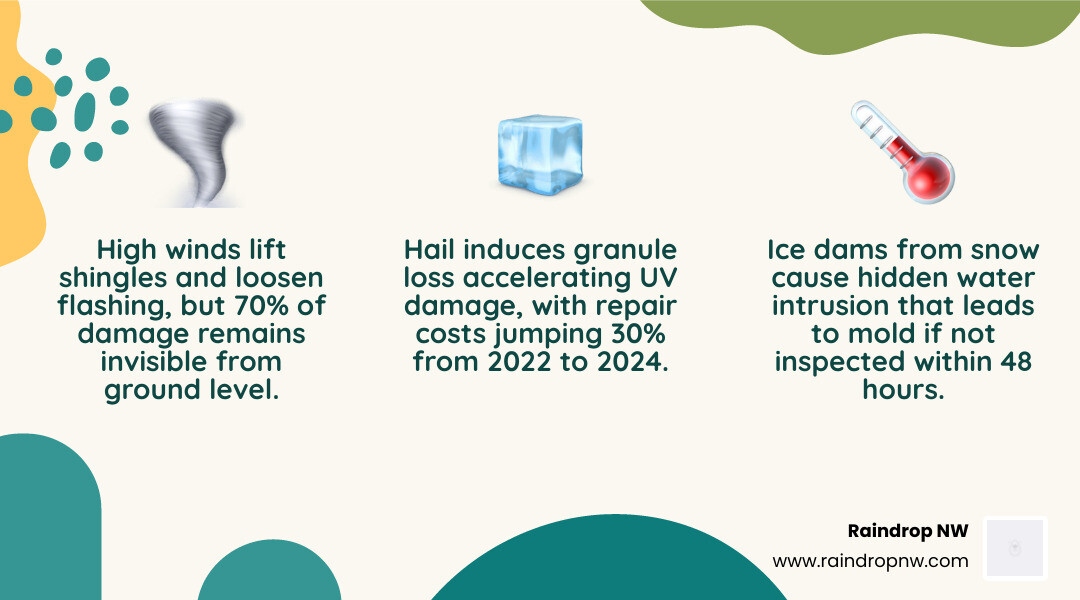
| High winds | Lifted or missing shingles, loosened flashing | Damage is often invisible from ground level |
| Hail | Granule loss, dents, cracked shingles | Accelerates UV deterioration if left unchecked |
| Heavy rain | Water intrusion, gutter overflow, foundation drainage issues | Leaks can appear weeks after the storm |
| Snow and ice | Ice dams, roof load stress, frozen pipe risk | Structural and moisture damage often hidden |
| Extreme heat | Shingle curling, thermal expansion, attic heat buildup | Masks material fatigue until the next wet season |
The stakes are real. Roof repair and replacement costs in the U.S. reached nearly $31 billion in 2024 — a 30% jump from 2022 — driven primarily by wind and hail damage. And that number only reflects what was caught and reported. Plenty of storm damage goes undetected until it becomes a much bigger problem.
I’m Torrey Yungeberg, owner of Raindrop Roofing NW, and after years of inspecting storm-damaged roofs across Oregon and Southwest Washington, I’ve seen how weather events trigger the need for inspections that uncover damage homeowners had no idea existed. In the sections below, I’ll walk you through exactly what to look for, when to call a professional, and how to protect your home before minor storm damage turns into a major repair.
Why Professional Inspections are Essential After Severe Weather

When a major storm blows through Portland or Beaverton, the first thing most of us do is look out the window. If the shingles are still there and the trees are standing, we tend to think we dodged a bullet. However, professional inspections are vital because “latent damage”—the kind that doesn’t show up immediately—is a silent home-killer.
Severe weather often creates tiny breaches in your home’s envelope. A single lifted shingle or a hairline crack in the flashing might not cause a flood today, but it allows moisture intrusion to begin. Once water gets past the primary barrier, the clock starts ticking. According to the EPA, the critical intervention window for preventing mold growth is just 24 to 48 hours after water enters a structure.
By the time you see a brown spot on your ceiling, the insulation is likely soaked, and wood rot may have already started. Our Residential Roofing Services are designed to catch these issues while they are still small, inexpensive fixes. Furthermore, having a professional report serves as essential documentation for insurance carriers, proving that the damage was caused by a specific event rather than neglect.
Detecting Hidden Structural Compromise
Not all storm damage is as obvious as a fallen branch. High-velocity winds can create “uplift,” where the pressure difference literally sucks shingles upward. Even if they lay back down afterward, the seal is broken, and the nails may have pulled through the matting.
To find these invisible threats, we utilize advanced Roof Inspections and Certifications processes. We look for compromised flashing around chimneys and vents—areas that are notoriously vulnerable to shifting during high winds. In some cases, we use infrared cameras or moisture meters to “see” through the roofing material and detect dampness that hasn’t yet reached the drywall.
Verifying Repairs on Renovated and Flipped Homes
In 2022, flipped homes accounted for over 8% of all U.S. home sales, the highest rate in nearly two decades. While a freshly renovated home in Tigard or Lake Oswego might look beautiful, the cosmetics can often hide “quick-fix” storm repairs.
We often see homes where new shingles were simply nailed over damaged or rotting decking to save time. This is especially common following massive events like the legacy of Winter Storm Uri, where the rush to repair led to many corners being cut. When we perform an inspection, we don’t just look at the surface; we verify permits and check the attic for signs of “faked” repairs, such as painted-over water stains or mismatched materials. For more on what to look for when buying, check our Owner Resources.
How Weather Events Trigger the Need for Inspections: Common Damage Types
Understanding how weather events trigger the need for inspections starts with knowing how different elements attack your roof. It isn’t just a “one size fits all” type of damage.
Hail is a prime example. Even small hailstones can cause “bruising” on asphalt shingles. This impact knocks away the protective granules—the “sand” on top of the shingle. These granules aren’t just for color; they protect the underlying bitumen from UV exposure. Once the granules are gone, the sun bakes the shingle, making it brittle and prone to cracking within months. If you’ve had a hailstorm, our Roof Repairs and Maintenance team can assess whether you’re looking at a simple patch or a more significant issue.
Heavy Rain and Snow Load Triggers
In the Pacific Northwest, we are no strangers to the “Pineapple Express” or heavy winter snow.
- Hydrostatic Pressure: Persistent heavy rain can force water into tiny gaps through sheer pressure, especially if your gutters are overflowing.
- Snow Load: A foot of wet snow can weigh thousands of pounds. This stress can cause structural “racking” or sagging in older roof decks.
- Ice Dams: When snow melts and refreezes at the gutters, it creates a dam that backs water up under the shingles.
These events often necessitate checks for Waterproof Deck Surfaces and drainage systems to ensure that water is being moved away from the foundation efficiently.
Extreme Heat and Material Expansion
It might seem counterintuitive, but a heatwave in July is just as much of a trigger for an inspection as a storm in January. Extreme heat causes materials to expand significantly. If a roof isn’t properly ventilated, this “thermal shock” can cause shingles to curl or blister.
Furthermore, extreme heat tests your HVAC efficiency. If your attic isn’t venting correctly, your cooling system has to work 30% harder, which can lead to premature mechanical failure. We evaluate Roof Types and Products specifically for their ability to handle the temperature swings we see in the Willamette Valley.
Leveraging Weather History for Defensible Inspection Reports
In April 2026, the standard for a “good” inspection has shifted from opinion to data. We use historical weather data to turn a subjective observation into a defensible decision.
When we say a roof has hail damage, we don’t just point at a dent. We pull verified records of the wind speeds and hail sizes that occurred at your specific GPS coordinates. This historical context provides the “when, how, and why” that insurance adjusters require. For business owners, our Commercial Roofing Estimates and Inspections utilize this data to ensure that claims are processed quickly and without the usual back-and-forth disputes.
How weather events trigger the need for inspections and insurance support
The biggest challenge with insurance claims is proving the damage happened during the policy period. By aligning our physical findings with documented storm activity, we provide objective evidence that is hard to ignore. Our photo-rich reports include diagrams and weather timestamps, which significantly reduces disputes with carriers. As a Manufacturer Certified Roofing Contractor, our assessments carry weight because they are backed by industry-standard training and verified data.
Using data to understand how weather events trigger the need for inspections
We’ve integrated technology like drone imagery and AI analysis into our workflow. Drones allow us to capture high-resolution photos of steep or dangerous roofs without the risk of “walking” the roof and causing more damage to brittle shingles. This data helps us map out weather patterns and property resilience, giving you a clear picture of your home’s health. Whether it’s a home or a Commercial Roofing project, data-driven inspections are the only way to ensure 100% accuracy.
The Post-Storm Assessment Process: What to Expect
If you’ve called us out after a storm, here is what our systematic process looks like:
- Initial Visual Review: We walk the perimeter and the roof (or use a drone) to look for obvious signs like missing shingles or damaged gutters.
- Attic Evaluation: This is critical. We check for damp insulation, water stains on rafters, and signs of light peeking through—which indicates a hole.
- Structural Checks: We look for sagging or “racking” that might have been caused by heavy snow or fallen debris.
- Flashing and Penetrations: We inspect the “boots” around pipes and the metal flashing around chimneys, as these are the most common leak points.
Whether we’re looking at New Replacement Roofs or minor repairs, we leave no stone—or shingle—unturned.
Timing and Frequency for Storm-Prone Properties
When should you schedule?
- Immediately: After any event with winds over 50mph or hail larger than 0.5 inches.
- Annually: A standard check-up every spring is a great way to catch winter wear.
- Biannually: For high-risk areas (like those near heavy timber or high-wind corridors), a pre-winter and post-winter check is best.
You can see examples of different roof conditions in our Roof Gallery to see what “healthy” versus “damaged” looks like.
Preparing Your Property for an Inspection
To help us give you the most accurate assessment, you can take a few simple steps:
- Clear the Debris: If there are branches on the roof, let us know, but don’t risk climbing up yourself.
- Document Damage: If you see shingles in the yard, take a photo of where they landed.
- Ensure Access: Make sure we can get into the attic and that pets are secured.
- Check Financing: If you’re worried about the results, look into Residential Roofing Financing options early so you know your budget.
Frequently Asked Questions about Weather-Triggered Inspections
Can a roof inspection be performed during active rain or snow?
While we can do a “safety clearance” or ground-level assessment during a storm, a full, detailed inspection is best done when surfaces are dry. Slippery roofs are a major safety hazard, and moisture can mask certain types of damage like granule loss or minor cracks. If it’s pouring, we’ll focus on the interior and attic first, then schedule a return visit for the exterior. This ensures we follow proper safety protocols and provide the most accurate report possible. For businesses, this is often covered under Commercial Roofing Warranties.
What are the warning signs I should look for before calling a professional?
Keep an eye out for these “Red Flags”:
- Water Stains: Check your ceilings and the corners of your walls after a heavy rain.
- Gutter Granules: If your downspouts are spitting out what looks like coarse sand, your shingles are failing.
- Missing Shingles: Even one missing shingle leaves the felt underlayment vulnerable to UV and rain.
- Debris: Large branches or piles of needles can trap moisture against the roof, leading to rot. If you’re a property manager, these signs are vital for maintaining Commercial Real Estate Partnerships.
How does weather history data help my insurance claim?
It removes the “he-said, she-said” from the process. Instead of an adjuster saying the damage is just “old age,” we can show them a report that says, “On March 12th, hail of 1.25 inches hit this specific roof.” This verified timing and hail size documentation reduces subjective interpretation and leads to faster, fairer settlements. You can see how we document these in our Commercial Roofing Gallery.
Conclusion
At Raindrop NW, we’ve built our reputation on being truly local. Unlike the big firms owned by out-of-state investment groups, we live and work in the same Beaverton and Portland neighborhoods we serve. We know exactly how our local weather patterns—from the Gorge winds to the Valley rains—affect your home.
Understanding how weather events trigger the need for inspections is the first step in long-term property protection. Don’t wait for a leak to tell you there’s a problem. Whether you need a quick check-up or Residential Roofing Services for a full replacement, we’re here to provide the accountability and service you deserve. Give us a call, and let’s make sure your roof is ready for whatever the Oregon sky throws at it next.




Leave a Reply
Want to join the discussion?Feel free to contribute!