
When Your Roof Needs More Frequent Inspections: A Guide
How Often Should You Have Your Roof Inspected? Here’s What Oregon Homeowners Need to Know
How often should you have your roof inspected is one of the most practical questions you can ask as a homeowner — and the answer depends on a few key factors. Here’s a quick overview:
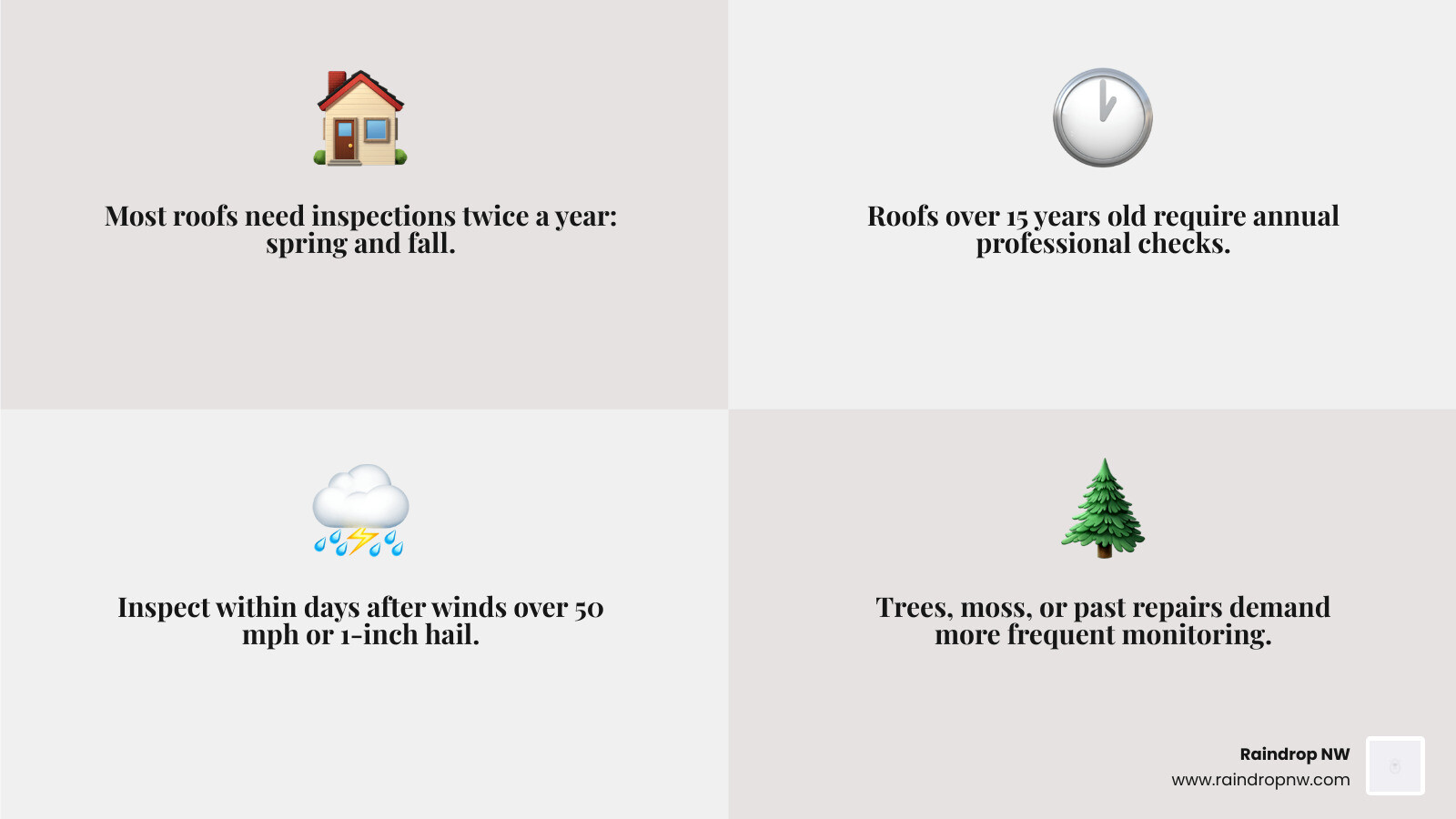
- Most homes: Twice a year — once in spring, once in fall
- Roofs 15 years or older: At least once a year by a licensed professional
- After severe weather (winds over 50 mph or hail over 1 inch): Schedule an inspection within days
- New roofs: Once or twice in the first year to catch any installation issues
- Roofs with overhanging trees, past repairs, or moss growth: More frequent monitoring is smart
For most Oregon homeowners, the baseline is two inspections per year. But your roof’s age, material, and exposure to Pacific Northwest weather can all shift that number.
A small problem caught early — like a cracked vent boot or a lifted shingle — can cost as little as $50 to $200 to fix. Left undetected for a year, that same issue can lead to water damage running into the thousands. Regular inspections are simply the most cost-effective roof maintenance habit you can build.
I’m Torrey Yungeberg, owner of Raindrop Roofing NW, and after years of inspecting roofs across Oregon and Southwest Washington, I’ve seen how a consistent inspection schedule answers the question of how often should you have your roof inspected in the most practical way possible — by catching small problems before they become expensive ones. In this guide, I’ll walk you through exactly what that schedule should look like for your home.
How Often Should You Have Your Roof Inspected?

While many homeowners treat their roof with an “out of sight, out of mind” mentality, the National Roofing Contractors Association (NRCA) recommends a much more proactive approach. The industry standard baseline for residential roofing services is two inspections per year.
We typically suggest scheduling these in the spring (March or April) and the autumn (September or October). A spring inspection allows us to identify and repair any damage caused by winter ice, heavy rains, or fallen debris. A fall inspection ensures your home is watertight and ready for the upcoming freeze-thaw cycles that can expand small cracks into major leaks.
Beyond the calendar, the question of how often should you have your roof inspected is driven by the reality of homeownership: more than 85% of homes are sold with some form of roof damage or leaks. By maintaining a biannual schedule, you aren’t just protecting your ceiling; you’re protecting your home’s resale value and structural integrity.
| Roof Condition | Recommended Frequency | Primary Goal |
|---|---|---|
| New Roof (0-5 years) | 1-2 times in the first year, then biannually | Catching installation defects |
| Mid-Life Roof (5-15 years) | Twice per year (Spring/Fall) | General maintenance & debris removal |
| Aging Roof (15+ years) | Professional annual check + DIY checks | Monitoring for material failure |
| High-Risk (Trees/Moss) | Quarterly or after storms | Preventing rot and drainage clogs |
The Importance of Inspections for Insurance and Warranties
Regularly checking your roof isn’t just about stopping drips; it’s about legal and financial protection. Approximately 30% of all insurance claims are related to leaking roofs and water intrusion. However, many homeowners are surprised to find their claims denied because of “deferred maintenance.” If an insurance adjuster determines that a leak was caused by neglect rather than a sudden event, you could be left footing the entire bill.
Similarly, manufacturer warranties often require proof of regular maintenance to remain valid. Using professional roof inspections and certifications provides you with the necessary documentation to prove you’ve been a responsible steward of your home. Considering that inadequate maintenance is the number one cause of roof issues, these documented check-ups are your best defense against unexpected costs.
Factors and Weather Triggers for Frequent Monitoring
In the Pacific Northwest, specifically in areas like Beaverton, Hillsboro, and Tigard, our climate plays a massive role in determining how often should you have your roof inspected. We don’t just deal with rain; we deal with moisture that fuels moss growth and heavy winds that can test the seals of even the best roof types and products.
Several factors might require you to ramp up your monitoring:
- Roof Age: Once a roof crosses the 15-year mark, its failure risk increases significantly. Materials begin to lose their flexibility, and sealants around vents start to crack.
- Material Type: While a metal roof might only need a professional look every few years to check fasteners, asphalt shingles require more frequent eyes due to granule loss.
- Surrounding Vegetation: If you have overhanging Douglas firs or maples, your gutters and roof valleys will collect needles and leaves. This debris traps moisture against the shingles, leading to rot and moss.
- Previous Repairs: If your roof has a history of leaks, those “patch areas” should be checked more frequently via routine repairs and maintenance visits to ensure the old fixes are holding up.
When to Schedule Inspections After Severe Weather
While the spring and fall are great for routine care, weather events don’t follow a calendar. You should perform a ground-level walkthrough within 24 to 48 hours of any major storm. Specifically, we look for two major triggers:
- High Winds: Sustained winds over 50 mph can lift shingles. Even if they don’t blow off, the seal can be broken, allowing rain to “wind-drive” its way underneath the shingle during the next storm.
- Hail: Any hail larger than 1 inch can cause bruising on shingles, knocking away the protective granules and exposing the underlying bitumen to UV rays.
If you’ve recently invested in new replacement roofs, a post-storm check is even more vital to ensure the new components are settling correctly and that flashing around chimneys and skylights hasn’t shifted.
Professional vs. DIY: What Happens During an Inspection
We always encourage homeowners to be observant. You can do a lot of good from the safety of the ground using a pair of binoculars. Check our owner resources for tips on what to look for, such as missing shingles, sagging lines, or excessive granules in the gutters (which look like dark sand).
However, a professional inspection goes much deeper. When we arrive at a home in Lake Oswego or West Linn, we aren’t just looking at the shingles. We perform a “three-layer” assessment:
- The Ground-Level Check: We examine the perimeter for signs of sagging, gutter detachment, or flashing that has pulled away from the walls.
- The Roof-Plane Inspection: We safely climb the roof (or use drone technology for steep pitches) to check the integrity of every shingle, the state of the ridge vents, and the seals around pipes.
- The Attic Scan: This is the part most homeowners skip. We use flashlights and sometimes infrared thermal imaging to look for moisture stains, daylight peeking through the boards, or compressed insulation—all of which signal a leak that hasn’t reached your ceiling yet.
Immediate Signs You Need a Professional Assessment
Sometimes you shouldn’t wait for your scheduled biannual visit. If you notice any of the following, you need an inspection immediately:
- Interior Clues: Water stains on the ceiling, peeling paint near the eaves, or mold in the attic.
- Structural Red Flags: A sagging roofline or a “spongy” feel when walking on the deck.
- Visible Shingle Damage: Buckling, curling, or shingles lying in your yard. You can see examples of what healthy roofs should look like in our roof gallery.
- Component Failure: Cracked vent boots or rusted flashing around the chimney.
- Energy Spikes: A sudden, unexplained increase in heating or cooling bills can indicate that your roof’s ventilation has failed, trapping hot or cold air in your attic.
Frequently Asked Questions about How Often Should You Have Your Roof Inspected
How often should you have your roof inspected if it is over 15 years old?
Once a roof reaches 15 years, it enters its “senior years.” For most residential roofing systems, this is when the risk of failure doubles or even triples. We recommend moving to a strict annual professional inspection at this stage. Proactive monitoring on an aging roof can often extend its life by another 5 to 10 years by catching small sealant failures before they cause structural rot.
How often should you have your roof inspected after a major storm?
You should assess your roof after every major storm involving high winds or hail. While you can do a quick check yourself, if you see debris in the yard or visible shingle damage, you need a professional to document the state of the roof for insurance purposes. Early documentation is the key to a successful claim and prevents secondary leaks from causing interior damage. Our team specializes in post-storm repairs and maintenance to get your home back to “baseline” quickly.
What is the best time of year for a routine roof inspection?
Spring and fall are the “golden windows.” Spring inspections help us find damage caused by winter’s weight and moisture, while fall inspections allow us to clear out debris and ensure the roof is ready for the upcoming rain and snow. Regular roof inspections and certifications during these seasons provide the best weather conditions for repairs and the most peace of mind for the homeowner.
Conclusion
At Raindrop NW, we understand that your roof is the most important shield your home has. Whether you are in Beaverton, Tualatin, or Vancouver, the local weather demands a disciplined approach to maintenance. We are a truly local, independently owned company. Unlike the big firms owned by out-of-state investors, we live in the communities we serve. Our commitment is to long-term service and accountability—we want to be the team that looks after your roof for the next twenty years, not just for a one-time repair.
Don’t wait for a drip on your forehead to tell you there’s a problem. Schedule your professional residential roofing inspection with us today and let’s make sure your home stays dry, safe, and efficient for years to come.




Leave a Reply
Want to join the discussion?Feel free to contribute!