
How Wind Storms and Ice Affect Your Roof: A Quick Start Guide

Why Wind Storms and Ice Are a Real Threat to Oregon Roofs
Understanding how wind storms and ice affect your roof could save you from a costly surprise — because most storm damage doesn’t announce itself with an obvious leak. It starts quietly: a lifted shingle edge here, a hairline crack there, a gutter filling with granules after a hard freeze. By the time water shows up on your ceiling, the damage has often been building for months.
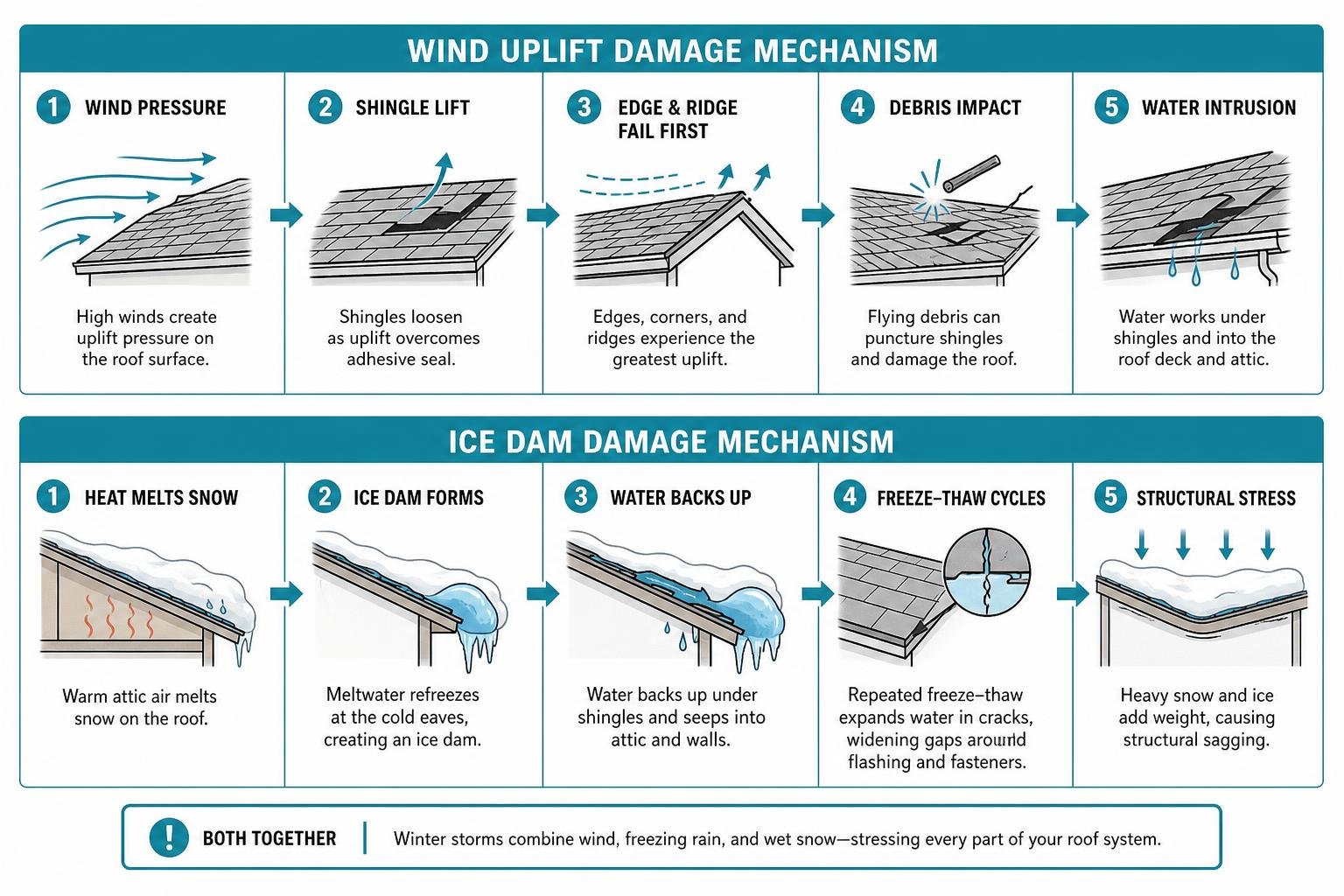
Here is a quick summary of the main ways wind and ice put your roof at risk:
Wind Storm Damage
- Wind speeds as low as 45–50 mph can lift or loosen older shingles
- Roof edges, corners, and ridges fail first due to uplift pressure
- Flying debris can puncture shingles and clog gutters
- Broken adhesive seals may leave no visible sign until the next storm
Ice and Freeze-Thaw Damage
- Ice dams form when warm attic air melts snow, which refreezes at the cold eaves
- Water backs up under shingles, seeping into your attic and walls
- Repeated freeze-thaw cycles expand water in small cracks by about 9%, widening gaps around flashing and fasteners
- Heavy snow and ice accumulation can cause structural sagging
Both Together
- Winter storms in the Pacific Northwest often combine wind, freezing rain, and wet snow — stressing every part of your roof system at once
For Oregon homeowners, this is not a distant risk. The Portland metro area regularly sees wind events, ice storms, and rapid temperature swings that put even well-built roofs to the test.
I’m Torrey Yungeberg, owner of Raindrop Roofing NW, and after years of inspecting roofs across Beaverton and the greater Portland area, I’ve seen how wind storms and ice affect your roof in ways most homeowners never notice until significant damage has already occurred. In the sections ahead, I’ll walk you through exactly what’s happening to your roof during these events — and what you can do about it.
How Wind Storms and Ice Affect Your Roof in the Pacific Northwest
Living in the Pacific Northwest, we enjoy a unique climate. From the lush greenery of Beaverton to the rolling hills of Lake Oswego and West Linn, our environment is beautiful but demanding. Our roofs face a constant gauntlet of high winds, persistent dampness, and occasional severe winter freezes.
When we look at How Portland Metro Climate Affects Your Roof, it is clear that our local weather patterns present a double whammy of wind uplift and freeze-thaw cycles. During our stormy seasons, strong winds sweep through the Columbia River Gorge, creating violent gusts that can easily compromise weakened roofing materials.
As these storms pass, they are frequently followed by sudden temperature drops. This rapid transition is where freeze-thaw cycles do their silent work. Water from rain or melting snow slips into tiny, pre-existing micro-cracks in your roofing materials. When the temperature drops below freezing, that trapped water expands by about 9%. This physical expansion acts like a tiny wedge, slowly prying apart shingles, widening gaps around nails, and loosening flashing. Over time, these small stresses dramatically shorten your system’s life, which is a major factor when evaluating How Portland Weather Affects Roof Lifespan.
How Wind Storms and Ice Affect Your Roof Shingles
Your shingles are your home’s primary shield. To do their job, they rely on a continuous, unbroken adhesive seal. Strong winds put this seal to the test. When high gusts find a loose edge, they push underneath, lifting the shingle and breaking its factory-applied adhesive bond.
Even if the shingle doesn’t blow off completely, it can flap like a flag in the wind. This flapping creates permanent creases across the shingle’s surface, fracturing the internal fiberglass mat. Once this mat is fractured, the shingle loses its structural integrity and water-shedding capability.
Furthermore, both wind and ice accelerate granule loss. Those tiny mineral granules on your asphalt shingles aren’t just for color; they protect the underlying asphalt from harmful UV rays. When wind-blown debris scrapes across your roof, or when ice slides down the slope, it strips these granules away. This leaves bald spots that dry out, crack, and leak. Understanding these mechanical stresses is essential, especially when you consider How Persistent Rain And Humidity Stress Your Roof, as bald, cracked shingles quickly fail under our region’s relentless seasonal rainfall.
How Wind Storms and Ice Affect Your Roof Drainage Systems
A roof is only as good as its ability to shed water, which makes your drainage system a critical component of storm defense. Wind and ice storms are notoriously tough on gutters and downspouts.
During a severe wind storm, twigs, leaves, and pine needles are ripped from overhanging branches, landing directly on your roof and washing into your gutters. This debris quickly creates stubborn clogs. When winter ice storms hit, any standing water in those clogged gutters freezes solid. The sheer weight of frozen water and debris can bend gutter hangers, pull the fascia board away from your home’s rafters, or cause the entire gutter system to collapse.
Worse yet, clogged gutters prevent melting snow and ice from draining safely. When water has nowhere to go, it backs up under the lower edge of your roof shingles. This moisture can rot your roof deck, ruin your soffits, and seep into your home’s exterior walls. Implementing smart safeguards is crucial to keeping your home dry, and you can find excellent strategies in our Water Damage Prevention Tips For Pacific Northwest Homeowners.
The Aerodynamics of Wind Damage and Shingle Uplift
To understand wind damage, we have to look at the physics of airflow. When wind hits your home, it doesn’t just push against the walls; it is forced upward and over your roof. This movement creates a pocket of high-velocity airflow, resulting in negative pressure (suction) directly above your roof’s surface. This is the exact same aerodynamic principle that gives an airplane wing its lift.
This suction force, known as uplift pressure, pulls upward on your shingles. At the same time, positive pressure can build up inside your attic if you have unsealed penetrations or if wind enters through open soffit vents. This combination of upward suction from the outside and pushing pressure from the inside is what tears shingles loose.
While standard residential roofs are engineered to withstand typical regional wind loads, older or improperly installed materials can begin to fail at sustained wind speeds as low as 45–50 mph. Once a single shingle seal is broken, a “zipper effect” can occur: the wind peels back one shingle, exposing the next, and quickly zips open an entire section of your roof. This is why major weather events can cause sudden, widespread failure, reinforcing How Weather Events Trigger The Need For Inspections to catch these broken seals before they lead to catastrophic leaks.
Vulnerable Areas: Edges, Flashing, and Ridges
Wind doesn’t attack a roof evenly. It targets the weakest, most exposed areas first:
- The Roof Edges (Rakes and Eaves): This is where wind first meets your roof line. If the starter shingles or drip edge are not fastened securely, the wind can easily get underneath and peel them back.
- The Ridge Caps: Because the ridge is the highest point of your roof, it experiences the highest wind speeds and strongest suction forces. Loose ridge caps can easily blow off, exposing the ridge vent and attic directly to rain.
- Flashing and Penetrations: Areas around chimneys, dormers, and skylights rely on metal flashing and sealant to stay watertight. Wind can loosen this flashing, while shifting roof structures can tear the seals, creating immediate pathways for water.
Material Performance: How Different Roofs Stand Up to Storms
Different roofing materials have distinct physical properties that dictate how they handle extreme wind, hail, snow, and ice. Here is how the most common materials perform in our Pacific Northwest climate:
| Roofing Material | Wind Resistance | Ice & Snow Performance | Vulnerabilities | Typical Lifespan in NW |
|---|---|---|---|---|
| Asphalt Shingles | Moderate to High (60–110+ mph depending on class) | Moderate; prone to ice dams if attic ventilation is poor | Sealant failure, granule loss, cracking in extreme cold | 18–25 Years |
| Cedar Shakes | High; naturally wind-resistant due to interlocking texture | Good; natural insulator, but requires proper breathing space | Moss growth, splitting over time, curling if neglected | 30–40 Years |
| Metal Roofing | Excellent (can withstand 140+ mph gusts) | Outstanding; sheds snow easily, highly resistant to ice damage | Fastener wear, denting from heavy debris impact | 50+ Years |
| Tile & Slate | High (relies on extreme weight for wind resistance) | Good; highly durable, but heavy snow loads require strong framing | Fragile under debris impact, high structural weight | 50–100 Years |
Choosing the right material and maintaining it properly is the best way to ensure your home stays protected. For more detailed tips on maximizing your roof’s longevity, check out our guide on How To Extend The Life Of Your Roof In Rainy Climates.
The Winter Threat: Snow Loads, Ice Dams, and Freeze-Thaw Cycles
While our winters in places like Tigard, Hillsboro, and Beaverton are generally mild, we do get hit with heavy, wet snow and freezing rain. Unlike the dry, powdery snow found in other parts of the country, Pacific Northwest snow is incredibly dense and heavy.
When several inches of this wet snow pile onto your roof, the weight can put immense stress on your home’s framing. This load can cause structural sagging, visible drywall cracks in your ceilings, and, in extreme cases, partial roof collapse. This risk is compounded when snow is followed by freezing rain, which seals the snow in a heavy, solid block of ice.
As this snow and ice sits on your roof, it sets the stage for one of the most destructive winter roofing hazards: the ice dam. To protect your home from these complex winter issues, it is highly beneficial to read our dedicated breakdown on How Ice Dams Form And What To Do About Them.
The Physics of Ice Dams and Attic Heat Leaks
An ice dam is a thick ridge of solid ice that forms along the eaves (edges) of your roof. They don’t just happen because it’s cold outside; they are caused by a temperature imbalance on your roof deck.
Here is exactly how the process works:
- Heat Leaks: Warm air escapes from your living space into the attic due to inadequate insulation or unsealed air leaks (such as around can lights, chimney chases, or bath fans).
- Snow Melts: This escaping heat warms the upper portions of your roof deck, causing the bottom layer of snow to melt.
- Water Flows: The melted snow flows down the warm roof slope beneath the snowpack until it reaches the cold eaves, which overhang the exterior walls and remain at outdoor freezing temperatures.
- Water Refreezes: The water refreezes at the cold eave, forming a barrier of ice.
- The Dam Backs Up: As more snow melts, the water pools behind this ice barrier. Because it has nowhere to go, this standing water backs up under your shingles, eventually dripping into your attic, ceiling drywall, and insulation.
The key to preventing this destructive cycle is maintaining a cold roof deck. This is achieved through a combination of proper attic insulation (R-38 is highly recommended for our climate) and balanced ventilation. By ensuring continuous airflow from your soffit vents to your ridge vents, you keep the roof deck temperature closer to the outdoor temperature, preventing the snow from melting prematurely.
Proactive Storm Preparedness and Post-Storm Inspections
The best time to deal with storm damage is before the storm even arrives. Taking a few proactive steps in the autumn can save you from emergency repairs in the dead of winter.
- Trim Overhanging Trees: Cut back branches to at least 10 feet away from your roof line. Heavy ice and snow can cause limbs to snap, dropping heavy wood directly onto your shingles.
- Clean Your Gutters: Ensure all leaves, needles, and debris are completely cleared out so winter rains and melting snow can drain freely.
- Conduct Visual Checks: Scan your roof from the ground using binoculars. Look for curling shingle edges, cracked flashing, or missing ridge caps.
- Check the Attic: Go into your attic with a flashlight. Look for daylight shining through the roof deck, wet insulation, or water stains on the rafters.
Taking these precautions is your first line of defense. To dive deeper into safeguarding your home, read our guide on How To Protect Your Home From Water Damage Through Your Roof.
Frequently Asked Questions about Storm Damage
Recovering from a severe weather event can be overwhelming. Here are answers to some of the most common questions we hear from homeowners across the Portland metro area.
What wind speed begins to damage residential roof shingles?
Damage can begin at sustained wind speeds as low as 45 to 50 mph. At these speeds, older, brittle, or improperly installed shingles can lift, breaking their adhesive seals.
Once wind speeds reach 55 to 75 mph (which is common during severe thunderstorms and winter wind events in Oregon), the risk increases significantly. These winds can tear away entire sections of shingles, damage gutters, loosen flashing, and send flying tree debris crashing into your roof structure.
Can I safely remove snow and ice from my roof myself?
We strongly advise against DIY snow and ice removal. Climbing onto a wet, icy, and sloped roof is incredibly dangerous.
Using tools like shovels, rakes, or hammers to break up ice can easily puncture your shingles, tear away gutters, and void your manufacturer warranty. Additionally, applying rock salt or chemical ice-melts to your roof can chemically damage asphalt shingles, corrode metal valleys, and kill the landscaping below your eaves when the ice melts. If you have heavy snow accumulation, it is always safest to hire professional snow removal services.
How do I know if my roof has storm damage if it isn’t leaking?
A leak is often the last sign of roof damage, not the first. To spot hidden storm damage without climbing onto your roof, look for these clues from the ground:
- Granules in Downspouts: Check the exit points of your downspouts. If you see piles of dark, sand-like grit, your shingles have suffered significant wear.
- Creased Shingles: Look for dark horizontal lines across your shingles, which indicate they have been flapping in the wind and their internal fiberglass mat is broken.
- Dented Metal: Inspect your gutters, metal valleys, and roof vents for small dents, which are clear indicators of hail or heavy debris impact.
- Attic Dampness: Check your attic rafters and insulation for damp spots or musty odors after a heavy storm.
Conclusion
Your roof is your home’s primary shield against the elements, and understanding how wind storms and ice affect your roof is the first step toward long-term home protection. From wind uplift to the slow, destructive creep of ice dams, our Pacific Northwest weather requires proactive care and expert attention.
At Raindrop Roofing NW, we are a truly local, family-owned roofing company based right here in Beaverton, Oregon. Unlike many roofing contractors in the area who have been bought out by out-of-state investment firms, we remain independently owned and deeply committed to our community. We believe in multi-generational craftsmanship, absolute transparency, and long-term accountability.
Whether you need a proactive pre-winter inspection, minor repairs after a wind storm, or a complete, high-quality roof replacement, our certified team is here to help. Don’t wait for a small leak to turn into a major headache. Contact us today to Schedule a Professional Roof Inspection and keep your home safe, dry, and secure for years to come.




Trackbacks & Pingbacks
[…] interact with your home over time, explore How Weather Events Trigger the Need for Inspections and How Wind Storms and Ice Affect Your Roof. Furthermore, our unique regional climate plays a massive role in material degradation. Learn more […]
Leave a Reply
Want to join the discussion?Feel free to contribute!