
When Should You Replace Your Roof?

How to Determine the Lifespan of Your Roofing Material
When should you replace your roof? Here’s the short answer most homeowners need before diving deeper:
Replace your roof when one or more of these conditions apply:
- Your asphalt shingles are 20+ years old (or 25+ for architectural shingles)
- You see curling, buckling, or missing shingles across multiple areas
- You find granules collecting in your gutters
- Your roofline is sagging or you can see daylight through the attic boards
- You have active leaks or spreading water stains on interior ceilings
- Repair costs would exceed 30% of the cost of a full replacement
- Your roof has sustained storm damage affecting more than 25–30% of the surface
If only one small area is damaged and your roof is under 15 years old, a repair is likely all you need. But if several of these warning signs are stacking up — especially on an older roof — replacement is almost always the smarter long-term move.
Your roof is the first line of defense between your family and everything Oregon’s weather throws at it — heavy rain, moss-promoting moisture, and the occasional freeze-thaw cycle that quietly works against shingles season after season. Most homeowners don’t think much about their roof until something goes wrong. But by then, what could have been a straightforward replacement has often turned into a much bigger problem: rotted decking, attic mold, or water damage that’s worked its way into the walls.
The good news is that knowing the right time to replace your roof isn’t complicated once you understand what to look for. Age, material, visible damage, and a few interior clues tell most of the story. This guide walks you through all of it — from how long different roofing materials actually last in the Pacific Northwest, to how to decide between a repair and a full replacement, to what your insurance company may or may not cover based on your roof’s age.
I’m Torrey Yungeberg, owner of Raindrop Roofing NW, and after years of inspecting roofs across Beaverton and the greater Portland metro, I’ve seen how understanding when should you replace your roof can save homeowners thousands of dollars in preventable damage. Let’s walk through exactly what to look for — and what it all means for your home.

Every roofing material comes with its own natural expiration date. While a roof in a mild climate might stretch to its maximum rated lifespan, our damp Pacific Northwest environment can sometimes shave a few years off that estimate if the system is not properly maintained.
When we evaluate a home in Beaverton or Portland, the very first thing we look at is the material type. Your roof’s starting point dictates how we calculate its remaining years and how we plan for its eventual replacement. To understand how your specific material impacts your long-term planning, you can read our guide on How Material Choice Impacts Your Roof Cost.
Asphalt Shingles vs. Premium Materials
The material on your roof determines how many decades of protection you can expect. Here is a breakdown of typical lifespans by material:
- Standard 3-Tab Asphalt Shingles: These are the most traditional, flat shingles. They typically last between 15 and 20 years.
- Architectural (Dimensional) Shingles: Thicker and more durable than 3-tab shingles, these are the modern standard for residential homes. They generally last 25 to 30 years under normal conditions.
- Metal Roofing (Standing Seam & Panels): Highly durable, lightweight, and fire-resistant. A quality metal roof easily lasts 40 to 70 years.
- Clay and Concrete Tile: Extremely heavy and durable, often found on Mediterranean-style homes. These roofs last 50 to 100 years, though the underlying felt underlayment may need replacement around the 35-year mark.
- Natural Slate: The gold standard of longevity. A well-maintained slate roof can last 100 years or longer, though individual slates may need periodic maintenance or replacement.
How Portland Weather Affects Roof Lifespan
Our local climate plays a major role in how quickly these materials age. In the Pacific Northwest, we do not experience the aggressive UV degradation of desert regions, but we do deal with constant moisture, heavy winter rainfall, and persistent shade.
These factors create a perfect breeding ground for moss, mold, and algae. Moss is not just a cosmetic issue; it holds water directly against the shingles, working its roots underneath them and lifting them up over time. Additionally, the Portland metro area experiences frequent winter freeze-thaw cycles. When water gets trapped under a loose shingle or in a tiny crack and freezes, it expands, cracking the shingle or loosening the adhesive seal.
To learn more about how our regional climate shapes your roof’s longevity, check out our resource on How Portland Weather Affects Roof Lifespan.
When Should You Replace Your Roof? Key Warning Signs
You do not always need to climb onto your roof to know it is in trouble. Often, the earliest warnings are visible from your driveway, your backyard, or even inside your attic. Keeping a close eye on these physical indicators is the best way to catch a failing roof before it causes structural damage to your home. For a complete look at keeping your home safe, refer to The Ultimate Guide to Roof Care in Portland Oregon.
Visual Warning Signs on the Shingles
When we perform a visual inspection from the ground or a ladder, we look for several key signs of shingle degradation:
- Curling, Cupping, or Buckling: As shingles reach the end of their lifespan, the asphalt dries out and the edges curl upward (cupping) or the middle sections bow (buckling). This leaves your roof vulnerable to wind uplift and water intrusion.
- Missing Shingles or Bare Patches: High winds can tear away shingles that have lost their adhesive grip. Missing shingles leave the underlying underlayment and wood decking completely exposed to the elements.
- Granule Loss in the Gutters: Asphalt shingles are coated with mineral granules to protect them from UV rays. As they age, these granules loosen. If you find piles of coarse, black sand in your gutters during cleaning, your shingles are losing their protective barrier.
- Heavy Moss and Algae Growth: While dark streaks (algae) are mostly cosmetic, thick clumps of green moss are a serious hazard. Moss acts like a wet sponge, keeping the roof constantly damp and rotting the structure underneath.
Structural and Interior Warning Signs
Sometimes the most critical warning signs are found inside the house. We always recommend inspecting your attic space with a flashlight, especially during or immediately after a heavy rainstorm:
- A Sagging Roofline: If you stand back from your home and notice a dip or a sag along the ridge or in the valleys, this is a structural warning sign. It usually indicates that long-term water damage has rotted the plywood decking or joists underneath. This requires immediate professional attention.
- Daylight Through the Roof Boards: If you go into your attic, turn off the lights, and see beams of daylight peeking through the roof boards, water can get in those same gaps.
- Active Leaks and Water Stains: Spreading brown circles on your ceilings or water running down your interior walls are clear indicators of a compromised roof.
- Attic Mold or Mildew: If your attic has a musty smell, visible mold on the rafters, or damp insulation, it is a sign of water intrusion or poor attic ventilation. Poor ventilation can trap heat and moisture, cutting your roof’s expected lifespan in half.
Repair vs. Replacement: The Decision Framework
One of the most common questions we hear is: “Can I just patch this, or do I need a whole new roof?” It is a vital question. No homeowner wants to invest in a full replacement if a simple, targeted repair will do. Conversely, spending money on repeated repairs for a roof that is fundamentally failing is just throwing good money after bad. To help you weigh these options, we have built a comprehensive guide on Should I Repair or Replace My Roof?.
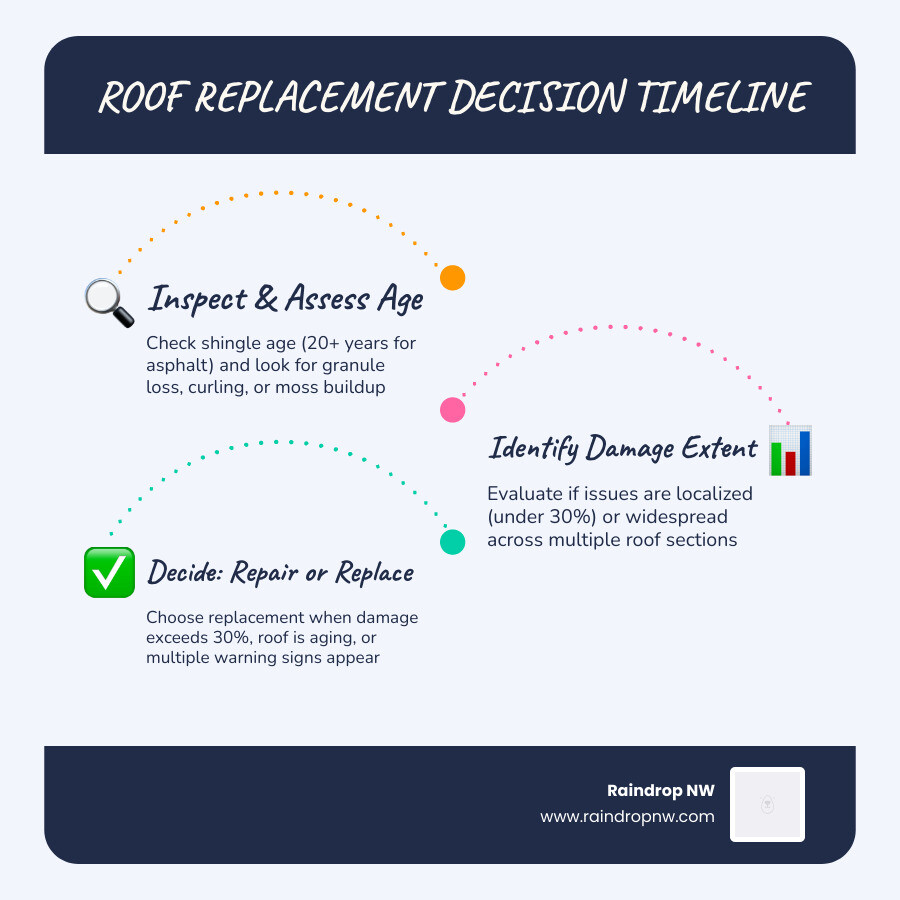
Applying the 30% Damage Rule
In the roofing industry, we use a general rule of thumb to help guide this decision: the 30% rule.
If the damage is localized to a single area — such as a few shingles damaged by a fallen tree branch, or a single leaking pipe boot — and the affected area accounts for less than 30% of the total roof surface, a repair is usually the most logical and cost-effective choice.
However, if the damage is widespread, or if the roof is showing systemic signs of aging (like curling and granule loss) across more than 30% of its surface, a full replacement is the safer, more economical option. In fact, many local building codes and jurisdictions require a complete roof replacement if the damaged area exceeds 25% to 30% of the total roof surface.
Evaluating the Financial Factors of Repairing vs. Replacing
When deciding between repair and replacement, look beyond the immediate cost of the project. Consider the long-term financial picture:
- The Cost of Repeated Repairs: A single minor repair is inexpensive. But if you find yourself calling a roofer every winter to patch new leaks, those costs quickly add up. Eventually, the cumulative cost of these patches will exceed the cost of a new, warrantied roof.
- Home Resale Value: If you plan to sell your home within the next few years, an aging or patchy roof can be a major dealbreaker for buyers. A new roof dramatically improves curb appeal and typically recoups 61% to 66% of its investment value during a home sale.
- Energy Efficiency: Modern roofing systems utilize advanced underlayments and ventilation techniques. A compromised roof with poor ventilation traps heat in the summer and loses warm air in the winter, driving up your energy bills. Replacing an old roof can improve your home’s energy efficiency, reducing heating and cooling costs.
For a deeper look at budgeting and financial planning for your home’s roof, read our Roof Replacement Cost Guide for Homeowners.
Navigating Homeowners Insurance and Roof Age
Understanding how your homeowners insurance policy interacts with your roof is essential, especially as your roof gets older. Many homeowners assume that insurance will cover a replacement whenever the roof fails, but policies have strict guidelines regarding wear and tear versus sudden storm damage. To protect your home and your wallet, we recommend reading How to File a Roof Damage Insurance Claim.
How Roof Age Affects Your Insurance Claim
Insurance companies are in the business of assessing risk, and an old roof represents a high risk. As a result, the age of your roof directly impacts how your policy handles claims:
- Actual Cash Value (ACV) vs. Replacement Cost Value (RCV): If you have an RCV policy, your insurance will cover the cost of a new roof (minus your deductible) if it is damaged by a covered peril, like wind or hail. However, many insurance companies automatically transition older roofs (typically those over 15 to 20 years old) to an ACV policy. Under ACV, the insurer depreciates the value of your roof based on its age, meaning they will only pay what the old, worn roof was worth at the time of damage, leaving you to cover the remaining balance out of pocket.
- Non-Renewal Risk: Insurance carriers have tightened their standards significantly. In multiple states, insurance companies are issuing non-renewal notices to homeowners with roofs that are 20 years or older, requiring a full replacement before they will renew the policy.
- Premium Discounts: On the bright side, installing a new roof — especially one with modern, impact-resistant materials — can lead to substantial premium discounts, often saving you money on your annual insurance costs.
To understand how the age of your system specifically changes your policy terms, read our guide on How Roof Age Affects Your Insurance Claim.
Planning Your Project: Timing and Preparation
Once you have determined that a replacement is necessary, the next step is planning the project. A roof replacement is a major home improvement undertaking, and timing it correctly can save you stress, time, and money. To understand how to schedule your project, refer to our guide on Roof Inspection Frequency for Pacific Northwest Homes.
Best Time of Year to Replace Your Roof
In the Pacific Northwest, weather is the primary factor when scheduling a reroofing project. While professional crews can technically install a roof year-round, certain seasons offer distinct advantages:
- Late Spring (April–May) and Early Fall (September–October): These are generally the ideal times to replace a roof in our region. The weather is typically mild and dry, which is crucial because asphalt shingle adhesive requires warm, consistent temperatures to seal and bond properly.
- Summer Peak Season: Summer is incredibly popular for roofing, but high demand means contractor schedules fill up fast. Booking your project 6 to 8 weeks in advance is highly recommended if you want a summer installation.
- Off-Peak Scheduling: Scheduling your replacement in the late winter or early spring can sometimes yield quicker turnaround times and better scheduling flexibility, as contractors are not in their peak summer rush.
Proactive Maintenance to Extend Roof Lifespan
If your roof is still in its middle years and you want to delay a full replacement for as long as possible, proactive maintenance is your best tool. Taking care of your roof today keeps it strong for tomorrow. To learn more, check out our guide on How to Extend the Life of Your Roof.
- Keep Gutters Clear: Clogged gutters cause water to back up under the edge of your roof, rotting the fascia boards and the lower edge of your roof decking. Clean your gutters at least twice a year.
- Treat Moss Early: Never pressure wash an asphalt shingle roof, as this strips away the protective granules. Instead, use gentle, roof-safe chemical treatments to kill moss, and install zinc or copper strips along the ridge line to prevent future growth.
- Trim Tree Branches: Keep tree branches trimmed back at least several feet from your roof. This prevents branches from scraping against shingles during high winds and reduces the amount of shade, leaves, and pine needles accumulating on your roof.
- Schedule Regular Inspections: Having your roof professionally inspected every few years allows you to catch minor issues — like a cracked pipe boot or a loose flashing joint — before they turn into major leaks.
Frequently Asked Questions about Roof Replacement
To help you make the most informed decision, we have answered some of the most common questions homeowners ask when trying to determine when should you replace your roof. To learn more about professional roof assessments, see How Often Should You Have Your Roof Inspected?.
How do I know when should you replace your roof if there are no active leaks?
A roof does not have to leak to be ready for replacement. If your asphalt roof is over 20 years old, it has likely reached the end of its reliable service life. Over time, shingles lose their flexibility and wind resistance. Waiting for an active leak means waiting for water to damage your drywall, insulation, and framing, which increases the scope and cost of the project. A proactive attic inspection can also reveal hidden rot or slow, structural leaks that have not yet stained your ceilings.
How does a homeowner decide when should you replace your roof after storm damage?
If your roof has sustained wind or hail damage, look at the extent of the impact. If high winds have torn away a few shingles on a single slope, a simple repair is usually best. However, if the storm has lifted shingles across multiple slopes, or if hail has bruised and cracked shingles across the entire surface, a full replacement is necessary. We recommend having a professional roofer inspect the damage and document it with photos before you file a claim with your insurance provider.
How can I determine the age of my roof if I don’t have records?
If you recently bought your home or do not have the original installation paperwork, you can find your roof’s age through a few public and private resources:
- County Building Permits: Check with your local county building permits office (such as Washington County or Multnomah County). Roof replacements typically require a permit, and these public records will show exactly when the last permit was issued and completed.
- Home Inspection Report: Review the home inspection report from when you purchased the property; inspectors usually estimate the remaining life and age of the roof.
- Prior Owners or Real Estate Agents: Your real estate agent may be able to contact the previous owner’s agent to request the installation date or the name of the roofing company that performed the work.
- Professional Inspection: A professional roofing contractor can examine the wear, adhesive condition, and shingle pliability to give you a highly accurate estimate of the roof’s age and remaining lifespan.
Conclusion
Deciding when should you replace your roof is one of the most significant maintenance decisions you will make for your home. While it can feel overwhelming, keeping a close eye on your roof’s age, watching for key warning signs like curling shingles or granule loss, and applying simple decision frameworks like the 30% rule can give you complete confidence in your next steps.
At Raindrop Roofing NW, we are proud to be a truly local, family-owned business serving Beaverton, Portland, and our surrounding Oregon communities. Unlike companies that have been bought out by out-of-state investment firms, we live and work right here in the Pacific Northwest. We understand our unique climate, we stand behind our certified craftsmanship, and we are committed to providing honest, pressure-free advice.
If you are unsure about the true condition of your roof, we would love to help. We offer professional, honest inspections to let you know whether your roof has years of life left, needs a simple repair, or is ready for a full upgrade.
Ready to get an honest assessment of your home’s roof? Schedule a Professional Roof Replacement with Raindrop Roofing NW today, or contact us to book your free inspection!




Trackbacks & Pingbacks
[…] When Should You Replace Your Roof […]
Leave a Reply
Want to join the discussion?Feel free to contribute!