
The Highs and Lows of Choosing Your Roof Style

Structural Differences in a Flat Roof vs Pitched Roof Comparison
: Flat Roof vs Pitched Roof Comparison
A flat roof vs pitched roof comparison comes down to five key factors most homeowners care about:
| Factor | Flat Roof | Pitched Roof |
|---|---|---|
| Upfront Cost | Lower | Higher |
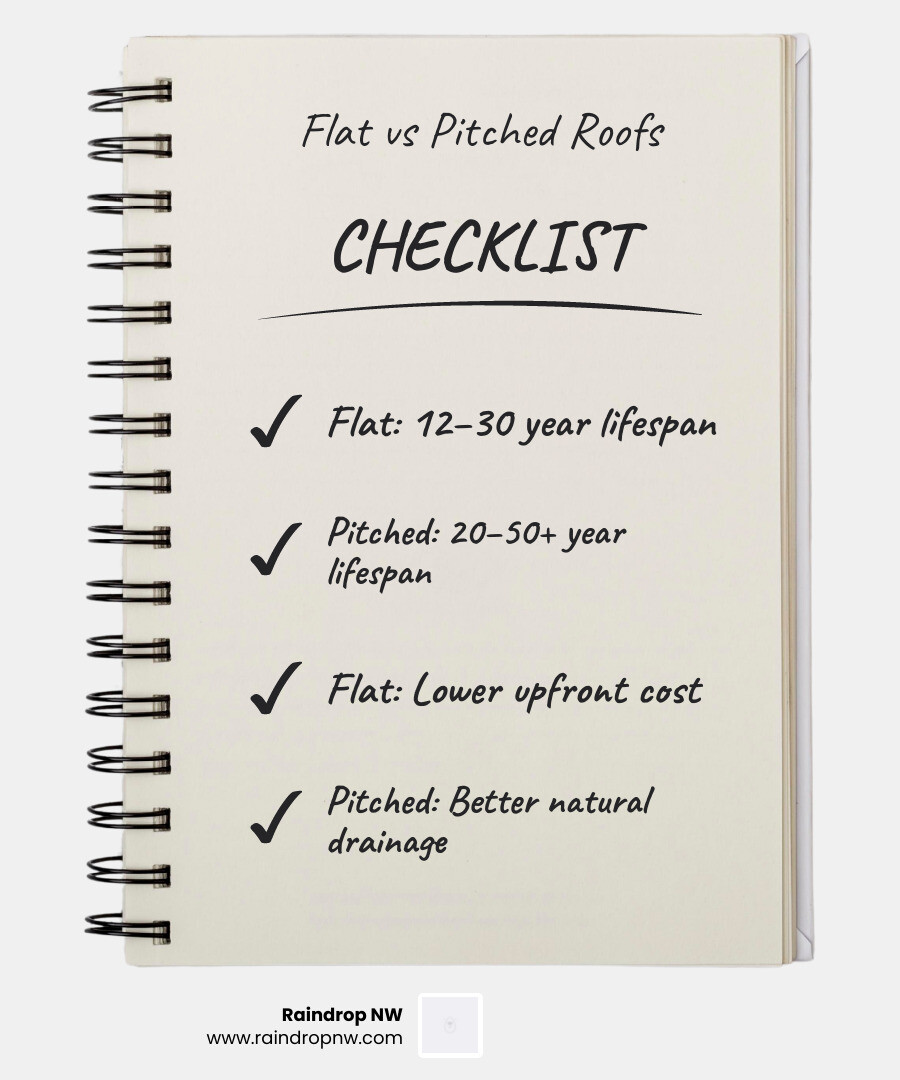
| Lifespan | 12–30 years | 20–50+ years |
| Weather Drainage | Requires active drainage management | Sheds water and snow naturally via gravity |
| Usable Space | Rooftop decks, gardens, HVAC | Attic storage, vaulted ceilings, loft space |
| Maintenance | More frequent inspections needed | Lower routine maintenance over time |
The short answer: If you want lower upfront costs and usable rooftop space, a flat roof has real appeal. If you want longer lifespan, better drainage, and lower long-term maintenance — especially here in the Pacific Northwest where rain is a way of life — a pitched roof typically wins.
Your roof is one of the biggest decisions you’ll make for your home. It shapes how your house looks from the street, how well it holds up against Oregon’s relentless wet seasons, and what your maintenance calendar looks like for the next few decades. Yet most homeowners don’t think deeply about roof style until they’re already replacing one — often under pressure, and without time to weigh the real trade-offs.
That’s exactly why this guide exists. Whether you’re building new, replacing an aging roof, or just trying to understand what you’re working with, understanding the core differences between flat and pitched roofs helps you make a smarter, more confident decision.
I’m Torrey Yungeberg, owner of Raindrop Roofing NW, and I’ve spent years helping Oregon homeowners navigate this exact flat roof vs pitched roof comparison — from residential reroof projects to advising on new construction. I’ll walk you through everything that actually matters, without the fluff.
When we talk about the structural skeleton of your home, the roof is the crowning achievement. The fundamental difference lies in how they handle weight and water.
A pitched roof is designed with a steep angle—typically between 20° and 45°—which allows it to utilize gravity as a primary defense mechanism. Structurally, these roofs often rely on a system of rafters or trusses that meet at a central ridge. This triangular shape is incredibly strong and naturally creates a void between the ceiling of the top floor and the roof itself.
On the flip side, a flat roof isn’t actually “flat” in the way a kitchen table is. If it were, it would become a swimming pool after the first Portland rainstorm. Instead, it features a very slight pitch, often just 1/4 to 1/2 inch per foot. Structurally, flat roofs use horizontal joists similar to floor systems. Because they don’t have the natural strength of a triangle, they require careful engineering to handle “live loads” like snow or people walking on them.
For those looking into the nuts and bolts of how these systems are built, More info about residential roofing can provide deeper insight into the local standards we use here in the Beaverton area.

Design and Interior Space Impact
The roof style you choose dictates the “feel” of your interior. In a flat roof vs pitched roof comparison, the impact on your living space is massive:
- Pitched Roofs: These are the kings of character. They allow for vaulted ceilings that make rooms feel twice as large. They also provide that classic attic storage space or the potential for a cozy loft conversion.
- Flat Roofs: These offer a more “compact” footprint. Because there is no attic, the ceiling height is consistent throughout the top floor. This is often a huge advantage for homeowners in areas with strict height restrictions or for those who want a sleek, minimalist modern aesthetic.
Performance, Weather Resistance, and Durability
In the Pacific Northwest, “weather resistance” is just another way of saying “how well does this handle rain?”
Pitched roofs are the gold standard for wet climates. Because of their slope, water and snow move off the surface almost instantly. This reduces the time moisture spends sitting on your roofing materials, which naturally extends the life of the roof. An asphalt shingle pitched roof can easily last 20 to 30 years, while premium materials like metal or composite can push past the 50-year mark.
Flat roofs face a tougher battle. Because water moves slowly across a flat surface, any small dip can lead to “ponding”—water that sits for more than 48 hours. This standing water is the enemy of longevity. While modern membranes like TPO and EPDM have made flat roofs much more reliable than they were in the 1970s, they still generally have a shorter lifespan, often requiring replacement every 12 to 25 years depending on the material and local conditions.
| Feature | Flat Roof | Pitched Roof |
|---|---|---|
| Lifespan | 12–30 Years | 20–50+ Years |
| Leak Risk | Higher (due to ponding) | Lower (natural runoff) |
| Snow Load | Vulnerable to accumulation | Naturally sheds heavy snow |
| Wind Resistance | Excellent (low profile) | High (if using impact-rated materials) |
To keep these systems performing at their peak, regular check-ups are non-negotiable. You can find More info about roof inspections and certifications to see how we verify the health of these different styles.
Maintenance Needs for a Flat Roof vs Pitched Roof Comparison
Maintenance is where the “personality” of your roof really shows.
If you have a pitched roof, your main chores involve keeping the gutters clear and checking for missing shingles after a windstorm. Because you can often see a pitched roof from the ground, it’s easier to spot problems like moss growth or debris buildup before they become emergencies.
Flat roofs require a bit more “hands-on” parenting. Because they don’t shed debris easily, leaves and pine needles can quickly clog scuppers and drains. If a drain clogs on a flat roof, you don’t just get a messy gutter—you get a heavy pool of water that can lead to structural rot or immediate leaks. We recommend flat roof owners inspect their systems at least twice a year and after every major storm. For those who prefer to leave it to the pros, More info about repairs and maintenance details how we handle these specific challenges.
Material Options and Energy Efficiency
The materials used in a flat roof vs pitched roof comparison are quite different, and each has its own energy profile.
For pitched roofs, the most common choice is asphalt shingles, though many Beaverton homeowners are moving toward metal or composite tiles for their durability and style. These roofs rely on an attic space to provide a thermal buffer, which, when properly ventilated, keeps your home cool in the summer and dry in the winter.
Flat roofs utilize “membrane” systems. You’ll often hear terms like TPO (Thermoplastic Polyolefin), EPDM (a durable synthetic rubber), or PVC. TPO is particularly popular for energy efficiency because it is typically white and highly reflective. This “cool roof” technology reflects UV rays away from the house, which can significantly lower cooling costs during those occasional Oregon heatwaves. You can explore these further with More info about roof types and products.
Usability and Long-Term Value in a Flat Roof vs Pitched Roof Comparison
This is where flat roofs get their revenge. While pitched roofs offer attic storage, flat roofs offer living space.
Imagine a rooftop garden, a private sun deck, or a dedicated space for your HVAC equipment that doesn’t take up yard space. In urban areas like Portland or parts of Beaverton where lot sizes are smaller, a flat roof can effectively double your usable outdoor area. However, this requires specialized waterproofing. If you’re considering turning your roof into a hangout spot, More info about waterproof deck surfaces is essential reading.
From a resale perspective, pitched roofs are often viewed as the “safer” bet by traditional buyers because of their longevity. However, a well-maintained, modern flat roof with a functional deck can be a massive selling point for younger buyers looking for that contemporary “city” vibe.
Frequently Asked Questions
Which roof type is better for heavy rain and snow?
In the Pacific Northwest, the pitched roof is generally superior for heavy precipitation. Its steep angle ensures that rain and melting snow exit the structure immediately, preventing the ponding and ice dams that can plague flat roofing systems.
How do lifespans compare between these styles?
Pitched roofs almost always last longer. A standard asphalt pitched roof lasts about 25 years, while high-end materials can last 50+. Flat roofs typically last between 15 and 25 years, though high-quality EPDM or TPO installations can push toward 30 years with meticulous maintenance.
Can I install solar panels on both roof types?
Absolutely! In fact, flat roofs can sometimes be even better for solar because you can use “tilt-up” racking systems to orient the panels at the perfect angle for the sun, regardless of which way the house faces. Pitched roofs are also excellent, provided you have a south-facing slope with enough surface area.
Conclusion
Choosing between a flat and pitched roof isn’t just about what looks better on a blueprint; it’s about how you want to live in your home and how much time you want to spend thinking about your roof.
At Raindrop NW, we’re proud to be a truly local, independently owned company right here in Beaverton. Unlike the big out-of-state firms that have been buying up local shops lately, we live in the same rainy climate you do. We’re committed to long-term service and accountability—because we’re going to see you at the grocery store next week.
Whether you’ve decided on the sleek lines of a flat roof or the timeless protection of a pitched one, we’re here to make sure it’s installed to last. If you’re ready to upgrade your home’s protection, check out More info about new replacement roofs and let’s get your project started.




Leave a Reply
Want to join the discussion?Feel free to contribute!