
Stop Roof Disasters Before They Start
Why How Regular Inspections Catch Problems Early Is the Smartest Thing You Can Do for Your Roof
How regular inspections catch problems early comes down to one simple idea: a trained eye can spot what you can’t see from the ground — before a small issue turns into a serious repair bill.
Here’s a quick look at what regular roof inspections catch and why it matters:
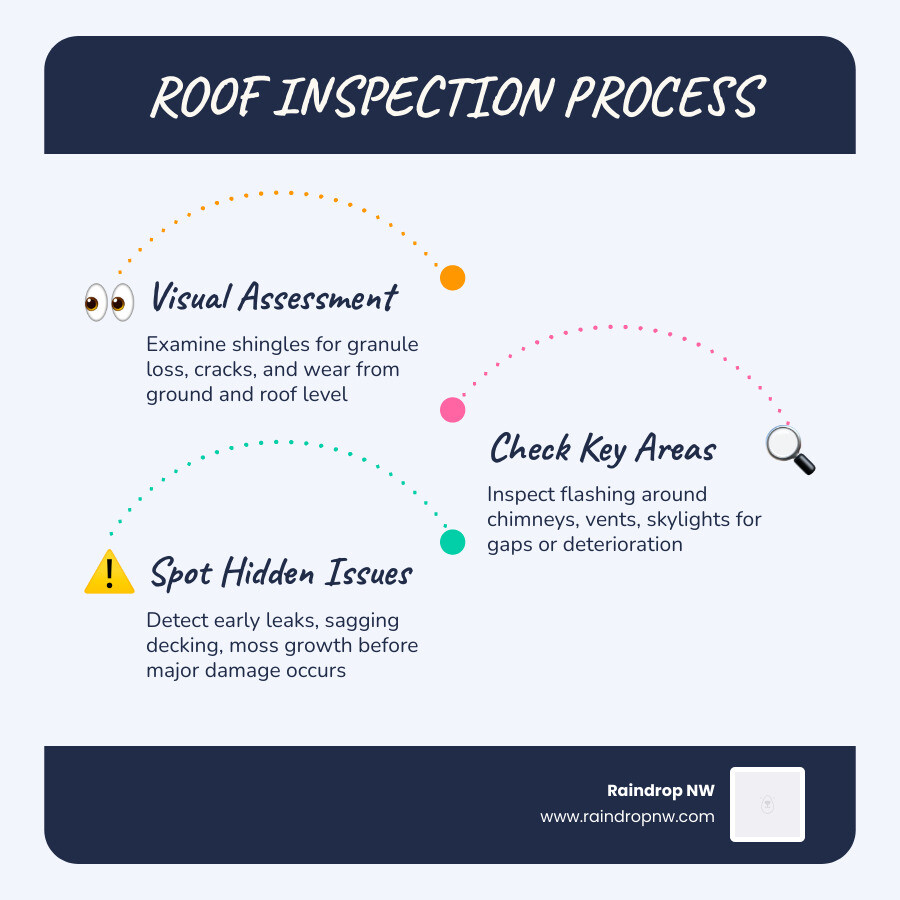
- Granule loss – worn shingles losing their UV protection, signaling the end of their lifespan
- Flashing failures – gaps around chimneys, vents, and skylights that let water sneak in
- Sagging roof decking – early signs of structural weakness from moisture or age
- Moss and algae growth – surface damage that works its way under shingles over time
- Minor leaks – small water intrusions that silently cause mold, rot, and ceiling damage if ignored
- Storm damage – wind uplift or hail hits that aren’t obvious until the next heavy rain
A minor roof leak caught early costs a few hundred dollars to fix. Left alone, that same leak can spiral into thousands in water damage, mold remediation, and structural repairs. The math is simple — catching problems early protects your home and your wallet.
I’m Torrey Yungeberg, owner of Raindrop Roofing NW, and after years of inspecting roofs across Oregon and Southwest Washington, I’ve seen how regular inspections catch problems early and save homeowners from expensive surprises. Keep reading and I’ll walk you through exactly what to look for, how often to check, and when to call in a pro.
The Core Benefits: How Regular Inspections Catch Problems Early
When we talk about how regular inspections catch problems early, we aren’t just talking about looking for holes in the ceiling. We are talking about preserving the very skeleton of your home. In the Pacific Northwest, where the rain is as much a part of life as coffee and hiking boots, your roof is your first and most important line of defense.
Protecting Your Home’s Structural Integrity
A roof is more than just shingles; it’s a complex system of ventilation, insulation, and structural support. When moisture gets past the outer layer, it attacks the wooden rafters and decking. By the time you see a brown spot on your living room ceiling in Beaverton or Hillsboro, the water has likely been traveling through your attic for months.
Proactive residential roofing services identify these moisture entry points when they are still “micro-leaks.” Fixing a small area of compromised flashing might take an hour, but replacing rotted support beams can take days and cost a fortune.
Boosting Property Value and Saleability
If you’re planning to sell your home in Portland or Lake Oswego, a documented history of roof inspections and certifications is a massive asset. Research shows that homes sold with pre-listing inspections spend 45% less time on the market. Buyers in April 2026 are savvy; they want proof that the home has been cared for. A “clean bill of health” from a local expert gives them the confidence to make a higher offer without fear of hidden “money pits.”
Safety and Health Improvements
Water damage isn’t just a structural issue—it’s a health hazard. Undetected leaks lead to mold and mildew growth in attics and wall cavities. This can severely impact indoor air quality, triggering allergies and respiratory issues. Furthermore, water dripping onto electrical wiring is a major fire hazard. Catching these leaks early keeps your family safe and your air clean.
Insurance Compliance and Peace of Mind
Many homeowners don’t realize that insurance companies can actually deny claims if they determine the damage was caused by a “lack of maintenance.” Regular inspections provide a paper trail of diligence. If a freak storm hits Tualatin or Tigard, having a recent inspection report proves that your roof was in good condition prior to the event, making the claims process much smoother.

7 Hidden Issues Detected by Proactive Roof Assessments
You might look up at your roof while mowing the lawn and think everything looks fine. But professional repairs and maintenance specialists use tools and techniques to see the “invisible” threats. Here are seven things we look for that the average homeowner might miss:
- Granule Loss: Those little pebbles on your shingles aren’t just for decoration; they protect the asphalt from UV rays. If we see bald spots or piles of granules in your gutters, it means your shingles are becoming brittle and are nearing the end of their life.
- Flashing Fatigue: Flashing is the metal material that seals the gaps around vents, chimneys, and valleys. Over time, the sealant cracks. We catch these gaps before the next big Portland downpour.
- Pest Activity: Termites and carpenter ants love damp wood. In fact, termites cause an estimated $5 billion in property damage in the U.S. annually. By catching a small leak early, we remove the “welcome mat” for these pests.
- Sagging Decks: If the roofline looks a bit “wavy,” it often indicates that the plywood underneath is warping due to moisture. This is a red flag for structural compromise.
- Compromised Waterproof deck surfaces: For homes with flat roofs or walk-out decks, the membrane must be perfectly sealed. We look for “bubbling” or “alligatoring” which suggests the surface is failing.
- Pipe and Vent Corrosion: Metal vents can rust, and rubber boots around plumbing pipes can dry rot. These are tiny components, but they are common culprits for “mystery leaks.”
- Attic Ventilation Blockages: Sometimes the problem isn’t the roof itself, but the air underneath it. If your soffit vents are blocked by insulation, heat builds up, “cooking” your shingles from the inside out and leading to premature failure.
Wear vs. Damage: What’s the Difference?
| Issue | Minor Wear (Catch it Now) | Major Damage (Too Late) |
|---|---|---|
| Foundation | Hairline cracks ($500 fix) | Structural shifting ($10,000+ fix) |
| Roof Leak | Small stain/drip ($300 fix) | Mold & rotted rafters ($20,000 fix) |
| Pests | Early activity detection | Full colony infestation & structural loss |
| Electrical | Loose wiring/outdated panel | House fire or total rewiring ($16,000) |
Determining Your Ideal Inspection Frequency
How often should you be asking how regular inspections catch problems early? While a general rule is once a year, several factors in the Pacific Northwest can change that timeline.
Factors That Influence Your Schedule
- Home Age: If your roof is over 15 years old, it needs more frequent check-ups. Materials become more brittle as they age, and seals are more likely to fail.
- Material Type: Asphalt shingles usually need annual checks, whereas high-end metal or tile roofs might go longer—though they still need gutter and flashing reviews.
- Climate Factors: Here in the Beaverton and Vancouver area, we deal with heavy rain, moss, and the occasional ice storm. This “wet-dry” cycle is brutal on roofing materials.
- Surrounding Trees: If you have large Douglas firs or maples overhanging your home in Lake Oswego, you need more frequent inspections to ensure needles and debris aren’t clogging your drainage systems.
For those considering new replacement roofs, we recommend an inspection within the first year to ensure everything is settling correctly and then moving to a regular maintenance schedule. You can find more tips on this in our owner resources.
How regular inspections catch problems early in older homes
Older homes in historic parts of Oregon City or Westmoreland often have layers of old roofing or aging “cedar shake” underneath newer shingles. These homes are prone to foundation settling, which can pull roof joints apart. Regular inspections for these homes focus on “movement”—checking to see if the roof is still square and if the historical materials are holding up against modern weather patterns.
How regular inspections catch problems early after extreme weather
After a major windstorm or hail event in the Tualatin Valley, you shouldn’t wait for your annual check-up. Wind can lift shingles just enough to break the sealant strip without blowing them off completely. This “wind uplift” allows rain to blow underneath. Specialized commercial roofing inspections and residential storm checks look for these hidden punctures and lifted edges that the naked eye misses from the driveway.
When to Schedule Specialized Roofing Evaluations
Sometimes, a standard visual walk-around isn’t enough. As we move further into 2026, technology has given us better ways to see what’s happening inside your roof.
Advanced Detection Tools
- Infrared Scans: We use thermal imaging cameras to detect “cold spots” in your ceiling. Since wet insulation holds temperature differently than dry insulation, we can find a leak’s origin even if there’s no visible water yet.
- Moisture Meters: These tools allow us to measure the actual moisture content of the wood decking to see if it’s within a safe range.
- Drone Surveys: For very steep or fragile roofs, drones allow us to get high-resolution photos of every shingle without stepping foot on the surface, preventing accidental damage to aging materials.
Buying and Selling Stages
If you are in the middle of a real estate transaction, standard home inspections often have limitations. Many general inspectors won’t even climb onto the roof! This is where real estate partnerships with roofing specialists become vital. Whether you need roof certifications to close a deal or a geotechnical analysis of how drainage is affecting your foundation, getting a specialist involved is the only way to avoid “buyer’s remorse.”
Frequently Asked Questions about Roof Maintenance
How often should I get a maintenance inspection?
We generally recommend a professional inspection once a year, ideally in the spring or fall. In the Pacific Northwest, fall is a great time to ensure your roof is ready for the winter “big rains.” However, if you live in a heavily wooded area like West Linn or Camas, bi-annual checks (every six months) are smarter to keep gutters clear and moss at bay. Working with a manufacturer certified roofing contractor ensures that your warranty stays valid, as many manufacturers require proof of maintenance.
Can I perform my own roof inspection?
You can (and should!) do visual checks from the ground with a pair of binoculars. Look for missing shingles or sagging lines. However, we strongly discourage homeowners from climbing onto their own roofs. Aside from the obvious safety risks, an untrained person can actually cause damage by walking on fragile shingles or failing to spot the subtle signs of “bridging” or “alligatoring.” A pro knows where to step and what to look for. Plus, we have the right roof types and products knowledge to know exactly how different materials should behave.
What happens if the inspector finds a problem?
Don’t panic! Most issues caught during a regular inspection are minor. We provide a detailed report, often with photos (check our roof gallery to see examples of what we find). We’ll categorize findings into “Urgent” (fix now to prevent damage), “Monitor” (it’s okay for now but will need help soon), and “Maintenance” (like cleaning gutters or removing moss). We’ll work with you to create an action plan that fits your needs.
Conclusion: Trust the Local Experts at Raindrop NW
At the end of the day, how regular inspections catch problems early is about more than just a roof—it’s about the people living under it. At Raindrop NW, we are deeply rooted in the Beaverton community. We aren’t some giant corporation owned by an out-of-state investment firm; we are your neighbors.
When you choose us, you’re choosing a team that understands the specific challenges of Oregon and Washington weather. We are committed to long-term service and accountability. We don’t just want to fix your roof today; we want to be the team you trust to protect your home for the next twenty years.
Don’t wait for a drip to become a flood. Schedule a professional roof inspection with us today and let’s make sure your home is ready for whatever the Pacific Northwest throws at it. Whether you’re in Portland, Gresham, Vancouver, or anywhere in between, we’re here to help you stop roof disasters before they start.




Trackbacks & Pingbacks
[…] During a Professional Roof Inspection. Regular assessments are key to saving money; discover how in How Regular Inspections Catch Problems Early, How Regular Inspections Prevent Major Problems, and How Inspections Prevent Costly […]
Leave a Reply
Want to join the discussion?Feel free to contribute!