
When a Roof Repair Isn’t Enough: Replacement Survival Guide
When a Roof Repair Isn’t Enough: How to Know It’s Time to Replace
When a roof repair isn’t enough and replacement is needed, the decision comes down to a few clear signals most homeowners can identify before spending another dollar on patches that won’t hold.
Quick Answer: Replace Instead of Repair When…
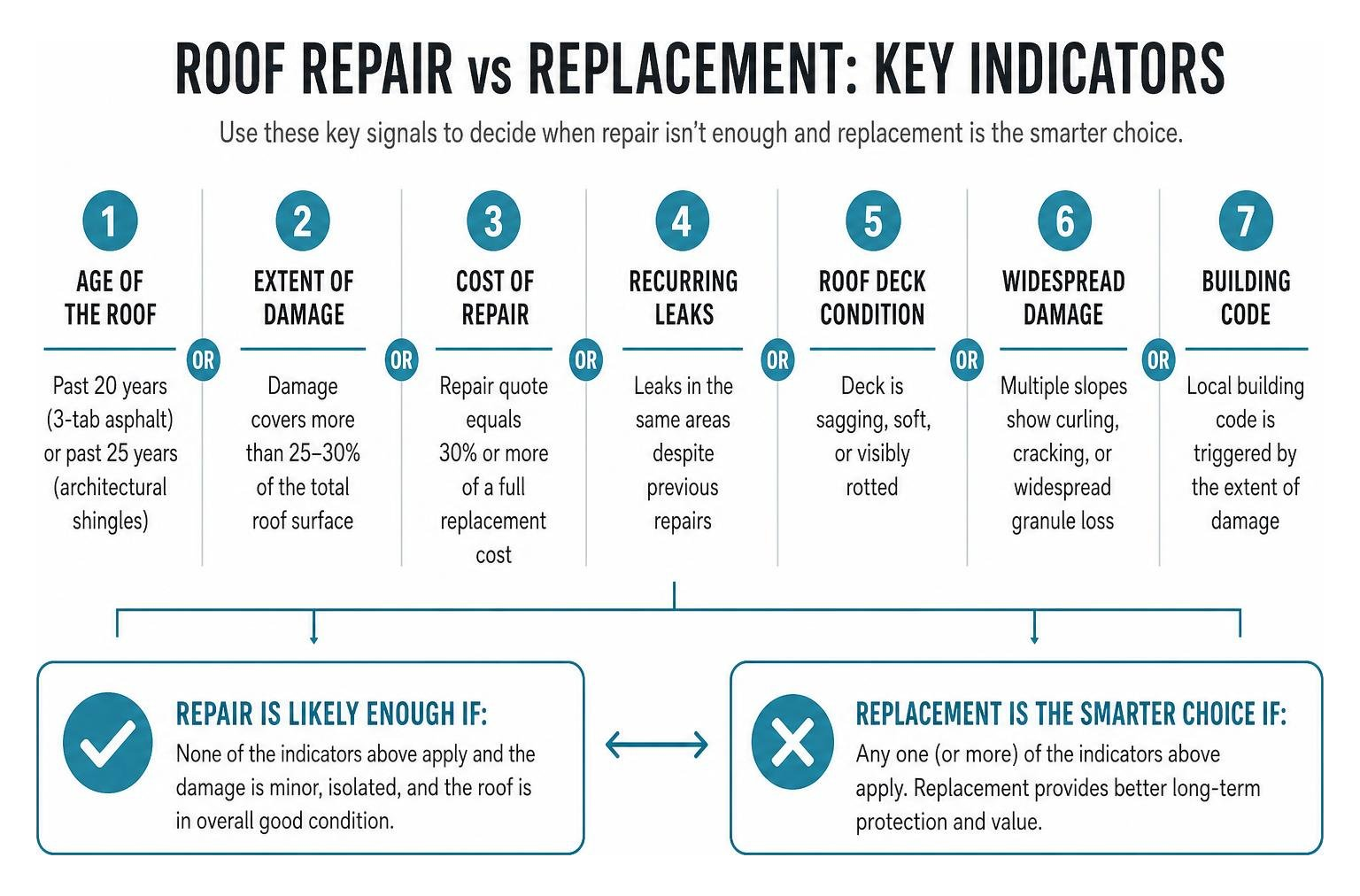
- Your roof is past 20 years old (3-tab asphalt) or past 25 years (architectural shingles)
- Damage covers more than 25–30% of the total roof surface
- Your repair quote equals 30% or more of a full replacement cost
- You have recurring leaks in the same areas despite previous repairs
- The roof deck is sagging, soft, or visibly rotted
- Multiple slopes show curling, cracking, or widespread granule loss
- Local building code is triggered by the extent of damage
Most homeowners reach for the cheapest option when a roof problem shows up — and that instinct makes sense. But a repair that buys you two years on a roof that’s already failing isn’t saving you money. It’s delaying a larger bill while the damage quietly spreads into your decking, insulation, and framing underneath.
Here in the Pacific Northwest, that window of delay tends to close faster than homeowners expect. Oregon’s persistent rain, moss pressure, and freeze-thaw cycles are hard on roofing systems — and a roof that’s limping along on patches is one wet winter away from becoming a much bigger problem.
This guide walks you through exactly when repair stops making sense and replacement becomes the smarter, more protective choice — covering everything from age thresholds and damage percentages to building codes, insurance math, and material performance.
I’m Torrey Yungeberg, owner of Raindrop Roofing NW and a roofing professional with deep roots in the Oregon trades, and I’ve helped hundreds of homeowners navigate the exact question of when a roof repair isn’t enough and replacement is needed — often saving them from costly mistakes in both directions. Let’s get into what actually matters when you’re making this call.
Key Signs When a Roof Repair Isn’t Enough and Replacement Is Needed
Spotting the warning signs early can mean the difference between a controlled, planned replacement and an emergency situation in the middle of a November rainstorm. While minor roof issues like a single loose shingle or a displaced pipe boot can be fixed quickly, systemic failures require a total reset. Knowing the Signs Your Roof Needs Repair Or Replacement helps you protect your home’s structural shell.
When evaluating your roof’s condition, look beyond individual surface defects. A single problem area usually indicates an isolated issue, but widespread symptoms point to widespread degradation.

Roof Age and Material Lifespan Benchmarks
The age of your roofing system is the single most important factor when weighing a spot repair against a full replacement. As materials age, they lose their natural flexibility, waterproofing oils, and protective surface coating.
When you evaluate Should I Repair Or Replace My Roof, comparing the current age of your materials against industry expectations is essential. Understanding When Should You Replace Your Roof starts with these standard material lifespans:
- 3-Tab Asphalt Shingles: 15–20 years (often showing severe wear around year 15 in wet climates)
- Architectural Asphalt Shingles: 25–30 years (high-performance composite design)
- Standing Seam Metal Roofing: 40–70 years (exceptionally resistant to water intrusion)
- Clay and Concrete Tile: 30–50 years (underlayment usually fails before tiles)
- Slate Roofing: 75–100+ years (natural stone longevity)
If your 3-tab asphalt roof is 18 years old, attempting a repair on a small leak is rarely cost-effective. Brittle shingles tend to break when lifted during patching, which often creates new leaks right next to the original fix.
Structural Failure and Recurring Leaks
Water that penetrates the outer protective layer eventually reaches the underlying wood decking, rafters, and interior insulation. Over time, persistent exposure leads to wood rot, swelling, and severe loss of load-bearing strength.
If you notice a visibly dipping or sagging ridge line, wood deck rot has already taken hold. In these situations, asking Is It Worth Fixing An Old Roof has an unequivocal answer: a simple surface patch cannot fix structural framing damage.
Furthermore, understanding How Persistent Rain And Humidity Stress Your Roof explains why recurring leaks in the same location are so dangerous. When water consistently finds a way through, it often travels along rafters, making the entry point difficult to locate without exposing the decking beneath.
Evaluating Damage Extent, Building Codes, and Financial Ratios
When deciding between patching and replacing, you must evaluate physical damage alongside legal compliance and long-term financial math.
To help simplify this decision, consult our framework comparing repair and replacement factors:
| Decision Factor | Repair Is Appropriate | Replacement Is Required |
|---|---|---|
| Roof Lifespan Used | Less than 50% of expected life | Over 75%–80% of expected life |
| Surface Damage Area | Less than 10% isolated area | Exceeds 25%–30% of surface area |
| Repair-to-Replacement Ratio | Below 30% of replacement quote | Equals or exceeds 30%–50% ratio |
| Building Code Threshold | Under 25% damaged in 12 months | Exceeds 25% code threshold |
| Structural Integrity | Decking solid, rafter frame sound | Decking rotted, sagging rooflines |
| Shingle Availability | Matching color & profile in stock | Discontinued, faded, mismatched |
The 30% Rule and When a Roof Repair Isn’t Enough and Replacement Is Needed
The roofing industry relies on the 30% Rule as an economic benchmark. This principle works across two distinct metrics: surface area and total expense.
First, if physical damage impacts more than 30% of your total roof surface, localized patching becomes impractical. At that point, the surrounding un-damaged area is usually near the end of its useful lifespan as well.
Second, if the estimated cost of repairs equals or exceeds 30% of a full replacement bid, investing in replacement is mathematically smarter. A patch only fixes a specific spot without adding warranty protection to the remaining system. By contrast, a total tear-off resets your roof’s service clock and restores full warranty coverage. Evaluating these choices with a Cost Of Repairing Vs Replacing Your Roof analysis ensures you allocate your home maintenance budget wisely. For a broader look at project considerations, review our Roof Replacement Cost Guide For Homeowners.
Building Code Mandates and the 25% Rule
Local municipal building codes frequently dictate whether a partial repair is legally permissible. Many jurisdictions across Oregon enforce strict rules regarding partial re-roofing projects.
Under the widely adopted 25% Rule, if more than 25% of a total roof section is damaged or repaired within a 12-month period, building regulations mandate a complete tear-off and replacement of that entire roof section.
Additionally, residential building codes strictly limit how many layers of asphalt shingles can exist on a home—typically allowing a maximum of two layers. If your home already has two layers of shingles, placing a third layer over them is prohibited. A full tear-off is legally required to bring your structure back into code compliance. Always double-check these details when Understanding Roofing Estimates And What To Look For.
How Roof Materials and Insurance Coverage Impact Your Decision
The material on your roof significantly influences how damage develops, how insurance claims are handled, and whether seamless repairs are even possible.
Material Characteristics and Shingle Degradation
Different roofing systems handle weather conditions differently:
- Asphalt Composite Shingles: Highly versatile, but susceptible to moss growth, thermal cracking, and loss of protective surface granules over time.
- Metal Roofing Systems: Exceptionally resistant to severe wind, heavy rain, and moss accumulation. While individual panel repairs can be complex, full systems easily last 40 to 70 years.
- Clay and Concrete Tile: Highly durable against weather exposure, but tiles can crack under foot traffic or falling branches. The underlying felt underlayment often degrades long before the tile exterior fails.
Understanding Roof Types And Materials Compared For Pacific Northwest Homes helps homeowners select replacement systems suited to damp regional environments. Comparing an Asphalt Shingle Vs Metal Roof Comparison can also highlight long-term maintenance advantages.
Insurance Coverage Rules and Policy Thresholds
When storm events or falling tree limbs cause roof damage, homeowners insurance plays a crucial role in deciding whether a roof gets repaired or fully replaced.
Understanding How Roof Age Affects Your Insurance Claim is vital. Insurance carriers commonly transition coverage terms based on system age:
- Replacement Cost Value (RCV): Typical for roofs under 15 years old. The policy pays to replace damaged roofing materials with new items of like kind and quality, minus your deductible.
- Actual Cash Value (ACV): Frequently applied to roofs older than 15 to 20 years. The insurer depreciates payout amounts based on age and wear, leaving homeowners with higher out-of-pocket expenses.
If sudden, covered storm perils affect a major portion of an older roof, insurance coverage can alter the economic equation. Reviewing Does Insurance Cover Roof Replacement and Understanding Your Insurance Policy And Roofing Coverage will help clarify your policy obligations.
Why Shingle Matching Fails When a Roof Repair Isn’t Enough and Replacement Is Needed
Even when a roof’s structural wood decking is sound, physical aesthetics can make spot repairs impractical. When replacing damaged shingles on an aging roof, achieving a clean visual match is nearly impossible due to:
- Color Batch Variations: Shingle manufacturers alter dye lots over time, meaning even identical brand products differ slightly between manufacturing runs.
- UV Fading and Weathering: Years of direct sunlight and moisture exposure fade original shingle colors, rendering new replacement shingles noticeably darker.
- Discontinued Product Lines: Shingle lines and color profiles are regularly updated or phased out by manufacturers.
- HOA Compliance Rules: Many homeowner associations enforce strict aesthetic uniformity. Patchwork repairs with mismatched colors often violate community guidelines.
When shingle patching leaves obvious patches across prominent roof faces, full replacement is often necessary to preserve home curb appeal and property resale value. Learn more about How Shingle Grade Affects Lifespan And Appearance.
Frequently Asked Questions About Roof Replacement
How do building code requirements force a full roof replacement instead of a spot repair?
Building codes protect structural safety. If wind or storm damage impacts more than 25% of a roof surface within a 12-month period, local codes typically mandate replacing the entire section to guarantee uniform weatherproofing.
Furthermore, if your roof already has two layers of shingles installed, building codes prohibit adding a third layer because of weight limitations. In that scenario, a full tear-off down to the wood deck is required by law.
What structural issues make a full replacement unavoidable?
A full replacement is unavoidable whenever the underlying structure is compromised. Signs include a sagging ridge line, visibly rotted deck sheathing, soft decking underfoot, or rafter deflection.
When structural framing or plywood deck panels rot from long-term moisture exposure, surface repairs cannot restore structural integrity. The old roofing materials must be removed to replace water-damaged deck boards and reinforce framing.
What are the financial risks of repeated repairs on an aging roof?
Repeatedly patching an aging roof creates a compounding financial drain. Spending money on frequent spot fixes across an old system doesn’t extend the roof’s overall service life or provide new warranty protection.
Additionally, lingering micro-leaks often trap moisture inside attic spaces, rotting wood framing, ruining ceiling insulation, and fostering toxic mold growth—leading to secondary repairs that far outpace the cost of an timely, planned roof replacement.
Conclusion
Knowing when a roof repair isnt enough and replacement is needed boils down to balancing system age, physical damage area, code requirements, and long-term value. While a quick patch can buy time for isolated damage on a young roof, attempting to extend the life of an exhausted roofing system only increases the risk of costly interior structural damage.
A new full roof replacement does more than stop water leaks—it restores total peace of mind, improves energy efficiency, and typically recoups 60% to 85% of its value in added home resale equity.
At Raindrop NW, we are a family-owned, truly local roofing company based in Beaverton, serving homeowners across Portland, Tigard, Lake Oswego, Hillsboro, and the greater PNW region. Our team believes in straight talk, transparent inspections, and craftsmanship built to withstand Oregon weather for decades to come.
Ready to protect your home with an honest, expert assessment? Schedule a professional roof evaluation with Raindrop NW today!




Leave a Reply
Want to join the discussion?Feel free to contribute!