
The Definitive Guide to Cost of Repairing vs Replacing Your Roof
Is It Cheaper to Repair or Replace Your Roof? Here’s What Oregon Homeowners Need to Know
Understanding the cost of repairing vs replacing your roof is one of the most important financial decisions you’ll make as a homeowner — and the right answer isn’t always obvious. A small leak after a Pacific Northwest storm might only need a targeted fix. But an aging roof with recurring problems across multiple areas could cost you far more in repeated repairs than a single full replacement would.
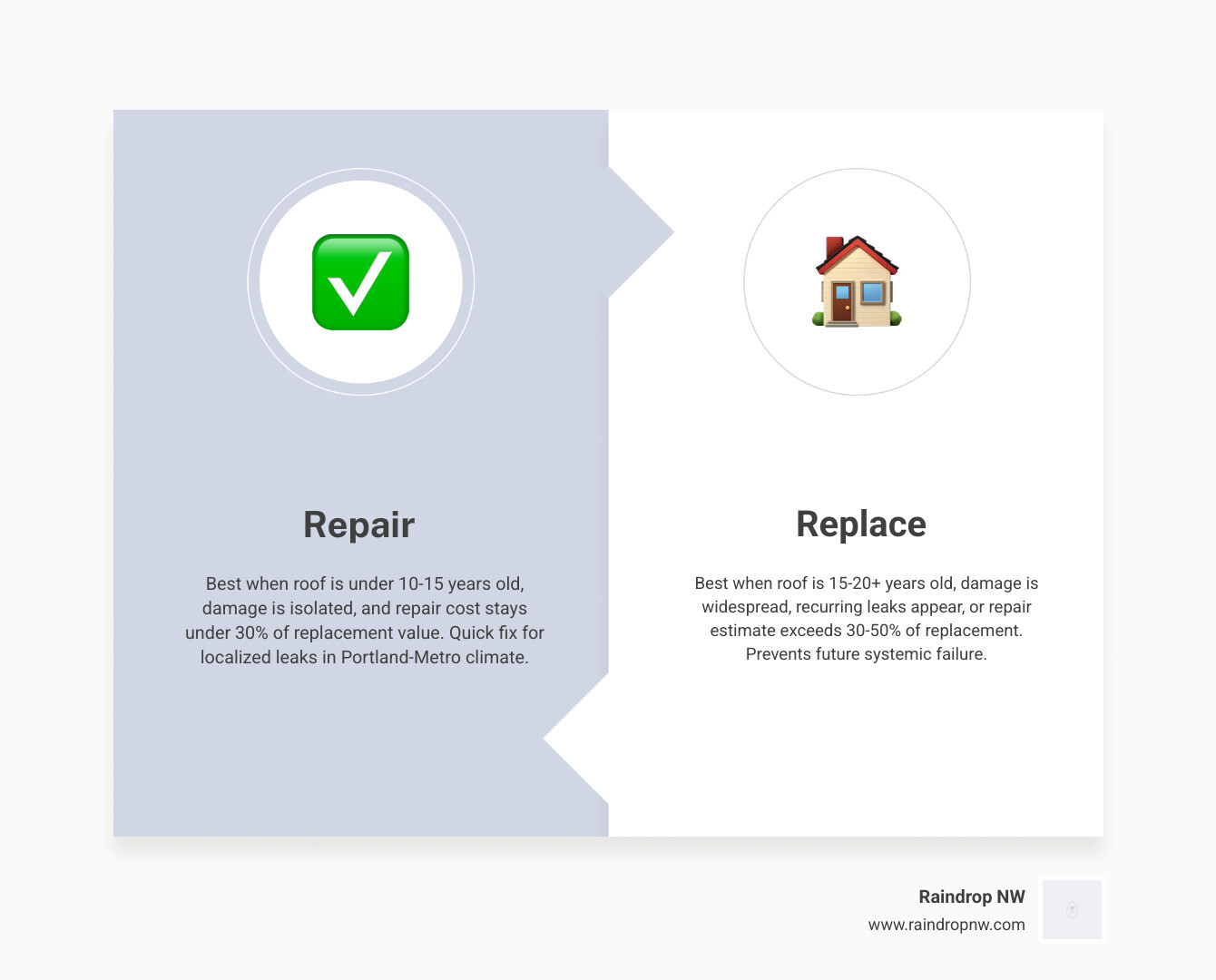
Here’s a quick snapshot to help you decide:
| Situation | Likely Best Choice |
|---|---|
| Roof under 10-15 years old, isolated damage | Repair |
| Repair estimate under 30% of replacement cost | Repair |
| Roof 15-20+ years old, widespread damage | Replace |
| Repair estimate exceeds 30-50% of replacement cost | Replace |
| Recurring leaks in multiple locations | Replace |
| Severe storm or hail damage across multiple slopes | Replace |
Keep reading for a full breakdown of costs, key decision factors, and what to watch out for when choosing a contractor in the Portland-Metro area.
I’m Torrey Yungeberg, owner of Raindrop Roofing NW, and after years leading a family-owned roofing business across Oregon and Southwest Washington, I’ve helped hundreds of homeowners work through the exact same question about the cost of repairing vs replacing your roof. I’ll walk you through everything you need to make a confident, well-informed decision — no pressure, no guesswork.
Understanding the cost of repairing vs replacing your roof
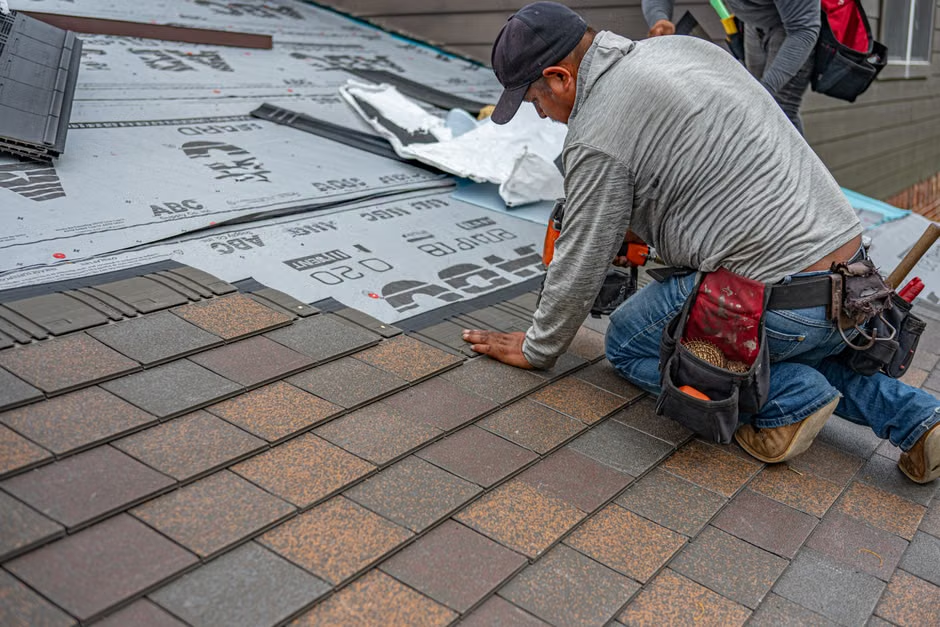
When we arrive at a home in Beaverton or Hillsboro to evaluate a leak, our goal is to provide a clear-eyed assessment of the cost of repairing vs replacing your roof. For many homeowners, the immediate reaction to a leak is a desire for a quick patch. While this is often viable for younger roofs, we have to look at the “30% Rule.”
In the roofing industry, if a repair estimate starts climbing toward 30% or more of what a full replacement would cost, it is almost always the smarter long-term financial move to invest in a new roof. Why? Because a roof requiring such extensive work is often signaling systemic failure. Patching one area might stop a leak today, but in our damp NW Oregon climate, the next weak point is usually just one storm away.
Localized damage, such as a few shingles blown off during a wind event or a single failed pipe boot, is a prime candidate for repair. However, when we see widespread issues like curling shingles, heavy moss growth that has compromised the integrity of the materials, or multiple leaks occurring simultaneously, we are looking at a systemic issue. At that point, the Should I Repair or Replace My Roof? question becomes about protecting your home’s interior from mold and structural rot.
How material choice affects the cost of repairing vs replacing your roof
The materials protecting your home play a massive role in the math. In the Portland-Metro area, we see a wide variety of styles, each with its own “breaking point” for repairs.
- Asphalt Shingles: These are the most common. Standard 3-tab shingles have a shorter lifespan, while architectural shingles are more durable. Repairs are relatively straightforward, but as they age, they become brittle. Trying to “tie in” new shingles to old, brittle ones can often cause more damage than it fixes.
- Metal Roofing: These systems are incredibly durable and can last 40 to 70 years. While the initial investment is higher, repairs are rare. However, if a metal roof is improperly installed or damaged by a major limb fall, the repair can be more technical and labor-intensive.
- Clay Tile and Slate: These are “forever” roofs, often lasting 50 to 100+ years. Repairs usually involve replacing individual broken tiles or fixing the underlayment. Because these materials require specialized labor, the repair price per square foot is significantly higher than asphalt.
Understanding these differences is key to our Roof Replacement Cost Guide for Homeowners, as the material dictates both the upfront price and the frequency of maintenance.
Evaluating the long-term cost of repairing vs replacing your roof
It is easy to look at a repair bill and think you’re saving money, but we encourage our neighbors in Tigard and Lake Oswego to look at the cumulative costs. If you spend money on three different repairs over five years, you may have already paid for half a new roof without getting the benefits of a new warranty or improved energy efficiency.
A new, properly ventilated roof can significantly lower your summer cooling bills in the Willamette Valley. Furthermore, insurance companies are becoming increasingly strict. Many carriers in 2026 may refuse to renew policies or will switch to “Actual Cash Value” (ACV) coverage once a roof passes the 15-year mark. Replacing your roof proactively can keep your premiums lower and ensure you have “Replacement Cost Value” (RCV) protection. Plus, if you plan to sell your home in the next few years, a new roof is one of the highest-ROI upgrades you can make, often recouping a large portion of its value at resale. Knowing How to Extend the Life of Your Roof through maintenance is great, but knowing when to stop the “stacked repair” trap is even better.
Critical Factors in the Repair vs. Replace Decision
Making the right call requires balancing several variables. In Oregon, the weather is our biggest adversary. Constant moisture, moss growth, and the occasional ice storm accelerate wear in ways that dry climates don’t experience.
| Factor | Favor Repair | Favor Replacement |
|---|---|---|
| Age | Under 12 years | Over 18-20 years |
| Damage Extent | Less than 25% of surface | More than 30% or multiple slopes |
| Leak History | First time, isolated spot | Recurring, multiple locations |
| Shingle Condition | Supple, granules intact | Brittle, curling, bald spots |
| Future Plans | Staying 1-3 years | Staying 5+ years or selling soon |
The impact of roof age on your investment
Age is often the ultimate tie-breaker. Asphalt shingles in the Pacific Northwest typically have a realistic lifespan of 20 to 25 years, depending on the quality and how well they were maintained. Once a roof hits the 15-year threshold, the shingles begin to lose their protective granules and the asphalt mat becomes brittle.
If we find significant granule loss in your gutters—looking like coarse sand—it’s a sign the shingles are losing their ability to deflect UV rays and shed water. At this stage, a repair is often just a “band-aid.” We often see that How Regular Inspections Catch Problems Early can help you squeeze a few more years out of a roof, but once the material reaches the end of its chemical life, replacement is the only permanent solution.
When storm and hail damage dictate the path forward
Storm events can change the math instantly. While Oregon doesn’t get the massive hailstorms seen in the Midwest, we do get high-wind events and heavy limbs that can cause widespread impact. If a storm damages more than 25% of a single roof slope, many building codes and insurance policies suggest a full replacement is necessary to ensure structural integrity and a proper shingle match.
Shingle colors are often discontinued every few years. If we can’t find a match for your 12-year-old roof, a repair will leave a visible “patchwork” look that can hurt your home’s curb appeal. In these cases, insurance may cover a full replacement. We also see this frequently with businesses; checking for Signs Your Commercial Roof Needs Attention after a storm is vital for insurance documentation.
When Damage Severity Dictates a Full Replacement
Sometimes the choice is taken out of our hands by the condition of the roof itself. If we step onto a roof in Tualatin and feel “soft spots,” we aren’t just looking at a shingle problem; we’re looking at a structural one.
Identifying minor vs. major repair needs
It helps to know what we consider a “simple” fix versus a major project.
- Minor Repairs: Replacing a cracked pipe boot (the rubber seal around vent pipes), fixing a small section of flashing around a chimney, or replacing a few shingles lost in a windstorm. These are cost-effective and should be done immediately to prevent water from reaching the wood deck.
- Major Repairs: Fixing a valley where two roof planes meet, addressing leaks that have reached the internal rafters, or replacing large sections of ridge caps. If these repairs are needed on an older roof, we will likely discuss the cost of repairing vs replacing your roof with you to ensure you aren’t throwing good money after bad.
Structural issues and safety considerations
If you see sagging in your roofline or daylight visible through the boards in your attic, the situation has moved beyond shingles. Sagging often indicates that the plywood decking or even the rafters have been weakened by long-term moisture.
In the Portland area, moss is a major culprit. It acts like a sponge, holding water against the shingles and eventually wicking it underneath. Once the underlayment fails, the wood begins to rot. If the structural deck is compromised, a “re-roof” (adding a new layer over the old) is not an option. A full tear-off is required to replace the rot and ensure your home is safe. Failing seals around skylights or dormers can also lead to hidden mold growth that requires professional remediation if left too long.
Long-Term Financial Benefits of a New Roof
While a new roof is a significant investment, it provides a “reset button” for your home’s protection. For our clients in Beaverton and Gresham, the peace of mind that comes with a 20-to-50-year warranty is often the biggest selling point.
ROI and property value increases
A new roof is one of the few home improvements that almost everyone agrees adds value. Real estate experts often note that a new roof can recoup 60% to 70% of its cost in home value. For a buyer, seeing a brand-new roof means they won’t have to worry about a major capital expense for decades. It builds immediate confidence. Furthermore, modern materials are far more advanced than those from 20 years ago, offering better wind resistance and specialized coatings that reflect heat, keeping your home more comfortable.
Avoiding the “stacked repair” trap
The “stacked repair” trap is a cycle we hate to see our neighbors fall into. It starts with a $500 fix, then a $1,200 fix a year later, then another $800 fix. Within a few years, you’ve spent thousands of dollars, yet you still have an old roof that could leak at any time. By choosing replacement when the signs point that way, you avoid emergency repair premiums—which are always higher when every roofer in town is busy during a storm—and you prevent the interior damage (ruined drywall, insulation, and flooring) that usually follows a major leak.
Frequently Asked Questions about Roofing Decisions
When is a repair more cost-effective than a replacement?
A repair is usually the winner if your roof is less than 12-15 years old and the damage is localized (like a single leak or a few missing shingles). If the overall health of the shingles is good—meaning they aren’t brittle and haven’t lost their granules—a targeted repair can easily extend the life of the roof for another decade. We generally recommend repair if the total cost stays well under 30% of what a new roof would cost.
How do I know if my roof damage is widespread?
Look for “the big three”:
- Granules: Check your gutters and downspouts. If they are filled with what looks like sand, your shingles are bald and failing.
- Curling and Cracking: If the edges of your shingles are turning upward or look like they are “clawing,” the asphalt has dried out.
- Multiple Leaks: If you have water stains appearing in different rooms or different parts of the attic, the underlayment is likely failing across the entire system.
Does homeowners insurance cover replacement for old roofs?
Insurance is designed to cover “sudden and accidental” damage—like a tree falling or a major windstorm ripping off shingles. It generally does not cover standard wear and tear or a roof that has simply reached the end of its life. However, if an older roof is damaged by a covered storm event, your policy type matters. A “Replacement Cost Value” (RCV) policy may pay for a new roof regardless of age, while an “Actual Cash Value” (ACV) policy will only pay what the old roof was worth at the time of damage, leaving you to cover the difference.
Conclusion
Deciding on the cost of repairing vs replacing your roof doesn’t have to be a stressful “guessing game.” At Raindrop Roofing NW, we believe in the power of local accountability. As a multi-generational, family-owned business based right here in Beaverton, we treat every roof like it’s over our own heads. We don’t use high-pressure sales tactics because we plan to be here serving the Portland-Metro community for another thirty years.
Whether you need a simple shingle replacement in Tigard or a full architectural shingle installation in Vancouver, our team provides transparent, honest assessments. We’ll tell you if a repair is all you need, and we’ll explain exactly why if a replacement is the safer bet for your family’s future.
Don’t wait for the next big Oregon storm to find out where your roof stands. Schedule a free inspection with Raindrop Roofing NW today and let us give you the clarity and craftsmanship you deserve.




Trackbacks & Pingbacks
[…] roof’s service clock and restores full warranty coverage. Evaluating these choices with a Cost Of Repairing Vs Replacing Your Roof analysis ensures you allocate your home maintenance budget wisely. For a broader look at project […]
Leave a Reply
Want to join the discussion?Feel free to contribute!