
Don’t Let the Rain Win with These PNW Roofing Options
Why Roof Types and Materials Compared for Pacific Northwest Homes Is a Decision Worth Getting Right
When it comes to roof types and materials compared for Pacific Northwest homes, not every option holds up equally against Oregon and Washington’s relentless rain, wind, moss, and humidity. Here’s a quick look at how the most common PNW roofing materials stack up:
| Material | PNW Rain Performance | Moss Resistance | Lifespan | Maintenance Level |
|---|---|---|---|---|
| Asphalt Shingles | Good (with algae-resistant coating) | Moderate | 20-30 years | Moderate |
| Metal Roofing | Excellent | High | 50-70 years | Low |
| Cedar Shake | Moderate | Low | 30-50 years | High |
| Synthetic Composite | Very Good | High | 30-50 years | Low |
| Concrete/Clay Tile | Very Good | Moderate | 50-100 years | Moderate |
| Slate | Excellent | High | 75-200 years | Low |
Your roof is the one part of your home that takes a beating every single day in the Pacific Northwest. From November through April, grey skies and heavy rainfall test every shingle, seam, and fastener on your home. Add in gusty coastal winds, shaded lots that trap moisture, and the region’s well-known moss problem, and it becomes clear why the wrong roofing material can mean costly repairs just a few years down the road. The National Roofing Contractors Association (NRCA) points out that material selection is the single most critical factor when it comes to regional climate performance — and in the PNW, that couldn’t be more true.
I’m Torrey Yungeberg, owner of Raindrop Roofing NW, and after years of hands-on experience helping Oregon and Southwest Washington homeowners navigate roof types and materials compared for Pacific Northwest homes, I’ve seen what holds up and what doesn’t in our unique climate. In the sections below, I’ll walk you through each major roofing option so you can make a confident, informed decision for your home.
Roof Types and Materials Compared for Pacific Northwest Homes
Choosing a roof in the Portland metro area isn’t just about picking a color that matches your siding. It is about building a system that can handle a climate where “damp” is the default setting for half the year. In our region, a roof has to be a master of water shedding and algae resistance while providing enough ventilation to keep your attic from becoming a sauna.
What Pacific Northwest homes need from a roof first
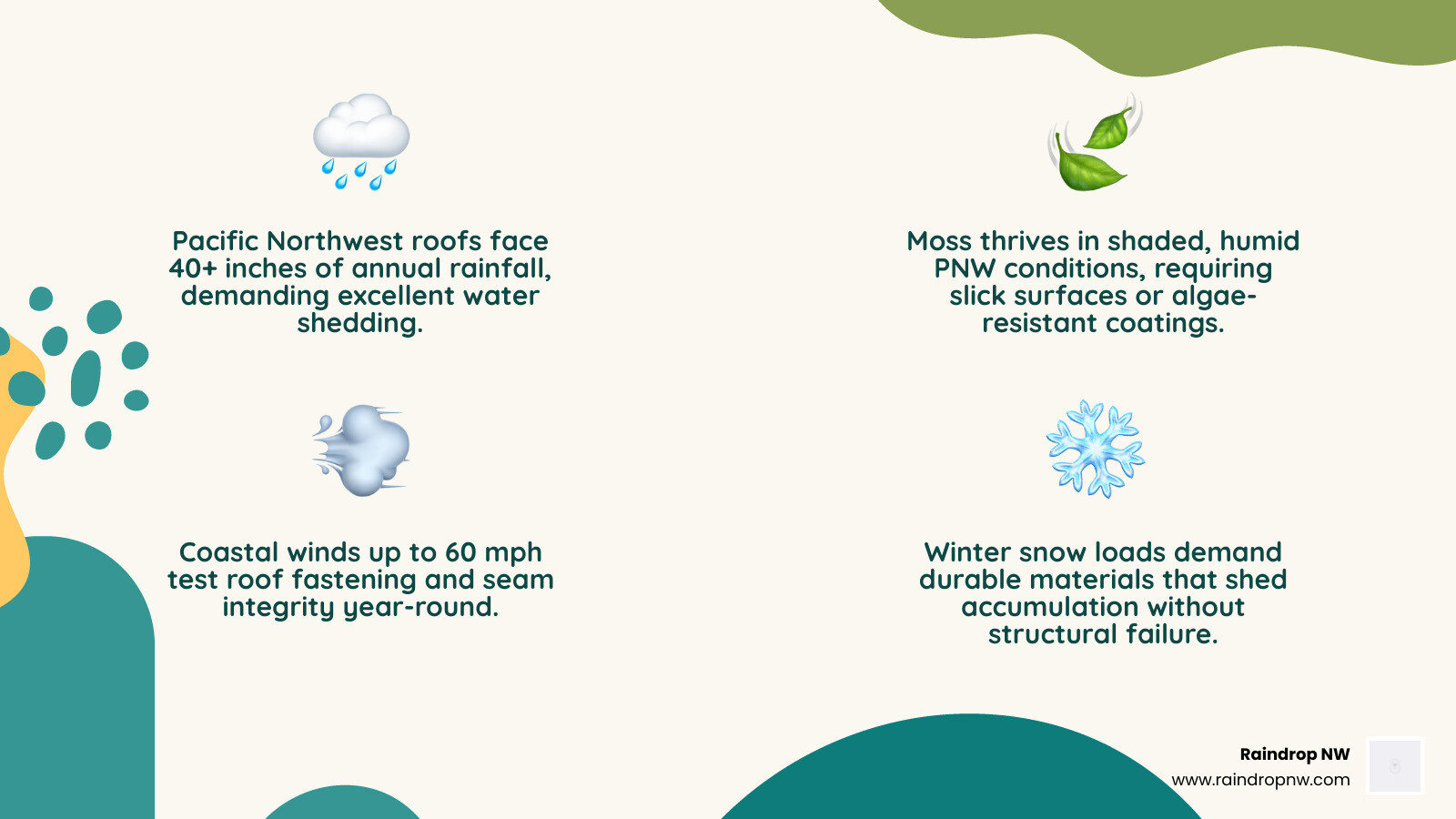
In the Pacific Northwest, we deal with a specific set of environmental pressures. First and foremost is water shedding. With our high annual precipitation, your roof needs a clear drainage path. If water lingers, it invites trouble. Wind resistance is another big one, especially if you live in more exposed areas like the Columbia River Gorge or near the coast where wind uplift can peel back poorly fastened shingles.
Moss control is perhaps the most famous PNW challenge. Because so many of our homes in places like Lake Oswego, Tualatin, and West Linn are nestled under beautiful, mature tree canopies, shaded roofs become breeding grounds for moss and algae. This organic growth isn’t just an eyesore; it traps moisture against the roofing material, leading to rot. Furthermore, we have to consider attic airflow. Without proper ventilation, the humidity from our wet winters can get trapped inside, leading to mold in the insulation and deck.
How roof types and materials compared for Pacific Northwest homes should really be judged
When we sit down with homeowners in Beaverton or Hillsboro, we suggest judging a roof by its long-term resilience rather than just its first-day appearance. You want to look at:
- Lifespan: How many rainy seasons will this actually last?
- Maintenance: Are you willing to climb a ladder (or hire us) every year to clear moss, or do you want a “set it and forget it” option?
- Weather Fit: Does the material handle the specific microclimate of your lot? A home in a sunny, open part of Gresham has different needs than a home in the shaded river valleys of Oregon City.
- Energy Efficiency: Does it help keep your home cool during those increasingly hot July and August weeks?
- Weight: Can your home’s structure handle the load of heavy tile or slate?
By weighing these factors, you move from just “buying a roof” to making a “resilient statement of beauty” that harmonizes with the natural contours of our landscape.
Asphalt Shingles: Best for Familiar Style and Broad Budget Fit
Asphalt composition shingles are the heavyweights of the industry, found on roughly 80% of homes across the United States. In our neck of the woods, they remain incredibly popular because they offer a versatile look and reliable performance at a price point that fits most budgets.
Modern asphalt isn’t the flat, flimsy “three-tab” shingle of the past. Today, we mostly install Premium Shingle Options for Pacific Northwest Homes that feature multiple layers of fiberglass mat and high-quality asphalt. These are often referred to as architectural or laminate shingles.

Why asphalt still works in the PNW when you choose the right shingle
The reason asphalt stays at the top of the list is its adaptability. When we perform an Asphalt Shingle Installation Salmon Creek Guide project, we focus on shingles equipped with algae-resistant granules. These granules often contain copper or zinc, which leaches out slowly over time to kill off moss and algae spores before they can take root.
If you are looking for something a bit more upscale, you might consider the Architectural vs Designer Shingle Comparison. Designer shingles are thicker and created to mimic the look of natural slate or wood shakes. Many homeowners ask us, Are Designer Shingles Worth the Extra Cost? The answer usually depends on how much you value curb appeal and whether you plan to stay in your home for the next 20 to 30 years.
Where asphalt shingles fall short in roof types and materials compared for Pacific Northwest homes
Despite their popularity, asphalt shingles do have a shorter lifespan in the PNW compared to premium materials—typically 15 to 30 years depending on the grade and maintenance. In heavily shaded areas, even “algae-resistant” shingles eventually lose their potency, and moss buildup can become a recurring issue. The granules also tend to wear off over time due to heavy rain and UV exposure, eventually leaving the underlying asphalt mat vulnerable to the elements.
Metal Roofing: Best for Longevity, Moss Resistance, and Rain Shedding
If you are looking for a long-lasting roofing option for your Pacific Northwest home, metal roofing is hard to beat. Metal roofs can last 50 to 70 years, which is significantly longer than many traditional roofing systems. In Oregon and Washington, they are becoming a popular choice for homeowners who want strong long-term performance in a wet climate.
Why many homeowners see metal as a strong all-around PNW option
Metal is excellent at shedding rain and snow quickly. Because the surface is non-porous and smooth, it is incredibly difficult for moss and algae to gain a foothold. This makes it a smart choice for homes in heavily wooded areas like Raleigh Hills or First Addition.
If you are searching for the Best Metal Roofing Company in Raleigh Hills OR, you’ll find that we emphasize the use of standing seam panels. These panels feature interlocking seams that sit above the water line, helping reduce the chance of leaks when installed correctly. They also offer strong wind resistance, which is helpful for homes on hillsides or in more exposed areas. For more on this, check out our Ultimate Metal Roofing First Addition OR resource.
Metal roofing can also help reflect heat during warmer summer months. And don’t worry about the noise—modern metal roofs installed with proper insulation are just as quiet as asphalt during a rainstorm.
What to know before choosing metal for your home style
While metal is tough, it does have a distinct look. It fits perfectly with modern, farmhouse, or industrial styles, but it might look different on a very traditional or historic home. You’ll also need to consider flashing details and condensation control. Because metal is a conductor, proper attic ventilation is even more critical to prevent moisture from regular PNW humidity from condensing on the underside of the panels.
Cedar, Synthetic, Tile, and Slate: Best for Style-Specific Homes
For some homes, only a specific aesthetic will do. Whether you are aiming for a rustic woodland vibe or a Mediterranean look, these specialty materials offer unique benefits and challenges in our wet climate.
Cedar shake: beautiful but high-maintenance in wet shade
Cedar shakes provide a “genuine, organic appeal” that is hard to replicate. They offer natural insulation and a classic PNW look. However, they are high-maintenance. In our damp river valleys, cedar requires regular cleaning and sealing to prevent rot, insect damage, and moss growth.
If you are considering this path, our Best Cedar Roofing Raleigh Hills Guide covers the essentials of upkeep. For those ready to commit to the look, we provide expert Cedar Roofing Installation in First Addition OR to ensure the wood is treated and installed for maximum airflow.
Synthetic, tile, and slate: when premium durability or distinctive architecture matters
If you love the look of cedar or slate but hate the maintenance or the weight, synthetic composite roofing is a fantastic modern alternative. These products are often made from recycled materials and weigh an average of just 4 lbs per square foot, making them easy on your home’s structure. They are designed to be rot-resistant and typically come with 30-to-50-year lifespans.
For the ultimate “multi-generational” investment, slate is the king. A slate roof can last 75 to 200 years—essentially outliving the house itself. Concrete and clay tiles are also incredibly durable (50 to 100 years) and fire-resistant, though they require a reinforced roof structure because they are significantly heavier than other materials.
How to Choose the Right Roof for Your PNW Home
Choosing between roof types and materials compared for Pacific Northwest homes comes down to your specific lot and your lifestyle. A home in the middle of a sunny Beaverton subdivision has very different needs than a home tucked away in the trees of Lake Oswego or the windy ridges of Camas and Ridgefield.
Match the material to your lot, roof design, and maintenance habits
Take a walk around your yard and look up. Do you have a lot of overhanging branches? If so, you’ll be dealing with a lot of debris and shade, making moss-resistant materials like metal or synthetic composite a smart move. Is your roof pitch very steep? Slate and tile look stunning on steep slopes but require specialized installation.
If you have low-slope or flat sections, you can’t use standard shingles. These areas require specialized waterproofing, which you can learn about on our waterproof deck surfaces page. We also recommend checking our residential roof types and products page for a deeper dive into specific manufacturer options we trust.
The installation details that matter as much as the material
You can buy the most expensive slate in the world, but if the flashing is done poorly, your roof will fail. In our region, the “system” is what matters. This includes:
- Underlayment: The secondary water barrier that protects your deck if a shingle is damaged.
- Flashing: The metal bits around chimneys and valleys where most leaks actually start.
- Ridge Vents: Ensuring your attic can breathe so moisture doesn’t build up.
- Fasteners: Using the right nails or screws to resist wind uplift.
At Raindrop Roofing NW, we focus on these details during every project. We even offer roof inspections and certifications to ensure your current system is actually doing its job.
Frequently Asked Questions about Roof Types and Materials Compared for Pacific Northwest Homes
Which roofing material is best for resisting moss and algae growth?
Metal roofing is the gold standard for moss resistance because of its smooth, non-porous surface. Synthetic composite shingles are a close second. For asphalt shingles, always look for products with high copper-granule content, which are specifically designed to inhibit organic growth in damp climates. Regardless of the material, keeping your trees trimmed back to allow more sunlight onto the roof is the best preventative measure.
Can asphalt shingles handle Pacific Northwest rain?
Yes, they can, but they need to be installed as part of a complete ventilated system. Modern architectural shingles are designed to shed heavy rain effectively. However, you should schedule professional inspections at least once a year to check for granule loss or minor wind damage, especially after our big winter storms.
What about low-slope or flat sections on Pacific Northwest homes?
Flat roofs are a different beast. Traditional hot-tar is mostly a thing of the past. Today, we recommend single-ply PVC membranes. These are incredibly durable, waterproof, and handle the “ponding” water that can occur on flat surfaces during a typical Portland downpour.
Conclusion
At the end of the day, the best roof for your home is the one that lets you sleep soundly while the rain drums on the shingles outside. Whether you choose the familiar value of asphalt, the long-term performance of metal, or the timeless beauty of cedar or slate, the key is matching the material to your home’s specific needs and ensuring it’s installed by a team that understands the Pacific Northwest.
As a family-owned company based right here in Beaverton, we are committed to long-term service and accountability. We are your neighbors, and we want your roof to last as long as possible.
If you are ready to stop worrying about the rain and start protecting your investment, we’d love to help. You can explore more about our residential roofing services or contact us today for a free inspection. Let’s make sure your home is ready for whatever the PNW skies throw at it!




Leave a Reply
Want to join the discussion?Feel free to contribute!