
Shingle All the Way: What Missing or Damaged Shingles Mean for Your Roof
What Missing or Damaged Shingles Mean for Your Home
Understanding missing or damaged shingles what they mean for your home comes down to one core idea: your roof is a system, and when even one piece of that system fails, the layers underneath are exposed to rain, wind, and everything Oregon’s weather throws at them.
Here is a quick summary of what shingle damage typically signals:
- A single missing shingle — A localized failure, often caused by wind uplift or a failed adhesive seal. Urgent, but usually repairable.
- Several missing shingles after a storm — Possible widespread adhesive or installation failure. Needs professional inspection to determine repair vs. replacement.
- Shingles missing in a pattern (e.g., a straight line) — Often points to an installation error such as high nailing, rather than random storm damage.
- Missing shingles on a roof 15–20+ years old — A strong signal the roof is past its useful service life and replacement may be more cost-effective than repair.
- Cracked, curling, or granule-shedding shingles — Signs of advanced material fatigue. The shingles are losing their ability to shed water effectively.
- Exposed underlayment visible from the ground — The last line of defense before water reaches your roof deck. This is not a permanent waterproofing layer and needs immediate attention.
You walk outside after a night of wind and rain, and there it is — a shingle in your yard. Most homeowners hope it blew in from somewhere else. It almost never did.
The truth is, a missing shingle is not just a cosmetic issue. Once a shingle is gone, the underlayment beneath it is exposed to the elements. That layer is a backup, not a waterproof barrier. Water entry can begin within hours to days of rain. Wood rot can follow within weeks. And structural damage can develop over months if the problem goes unaddressed.
In the Portland metro and greater Beaverton area, where persistent rain and damp conditions are part of life for much of the year, that timeline compresses fast. There is less drying time between storms, which means less margin for delay.
I’m Torrey Yungeberg, owner of Raindrop Roofing NW — a family-owned roofing company based in Boring, Oregon — and over the years I’ve seen how often missing or damaged shingles mean something deeper is going on beneath the surface than what’s visible from the ground. In this guide, I’ll walk you through everything you need to know to understand what you’re dealing with and what to do next.
Understanding Missing or Damaged Shingles What They Mean
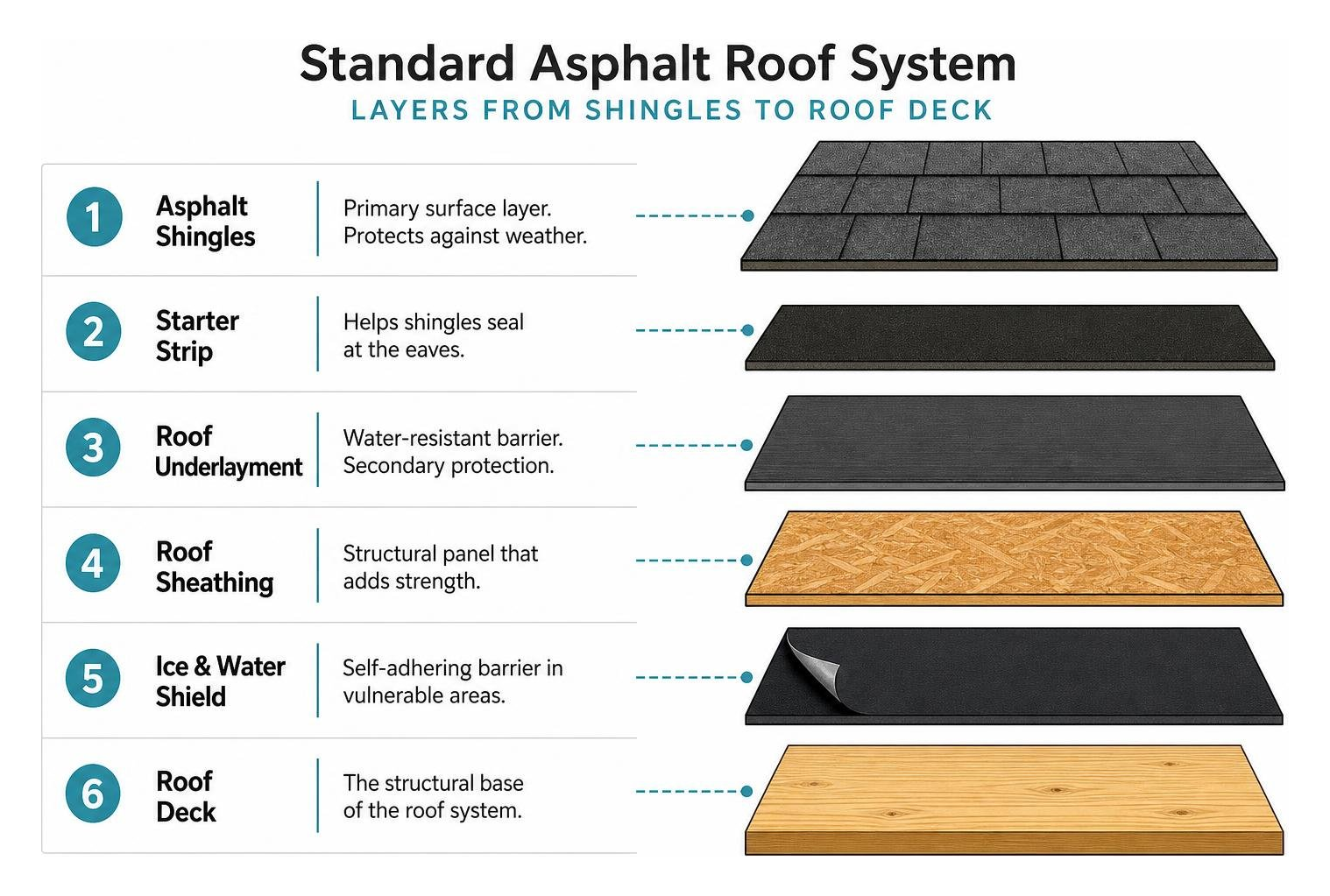
When you look up at your roof and notice a dark patch or a completely bare spot, you are looking at a “system break.” Many homeowners view shingles as individual tiles slapped onto a wooden board, but a modern roof is actually a highly engineered, multi-layered water-shedding system.
The shingles are the first line of defense, designed to overlap and shed water down to the next shingle, eventually directing it into your gutters. Beneath those shingles lies the underlayment, followed by the roof deck (usually plywood or OSB boards).
When a shingle goes missing, the protective canopy is broken. This leaves the underlayment and the critical nail lines of the surrounding shingles completely bare. While modern synthetic underlayment provides excellent temporary weather protection, it is not designed to withstand direct exposure to UV rays, pooling water, or wind-driven rain for long.
When you ignore these vulnerabilities, you bypass the water-shedding design entirely. Water can easily seep around the exposed nail heads, follow the nail shank down through the roof deck, and begin dripping into your attic. This is why learning How to Protect Your Home from Water Damage Through Your Roof is so essential for local homeowners.
Living in the Pacific Northwest means our roofs face unique environmental stressors. Understanding How Portland Metro Climate Affects Your Roof is key to recognizing why a single missing shingle here is far more urgent than it might be in a dry, desert climate. The constant cycle of rain, high humidity, and limited winter sunlight means that once moisture gets under your shingles, it rarely has the chance to dry out naturally.
The Structural Impact of Missing or Damaged Shingles What They Mean
The structural damage caused by shingle loss is a progressive timeline. Within days of a heavy rain event, water can saturate the exposed underlayment and begin soaking into the wooden roof deck. Plywood and OSB are highly susceptible to moisture; when saturated, they swell, soften, and begin to delaminate.
Over weeks and months, this persistent dampness leads to wood rot. Rotting roof decks lose their structural integrity, which can eventually cause the roof to sag. Furthermore, water doesn’t just stay in the deck. It drips down into your attic insulation, ruining its thermal resistance and forcing your heating system to work harder.
Eventually, the water finds its way to your drywall, presenting as unsightly ceiling stains, bubbling paint, or active drips in your living space. This compounding damage is why we emphasize How Persistent Rain and Humidity Stress Your Roof — the longer moisture sits in your roofing system, the more expensive the ultimate repair bill becomes.
The Hidden Dangers of Ignoring Missing or Damaged Shingles What They Mean
Beyond structural wood rot, ignoring missing shingles introduces several hidden dangers to your home. One of the most critical is toxic mold and mildew growth. Attics are naturally warm, and when you introduce moisture from a roof leak, you create the perfect incubator for mold spores. This mold can spread rapidly through your attic space, eventually contaminating your home’s indoor air quality and triggering respiratory issues for your family.
Additionally, a compromised roofing system directly impacts your home’s energy efficiency. When insulation becomes wet, it loses its ability to trap heat. This means your home will lose heat rapidly during our chilly Oregon winters, leading to a noticeable spike in your monthly utility bills.
Water running down the interior of your walls can also damage electrical wiring, creating a potential fire hazard. There is also a direct relationship between your roof’s water management and your home’s foundation. To understand how these systems connect, it helps to review How Gutter Maintenance and Its Impact on Your Roof can prevent water from backing up and compounding shingle damage at the roof’s edge.
Common Causes of Shingle Damage and Loss
Shingles do not simply fall off a roof without a reason. When we perform inspections in communities like Beaverton, Hillsboro, or Oregon City, we look at shingle loss as a symptom of an underlying issue. Identifying the root cause is the only way to ensure that a repair will actually last.
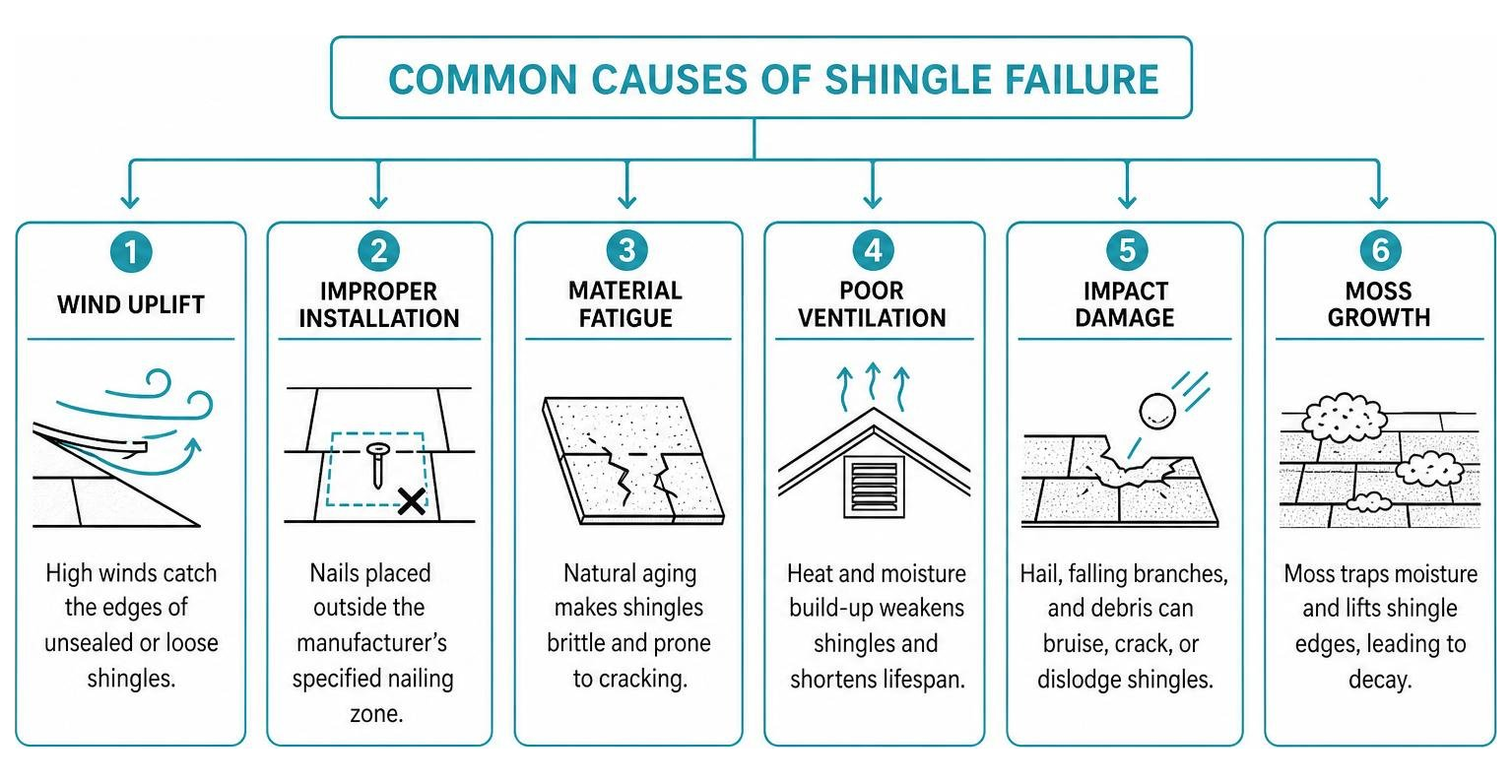
The most common culprits behind missing or damaged shingles include:
- Wind Uplift: High winds catch the edges of unsealed or loose shingles, peeling them back.
- Improper Installation: Nails placed outside the manufacturer’s specified nailing zone.
- Material Fatigue: Natural aging that makes shingles brittle and prone to cracking.
- Moss and Algae Growth: Thick moss roots lifting the shingle edges and trapping moisture.
To protect your home, it is valuable to understand How Wind Storms and Ice Affect Your Roof during our wilder winter months.
Wind Uplift and Storm Damage
Asphalt shingles rely on a factory-applied adhesive seal strip to bond them to the shingle course below. This seal creates a continuous, unified barrier against the wind. However, if wind speeds exceed the shingle’s wind rating, or if the adhesive strip has degraded due to age or dust accumulation, the wind can lift the shingle tab.
Once wind gets underneath a shingle, it creates “wind uplift.” This force flexes the shingle upward, creasing the asphalt, and eventually tearing it completely away from the nail line. Because wind uplift can affect large areas of a roof silently, understanding How Weather Events Trigger the Need for Inspections is critical to catching storm damage before it manifests as an active interior leak.
Installation Errors and High Nailing
Sometimes, shingles blow off during a mild windstorm that they should have easily survived. When this happens, the root cause is almost always an installation error.
Every shingle manufacturer specifies a precise “nailing zone” — a narrow horizontal strip where nails must be driven to secure both the active shingle and the top edge of the shingle below it. If a previous installer rushed the job and placed the nails too high (referred to as “high nailing”), the nails miss the underlying shingle entirely.
Additionally, if the air pressure on the pneumatic nail gun is set too high, the nails can be overdriven, cutting right through the shingle material. In either case, the shingle is left barely hanging on, waiting for a moderate gust of wind to slide it right off the roof deck.
Aging, Moss, and Environmental Wear
As asphalt shingles age, they naturally lose the protective ceramic granules coated on their surface. These granules shield the underlying asphalt from UV radiation. Once granule loss occurs, the sun’s UV rays dry out the asphalt, making the shingles brittle, curled, and highly susceptible to cracking.
In the rainy Pacific Northwest, we also face a major biological threat: moss. Because of our damp, shaded environments, moss thrives on residential roofs. To understand why this is so dangerous, you can read about How Moss and Algae Thrive in Pacific Northwest Weather.
As moss grows, its root-like structures (rhizoids) work their way under the shingle edges, breaking the adhesive seal and lifting the shingles. This lifts them directly into the path of oncoming wind. Regular maintenance and knowing How Moss Removal Protects Your Shingles are essential steps to prevent moss from destroying your roof’s wind resistance.
How to Safely Inspect Your Roof for Missing Shingles
At Raindrop Roofing NW, our number one rule for homeowners is simple: stay off the roof. Climbing onto a wet, steep, or compromised roof is incredibly dangerous and can lead to severe injuries. Furthermore, walking on brittle or hot shingles can actually cause additional damage, breaking the fragile adhesive seals of healthy shingles.
Fortunately, you can perform a highly thorough and safe preliminary inspection without ever leaving the ground. Knowing How Often Should You Have Your Roof Inspected — ideally once in the spring and once in the fall — will help you catch these issues before they turn into major headaches.
Ground-Level Visual Checks
To inspect your roof safely, grab a pair of binoculars and walk around the perimeter of your home. Look for the following warning signs:
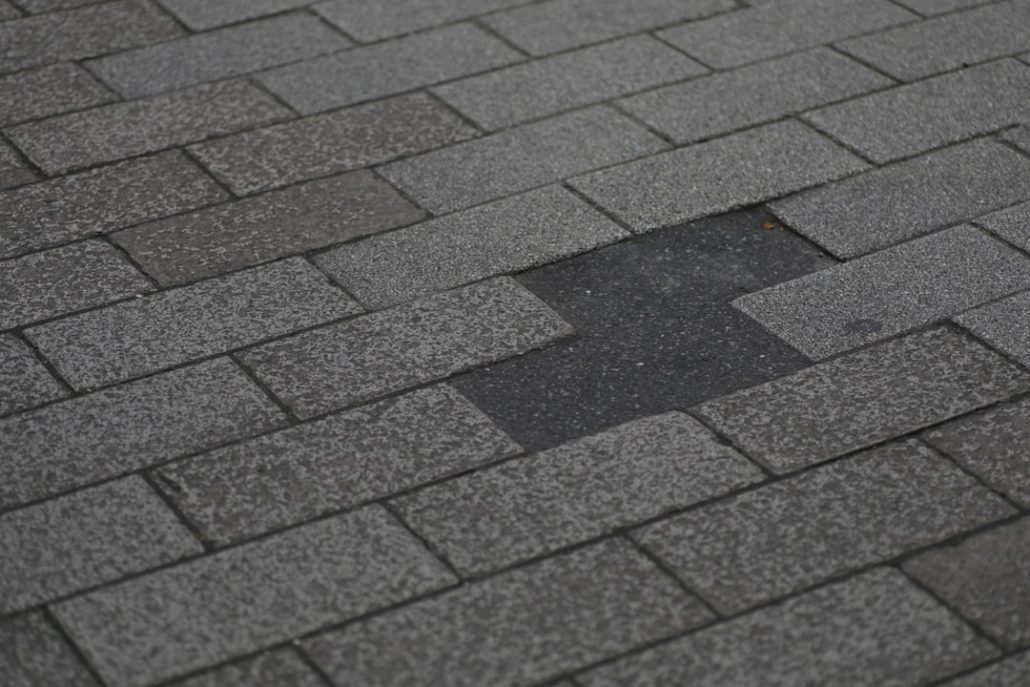
- Shingle Pattern Changes: Look for clean, rectangular dark patches where a shingle has slid out of its course.
- Exposed Underlayment: Watch for patches of black felt paper or gray/blue synthetic underlayment showing through.
- Yard Debris: Check your lawn, flowerbeds, and deck after a windstorm for pieces of torn shingles.
- Gutter Granules: Inspect your gutter discharge areas. If you find piles of coarse black sand in your downspout splash blocks, your shingles are rapidly shedding their protective granules.
Interior and Attic Inspections
Sometimes, the best clues about your roof’s health are found inside your home. Take a flashlight and head up into your attic space on a bright, sunny day.
Look up at the underside of your roof deck. If you see pinpricks of daylight shining through the boards, you have a direct path for water entry.
Next, inspect the attic rafters and insulation. Look for dark water staining, damp insulation, or active dripping. Checking your ceilings and walls in your living spaces for bubbling paint, musty odors, or brown water rings is also an excellent way to spot a leak early.
Repair vs. Replacement: Deciding Your Roof’s Future
When you discover shingle damage, the immediate question is: Do I need a quick repair, or am I looking at a full roof replacement?
This decision depends on several key factors, including the age of your roof, the flexibility of the remaining shingles, and the overall extent of the damage. Here is a quick comparison framework to help you understand how we evaluate your roof:
| Factor | When Repair is Enough | When Replacement is Necessary |
|---|---|---|
| Roof Age | Under 12–15 years old | 15–20+ years old |
| Shingle Condition | Pliable, flexible, granules mostly intact | Brittle, curling, bald spots, heavy granule loss |
| Extent of Damage | Localized to a small area (1–5 shingles) | Widespread across multiple slopes or valleys |
| Adhesive Seal | Surrounding shingles are firmly sealed | Widespread adhesive failure across the roof |
| Underlying Deck | Dry, solid, no signs of rot | Soft spots, widespread water damage, sagging |
Understanding How to Extend the Life of Your Roof in Rainy Climates can help you maximize the lifespan of your system, keeping you in the “repair” category for as long as possible.
When a Targeted Repair is Sufficient
If your roof is relatively young (under 12 years old) and the surrounding shingles are still flexible, pliable, and firmly sealed down, a targeted repair is usually the most logical and cost-effective choice.
A professional roofer can carefully lift the overlapping shingles, remove the damaged nails, slide a color-matched replacement shingle into place, and secure it with new galvanized nails and hand-applied roofing cement. If you live in the Beaverton area, learning How to Find the Best Roof Repair in Beaverton OR will ensure you partner with a trusted, local contractor who won’t push for a replacement you don’t actually need.
When a Full Roof Replacement is Necessary
If your roof is approaching the 15-to-20-year mark and is losing shingles during normal, non-storm weather, you are likely dealing with systemic material failure. As shingles age and dry out, they lose their flexibility.
If we attempt to repair a single shingle on an old, brittle roof, the process of lifting the surrounding shingles to nail the new one down will often cause the old shingles to crack and break. This creates a domino effect of damage.
Additionally, if there is widespread wood rot in the roof deck, a patch job is simply putting a band-aid on a structural emergency. In these cases, a full tear-off and replacement is the safest and most financially sound investment. If you find yourself in this position, our guide on How to Find Top Rated Roof Replacement in Beaverton will help you navigate the replacement process with confidence.
Navigating Insurance Claims and Immediate Action Steps
If your shingles went missing during a sudden storm, high-wind event, or due to a fallen tree limb, your homeowners insurance policy will likely cover the cost of the repairs or replacement. However, insurance companies require clear proof of sudden, accidental damage. They will often deny claims if they determine the root cause of the leak was neglected maintenance or normal wear and tear on an ancient roof.
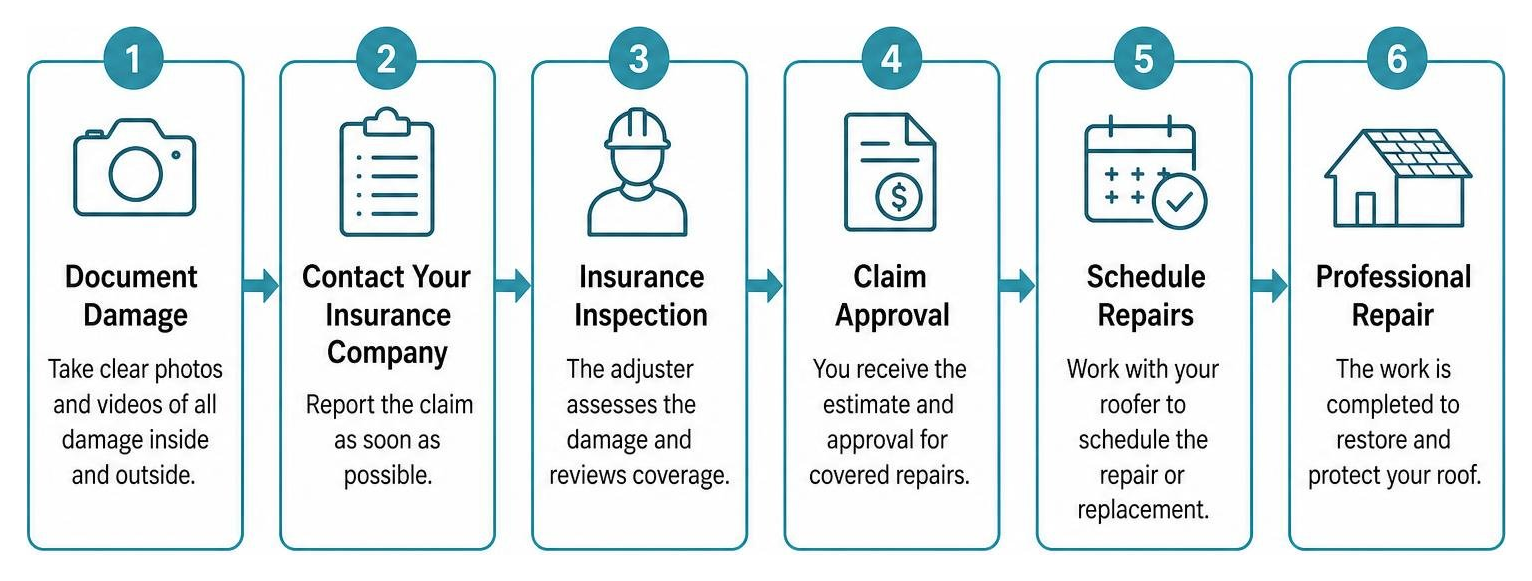
Understanding How to File a Roof Damage Insurance Claim is crucial to maximizing your coverage. Additionally, knowing How Roof Age Affects Your Insurance Claim will help you manage expectations, as some policies transition from Replacement Cost Value (RCV) to Actual Cash Value (ACV) as a roof ages.
Documenting Storm Damage
If you suspect storm damage, take the following steps immediately to build a strong case for your insurance adjuster:
- Take Photos: Photograph any shingles lying in your yard, as well as wide shots of the roof from the ground showing the bare spots.
- Note the Date: Record the exact date and time of the storm event.
- Check the Interior: Document and photograph any ceiling stains or active leaks inside your home.
- Get a Professional Inspection Report: Contact a trusted local roofer to perform a professional inspection. They can provide a detailed, written report with photo documentation to submit with your claim.
Temporary Protection and Mitigation
As a homeowner, you have a legal obligation under your insurance policy to mitigate further damage to your home. If rain is in the forecast and your roof is actively leaking, you cannot simply wait for the insurance company to process your claim.
Installing a temporary tarp over the damaged area is a critical step to protect your home’s interior. Because emergency situations can be incredibly stressful, we wrote a guide on How to Handle a Hillsboro Roofing Emergency Without Losing Your Cool to help you navigate these high-pressure moments safely.
Frequently Asked Questions About Shingle Damage
Can I replace missing shingles myself?
While a DIY shingle replacement might seem like a simple weekend project, we highly advise against it. Beyond the obvious fall hazards of working on a pitched roof, improper DIY repairs can void your existing manufacturer warranties.
If you do not break the surrounding seals correctly, nail the new shingle in the exact nailing zone, or apply the proper amount of roofing cement, the new shingle will likely blow off during the next windstorm. A professional roofer has the safety gear, specialized tools, and training to ensure the repair is fully watertight and compliant with warranty standards.
How fast do I need to replace missing shingles?
You should address missing shingles with high urgency. While your roof might survive a few dry, sunny days without an issue, the underlayment is not designed for direct exposure to the elements.
Once rain falls on an exposed roof deck, water can penetrate the nail lines within hours. Wood rot can begin setting in within weeks, and mold can take hold rapidly in a damp attic. Addressing the issue immediately is always the most cost-effective path.
Will my homeowners insurance cover missing shingles?
Yes, if the damage was caused by a covered peril, such as a severe windstorm, hail, or a fallen tree branch. Most standard policies will cover the cost of repairs to restore your roof’s integrity.
However, if the shingles fell off because the roof is 25 years old and has neglected maintenance, the insurance company will likely deny the claim. This is why keeping records of regular inspections and maintenance is so important.
Conclusion
Discovering missing or damaged shingles on your roof can be stressful, but it doesn’t have to be overwhelming. By understanding what these warning signs mean and acting quickly, you can protect your home’s structural integrity, preserve your indoor air quality, and avoid expensive water damage repairs down the road.
At Raindrop Roofing NW, we believe in honest answers and local accountability. As a family-owned, multi-generational roofing company based in Boring, Oregon, we serve our neighbors throughout Beaverton, Hillsboro, Portland, and the surrounding communities with craftsmanship and integrity. We are committed to long-term service, standing firmly behind our work without the corporate runaround of out-of-state investment firms.
If you’ve spotted a missing shingle or want peace of mind after a heavy storm, we are here to help. You can explore our comprehensive Residential Repairs and Maintenance Services to see how we can keep your home safe, dry, and secure for years to come. Give us a call today to schedule your professional, transparent roof inspection!




Leave a Reply
Want to join the discussion?Feel free to contribute!