
Ultimate Checklist for Moss and Algae Growth in Pacific Northwest Weather

Why Moss and Algae Take Over Pacific Northwest Roofs — and What It Means for Your Home
How moss and algae thrive in Pacific Northwest weather comes down to a few relentless conditions working together: persistent rain, mild temperatures, dense evergreen shade, and nearly year-round humidity that never quite lets surfaces dry out.
Here is a quick breakdown of the key factors:
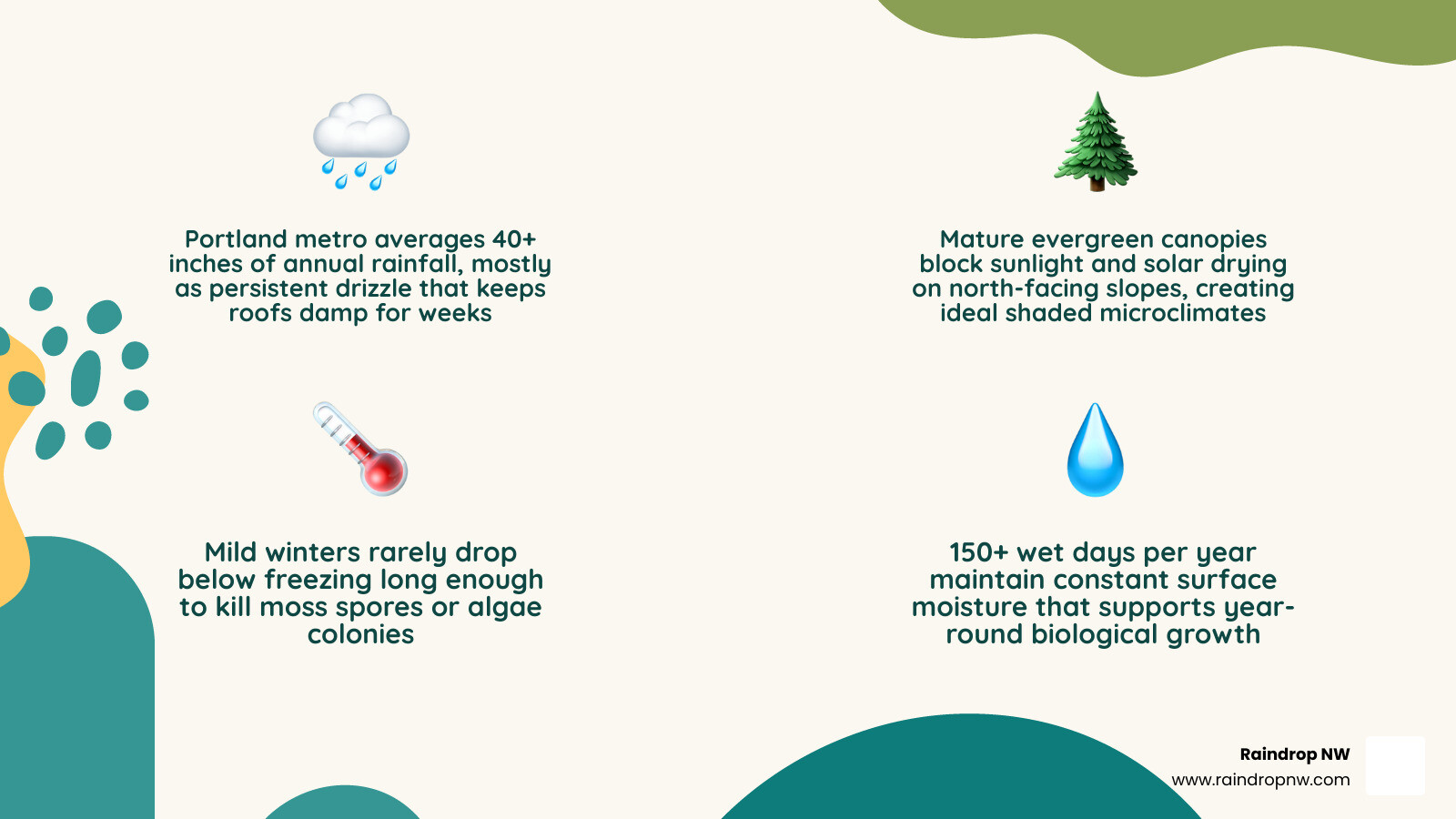
- Rainfall — The Portland metro averages over 40 inches of rain annually, most of it falling as slow, steady drizzle rather than fast-draining downpours
- Wet days — Western Washington and Oregon see roughly 150 or more wet days per year, keeping surfaces damp for weeks at a time
- Shade — Mature evergreens block sunlight and solar drying, especially on north-facing roof slopes
- Temperature — Winters are mild enough that hard freezes rarely kill biological growth the way they do in colder climates
- Surfaces — Asphalt shingles, concrete patios, and wood siding all offer the porous, textured footholds that moss spores and algae need to anchor and spread
The result is a climate that does not give moss or algae a reason to stop growing. Where most of the country gets a hard freeze or a dry summer that resets the biological clock, the Pacific Northwest just keeps things damp, shaded, and temperate — perfect conditions for organic growth to quietly take hold and build season after season.
If you live in Beaverton, Portland, or anywhere in the surrounding metro, you have probably watched green creep across a roof, patio, or fence line faster than expected. That is not bad luck. That is just the PNW doing what it does.
I’m Torrey Yungeberg, owner of Raindrop Roofing NW, and after years of inspecting and restoring roofs across Oregon and Southwest Washington, I have seen how moss and algae thrive in Pacific Northwest weather and exactly what that means for the long-term health of your roof. In the sections below, I will walk you through everything you need to know — from the biology behind the growth to the smartest ways to protect your home.
The Science of How Moss and Algae Thrive in Pacific Northwest Weather
To understand why your roof in Beaverton or your driveway in Tigard looks like a miniature rain forest, we have to look at the unique climate system of the Willamette Valley and Southwest Washington.
Our region averages over 40 inches of annual rainfall, but it is not the volume of rain that makes us the moss capital of the country—it is the delivery method. Unlike the Midwest or South, where heavy thunderstorms dump inches of rain and then give way to blazing sunshine, our weather consists of persistent, light precipitation spread over 150 or more wet days per year. This constant misting acts like a drip-irrigation system for biological growth.
Furthermore, our winters are incredibly mild. While a deep freeze in other states kills off surface spores and resets biological growth, our winter temperatures rarely drop low enough for long enough to kill moss or algae. Instead, they remain in a highly active growth state throughout winter and spring when moisture is abundant and temperatures hover in the cool, comfortable 40s and 50s.
This damp environment is amplified by local microclimates. If your home sits near the Tualatin River, in the foggy valleys of Oregon City, or nestled under the dense tree canopy of Lake Oswego, your local humidity levels remain elevated even on dry days.
North-facing roof slopes are particularly vulnerable. Because they receive the least direct solar radiation, they dry out incredibly slowly, creating a permanent, cold incubator for airborne spores. Understanding How Portland Metro Climate Affects Your Roof is the first step in realizing that biological growth is not an occasional nuisance—it is an environmental certainty.
Environmental Factors: How Moss and Algae Thrive in Pacific Northwest Weather Shaded Areas
We love our towering Douglas firs, cedar trees, and maples, but they are major accomplices in the battle against roof decay. A mature evergreen canopy acts as a physical shield, blocking what little winter sun we get and preventing solar radiation from drying out your shingles.
When tree limbs overhang your roof, they do more than block the sun; they drop organic debris like needles, leaves, and twigs. This debris collects in the valleys of your roof and the gaps between your shingles. As it decays, it forms a rich, moisture-holding compost that provides both the nutrients and the damp substrate necessary for spores to colonize.
This creates a self-sustaining cycle: the shade keeps the relative humidity near 100%, the trees drop nutrients, and the lack of air circulation ensures the surface never dries. For a deeper look at this dynamic, you can read about How Persistent Rain and Humidity Stress Your Roof to see how local weather patterns accelerate wear.
The Biological Adaptations of PNW Epiphytes
Mosses, algae, and lichens are epiphytes. This means they derive their moisture and nutrients from the air, rain, and surrounding dust rather than drawing them from a host plant through a root system. They are incredibly hardy, ancient organisms designed to survive in conditions where other plants would wither.
Consider these biological superpowers:
- Extreme Water Absorption: Certain species of moss can absorb up to 20 times their dry weight in water. This makes them highly efficient organic sponges that hold water directly against your home’s building materials.
- Dormancy and Rehydration: During our brief, dry summer months, moss does not die. It simply enters a dormant state, turning a dry, dusty brown. The moment the first autumn rains arrive in September or October, the cellular structure rehydrates instantly, and the moss resumes active photosynthesis.
- Spore Dispersal: Moss reproduces via millions of microscopic, single-celled spores carried by the wind. If there is a mossy roof in your neighborhood in Hillsboro or Vancouver, those spores are constantly landing on your shingles, waiting for the right moisture window to sprout.
- Chlorophyll Independence: Because they contain chlorophyll, they manufacture their own food using minimal sunlight, allowing them to flourish in low-light, north-facing environments where other plants would starve.
Moss, Algae, and Lichens: Key Differences and Management Approaches
Many homeowners use the terms “moss,” “algae,” and “lichen” interchangeably, but they are entirely different organisms. Treating them all with the same approach is a recipe for wasted time and money.
Moss (Bryophytes)
Mosses are primitive plants with simple stem and leaf structures but no true root systems. Instead, they use tiny hair-like anchors called rhizoids to grip onto surfaces. Because they form thick, cushiony mats, they hold massive amounts of water. They require physical disruption combined with chemical treatments to fully eradicate.
Algae (Gloeocapsa magma)
The black streaks you see on local roofs are not dirt or soot—they are actually a hardy species of photosynthetic cyanobacteria called Gloeocapsa magma. Algae do not have roots or leaves and present a slimy, thin film when wet. While primarily a cosmetic issue, algae act as a warning sign: if your roof stays wet enough to support algae, moss is usually right behind it.
Lichens
Lichens are a fascinating partnership between a fungus and an alga living in a mutualistic relationship. The fungus provides the physical structure and absorbs moisture, while the alga produces food via photosynthesis. They appear as flat, crusty, circular patches that are incredibly difficult to remove because they chemically bond to the mineral granules of your shingles. They produce mild organic acids that can pit and etch roofing materials and solar panel glass.
How Biological Growth Damages Roofs and Hardscapes Over Time
When left unchecked, these biological invaders go from aesthetic nuisances to structural hazards. They physically alter the materials they grow on, leading to premature failures that can cost thousands of dollars to repair.
The Structural Threat to Asphalt Shingles
Asphalt shingles rely on a top layer of ceramic-coated mineral granules to protect the underlying asphalt from ultraviolet (UV) radiation and shedding water. When moss takes root in the gaps between shingle courses, it begins to physically damage this defensive layer.
The damage progresses through several distinct stages:
- Granule Loss (Years 2–5): As moss rhizoids anchor into the shingle, they wrap around the mineral granules. When the moss freezes, thaws, or is pulled away by wind, it tears these granules free, exposing the raw asphalt underneath to rapid UV degradation.
- Shingle Lifting (Years 3–7): As the moss clumps grow, they act as tiny wedges, physically lifting the edges of the shingles. This breaks the factory sealant strip, making your roof highly vulnerable to wind uplift and blow-offs during winter storms.
- Water Backup and Sheathing Rot (Years 5–10): Raised shingles act as tiny dams. During our persistent winter rains, water running down the roof hits these moss dams and is forced backward, traveling up and under the shingles. This water bypasses the shingles entirely, soaking the underlayment and rotting the plywood roof deck below.
To prevent these issues from starting, check out our Water Damage Prevention Tips for Pacific Northwest Homeowners to keep your property dry and secure.
Hardscape Degradation: Concrete vs. Pavers
Roofs are not the only surfaces vulnerable to how moss and algae thrive in Pacific Northwest weather. Patios, walkways, and driveways across Gresham and Beaverton suffer as well.
Poured concrete behaves like a rigid sponge. It is incredibly porous, meaning it absorbs water and holds it deep within its structure. When moss spores settle in these damp pores, they grow and expand. During our winter freeze-thaw cycles, the trapped water and organic material expand, causing the concrete surface to pit, flaking away the top layer (spalling) and widening hairline cracks into major structural splits.
High-quality interlocking pavers offer a much more resilient alternative, but only if installed and maintained correctly. Pavers are engineered to allow water to drain through a flexible gravel base, preventing water from pooling on the surface.
However, if the joints between the pavers are filled with standard dirt or sand, moss will quickly take over. This is why we recommend using polymeric sand—a specialized sand infused with polymers that harden into a flexible, mortar-like barrier when activated with water, completely blocking moss from finding a foothold.
Without proper sealing and maintenance, joint sand erodes, leaving gaps that trap organic debris and turn your beautiful patio into a slippery, green hazard.
Cultural and Preventive Strategies to Stop Growth Before It Starts
The most cost-effective way to deal with moss and algae is to prevent them from establishing themselves in the first place. By making minor adjustments to your home’s immediate environment, you can dramatically reduce the need for aggressive cleaning.
- Prune the Canopy: Trim back overhanging tree branches to allow at least four hours of direct sunlight to reach your roof and hardscapes daily. This also improves wind circulation, helping wet surfaces dry out quickly after a rainstorm.
- Install Zinc or Copper Strips: Installing metallic zinc or copper strips along the ridges of your roof is a time-tested preventive measure. When rainwater washes over these metal strips, it oxidizes, releasing metallic ions that flow down the roof. These ions are naturally toxic to moss and algae spores, preventing them from taking root. That these strips must be kept clean of debris to oxidize properly, and they do have a limited lifespan.
- Bi-Annual Gutter Cleaning: Clean your gutters every spring and fall. Clogged gutters cause water to back up under the eave shingles, creating a permanently damp edge where moss thrives.
- Use a Leaf Blower Regularly: For patios and walkways, use a leaf blower weekly to clear away organic debris, leaves, and dirt before they can break down into compost.
How Moss and Algae Thrive in Pacific Northwest Weather with Poor Attic Ventilation
One of the most overlooked contributors to roof moss is poor attic ventilation. When an attic is not properly ventilated, warm, moist air from cooking, showering, and heating escapes into the attic space and gets trapped directly beneath the roof deck.
This trapped heat warms the roof deck from the inside out. In the winter, this creates a warm roof surface that prevents frost or light snow from melting quickly, leaving a cold, damp slurry on top of your shingles.
Additionally, this temperature differential causes condensation to form on the underside of your roof deck, leading to mold and wood rot inside, while keeping the exterior shingles damp for longer periods.
By installing a balanced system of intake vents (at the soffits) and exhaust vents (at the ridge), you ensure that your roof deck stays cool and dry. To see how this works, read about How Ventilation Reduces Moisture Damage to understand how proper airflow protects your entire roofing system.
Safe Removal Methods: Chemical, Non-Chemical, and the Risks of DIY
If moss and algae have already claimed your roof or walkways, you must use safe, effective removal methods that do not cause secondary damage to your home or the environment.
The industry standard for safe roof cleaning is a process called soft washing. Unlike high-pressure washing, soft washing relies on a low-pressure application (typically under 100 PSI—similar to a garden hose) of specialized, biodegradable cleaning solutions.
These solutions typically consist of sodium hypochlorite or specialized alkyl ammonium chlorides that kill moss, algae, and lichens at the cellular level, dissolving the spores so they cannot easily return.
For those looking for non-chemical physical removal, the process must be done with extreme care:
- Wait for a Dry Spell: Physical scraping is easiest when the moss is slightly dry but not completely baked.
- Use the Right Tools: Use a soft-bristle brush or a plastic putty knife. Never use wire brushes or metal scrapers on asphalt shingles, as they will gouge the material.
- Brush Downward: Always brush down the slope of the roof, in the direction of the shingle overlaps. Brushing upward will lift the shingles and break their sealant bonds.
- Collect the Debris: Bag and remove the scraped moss immediately so it doesn’t wash into your gutters and cause massive clogs.
Why Pressure Washing Does More Harm Than Good
We cannot emphasize this enough: never pressure wash an asphalt shingle roof.
While blasting your roof with a 3,000 PSI pressure washer might offer instant gratification, it does catastrophic, irreversible damage. High-pressure water strips the protective ceramic granules right off the shingles, exposing the raw asphalt to the sun and aging your roof by 5 to 10 years in a single afternoon.
Even worse, the high pressure can easily force water upward under the shingles, tearing the underlayment, soaking your roof deck, and blowing past your flashing. This water intrusion can ruin your insulation and drywall before you even realize a leak has occurred.
Additionally, pressure washing your roof will almost certainly void your shingle manufacturer’s warranty. To understand how water behaves when forced into vulnerable areas, read about How Proper Flashing Prevents Leaks.
Long-Term Maintenance Timelines and the Consequences of Neglect
In the Pacific Northwest, roof maintenance is not a “one-and-done” chore—it is an ongoing commitment. Neglecting your roof can turn a simple maintenance task into a premature, full-scale roof replacement.
To keep your home protected, we recommend the following maintenance schedule:
- Every 6 Months (Spring & Fall): Clean gutters, clear valleys of accumulated pine needles and leaves, and inspect the roof for early signs of green film or small moss tufts.
- Every 12 Months: Schedule a professional roof inspection to check flashing, sealants, and ventilation.
- Every 1 to 2 Years: Apply a preventative, eco-friendly moss treatment to kill any newly landed spores before they can grow.
Ignoring these steps can lead to severe consequences. While a quality architectural asphalt roof should last 25 to 30 years in most parts of the country, that same roof in the Portland metro can fail in as little as 12 to 15 years if moss is allowed to run rampant.
The moisture trapped by moss leads to wood rot in the roof deck, mold in the attic, and structural instability that ruins your home’s value. Staying ahead of the weather is key, and learning How Weather Events Trigger the Need for Inspections will help you time your maintenance perfectly.
Frequently Asked Questions about PNW Moss and Algae
Can moss on my roof actually cause structural leaks?
Yes, absolutely. While moss does not eat through shingles, it acts as a physical barrier that forces water to flow backward under the shingles. Once water gets underneath, it rots the underlayment, the plywood decking, and eventually drips into your attic and ceiling, causing major structural damage.
Is winter a bad time to clean moss off my roof in Oregon?
Actually, late winter and early spring are fantastic times for moss treatments. Moss is actively growing during these wet, cool months, meaning it absorbs treatments much more effectively than during the dry summer when it goes dormant. Treating it in the winter catches the growth before it explodes in the spring.
Do zinc strips really work to prevent moss long-term?
Zinc strips are effective, but they have limitations. They only protect the area directly below where they are installed (typically 10 to 15 feet down the slope), and they require regular rain to oxidize. Over time, they can dull and lose effectiveness, and there are environmental concerns regarding heavy metal runoff into local waterways, which is why many homeowners prefer regular, eco-friendly soft-wash treatments instead.
Protect Your Pacific Northwest Home with Raindrop Roofing NW
Dealing with how moss and algae thrive in Pacific Northwest weather is simply part of owning a home in our beautiful, green corner of the world. But you do not have to fight this battle alone.
At Raindrop Roofing NW, we are a truly local, family-owned company based right here in Beaverton, Oregon. Unlike many local roofing companies that have been bought out by out-of-state private equity firms, we remain deeply committed to our community, our neighbors, and long-term accountability. We treat your home with the same care and respect we would show our own.
If you are ready to clear the green off your roof, protect your shingles, and ensure your home is ready for the next rainy season, we are here to help. Contact us today to schedule a comprehensive roof assessment, and let our family protect yours.
Explore our Raindrop NW Repairs and Maintenance options to keep your roof in peak condition year-round.




Leave a Reply
Want to join the discussion?Feel free to contribute!