
A Practical Guide to the Best Roofing Materials for Rain and Humidity
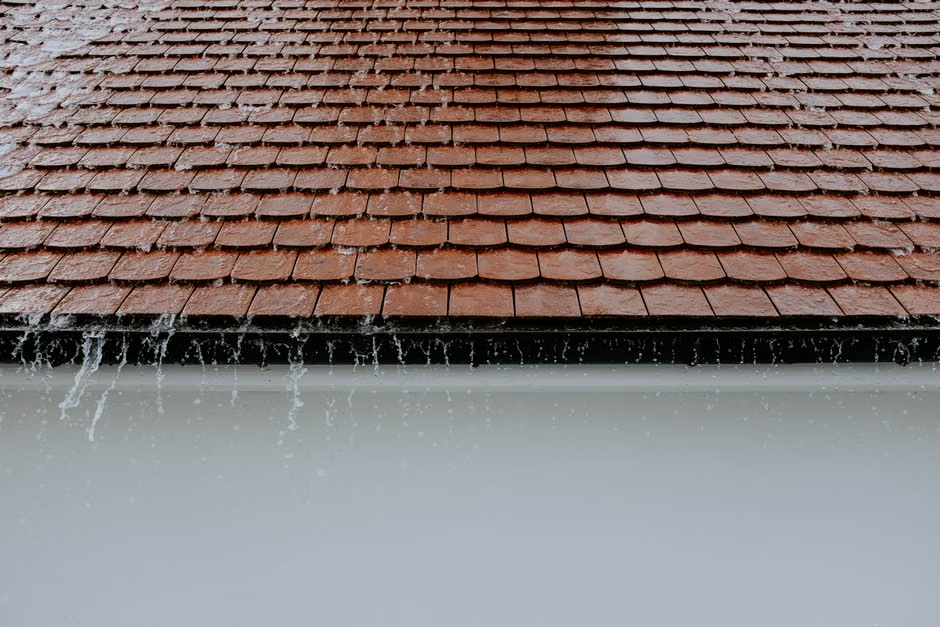
What Are the Best Roofing Materials for Rain and Humidity?
If you’re searching for the best roofing materials for rain and humidity, here’s a quick answer before we dive deeper:
Top roofing materials for wet, humid climates:
- Standing seam metal – Concealed fasteners, no exposed laps, sheds water efficiently, lasts 40-70 years
- Architectural asphalt shingles (algae-resistant) – Best value option with copper or zinc granules; 18-25 year lifespan in wet climates
- Concrete and clay tile – Exceptional moisture resistance and longevity (50-100 years); requires structural support
- Synthetic composite slate or shake – Polymer-based, rot-free, mold-resistant, lightweight; 30-50 year lifespan
- TPO or PVC membranes – Best choice for flat or low-slope roofs; heat-welded seams prevent ponding water infiltration
Materials to avoid in rainy, humid climates:
- Untreated wood shakes (rot and moss risk)
- Low-grade 3-tab asphalt shingles (granule loss, moisture infiltration)
- Exposed fastener metal systems without moisture-rated gaskets
Here in the Pacific Northwest, rain isn’t a seasonal inconvenience — it’s a way of life. Beaverton and the greater Portland metro area receive persistent, low-intensity rainfall for months at a time, and that kind of steady, relentless moisture does something to a roof that heat or wind simply doesn’t. It finds every gap, creeps behind every flashing, and works its way through any seam that wasn’t sealed completely. Over time, a roof that wasn’t designed for this climate will show it — in dark streaks, lifted shingles, rot under the surface, and leaks that seem to appear from nowhere.
Choosing the wrong roofing material in Oregon isn’t just a cosmetic problem. It’s a structural one. And with roofing companies increasingly being acquired by out-of-state investment firms, homeowners across the Portland area are rightfully asking harder questions about who they can actually trust with a decision this significant. Getting the material right from the start — matched to this specific climate, installed correctly, and backed by someone with real local accountability — makes the difference between a roof that lasts and one that quietly fails.
I’m Torrey Yungeberg, owner of Raindrop Roofing NW and a lifelong Oregonian with years of hands-on experience helping Portland-area homeowners navigate exactly this decision — finding the best roofing materials for rain and humidity in a climate that demands more than the national average. Let’s walk through everything you need to know to make a confident, long-term choice for your home.
Why Wet Climates Demand Specialized Roofing Systems
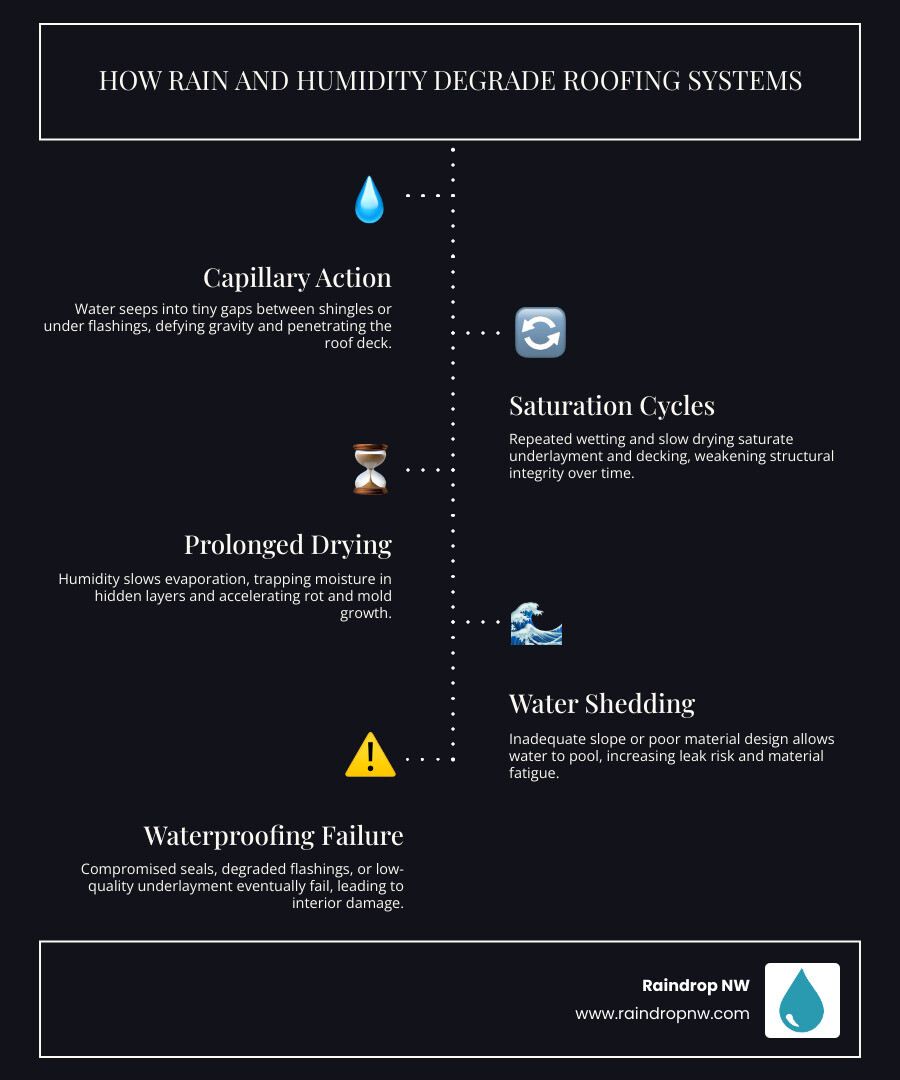
Rain and humidity do not attack a roof in the same way a single summer storm or a sudden high-wind event does. Instead, they work slowly, exploiting gravity, geometry, and time. When we look at how persistent moisture affects a roofing assembly, we see several distinct, non-identical physical mechanisms at play:
- Capillary Action: Water does not always flow downward. Through capillary action, moisture can actually travel upward and laterally through microscopic gaps between overlapping shingles or undersecured seams, bypassing standard water-shedding features.
- Saturation Cycles: When materials are exposed to continuous dampness without adequate drying windows, they absorb moisture. This constant saturation weakens structural bonds, accelerates the loss of protective mineral granules on asphalt products, and causes organic substrates to rot.
- Prolonged Drying Times: In highly humid environments, water does not evaporate quickly. This leaves a lingering film of moisture on the roof surface, creating the perfect breeding ground for biological growth.
Understanding how persistent rain and humidity stress your roof helps us realize that a roof’s success relies on a two-part system: water shedding (for steep slopes where gravity does the heavy lifting) and waterproofing (for low slopes where slow drainage requires a completely sealed, monolithic barrier). If either of these systems fails, moisture will eventually breach the primary surface material and compromise the structural sheathing below.
Evaluating the Best Roofing Materials for Rain and Humidity
When we help homeowners in Beaverton, Hillsboro, Tigard, and Lake Oswego evaluate material options, we emphasize that there is no single “perfect” choice. Every material involves trade-offs between upfront cost, expected lifespan, structural requirements, and aesthetic style.
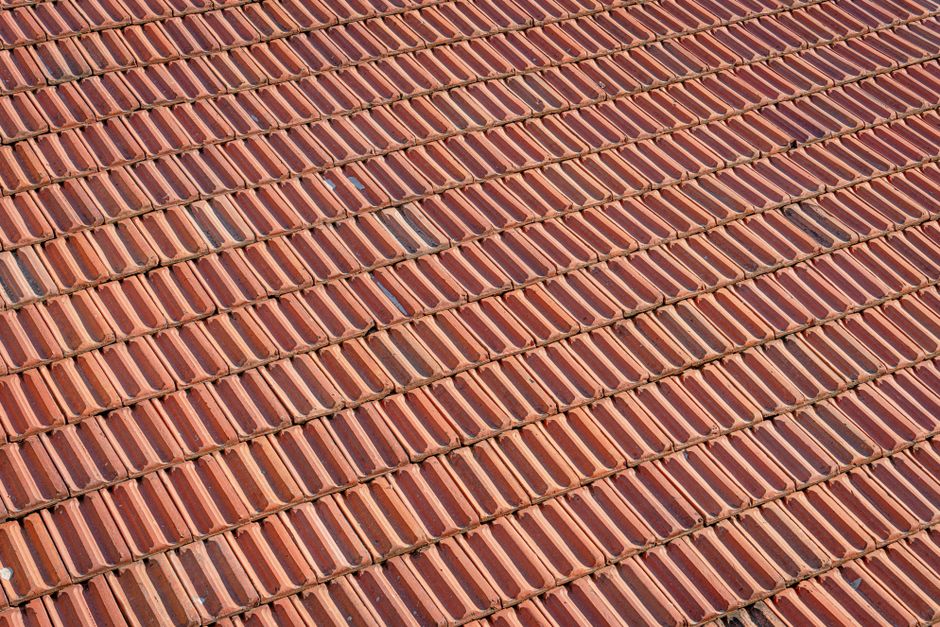
To make an informed choice, it helps to look at the top contenders side-by-side to see how they manage the unique challenges of the Pacific Northwest. Let’s explore the details of the best roofing materials for portland area homes to find the right fit for your property.
Why Standing Seam Metal is One of the Best Roofing Materials for Rain and Humidity
If durability and absolute weather protection are your primary goals, standing seam metal is arguably the premier choice for our climate. Unlike traditional roofs, a standing seam system utilizes raised interlocking seams that connect the metal panels above the water line.
- Concealed Fasteners: The screws and clips holding the panels to the roof deck are entirely hidden beneath the metal surface. This eliminates thousands of potential leak points created by exposed fasteners.
- Efficient Water Shedding: The smooth, continuous vertical panels allow heavy rain and melting snow to slide off instantly, preventing water from backing up under laps.
- Exceptional Longevity: While a metal roof represents a higher initial investment, it boasts an incredible service life of 40 to 70 years in wet climates.
- Wind and Weather Resistance: Properly installed standing seam systems are rated to withstand winds of 140 mph or more, easily handling our heavy winter windstorms.
When doing a detailed asphalt shingle vs metal roof comparison, metal stands out as a highly resilient, low-maintenance option that naturally resists moss, mold, and rot.
Architectural Asphalt Shingles: Balancing Performance and Value
Asphalt shingles remain the most widely used roofing material, appearing in roughly 80% of residential projects across the country. However, in our humid climate, standard budget shingles can deteriorate rapidly. To get the performance you need, it is essential to step up to high-quality dimensional or architectural shingles.
- Algae-Resistant Technology: Premium architectural shingles are manufactured with specialized copper or zinc granules. When it rains, these metals release ions that naturally inhibit the growth of blue-green algae, preventing those unsightly dark streaks.
- Enhanced Durability: Architectural shingles are thicker and heavier than standard 3-tab shingles, offering vastly superior wind uplift resistance (often rated up to 130 mph).
- Lifespan Expectations: While a 30-year architectural shingle may perform for its full term in dry climates, in a rainy Pacific Northwest climate, it will typically perform for 18 to 25 years under consistent maintenance.
Understanding how shingle grade affects lifespan and appearance is key to selecting a product that will keep your attic dry and your curb appeal intact for decades.
Concrete and Clay Tiles: Heavy-Duty Moisture Resistance
Commonly associated with Mediterranean or Southwestern architecture, concrete and clay tiles are also highly effective in wet and humid regions.
- Natural Airflow: Tile roofs are typically installed on a batten system, which creates a continuous drainage cavity and airflow channel beneath the tiles. This design allows trapped moisture to dry quickly and prevents heat from building up in the attic.
- Immunity to Rot: Clay and concrete are naturally dense, non-combustible materials that are completely immune to rot, rust, and insect damage. They can easily last 50 to 100 years.
- The Weight Factor: The primary trade-off with tile is its immense weight (often 9 to 12 pounds per square foot). Before choosing this material, we must perform a professional structural evaluation to ensure your home’s framing can safely support the load.
In our wet climate, the underlying underlayment system does the actual waterproofing work beneath the tile, making professional installation critical. You can read more about how these heavy-duty systems handle continuous precipitation in our guide on metal roof durability vs shingle in oregon rain.
Synthetic Composite Slate and Shake: Rot-Free Aesthetics
For homeowners who love the rustic, textured look of natural cedar shakes or the elegant profile of slate, synthetic composite roofing offers the perfect compromise.
- Polymer-Based Composition: Made from advanced engineered polymers and recycled materials, synthetic tiles are completely impervious to water absorption.
- Zero Rot or Moss Growth: Unlike real wood, which absorbs water and rots, synthetic shakes do not support biological growth, mold, or mildew.
- Lightweight and Durable: Synthetic composites offer a Class A fire rating, Class 4 impact resistance, and wind ratings up to 110–130 mph, all at a fraction of the weight of real slate or clay tile.
If you are looking for premium shingle options for pacific northwest homes, synthetic composite systems provide a beautiful, high-performance solution that stands up beautifully to our damp climate.
The Role of Roof Slope, Drainage, and Flat Roof Assemblies
The material you choose is only half of the equation; how your roof manages water flow is the other. In heavy-rainfall regions, slope is a critical variable.
Steep-slope roofs rely on gravity to shed water quickly, while low-slope or flat roofs must act as a completely waterproof basin to prevent water from pooling. To understand which design logic fits your home’s architecture, we dive deep into which roof style is better for rain.
Flat Roof Challenges and Membrane Solutions
Flat and low-slope roofs present unique engineering challenges in wet climates. “Flat” roofs are never completely flat; they require a minimum slope of 1/4-inch per foot to direct water toward drains, gutters, or scuppers.
When water cannot drain, it pools. A 2-inch pond of standing water across a 1,000-square-foot roof section adds more than 10,000 pounds of unplanned load to your home’s structure. To prevent this, low-slope residential areas — like porch transitions, additions, or modern architectural designs — require specialized single-ply membrane systems:
- TPO (Thermoplastic Polyolefin): A reflective, single-ply membrane with heat-welded seams that form a physical, monolithic bond. TPO is highly resistant to tears, punctures, and chemical exposure, offering a lifespan of 20 to 30 years in wet climates.
- PVC (Polyvinyl Chloride): Extremely durable and naturally resistant to moisture, ponding water, and biological growth. Like TPO, PVC features heat-welded seams that are actually stronger than the membrane itself.
- Drainage Redundancy: Flat roof assemblies must include secondary overflow scuppers. If a primary drain becomes clogged with pine needles or leaves, the overflow system prevents water from backing up and overloading the structure.
Navigating flat roof challenges in the pacific northwest requires specialized expertise in seam welding and water-diversion design to ensure your low-slope roof remains leak-free.
Beyond the Surface: Underlayment, Ventilation, and Flashing
While the outer roofing material gets all the attention, the layers beneath are what truly keep your home dry. In a wet climate, a roof must be viewed as an engineered assembly of integrated components.
Every layer must work together to create a continuous moisture barrier. Let’s look at how to optimize these hidden defenses based on our guide on how to protect your home from water damage through your roof.
Attic Ventilation and Moisture Control
It might surprise you to learn that many roof leaks don’t start from rain outside, but from moisture inside. In a humid climate, warm, moist air from cooking, showering, and breathing rises into the attic space. If that moisture cannot escape, it condenses on the cold underside of your roof deck. This trapped condensation leads to mold, wood rot, and rusted fasteners.
- Balanced Airflow: Proper ventilation requires a balanced ratio of intake vents (at the soffits or eaves) and exhaust vents (at the ridge). This creates a continuous, natural chimney effect that flushes out warm, humid air.
- Drying Potential: While building codes typically mandate a minimum ventilation ratio of 1:150 (1 square foot of ventilation space per 150 square feet of attic floor space), high-humidity regions benefit from upgrading to a 1:100 ratio to maximize drying potential.
Understanding how ventilation reduces moisture damage is essential for extending the life of your roof deck and keeping your indoor air clean.
Precision Flashing and Leak Prevention
Flashing consists of thin metal pieces installed at every intersection, transition, and penetration on your roof. Because water naturally flows toward these valleys and walls, flashing is your roof’s most critical line of defense.
- Valleys: Where two roof slopes meet, water channels in massive volumes. We use heavy-duty metal valley flashing paired with self-adhering waterproof underlayments to prevent lateral water intrusion.
- Transitions and Chimneys: Roof-to-wall junctions, skylights, and chimneys require custom-fabricated, step-flashing systems that weave between shingle courses to divert water outward.
- Kick-Out Flashing: Often overlooked, kick-out flashing redirects water away from where a roof edge meets siding, preventing water from channeling directly into your exterior walls.
Using high-quality, corrosion-resistant metals and executing precise bends during installation is the only way to ensure long-term protection. Learn more about these critical details in our article on how proper flashing prevents leaks.
Combating Biological Growth and Common Installation Pitfalls
In the Pacific Northwest, our mild, wet winters and heavy tree canopy create a paradise for moss, algae, and lichen. These organisms are more than just an aesthetic issue; they actively damage your roof.
| Material Type | Algae Resistance | Moss/Lichen Resistance | Key Vulnerability in Wet Climates |
|---|---|---|---|
| Standing Seam Metal | Excellent | Excellent | Noise during heavy downpours (mitigated by insulation) |
| Architectural Shingles | Moderate (with copper) | Low to Moderate | Granule loss and edge lifting from moss rhizoids |
| Concrete/Clay Tile | High | Moderate | Debris accumulation in water channels |
| Synthetic Slate | Excellent | High | Requires precise seam sealing |
| TPO/PVC Membrane | Excellent | Excellent | Ponding water if slope is inadequate |
Moss grows root-like structures called rhizoids. In a wet environment, these rhizoids wedge themselves under the edges of asphalt shingles, physically lifting them and allowing wind-driven rain to bypass the laps. To understand how to protect your home from these biological invaders, read our guide on how moss and algae thrive in pacific northwest weather.
Materials to Avoid in Humid Climates
While some materials look beautiful in architectural magazines, they are poorly suited for the realities of our wet, shaded climate.
- Untreated Wood Shakes: Natural cedar contains organic oils that resist decay, but untreated wood shakes in our damp climate act like a sponge. They retain moisture, buckle, split, and quickly become covered in thick moss and rot.
- Low-Grade 3-Tab Shingles: These thin shingles lack the wind resistance and thickness required to handle heavy winter storms, leading to rapid granule loss and premature curling.
- Exposed Fastener Metal Systems: Often used on agricultural buildings, these roofs use screws with rubber washers exposed directly to the elements. Over time, UV rays dry out the washers, causing them to crack and leak.
Choosing the wrong material can drastically cut your roof’s service life short. Explore the details in our article on how portland weather affects roof lifespan.
Critical Installation Mistakes in Wet Climates
Even the most expensive, high-grade roofing material will fail if it is installed incorrectly. In wet climates, minor installation errors lead to rapid, costly failures.
- Improper Nailing: High-nailing (placing nails above the manufactured nail line) or under-driving nails prevents shingles from sealing properly, making them highly susceptible to wind uplift and water intrusion.
- Poor Sealing at Valleys: Failing to install a self-adhering ice-and-water barrier in valleys and along eaves allows backed-up water to seep directly into the roof deck.
- Blocked Ventilation: Installing new shingles over old, clogged intake vents or failing to cut adequate ridge ventilation traps moisture in the attic, accelerating deck rot from the inside out.
Working with an experienced, certified local team is the best way to avoid these costly mistakes. Discover our top tips in how to extend the life of your roof in rainy climates.
Frequently Asked Questions About Wet Climate Roofing
What are the best roofing materials for rain and humidity?
The absolute best materials are standing seam metal (due to its concealed fasteners and exceptional water shedding) and premium synthetic composite slate or shake (which offers a classic look with zero risk of rot or water absorption). For homeowners looking for the best balance of performance and value, algae-resistant architectural asphalt shingles are an excellent, dependable choice.
How does attic ventilation prevent moisture damage?
Attic ventilation prevents moisture damage by continuously circulating fresh outdoor air through your attic space. This process flushes out warm, humid air rising from your living spaces before it can condense on the cold underside of your roof deck, preventing mold, wood rot, and structural damage. Learn more in our article on how proper ventilation extends roof life.
Why should untreated wood shakes be avoided in wet climates?
Untreated wood shakes absorb and retain water, which prevents them from drying out in our highly humid, shaded environment. This constant moisture retention leads to wood rot, warping, split shingles, and rapid moss and algae growth that can destroy your roof deck in a fraction of its expected lifespan.
To keep your roof performing at its best, we recommend checking out our guide on how often should you have your roof inspected to catch minor moisture issues before they turn into expensive repairs.
Conclusion
Selecting the right roof for a rain-heavy, humid climate like ours isn’t just about picking a pretty material. It’s about designing an integrated, high-performance system — from the structural deck and synthetic underlayment to the ventilation, precision flashing, and durable outer surface.
At Raindrop Roofing NW, we have spent decades serving families and businesses across Beaverton, Portland, Hillsboro, Tigard, Lake Oswego, and the surrounding metro area. As a multi-generational, family-owned, and truly local company, we don’t answer to out-of-state investment firms. We answer to you, our neighbors. Our certified craftsmanship, transparent process, and commitment to long-term accountability ensure your home gets a roof built to handle the unique demands of the Pacific Northwest.
Key Takeaways for Wet Climate Roofing:
- Prioritize standing seam metal or premium synthetic composite for ultimate longevity and rot prevention.
- If choosing asphalt shingles, always select high-quality, algae-resistant architectural shingles with copper granules.
- Ensure your roof assembly includes a balanced attic ventilation system and high-performance synthetic underlayment.
- Avoid untreated wood shakes and low-grade 3-tab shingles that rot or fail prematurely in wet climates.
- Work with a trusted, local contractor who understands our unique regional weather patterns.
If you are ready to protect your home with a roof designed for Oregon’s rain and humidity, we are here to help. Contact us today to schedule a free, honest, and comprehensive inspection of your current roof system. Explore our residential roofing services to see how we can bring lasting peace of mind to your home.




Leave a Reply
Want to join the discussion?Feel free to contribute!