
Breaking the Ice and Saving Your Roof

Why Understanding How Ice Dams Form and What to Do About Them Could Save Your Roof This Winter
How ice dams form and what to do about them is something every homeowner in the Pacific Northwest and northern climates needs to understand before winter hits hard. Here’s the short version:
How ice dams form:
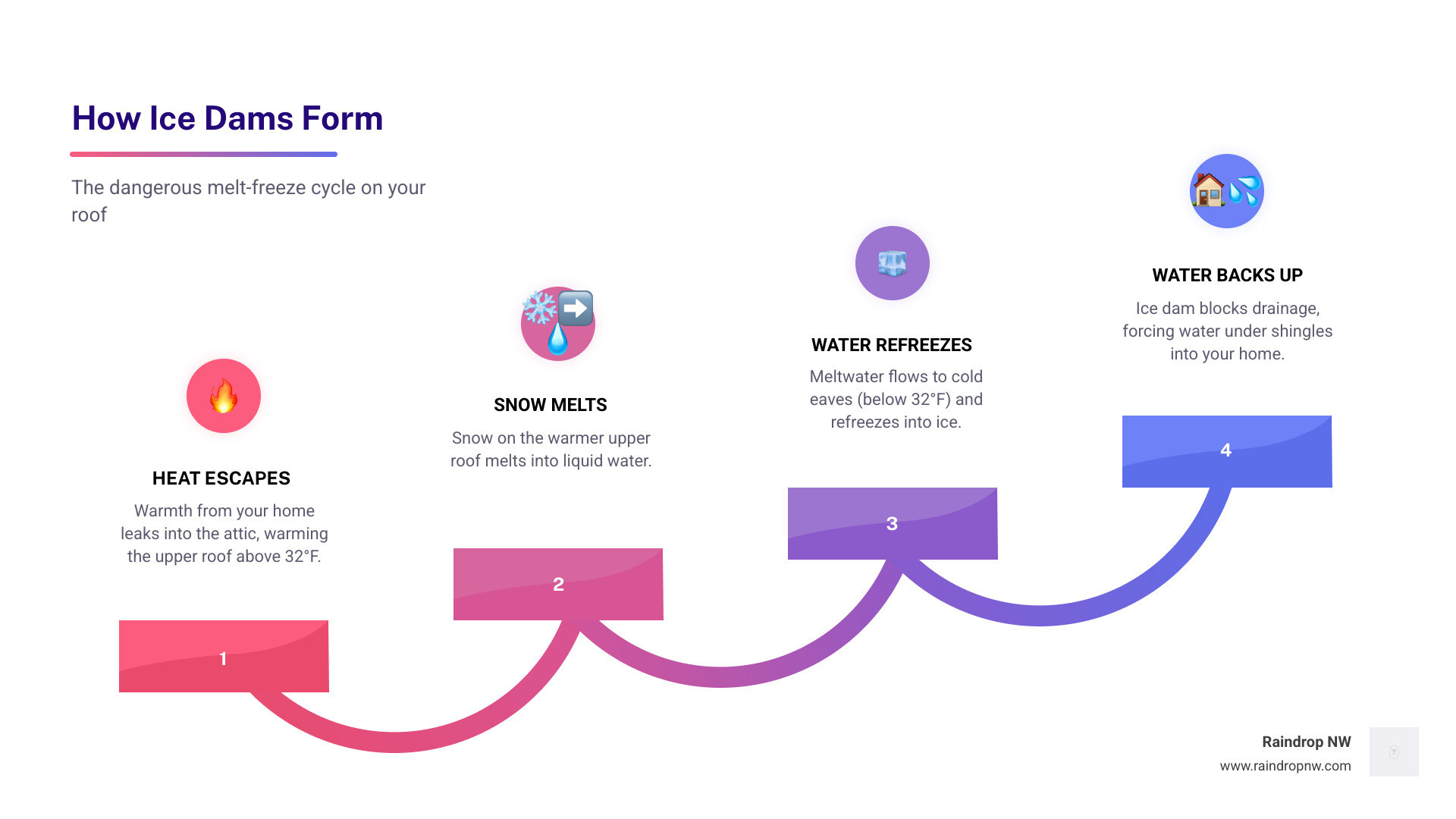
- Heat escapes from your living space into the attic
- That heat warms the upper portion of your roof, melting snow
- Meltwater runs down toward the cold eaves and refreezes
- Ice builds up along the roof edge, blocking further drainage
- Backed-up water works its way under shingles and into your home
What to do about them:
- Right now: Safely remove snow from your roof with a roof rake and call a professional if water is already leaking inside
- This season: Keep gutters clear and avoid chipping or salting the ice
- Long-term: Seal attic air leaks, upgrade insulation to R-50, and ensure proper soffit-to-ridge ventilation
That ridge of ice along your eaves might look like a winter postcard, but it’s actually a warning sign. Ice dams don’t just stress your gutters — they push water beneath your shingles, soak your insulation, and can lead to mold, damaged ceilings, and costly structural repairs. In northern climates, where freezing temperatures and heavy snowfall go hand in hand, this is one of the most common and preventable causes of serious roof damage.
I’m Torrey Yungeberg, owner of Raindrop Roofing NW, and after years of inspecting Oregon roofs damaged by winter weather, I’ve seen the destruction that comes from not knowing how ice dams form and what to do about them before it’s too late. Let’s walk through everything you need to know to protect your home this season and for winters to come.
Understanding How Ice Dams Form and What to Do About Them
To effectively manage your home during a Beaverton winter, you have to look past the icicles. An ice dam is essentially a thick ridge of solid ice that builds up along the eaves (the edges) of your roof. While they might look like a natural part of winter, they are actually a sign of a “feverish” house.

The process is a cycle of melting and refreezing. For an ice dam to form, you need three ingredients: snow on the roof, subfreezing outdoor temperatures, and a roof surface that is unevenly heated. When the higher part of your roof surface rises above 32°F while the lower eaves remain below freezing, you have the perfect recipe for trouble.
As snow melts on the warm upper part of the roof, the water flows down until it hits the cold eave. Because the eave hangs out past the walls of the house, it isn’t warmed by the attic air; it stays at the outdoor temperature. The water refreezes there, creating a literal dam. As more snow melts, the water pools behind this ice wall. Since it has nowhere to go, it backs up under the shingles.
This leads to significant shingle damage, as the freezing water can lift the edges of the shingles, allowing moisture to reach the wooden decking and eventually your ceiling. If you notice any of these signs, you likely have an ice dam:
- Large, heavy icicles forming only on the gutter edge (not on the gutters themselves).
- Ice emerging from your exterior soffit vents.
- Water or ice buildup behind the siding or around window frames.
- Stains on your interior ceilings or walls near the outside of the house.
If you’ve spotted these issues, you may need to look into residential roofing repairs to assess the extent of the moisture infiltration.
The Root Causes: Why Roof Temperatures Become Uneven
It is a common misconception that ice dams are a “roofing problem.” In reality, they are almost always an insulation and ventilation problem. We like to say that the roof is just the place where the symptoms show up. The root cause is heat escaping from your heated living space into the attic.
There are three primary ways heat moves into your attic to cause that uneven melting:
- Conduction: Heat moves directly through solid materials, like your ceiling drywall and wooden framing.
- Convection: Warm air rises. If there are holes in your ceiling (attic bypasses), warm air will flow right into the attic.
- Radiation: Heat radiates off the surface of your insulation or attic floor onto the underside of the roof deck.
| Heat Transfer Method | How it Affects Your Roof | Common Culprit |
|---|---|---|
| Conduction | Heat travels through the building materials themselves. | Thin or compressed insulation. |
| Convection | Warm air escapes through gaps and rises to the peak. | Unsealed light fixtures, plumbing stacks, and attic hatches. |
| Radiation | Heat waves move through the air space to warm the wood. | Lack of radiant barriers or very high indoor temperatures. |
Air leakage is often the biggest offender. Small gaps around chimneys, recessed “can” lights, and electrical wires act like little chimneys, pumping warm, moist air into the attic. This air quickly warms the roof deck above the freezing point. If you haven’t had your roof looked at lately, a professional roof inspection can help identify these “hot spots” before the next big snowstorm hits in 2026.
How Ice Dams Form and What to Do About Them in an Emergency
If you wake up and find water dripping from your window frame or a brown spot forming on your bedroom ceiling, you are in an emergency situation. You need to act fast, but you also need to act safely.
The Do’s of Emergency Removal:
- Roof Raking: Use a long-handled roof rake to pull fresh snow off the first three to four feet of the roof while standing safely on the ground. This removes the “fuel” for the ice dam.
- Professional Steaming: This is the gold standard for removal. Professionals use low-pressure steam to melt through the ice without damaging the shingles.
- Emergency Channeling: In a pinch, on a slightly warmer day, you can use a hose with tap water to melt a vertical channel through the ice dam. Start at the bottom and work up. This gives the pooled water a path to drain off the roof.
The Don’ts (Safety Warnings):
- Avoid Hammers and Chippers: Never go onto a snowy roof with a hammer or ice pick. You are almost guaranteed to punch a hole through your shingles, which are brittle in the cold.
- No Salt or Rock Salt: These chemicals can corrode your gutters and kill the landscaping below when the snow finally melts.
- Avoid Heat Cables in an Emergency: Installing heat cables over an existing ice dam is ineffective and can be a fire hazard.
For immediate help with leaks or structural concerns, our team provides comprehensive residential roofing services to help Beaverton homeowners dry out and secure their homes.
Long-Term Prevention: Insulation, Air Sealing, and Ventilation
While emergency fixes get you through the night, the only way to stop ice dams for good is to fix the thermal environment of your attic. The goal is to keep the roof temperature the same as the outdoor temperature.
1. Insulation (The Blanket) In our climate, the current recommendation for 2026 is to have attic insulation at a minimum of R-49 or R-50. If your insulation is less than 12 inches thick, you likely don’t have enough. Adding more insulation slows the conduction of heat from your home into the attic space.
2. Air Sealing (The Seal) Before you add insulation, you must seal the leaks. We use expanding foam and caulk to close off attic bypasses—those gaps around plumbing pipes, light fixtures, and the attic hatch. If you skip this step, the warm air will simply “wind wash” through your new insulation, rendering it much less effective.
3. Ventilation (The Breath) A cold attic needs to breathe. We follow the 1:300 rule: you should have at least 1 square foot of vent opening for every 300 square feet of attic floor. This is achieved through a combination of:
- Soffit Vents: These bring cold air in at the bottom of the roof.
- Ridge Vents: These allow any lingering warm air to escape at the very peak.
- Baffles: These plastic or foam inserts ensure that your insulation doesn’t block the airflow coming in from the soffits.
If your roof is old and lacks these modern features, it might be time to consider new replacement roofs that incorporate advanced ventilation systems and ice-and-water shield membranes.
How Ice Dams Form and What to Do About Them Regarding Insurance
Does homeowners insurance cover ice dam damage? Generally, yes. Most standard policies cover damage caused by the “weight of ice and snow.” This usually applies to the structural damage to your roof or the interior damage caused by the resulting leaks.
However, insurance typically covers the damage (like the ruined drywall and wet carpet), but not the prevention. They likely won’t pay to upgrade your insulation or install new vents. It’s also important to note that many policies require you to perform “reasonable maintenance.” If you ignore a massive ice dam for three weeks while it pours water into your home, you might run into coverage issues.
We always recommend checking our owner resources for tips on documenting damage for insurance adjusters. If you are worried about whether your roof can handle the weight of heavy snow, a professional structural assessment is a wise investment.
Frequently Asked Questions about Ice Dams
Can gutters cause ice dams?
Gutters do not cause ice dams—heat loss causes them. However, gutters can certainly make them worse. If your gutters are full of leaves and debris, the meltwater has nowhere to go and will freeze faster, accelerating the damming process. Keeping your gutters clean is a vital first step in winter prep.
Is mechanical attic ventilation recommended?
Generally, no. We usually advise against powered or mechanical attic fans for ice dam prevention. These fans can actually create “negative pressure,” which sucks even more warm air out of your house and into the attic through unsealed gaps. Natural, passive ventilation (soffit and ridge vents) is much more effective and energy-efficient.
What are the best practices for new construction?
If you are building a new home in the Beaverton or Portland area, ensure your contractor is installing a continuous air barrier. This is a dedicated layer that prevents any air exchange between the house and the attic. Additionally, ensure the roof design includes a “cold roof” system with plenty of space for thick insulation (R-50+) and unobstructed airflow from eaves to peak.
Conclusion
Understanding how ice dams form and what to do about them is about more than just avoiding a few icicles. It’s about protecting the structural integrity of your home and ensuring your family stays dry and comfortable through the 2026 winter season.
At Raindrop NW, we take pride in being a truly local, independently owned company. We aren’t an out-of-state firm looking for a quick buck; we are your neighbors in Beaverton, and we’re committed to the long-term health of your roof. Whether you need an emergency inspection after a freeze or you want to proactively upgrade your home’s defenses, we are here to help.
For more information on how to keep your home safe this year, explore our residential roofing guide or give us a call today. Let’s make sure the only thing “breaking” this winter is the ice, not your budget.




Leave a Reply
Want to join the discussion?Feel free to contribute!