
Storm Damage Repair vs Full Replacement: In Depth Guide

After a Storm Hits, Here’s How to Know If You Need a Repair or a Full Replacement
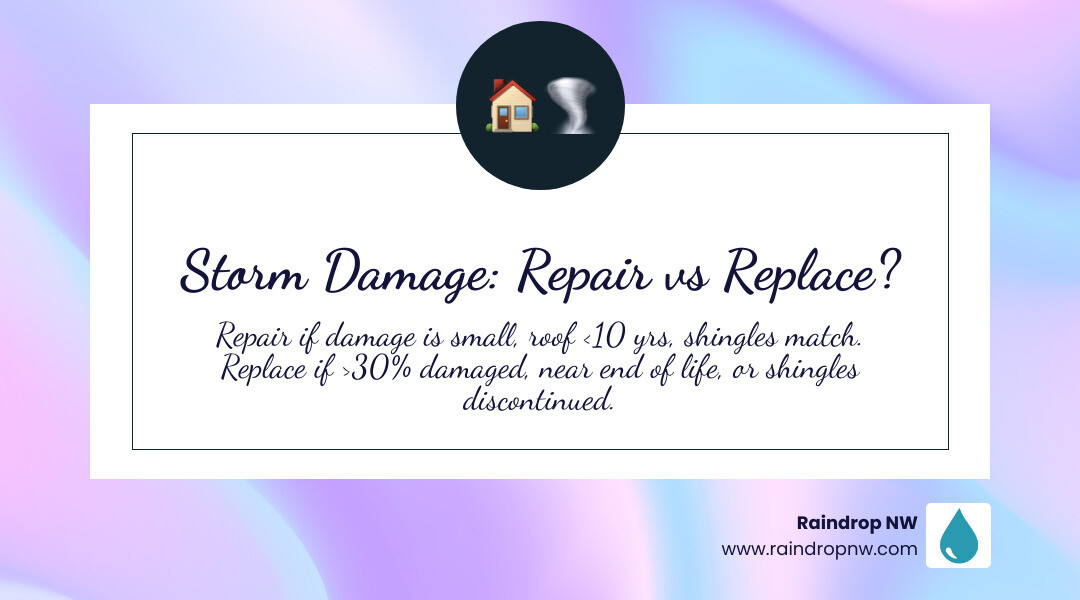
When it comes to storm damage repair vs full replacement, there is no single right answer for every roof — but there are clear signals that point you in the right direction. Here is a fast-reference breakdown before we go deeper:
Repair is likely the right choice when:
- Damage is isolated to one small area or a single slope
- Your roof is under 10 years old and otherwise in good condition
- Matching shingles are still available from the manufacturer
- There is no structural damage to the decking or rafters
Full replacement is likely the right choice when:
- Damage covers multiple slopes or more than 25–30% of the roof surface
- Your roof has reached 80% or more of its expected lifespan
- Shingles are too brittle to repair without causing further damage
- Your original shingle line has been discontinued
- There is active water intrusion, sagging, or compromised decking
Most Oregon homeowners don’t think much about their roof until a windstorm tears through the Portland metro or a week of heavy rain reveals a leak they didn’t know was coming. After the storm passes, the question hits fast: is this something you patch, or is it time to start over?
The answer depends on more than just what you can see from the ground. Storm damage — whether from wind, impact, or persistent water intrusion — can hide beneath the surface in ways that a quick visual check will never catch. Shingles that look fine from the street may have broken seals, cracked underlayment, or granule loss that is quietly shortening the life of your roof with every rain that follows.
That is exactly why this decision deserves a clear, honest framework — not a sales pitch.
I’m Torrey Yungeberg, owner of Raindrop Roofing NW, and after years of inspecting storm-damaged roofs across Beaverton, Portland, and the surrounding communities, I’ve seen how often the storm damage repair vs full replacement decision gets made too quickly, without the right information. My goal here is to give you that information so you can make the call that actually protects your home long-term.
Key Factors in Storm Damage Repair vs Full Replacement
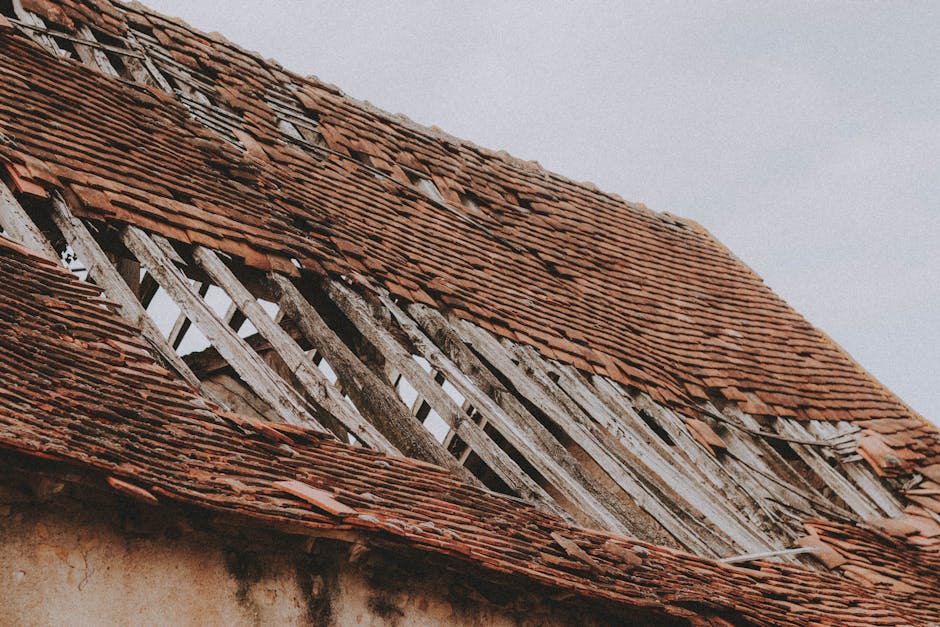
When we step onto a roof in Beaverton or Portland after a major weather event, we don’t just look at the missing shingles. We look at the roof as a complete, interconnected system. Deciding whether to patch a few areas or replace the entire system requires looking at several intersecting variables.
To make an informed decision, we always weigh the following core factors:
- The Extent of the Damage: Is the damage concentrated on a single slope, or has the storm impacted multiple sides of your home?
- The Damage Pattern: Are we looking at a clean, localized impact (like a fallen tree branch in one spot) or widespread, systemic issues (like wind uplift across the entire roof)?
- The Repair History: Has this roof been patched multiple times in the past? A roof that is already a patchwork of different repairs is structurally weaker and far more prone to future leaks.
Every roof has a tipping point where continuing to invest in localized fixes becomes a poor financial decision. If you want to dive deeper into how we weigh these initial factors, you can read our detailed guide on Should I Repair or Replace My Roof.
The 30% Rule and the 25% Building Code Threshold
In the roofing industry, we use two key thresholds to remove the guesswork from the storm damage repair vs full replacement equation. One is a financial rule of thumb; the other is a strict legal building code.
The 30% Rule is a simple financial calculation: if the cost to responsibly repair your storm damage exceeds 30% of the price of a full replacement, a new roof is mathematically the better investment. At that point, you are spending a significant portion of the cost of a new roof on a system that still carries its old age, old warranties, and existing wear.
The 25% Rule is a regulatory standard that often dictates the decision for us. According to the Oregon Structural Specialty Code and many insurance guidelines, if more than 25% of a roof area requires repair within a 12-month period, building codes and insurers often require a full replacement to current standards.
This code exists for your safety. When more than a quarter of your roof is compromised, the structural integrity of the entire system is weakened. Trying to patch that much area means disturbing too many surrounding shingles, which ultimately compromises the home’s weather barrier.
How Roof Age and Lifespan Dictate the Decision
Your roof’s age is often the ultimate deciding factor. An asphalt shingle roof in the Pacific Northwest typically has an expected service life of 20 to 30 years, depending on ventilation, maintenance, and exposure to our damp climate.
If your roof has reached 80% of its expected lifespan — which is roughly 16 to 20 years for a standard asphalt system — it should almost always be replaced following significant storm damage.
Why? It comes down to what we call the “brittle test.”
As shingles age, the sun’s UV rays and our seasonal temperature swings dry out the underlying asphalt, making them stiff and fragile. To repair a damaged shingle, a roofer must physically lift the shingles directly above it to access the nails. On an older roof, lifting those adjacent shingles will cause them to crack and crease, creating new damage in the process.
Before you spend money on a temporary patch, it is highly recommended to evaluate if those repairs will actually hold. You can learn more about this in our articles on Is It Worth Fixing an Old Roof and When Should You Replace Your Roof.
Evaluating Different Types of Storm Damage
Not all storms treat your roof the same way. A high-wind event in the Columbia River Gorge affects a roof completely differently than a heavy, wet snowstorm or a rare valley hailstorm. Understanding the specific type of damage your roof has sustained is the first step in choosing the right path forward.
To learn more about how our local weather patterns interact with your home, explore our guides on How Wind Storms and Ice Affect Your Roof as well as How Persistent Rain and Humidity Stress Your Roof.
Wind Damage: Lifted Shingles and Broken Seals
Wind damage is the most common storm issue we see in the Portland metro area. Many homeowners think wind damage only means shingles lying in the yard, but the most dangerous wind damage is actually invisible from the ground.
Standard asphalt shingles rely on a factory-applied adhesive strip to seal them to the shingle below. Wind speeds as low as 60 mph can compromise standard shingle seals. When high winds get under a shingle, they lift it up, breaking that adhesive bond.
Even if the shingle settles back down and looks perfectly flat from your driveway, the seal is gone. The next rainfall will push water straight under that unsealed shingle, exposing your underlayment and roof decking to rot. If more than 25% of your roof has lost its adhesive seal, a localized repair is no longer viable, and a full replacement is required.
If you are dealing with active leaks or missing shingles after a wind event, read our Emergency Roof Repair Beaverton OR Guide for immediate steps to protect your home.
Hail and Impact Damage: Granule Loss and Structural Signs
While major hailstorms are less frequent in Western Oregon than in other parts of the country, we do experience severe convective storms that produce hail.
Hail damages shingles by bruising the underlying asphalt mat and knocking away the protective ceramic granules. These granules are your roof’s primary defense against the sun; once they are gone, the exposed asphalt will deteriorate rapidly under UV rays, leading to micro-fractures and leaks.
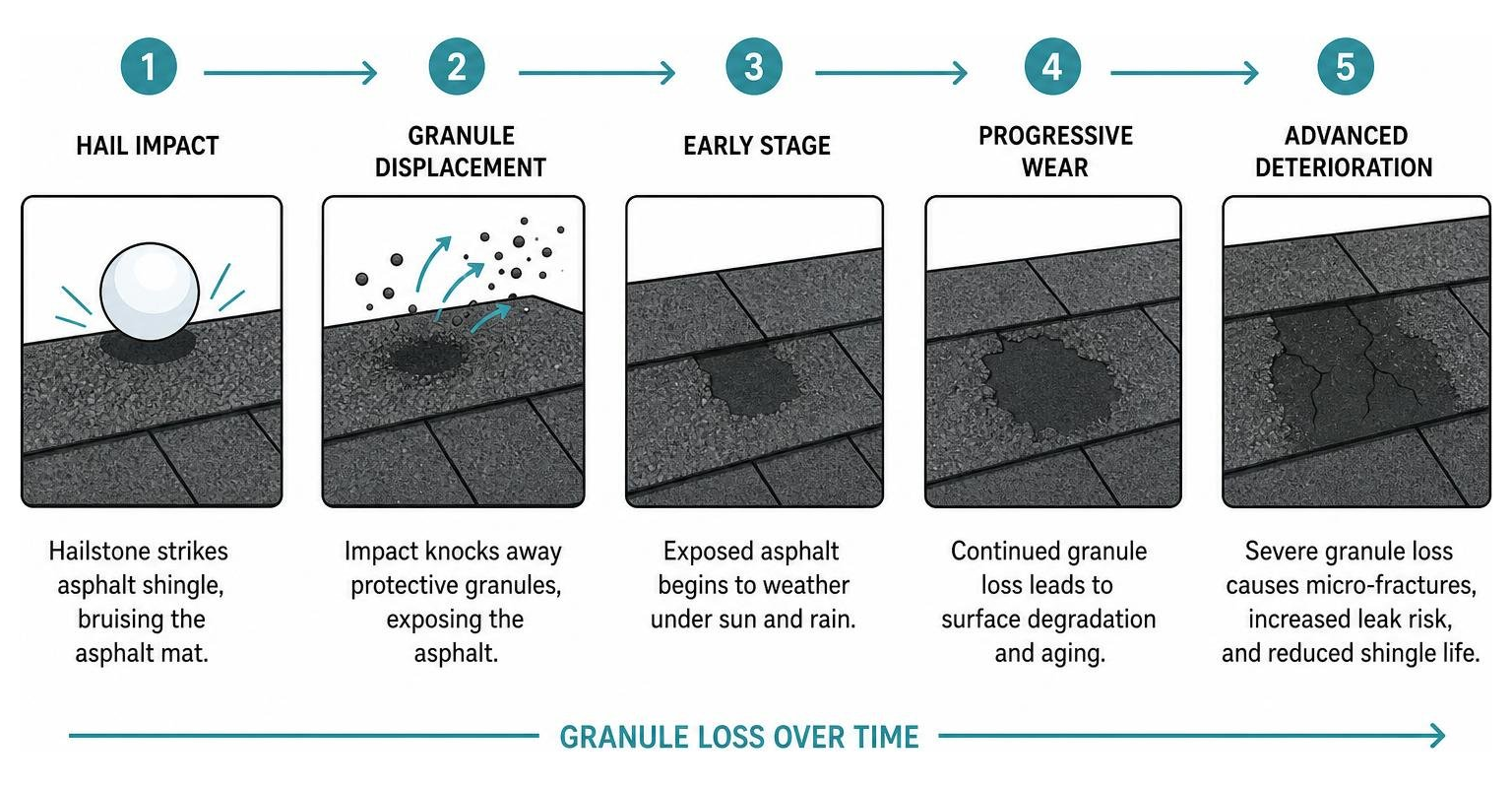
Beyond shingles, severe storms can cause structural damage that demands immediate attention. Keep an eye out for these critical structural warning signs:
- Cracked Rafters or Trusses: Visible in your attic after a heavy snow load or tree impact.
- Sagging Rooflines: A clear sign that the roof decking or structural support has been compromised.
- Deep Depressions: Areas where heavy limbs have compromised the plywood decking beneath the shingles.
How We Assess Storm Damage Repair vs Full Replacement
We don’t believe in guessing when it comes to your home’s protection. When our family-owned team performs a post-storm inspection, we follow a rigorous, objective checklist to determine the healthiest path for your roof.
Our assessment process includes:
- A Ground-Level Scan: Checking for missing shingles, damaged metal flashing, and gutter alignment.
- On-Roof Physical Inspection: Checking shingle pliability, checking adhesive seals, and looking for hail bruising.
- Moisture Detection & Attic Check: We head into your attic space to look for active leaks, water stains on rafters, and signs of compromised roof decking.
- The Brittle Test: Gently lifting a few shingles to see if they can withstand a repair without cracking.
Understanding these technical details helps you compare your options logically. For a closer look at the financial trade-offs of these two paths, see our breakdown on the Cost of Repairing vs Replacing Your Roof.
The Shingle Matching Problem and Insurance Realities
One of the most common surprises for homeowners during a post-storm repair is the shingle matching problem.
Even if your roof is only seven or eight years old, matching the exact color, style, and manufacturer of your existing shingles can be incredibly difficult. Shingle manufacturers frequently update their product lines, and older shingle styles are regularly discontinued. Furthermore, years of exposure to Oregon’s rain and sun will naturally fade your existing roof, meaning even a “matching” shingle from the same line will look like a bright, obvious patch.
In many local neighborhoods, a heavily mismatched roof doesn’t just hurt your curb appeal — it can violate strict Homeowners Association (HOA) guidelines. If a seamless match is impossible, insurance companies are often required to fund a full replacement rather than leaving you with an unsightly, multi-colored roof.
Navigating Insurance Claims for Storm Damage Repair vs Full Replacement
Navigating an insurance claim after a storm can feel overwhelming, but understanding your policy type makes a massive difference.
Most homeowners policies cover sudden, accidental damage from wind and hail. However, how much they pay depends on whether you have an Actual Cash Value (ACV) or a Replacement Cost Value (RCV) policy:
- RCV (Replacement Cost Value): Covers the actual cost to replace your roof with a new one of similar quality, minus your deductible. This is the most protective policy type.
- ACV (Actual Cash Value): Depreciates the payout based on the age and pre-existing wear of your roof. If you have a 15-year-old roof under an ACV policy, your payout will be significantly lower, leaving you to cover the remaining balance out-of-pocket.
Having a trusted local contractor present when the insurance adjuster inspects your roof ensures that all damage is documented accurately from day one. To learn more about this process, read Does Insurance Cover Roof Replacement and our step-by-step guide on How to File a Roof Damage Insurance Claim.
Upgrading to Class 4 Impact Resistant Shingles
If your insurance company approves a full replacement after a storm, it represents a unique opportunity to upgrade your home’s protection. Investing a little extra to install Class 4 impact-resistant shingles is one of the smartest long-term upgrades you can make.
Class 4 shingles are engineered with a polymer-modified asphalt that allows them to withstand severe impacts without cracking. Because they are so durable, many insurance providers offer premium discounts of 15% to 35% on your wind and hail coverage once they are installed.
To help you visualize the long-term value of your options, here is a direct comparison of repair versus a full replacement:
| Decision Factor | Localized Storm Repair | Full Roof Replacement |
|---|---|---|
| Immediate Out-of-Pocket Cost | Low (typically paid out-of-pocket or under deductible) | Moderate (deductible only, if covered by insurance) |
| Warranty Coverage | Limited strictly to the patched area | Comprehensive, system-wide manufacturer warranty |
| Curb Appeal & Matching | Potential for mismatched, faded patches | Perfect, uniform appearance across all slopes |
| Future Storm Resilience | Surrounding older shingles remain vulnerable | High resilience (especially with Class 4 upgrades) |
| Home Resale Value | Neutral or negative (mismatched patches can deter buyers) | High (adds strong selling point and peace of mind) |
What to Do Immediately After a Storm
When a severe storm clears, taking fast, structured action is key to protecting your home and securing your insurance coverage.
Here is your immediate post-storm action plan:
- Prioritize Safety First: Never climb onto a wet, storm-damaged roof yourself. Keep your inspections at ground level.
- Document Everything: Walk around your property and take high-quality photos and videos of any visible damage, including shingles in the yard, dented gutters, fallen limbs, and interior water stains on your ceilings.
- Check for Hidden Leaks: Head into your attic with a flashlight to look for active drips or damp insulation.
- Schedule a Professional Inspection: Call a reputable, local roofing contractor to perform a hands-on, safe inspection and provide a detailed damage report.
For a deeper look at why timing is so critical after a weather event, see How Weather Events Trigger the Need for Inspections.
Frequently Asked Questions about Storm Damage
How do I know if my roof damage can be repaired or requires a full replacement?
If the damage is limited to a small, isolated area (less than 25% of the roof), the shingles are still flexible enough to undergo repair, and matching materials are available, a repair is usually the best choice. If the damage is widespread, shingles are brittle, or there is structural sagging, a full replacement is necessary.
What is the 30% rule in roofing?
The 30% rule states that if the cost to repair your storm-damaged roof exceeds 30% of the cost of a complete roof replacement, it is mathematically more sensible to invest in a full replacement. This prevents you from spending significant money on a system that is already nearing the end of its useful life.
Will insurance cover a full roof replacement after a storm?
Yes, if the damage was caused by a covered peril like wind or hail, and the damage is widespread enough to meet your insurer’s replacement threshold (or if matching shingles are unavailable). Your actual out-of-pocket cost will depend on whether you have an RCV or ACV policy.
Conclusion
Making the choice between storm damage repair vs full replacement doesn’t have to be overwhelming. By understanding the age of your roof, the extent of the damage, and the local building codes, you can make a decision that protects both your home and your financial investment.
At Raindrop NW, we pride ourselves on being a truly local, family-owned company serving Beaverton, Portland, and our surrounding communities. We aren’t an out-of-state corporation looking for a quick payout after a storm; we live and work in this community, and our multi-generational commitment means we stand behind our workmanship for the long haul.
If you suspect your roof has taken damage from a recent storm, don’t wait for a small leak to turn into a major headache. Contact us today to schedule a transparent, professional assessment through our Raindrop NW Roof Inspections and Certifications service, and let’s make sure your home is ready for whatever the Pacific Northwest weather brings next.




Leave a Reply
Want to join the discussion?Feel free to contribute!