
Step-by-Step Guide to How to Choose the Right Roofing Material

Your Roof Is One of the Biggest Decisions You’ll Make as a Homeowner
Knowing how to choose the right roofing material for your home can save you years of headaches and a lot of second-guessing. Here is a quick-reference guide to get you started:
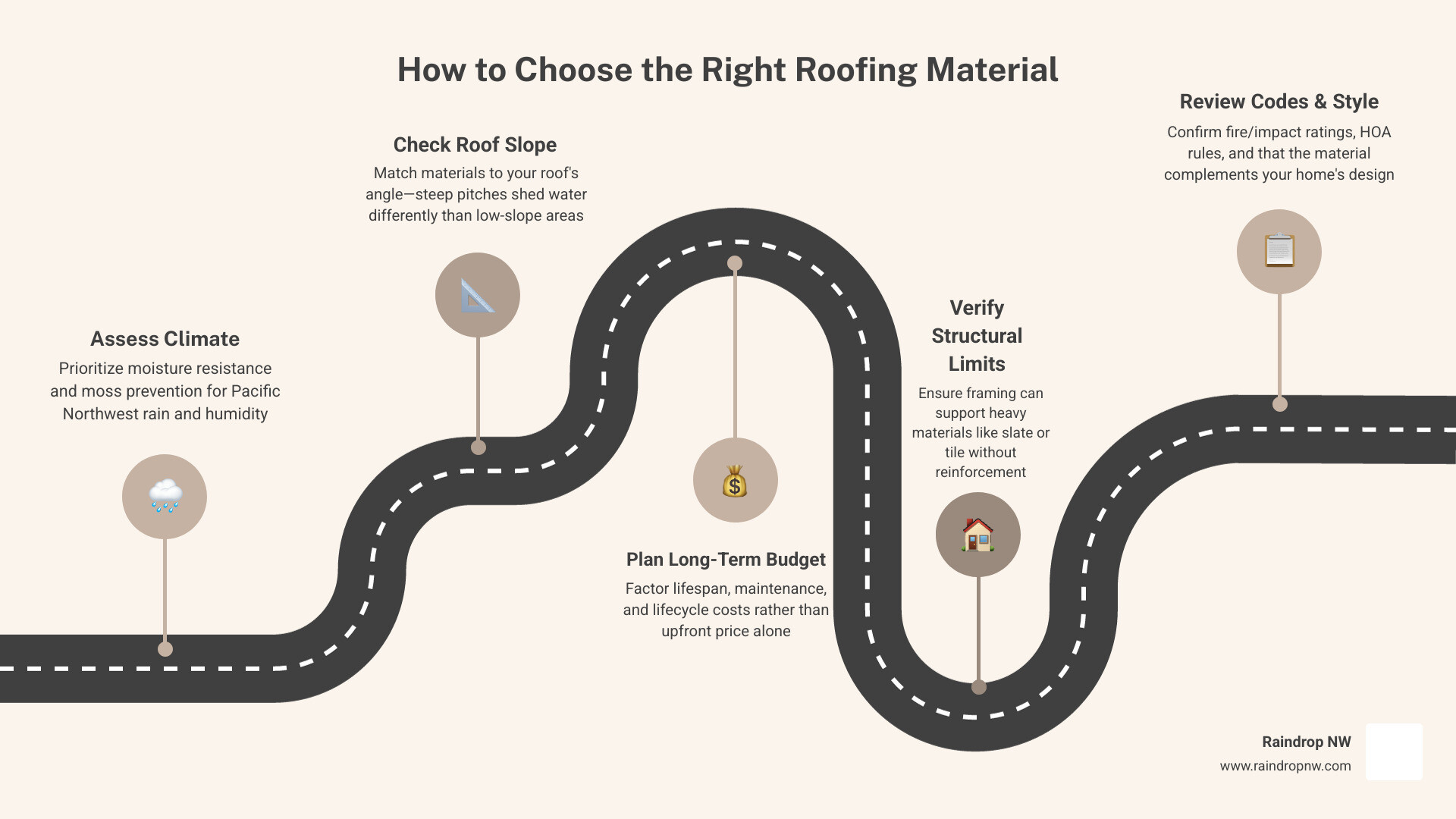
How to Choose the Right Roofing Material in 6 Steps:
- Assess your climate – In the Pacific Northwest, moisture resistance and moss prevention matter most
- Check your roof slope and pitch – Some materials only work on certain roof angles
- Know your budget over time – Factor in lifespan and maintenance, not just upfront cost
- Confirm your home’s structural limits – Heavy materials like slate or tile may require reinforcement
- Match your home’s architectural style – Material and color should complement your home’s design
- Verify local building codes – Fire ratings, impact ratings, and HOA rules may limit your options
The stakes are high. A roof replacement is a major investment, and projects vary depending on the material and the size of your home. Yet many homeowners pick a material without ever thinking through climate performance, long-term durability, or whether their framing can even support the weight.
That kind of decision can lead to issues down the road. A roof that works beautifully in Arizona may be completely wrong for a home in Beaverton that sees months of rain, moss-friendly humidity, and the occasional windstorm rolling in off the coast.
This guide walks you through every factor that matters — from the Oregon climate and your roof’s structural limits, to the pros and cons of each major material, to what a trustworthy contractor bid actually looks like.
I’m Torrey Yungeberg, owner of Raindrop Roofing NW and a lifelong Oregon roofing professional who has helped hundreds of Pacific Northwest homeowners navigate how to choose the right roofing material for your home with confidence and clarity. As a family-owned business rooted in this region, we know how Oregon’s climate demands more from a roof — and from the people who install it.
Key Factors in How to Choose the Right Roofing Material for Your Home
When we sit down with homeowners in Portland, Lake Oswego, or Tigard, we always explain that a roof is a complex protective system, not just a surface layer of shingles. To make an investment that stands the test of time, you have to look beyond aesthetics and initial cost.
Several crucial elements dictate which materials are physically and practically suitable for your home. Your roof’s shape and slope are the primary starting points. A steep-slope gable roof sheds water very differently than a low-slope or flat roof section. If you are wondering how slope impacts your options, you can read more about Which Roof Style Is Better for Rain? to see how different designs handle our heavy winter downpours.
Furthermore, we must evaluate the structural weight limits of your home’s framing. While you might love the look of heavy clay tiles, your home’s rafters or trusses must be engineered to support that load. Finally, matching the architectural style of your home is essential for maintaining curb appeal and resale value. Whether you own a classic Craftsman in Beaverton, a mid-century modern home in West Linn, or a contemporary home in Hillsboro, the material you select should feel cohesive with the rest of your home’s design. For a deeper dive into how roof geometry influences your material choices, check out our Flat Roof vs Pitched Roof Comparison.
How to Choose the Right Roofing Material for Your Home Based on Energy Savings
Your roof plays a massive role in your home’s overall thermal envelope. The right material can significantly reduce your heating and cooling demands, keeping your living space comfortable year-round while lowering your utility bills.
Energy-efficient roofing relies heavily on solar reflectance—the ability of a material to reflect sunlight back into the atmosphere rather than absorbing it as heat. Metal roofing and highly reflective cool-roof shingles excel at this. During our warm Oregon summers in places like Tualatin and Sherwood, a high-reflectance roof prevents heat from radiating down into your attic.
However, material choice is only half the battle. For any roofing material to perform efficiently, it must be paired with balanced attic ventilation and proper insulation. A continuous airflow system—combining intake vents at the soffits with exhaust vents along the ridge—flushes out hot air in the summer and prevents moisture buildup in the winter. When we design a roof replacement, we always evaluate your attic’s ventilation to ensure your new material can deliver the maximum possible energy savings.
How to Choose the Right Roofing Material for Your Home to Resist Storms and Fire
Living in the Pacific Northwest means preparing for a variety of weather challenges, from high winds and heavy rains to dry summer seasons that bring wildfire risks to forested areas near Oregon City, Sandy, and Damascus.
When evaluating how to choose the right roofing material for your home, safety ratings are paramount:
- Fire Safety Ratings: Materials are rated from Class A (highest resistance) to Class C. Non-combustible materials like metal, concrete tile, and specialized asphalt shingles offer Class A protection, which is highly recommended—and sometimes mandated by local building codes—for homes near wildland-urban interfaces.
- Wind and Impact Ratings: High winds can lift weak shingles, while falling debris or hail can cause punctures. Look for materials tested to withstand high wind speeds (often up to 110–130 mph for quality architectural shingles) and those with a Class 4 impact rating to resist physical damage.
Choosing a highly resilient, code-compliant material not only protects your family but can also qualify you for substantial discounts on your homeowner’s insurance premiums.
Evaluating Climate and Oregon Rain Impact
In Western Oregon, rain is a constant companion for a large portion of the year. Our prolonged wet seasons create a unique set of challenges for residential roofs. Constant moisture, combined with shaded overhanging trees, makes our region the perfect breeding ground for moss, algae, and mold.
Moss is more than just an aesthetic issue; its roots can lift shingles, trap moisture against the roof deck, and cause premature rot. Because of this, moisture resistance and moss prevention must be top priorities.
While asphalt shingles remain popular, metal roofing offers an incredibly slick, non-porous surface that sheds water instantly and prevents moss from taking hold. To understand how these two options handle our unique climate, you can read our comparison on Metal Roof Durability vs Shingle in Oregon Rain.
Structural Weight and Roof Pitch Considerations
Before falling in love with a specific material, we must look at what lies beneath: your roof deck and framing. The physical weight of roofing materials varies dramatically. While asphalt shingles and metal panels are relatively lightweight, natural slate and concrete tiles are incredibly heavy.
If you choose a heavy premium material, a structural engineer must inspect your home’s framing. Older homes in historic areas like Eastmoreland or Westmoreland may require significant structural reinforcement—such as adding extra rafters or collar ties—to safely bear the load.
Additionally, the pitch of your roof determines which materials can be safely installed. Low-slope or flat roofs require continuous membrane systems (like TPO) to prevent standing water from seeping between joints, whereas steep roofs can utilize individual shingles or tiles that rely on gravity to shed water. To learn more about how pitch affects maintenance and material costs, explore our Flat vs Pitched Roof Cost and Maintenance Comparison.
Comparing the Most Common Residential Roofing Materials
To help you visualize your options, let us look at the most common residential roofing materials used throughout the Portland metro area. Each material comes with its own balance of lifespan, maintenance requirements, and aesthetic appeal.
Asphalt Shingles: The Traditional Standard
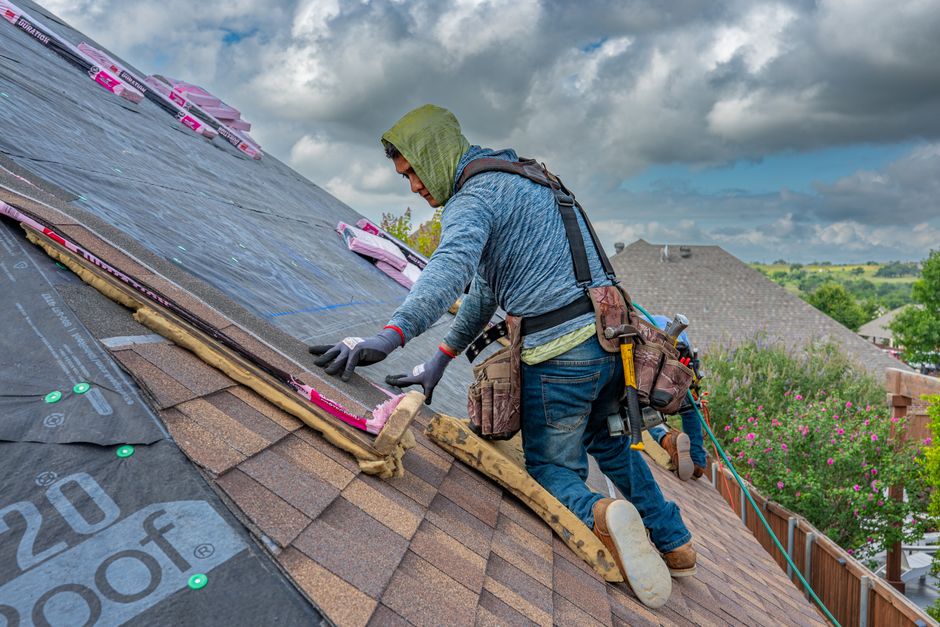
Asphalt shingles cover the vast majority of residential homes in North America, and for good reason. They are versatile, reliable, and come in a wide range of styles to fit almost any budget.
There are three primary categories of asphalt shingles:
- Three-Tab Shingles: The traditional, flat, single-layer shingles. While they are the most economical option upfront, they have a shorter lifespan and lower wind resistance.
- Architectural (Dimensional) Shingles: These feature multiple layers laminated together to create a dimensional, wood-shake-like appearance. They are thicker, much more durable, and typically carry longer warranties and higher wind ratings.
- Designer (Premium) Shingles: These are engineered to mimic the look of natural slate or old-world wood shakes, offering unmatched curb appeal.
If you are weighing your options, you might ask, Are Designer Shingles Worth the Extra Cost? to see if the aesthetic upgrade matches your goals. You can also view our detailed Architectural vs Designer Shingle Comparison or learn How Shingle Grade Affects Lifespan and Appearance to make an informed choice.
Metal Roofing: Durability and Energy Efficiency
Metal roofing has grown rapidly in popularity across Oregon. Known for its sleek, modern aesthetic and exceptional longevity, a metal roof is a premium investment that often lasts two to three times longer than standard asphalt.
The most common residential style is standing seam metal roofing, where the fasteners are concealed within raised seams. This design eliminates exposed screws, greatly reducing the risk of leaks over the decades. Metal roofs are highly reflective, making them highly energy-efficient during sunny summer months. They are also widely considered the absolute best base for solar panel installations because solar racking systems can clamp directly onto the standing seams without drilling holes into your roof deck. For a side-by-side breakdown of these two popular choices, check out our Asphalt Shingle vs Metal Roof Comparison.
Premium Options: Slate, Tile, and Wood Shakes
For homeowners looking to make a true architectural statement, premium materials offer unmatched beauty and historic accuracy:
- Natural Slate: Sourced from quality quarries, slate is virtually indestructible, often lasting well over a century. It offers a timeless, elegant look but requires specialized installation and a robust structural frame.
- Clay and Concrete Tile: Popular on Mediterranean, Mission, and modern farmhouse designs, these tiles are highly resistant to fire, rot, and insects, carrying lifespans of 50 to 100+ years.
- Wood Shakes and Shingles: Typically made from cedar, wood roofing offers a beautiful, rustic, natural appearance. However, in our damp climate, cedar shakes require meticulous maintenance to prevent rot, moss growth, and decay.
If you love the natural look of wood or slate but want modern durability tailored to our wet winters, we recommend looking at Premium Shingle Options for Pacific Northwest Homes to find high-performance alternatives designed for our climate.
Long-Term Value, Warranties, and Contractor Selection
When evaluating the true value of a new roof, it is vital to look beyond the initial installation. A material that lasts 50 years with minimal maintenance often provides far better lifecycle value than a material that needs to be replaced or repaired every 15 years.
To protect this investment, you must understand the two types of warranties:
- Manufacturer Warranties: These cover defects in the roofing materials themselves. High-quality materials often come with long-term or lifetime material warranties, but these are often voided if the roof is not installed strictly according to the manufacturer’s specifications.
- Workmanship Warranties: Provided by the contractor, this covers the actual installation quality.
Choosing certified contractors who are authorized by manufacturers to offer extended system warranties is the best way to ensure peace of mind. For a detailed breakdown of how your choice of material impacts your long-term financial planning, see our guide on How Material Choice Impacts Your Roof Cost.
Vetting Your Roofing Contractor
Even high-grade roofing material will fail prematurely if it is installed incorrectly. In fact, industry data suggests that a vast majority of roofing issues stem from poor installation rather than material failure.
To protect your home, we recommend vetting your contractor with these essential steps:
- Verify Licensing and Insurance: Ensure they hold an active license with the Oregon Construction Contractors Board (CCB) and carry adequate liability, auto, and workers’ compensation insurance.
- Ask for Local References: Look for a contractor with a deep footprint in your local community, whether that is Beaverton, Hillsboro, Tigard, or Lake Oswego.
- Request a Comprehensive Written Bid: A professional quote should detail everything—including tear-off, decking repairs, underlayment types, flashing replacement, ventilation upgrades, and cleanup.
As a truly local, independently owned company, we believe in complete transparency and accountability. We focus entirely on delivering our own high standards of craftsmanship and service with our dedicated team.
Frequently Asked Questions about Choosing a Roof
What is the best roofing material for solar panels?
Standing seam metal roofing is widely considered the absolute best base for solar panel installations. Because the panels can be clamped directly onto the raised metal seams, solar installers do not need to drill holes through your roof deck. This preserves the watertight integrity of your roof and makes future solar maintenance much easier.
Can I change my roofing material from shingles to metal or tile?
Yes, you can transition from asphalt shingles to other materials, but you must account for structural weight and local building codes. While metal is lightweight and can easily replace shingles without extra support, upgrading to heavy clay tile or natural slate will require a structural engineering evaluation to confirm your home’s framing can handle the load.
How does roof color affect energy efficiency?
Roof color has a direct impact on solar reflectance and attic temperatures. Light-colored roofs reflect a much higher percentage of solar radiation, keeping your attic cooler and reducing your home’s cooling costs during hot summer months. In contrast, dark roofs absorb heat, which can increase the workload on your air conditioning system.
Conclusion
Choosing the right roof is a significant milestone in protecting your home and family. By understanding how the Pacific Northwest climate, your home’s structural limits, and different material characteristics interact, you can make a choice that brings lasting beauty, energy efficiency, and peace of mind.
At Raindrop Roofing NW, we are proud to be a family-owned, truly local company serving Beaverton, Portland, Hillsboro, Tigard, and the surrounding communities. Unlike companies owned by out-of-state investment firms, our roots are deep in this region, and we are committed to providing honest, multi-generational craftsmanship and service.
Whether you are ready to replace an aging roof or simply want an expert, honest assessment of your roof’s current condition, we are here to help with certified workmanship and clear communication.
Ready to take the next step? Schedule a Free Roof Replacement Consultation with our friendly, experienced team today. Let us help you find the perfect protective shield for your Oregon home.




Leave a Reply
Want to join the discussion?Feel free to contribute!