
A Comprehensive Guide to How Moss Damages Your Roof Shingles

Why Moss on Your Roof Is More Than Just a Cosmetic Problem
How moss damages your roof shingles is something every Oregon homeowner should understand — because in the Pacific Northwest, moss isn’t just an occasional nuisance. It’s one of the most common and quietly destructive forces working against your home’s first line of defense.
Here’s a quick breakdown of how moss damages shingles:
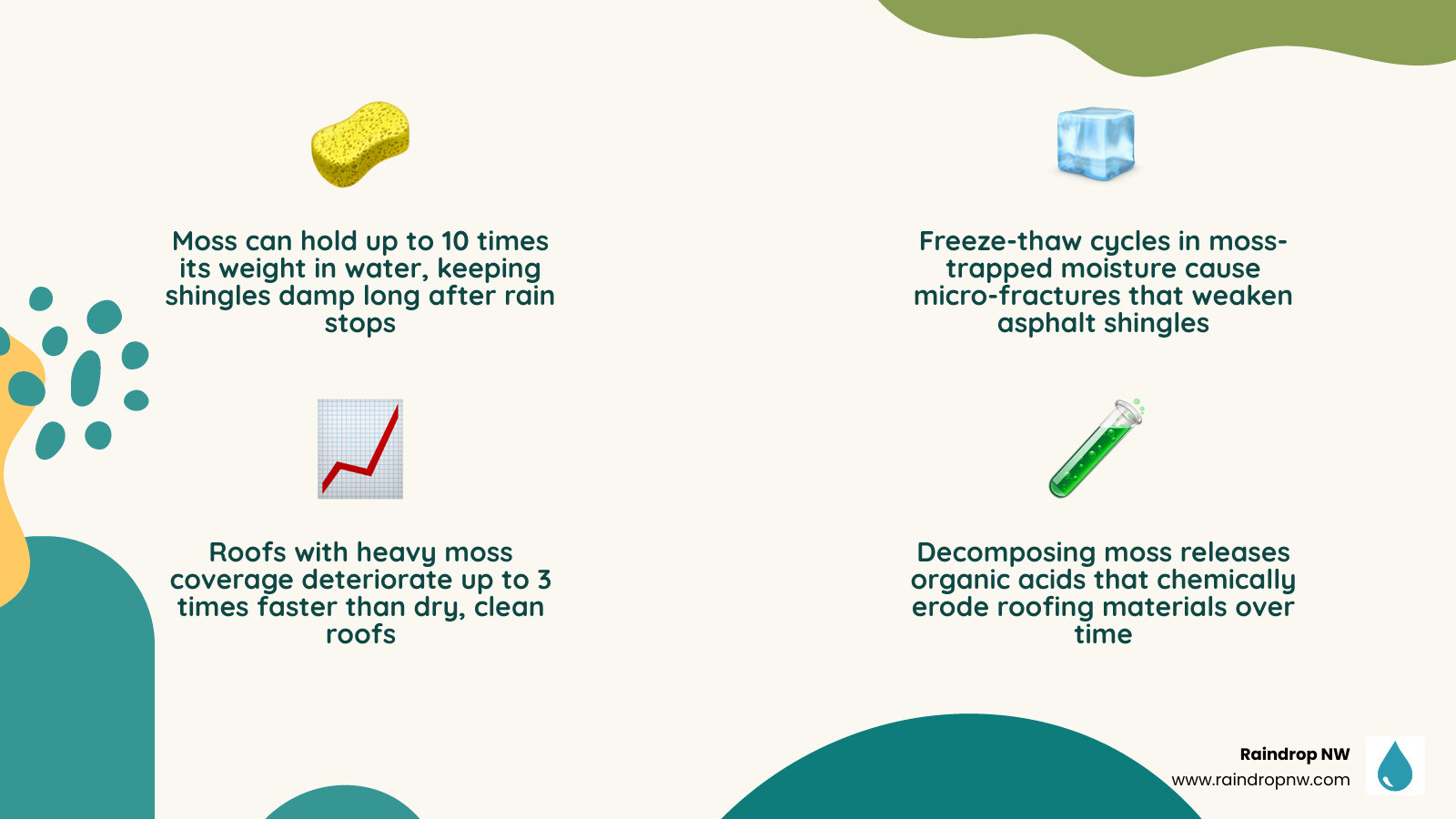
- Moisture retention – Moss acts like a sponge, holding water directly against your shingles long after rain stops, preventing them from drying naturally
- Shingle lifting – As moss grows thicker, it physically wedges under shingle edges, breaking the adhesive seal that holds them flat and wind-resistant
- Capillary action – Moss growing in the gaps between shingles wicks water upward and sideways — against gravity — under the shingles above
- Granule loss – Moss weakens the bond between asphalt and the protective ceramic granules on your shingles, accelerating UV damage
- Freeze-thaw cracking – Water trapped in moss freezes and expands in cold weather, causing micro-fractures in the asphalt body of the shingle
- Wood rot – On wood shake roofs, moss traps debris and moisture, creating the perfect environment for fungal growth and decay
- Organic acid damage – As moss breaks down, it releases organic acids that chemically erode roofing materials over time
Most homeowners don’t notice the damage until it’s already significant. A roof with heavy moss coverage can deteriorate up to three times faster than a dry roof — and by the time leaks appear, the underlying structure may already be compromised.
I’m Torrey Yungeberg, owner of Raindrop Roofing NW, and after years of inspecting roofs across Beaverton, Portland, and the surrounding communities, I’ve seen how moss damages your roof shingles in ways that catch homeowners completely off guard. In this guide, I’ll walk you through exactly what’s happening under that green layer — and what you can do about it before small growth becomes a costly repair.
The Science of How Moss Damages Your Roof Shingles
To understand why a simple, primitive plant poses such a threat to a heavy-duty roofing system, we have to look at the biology of moss. Unlike typical garden plants, mosses are non-vascular. They do not have a traditional root system to pull nutrients and water from the soil. Instead, they absorb water and airborne nutrients directly through their leaves.
Because they rely entirely on surface moisture, mosses have evolved to be incredibly efficient sponges. They can survive on dry, nutrient-poor surfaces like asphalt shingles by anchoring themselves and waiting for the next rain.
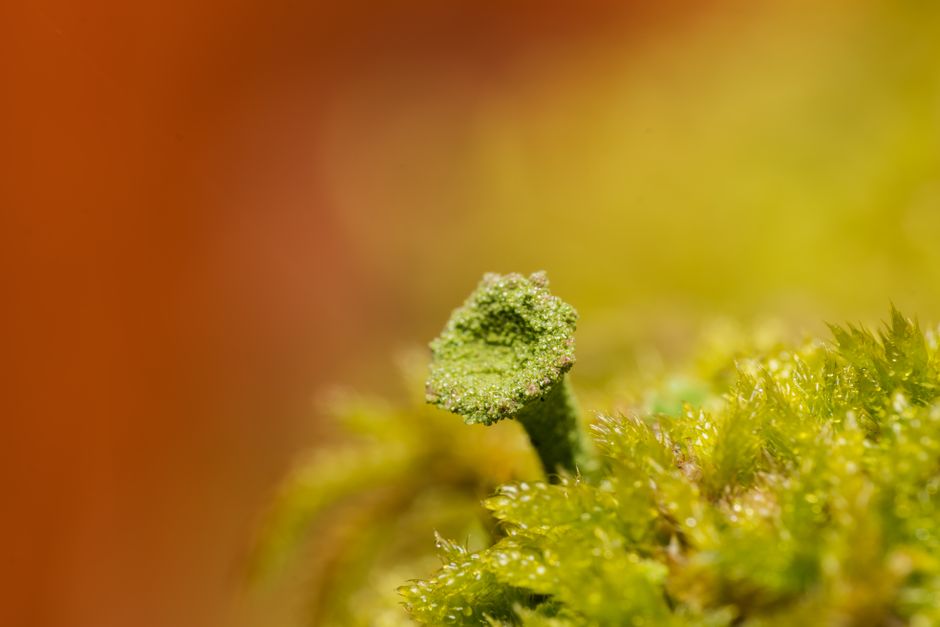
Instead of roots, mosses use microscopic, hair-like anchoring structures called rhizoids. While rhizoids do not absorb nutrients, they are incredibly strong. They wrap around and wedge themselves into the tiny crevices between the ceramic granules on your shingles.
Once anchored, moss creates a continuous, damp microclimate on your roof. This constant moisture retention is the root cause of physical roof degradation in the rainy Pacific Northwest. When water remains trapped on your shingles for weeks or months at a time, it begins to wear down the structural integrity of the roofing materials.
This problem is severely compounded during our cold winter months. When the temperature drops below freezing, the water trapped inside the dense moss biomass expands. This freeze-thaw cycle acts like a slow-motion jackhammer, widening microscopic cracks in the asphalt, loosening granules, and physically weakening the shingle body. To dive deeper into why our local climate is such a perfect breeding ground for these organisms, read our article on How Moss And Algae Thrive In Pacific Northwest Weather.
Capillary Action: How Moss Damages Your Roof Shingles From Beneath
One of the most insidious ways moss destroys a roof is through a physical phenomenon known as capillary action.
Under normal circumstances, your roof is designed to shed water downward, using gravity to channel rain off the shingles and into your gutters. However, when moss begins to grow in the vertical keyways (the gaps between individual shingles), it acts as a porous dam.
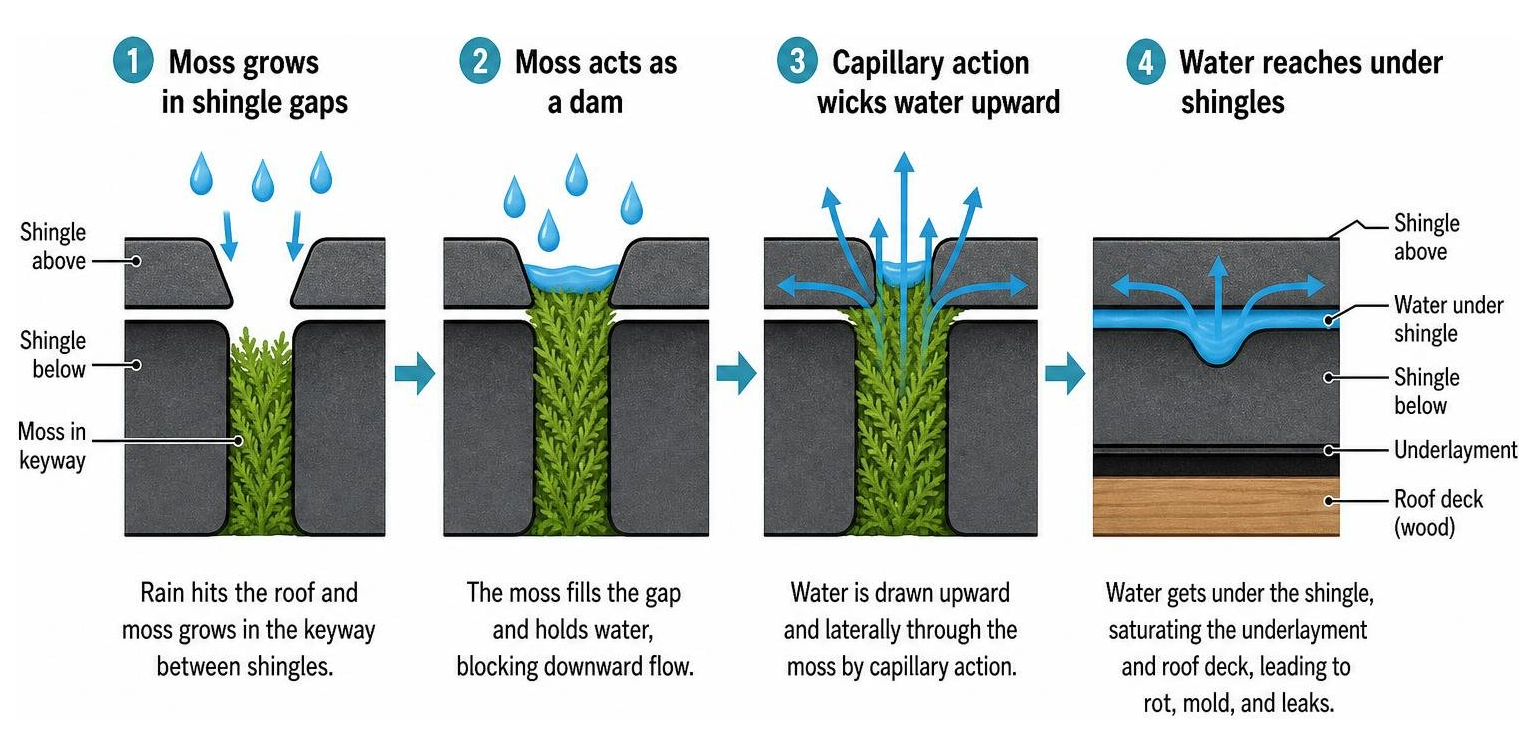
As rainwater hits this mossy dam, the dense network of leaves and stems creates a capillary network. Instead of flowing down the roof, the water is wicked upward and laterally, traveling against gravity.
This wicking action draws water directly underneath the shingles above. Once water gets behind the shingle line, it bypasses the primary shedding surface and sits directly on the underlayment or the wooden roof deck. Over time, this constant lateral water movement leads to wood rot, mold growth in your attic, and active leaks. You can learn more about how these shady, damp environments accelerate this process in our guide on How Moisture And Shade Encourage Moss Growth.
Shingle Lift and Wind Damage: How Moss Damages Your Roof Shingles in Storms
As moss matures, it doesn’t just sit flat on the roof; it grows into thick, heavy cushions. This physical expansion creates a powerful mechanical force.
As the moss clumps thicken, they push upward against the leading edges of the shingles. Asphalt shingles rely on a thermally activated sealant strip—a line of specialized adhesive that bonds the overlapping shingles together to form a wind-resistant barrier.
The physical wedging of growing moss clumps breaks this adhesive bond. Once the sealant strip is compromised, the shingles begin to lift and curl.
This “pry bar” effect leaves your roof highly vulnerable to wind damage. During typical autumn windstorms in the Willamette Valley, wind can easily get underneath these lifted, curled shingles. Without the adhesive bond holding them down, entire shingles can easily be stripped or blown off the roof, exposing the bare underlayment directly to heavy rain.
How Moss Affects Different Roofing Materials
Different roofing materials interact with moss in unique ways. While some materials are highly resistant, others can be severely damaged in a short period.
| Roofing Material | Primary Moss Vulnerability | Speed of Damage | Long-Term Consequence |
|---|---|---|---|
| Asphalt Shingles | Granule loss, adhesive seal failure, curling | Moderate (3–5 years) | Shingle blow-offs, accelerated UV degradation, leaks |
| Cedar Shakes | Moisture entrapment, rot, fungal decay | Rapid (2–4 years) | Split shakes, structural decay, complete roof failure |
| Concrete & Clay Tiles | Water channel blockage, lateral backup | Slow (5–10 years) | Underlayment rot, structural overloading from water weight |
| Metal Roofing | Seam blockage, fastener corrosion | Very Slow (10+ years) | Rust at seams, fastener failure |
Asphalt Shingles and Granule Loss
Asphalt shingles are made of a fiberglass mat coated in asphalt and topped with a layer of colored ceramic granules. These granules aren’t just there for looks; they are your roof’s primary defense against ultraviolet (UV) radiation. Without them, the underlying asphalt would quickly dry out, become brittle, and crack under the sun.
When moss anchors its rhizoids into the granule layer, it weakens the bond between the granules and the asphalt. When the moss is disturbed by wind, rain, or improper cleaning, it pulls the granules off with it. This is often referred to as the “sandbox effect.”
If you notice piles of colored sand in your gutters or at the bottom of your downspouts, your shingles are rapidly losing their protective layer. To understand how keeping your shingles clean preserves this vital barrier, read about How Moss Removal Protects Your Shingles.
Cedar Shakes and Wood Rot
Cedar shakes are highly vulnerable to moss. Because wood is a natural, organic material, it naturally absorbs and releases moisture. However, when moss establishes itself on cedar, it acts as a permanent wet blanket.
The moss traps soil, pine needles, and other debris, keeping the wood constantly damp. This creates the absolute perfect breeding ground for wood-decomposing fungi.
Once wood rot sets in, the cedar shakes soften, split, and begin to decay. This structural failure can quickly spread to the roof decking beneath. To learn more about how our local weather patterns put unique stress on wood and asphalt roofs, check out our article on How Persistent Rain And Humidity Stress Your Roof.
The Dangers of Improper DIY Moss Removal
When homeowners spot moss on their roof, their first instinct is often to grab a ladder, a pressure washer, or some strong household chemicals. Unfortunately, aggressive DIY moss removal often causes far more damage to the shingles than the moss itself.
Shingles are designed to shed falling rain, not withstand high-pressure water blasting upward or aggressive scrubbing with stiff wire brushes. Improper cleaning can instantly ruin a roof, strip away decades of useful life, and void your manufacturer’s warranty.
Why Pressure Washing is Destructive
Pressure washing is perhaps the single fastest way to destroy an asphalt shingle roof.
A high-pressure water stream easily strips the protective ceramic granules right off the shingles, leaving the asphalt completely bare and exposed to UV damage. Furthermore, blasting water upward from a pressure washer forces water directly under the shingles and past the flashing, mimicking severe storm damage and causing immediate indoor leaks.
Additionally, walking on a wet, mossy roof while operating a high-pressure wand is incredibly slippery and dangerous. One slip can lead to severe injury or catastrophic roof damage.
Chemical Runoff and Environmental Risks
Using the wrong chemicals to kill moss can have severe consequences for your home and the local environment.
For example, zinc sulfate is a highly effective moss killer, but it is incredibly corrosive to copper. If your home has copper gutters, downspouts, or flashing, zinc sulfate will chemically damage them. It is also non-water-soluble and can be highly toxic to local wildlife and garden plants when it washes off the roof.
Similarly, using highly concentrated chlorine bleach can degrade the asphalt in your shingles, corrode metal fasteners, and kill the landscaping around your foundation. If you must use chemical treatments, they must be carefully selected, properly diluted, and applied with strict safety precautions to protect your home’s exterior and local waterways.
Safe and Effective Moss Remediation and Prevention
Safe moss removal requires a patient, low-pressure approach that kills the moss at the root level without harming the underlying roofing materials.
The professional standard of care involves gently brushing away the heavy, loose clumps of moss using soft-bristled brushes, followed by the application of an eco-friendly, low-pressure chemical treatment to neutralize the remaining spores and rhizoids. Over the following weeks, the dead moss will naturally loosen and wash away with the rain. To learn more about maintaining your roof’s longevity in our wet climate, read our guide on How To Extend The Life Of Your Roof In Rainy Climates.
Environmental Mitigation and Sunlight
No matter how thoroughly you clean your roof, the moss will return if you don’t address the environmental conditions that allowed it to grow in the first place. Moss thrives in cool, damp, shaded areas.
The most effective long-term preventative measure is to let the sunshine in:
- Trim overhanging branches – Prune back tree limbs to allow direct sunlight to reach and dry your roof surface.
- Clear debris regularly – Keep your roof valleys and gutters clear of leaves and pine needles, which trap moisture and provide nutrients for moss.
- Improve attic ventilation – A properly ventilated attic prevents heat and moisture from building up under the roof deck, keeping the shingles cooler and drier. You can read more about this in our article on How Proper Ventilation Extends Roof Life.
Long-Term Preventative Solutions
For homes surrounded by mature trees where shade is unavoidable, installing physical preventative barriers is an excellent solution.
Installing zinc or copper strips along the ridge line of your roof provides continuous, passive protection. When rainwater runs over these metal strips, it oxidizes and carries microscopic metallic ions down the slope of the roof. These ions make the shingle surface completely uninhabitable for moss, algae, and lichens.
Additionally, when it comes time for a roof replacement, you can opt for shingles that incorporate algae-resistant technology, such as those featuring copper-coated granules. For practical tips on managing your roof maintenance without getting overwhelmed, check out our guide on How To Master Roof Maintenance In Aloha Without Losing Your Shingle.
Frequently Asked Questions About Roof Moss
We hear many of the same questions from homeowners across the Portland metro area regarding roof moss. Here are the facts.
Does moss on a roof cause immediate leaks?
No, moss rarely causes immediate leaks. The damage it causes is slow and mechanical.
At first, a small amount of green fuzz is purely cosmetic. However, as it thickens over months and years, it begins to lift shingles, trap water, and rot the underlying wood deck. By the time you notice an active leak inside your home, the structural damage has likely been developing for a long time. This is why regular professional inspections are so critical. You can learn more about catching these issues early in our guide on How Regular Inspections Catch Problems Early.
Can I install a new roof over moss-covered shingles?
We strongly discourage reroofing over existing moss-covered shingles.
Installing a second layer of shingles over an active moss infestation traps the moisture, spores, and decaying organic matter between the layers. This quickly leads to a severe mold outbreak in your attic, compromises the thermal sealant bond of your new shingles, and will almost certainly void the manufacturer’s warranty on your new roof. A complete tear-off is always the safest and most reliable approach.
Will roof moss go away on its own during dry summer months?
No. During our dry Oregon summers, roof moss will turn yellow, brown, and crunchy, appearing completely dead.
However, the moss is simply in a state of dormancy. The rhizoids remain tightly locked into your shingle granules. As soon as the autumn rains return, the moss will absorb the moisture, turn vibrant green, and continue growing right where it left off.
Conclusion
Understanding how moss damages your roof shingles is the first step in protecting your home from premature roof failure. While a little green growth might look rustic, it is a slow-motion threat to your roof’s structural integrity, wind resistance, and overall lifespan.
At Raindrop NW, we believe in helping our neighbors protect their investments with honest advice, skilled craftsmanship, and reliable maintenance. As a truly local, family-owned business serving Beaverton, Portland, and the surrounding communities, we take pride in our accountability to the community we live in. We don’t believe in high-pressure sales tactics or unnecessary replacements — just clear, straightforward solutions to keep your roof in peak condition.
If you are noticing moss buildup, lifted shingles, or just want peace of mind before the next rainy season, we are here to help. Contact us today to schedule a professional assessment, and let’s make sure your home stays safe, dry, and protected for years to come.
Explore Raindrop NW Residential Roof Repairs and Maintenance




Leave a Reply
Want to join the discussion?Feel free to contribute!