
Why Moss Loves Your Shady Spot
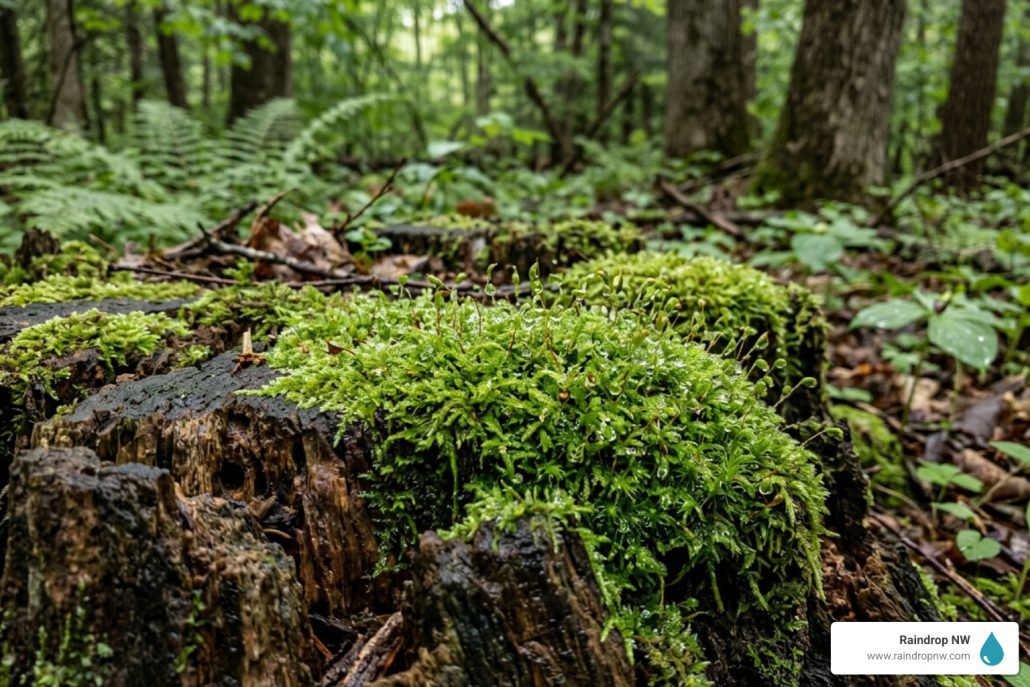
Why Moss Loves Your Shady, Wet Roof in Beaverton, Oregon
How moisture and shade encourage moss growth comes down to a simple biological advantage: moss doesn’t need roots, sun, or rich soil to survive — just a damp surface and enough shadow to stay wet.
Here’s the short version:
- Moisture keeps moss actively photosynthesizing; without it, moss just goes dormant and waits — it rarely actually dies
- Shade slows evaporation, keeping surfaces wet longer and preventing the drying conditions that would stress moss or slow its spread
- Together, shade and moisture create a surface where grass and other competitors can’t keep up, but moss thrives effortlessly
- On roofs, this combination is especially damaging — moss traps moisture directly against shingles, accelerating deterioration from the inside out
- In Oregon’s climate, mild wet winters mean moss stays active while grass slows down, giving it a significant seasonal head start
If you’ve noticed green patches creeping across your roof or lawn, you’re not imagining things — and the conditions driving that growth are very specific and very fixable.
Here in the Pacific Northwest, moss isn’t just a yard problem. It’s a roofing problem. Oregon’s persistent rainfall, dense tree canopies, and overcast skies create near-perfect conditions for moss to take hold on shingles, in gutters, and along roof valleys. Left unchecked, what starts as a thin green film can work its way under shingles and quietly compromise your roof’s ability to shed water — exactly the one job it needs to do.
I’m Torrey Yungeberg, owner of Raindrop Roofing NW, and after years of inspecting roofs across Beaverton and the greater Portland metro, I’ve seen how moisture and shade encourage moss growth in ways that catch homeowners off guard. In the sections ahead, we’ll break down exactly what’s happening — and what you can do about it.

The Biology of a Survivor: Why Moss Thrives Where Grass Fails
To understand why your roof is turning into a miniature forest, we have to look at the biology of moss. Moss is an ancient survivor—it has been covering the bare spots of the Earth for over 450 million years. Unlike turfgrass, which is a vascular plant with complex root systems that suck up water from deep in the soil, moss is non-vascular.
Moss doesn’t have true roots. Instead, it uses tiny hair-like structures called rhizoids. These aren’t for drinking; they are strictly for anchoring the plant to a surface—whether that’s a rock, a log, or your expensive asphalt shingles. Because they don’t have roots to pull water from the ground, mosses absorb moisture and nutrients directly through their leaves, which are often only one cell thick.
This cellular structure is a double-edged sword. In the full, punishing sun of a July afternoon in Beaverton, those thin leaves would dry out instantly. However, moss has a “superpower”: when it dries out, it doesn’t die. It simply stops photosynthesizing and goes dormant. The moment the next Oregon rain shower hits, it rehydrates instantly and gets back to work.
Understanding how moisture and shade encourage moss growth on roofs
When we talk about how moisture and shade encourage moss growth on a roof, we are looking at a cycle of moisture entrapment. On a healthy, sun-exposed roof, rainwater hits the shingles and evaporates relatively quickly. But in the shaded corners—usually on the north-facing side or under a large Douglas fir—the water lingers.
Moss acts like a sponge. It can hold several times its own weight in water. When moss establishes itself on a shingle, it keeps that shingle wet long after the rest of the roof has dried. This constant dampness is the enemy of roofing materials. It can cause shingles to rot, edges to curl, and granules to loosen.
Furthermore, poor attic ventilation can exacerbate this. If your attic is too hot or holds too much humidity, it can create “hot spots” on the roof deck that contribute to condensation issues, feeding the moss from the underside while the shade protects it from above. Learning How Ventilation Reduces Moisture Damage is a critical first step for any homeowner in the Portland metro area dealing with persistent growth.
| Feature | Turfgrass | Moss |
|---|---|---|
| Light Needs | 4-6+ hours direct sun | < 3 hours direct sun |
| Water Source | Deep roots in soil | Surface absorption through leaves |
| Dormancy | Browns/dies in extreme drought | Rehydrates instantly from dry state |
| Soil Preference | Aerated, nutrient-rich | Compacted, damp, or even bare rock |
| Winter Activity | Dormant in PNW winters | Highly active in cool, wet winters |
The Perfect Storm: How moisture and shade encourage moss growth in the Pacific Northwest
In the Pacific Northwest, we live in what moss researchers would consider a “luxury resort.” Our climate provides the “Perfect Storm” for moss dominance.
First, let’s talk about the sunlight threshold. Most grasses require at least 3-4 hours of direct sunlight or 6-8 hours of filtered sunlight to stay healthy. In many Beaverton neighborhoods, the combination of tall evergreens and our standard overcast skies means many roofs and lawns never hit that threshold. Moss, however, is perfectly happy with less than three hours of light. In fact, it is at its greenest and most vibrant in low-light conditions where other plants look sickly.
Then there is the humidity. Even when it isn’t actively raining, our air is often saturated. Because moss absorbs water from the air, it can continue growing even during “dry” spells if the humidity remains high and the shade is deep.

Why how moisture and shade encourage moss growth matters for Oregon homeowners
For those of us in the Willamette Valley, the timing of moss growth is particularly frustrating. Most of our lawn grasses go dormant when the temperature drops in the winter. Moss, however, is incredibly cold-tolerant—some species can continue growing at temperatures as low as 20 degrees Fahrenheit.
This means that while your grass is “sleeping” during our long, grey winters, the moss is wide awake and expanding its territory. By the time spring rolls around in May 2026, the moss has had a six-month head start to fill in every gap where the grass thinned out.
On a roof, this seasonal advantage is even more dangerous. The constant moisture trapped by moss during the winter can lead to “frost wedging.” When trapped water freezes, it expands, physically prying the granules off your shingles or lifting the edges, which allows even more water to seep underneath. This is why the Roof Inspection Frequency For Pacific Northwest Homes should be higher than in drier climates like Arizona or California.
Assessing Your Property: Signs of Moisture and Shade Dominance
How do you know if your moss problem is just an aesthetic quirk or a sign of structural danger? You have to look for the environmental triggers.
On your roof, moss is rarely the primary problem; it’s a symptom of a damp, shaded environment. If you see moss, you should also look for:
- Granule Loss: Check your gutters. If they are full of “sand” (the protective granules from your shingles), the moss is likely prying them loose.
- Lifting Shingles: Moss often starts in the “keyways” (the gaps between shingles). As it grows, it acts like a wedge, lifting the shingle above it.
- Debris Accumulation: Pine needles and leaves trap moisture, creating a “compost” layer that moss loves.
- Internal Stains: If you see yellow or brown spots on your ceiling, moisture is likely bypassing your moss-damaged shingles.
Identifying environmental triggers in Beaverton yards
In your yard, moss is an “indicator species.” It tells you that the soil is likely compacted, poorly drained, or too acidic for grass. If you find yourself wondering How Often Should You Have Your Roof Inspected, you should also be looking at the trees surrounding your home.
A dense tree canopy does two things: it blocks the sun (shade) and it prevents wind from drying out the roof and soil (moisture). If your yard stays “squishy” for days after a rain, you have a drainage issue that is actively inviting moss to move in.
Practical Solutions: Reducing Moisture and Increasing Light
The good news is that you don’t have to just “live with it.” While we can’t change the Oregon rain, we can change how that rain interacts with your home.
1. Strategic Pruning The single most effective way to discourage moss is to “let the light in.” Thinning out the branches of overhanging trees or removing limbs that sit directly over the roof can drastically increase sunlight and air circulation. This helps the roof dry out faster, depriving the moss of the consistent moisture it needs to stay active.
2. Gutter Maintenance Clogged gutters are a moss’s best friend. When gutters overflow, water backs up onto the roof’s edge and the fascia boards. Keeping gutters clear ensures that moisture is moved away from the structure as quickly as possible.
3. Physical Removal If you already have heavy moss, it needs to be removed—but carefully. Never use a high-pressure power washer on asphalt shingles; it will strip the granules and ruin the roof. Instead, professional “soft washing” or manual brushing combined with zinc or copper treatments is the way to go.
Cultural adjustments to discourage moss recurrence
For your lawn, the strategy is similar. You want to make the environment as “hostile” as possible for moss and as “friendly” as possible for grass.
- Aerate Your Soil: Core aeration helps break up compacted soil, allowing water to sink in rather than sitting on the surface.
- Increase Mowing Height: In shaded areas, mow your grass a bit higher (around 3 inches). This allows the grass blades to capture more of the limited sunlight, making the turf stronger and better able to compete with moss.
- Plant Shade-Tolerant Varieties: If you’re fighting moss in a dark corner, stop trying to grow Kentucky Bluegrass. Switch to a fine fescue mix that is bred to survive in lower light.
Regular professional check-ups are also vital. We often see homeowners who wait until the moss is a thick carpet before calling us. Understanding How Regular Inspections Catch Problems Early can save you from a full roof replacement down the road.
Frequently Asked Questions about Moss Growth
How long does it take for moss to establish in shady spots?
If the conditions are right—meaning light watering or consistent rain and deep shade—moss can establish full coverage in as little as three to six months. Moss spores are ubiquitous in the air; they are likely already sitting on your roof right now, just waiting for the next rainy season to “wake up.”
Should I embrace moss as a ground cover in my yard?
In some cases, yes! If you have a spot in your yard that is deep shade and perpetually damp, fighting to grow grass there is a losing battle. Many homeowners in the Portland area are choosing to embrace “moss gardening.” Moss requires no mowing, no fertilizer, and no pesticides. It stays green all winter and feels like a soft velvet carpet underfoot. However, while moss is a lovely ground cover, it is never a good “roof cover.”
Does liming the soil or roof actually kill moss?
This is a common myth. While lime can raise the pH of acidic soil (which makes the soil more hospitable to grass), it does not actually kill existing moss. Moss is very tolerant of different pH levels. To actually “kill” moss on a roof, you usually need an iron-based or fatty-acid-based treatment that desiccates the plant.
Conclusion
Understanding how moisture and shade encourage moss growth is the first step in protecting your home from the unique challenges of the Pacific Northwest climate. Moss is a fascinating, resilient plant, but it has no place on your shingles.
At Raindrop Roofing NW, we aren’t just contractors; we’re your neighbors. We are a truly local, independently owned company based right here in Beaverton. Unlike the big firms owned by out-of-state investment groups, we live in the same rain we work in. We understand the specific ways Oregon weather can wear down a roof, and we are committed to providing the long-term service and accountability you deserve.
Whether you need a simple repair, a moss treatment, or a full system replacement, we’re here to help. If you’re worried that the shade and moisture around your home are inviting unwanted “green guests” to your roof, don’t wait for a leak to find out. We offer expert Residential Roofing Repairs and Maintenance tailored specifically for our local climate.
Give us a call at Raindrop NW today. Let’s make sure your roof stays dry, your attic stays ventilated, and your home stays protected—no matter how much shade the Oregon trees throw your way.




Leave a Reply
Want to join the discussion?Feel free to contribute!