
How to Install Zinc and Copper Strips for Moss Prevention the Right Way
Why Zinc and Copper Strips for Moss Prevention Matter for Pacific Northwest Roofs
If you’re weighing your options for zinc and copper strips for moss prevention, here’s a quick comparison to help you decide:
| Feature | Zinc Strips | Copper Strips |
|---|---|---|
| How it works | Releases zinc ions in rain | Releases copper ions in rain |
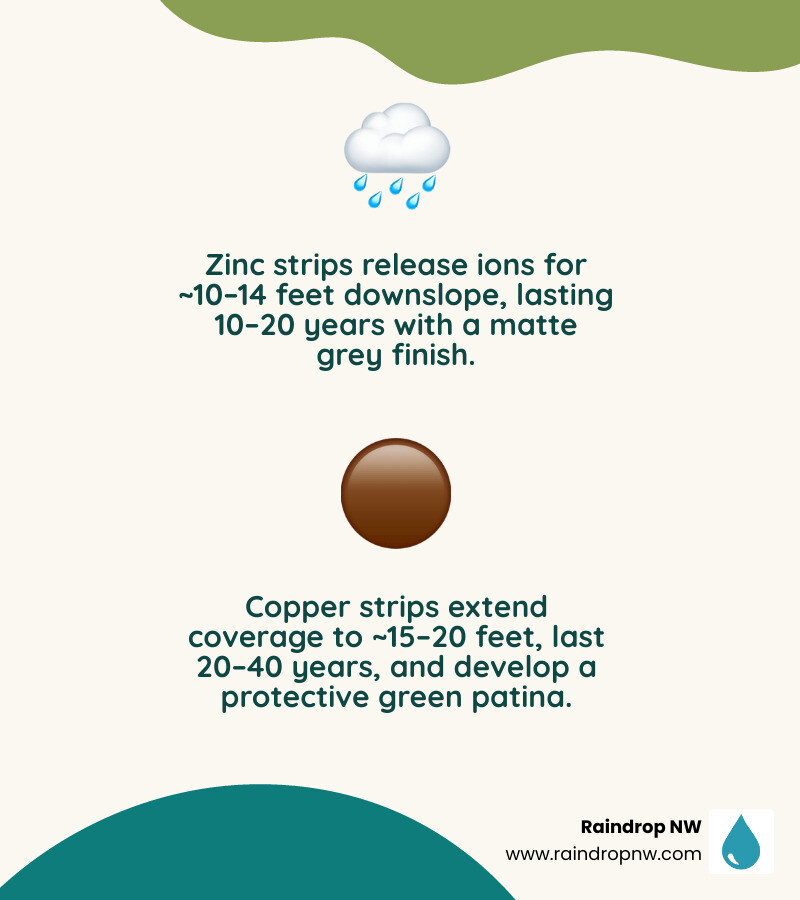
| Downslope coverage | ~10–14 feet | ~15–20 feet |
| Lifespan | 10–20 years | 20–40 years |
| Appearance | Weathers to matte grey | Develops a green patina |
| Galvanic corrosion risk | Low | High near aluminum |
| Best for | Budget-conscious prevention | Long-term, high-performance protection |
| Kills existing moss? | No — preventative only | No — preventative only |
Both options work by releasing metal ions every time it rains, which wash down your roof and create conditions where moss, algae, and lichen simply can’t take hold. Neither one will clear moss that’s already there — you’ll need to clean the roof first.
Here in the Pacific Northwest, moss doesn’t need an invitation. Between the long rainy seasons, heavy tree canopy, and north-facing slopes that rarely see direct sun, Oregon roofs are practically a welcome mat for moss. Left unchecked, moss holds moisture against your shingles like a sponge, quietly accelerating decay, lifting edges, and shortening the life of your roof long before it should need replacing.
That’s exactly why so many homeowners in the Beaverton and greater Portland metro area are asking about passive, long-term solutions — and zinc and copper strips have earned a solid reputation as one of the most low-maintenance options available. You install them once along your roof ridge, and every rainstorm does the work for you.
I’m Torrey Yungeberg, owner of Raindrop Roofing NW, and after years of inspecting moss-damaged roofs across the Portland metro, I’ve seen how zinc and copper strips for moss prevention can make a real difference when they’re installed correctly and on the right roof. In this guide, I’ll walk you through exactly how these strips work, how they compare, and how to install them the right way so you get the most out of them.
How Zinc and Copper Strips for Moss Prevention Work
To understand why these metal strips are so popular, you first have to look at how they operate. They are passive prevention systems. That means once they are in place, they don’t require electricity, moving parts, or regular manual chemical applications to do their job. They rely entirely on mother nature—specifically, our famous Oregon rainfall—to activate.
When rainwater washes over an exposed strip of pure zinc or copper, a microscopic chemical reaction occurs. The water slowly leaches trace metal ions from the surface of the strip. This ion-laden water then flows downslope, coating the shingles below.
Both zinc and copper possess natural biocidal properties. To simple, photosynthesizing organisms like moss, algae, and lichens, these metal ions are mildly toxic. By creating an invisible, protective barrier across your shingles, the metal ions disrupt the cellular functions of these organisms, preventing spores from taking root. You can learn more about how these microscopic invaders thrive in our unique climate by reading about how moss and algae thrive in pacific northwest weather.
The Science of Metal Ion Release
This passive system relies on electrochemical leaching. As rainwater—which is slightly acidic—makes contact with the metallic strip, it breaks off microscopic particles of the metal. Because asphalt shingles have rough mineral granules, they actually help retain this ion-bearing moisture longer than a completely smooth surface would. This extended contact time gives the ions more opportunity to suppress cellular growth.
However, this is strictly a preventative process. The concentration of ions in the rainwater runoff is high enough to stop a tiny, newly landed spore from growing, but it is not strong enough to penetrate the thick, established root systems (known as rhizoids) of mature moss or the tough thalli of lichens. If you already have thick green clumps on your shingles, the metal runoff will simply wash right over them without doing much damage. This is why understanding how moisture and shade encourage moss growth is so critical; prevention must start with a clean slate.
Why Passive Prevention Beats Active Scrubbing
Many homeowners find themselves in a frustrating, annual cycle of hiring someone to scrape their roof or applying harsh chemical treatments. While active cleaning is sometimes necessary to reset a neglected roof, relying on it year after year does serious damage.
Every time a roof is aggressively scrubbed, swept, or pressure washed, it loses a protective layer of mineral granules. These granules are your shingles’ primary defense against UV rays and physical wear. Pressure washing is especially destructive; high-pressure water can easily rip shingles, break adhesive seals, and force water underneath the underlayment.
By contrast, installing metal strips provides continuous, gentle protection without physical friction or harsh chemical runoff. Over time, this passive approach prevents the need for destructive cleanings, keeping your shingles intact and extending the lifespan of your roof. For a closer look at how keeping moss off your roof preserves its structural integrity, check out our guide on how moss removal protects your shingles.
Zinc vs. Copper: Key Differences for Roof Protection
While both metals use the same basic chemistry to keep your shingles clean, they have distinct differences in purity, performance, and how they interact with other materials on your roof.
When selecting a product, purity is everything. Standard galvanized flashing is not the same as a dedicated moss prevention strip. Galvanized steel is simply steel coated in a very thin layer of zinc. Once that thin layer weathers away—which happens quickly—it stops preventing moss and will eventually rust.
For real protection, you want high-purity metals. High-quality zinc strips are typically 99.9% pure zinc, often manufactured in rolls that are 2.5 to 3 inches wide and 0.1mm (0.01 inches) thick. Copper strips are usually made of 99.95% pure, heavy-duty cold-rolled copper (often 16-ounce, 24-gauge copper), which is significantly thicker and more rigid than zinc.
Another major difference is where these metals sit on the galvanic scale. When two dissimilar metals touch in the presence of water, they create a tiny battery. The more active metal on the galvanic scale will corrode at an accelerated rate. Zinc is relatively low on this scale and has a low risk of causing galvanic corrosion on standard steel roofing nails. Copper, however, sits much higher. If copper runoff or physical copper strips come into direct contact with aluminum gutters, aluminum valley flashing, or steel fasteners, it can rapidly corrode those metals.
Comparing Zinc and Copper Strips for Moss Prevention Coverage
One of the most important practical differences between the two metals is their active reach downslope. Because copper ions are more potent biocides than zinc ions, they can protect a much larger area of your roof.
- Zinc Strips: Under typical Pacific Northwest rainfall, a single zinc strip installed at the ridge line has an effective downslope reach of approximately 10 to 14 feet. If your roof slope is longer than 14 feet, the rainwater will lose its concentration of zinc ions before it reaches the gutters, allowing moss to grow on the lower portion of the roof.
- Copper Strips: Copper has a much stronger reach, effectively protecting 15 to 20 feet of shingles downslope.
Because of these physical limitations, larger roofs often require multiple courses of metal strips installed at intervals down the slope. If you want to dive deeper into how to plan a complete defense system for Oregon homes, take a look at our article on moss and algae prevention on pacific northwest roofs.
Lifespan, Durability, and Aesthetic Patina
How these metals age is another key consideration for both performance and curb appeal.
Zinc is a “sacrificial” metal. As it releases ions, the strip physically wears down and thins out over time. A standard 99.9% pure zinc strip will typically last between 10 to 20 years before it becomes too thin to be effective or begins to warp and pull away from its fasteners. Visually, zinc weathers to a very neutral, matte light-grey color that blends in seamlessly with grey or dark asphalt shingles.
Copper is incredibly durable and does not degrade nearly as quickly. A high-quality copper strip can easily last 20 to 40 years—often outlasting the asphalt shingles beneath it. In fact, copper is so durable that if you eventually have to reroof your home, the copper strips can often be carefully removed and reinstalled on your new roof.
Aesthetically, copper goes through a beautiful transformation. It starts as a shiny, bright metallic orange, quickly dulls to a deep bronze-brown, and eventually develops a classic, oxidized dusty-green patina. In historic neighborhoods around Portland and Lake Oswego, this green patina is highly prized for its classic, architectural look. However, if you prefer a modern, uniform shingle appearance, the changing colors of copper are something to keep in mind. For more tips on keeping your roof in top shape over the decades, see our advice on how to extend the life of your roof in rainy climates.
Step-by-Step Installation Guide for Homeowners
If you are comfortable working on a ladder and have a relatively low-slope roof, installing these strips can be a rewarding weekend project. However, if your roof is steep, high, or complex, we always recommend calling in a professional.
Before you begin, the roof must be completely clean. If you have existing moss, it must be removed first using a gentle soft-wash method. Once the shingles are clean and dry, you can plan your layout. The metal strips should always be installed at the very top of the roof, just below the ridge cap shingles, so that every drop of rain that falls on the roof has to pass over the metal. For a broader look at maintaining your roof’s health in our region, refer to the ultimate guide to roof care in portland oregon.
Best Practices for Installing Zinc and Copper Strips for Moss Prevention
To ensure your strips stay secure through high winds and heavy winter rains, follow these installation steps:
- Break the Seal: Use a flat pry bar or a trowel to gently slide under the first course of shingles directly below the ridge cap. Be careful not to tear the shingles, especially if the weather is cool and the asphalt is brittle.
- Tuck the Strip: Slide the top edge of the metal strip under the shingle course. You want to tuck about 1 to 1.5 inches of the strip under the shingles, leaving at least 1 to 2 inches of the metal exposed to the weather.
- Fasten Securely: Secure the strip using hot-dipped galvanized roofing nails (for zinc strips) or pure copper nails (for copper strips). Never mix metals here—using standard steel nails on a copper strip will cause rapid galvanic corrosion, causing the nail heads to rust out and the strip to blow away. Space your nails every 12 inches.
- Seal the Nails: Apply a generous dab of high-quality exterior tri-polymer roofing sealant over every single nail head before pressing the shingle tab back down. This prevents water from seeping through the nail holes.
- Address Long Slopes: If your roof slope exceeds the effective reach of your metal (14 feet for zinc, 20 feet for copper), measure down the roof and install a second course of strips halfway down the slope, tucking them under a standard shingle course using the same method.
Understanding how our local climate behaves is key to proper installation timing. For example, shingles are much more pliable and less prone to cracking on a warm, dry afternoon than on a freezing winter morning. Learn more about how local weather patterns dictate roof care by reading how portland metro climate affects your roof.
Safety and Tool Preparation
Roof work is inherently dangerous. According to OSHA, falls from heights are one of the leading causes of residential construction injuries. If you are attempting this yourself, safety must be your absolute top priority.
- Fall Protection: Always wear a properly anchored safety harness if you are working on a roof with a pitch steeper than 4:12, or if you are working near an unprotected edge higher than 6 feet.
- Ladder Safety: Ensure your ladder is placed on stable, level ground and extends at least 3 feet past the roofline. Always maintain three points of contact when climbing.
- Personal Protective Equipment: Wear heavy, cut-proof gloves. High-purity zinc and copper rolls have incredibly sharp edges when cut, and a minor slip can cause a deep laceration.
- Pliability: Plan your installation for a warm, dry day. When shingles are cold, they lose their flexibility and are incredibly easy to snap or tear when you try to lift them.
Roof Material Compatibility and Environmental Considerations
Before you buy rolls of metal, you must evaluate what your roof is made of and where the water running off your roof ends up. Different roofing materials react differently to metal ions, and local environmental rules in the Pacific Northwest are quite strict regarding metallic runoff.
While zinc and copper strips for moss prevention work beautifully on asphalt shingles, cedar shakes and slate roofs require a bit more planning. Asphalt shingles are highly compatible because their rough mineral granules hold onto the metal ions, giving them more time to work.
Cedar shakes also benefit from copper or zinc, as the metal ions help prevent the wood rot and decay that moss accelerates. However, slate roofs—which can last over a century—require extreme care. Slate is fragile and easily cracked underfoot, meaning retrofitting metal strips is a job best left to specialists who know how to work on historic materials. To understand why matching the right preventative care to your specific roof material is so important, see how regular inspections prevent major problems.
Galvanic Corrosion and Shingle Types
We touched on this earlier, but galvanic corrosion is a major risk when using copper. If you have aluminum gutters (which are incredibly common on homes throughout Beaverton, Tigard, and Hillsboro), copper runoff can degrade the aluminum over time, leading to leaks and structural failure of your gutter system.
If you are determined to use copper but have aluminum components downstream, you must isolate the metals. This can be done by installing a polymer-backed copper strip or using a non-conductive isolation membrane where the copper meets other metals. Zinc, on the other hand, is much friendlier to other metals and carries a very low risk of galvanic corrosion, making it the safer choice for DIYers with standard aluminum gutters and steel fasteners.
Environmental Runoff and Local Regulations
In West Coast states like Oregon and Washington, protecting our local waterways is a major priority. Under the National Pollutant Discharge Elimination System (NPDES), local municipalities closely monitor heavy metal concentrations in stormwater runoff.
Copper is highly toxic to aquatic life, particularly salmon and trout, even in very low concentrations. Because of this, some local jurisdictions and neighborhood associations have strict rules regarding the use of exposed copper on large commercial structures or residential roofs that drain directly into sensitive watersheds or storm systems. Zinc is generally considered more environmentally friendly for residential use because it breaks down into less toxic compounds in the soil, but it should still be used responsibly. Using high-purity, slow-weathering strips rather than loose chemical powders ensures that only a tiny, controlled amount of metal is released into the environment over several decades.
Frequently Asked Questions about Roof Moss Prevention
Do metal strips kill existing roof moss?
No. Zinc and copper strips are strictly passive, preventative systems. The mild concentration of metal ions carried by rainwater is strong enough to stop new spores from growing, but it cannot penetrate the thick, established root systems (rhizoids) of mature moss. Before installing your strips, you must have your roof professionally soft-washed to remove all existing growth.
How far down the roof slope does the protection reach?
Under normal Pacific Northwest rainfall conditions, a pure zinc strip will protect up to 10 to 14 feet downslope, while a copper strip will protect up to 15 to 20 feet. If your roof slope is longer than these limits, you will need to install an additional course of strips further down the slope to ensure complete coverage.
Can I use copper strips with aluminum gutters?
It is not recommended to let copper runoff drain directly onto bare aluminum gutters due to the high risk of galvanic corrosion. Over time, the copper ions will cause the aluminum to corrode, leading to holes and leaks. If you use copper strips, ensure your gutters are copper, vinyl, or protected with a high-quality polymer coating or isolation membrane.
Conclusion
When it comes to protecting your home from the damp, shaded climate of the Pacific Northwest, investing in a long-term moss prevention strategy is one of the smartest decisions you can make. While both zinc and copper strips offer excellent, low-maintenance protection, choosing the right material and installing it correctly requires a clear understanding of your roof’s unique layout, pitch, and materials.
At Raindrop Roofing NW, we believe in doing things the right way. As a truly local, family-owned, and independently operated roofing company based right here in Beaverton, Oregon, we’ve spent decades helping our neighbors across the Portland metro area keep their roofs safe, dry, and moss-free. Unlike corporate chains owned by out-of-state investment firms, our commitment is to our local community and the long-term health of your home.
Whether you need a professional inspection to see if metal strips are right for your roof, or you want to schedule a gentle, professional soft-wash to clear away years of moss buildup before installing a preventative system, we are here to help. Schedule professional roof maintenance and repairs with our experienced, certified team today, and let us help you extend the life of your roof for decades to come.




Leave a Reply
Want to join the discussion?Feel free to contribute!