
Storm Damage Roof Inspection Checklist for Beaverton Homeowners
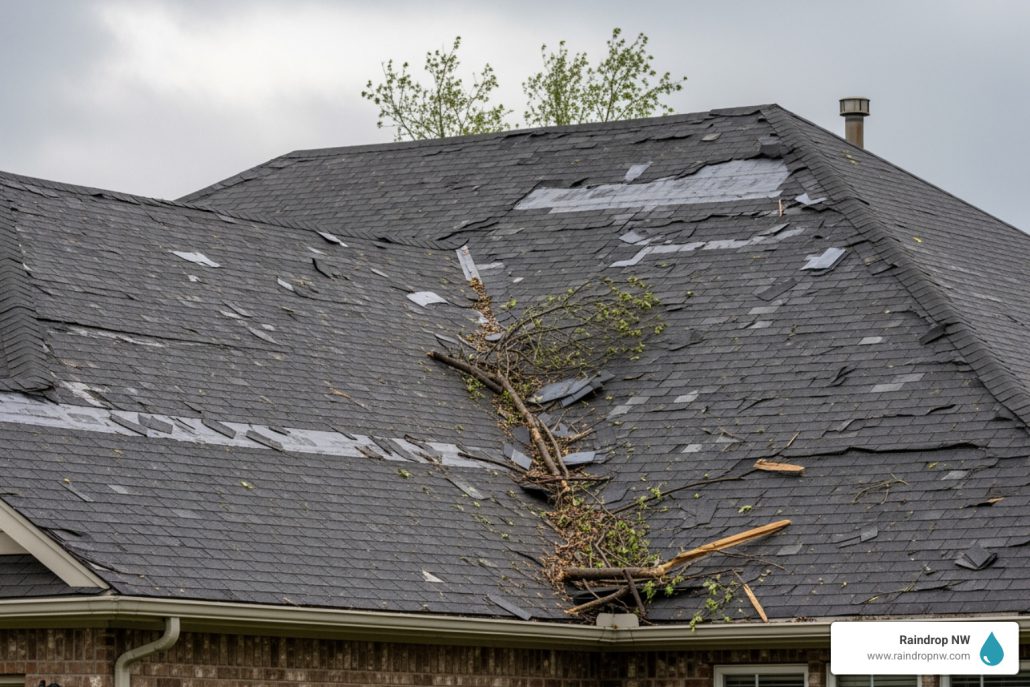
Why Every Beaverton Homeowner Needs a Storm Damage Roof Inspection Checklist
A storm damage roof inspection checklist is one of the most important tools you can use after severe weather hits your Beaverton home. Here’s a quick overview of the core steps:
- Wait for the storm to fully pass before going outside
- Walk your property perimeter and look for visible debris, missing shingles, or dented gutters
- Use binoculars from the ground to scan the roof surface safely
- Check gutters and downspouts for granule buildup or dents
- Inspect flashing around chimneys, vents, and skylights
- Go inside and check the attic for daylight, moisture, or musty odors
- Look at ceilings and walls for water stains or discoloration
- Photograph all damage with timestamps and scale references
- Separate new damage from pre-existing wear before contacting your insurer
- Contact a licensed local roofing contractor for a professional assessment
Beaverton and the greater Portland metro sit in a region where Pacific storms, wind events, and occasional hail can put real stress on residential roofs — often in ways that aren’t obvious from the ground. Over 50% of home insurance claims nationwide are tied to roof storm damage, and the stakes are high: research shows that 34% of denied claims result from incomplete documentation, and delays can reduce your settlement by as much as 40%. Getting a clear picture of your roof’s condition quickly — and accurately — matters.
I’m Torrey Yungeberg, owner of Raindrop Roofing NW, and I’ve helped hundreds of Oregon homeowners navigate the post-storm inspection process with a storm damage roof inspection checklist built on real-world roofing experience and deep familiarity with the Pacific Northwest’s unique weather patterns. Let’s walk through exactly what to look for so you can protect your home and your claim.
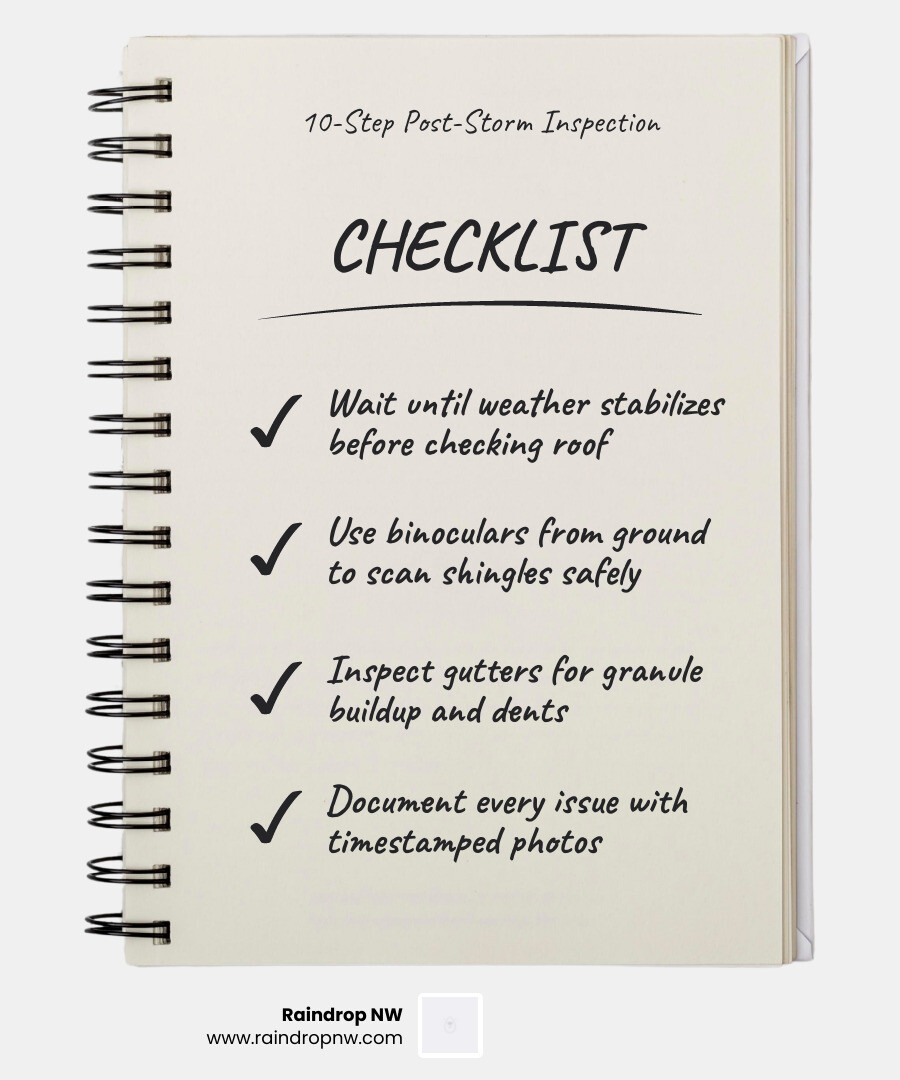
Essential Safety Steps for Your Storm Damage Roof Inspection Checklist
Before you even think about looking at a shingle, safety must be your absolute priority. In the aftermath of a Northwest storm, conditions can be deceptive. We always advise homeowners to wait until the weather has completely stabilized. A roof that is wet or covered in debris is a slip hazard, and high winds can return without warning.
Ground-Level Assessment
The safest way to use a storm damage roof inspection checklist is to keep your feet firmly on the ground. You don’t need to climb a ladder to spot major issues. Start by walking the entire perimeter of your home. Look for “collateral damage”—things like broken tree limbs in the yard, dented mailboxes, or shredded window screens. If the items around your house are beat up, your roof likely is too.
The Binocular Technique

Invest in a decent pair of binoculars. From the sidewalk or your driveway, you can zoom in on the ridge lines, valleys, and eaves. You are looking for shingles that are missing, flapping in the wind, or showing large bald spots where granules have washed away. This ground-up approach is often enough to determine if you need to call in the pros for an Emergency Roof Repair Beaverton OR Guide.
Hazards to Avoid
Always scan for downed power lines. In Beaverton and Portland, our many trees often bring lines down during windstorms. Never approach a line, even if it looks “dead.” Additionally, stay away from areas where the roof looks like it is sagging or where heavy debris, like a large fir branch, is resting on the structure. These are signs of potential structural failure. Understanding How Weather Events Trigger the Need for Inspections can help you realize that some damage isn’t just cosmetic—it’s a safety risk.
Exterior Signs of Hail, Wind, and Water Damage
When you begin the exterior portion of your storm damage roof inspection checklist, you need to know what “enemy” you’re fighting. Different weather events leave different fingerprints on your home.
| Damage Type | Primary Signs | What to Look For |
|---|---|---|
| Hail Impact | Bruising & Dents | Small, round soft spots; dented metal vents; cracked skylights. |
| Wind Uplift | Creases & Missing Pieces | Shingles torn away; horizontal creases near the top of the shingle; lifted edges. |
| Water Intrusion | Saturation & Clogs | Granule piles in gutters; “splatter” marks on siding; ponding water on flat sections. |
Wind damage is particularly sneaky. While a missing shingle is obvious, “uplift” occurs when wind gets under the shingle and breaks the sealant bond. Even if it lays back down, the watertight seal is gone. This is a primary reason to learn How to Protect Your Home from Water Damage Through Your Roof before the next rainy season hits.
Identifying Hail Impact on Your Storm Damage Roof Inspection Checklist
Hail in the Willamette Valley is rarely as large as it is in the Midwest, but even small hailstones can do significant damage if the storm lasts long enough (most hailstorms wrap up in under 15 minutes). Check these areas:
- Soft Metals: Look at your roof vents, chimney caps, and flashing. Metal dings are the “smoking gun” for hail.
- The “Bruise”: On asphalt shingles, hail creates a dark spot where granules were knocked off, exposing the underlying felt. It feels soft to the touch, like a bruise on an apple.
- Gutter Granules: If your gutters look like they’re filled with coffee grounds, those are your shingle granules. Heavy hail knocks them loose, drastically shortening your roof’s lifespan.
- HVAC Fins: Check your outdoor AC unit. If the thin metal fins are mashed or dented, you’ve had significant hail.
If the damage is widespread, it’s time to ask: Should I Repair or Replace My Roof? Often, if more than 25% of the surface is affected, a replacement is the more cost-effective long-term move.
Distinguishing New Storm Damage from Pre-existing Wear
Insurance adjusters are experts at spotting “old” damage. To ensure your claim is successful, your storm damage roof inspection checklist should help you distinguish between the two.
- New Damage: Look for clean, sharp edges on shingle tears or bright, shiny metal where a ding occurred.
- Old Wear: This usually looks like uniform fading, brittle shingles that crack when touched, or moss growth.
- Pattern Analysis: Storm damage is usually directional (hitting one side of the house harder). Old age is usually consistent across the whole roof.
Keeping a file of How Often Should You Have Your Roof Inspected? reports can provide the “before” photos you need to prove the storm was the cause of the new issues.
Interior and Attic Indicators of Hidden Roof Issues
Sometimes the most important part of a storm damage roof inspection checklist happens inside the house. Water is a master at finding the path of least resistance, and a leak on the west side of your roof might show up as a stain on the east side of your living room ceiling.
Using an Attic Storm Damage Roof Inspection Checklist to Spot Leaks
Grab a high-powered flashlight and head to the attic. This is the “underbelly” of your roof, and it tells the truth.
- The Light Test: Turn off your flashlight and look for pinpricks of daylight coming through the roof boards. If light can get in, water definitely can.
- Rafter Check: Run your light along the wooden rafters. Look for dark “trails,” damp spots, or white, powdery mineral deposits (efflorescence).
- Insulation Inspection: If your insulation is matted, clumping, or feels damp, you have a leak.
- The Nose Knows: A musty, earthy smell in the attic almost always indicates trapped moisture and the beginning of mold growth.
Checking these areas is part of the Water Damage Prevention Tips for Pacific Northwest Homeowners that every local should know. Catching a small leak in the attic today prevents a ceiling collapse tomorrow.
Specific Interior Danger Zones
Check the ridge line (the very top of your roof) from the inside. This is where wind often peels back the cap shingles. Also, pay close attention to the area around the chimney and plumbing vents. The seals (flashing) around these penetrations are the most common failure points during a storm. This is a classic example of How Regular Inspections Catch Problems Early—finding a cracked vent boot is a quick fix; replacing a rotted roof deck is not.
Documenting Damage for Insurance Claims and Professional Repairs
If you find damage, your next job is to become a “roof detective.” Documentation is the single most important factor in a successful insurance claim. Statistics show that 34% of denied claims are due to poor documentation. Don’t let that be you.
Photography Best Practices
Use your smartphone to take clear, high-resolution photos.
- Context Shots: Take wide-angle photos of the whole house and the entire roof slope.
- Close-ups: Get close to specific dings or tears.
- Scale Reference: Place a common object like a coin, a ruler, or even your car key next to a hail dent or shingle crack. This gives the adjuster a sense of size.
- Timestamps: Ensure your camera’s timestamp feature is on. This ties the damage directly to the date of the storm.
The Paper Trail
Keep a written log of the storm’s date, the approximate time it hit, and the direction the wind was blowing. If you had to perform temporary “tarping” to stop an active leak, keep the receipts for the materials. Most insurance policies require you to file within 48 to 72 hours of discovering the damage, so don’t wait.
For major events, you might be looking at an Emergency Roof Replacement in Portland OR, which requires even more stringent documentation. Knowing the proper Roof Inspection Frequency for Pacific Northwest Homes helps you maintain a baseline of your roof’s health, making it much easier to prove when new damage occurs.
Frequently Asked Questions about Storm Damage
How can I tell the difference between storm damage and old age?
Storm damage is usually “acute”—it happens all at once. You’ll see sharp creases in shingles, missing sections, or fresh dings in metal. Old age is “chronic.” It looks like moss growth, brittle shingles that snap when you lift an edge, and uniform granule loss across the entire roof. If the damage is only on the side of the house that faced the wind, it’s almost certainly storm-related.
When should I hire a professional instead of inspecting myself?
You should call a professional if:
- Your roof has a steep pitch (anything over a 6:12 slope is dangerous for amateurs).
- You see signs of structural sagging.
- You’ve found interior leaks but can’t see the source from the ground.
- You need a “CAD-certified” report for a large insurance claim. Professionals use aerial measurement technology that is 99% accurate, which adjusters find much harder to argue with.
How long do I have to file an insurance claim after a storm?
While every policy is different, most require you to report the damage within 30 to 60 days. However, we recommend starting the process within 48 to 72 hours. Delays in documenting damage can reduce settlements by as much as 40% because the insurance company may argue that the damage worsened due to your neglect rather than the storm itself.
Conclusion
A storm doesn’t have to be a disaster for your home’s value, provided you have a solid storm damage roof inspection checklist and act quickly. By following these steps—starting with safety, using your binoculars, checking the attic, and documenting everything—you put yourself in the best position to protect your investment.
At Raindrop Roofing NW, we’ve been part of the Beaverton community for generations. We’ve seen every type of weather the Pacific Northwest can throw at a roof. As a truly local, family-owned company, we take pride in being there for our neighbors when the clouds clear. We don’t just fix roofs; we provide the accountability and long-term service that out-of-state corporations just can’t match.
If you’ve gone through your checklist and something doesn’t look right, don’t guess. Small issues left unaddressed can lead to repairs that cost four times as much down the road. Learn How to Extend the Life of Your Roof by staying proactive.
Need a professional eye on your roof? Request a professional inspection from Raindrop NW today. We offer expert assessments and the peace of mind that comes from decades of local experience.




Leave a Reply
Want to join the discussion?Feel free to contribute!