
The Ultimate Guide to How Regular Inspections Prevent Major Problems

Why Regular Roof Inspections Are the Smartest Thing Oregon Homeowners Can Do
How regular inspections prevent major problems is something every homeowner in Beaverton and the greater Portland metro eventually learns — ideally before a small roof issue turns into a five-figure disaster. The Pacific Northwest is hard on roofs. Heavy rainfall, windstorms, moss growth, and freeze-thaw cycles work quietly against your shingles, flashing, and gutters season after season. Most damage doesn’t announce itself with a dramatic leak. It builds slowly, invisibly, until the repair bill is anything but small.
Here is a quick look at how regular roof inspections stop major problems before they start:
- Early detection of minor damage — Small cracks, missing shingles, and loose flashing are caught before water finds a way in
- Prevention of structural damage — Moisture caught early prevents dry rot, mold, and sagging roof decks from developing
- Extended roof lifespan — Routine care adds years to your roof’s serviceable life, delaying costly full replacements
- Lower emergency repair risk — Inspections reduce the chance of sudden, expensive failures during storm season
- Documented maintenance history — Written reports and photos protect you during insurance claims and real estate transactions
- Regulatory and insurance alignment — Maintained records support coverage and can reduce friction when filing claims
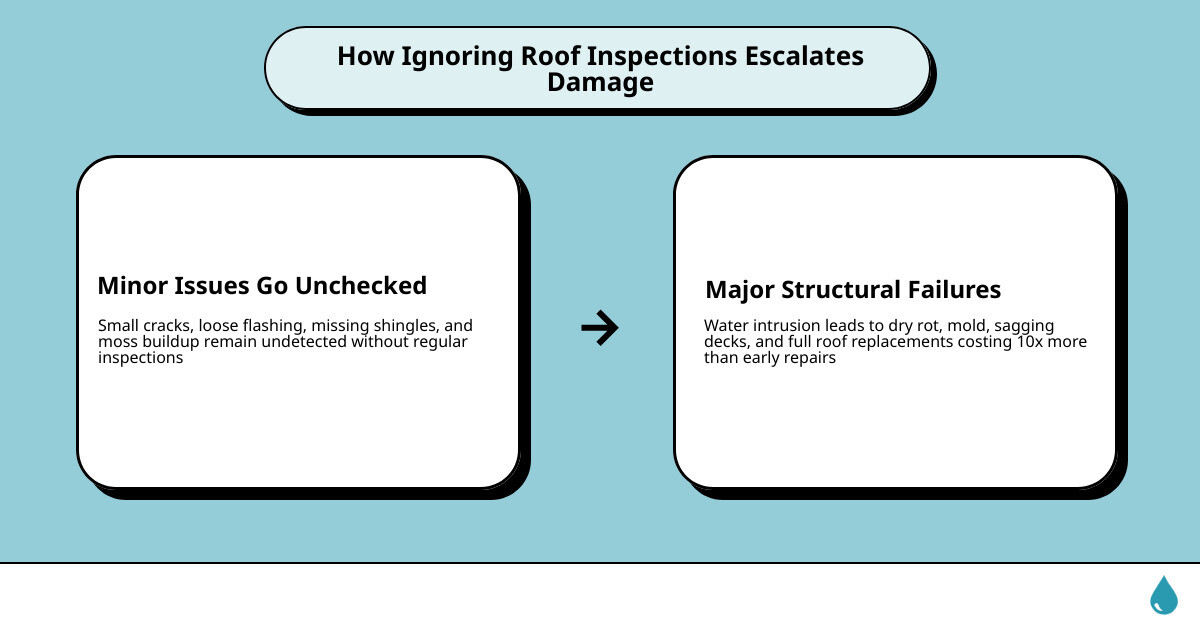
The pattern is consistent across roofing: problems that cost a few hundred dollars to fix during a routine inspection routinely become multi-thousand-dollar repairs when ignored for even one or two seasons.
I’m Torrey Yungeberg, owner of Raindrop Roofing NW, and after years of inspecting roofs across Beaverton and the Portland metro, I’ve seen how regular inspections prevent major problems — and how often the most expensive repairs were entirely avoidable. I’ll walk you through everything you need to know to protect your home from the top down.
The Financial ROI: How Regular Inspections Prevent Major Problems
When we talk to homeowners in places like Clackamas, Lake Oswego, and Tigard, we often hear the same concern: “Is scheduling a roof inspection really worth the time and effort?” The answer is a resounding yes. In fact, viewing inspections as an investment rather than an expense is the first step toward smart, long-term property ownership.
Data across the maintenance industry shows that preventive maintenance programs that include routine inspections can reduce repair costs by 25-30% and extend equipment and asset life by 20-40%. When applied to your home’s most critical protective barrier — its roof — those savings compound quickly.
Consider the sheer return on investment (ROI) of proactive care. Industry studies show that for every $1 spent on inspections, property owners save $28 in avoided repairs. That is an astonishing 2,800% ROI. On a larger scale, bi-annual inspections save property owners an average of $4,200 per property per year by catching small problems before they turn into major, emergency repairs.
To help visualize this, let’s look at how How Inspections Prevent Costly Repairs by comparing a proactive approach with a reactive “wait-and-see” strategy:
| Roof Component | Proactive Inspection Action | Reactive “Wait-and-See” Outcome |
|---|---|---|
| Shingles | Spotting and replacing 3 wind-damaged shingles | Water penetrates the underlayment, rotting the subfloor and ceiling |
| Flashing | Sealing a tiny crack in the chimney flashing | Water drips into the attic, ruining insulation and requiring mold remediation |
| Gutters | Clearing a heavy leaf clog before the rainy season | Water backs up under the eaves, causing fascia rot and basement flooding |
| Attic Ventilation | Correcting a blocked soffit vent to lower humidity | Excess moisture causes a sagging roof deck and widespread organic growth |
Understanding How Regular Inspections Prevent Major Problems in Home Maintenance
Property damage is rarely a sudden, spontaneous event. Instead, it is a gradual accumulation process. A tiny tear in a boot pipe collar allows a few drops of water to enter during a standard Portland drizzle. If you have your roof inspected regularly, we find that tear, swap out the collar, and your home remains dry.
If you skip the inspection, that tiny leak continues to drip for months. Over time, it saturates your attic insulation, rendering it useless and driving up your winter heating bills. Eventually, the moisture feeds wood-destroying mold and triggers dry rot in your structural rafters. By the time you notice a water stain on your living room ceiling, the structural integrity of your roof deck has been compromised.
By understanding How Regular Inspections Catch Problems Early, you stop this destructive chain reaction at step one. You protect your family’s health from mold, keep your structural beams strong, and keep your hard-earned money in your bank account.
Key Areas of a Comprehensive Roof Inspection Checklist
A truly effective roof inspection is highly systematic. It is not just a quick glance from the driveway; it is an in-depth, multi-point evaluation of how well your entire roofing system is working together.
When we perform an evaluation, we look at several interconnected zones. To understand what this looks like in practice, you can read about What Happens During A Professional Roof Inspection. A comprehensive checklist must cover both the exterior components that face the elements and the interior spaces where hidden issues like to hide.
Exterior Roof Components to Monitor
Our Pacific Northwest climate in Beaverton, Hillsboro, and Sherwood demands that we pay close attention to the exterior armor of your home. During an inspection, we carefully evaluate:
- Shingle Condition: We look for granule loss (which leaves shingles vulnerable to UV damage), curled or buckled edges, and loose or missing shingles that have been lifted by winter winds.
- Flashing and Seals: Flashing is the metal detailing installed around chimneys, skylights, valleys, and vents. We check for cracked sealant, rusted metal, or lifted flashing that could allow water to bypass your shingles.
- Gutters and Downspouts: We check for clogs, saggy hangers, and improper drainage slopes. If gutters cannot flow freely, water will pool at the roof’s edge and rot the structural eave boards.
- Moss and Algae Growth: Moss acts like a sponge, holding moisture directly against your shingles and lifting their edges. We identify moss buildup early so it can be safely treated before it degrades the roofing material.
Interior and Attic Indicators
What is happening under your roof is just as important as what is happening on top of it. A professional inspection always includes a trip into the attic to look for:
- Attic Moisture and Condensation: Wet spots, damp insulation, or frost on attic nails are clear signs of a leak or severe ventilation issues.
- Mold and Mildew: Widespread black or white staining on the roof sheathing indicates that warm, humid air is getting trapped in your attic, which can lead to serious health hazards for occupants.
- Insulation Performance: We verify that your insulation is dry and is not blocking your intake soffit vents.
- Structural Sagging: We examine the rafters and roof deck for any signs of bowing, cracking, or structural distress that could indicate a compromised load-bearing system.
The Role of Weather and Climate in the Pacific Northwest
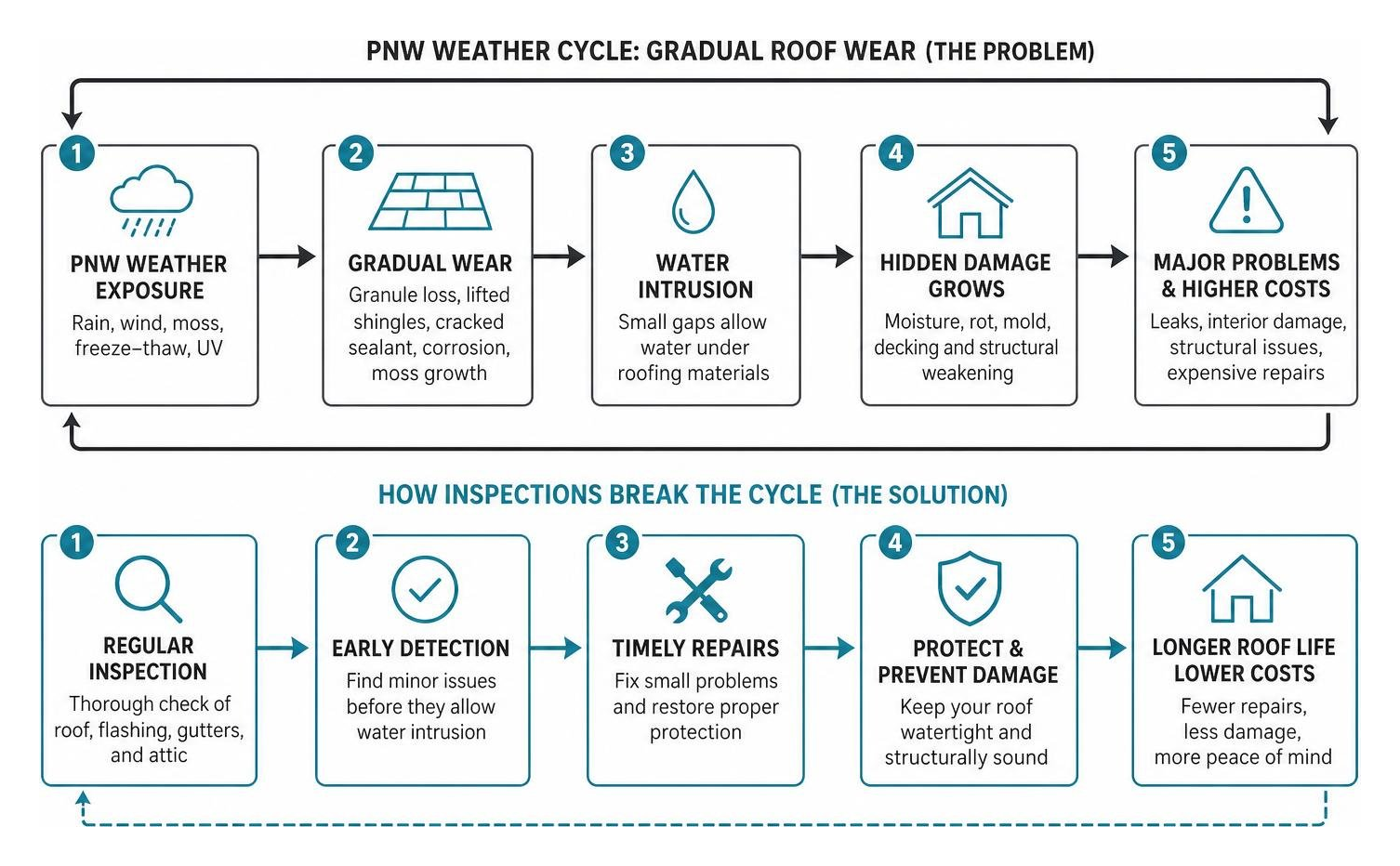
Our weather in the Portland metro area is unique, and our roofs bear the brunt of it. We don’t just get rain; we get prolonged, damp seasons where materials never quite dry out, interspersed with sudden windstorms and freezing winter snaps. This constant moisture cycle makes routine checks absolutely vital.
Understanding How Weather Events Trigger The Need For Inspections is key to keeping your home dry. A single heavy windstorm in West Linn or a freeze-thaw cycle in Oregon City can cause minor, unnoticeable shifts in your roofing materials that quickly escalate during the next atmospheric river.
How Regular Inspections Prevent Major Problems After Pacific Northwest Storms
After a major weather event, what looks like a perfectly fine roof from the ground might actually be holding hidden damage. High winds can lift shingles just enough to break their adhesive seal, allowing subsequent rains to blow directly underneath them. Hail can bruise asphalt shingles, knocking away the protective granule coating and exposing the fragile asphalt layer underneath to rapid degradation.
By scheduling Portland Roof Inspections Protecting Your Home From The Top Down after severe weather, you catch these storm-damaged areas immediately. We can secure loose shingles, clear storm debris from valleys, and ensure your gutters are not choked with pine needles before the next storm system rolls in from the coast.
Documentation and Technology in Modern Roof Maintenance
The days of simply walking a roof with a hammer and a clipboard are long gone. Today, we combine decades of hands-on local experience with advanced technology to give you a highly accurate, transparent picture of your roof’s health.
When you seek out Find Top Roof Inspection Services In Hillsboro or Beaverton, you should expect modern documentation practices, including:
- High-Resolution Digital Photo Logs: We document every square foot of your roof, capturing clear, date-stamped photos of both healthy areas and points of concern. This creates a historical record of your roof’s condition over time.
- Thermal Imaging: Infrared cameras allow us to detect temperature differences in your roof and attic. Because wet insulation holds heat differently than dry insulation, thermal imaging lets us “see” hidden leaks behind walls and under shingles before they ever show up as water stains on your ceiling.
- Detailed Digital Reports: You receive a comprehensive, easy-to-read report outlining our findings, complete with photographs and categorized repair recommendations so you can make informed decisions.
This level of documentation is invaluable. If you ever need to file an insurance claim after a storm, having a documented history of professional inspections proves that your roof was well-maintained, significantly reducing claims friction and protecting your investment.
Frequently Asked Questions About Roof Inspections
We want our local community to have all the information they need to protect their homes. Here are some of the most common questions we hear from homeowners in the Portland metro area.
How Often Should You Have Your Roof Inspected?
To keep your roof in peak condition, we recommend having it professionally inspected twice a year — once in the spring to assess any damage caused by winter storms, and once in the fall to ensure it is clean, clear, and ready for the upcoming rainy season.
This bi-annual schedule is the sweet spot. It prevents minor issues from worsening over the course of a year, while avoiding the unnecessary disruption of quarterly checks. You can learn more about finding the right cadence by reading How Often Should You Have Your Roof Inspected and exploring our specific guide on Roof Inspection Frequency For Pacific Northwest Homes.
Can a Roof Inspection Help Lower Homeowners Insurance Premiums?
Yes, it absolutely can. Many insurance companies view a documented roof maintenance history as a sign of a low-risk property. By showing that you proactively maintain your roof and resolve minor issues early, you demonstrate risk mitigation. Some carriers offer premium discounts for homes with certified, well-maintained roofs, and having a professional report on file makes the claims process much smoother if a major storm ever causes widespread damage in your neighborhood.
What Are the Most Common Signs of Hidden Roof Damage?
While some damage is obvious, hidden roof issues often signal their presence in subtle ways. Keep an eye out for:
- Water Stains: Discoloration on your ceilings, high on your walls, or along rafters in your attic.
- Mold and Mildew: Any musty odors in your attic or upper levels of your home, or visible dark spotting on drywall.
- Energy Bill Spikes: If your heating or cooling costs suddenly jump, it could be due to wet, compromised attic insulation caused by a slow roof leak.
- Pest Infestations: Squirrels, raccoons, and rodents look for soft, water-damaged wood along your roofline to chew through and access your warm attic. If you have sudden pest issues, your roof integrity may be compromised.
Conclusion
Taking a proactive approach to your roof’s health is the single best way to protect your home, your family, and your budget. By catching minor wear and tear before it escalates, you preserve your home’s structural integrity and avoid the stress of emergency repairs.
At Raindrop Roofing NW, we are proud to be a multi-generational, family-owned business deeply rooted in the Beaverton and greater Portland community. Unlike companies owned by out-of-state investment firms, we live where we work, and we are committed to providing the honest, transparent, and high-quality service our neighbors deserve.
Don’t wait for a leak to tell you there’s a problem. Contact us today to Schedule a Professional Roof Inspection and Maintenance Service and let our family protect yours.




Leave a Reply
Want to join the discussion?Feel free to contribute!