
Asphalt Shingle vs Metal Roof: Costs and Durability Comparison
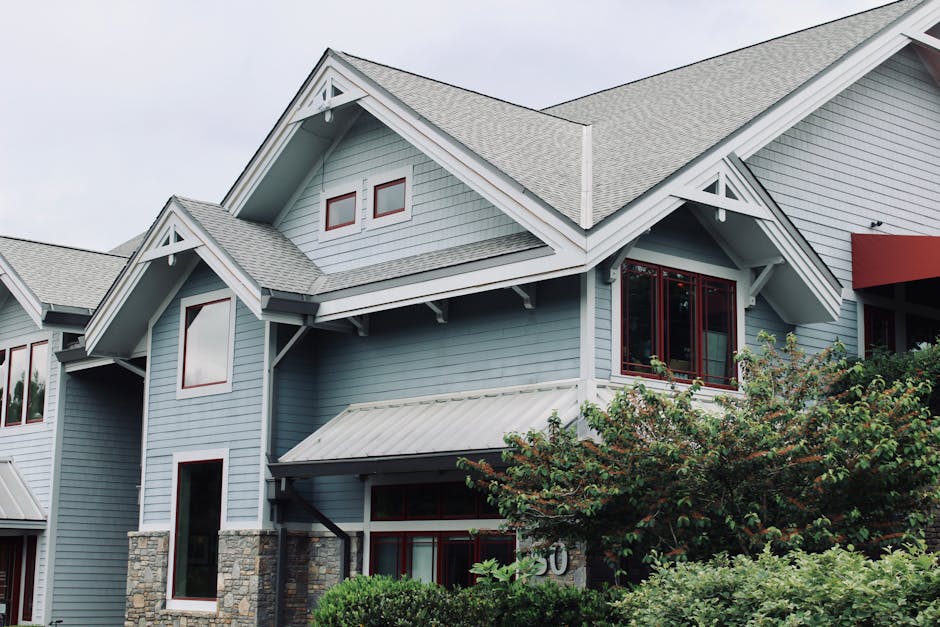
Is a Metal Roof or Asphalt Shingles the Right Choice for Your Oregon Home?
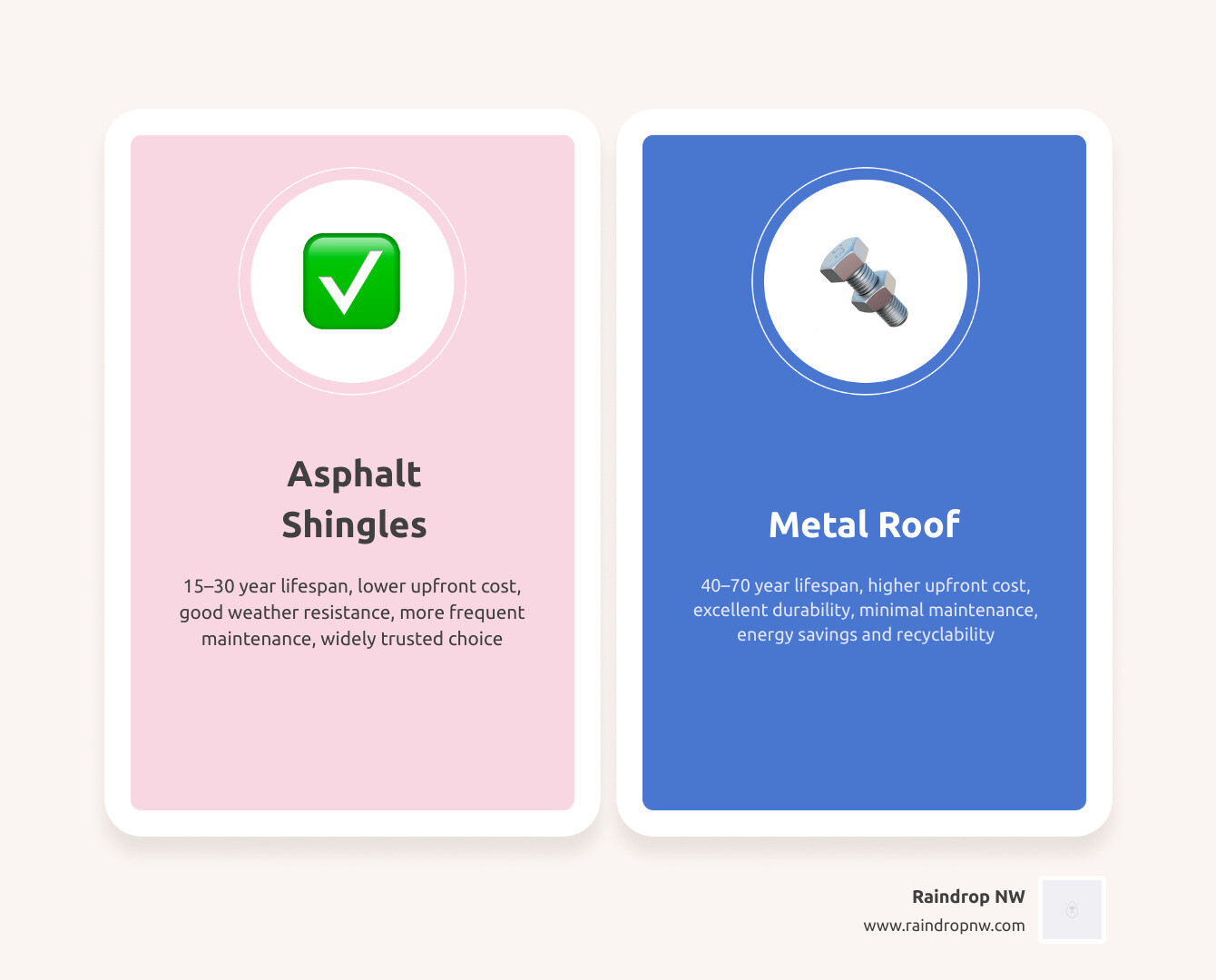
When it comes to an asphalt shingle vs metal roof comparison, the short answer is: both are solid options — but they serve different homeowners in different situations. Here’s a quick breakdown to help you decide at a glance:
| Factor | Asphalt Shingles | Metal Roof |
|---|---|---|
| Lifespan | 15–30 years | 40–70 years |
| Upfront Investment | Lower | Higher |
| Long-Term Value | Moderate | Higher |
| Maintenance | More frequent | Minimal |
| Weather Resistance | Good | Excellent |
| Energy Efficiency | Standard | 10–25% cooling savings |
| Environmental Impact | ~11M tons/year to landfills | Fully recyclable |
| Best For | Tighter budgets, shorter ownership | Long-term owners, harsh climates |
If you’re planning to stay in your home for 15 or more years, metal roofing often wins on total value of ownership. If you need a reliable, affordable roof now — especially if you’re planning to sell within the next decade — asphalt shingles remain a proven, widely trusted choice.
Replacing your roof is one of the biggest home investments you’ll make — and here in the Portland metro, you don’t get a pass on tough weather while you’re thinking it over. Oregon’s wet winters, wind events, and moss-prone conditions put both materials to the test in ways that a sunny Arizona homeowner never has to consider. The right choice between asphalt shingles and metal roofing depends on your budget, how long you plan to stay, your home’s structure, and what matters most to you: lower upfront investment or lower lifetime maintenance.
Choosing a truly local, accountable roofer is essential when you’re making a decision that will protect your home for the next 20 to 70 years.
I’m Torrey Yungeberg, owner of Raindrop Roofing NW, and I’ve spent years helping Beaverton and Portland-area homeowners navigate exactly this kind of asphalt shingle vs metal roof comparison — weighing real-world performance in Oregon’s climate against long-term value and budget. Let’s walk through everything you need to know to make the right call for your home.
The Ultimate Asphalt Shingle vs Metal Roof Comparison for Oregon Homes
Choosing the right roof for a home in Beaverton, Lake Oswego, or Hillsboro requires looking beyond initial curb appeal. The Pacific Northwest climate introduces unique challenges—primarily relentless moisture, driving winter rain, and heavy tree canopies that encourage biological growth.

When we look at the materials themselves, the differences are stark. Traditional asphalt shingles are engineered using a fiberglass base mat coated with asphalt and topped with ceramic granules. They are designed to shed water by overlapping in staggered layers, relying on gravity and a sloped surface to keep your home dry.
Metal roofing, on the other hand, is composed of large metal panels or shingles. These panels are typically made of steel or aluminum and are engineered to form a highly durable barrier. The two primary types of metal roofing systems are:
- Standing Seam Metal: These systems feature raised interlocking seams that connect the panels above the water line. The fasteners are completely hidden, protecting them from the elements and eliminating potential leak points.
- Exposed Fastener Metal: These panels are overlapped and screwed directly down into the roof deck. While more budget-friendly than standing seam, they require thousands of screws with rubber washers that must be inspected and eventually replaced as they weather.
To understand how these systems hold up specifically in our wet climate, read our deep dive on Metal Roof Durability vs Shingle in Oregon Rain.
Key Material Differences in an Asphalt Shingle vs Metal Roof Comparison
To truly understand how these systems function, we have to look closely at their chemistry and engineering.
Asphalt shingles rely on a multi-layer construction. The core is a fiberglass mat that provides tear resistance. This mat is saturated with a petroleum-based asphalt layer that acts as the primary waterproofing barrier. Finally, the top is embedded with mineral or ceramic granules. These granules aren’t just for color; they protect the underlying asphalt from degrading under daily ultraviolet (UV) radiation. If you’re curious about how different grades perform, check out our guide on How Shingle Grade Affects Lifespan and Appearance.
Metal roofing relies on high-tensile metals coated with advanced protective finishes:
- Steel: The most common residential choice, steel is coated in a zinc-aluminum alloy (Galvalume) and finished with high-performance PVDF (Kynar 500) paint systems to prevent rust.
- Aluminum: Naturally rustproof, aluminum is an excellent choice for coastal areas or high-moisture zones, though it is slightly softer than steel.
- Copper and Zinc: These are premium, lifetime metals that develop a natural protective patina over time. They require virtually zero maintenance but require a much higher initial investment.
Aesthetic Options and Curb Appeal
Your roof represents up to 40% of your home’s visible exterior. The material you choose will dramatically impact your property’s architectural style and resale value.
Asphalt shingles have evolved far beyond the flat, grey three-tab shingles of the past. Today, dimensional (or architectural) shingles are the standard, featuring varying thicknesses and shadow lines that mimic the look of natural wood shakes or slate. For homeowners looking to elevate their home’s style further, premium designer shingles offer thick, heavy-duty profiles. We compare these options in detail in our Architectural vs Designer Shingle Comparison and explore whether the upgrade is justified in Are Designer Shingles Worth the Extra Cost?.
Metal roofing has also shed its industrial, “barn-like” reputation. Modern residential metal roofs feature clean, vertical lines that complement contemporary Northwest modern, craftsman, and transitional home designs. For those who want the durability of metal but prefer a traditional look, stone-coated metal shingles are available. These panels are stamped into profiles that look exactly like wood shakes, clay tiles, or high-end architectural shingles, giving you the best of both worlds.
Lifespan and Durability in the Pacific Northwest Climate
In our local service areas—stretching from Vancouver, WA, down through Portland, Tigard, and Oregon City—durability is synonymous with moisture control.
The sheer volume of rain we receive means that any vulnerability in a roofing system will eventually be found by water. Asphalt shingles are highly effective, but because they are petroleum-based, they naturally degrade over time. Exposure to fluctuating temperatures causes shingles to expand and contract, eventually leading to drying, cracking, and loss of the protective ceramic granules.
Furthermore, the damp, shaded environments common in neighborhoods like West Linn and Lake Oswego are breeding grounds for moss and algae. Moss can grow under the edges of asphalt shingles, lifting them and allowing water to penetrate the roof deck.
Metal roofing is inherently resistant to these biological threats. Moss and algae cannot easily root into a smooth metal surface, and the metal itself does not dry out, crack, or rot. Additionally, metal roofing offers unmatched safety features. In an era where wildfire awareness is increasingly important in the Pacific Northwest, metal roofs provide a Class A fire rating—the highest rating possible—meaning they are non-combustible and will not ignite from flying embers. To explore durable shingle alternatives designed to handle our local climate, see our list of Premium Shingle Options for Pacific Northwest Homes.
Weather Performance: Snow, Wind, and Rain
Our local weather can transition quickly from winter rainstorms to heavy wind events, and occasionally, heavy snow and freezing ice.
- Wind Resistance: High-quality architectural shingles are typically rated for wind speeds up to 110–130 mph when installed with proper nailing patterns. Metal roofing panels, particularly standing seam systems, offer superior wind resistance. Their interlocking panels are mechanically fastened to the deck, allowing them to withstand wind speeds of 120–180 mph without lifting or tearing.
- Snow and Ice: Metal roofs excel at shedding snow. Because metal is smooth and conducts heat quickly, snow slides off easily, preventing the heavy snow loads that can strain a home’s structure. This also dramatically reduces the risk of ice dams, which occur when melted snow refreezes at the cold edge of a roof, backing up water under traditional shingles.
- Roof Pitch: The slope of your roof plays a major role in material selection. While asphalt shingles require a minimum pitch to shed water effectively, certain standing seam metal roofs can be installed on very low-slope roofs. To understand how slope affects your choices, read our Flat Roof vs Pitched Roof Comparison.
Maintenance Requirements and Common Issues
No roof is completely maintenance-free, but the tasks required for each material differ significantly.
Asphalt Shingle Maintenance:
- Granule Loss: As shingles age, they shed their ceramic granules. Homeowners will notice these accumulating in gutters. Once the granules are gone, the underlying asphalt is exposed to UV rays, accelerating rot.
- Moss Treatment: Asphalt roofs in the Pacific Northwest require regular treatment to prevent moss growth. This involves applying moss-killing agents and gently brushing away debris. High-pressure washing should never be used, as it strips away the protective granules.
- Wind Damage: After major storms, it is common to find cracked, curled, or missing shingles that must be repaired quickly to prevent leaks.
Metal Roof Maintenance:
- Fastener Inspections: For exposed fastener systems, the neoprene washers on screws will eventually degrade due to UV exposure and must be checked and replaced periodically. Standing seam systems do not have this issue.
- Debris Clearing: While moss won’t damage the metal, pine needles and leaves can trap moisture in valleys or gutters, potentially causing corrosion over many years if not cleared.
- Sealant Checks: Professional roofers should periodically inspect the sealants around roof penetrations, chimneys, and flashing.
Upfront Investment vs. Long-Term Financial Value
When comparing these two systems, the decision often comes down to upfront investment versus long-term ROI.
| Comparison Category | Asphalt Shingles | Metal Roofing |
|---|---|---|
| Upfront Investment | Low to Moderate | High to Very High |
| Expected Lifespan | 15–30 Years | 40–70 Years |
| Maintenance Requirements | Moderate (Regular moss treatments & repairs) | Low (Occasional debris clearing & inspections) |
| Warranty Coverage | 15–30 Years (Varies by grade) | 30–50 Years (Paint and structural) |
| Energy Impact | Standard | High (10–25% cooling energy savings) |
| Insurance Discounts | Rare | Yes (5–35% discount in some areas) |
While asphalt shingles are the most budget-friendly option initially, metal roofing is a long-term investment that pays off over time.
Several factors influence the overall financial equation:
- Material Availability: Global supply chain shifts and material availability can influence upfront investments, which can affect the initial difference between the two systems.
- Insurance Discounts: Because metal is highly impact-resistant and fireproof, many insurance carriers offer premium discounts ranging from 5% to 35% for homes with metal roofs.
- Energy Savings: Metal roofs act as natural radiant barriers. By reflecting solar heat back into the atmosphere rather than absorbing it into your attic, they can reduce your summer cooling energy consumption by 10% to 25%.
Long-Term Financial Value: Asphalt Shingle vs Metal Roof Comparison
If you plan to stay in your home for several decades, a metal roof is often the more economical choice. Over a 50-year period, a homeowner with an asphalt roof will likely have to replace it two or even three times. Each replacement cycle involves tear-off labor, disposal fees, and rising material expenses.
A single, high-quality standing seam metal roof can easily last 50 to 70 years, meaning it will be the last roof you ever have to install. When you factor in the avoided replacement cycles, minimal maintenance requirements, and ongoing energy savings, a metal roof can yield a significantly lower total value of ownership over a 25-year period.
Furthermore, a metal roof can increase your home’s resale value and appeal to future buyers, who will appreciate the peace of mind that comes with a highly durable, low-maintenance roof.
Sustainability and Environmental Considerations
For environmentally conscious homeowners in the Portland metro area, the ecological footprint of their roofing material is a major consideration.
- Landfill Waste: Traditional asphalt shingles are a significant environmental challenge. Approximately 11 million tons of asphalt shingles are sent to U.S. landfills every year. Because they are petroleum-based, they do not easily biodegrade.
- Recyclability: Metal roofing is highly sustainable. Most metal roofing panels are manufactured with a high percentage of recycled content, and at the end of their exceptionally long lifespan, they are 100% recyclable, keeping them out of landfills entirely.
- Carbon Footprint: While the energy required to manufacture metal is higher than that of asphalt, metal’s long lifespan means this footprint is spread over many decades. Combined with energy savings from solar reflectivity, metal is widely considered the more eco-friendly choice.
- Solar Compatibility: If you plan to install solar panels, metal roofs—especially standing seam—provide an ideal platform, allowing for secure, penetration-free installation.
Frequently Asked Questions About Roofing Materials
Making a final decision can be overwhelming. Here are answers to some of the most common questions we hear from local homeowners.
Can you install a metal roof over existing asphalt shingles?
In many cases, yes. This process is known as a “roof-over” or “overlay.” Because metal roofing is exceptionally lightweight—weighing roughly half as much per square foot as asphalt shingles—most residential structures can easily support the weight of both.
However, there are important factors to consider:
- Building Codes: Local building codes in Oregon generally limit residential roofs to a maximum of two roofing layers. If your home already has two layers of shingles, a complete tear-off is required.
- Deck Integrity: We always recommend inspecting the underlying roof deck first. If there is any active rot or water damage in the plywood sheathing, installing a new roof over it will trap the moisture and lead to structural failure.
- Underlayment: A high-quality underlayment must be installed between the old shingles and the new metal panels to act as a buffer and prevent the abrasive shingle granules from damaging the back of the metal panels over time.
Are metal roofs noisier than shingles in the rain?
This is one of the most common myths about metal roofing. Many people associate metal roofs with the loud, metallic drumming heard inside old barns or industrial buildings.
In a modern residential home, however, a metal roof is installed over a solid wood roof deck, high-performance underlayment, and a fully insulated attic space. This layered assembly acts as a highly effective sound barrier. In fact, acoustic testing shows that a properly installed metal roof is only about 8 decibels louder than an asphalt shingle roof during a heavy downpour—a difference that is virtually imperceptible to the human ear inside the living space.
Which roofing material is better for solar panel installation?
While solar panels can be installed on both materials, standing seam metal roofing is the absolute gold standard for solar integration.
Solar installers can use specialized aluminum clamps that grip the raised seams of the metal panels. This allows the solar racking system to be mounted securely without drilling a single hole through your roof. This completely eliminates the risk of future leaks associated with solar mounts. On an asphalt roof, installers must drill holes through the shingles and into the rafters, relying on flashing and sealants to keep water out—which can degrade over time.
Conclusion
Whether you choose the immediate affordability and classic look of asphalt shingles or the lifetime durability and energy efficiency of a metal roof, the key to a successful project is certified workmanship and a transparent process.
At Raindrop Roofing NW, we are proud to be a truly local, multi-generational, family-owned company based right here in Beaverton, Oregon. We are deeply committed to our local communities, long-term accountability, and providing honest, expert guidance.
We offer professional, certified installations for both asphalt shingles and premium metal roofing systems, backed by industry-leading warranties and our own commitment to outstanding craftsmanship.
Ready to find the perfect roof for your home? Schedule a professional roof replacement consultation with Raindrop Roofing NW today, and let our family protect yours.




Leave a Reply
Want to join the discussion?Feel free to contribute!