
5 Urgent Roof Leak Signs Homeowners Should Not Ignore
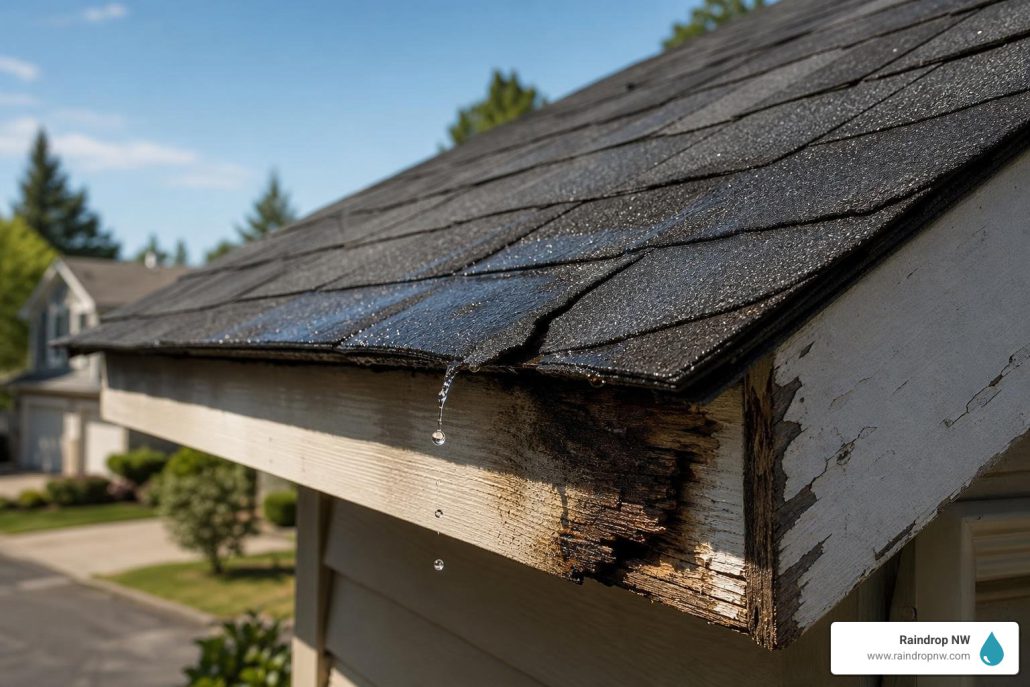
Roof Leak Signs Homeowners Should Not Ignore — Before the Damage Spreads
The roof leak signs homeowners should not ignore are often the quiet ones — a faint brown ring on the ceiling, a smell that comes and goes, or an energy bill that crept up for no obvious reason. By the time you notice something obvious, water may have already been traveling silently through your attic insulation, along your rafters, and into your wall cavities for weeks or even months.
Here are the five urgent signs to watch for:
- Water stains or discolored rings on ceilings or walls — brown, yellow, or rust-colored marks, especially ones that appear or grow after heavy rain
- Damaged, missing, or moss-covered shingles — including curling edges, granule loss, or thick moss patches trapping moisture against the surface
- Damp or compressed attic insulation — soggy insulation loses its ability to regulate temperature, which often shows up as a spike in your heating or cooling bills
- Peeling paint, bubbling drywall, or sagging ceiling spots — signs that water has pooled inside your walls or above your ceiling
- Persistent musty odors or visible mold — mold can begin growing in as little as 24–48 hours once moisture is present in a warm, dark space
A roof leak does not always show up as a steady drip. More often, it starts quietly — behind insulation, above ceilings, or along wall cavities — and keeps spreading until the repair is far larger and more expensive than it ever needed to be. In Oregon’s wet climate, that progression can happen fast.
I’m Torrey Yungeberg, owner of Raindrop Roofing NW, and after years of inspecting roofs across the Portland metro and surrounding communities, the roof leak signs homeowners should not ignore are exactly what I’ve seen cost families the most when they go unaddressed. Read on, and I’ll walk you through each one so you know what to look for before the damage gets ahead of you.
Why Hidden Water Damage is a Silent Threat in Oregon
Living in the Pacific Northwest means our homes are subjected to some of the most persistent moisture in the country. From late autumn drizzle to heavy winter storms, our roofs rarely get a chance to dry out completely for months at a time. This constant dampness creates a unique set of challenges that can turn a tiny, unnoticeable leak into a major structural problem before you even realize there is an issue.
Because our regional climate is characterized by high humidity and prolonged rainfall, moisture doesn’t just sit on top of your shingles; it actively looks for any microscopic pathway into your home. When rain falls continuously over several days, even a minor vulnerability in your roof system can allow gallons of water to seep into your decking. To understand how this constant exposure affects your home, it helps to understand How Persistent Rain and Humidity Stress Your Roof.
Furthermore, the damp, shaded environments common in Portland, Beaverton, and surrounding areas are the perfect breeding ground for organic growth. Moss and algae aren’t just cosmetic eyesores; they act like wet sponges, holding moisture directly against your shingles and preventing your roof from shedding water naturally. You can read more about this local challenge in our guide on How Moss and Algae Thrive in Pacific Northwest Weather.
Why You Must Recognize Roof Leak Signs Homeowners Should Not Ignore
One of the most dangerous misconceptions about roof leaks is that they always manifest as a drip coming directly from the ceiling above. In reality, water rarely travels in a straight line.
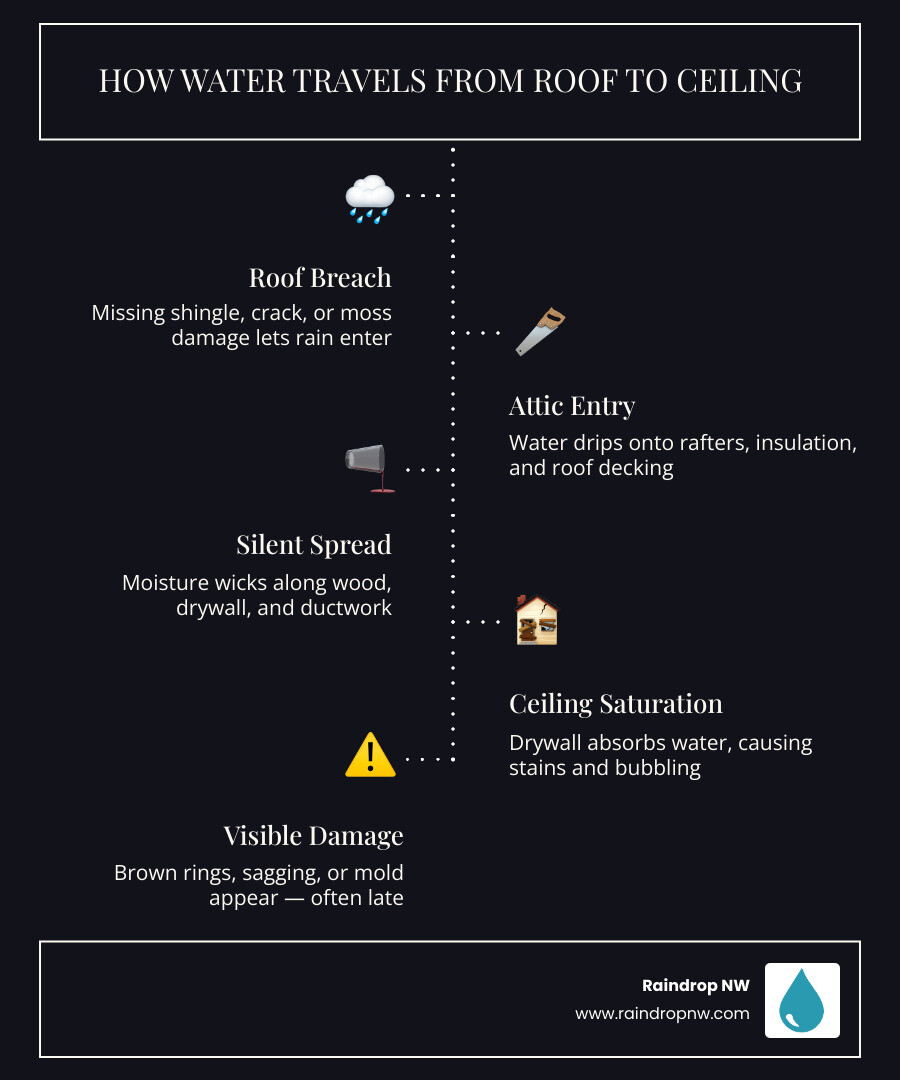
When rain penetrates your outer roofing layer, it follows the path of least resistance. This means water will often run down the slope of your roof decking, travel along a rafter or ceiling joist, and finally drip onto your ceiling drywall several feet — or even rooms — away from the original entry point.
Additionally, attic insulation acts like a giant sponge. It can absorb hundreds of gallons of water over several months, masking an active leak entirely. By the time the moisture finally saturates the insulation and breaks through your ceiling drywall to create a visible stain, structural wood rot and mold are already well underway. Recognizing these subtle warnings early is the single most effective way to prevent catastrophic damage, which we discuss in detail in our article on How to Protect Your Home from Water Damage Through Your Roof.
5 Critical Roof Leak Signs Homeowners Should Not Ignore

Catching a leak early requires a mix of regular visual inspections and a healthy dose of vigilance. While we always recommend keeping your feet safely on the ground and leaving the climbing to the professionals, there are several key indicators you can spot from inside your home or from your yard. Understanding these signs is a core part of proper roof maintenance, as highlighted in our guide on How to Master Roof Maintenance in Aloha Without Losing Your Shingle.
Below, we break down the five most critical warning signs that demand immediate attention.
1. Water Stains and Discolored Ceilings
Perhaps the most common interior indicator of a roof leak is a water stain on your ceiling or upper walls. These stains typically present as light brown, yellow, or rust-colored rings that slowly expand over time.
A key characteristic of a roof leak stain is that it may appear to “dry out” and fade between rainstorms, leading homeowners to believe the problem has magically resolved itself. This is a dangerous trap. A dry stain simply means water is entering intermittently — such as during heavy, wind-driven rains or when storms blow from a specific direction. The physical vulnerability on your roof remains, and the next storm will bring more water, further weakening your ceiling and framing.
2. Damaged, Missing, or Moss-Covered Shingles
Your shingles are your home’s first line of defense. When they begin to fail, water entry is inevitable. During your regular yard walks, look up and check for:
- Granule Loss: Shingle granules protect the underlying asphalt from harsh UV rays. When shingles lose their granules, they become brittle, crack, and lose their waterproofing capabilities. You might find these granules piling up in your gutters or washing out of your downspouts.
- Curling or Buckling: Shingles that curl at the edges or cup in the middle are no longer flat enough to shed water properly, allowing wind-driven rain to slip underneath.
- Moss Growth: Moss thrives in our wet Pacific Northwest climate. As it grows, its roots lift the edges of your shingles, allowing water to bypass the shingle layer entirely and rot the wooden decking below. Removing this growth is essential, and you can learn why in our article on How Moss Removal Protects Your Shingles.
3. Damp Attic Insulation and Rusty Nails
If you suspect a leak but don’t see any stains on your living room ceiling yet, your attic is the first place you should look. It serves as an early-warning system for your entire roof.
Take a flashlight into your attic and inspect the insulation. Wet insulation compresses, clumps together, and permanently loses its thermal resistance (R-value). Because the insulation can no longer keep your conditioned air inside, you might notice a sudden, unexplained spike in your heating or cooling bills.
While you are in the attic, look up at the underside of your roof deck. If you see rusty roofing nails protruding through the wood, or dark water staining around those nails (known as “nail pops”), it is a clear sign that moisture is lingering in your attic space. This is often caused by a combination of minor leaks and poor ventilation. Proper airflow is crucial to prevent this, as we explain in How Ventilation Reduces Moisture Damage.
4. Peeling Paint and Bubbling Drywall
When water makes its way past your roof deck, it often travels down inside your wall cavities. As drywall absorbs water, it swells and loses its structural integrity, causing the paint or wallpaper on the surface to bubble, peel, or crack.
If you notice a “water blister” or a sagging pocket in your ceiling paint, resist the urge to poke it without a bucket nearby. These bubbles can hold a surprising volume of trapped water, and puncturing them without proper preparation can cause sudden indoor flooding and ruin your flooring or furniture.
5. Musty Odors and Mold Growth
Mold is a swift and destructive consequence of water intrusion. According to EPA guidelines, mold can begin colonizing damp building materials in as little as 24 to 48 hours under warm, humid conditions.
If you notice a persistent musty smell in your attic, upper closets, or top-floor bedrooms, moisture is actively trapped nearby. Mold spores can quickly spread through your home’s ventilation system, posing serious health risks, particularly to children, the elderly, or anyone with pre-existing respiratory issues. Ignoring a slow leak doesn’t just damage your home’s structure; it directly threatens your family’s indoor air quality.
The Damage Timeline: How Water Destroys Your Home’s Structure
Many homeowners ask us: “How quickly does a roof leak actually cause structural damage?”
The answer depends heavily on the climate. In Oregon’s damp environment, structural deterioration can begin in as little as 2 to 4 weeks once water actively soaks into your wooden roof framing. What starts as a minor drip can quickly escalate into a compromised support system.
Here is how a hidden leak typically progresses:
- Week 1: Water saturates the attic insulation, destroying its thermal efficiency.
- Weeks 2–4: The wooden roof decking (sheathing) begins to rot. Mold starts to colonize the damp wood and drywall.
- Months 2–3: Water rots the structural rafters and trusses. Drywall begins to sag, and paint peels.
- Month 6+: The structural integrity of the ceiling is severely compromised, putting the home at risk of a localized ceiling collapse. A leak left unnoticed for this long can easily increase repair costs by 150% to 300% compared to addressing it immediately.
To help visualize the difference between taking quick action and waiting, consider this comparison:
| Stage of Leak | Typical Damage | Repair Complexity | Impact on Home |
|---|---|---|---|
| Minor / Early Leak | Damaged pipe boot, single missing shingle, minor flashing gap | Simple, localized repair | Minimal; structure remains fully intact |
| Moderate / Neglected Leak | Saturated insulation, rotted roof decking, localized mold | Moderate repair (decking replacement + mold remediation) | High; increased energy bills and indoor air risks |
| Systemic / Structural Failure | Rotted rafters, sagging ceilings, extensive mold, drywall failure | Major structural reconstruction and whole-attic remediation | Extreme; safety hazard, potential ceiling collapse |
What to Do Immediately After Discovering a Leak
Discovering an active leak can be stressful, but taking prompt, organized action can save you thousands of dollars in secondary damage.
Here is your immediate action plan:
- Contain the Water: Place a bucket, plastic bin, or heavy towels directly under the drip. If you notice a sagging water blister in your ceiling drywall, carefully puncture the center of the bubble with a screwdriver or utility knife to drain the trapped water into a bucket. This relieves the weight on the drywall and prevents a sudden, wider ceiling collapse.
- Protect Your Belongings: Move furniture, electronics, rugs, and valuables completely out of the wet area. Cover larger items with plastic sheeting.
- Dry the Area: Run fans and dehumidifiers in the affected room to start drying out the air and flooring. Turn your air conditioning or heating system to a moderate setting to help lower indoor humidity and slow down mold growth.
- Document Everything: Take clear photos and videos of the active leak, the water stains, and any damaged personal property. This documentation is vital for your insurance records.
How to Act on Roof Leak Signs Homeowners Should Not Ignore
Once you have contained the immediate indoor mess, the next steps involve securing the exterior and getting professional eyes on the problem.
If you are comfortable and it is safe to do so, draping a temporary waterproof tarp over the damaged section of the roof can prevent additional water entry during an active storm. Whenever possible, drape the tarp over the peak of the roof so wind and gravity cannot drive water underneath the top edge of the tarp. Never climb onto a wet, slippery roof, or one that has visible sagging, as the decking may be structurally compromised.
Your most important step is to bring in a professional to locate the true source of the water. Because water travels along framing, the entry point on your roof is rarely directly above the stain on your ceiling. Scheduling an inspection ensures the root cause is fixed permanently. You can learn more about how we identify these hidden pathways in our guide on How Regular Inspections Catch Problems Early.
Frequently Asked Questions About Roof Leaks
How can you tell if a water stain is from a roof leak versus a plumbing issue?
It can be tricky to tell the difference, but there are a few reliable clues:
- Location: If the stain is on the top floor of your home directly beneath the attic, it is highly likely to be a roof leak. If it is on a lower floor with bathrooms or laundry rooms directly above, it is often a plumbing issue.
- Weather Correlation: Keep a close eye on the stain. If it only appears, grows, or becomes damp during or immediately after a rainstorm, you are dealing with a roof leak. If the stain remains wet constantly or worsens when someone takes a shower or runs the washing machine, it is a plumbing problem.
- Appearance: Roof leaks typically carry dirt, dust, and wood tannins from your attic, leaving a dirty, dark brown, or rust-colored ring. Plumbing leaks often involve clean tap water, which may result in a lighter, clearer stain initially (though mold can still develop later).
When should you repair a roof versus replace it entirely?
This decision comes down to the extent of the damage and the age of your roof system:
- When to Repair: If your roof is relatively young (under 10–12 years old) and the leak is caused by an isolated failure — such as a cracked pipe boot, a loose piece of flashing, or a few missing shingles from a windstorm — a simple, localized repair is usually the best and most cost-effective path.
- When to Replace: If your roof is nearing the end of its natural lifespan (typically 15 to 20 years for standard 3-tab asphalt shingles in our climate) and is showing signs of systemic deterioration, a full replacement is recommended. Repeatedly patching an aging roof that is failing systemically will cost you more in the long run than upgrading the system proactively.
To help weigh your options, take a look at our detailed breakdown on Should I Repair or Replace My Roof.
Does homeowners insurance cover roof leaks?
The short answer is: it depends on what caused the leak.
- What is Covered: Most standard homeowners insurance policies cover roof leaks that are the result of sudden, accidental, or “unforeseen” events. This includes storm damage, fallen tree limbs, or severe wind tearing shingles away.
- What is NOT Covered: Insurance policies generally exclude damage caused by gradual wear and tear, lack of maintenance, aging, or unresolved moss growth. If a leak has been slowly dripping for months because of old shingles or clogged gutters, the insurance company may deny the claim due to neglect.
To give yourself the best chance of a successful claim, document the damage immediately and consult our guide on How to File a Roof Damage Insurance Claim.
Conclusion
Ignoring a roof leak is one of the most expensive mistakes a homeowner can make. What begins as a subtle, faint spot on your ceiling can quickly evolve into structural rot, ruined insulation, and costly mold remediation. By keeping an eye out for these five warning signs, you can protect your home, your family’s health, and your hard-earned budget.
At Raindrop Roofing NW, we are proud to be a family-owned, truly local, independent roofing company based right here in Beaverton, Oregon. We serve the entire Portland metro area with honest, high-quality craftsmanship, and we never use high-pressure sales tactics. We believe in building long-term relationships with our neighbors through transparency and accountability.
If you have spotted any of these warning signs, don’t wait for the next storm to make it worse. Schedule a professional inspection with Raindrop Roofing NW today, and let our experienced team give you the peace of mind you deserve.




Leave a Reply
Want to join the discussion?Feel free to contribute!