
The Complete Guide to Choosing a Certified Roofing Contractor
Why Choosing a Certified Roofing Contractor Is One of the Most Important Decisions You’ll Make as a Homeowner
Choosing a certified roofing contractor in the Portland-metro area means the difference between a roof that protects your home for decades and one that fails within years — taking your warranty, your money, and your peace of mind with it.
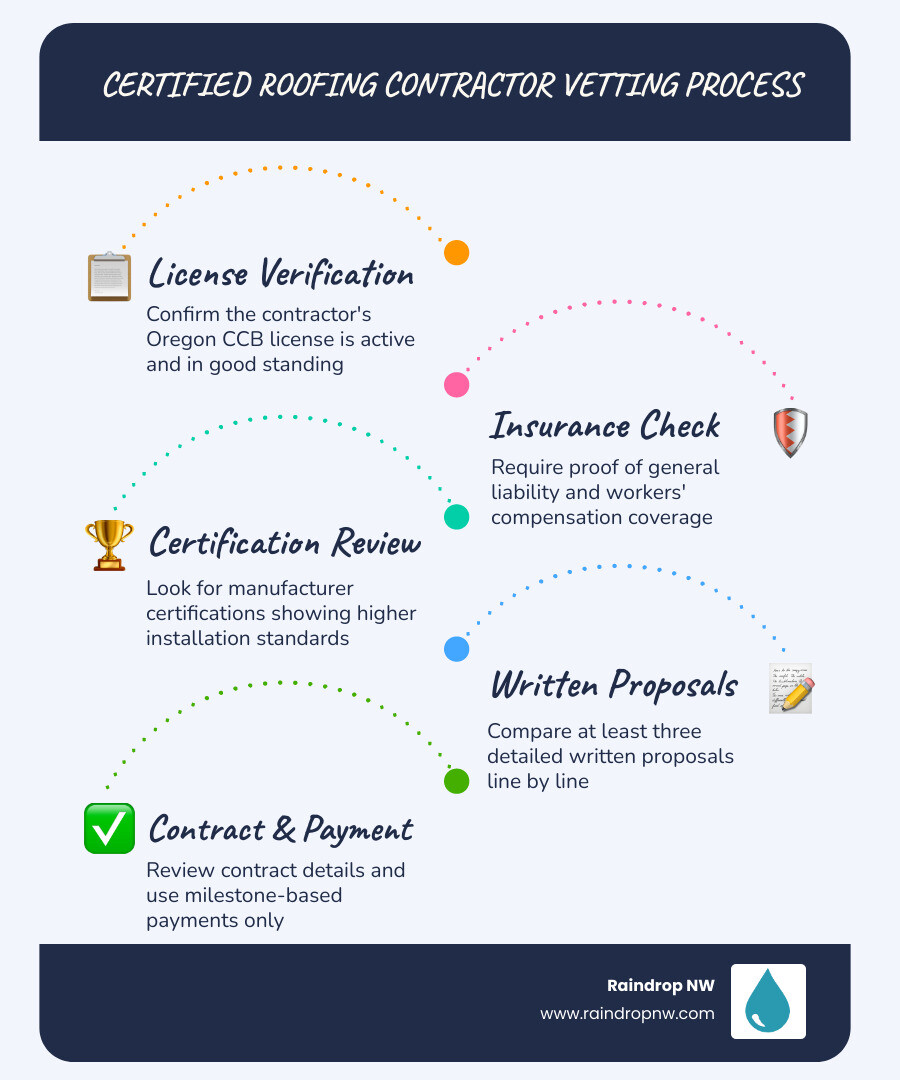
Here are the key steps to vet and hire the right certified roofing contractor:
- Verify their Oregon CCB license — confirm it’s active and in good standing
- Check insurance — require proof of general liability and workers’ compensation
- Look for manufacturer certifications — these show the contractor meets a higher installation standard
- Get at least three written proposals — and compare them line by line, not just by price
- Review the contract carefully — it should include scope, materials, timeline, payment schedule, and permits
- Use milestone-based payments — never pay in full upfront
- Hire local — a contractor with a real local office is accountable long after the job is done
Your roof is one of the largest investments your home will ever need. Oregon’s wet winters, wind events, and temperature swings put real stress on roofing systems — and a poor installation can mean leaks, structural damage, and a voided manufacturer warranty before you even realize something went wrong. Research shows that the majority of roofing complaints filed with state licensing boards involve contractors chosen primarily because they offered the lowest bid. Up to 40% of complaints in post-storm periods involve operators who disappear after collecting an initial payment.
The good news? With the right vetting process, you can confidently hire someone who will do the job right — the first time.
I’m Torrey Yungeberg, owner of Raindrop Roofing NW and Secretary of both the Oregon Chapter of National Women in Roofing and the Associated Roofing Contractors of Oregon and Southwest Washington — roles that have given me a front-row seat to what goes wrong when homeowners skip the vetting process when choosing a certified roofing contractor. Everything in this guide reflects what I’ve learned leading crews, reviewing contracts, and advocating for ethics in our industry.
Essential Steps for Choosing a Certified Roofing Contractor
When you begin your search, it is easy to get overwhelmed by the sheer number of companies online. However, separating the true professionals from the unreliable operations comes down to a few critical filters.
First and foremost, look at business longevity. A company that has been operating under the same name for at least five years has demonstrated stability. Many roofing businesses fail within their first three years, leaving past clients with worthless workmanship warranties. When a company has deep roots in communities like Beaverton, Hillsboro, or Tigard, they have a track record you can actually verify.
Second, ensure the contractor has a physical, local office. A post office box or a temporary shared workspace is a major red flag. A permanent brick-and-mortar office means the company has a physical presence in our community, employs local staff, and will be around to service your roof if a leak occurs years down the road. This local presence is the foundation of accountability. For a deeper look into this process, check out our guide on How to Choose the Right Roofing Contractor.
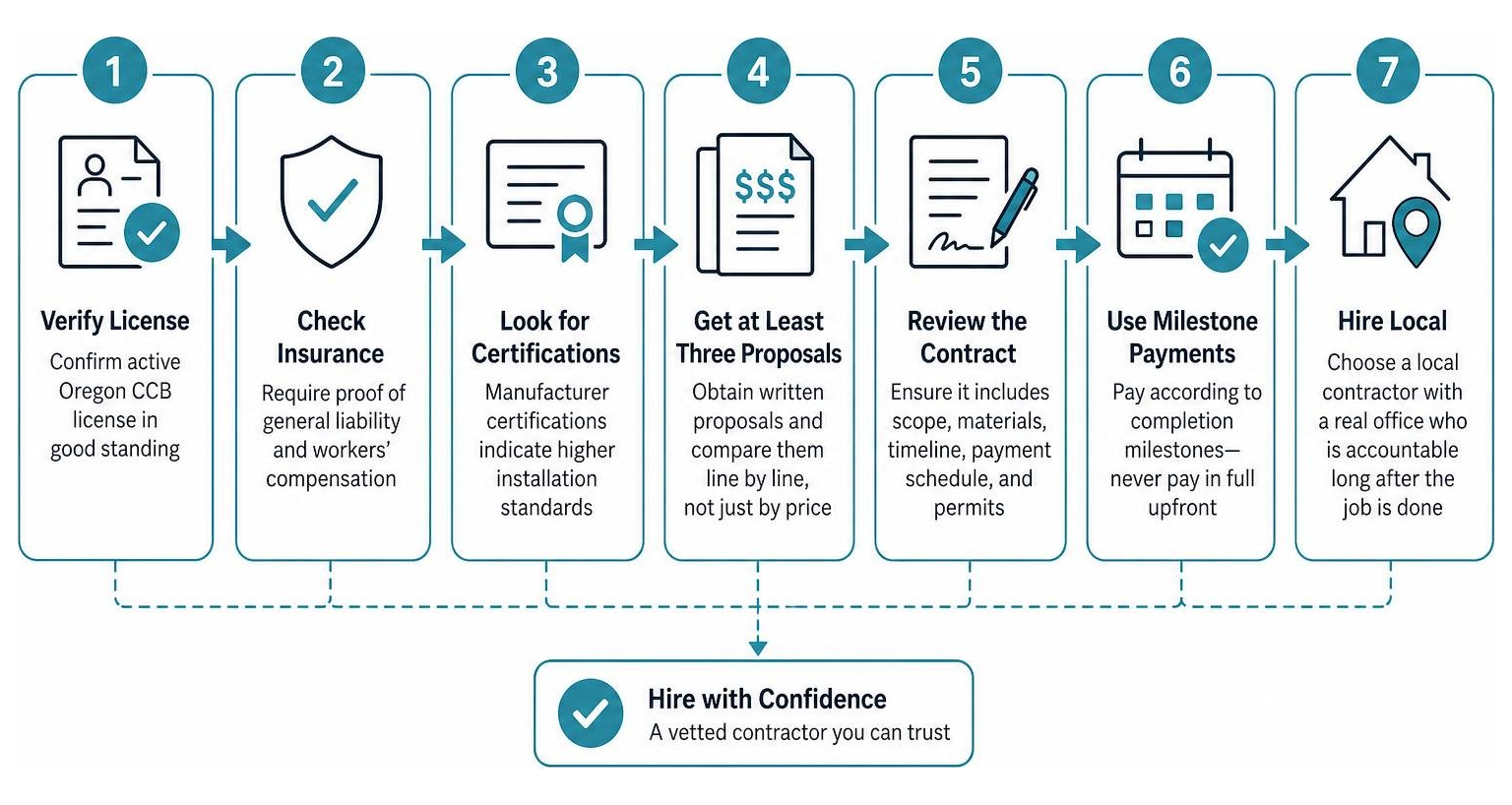
To help you visualize this initial screening phase, here is a quick framework we use to filter out unreliable operators before ever requesting a bid:
Verifying License and Insurance Credentials
Never take a contractor’s word when they say they are licensed and insured. In Oregon, any business performing construction work must be registered with the Oregon Construction Contractors Board (CCB).
Before you sign anything, ask for the contractor’s CCB number and look it up directly on the state registry website. Verify that the license is active, matches the business name, and has no active civil penalties or unresolved consumer complaints.
Additionally, you must verify their insurance coverage. A professional roofing contractor should carry:
- General Liability Insurance: This protects your home and property from damage caused during the installation. Look for a policy with a minimum of $1 million in coverage.
- Workers’ Compensation Insurance: This is absolutely vital. If a worker is injured on your roof and the contractor does not carry workers’ comp, you as the homeowner can be held legally and financially liable for those medical bills.
Always request a Certificate of Insurance (COI) sent directly from the contractor’s insurance agency to confirm the policy is active and has not lapsed. To learn more about protecting yourself, read our detailed breakdown on How to Verify a Roofer’s License and Insurance.
The Value of Manufacturer Certifications and Warranties
Many homeowners do not realize that a roof is only as good as its installation. In fact, industry data shows that less than 25% of new roof installations actually meet strict manufacturer specifications due to poor installation techniques. When a roof is installed incorrectly, the manufacturer’s material warranty can be completely voided, leaving you with zero financial protection if the shingles fail prematurely.
This is why manufacturer certifications are so valuable. Major roofing manufacturers like GAF, Owens Corning, and CertainTeed offer specialized credentialing programs for top-performing contractors. For example, GAF Master Elite contractors represent only 2% of all roofing contractors nationwide.
To achieve and maintain these certifications, a contractor must undergo regular training, maintain excellent credit, show proof of high-level insurance, and agree to random quality inspections by the manufacturer. More importantly, only certified contractors can offer enhanced, extended warranties that cover both the materials and the contractor’s workmanship for up to 50 years, backed directly by the manufacturer itself. Discover why these credentials are a non-negotiable quality signal in our article on How Manufacturer Certifications Indicate Quality.
How to Compare Written Proposals and Protect Your Investment
When you receive bids from multiple contractors, comparing them solely on the bottom-line price is a recipe for a roofing nightmare. The majority of complaints filed with licensing boards involve contractors who were selected because they offered the lowest bid. Often, these low bids are the result of skipped steps, cheap materials, or a lack of proper insurance.
To protect yourself, you must compare the actual scope of work line by line. A professional estimate will be highly detailed and specific, while a risky bid will be vague and brief.
| Feature | Comprehensive Professional Proposal | Vague / Risky Bid |
|---|---|---|
| Material Specifications | Lists exact brand, product line, underlayment type, and ventilation accessories. | Mentions generic “asphalt shingles” or “standard materials.” |
| Scope of Work | Explicitly details tear-off of old layers, decking inspection, and replacement costs per sheet if rot is found. | Vaguely mentions “replacing roof” without specifying tear-off or rot repairs. |
| Flashings & Drip Edge | Specifies replacement of all valley, chimney, and wall flashings, plus new drip edge. | Often omits flashing details or says they will “re-use existing” components. |
| Cleanup & Disposal | Details daily cleanup, magnetic sweeping for nails, and all debris disposal fees included. | Leaves cleanup terms unwritten, potentially leaving you with disposal fees. |
| Warranties | Clearly separates the manufacturer’s material warranty from the contractor’s written workmanship warranty. | Offers a verbal promise of a “lifetime warranty” with no written terms. |
Reviewing these details carefully ensures you are comparing identical scopes of work. For a complete list of questions to ask during this phase, consult our guide on Questions to Ask Before Hiring a Roofer.
What Must Be Included in a Rock-Solid Roofing Contract
Once you have chosen your contractor, the next step is securing a comprehensive, written contract. In Oregon, any home improvement project over a certain threshold requires a written contract, but regardless of the law, you should never allow work to begin without one. A handshake agreement offers zero legal protection.
A professional, legally binding roofing contract must include:
- Detailed Scope of Work: Every material being used, from the brand of shingles to the weight of the underlayment (such as synthetic vs. felt).
- Project Timeline: Estimated start and completion dates, including provisions for weather delays.
- Permit Responsibilities: The contract must explicitly state that the contractor is responsible for pulling and paying for all necessary municipal building permits.
- Property Protection and Cleanup: Specific details on how our crew will protect your landscaping, siding, and gutters, and how they will clean up debris daily.
- Workmanship Warranty: A written guarantee of the contractor’s installation quality, typically ranging from 5 years to a lifetime.
Having these details clearly documented protects both you and the contractor throughout the project. See how proper documentation and licensing protect your home investment over time by reading How Consistent Licensing Protects Past and Future Customers.
Safe and Standard Payment Terms for Homeowners
How a contractor structures their payment schedule is a major indicator of their financial health and professionalism. You should never pay 100% of the project cost upfront. A demand for full payment before materials arrive on-site is one of the most common signs of a contractor scam.
Safe and standard payment terms typically follow a milestone-based schedule, such as:
- Initial Deposit: 10% to 30% of the total project cost, paid upon signing the contract or when materials are delivered to your property.
- Progress Payment (for larger projects): A mid-project payment tied to a specific milestone, such as completion of the tear-off phase.
- Final Payment: The remaining balance, paid only after the project is fully completed, has passed final municipal inspections, and you have performed a final walkthrough with the supervisor.
Additionally, always request lien waivers from the contractor before making your final payment. A lien waiver is a receipt showing that the contractor has paid their material suppliers and crew. Without this, if the contractor fails to pay their supplier, the supplier can legally place a lien on your home, even if you paid the contractor in full. For more tips on avoiding financial pitfalls, read Don’t Get Ripped Off: How to Pick the Top Rated New Roof Installer in Portland.
Protecting Your Home from Storm Chasers and Unreliable Operators
Severe weather events in the Pacific Northwest—such as heavy windstorms, winter ice storms, or falling trees—often bring out “storm chasers.” These are out-of-state, uncertified contractors who travel to hard-hit neighborhoods immediately following a storm, soliciting door-to-door.
Storm chasers use high-pressure tactics to convince homeowners to sign contracts on the spot. They often offer to “waive” your insurance deductible or promise a “free roof” through insurance claims. In Oregon, waiving an insurance deductible is highly unethical and can constitute insurance fraud.
These operators typically use cheap, mismatched materials, skip necessary permits, and hire temporary, untrained crews. Once they collect their payment, they pack up and move to the next storm-damaged city. When their substandard work begins to leak a year later, the homeowner finds their phone number disconnected, their “warranty” completely useless, and their home severely damaged. To understand how to choose a company committed to our community, read Choosing a Roofing Company That Won’t Sell Out.
The Importance of Local Expertise When Choosing a Certified Roofing Contractor
Hiring a truly local, independent roofing contractor is your best defense against poor craftsmanship and storm-chasing scams. Local contractors understand the unique demands of the Pacific Northwest climate. We know how to design a roof system that handles heavy rain, resists moss growth, and provides proper attic ventilation to prevent condensation during cold Oregon winters.
Furthermore, a local business is bound by community accountability. Our reputation in Beaverton, Portland, Tigard, and surrounding cities is everything to us. We cannot afford to do substandard work because our clients are our neighbors. We maintain a physical office, employ local residents, and are easily reachable if you ever have a question or need maintenance. Explore the long-term advantages of working with an independent, local team in our article on the Benefits of Choosing a Truly Local Independent Roofer.
Avoiding Scams by Choosing a Certified Roofing Contractor
To protect your home and your wallet, keep these simple rules in mind to spot and avoid common roofing scams:
- Say no to door-to-door pressure: If a contractor knocks on your door unsolicited and pressures you to sign a contract immediately, politely decline and close the door.
- Avoid cash-only deals: Reputable companies never demand cash-only payments or offer deep discounts for unrecorded cash transactions. Cash deals leave no paper trail, which means you have no legal recourse if the work is faulty.
- Verify the credentials yourself: Always double-check their CCB license status and look for verifiable manufacturer certifications like GAF Master Elite or Owens Corning Preferred status.
- Never accept deductible-waiving offers: If a contractor offers to cover, waive, or absorb your homeowner’s insurance deductible, walk away. It is illegal and puts you at risk of fraud.
Frequently Asked Questions about Roofing Contractors
How do I verify if a roofing contractor is currently licensed and insured?
You can easily verify an Oregon contractor’s license by visiting the Oregon Construction Contractors Board (CCB) website and entering their CCB license number. Ensure their status is “Active,” and check for any outstanding civil penalties or complaints. To verify their insurance, ask the contractor to have their insurance broker send a Certificate of Insurance (COI) for both general liability and workers’ compensation directly to your email.
What is the difference between a manufacturer warranty and a workmanship warranty?
A manufacturer warranty covers defects in the physical roofing materials (such as shingles cracking or losing granules prematurely) and is usually valid for 20 to 50 years. A workmanship warranty is provided by the contractor and covers errors made during the installation process (such as improper flashing or incorrect nailing). While material warranties are standard, only certified contractors can offer extended warranties that cover workmanship backed directly by the manufacturer.
What are the biggest red flags to watch out for when hiring a roofer?
The most common red flags include:
- Unsolicited door-to-door sales representatives using high-pressure tactics.
- Demands for large upfront cash deposits or full payment before work begins.
- Out-of-state license plates, phone numbers, or P.O. box addresses.
- Extremely low bids that are 30% or more below other estimates.
- A refusal to provide a detailed, written contract or proof of active insurance.
Conclusion
Choosing a certified roofing contractor is the single most important step you can take to protect your home, your family, and your financial investment. By taking the time to verify CCB licensing, confirm robust insurance, insist on written contracts, and prioritize manufacturer-certified local professionals, you ensure your new roof will stand strong against the Pacific Northwest elements for decades to come.
At Raindrop Roofing NW, we are proud to be a family-owned, multi-generational, and truly independent local company. Serving Beaverton, Portland, Hillsboro, Tigard, and the surrounding communities, our team brings decades of local experience, certified craftsmanship, and a transparent, pressure-free process to every project. We do not answer to out-of-state investment firms—we answer directly to you, our neighbors.
Ready to secure your home with a beautiful, expertly installed roof? Schedule a professional residential roofing consultation today and let us show you the difference that true local expertise and certified quality can make.




Leave a Reply
Want to join the discussion?Feel free to contribute!