
A Quick Start Guide to Assessing Roof Repair Costs
Is It Worth Fixing an Old Roof? Here’s What Oregon Homeowners Need to Know First
Is it worth fixing an old roof? The honest answer depends on a few key factors — and getting them right can save you thousands of dollars.
Quick answer:
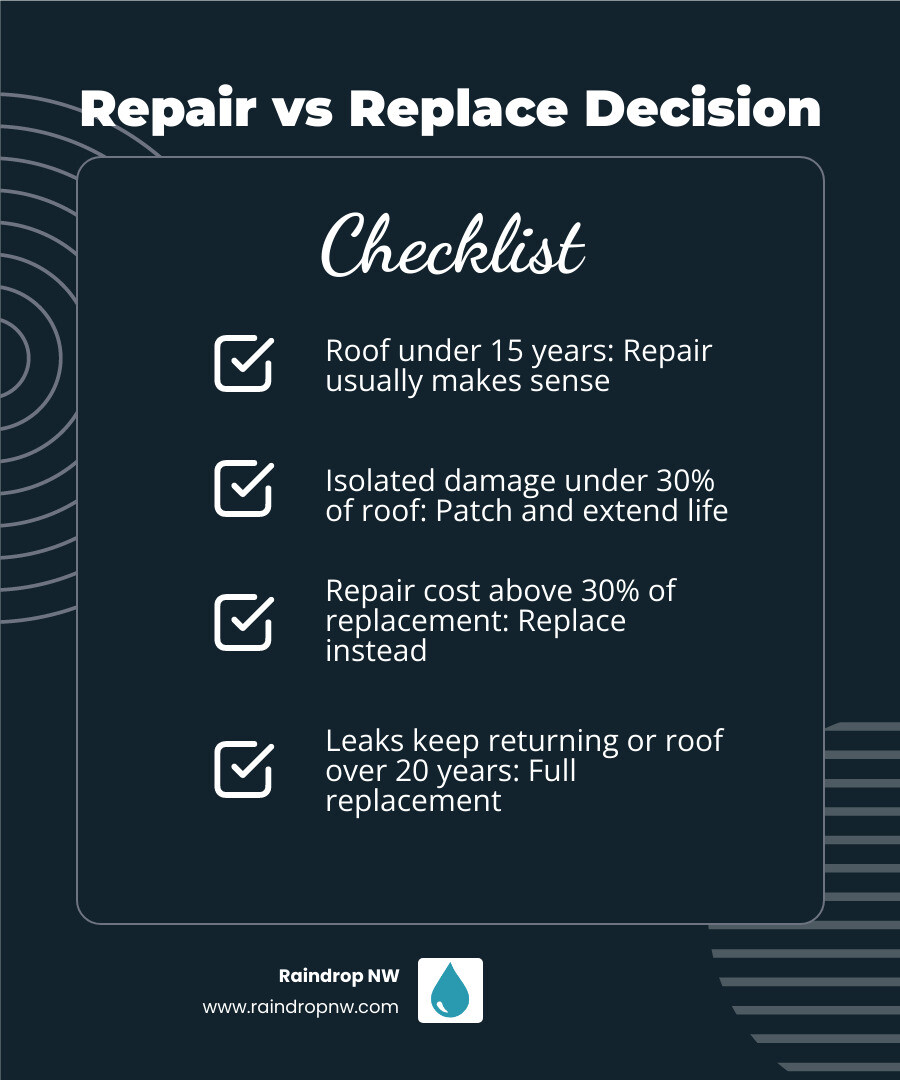
- Repair if your roof is under 15 years old, damage is isolated to one area, and repair costs stay below 30% of full replacement cost
- Replace if your roof is 20+ years old, leaks keep coming back, damage covers more than 30% of the surface, or repair costs are climbing toward half the price of a new roof
- Get an inspection first if you’re unsure — age and visible damage alone don’t tell the whole story
Most homeowners discover they have a problem after a wet Oregon winter reveals a water stain on the ceiling or moss creeping across the shingles. The pressure to act fast is real. But rushing that decision — in either direction — is exactly how homeowners end up overpaying. About 70% of roofs that get evaluated can still be repaired; the other 30% genuinely need full replacement. Knowing which category your roof falls into is the most important thing you can do before spending a dollar.
I’m Torrey Yungeberg, owner of Raindrop Roofing NW, and I’ve spent years helping Portland-area homeowners navigate the repair-versus-replace question — including the complicated cases where the answer isn’t obvious. In this guide, I’ll walk you through exactly how to assess whether it’s worth fixing an old roof, so you can make a confident, clear-eyed decision.
The Core Decision: Is It Worth Fixing an Old Roof?
When you are staring at a water spot on your ceiling, the immediate reaction is often panic. You might wonder if a quick patch will buy you another decade or if you are looking at a complete system failure. To make the right financial and structural choice, you must look at the roof as a complete, integrated system rather than just a collection of shingles.
The first step in our decision framework is comparing the current age of your roof against its expected functional lifespan. In the Pacific Northwest, our damp, temperate climate means roofs face unique environmental stressors that can cause materials to degrade faster than the manufacturer’s national averages might suggest.
When we evaluate a home in Beaverton, Tigard, or Hillsboro, we often look for the “80% lifespan threshold.” Once a roofing material has reached 80% of its expected life, investing in anything more than a very minor patch rarely makes long-term financial sense. At this stage, the materials have lost their flexibility, shingles have become brittle, and a repair in one spot often triggers a new failure nearby.
To help you understand where your home stands, we have outlined the general lifespans and repair viability of the most common roofing materials below. For a deeper dive into this initial decision-making process, you can read our complete guide on Should I Repair or Replace My Roof?.
| Roofing Material | Expected Lifespan (PNW Climate) | Repair Viability (Under 15 Years) | Repair Viability (Over 20 Years) |
|---|---|---|---|
| Asphalt 3-Tab Shingles | 15–20 Years | High (for isolated wind/impact damage) | Very Low (shingles are too brittle to seal) |
| Architectural Shingles | 20–30 Years | High (excellent candidate for targeted repairs) | Moderate to Low (conditional on overall wear) |
| Metal Roofing | 40–70 Years | High (usually limited to flashing/fasteners) | High (panels remain structurally sound) |
| Clay / Concrete Tile | 50–100 Years | High (replacing individual broken tiles) | Moderate (underlayment often fails first) |
| Wood Shake | 20–30 Years | Moderate (requires specialized care) | Low (widespread rot or splitting is common) |
| Slate | 75–150 Years | High (replacing individual slipped slates) | High (focus is on flashings and fasteners) |
Assessing Lifespan by Material Type
Asphalt shingles remain the most common choice for homes throughout the Portland metro area, but they are also the most sensitive to aging. Traditional three-tab shingles have a shorter functional lifespan, often showing severe wear after 15 years in our wet climate. Modern architectural shingles are thicker and far more resilient, typically lasting up to 25 or 30 years before a full replacement becomes necessary.
Metal roofing is exceptionally durable, standing up well to wind, rain, and falling debris. While the panels themselves can easily last half a century, the sealants, boots, and exposed fasteners may require maintenance after 20 to 25 years.
Clay and concrete tiles, as well as natural slate, are incredibly heavy and durable, often lasting up to a century. However, the waterproof underlayment beneath these heavy materials typically only lasts 30 to 40 years. This means you might need to lift the tiles, replace the barrier underneath, and reinstall the original tiles.
Wood shakes bring a classic Northwest aesthetic, but they require diligent maintenance. Without regular treatment, the constant moisture in places like Lake Oswego and West Linn can lead to rot, moss intrusion, and splitting within 20 to 25 years. To understand how these different options affect your long-term investment, check out our guide on How Material Choice Impacts Your Roof Cost.
When Is It Worth Fixing an Old Roof with Minor Damage?
There are many scenarios where a repair is absolutely the smartest, most responsible path forward. If your roof is relatively young (under 15 years old) and has suffered localized damage, there is no need to jump to a full replacement.
Common examples of highly repairable issues include:
- A tree branch falling and damaging a small cluster of shingles on a single slope.
- Strong wind lifting a few shingles on an otherwise healthy, flexible roof field.
- A cracked pipe boot or localized flashing failure around a chimney or skylight.
In these cases, a targeted repair can seamlessly restore the integrity of the system and buy you another decade of reliable protection. The key is catching these issues early before water penetrates the underlayment and rots the wooden roof deck beneath. You can learn more about keeping your system in top shape by reading our tips on How to Extend the Life of Your Roof.
Additionally, many recurring leaks are not actually failures of the shingles themselves, but rather failures of the metal transitions. Ensuring your valleys and penetrations are properly sealed is critical, which is why we emphasize How Proper Flashing Prevents Leaks to protect your home’s structural framing.
The Financial Thresholds: The 30% and 50% Rules
When evaluating whether is it worth fixing an old roof, you can use two simple, industry-standard financial rules to remove the guesswork from your decision: the 30% Cost Rule and the 50% Rule.
The 30% Cost Rule looks at the immediate project at hand. If a professional, itemized estimate for repairing your current roof exceeds 30% of what a complete, brand-new roof replacement would cost, the smarter financial move is almost always replacement. Spending a significant portion of a replacement budget on a repair only delays the inevitable, and you will still have an aging, depreciating asset overhead.
The 50% Rule is a broader framework that looks at both repair costs and the overall condition of the system. If the cost of a single major repair climbs toward 50% of a full replacement, or if the cumulative cost of repeated minor repairs over a 3-to-5-year period reaches that 50% threshold, you are throwing good money after bad.
For a complete breakdown of how these ratios translate into long-term home budgeting, explore our Roof Replacement Cost Guide for Homeowners.
Is It Worth Fixing an Old Roof When Leaks Keep Returning?
One of the clearest warning signs of a failing roof is the recurring leak. If you pay to patch a leak in your living room ceiling, only for a new water stain to appear in the hallway six months later, your roof is likely experiencing systemic failure.
When a roof reaches the end of its life, the materials degrade globally, not locally. Patching one weak spot simply shifts the water pressure to the next vulnerable area. Homeowners who try to stretch a dying roof for five additional years through constant patching often end up spending thousands of dollars on temporary fixes, only to pay for a full replacement in the end anyway.
By choosing a timely replacement instead, you gain immediate peace of mind, protect your home’s interior, and stop paying for repeated service calls. To see how proactive management can keep your home dry, read about How Inspections Prevent Costly Repairs.
Homeowner Timelines and Resale ROI
Your personal timeline for living in the home is another critical piece of the puzzle. If you plan to live in your home for the next 10, 20, or 30 years, replacing an aging roof immediately is a highly sensible investment. You will get to enjoy decades of worry-free protection, improved energy efficiency, and lower insurance costs.
However, if you are planning to sell your home within the next year or two, the math shifts:
- Minor Repairs: If the roof is in fair condition with a small, isolated issue, a professional repair is usually the best choice to ensure the home passes a buyer’s inspection without requiring a massive upfront investment.
- Full Replacement: If the roof is clearly at the end of its life, trying to hide it with minor patches will likely backfire. Savvy buyers and home inspectors in the Portland area will easily spot an aged roof. A failing roof often becomes a major point of negotiation, leading to buyers demanding steep price drops or repair credits.
According to national real estate data, a brand-new roof is one of the most attractive features for prospective buyers, recovering roughly 60% to 70% of its cost at resale. It removes a major immediate expense for the new owner, speeds up the closing process, and significantly boosts your home’s curb appeal.
Hidden Risks and Pacific Northwest Climate Challenges
Living in Western Oregon and Southwest Washington means our homes face some of the most demanding moisture conditions in the country. From Gresham and Clackamas down to Newberg and Oregon City, our roofs must endure months of persistent rain, high humidity, and limited sunlight.
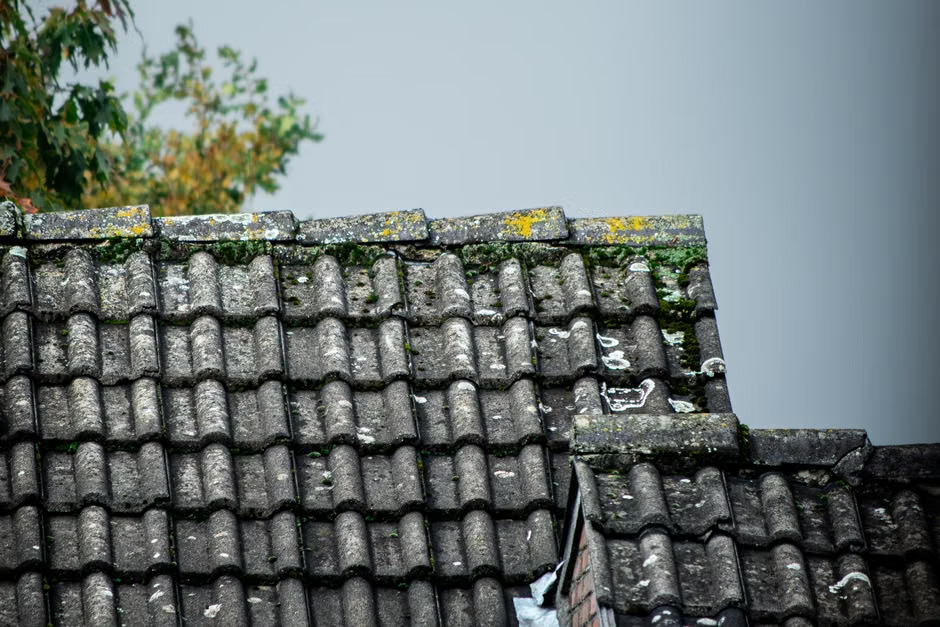
This environment makes moss growth a constant battle. Moss is not just an aesthetic issue; it is a destructive organism. Moss acts like a sponge, holding water flat against your shingles and preventing the roof from drying out. Over time, the root-like structures of moss pry up the edges of shingles, allowing water to migrate underneath.
Additionally, our winter freeze-thaw cycles can cause major damage. When water gets trapped under shingles or behind metal flashings and then freezes, it expands. This expansion pulls apart seams, cracks brittle sealants, and widens tiny gaps into major leaks. For specialized advice on protecting your home from our local weather, read our guide on How to Extend the Life of Your Roof in Rainy Climates.
Structural Damage and Mold Growth
When an old roof is left to slowly fail, the damage is rarely confined to the shingles. Water that slips past a compromised barrier will quietly saturate the wooden roof deck (the plywood or oriented strand board beneath the shingles). Over time, this leads to dry rot, which structurally weakens the roof and can cause dangerous sagging.
Furthermore, trapped moisture in a poorly ventilated attic creates the perfect breeding ground for mold and mildew. Mold remediation in an attic space is a highly complex, expensive process that can impact your family’s respiratory health.
A compromised roof also destroys your home’s energy efficiency. Saturated attic insulation loses its ability to resist heat flow, causing your heating and cooling systems to work much harder and driving up your monthly utility bills.
Shingle Matching and Local Building Codes
If you decide to move forward with a localized repair on an older roof, you will often run into the challenge of shingle matching. Shingle manufacturers discontinue color lines every few years, and even if the exact line is still active, years of UV exposure will have faded your existing roof. A repaired patch on an old roof will almost always look like a mismatched band-aid, which can hurt your home’s curb appeal.
You must also consider local building codes. In Oregon and Washington, building codes permit a maximum of two layers of shingles on a residential roof. If your home already has two layers, you cannot simply lay a third layer of shingles over the old ones to save money. A complete tear-off of both layers down to the bare wood deck is legally required, which is always the safest and most reliable way to inspect for hidden rot.
Navigating Homeowners Insurance and Professional Inspections
Understanding how your homeowners insurance policy treats roof damage is essential when deciding whether to repair or replace. Insurance is designed to cover sudden, accidental damage from covered perils—such as a severe windstorm blowing off a section of shingles, a fallen Douglas fir branch puncturing the deck, or a rare hail event.
Insurance does not cover gradual wear and tear, aging, or deferred maintenance. If your roof is leaking simply because it is 25 years old and has reached the end of its natural life, your insurance claim will be denied.
When a claim is approved, how much you receive depends on your policy type:
- Replacement Cost Value (RCV): This is the most homeowner-friendly policy. It covers the actual cost of replacing the damaged roof with a new one of similar quality, minus your deductible.
- Actual Cash Value (ACV): This type of policy factors in depreciation. If your 20-year-old roof is damaged, the insurance company will only pay what a 20-year-old roof is worth today, which may cover only a small fraction of a new installation.
Because policies are complex, we recommend having a professional inspection completed before filing a claim, ensuring you have clear documentation of the damage. To learn more about timing these evaluations, see How Often Should You Have Your Roof Inspected?.
The Role of a Professional Roof Inspection
You should never rely on a quick look from the ground to decide the fate of your roof. A professional roof inspection involves a thorough, hands-on evaluation of the entire system.
An experienced inspector will walk the roof to check for:
- Granule loss and shingle pliability.
- The integrity of the flashings in valleys and around chimneys.
- The condition of the underlayment and drip edges.
- The attic space, looking for proper ventilation, water stains, or sagging wood.
This comprehensive approach ensures you get an honest assessment of whether a repair will buy you real time or if replacement is the only safe option. To see how these early evaluations protect your home, read about How Regular Inspections Catch Problems Early.
When you are ready to hire a professional, it is crucial to work with a team that has deep roots in your community and a reputation for honesty. You can find our best advice on this process in our guide on How to Choose the Right Roofing Contractor.
Insurance Premium Discounts with a New Roof
Investing in a new roof can also lead to ongoing savings on your homeowners insurance premiums. Insurance companies prefer new roofs because they drastically reduce the risk of water damage claims.
Many insurers offer significant premium discounts (often ranging from 5% to 20%) for homes with brand-new roofs, especially those installed with modern, impact-resistant shingles or class-A fire-rated materials. Over the lifespan of your new roof, these monthly savings can help offset a portion of your initial investment.
Frequently Asked Questions about Roof Replacement
Can I put a new roof over my old shingles?
While some local building codes allow you to overlay a second layer of asphalt shingles over an existing single layer, we strongly advise against it.
Overlaying saves a small amount of money upfront on tear-off labor, but it introduces several serious long-term risks:
- Trapped Heat: A second layer traps heat, which bakes the new shingles from both sides and can cut their lifespan in half.
- Hidden Rot: You cannot inspect the wooden roof deck for rot or structural damage without tearing off the old shingles.
- Voided Warranties: Many major shingle manufacturers will void or severely limit their product warranties if the shingles are installed over an existing layer.
- Added Weight: Two layers of shingles add immense structural weight to your home’s framing, which can lead to sagging.
What is the best month to replace a roof in Oregon?
The ideal window for roof replacement in the Pacific Northwest runs from late spring through early autumn (typically June through September). During these dry, warm summer months, the weather is predictable, which allows projects to be completed quickly and safely.
Furthermore, asphalt shingles require warm temperatures and direct sunlight for their self-sealing adhesive strips to activate and bond properly. While experienced local crews can install roofs during dry winter stretches, scheduling your project for the dry season ensures the best install conditions.
How long does a typical roof replacement take?
The installation timeline depends on the size of your home, the pitch of your roof, and the materials used:
- Asphalt Shingles: A standard single-family home can typically be torn down and fully replaced with new asphalt shingles in just 1 to 3 days.
- Metal Roofing: Due to the precision required for cutting and fastening panels, a metal roof replacement usually takes 3 to 5 days.
- Tile or Slate: These heavy, premium materials require structural reinforcement checks and meticulous hand-installation, taking anywhere from 5 to 10 days to complete.
Conclusion
Deciding whether is it worth fixing an old roof can feel overwhelming, but you do not have to make the decision alone. At Raindrop Roofing NW, we believe in giving our neighbors in Beaverton, Portland, and the surrounding communities honest, straightforward guidance.
As a family-owned, multi-generational company, our focus is on long-term service and accountability. We live and work in the same neighborhoods we serve, and we treat every home as if it were our own. Whether your roof simply needs a targeted repair to get through the next decade or it is time for a complete, high-quality replacement, we are here to provide clear options with no high-pressure sales tactics.
If you are ready to get a professional, honest assessment of your roof’s condition, Schedule a professional assessment with Raindrop Roofing NW today. We will help you protect your home, your family, and your investment for decades to come.




Leave a Reply
Want to join the discussion?Feel free to contribute!