
Detailed Guide to Flat vs Pitched Roof Cost and Maintenance Comparison
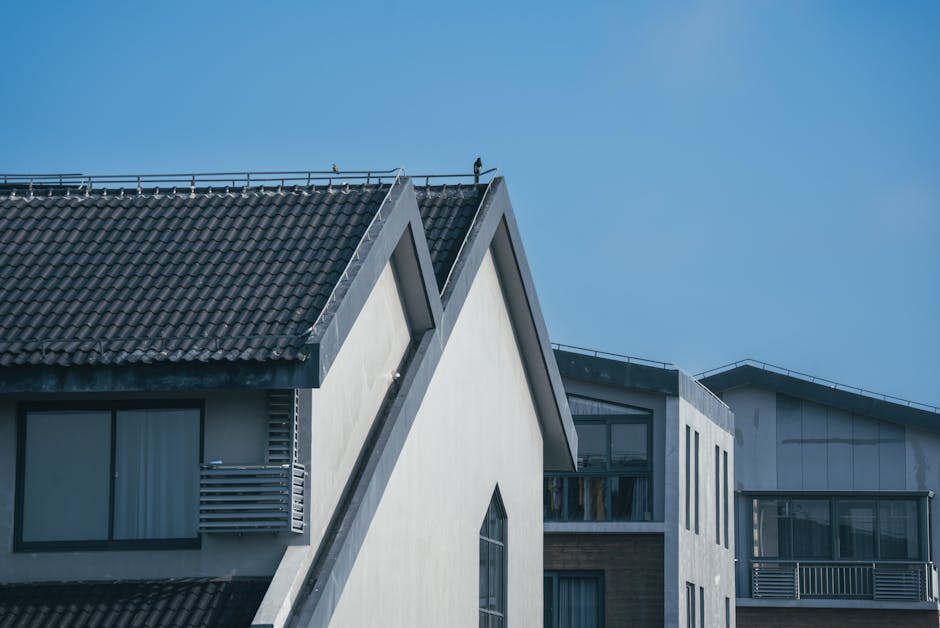
Is a Flat or Pitched Roof the Better Long-Term Investment for Your Home?
Making a flat vs pitched roof cost and maintenance comparison is one of the most important decisions you’ll face when planning a roof replacement or new build. Here’s a quick side-by-side so you can size up the key differences right away:
| Factor | Flat Roof | Pitched Roof |
|---|---|---|
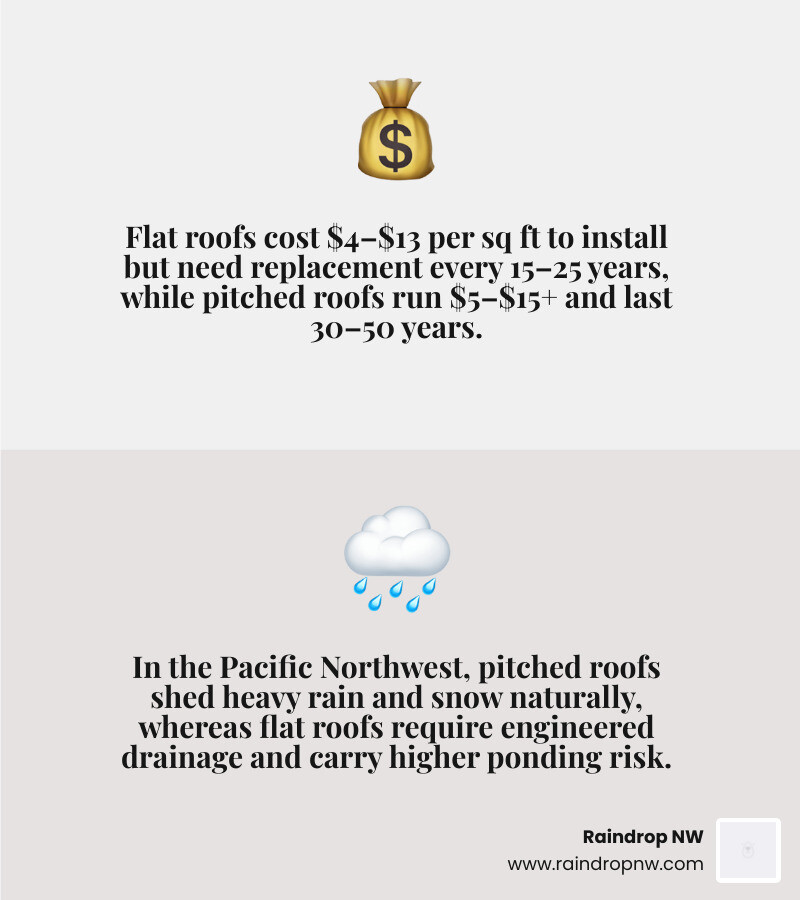
| Installed cost per sq ft | $4–$13 | $5–$15+ |
| Typical lifespan | 15–25 years | 30–50+ years |
| Maintenance frequency | Semi-annual inspections + quarterly debris removal | Annual inspection |
| Annual maintenance cost | $300–$500 | $150–$300 |
| Snow & rain performance | Requires engineered drainage; ponding is a risk | Sheds water and snow naturally |
| Best climate fit | Dry, mild climates | Wet or snowy climates (like the Pacific Northwest) |
| Usable space | Rooftop decks, solar, HVAC | Attic storage, loft potential |
| Energy efficiency | High (reflective membranes, cool roof rated) | Good (with proper ventilation and insulation) |
Flat roofs cost less upfront but typically need replacing sooner and require more hands-on upkeep. Pitched roofs carry a higher initial price tag, but their longer lifespan and lower maintenance burden often make them the more cost-effective choice over 20 to 30 years — especially here in the Pacific Northwest, where heavy rainfall and occasional snow put drainage performance front and center.
The right answer depends on your building type, your budget, your climate, and how long you plan to own the property. This guide walks through everything you need to weigh that decision with confidence.
I’m Torrey Yungeberg, owner of Raindrop Roofing NW, and after years of working on both low-slope and steep-slope systems across the Portland metro, I’ve seen how the flat vs pitched roof cost and maintenance comparison plays out in real Oregon weather and real homeowner budgets. Let’s dig into the details so you can make the call that’s right for your home.
Understanding the Structural Differences Between Flat and Pitched Roofs

When we talk about roof design in Beaverton and the surrounding Portland-Metro area, we are essentially looking at two different engineering philosophies. A pitched roof is defined by its steep slope, usually measured as a ratio of “rise over run.” Most traditional homes in our area feature a pitch of 4:12 or higher, meaning the roof rises four inches for every twelve inches it runs horizontally. This design relies on gravity to shed water and snow.
On the other hand, a flat roof (or low-slope roof) isn’t actually perfectly level. To prevent immediate flooding, these systems are engineered with a slight pitch—usually between 1/4 and 1/2 inch per foot—to guide water toward drains or scuppers.
The structural load requirements differ significantly between the two. Because flat roofs can hold water or heavy snow for longer periods, they often require reinforced decking and heavier framing. Meanwhile, pitched roofs provide the added benefit of attic space, which can be used for storage or even converted into extra living space. From a purely aesthetic standpoint, pitched roofs offer classic curb appeal, while flat roofs are the hallmark of modern, mid-century architecture often seen in neighborhoods like Westmoreland or Eastmoreland. If you are looking at a commercial property, you’ll find that commercial roofing options and what to expect often lean toward flat systems due to the large footprint of the buildings.
Flat vs Pitched Roof Cost and Maintenance Comparison: Key Factors
When evaluating the flat vs pitched roof cost and maintenance comparison, several factors drive the final invoice. It isn’t just about the price of the shingles or the membrane; it’s about the complexity of the installation.
- Material Volume: Pitched roofs actually have more surface area than flat roofs covering the same square footage of a home because of the angle. This means you’ll often need more actual material (like shingles and underlayment) for a sloped roof.
- Labor Complexity: Flat roofs are generally quicker to install because workers can walk around easily without safety harnesses or specialized scaffolding. However, the technical skill required to heat-weld seams on a TPO roof is high.
- Drainage Systems: While a pitched roof uses standard gutters and downspouts, a flat roof requires specialized drainage like internal drains, scuppers, or siphonic systems to prevent “ponding.”
- Permits and Inspections: In cities like Lake Oswego or Tigard, building permits for a complete roof replacement can vary. Flat roofs often require more stringent inspections to ensure the waterproofing seal is perfect.
Analyzing the Flat vs Pitched Roof Cost and Maintenance Comparison for Installation
The materials you choose will dictate much of your upfront investment. For flat roofs, common choices include TPO (Thermoplastic Polyolefin) and EPDM (rubber). TPO is highly popular in the NW because its white surface reflects heat, though it requires professional heat-welding. EPDM is durable and stands up well to the temperature swings we see in the Tualatin Valley.
Pitched roofs typically use architectural asphalt shingles, which are the most common residential choice in Oregon. For those looking for extreme longevity, metal roofing is a fantastic option that can last twice as long as shingles. When you are choosing the right commercial roofing contractor, make sure they have experience in the specific material your structure requires, as the installation techniques for a flat membrane are entirely different from those for a sloped shingle roof.
Long-Term Value in the Flat vs Pitched Roof Cost and Maintenance Comparison
If you look at the total cost of ownership over 30 years, the winner often changes. A flat roof might be more affordable to install initially, but you may have to replace it twice in the time it takes to wear out one high-quality pitched roof.
Resale value is another consideration. In many traditional Portland neighborhoods, a well-maintained pitched roof is seen as a safer bet by home inspectors and buyers. Insurance premiums can also be slightly higher for flat roofs because insurers view them as a higher risk for water intrusion. However, you can mitigate these long-term risks by learning how to extend the life of your roof through proactive care.
Maintenance and Longevity: Protecting Your Investment
Maintenance is where the flat vs pitched roof cost and maintenance comparison gets real. Because flat roofs don’t have gravity on their side, they are “high-touch” systems.
- Ponding Water: If water stays on a flat roof for more than 48 hours after a rainstorm, it’s called ponding. This standing water can degrade the membrane and lead to leaks.
- Debris Removal: Flat roofs act like a shelf for leaves and pine needles. In wooded areas like Sherwood or Wilsonville, you may need to clear your roof quarterly to prevent drainage clogs.
- Seam Integrity: The seams are the weakest point of a flat roof. They should be inspected at least twice a year to ensure they haven’t pulled apart due to thermal expansion.
- Flashing: On pitched roofs, flashing around chimneys and vents is critical. On flat roofs, these penetrations are even more sensitive because water doesn’t rush past them—it sits around them.
Knowing how often should you have your roof inspected is key to preventing a small drip from becoming a major structural repair. We always tell our neighbors in Beaverton that how regular inspections catch problems early is the difference between a simple patch and a $20,000 headache.
Climate Performance in the Pacific Northwest
In the Portland-Metro area, our weather is dominated by rain. We get about 36 to 40 inches of rain a year, and that moisture is the natural enemy of any roof.
Pitched roofs are the “gold standard” for our climate because they shed water instantly. They also handle our occasional heavy snow loads better, as the weight is distributed more safely across the rafters. However, pitched roofs in damp areas are prone to moss and algae growth. Proper airflow is essential to combat this, and understanding how ventilation reduces moisture damage can help prevent rot in your attic.
Flat roofs can perform well here, but they require a “zero-tolerance” policy for clogged drains. If a drain clogs during a typical November downpour, you effectively have a swimming pool on top of your house. This is why how inspections prevent costly repairs is a topic we emphasize for all our low-slope customers.
Maximizing Functional Space and Energy Efficiency
One area where flat roofs truly shine is functionality. If you have a small lot in a dense area like Portland or Vancouver, a flat roof can be converted into a rooftop deck or a “green roof” with vegetation. This creates usable outdoor space that a pitched roof simply can’t offer.
Flat roofs are also often more energy-efficient. Many modern membranes are “cool roof” rated, meaning they reflect UV rays and keep the building cooler in the summer. For businesses, how a well maintained roof protects your business includes keeping energy bills predictable.
Pitched roofs, however, offer better natural insulation opportunities. The attic acts as a thermal buffer between the living space and the outdoors. In the winter, a well-insulated attic keeps your heat where it belongs—inside the house.
Making the Decision: Repair vs. Replacement
Eventually, every homeowner asks: “Can I just fix this, or do I need a whole new roof?”
We generally follow the “30% Rule.” If the cost of the repairs exceeds 30% of the cost of a total replacement, or if you find yourself calling us for leaks more than once a year, it’s time for a new roof. For flat roofs, if the membrane is becoming brittle or the seams are failing across the entire surface, patching is usually a temporary (and expensive) band-aid.
If you are unsure, check out our guide on should I repair or replace my roof. For business owners, keep an eye out for these signs your commercial roof needs attention, such as interior water stains or a sudden spike in heating costs.
Frequently Asked Questions about Roof Comparisons
Which roof type is better for solar panel installation?
While both can support solar, flat roofs offer a slight edge in optimization. On a flat roof, we can use adjustable racks to angle the panels perfectly toward the sun, regardless of which way the house faces. On a pitched roof, you are limited by the existing slope and orientation of the roof planes.
How often should I inspect a flat roof compared to a pitched roof?
We recommend a semi-annual schedule for flat roofs—once in the spring and once in the fall. This ensures the drains are clear before the rainy season starts. Pitched roofs can usually get away with a thorough annual inspection, though you should always check for storm damage after high-wind events.
Can I convert a flat roof to a pitched roof during a remodel?
Yes, but it is a major structural undertaking. It requires new framing, structural engineering to ensure your walls can handle the new weight distribution, and often a zoning permit to ensure you aren’t exceeding height limits in your neighborhood. It’s an expensive way to gain attic space, but it can significantly increase the long-term value of the home.
Conclusion
Choosing between these two systems is about balancing your immediate budget with your long-term goals for your home. Whether you love the modern lines of a flat roof or the reliable drainage of a classic pitch, the most important factor is the quality of the installation and the consistency of the maintenance.
At Raindrop Roofing NW, we are a family-owned, multi-generational company. We live in the same Beaverton and Portland-Metro communities we serve, and we take pride in providing the kind of craftsmanship that stands up to Oregon’s toughest weather. We aren’t an out-of-state corporation; we are your neighbors, and we are committed to being here for the life of your roof.
If you’re ready to see how the flat vs pitched roof cost and maintenance comparison applies to your specific home or business, we’d love to help. More info about residential roofing services is just a click away, or you can reach out to us for a free, transparent inspection. Let’s make sure your home stays dry for decades to come.




Leave a Reply
Want to join the discussion?Feel free to contribute!