• Link to X
  • Link to Instagram
  • Link to Youtube
  • Link to Facebook
  • Link to WhatsApp
CALL: (503)526-3887 or EMAIL: info@raindropnw.com
RAINDROP ROOFING NW | PORTLAND, OR
  • Home
  • About Us
    • About Raindrop Roofing NW
    • Our Team
    • Areas We Serve
    • Who We Support
    • Our Commitment to a Greener Future
    • Careers
    • Blog
  • Residential Roofing
    • Services
      • New / Replacement Roofs
      • Repairs and Maintenance
      • Remodels and Additions
      • Balconies, Patios, and Flat Decks
      • Roof Inspections and Certifications
    • Financing
    • Roof Gallery
    • Roof Types and Products
    • Manufacturer-Certified Roofing Contractor
    • Owner Resources
  • Commercial Roofing
    • Services
      • New and Replacement Roofs
      • Estimates and Inspections
      • Warranties
      • Real Estate Partnerships
      • Roof Certifications
    • Commercial Gallery
    • Roof Types and Products
    • Featured Project
  • Reviews
  • Contact Us
  • Menu Menu
You are here: Home1 / Emergency Roof Repair in Beaverton, OR2 / 2026

A Dimensional Dilemma: Choosing Between Architectural and Designer Shingles

Shingle Roofing

Defining the Tiers: Architectural vs Designer Shingle Comparison

When we talk about asphalt shingles in April 2026, we are essentially looking at a three-tier system. At the bottom, you have traditional 3-tab shingles—flat, thin, and increasingly rare on modern Beaverton homes. Above those sit the two heavyweights of the industry: architectural and designer shingles.

Both of these premium options utilize a “laminated” or “dimensional” construction. Unlike the single layer of a 3-tab shingle, these are created by fusing two or more layers of asphalt-saturated fiberglass mat together. This creates a staggered, recessed look that adds depth and shadow lines to your roof. However, as we move through this architectural vs designer shingle comparison, you’ll see that designer shingles take this layering to a much more complex, “artisan” level.

Feature 3-Tab Shingles Architectural Shingles Designer Shingles
Construction Single-layer, flat Multi-layered, laminated Thickest, multi-layered, custom shapes
Visual Depth Minimal (2D) Moderate (3D) High (Dramatic 3D)
Wind Rating 60–70 mph 110 mph 130+ mph
Lifespan 15–20 years 25–30 years 30–50 years
Primary Goal Budget protection Performance & Style Luxury & Longevity

For homeowners looking to understand how these materials fit their specific property, our Residential roofing services provide a comprehensive look at how each tier integrates with a full roofing system.

What are Architectural Shingles?

Architectural shingles, also known as dimensional or laminated shingles, are the current “gold standard” for most American homes. They were originally designed in the 1970s to provide a more affordable alternative to natural wood shakes. By layering the shingles, manufacturers created a product that was not only more aesthetically pleasing but also significantly more durable than the flat shingles of the past.

In our local climate—stretching from Portland to Hillsboro and down to Wilsonville—architectural shingles are incredibly popular because they offer a fantastic balance of value and resilience. They typically feature a 25-to-30-year lifespan. Because they are thicker and heavier than 3-tab options (often weighing 240 to 320 lbs per square), they stay put during those gusty autumn windstorms we get in the Willamette Valley.

Furthermore, their textured surface is excellent at hiding minor imperfections in the roof deck. If your home has settled slightly over the years, architectural shingles provide a forgiving, uniform look. To ensure your current roof deck is ready for this heavier material, we recommend regular Roof inspections and certifications to check for structural integrity.

The Premium Edge: Architectural vs Designer Shingle Comparison in Luxury

If architectural shingles are the “reliable SUV” of the roofing world, designer shingles are the “luxury grand tourer.” Also called “luxury” or “premium” shingles, these represent the absolute pinnacle of asphalt roofing technology.

What sets them apart in an architectural vs designer shingle comparison is the sheer level of craftsmanship. Designer shingles are often larger and significantly thicker than standard architectural shingles. They are engineered to mimic high-end, expensive materials like natural slate or hand-split cedar shakes with startling accuracy. Some lines feature scalloped edges, rounded “beaver tail” shapes, or intricate tab patterns that create a unique “old-world” charm.

Beyond the looks, you are paying for an incredible lifespan of 30 to 50 years. These shingles often utilize specialized granule blends and extra-thick asphalt layers that provide superior protection against UV degradation and thermal cycling (the expansion and contraction caused by our fluctuating Oregon temperatures). For a homeowner planning their “forever home” in Lake Oswego or West Linn, a New roof replacement using designer shingles is often the last roof they will ever need to buy.

Performance and Durability in the Pacific Northwest

roof shingles withstanding heavy rain and wind in a Pacific Northwest storm - architectural vs designer shingle comparison

Living in the Pacific Northwest means your roof has a tough job. Between the relentless winter rains in Gresham and the high winds that can whip through the Columbia River Gorge into Camas and Ridgefield, durability isn’t just a buzzword—it’s a necessity.

In a head-to-head architectural vs designer shingle comparison regarding performance, designer shingles almost always take the lead. Standard architectural shingles are typically rated for winds up to 110 mph. While this is sufficient for most Oregon storms, designer shingles often carry a wind rating of 130 mph or higher. This extra resistance comes from their increased weight and more robust interlocking designs, which prevent wind uplift from getting under the shingle edge.

Impact resistance is another factor. Many designer shingles are UL 2218 Class 3 or Class 4 rated, meaning they can withstand the impact of large hailstones without cracking the fiberglass mat. In our region, we also have to deal with the dreaded “green roof”—and I don’t mean the eco-friendly kind. Moss and algae thrive in our damp climate. Both architectural and designer shingles now frequently come with algae-resistant granules (often containing copper or zinc) that help prevent those unsightly black streaks. However, the premium coatings on designer lines often provide longer-lasting protection.

To keep either type of shingle performing at its peak, consistent Repairs and maintenance are vital, especially clearing debris that can trap moisture and lead to premature wear.

Aesthetic Impact and Home Value

close-up of high-definition roofing shingles showing color gradations and texture - architectural vs designer shingle

Your roof accounts for about 40% of your home’s visible exterior. Choosing a shingle is essentially choosing the “outfit” your home wears for the next few decades.

Architectural shingles provide a clean, modern, and dimensional look that complements almost any home style, from a classic ranch in Tigard to a contemporary build in Damascus. They offer subtle color blends and shadow lines that provide a much richer look than flat shingles.

Designer shingles, however, are “statement” pieces. They can completely transform the architectural identity of a house. If you have a stately Tudor or a historic Victorian in Oregon City, designer shingles can provide the look of heavy slate or thick wood shakes at a fraction of the cost of the real materials. This “prestige” factor directly impacts resale value. Prospective buyers in upscale neighborhoods often recognize the quality of a premium roof, viewing it as a sign of a meticulously maintained home.

Furthermore, many modern premium shingles include reflective granules. These “cool roof” technologies can help lower attic temperatures during our increasingly hot summers, improving energy efficiency and potentially lowering cooling costs. You can see examples of how these different styles look in action by visiting our Roof gallery.

Choosing the Right Style for Your Home’s Architecture

When making your architectural vs designer shingle comparison, consider the “bones” of your house.

  • Colonial and Craftsman Homes: Architectural shingles are often the perfect fit. Their structured, clean lines accentuate the gables and brickwork of these classic styles without overwhelming the other design elements.
  • Modern and Minimalist Builds: High-contrast architectural shingles in deep grays or blacks provide the crisp, sharp lines that contemporary architecture demands.
  • Historical and Luxury Estates: This is where designer shingles shine. If your home has a steep pitch (which makes the roof even more visible), the dramatic textures of a slate-mimicking designer shingle will be on full display, creating a sense of permanence and luxury.

For homeowners who want to dive deeper into how different materials interact with home design, we offer several Owner resources to help guide your aesthetic journey.

Warranty and Installation Considerations

No matter how much you spend on shingles, they are only as good as the hands that install them. This is especially true for designer shingles, which are heavier and often require specific nailing patterns and specialized flashing to ensure they stay waterproof.

In the roofing industry, the top 2% of contractors often hold elite certifications from manufacturers. These certifications allow us to offer enhanced warranties that cover not just the materials, but the labor and the entire “system” (including underlayment and ventilation) for up to 50 years. When you choose a Manufacturer certified roofing contractor, you are essentially buying peace of mind.

Proper ventilation is the “secret sauce” of shingle longevity. If your attic isn’t breathing correctly, heat and moisture will bake your shingles from the inside out, potentially voiding your warranty. Whether you choose architectural or designer, we ensure your intake and exhaust vents are balanced to maximize the life of your investment.

Making the Final Architectural vs Designer Shingle Comparison

As you reach the end of your architectural vs designer shingle comparison, the “best” choice usually comes down to three factors:

  1. Your Timeline: Are you planning to sell in 5 years, or stay for 30? For short-term ownership, architectural shingles offer the best ROI. For a forever home, the longevity of designer shingles is hard to beat.
  2. Your Neighborhood: Look at the homes around you. In some upscale Portland and Vancouver neighborhoods, designer shingles are the standard. Choosing anything less might actually hurt your resale value.
  3. Your Budget vs. Vision: Architectural shingles are the practical, high-performance choice for the majority of homeowners. Designer shingles are for those who want their roof to be a standout architectural feature.

At the end of the day, both options provide excellent protection. Our Residential roofing services are designed to help you weigh these factors based on your specific Beaverton or Portland Metro area home.

Frequently Asked Questions about Premium Shingles

How much longer do designer shingles last compared to architectural?

In the real-world conditions of the Pacific Northwest, architectural shingles typically last between 25 and 30 years. Designer shingles, due to their increased material density and superior asphalt quality, can last between 30 and 50 years. This makes them a “once-in-a-lifetime” roofing choice for many.

Can architectural shingles withstand high winds in Oregon?

Yes! Most modern architectural shingles are rated for 110 mph winds. For context, a Category 2 hurricane starts at 96 mph. While we don’t get hurricanes, we do get severe wind events, and the multi-layered, interlocking design of architectural shingles makes them very resistant to “blow-offs” compared to old-fashioned 3-tab shingles.

Do designer shingles improve home energy efficiency?

They certainly can. Many premium designer shingles incorporate ceramic-coated reflective granules. These granules reflect a higher percentage of the sun’s infrared radiation, which reduces the amount of heat transferred into your attic. This can keep your home cooler in the summer and reduce the strain on your AC system.

Conclusion

Choosing between architectural and designer shingles doesn’t have to be a “dilemma.” It’s about matching the right technology to your home’s needs and your family’s long-term plans. Whether you’re in Tualatin, Sherwood, or Battle Ground, your roof is your first line of defense against the elements.

At Raindrop NW, we take pride in being a truly local, independently owned company. We aren’t owned by a distant investment firm; we live and work in the same communities you do. This means we are committed to long-term accountability—we’ll be here to service your roof long after the installation is complete.

If you’re ready to see the difference between these shingles in person, or if you need an expert eye to evaluate your current roof, we’re here to help. Explore our Residential roofing services today and let’s build a roof that protects your home and enhances your curb appeal for decades to come.
https://www.raindropnw.com/wp-content/uploads/2026/04/ca10060aa8258e7632d350c106d5bc7fb0278a15.jpg 1024 1536 SEO Stats https://www.raindropnw.com/wp-content/uploads/2024/05/logo-raindrop-space-300x92.png SEO Stats2026-04-21 07:27:512026-04-21 07:27:51A Dimensional Dilemma: Choosing Between Architectural and Designer Shingles

The Ultimate Guide to Hiring Your Next Commercial Roofing Partner

Roofing

Why Choosing the Right Commercial Roofing Partner Can Make or Break Your Investment

Choosing the right commercial roofing contractor is one of the most important decisions you’ll make as a building owner or property manager. A commercial roof isn’t just a layer of material over your head — it protects your assets, your tenants, and your bottom line for decades to come.

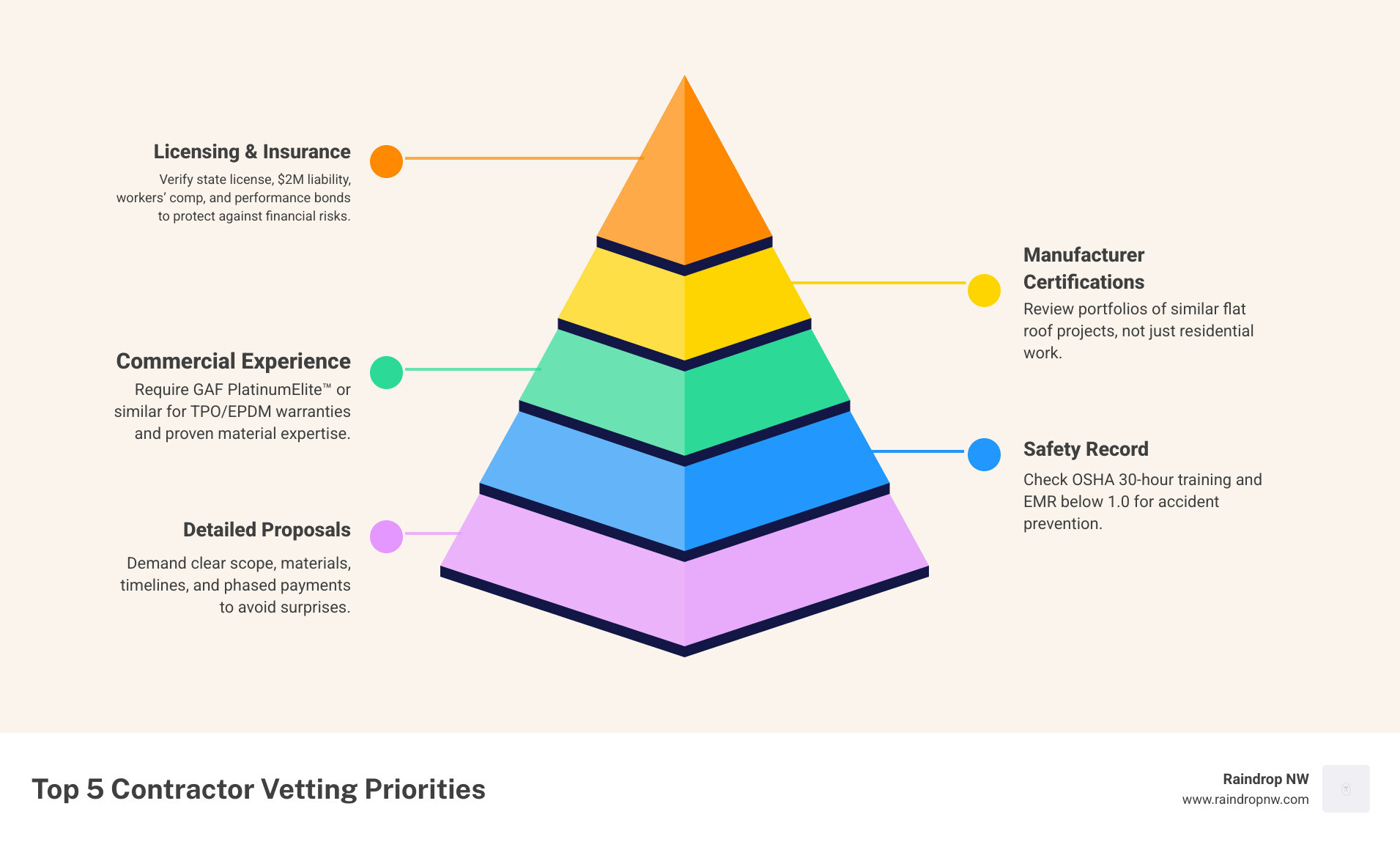
Here’s a quick overview of what to look for:

  1. Valid licensing and insurance — including general liability and workers’ compensation
  2. Verified commercial experience — portfolio of similar projects, not just residential work
  3. Manufacturer certifications — such as GAF PlatinumElite™ for stronger warranty coverage
  4. OSHA safety compliance — including documented training and a solid safety record
  5. Detailed written proposals — scope, materials, timeline, and warranty terms clearly spelled out
  6. Local presence and accountability — a contractor who knows your region’s codes and climate
  7. Transparent communication — a dedicated project manager and clear update processes
  8. Maintenance and warranty support — long-term plans, not just a one-time installation

Commercial roofs are strategic assets. They affect your building’s energy efficiency, resale value, and the day-to-day operations of everyone inside. Yet too many building owners make their decision based on price alone — and end up paying far more in repairs, early replacements, and headaches down the road.

This guide walks you through every step of the vetting process so you can hire with confidence.

I’m Torrey Yungeberg, owner of Raindrop Roofing NW and Secretary of both the Oregon Chapter of National Women in Roofing and the Associated Roofing Contractors of Oregon and Southwest Washington — experience that has given me a front-row seat to what separates great commercial roofing partners from costly mistakes. I’ve put everything I know about choosing the right commercial roofing contractor into this guide to help you protect what matters most.

10-step commercial roofing contractor vetting process infographic - choosing the right commercial roofing contractor

Essential Credentials for Choosing the Right Commercial Roofing Contractor

professional roofing crew following safety protocols - choosing the right commercial roofing contractor

When you begin your search, credentials are your first line of defense. Unlike residential roofing, where a small mistake might result in a minor leak over a garage, a failure on a commercial site can lead to millions of dollars in inventory damage or structural compromise.

State Licensing and Insurance

In our industry, the “fly-by-night” contractor is a real risk. As of April 2026, only about 21 states require roofers to hold a specific state license. However, in our region, a valid contractor license is non-negotiable. You should always verify that your partner is currently registered and in good standing with the state.

Insurance is where many building owners get caught off guard. For commercial projects, a standard general liability policy should have a minimum of $2 million aggregate. This protects your building from accidental damage during construction. Furthermore, workers’ compensation is vital; without it, you could be held liable if a worker is injured on your property. Always request a Certificate of Insurance (COI) directly from the contractor’s agent to ensure it is active and not a fraudulent document.

Safety and Bonding

Safety isn’t just a buzzword; it’s a financial safeguard for you. Look for contractors who prioritize OSHA 30-hour training for their supervisors. One of the best ways to verify a contractor’s safety record is to ask for their Experience Modification Rate (EMR). An EMR below 1.0 indicates that the company has a better-than-average safety record, which translates to fewer accidents and smoother project timelines.

For larger projects, performance bonds are essential. A performance bond acts as a guarantee that the contractor will complete the project according to the contract terms. If they fail to do so, the bonding company steps in to ensure the work is finished. This is a level of protection every facility manager should insist upon during roof inspections and certifications.

Manufacturer Certifications and Specialized Training

Not all contractors are authorized to install every roofing system. Manufacturers like GAF, Firestone, and Johns Manville have strict requirements for who can represent their brands.

Choosing the right commercial roofing contractor often means looking for elite tiers of certification. For instance, less than 10% of GAF commercial contractors qualify as GAF PlatinumElite™ Commercial Contractors. This status is more than just a badge; it allows the contractor to offer exclusive No-Dollar-Limit (NDL) guarantees that cover both materials and workmanship for up to 35 years.

Whether your building requires single-ply membranes like TPO, EPDM, or PVC, or complex liquid-applied systems, hiring a manufacturer certified roofing contractor ensures that the crew has received factory-direct training on the latest installation technologies.

Why Local Expertise Matters in Choosing the Right Commercial Roofing Contractor

When out-of-state investment firms are buying up local roofing companies, the value of a truly local partner cannot be overstated. Local expertise is critical for several reasons:

  • Climate Knowledge: A contractor from a dry climate might not understand the specific drainage needs required for the Pacific Northwest’s relentless rain.
  • Building Codes: Local contractors have established relationships with city inspectors and a deep understanding of regional building codes and permit navigation.
  • Emergency Response: If a storm hits at 2:00 AM, you need a partner with a local warehouse and crews who can be on-site within hours, not days.

At Raindrop NW, we believe in commercial roofing that is rooted in community accountability. When you work with an independently owned local company, you aren’t just a project number on a spreadsheet in another state; you’re a neighbor.

Evaluating Experience and Project Management

Experience in commercial roofing is measured in decades, not months. A company that has spent 20 years installing residential shingles may have zero experience managing the logistics of a 50,000-square-foot TPO warehouse roof.

Portfolio and References

Ask to see a commercial gallery of completed work. Look for projects that match the scale and complexity of your own. If you manage a retail center, ask for references from other retail facility managers. When calling these references, don’t just ask if they liked the roof. Ask:

  • Did the contractor stay on schedule?
  • How did they handle unexpected weather delays?
  • Was the site kept clean and safe for customers/tenants?
  • Have there been any leaks since the project was completed?

A featured project summary can also give you insight into how a contractor solves complex problems, such as working around heavy HVAC equipment or managing phased installations.

Communication Standards for Choosing the Right Commercial Roofing Contractor

The success of a commercial project often hinges on communication. You should expect a designated project manager who serves as your single point of contact. This prevents the “middle-man” confusion that often occurs when a company uses various subcontractors.

Transparent communication includes:

  • Daily Updates: Knowing what was accomplished today and what is planned for tomorrow.
  • Documentation: Digital photos of the progress and any “hidden” damage found during the tear-off.
  • Owner Resources: Access to owner resources that explain the technical aspects of your new system.
  • Conflict Resolution: A clear process for handling change orders or logistical hurdles without halting the project.

Commercial vs. Residential Roofing Differences

It is a common mistake to assume that a “roofer is a roofer.” In reality, the differences are vast. Commercial roofing involves:

  • Flat Roof Drainage: Managing ponding water is a science that residential contractors rarely deal with.
  • Equipment Support: Commercial roofs often support massive HVAC units, requiring specialized flashing and structural reinforcement.
  • Occupied Building Logistics: We have to manage noise, fumes, and safety while your business remains open. This requires a level of coordination far beyond a standard residential job.
  • Material Complexity: From TPO membranes to built-up roofing (BUR), the materials used for new and replacement roofs require specialized heat-welding equipment and technical expertise.

Analyzing Bids and Avoiding Selection Red Flags

When the bids start rolling in, it is tempting to jump straight to the bottom line. However, the lowest price is often the most expensive choice in the long run.

Feature Comprehensive Bid Vague/Red Flag Proposal
Scope of Work Itemized list of all layers, flashing, and edge details General “replace roof” statement
Materials Specific brands, thicknesses (mils), and insulation R-values “Standard materials” or “TPO roof”
Timeline Estimated start/end dates and weather contingencies No mention of duration
Safety Plan Detailed OSHA compliance and site protection No mention of safety
Warranties Separate labor and manufacturer system guarantees Vague “5-year warranty”

Value Engineering

A great contractor doesn’t just bid on the specs; they look for ways to save you money without sacrificing quality. This is called “value engineering.” For example, if your existing insulation is dry and meets current codes, a contractor might suggest a “recover” rather than a full “tear-off,” saving you thousands in disposal fees. Understanding various commercial roofing types and products allows a contractor to suggest alternatives that might better suit your building’s specific needs.

Red Flags to Avoid

Be wary of:

  • Unsolicited Offers: “Storm chasers” who knock on your door after a hail event.
  • High-Pressure Sales: Contractors who say the price is only good for 24 hours.
  • Large Upfront Payments: In commercial roofing, payments should be tied to milestones (e.g., materials delivered, 50% completion).
  • Lack of Local Office: If their business address is a P.O. Box or a residential home, they may not have the infrastructure to support you long-term.

Long-Term Support and Warranty Evaluation

A commercial roof is an asset that needs to be managed over its 20- to 30-year lifespan. Choosing the right commercial roofing contractor means finding a partner who will be there for year 15, not just year one.

Warranty Types

There are two main types of commercial roofing warranties:

  1. Workmanship Warranty: Provided by the contractor, covering the actual installation.
  2. Manufacturer Warranty: Covering material defects. The “Gold Standard” is the NDL (No Dollar Limit) warranty, which covers both labor and materials for a set period, regardless of the cost of the repair.

Maintenance Plans

Most manufacturer warranties are actually voided if you don’t perform regular maintenance. A proactive partner will offer repairs and maintenance plans that include bi-annual inspections (spring and fall). These inspections identify small issues—like a clogged drain or a loose piece of flashing—before they turn into a major interior flood.

Lifecycle cost analysis shows that buildings with regular maintenance plans have a total cost of ownership that is 30-50% lower than those that only react when a leak appears.

Frequently Asked Questions about Commercial Roofing Partners

How many bids should I get for a commercial project?

We generally recommend getting 3 to 4 bids from reputable, local contractors. This allows you to perform an “apples-to-apples” comparison. If one bid is significantly lower than the others, it usually means they missed something in the scope or are using inferior materials. Look for value-added services like CAD drawings or infrared moisture scans that prove the contractor is being thorough.

What insurance limits are standard for commercial roofing in 2026?

Standard commercial projects in 2026 typically require a minimum of $2 million in general liability aggregate coverage. For larger industrial sites or high-rise buildings, umbrella policies of $5 million to $10 million are common. You should also ensure the policy includes specific coverage for “open roof” conditions to protect your building’s interior during the construction process.

How do I verify a contractor’s safety record?

Beyond asking for their EMR rating (aim for below 1.0), you can check the OSHA website for any recent citations or violations. A contractor with a strong safety culture will be happy to share their written safety manual and site-specific safety plans. If an uninsured or unsafe worker is injured on your roof, the legal and financial fallout can land squarely on the building owner.

Conclusion

Choosing a commercial roofing partner is about more than just finding someone to roll out a membrane. It’s about finding a team that understands the stakes of your investment. At Raindrop NW, we pride ourselves on being a truly local, independently owned company. While other firms are being consolidated by out-of-state interests, we remain committed to long-term service and accountability right here in Beaverton and the surrounding Portland metro area.

We don’t just want to install your roof; we want to be the partner that helps you manage that asset for the next three decades. If you’re ready to work with a team that values transparency, safety, and local expertise, we’re here to help.

Contact our commercial roofing team today to schedule a comprehensive evaluation of your building’s needs.

https://www.raindropnw.com/wp-content/uploads/2026/04/photo-1768677432858-b9a8608dd849.jpeg 787 1080 SEO Stats https://www.raindropnw.com/wp-content/uploads/2024/05/logo-raindrop-space-300x92.png SEO Stats2026-04-20 08:10:252026-04-20 08:10:25The Ultimate Guide to Hiring Your Next Commercial Roofing Partner

A Business Owner’s Guide to Commercial Roofing Materials and Expectations

Roofing

What Are Your Commercial Roofing Options and What to Expect?

Commercial roofing options and what to expect depend largely on your building type, climate, and budget — but most commercial buildings use one of six main systems:

Roofing System Best For Typical Lifespan
TPO (Thermoplastic Polyolefin) Energy efficiency, large flat roofs 20-30 years
EPDM (Rubber) Cold climates, simple low-slope roofs 25-30 years
PVC Chemical/grease exposure (restaurants, labs) 20-35 years
Metal Roofing Long-term value, sloped or low-slope 40-60+ years
Modified Bitumen High-traffic roofs, layered waterproofing 20-25 years
Built-Up Roofing (BUR) Heavy-duty flat roofs, puncture resistance 25-30 years

Each system has real trade-offs in cost, maintenance, and performance. The right choice protects your building for decades — the wrong one costs you far more in repairs and downtime than you ever saved upfront.

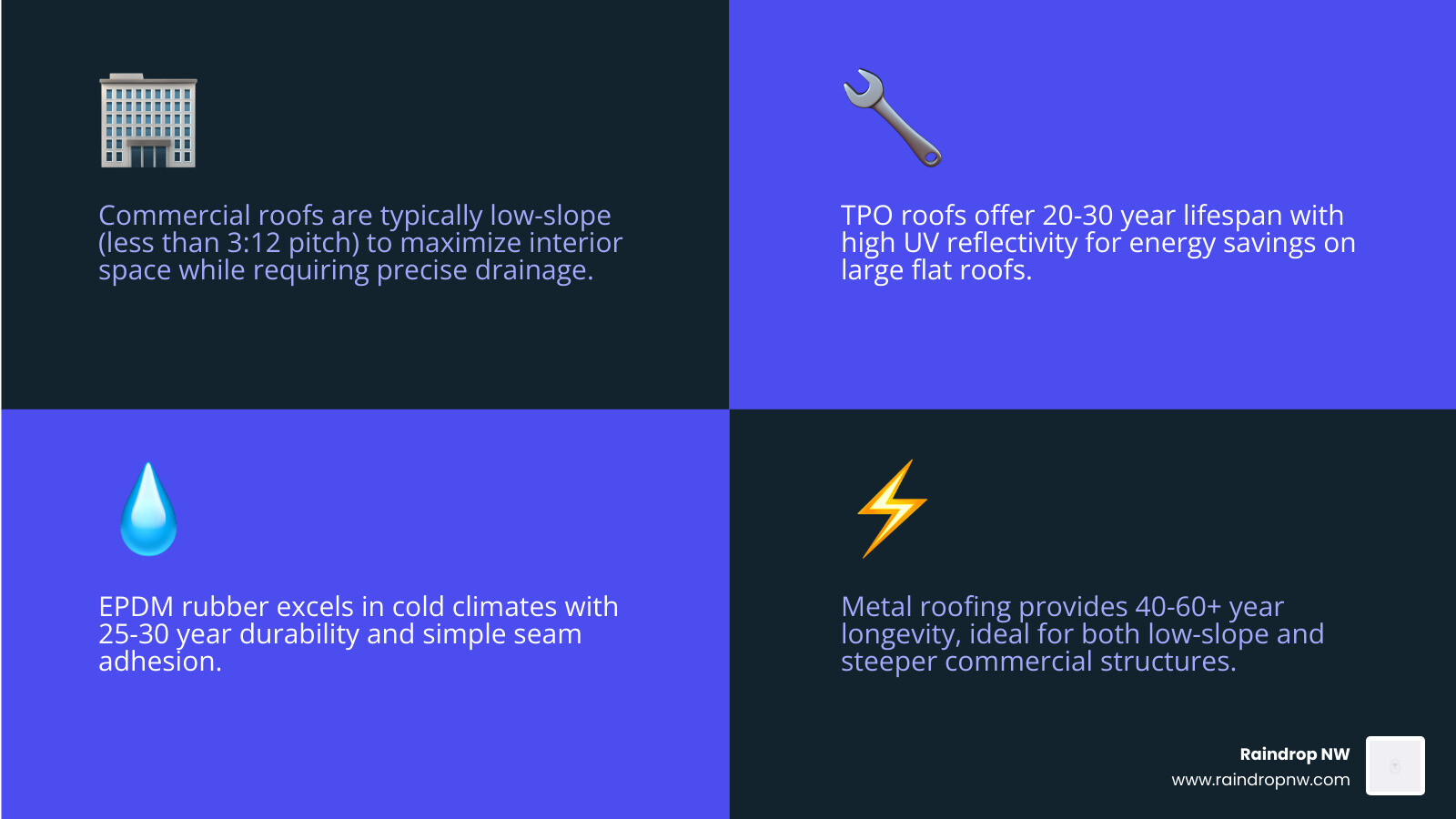
Commercial roofs are fundamentally different from residential roofs. They’re almost always flat or low-slope, they carry rooftop HVAC equipment, they handle foot traffic from service crews, and they must drain properly despite having little to no visible pitch. Even a small misstep in material selection or installation can quietly create serious risk overhead — water damage, failed insulation, and disrupted operations — long before you notice anything from the parking lot.

That’s why this guide walks through every major material option, what each one is suited for, and what the full process looks like from installation to long-term maintenance.

I’m Torrey Yungeberg, owner of Raindrop Roofing NW, and I’ve spent my career helping Oregon and Southwest Washington business owners navigate exactly these decisions — from understanding commercial roofing options and what to expect during installation to knowing when a repair is enough and when it’s time to replace. Let’s break it all down so you can move forward with confidence.

Infographic comparing commercial roofing options lifespan energy efficiency and best use cases - commercial roofing options

Understanding Commercial Roofing Options and What to Expect

When we talk about commercial roofing, we are usually discussing “low-slope” systems. While a residential home typically has a steep pitch to shed water quickly, commercial buildings like warehouses and retail centers in Beaverton or Portland are often designed with large, flat surfaces. However, “flat” is a bit of a misnomer. To prevent ponding water—which can lead to structural failure—even a flat roof must have a slight slope, usually at least 1/4 inch per foot, to guide water toward drains and scuppers.

Flat roof drainage system with scuppers and internal drains on a commercial building - commercial roofing options and what

The structural integrity of a commercial roof is also under more pressure than a typical home. It doesn’t just keep the rain out; it often supports massive HVAC units, refrigeration equipment, and exhaust fans. This means the material you choose must be able to handle “dead loads” (the weight of the equipment) and “live loads” (the weight of technicians walking on the surface to service that equipment).

Water management is the single most important job of these systems. Unlike a sloped roof where gravity does most of the work, a low-slope system relies on watertight seams and high-performance membranes to keep the interior bone-dry. For more detail on specific products, you can check out more info about commercial roof types.

Comparing Commercial Roofing Options and What to Expect by Material

Choosing a material isn’t just about the initial purchase; it’s about the lifecycle. In April 2026, we are seeing a massive shift toward materials that prioritize energy reflectivity and long-term durability. Here is how the heavy hitters stack up:

  • TPO (Thermoplastic Polyolefin): Currently holding about 40% of the market share for new construction, TPO is a single-ply reflective membrane. It’s popular because it combines the best traits of EPDM and PVC but often at a more accessible entry point.
  • EPDM (Ethylene Propylene Diene Monomer): This is the classic “rubber roof.” It’s incredibly durable and handles the freeze-thaw cycles of the Pacific Northwest exceptionally well. It captures about 22% of the new construction market.
  • PVC (Polyvinyl Chloride): The gold standard for restaurants and industrial facilities. It is highly resistant to chemicals, grease, and fire.
  • Metal Roofing: While the upfront investment is higher, metal can last 40 to 60 years. It’s often used on sloped commercial facades or for high-end retail spaces where aesthetics and longevity are paramount.
  • Modified Bitumen & BUR: These are “multi-ply” systems. Instead of one thick membrane, they use multiple layers of asphalt-soaked fabrics. They are incredibly tough against foot traffic and punctures.

Single-Ply Membrane Performance

Single-ply membranes (TPO, EPDM, and PVC) have revolutionized the industry because they are manufactured with precise quality control. Unlike older systems that were built layer-by-layer on your roof, these arrive in large rolls, meaning fewer seams and a more consistent finish.

One of the biggest advantages of thermoplastic membranes (TPO and PVC) is that their seams are heat-welded. This creates a physical bond that is actually stronger than the membrane itself, making them highly resistant to leaks at the most vulnerable points. EPDM, being a “thermoset” rubber, typically uses adhesive or tape for seams. While EPDM is famous for its weathering resistance, TPO and PVC are the champions of UV reflectivity, often reflecting up to 85% of solar heat. This can cut cooling costs by 20-30% during our increasingly hot Oregon summers.

Choosing the Right System for Your Building Type

The “best” roof doesn’t exist in a vacuum; it depends on what happens inside and on top of your building.

  • Warehouses: These buildings usually have massive surface areas. TPO is often the go-to here because it is cost-effective and provides the energy efficiency needed to keep large open spaces cool.
  • Retail Centers: Curb appeal and HVAC access are the priorities. Since retail roofs often see a lot of foot traffic from maintenance crews, a thicker membrane or a multi-ply system like Modified Bitumen is a smart play.
  • Office Buildings: Noise reduction and HVAC integration are key. PVC and TPO are excellent because they allow for easy detailing around the many vents and units found on office roofs.
  • Healthcare Facilities: Reliability is non-negotiable. Many hospitals opt for PVC or Modified Bitumen because they offer superior chemical resistance and redundancy. A leak in a surgical suite isn’t just an inconvenience; it’s a crisis.
  • Restaurants: If you have kitchen exhaust fans, you need PVC. Grease will eventually eat through TPO and EPDM, but PVC is designed to withstand it.

Before making a final call, it’s essential to have a professional assessment of your current deck and insulation. You can find more info about commercial inspections to see what we look for during a site visit.

Climate and Energy Efficiency Considerations

In the Pacific Northwest, we deal with a unique mix of heavy rain, moss growth, and intense summer sun. This makes cool roofs a major trend in 2026. A white or light-colored TPO membrane can significantly reduce the “Urban Heat Island” effect, keeping your building cooler and reducing the strain on your HVAC system.

Beyond the membrane, the R-value (insulation thickness) is critical. Modern building codes in Oregon and Washington have become much stricter regarding thermal insulation. Proper insulation doesn’t just keep you warm in the winter; it can reduce your annual energy expenses by 10-15%. We often recommend using polyisocyanurate (polyiso) board, which offers high thermal resistance and a solid substrate for the roofing membrane.

The Commercial Roofing Installation Process and Timeline

We know that for a business owner, “roofing project” often sounds like “business disruption.” Our goal is always to minimize that. For a standard 20,000 sq. ft. commercial project, the installation typically spans 5 to 10 days, depending on the complexity and weather.

The process generally follows these steps:

  1. Site Preparation & Safety: We set up safety barriers and staging areas. Because we are a local, independently owned company, we take extra care to ensure our equipment doesn’t block your customers or tenants.
  2. Tear-Off (if needed): We remove the old roofing material down to the deck. We also perform a moisture scan to ensure no trapped water remains in the substrate.
  3. Insulation & Cover Board: We lay down the thermal layers and a cover board to provide a smooth, impact-resistant surface.
  4. Membrane Installation: The rolls are laid out, fastened or adhered, and the seams are welded or taped.
  5. Detailing: This is where the skill shows. We flash all penetrations (pipes, vents, HVAC curbs) to ensure they are watertight.
  6. Final Inspection: A thorough walkthrough to ensure everything meets manufacturer specifications and local codes.

For more on what a full replacement looks like, see more info about new commercial roofs.

Minimizing Operational Downtime

We understand that you can’t just close your doors because the roof is being worked on. We use a staged installation approach, meaning we only tear off what we can replace in the same day. This keeps your building “dry-in” at all times.

Communication is our best tool for minimizing disruption. We provide clear schedules so you know when to expect noise or when a certain part of the parking lot will be used for material staging. By managing debris daily and maintaining strict safety compliance, we ensure your employees and customers stay safe while we work overhead.

Maintenance and Longevity: What to Expect Post-Installation

A commercial roof is an asset that requires management. “Out of sight, out of mind” is the leading cause of premature roof failure. Most single-ply systems are designed to last 20 to 30 years, but only if they are cared for.

Routine maintenance should include:

  • Twice-Yearly Inspections: Ideally in the spring and fall, plus after any major wind or hail storms.
  • Drain and Gutter Cleaning: Clogged drains lead to ponding water, which adds thousands of pounds of stress to your building’s structure.
  • Seam and Flashing Checks: We look for any signs of “bridging” or splitting where the membrane meets walls or pipes.
  • Puncture Repair: Rooftop equipment service often leads to dropped tools or screws. Finding these early prevents them from becoming leaks.

Warranties are a big part of the protection package. There are two main types: the manufacturer’s warranty (covering the material) and the contractor’s workmanship warranty. For a deep dive into what is covered, read more info about commercial warranties.

When to Repair vs. Replace

This is the most common question we get. As a general rule, we use the 25-30% rule: if more than 25-30% of the roof is damaged or the insulation is widespread with moisture, a full replacement is usually more cost-effective than constant patching.

However, if the issues are localized—like a few failed seams or a single leaking HVAC curb—a repair is the way to go. In some cases, if the existing roof is structurally sound but aging, we can apply restoration coatings. This can extend the life of your roof by 10-15 years and improve energy reflectivity without the cost of a full tear-off. It’s all about analyzing the total lifecycle cost rather than just looking at the immediate price tag.

Frequently Asked Questions about Commercial Roofing

What are the most common commercial roofing options and what to expect regarding lifespan?

The most common options are TPO, EPDM, PVC, and Metal. You can generally expect 20-30 years for single-ply membranes (TPO/EPDM/PVC) and 40-60+ years for metal systems. Factors like maintenance frequency and the quality of the initial installation significantly impact whether you hit the high or low end of those ranges.

How do energy-efficient cool roofs benefit commercial properties in 2026?

Cool roofs use highly reflective surfaces (like white TPO or PVC) to bounce solar energy away from the building. In 2026, with rising energy costs and stricter environmental regulations in the Pacific Northwest, these roofs are essential. They can reduce peak cooling demand by up to 15%, lower your energy bills, and extend the life of your HVAC equipment by reducing its workload.

What should I look for in a commercial roofing warranty?

Look for an NDL (No Dollar Limit) warranty from a reputable manufacturer. This means if there is a failure covered by the warranty, the manufacturer will pay the full cost of the repair, regardless of the original price of the roof. Also, ensure your contractor provides a separate workmanship warranty. At Raindrop NW, we pride ourselves on long-term accountability—we’re local, so if you have a problem, you know exactly where to find us.

Conclusion

Navigating commercial roofing options and what to expect doesn’t have to be overwhelming. Whether you are managing a retail strip in Tigard or a warehouse in Hillsboro, the goal is the same: a reliable, energy-efficient system that lets you focus on your business instead of the weather forecast.

At Raindrop NW, we do things differently. While many local roofing companies have been bought out by large, out-of-state investment firms, we remain a truly local, independently owned company based right here in Beaverton. We live in the communities we serve—from Vancouver and Camas down to Lake Oswego and Oregon City. This means our reputation is on the line with every seam we weld and every drain we clear. We aren’t looking for a quick transaction; we are looking to be your roofing partner for the next thirty years.

If you’re ready to discuss your building’s needs or need a professional eye to evaluate your current system, we’re here to help. Learn more about our commercial roofing services and let’s build a plan that protects your investment for the long haul.

https://www.raindropnw.com/wp-content/uploads/2026/04/photo-1766866771433-c3042a3ce7a3.jpeg 720 1080 SEO Stats https://www.raindropnw.com/wp-content/uploads/2024/05/logo-raindrop-space-300x92.png SEO Stats2026-04-17 11:37:482026-04-17 11:37:48A Business Owner’s Guide to Commercial Roofing Materials and Expectations

Top 10 Roof Repair Services in Beaverton, OR: A Local’s Guide

Roofing

Why Finding the Right Roof Repair Service Matters in Beaverton

Roof repair near me in Beaverton, OR is one of the most common searches local homeowners make when they notice water stains, missing shingles, or moss taking over their roof. If you’re facing roof damage, here’s what you need to know right away:

Quick Guide to Roof Repair Services in Beaverton:

  1. Look for local, independent contractors with proven community ties and long-term accountability
  2. Verify licensing and insurance to protect yourself from liability
  3. Request a thorough inspection that includes both roof and attic examination
  4. Ask about moss and algae prevention specific to our Pacific Northwest climate
  5. Get clear answers on whether repair or replacement is the right choice
  6. Check verified reviews from other Beaverton homeowners
  7. Confirm emergency availability for urgent leak situations
  8. Ensure proper cleanup protocols and debris removal
  9. Request detailed proposals with materials, timelines, and warranty coverage
  10. Choose contractors familiar with local building codes and weather challenges

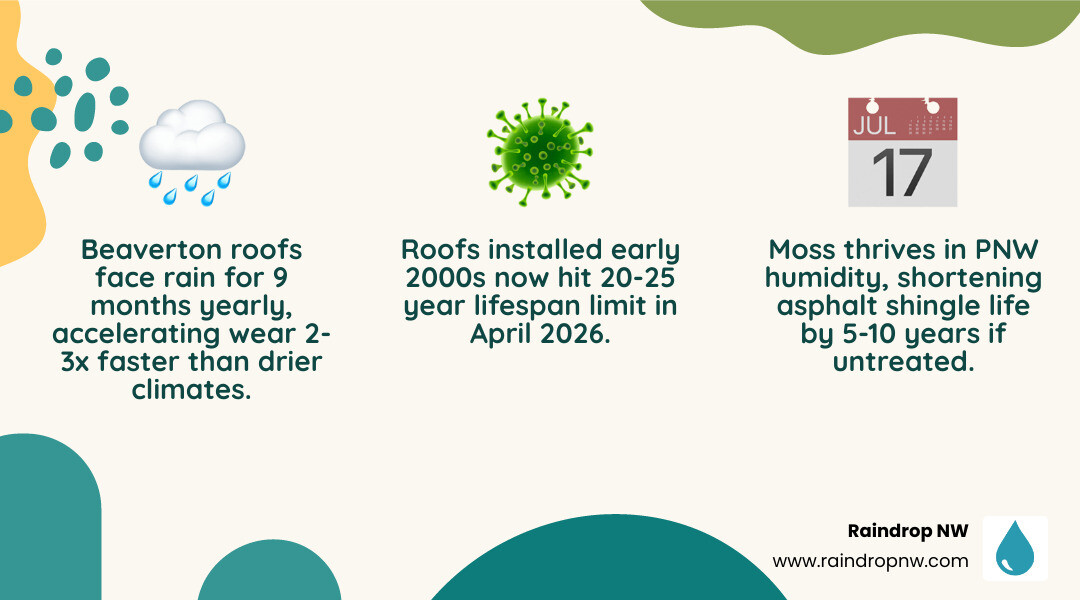
Beaverton’s wet climate is tough on roofs. Between nine months of rain, high humidity, and moss growth in shady spots, your roof faces constant challenges that simply don’t exist in drier climates. Wind-driven rain can work its way under shingles, debris from surrounding trees clogs gutters, and moisture creates the perfect environment for algae and mildew. These aren’t just cosmetic issuesthey lead to real damage that gets worse every season you wait.

The challenge isn’t just finding a roofer; it’s finding a dedicated local partner who will be there to stand behind their work for years to come. When your home’s protection is on the line, you deserve the peace of mind that comes from working with a contractor who has deep community roots and a commitment to long-term accountability. This guide provides a practical 10-point checklist to help you identify a roofer who offers that level of reliability and trust.

For expert help with your roofing needs, explore our residential roofing services or schedule a free inspection to assess your roof’s condition.

I’m Torrey Yungeberg, owner of Raindrop Roofing NW, and I’ve spent years helping Oregon homeowners steer roof repair near me in Beaverton, OR by focusing on honest assessments and quality craftsmanship that protects what matters most. My team and I understand exactly what Beaverton’s climate does to roofs because we live here too, and we’re committed to being the local partner you can count on for the long haul.

Infographic showing common roof damage signs in Beaverton including missing shingles, water stains on ceilings, moss growth, curled or cracked shingles, sagging roof areas, and algae discoloration with text explaining that Pacific Northwest climate causes these issues and early detection prevents costly repairs - roof repair near me in beaverton, or

Quick roof repair near me in beaverton, or terms:

  • best roof repair in beaverton, or
  • emergency roof repair in beaverton, or

The Impact of Beaverton’s Climate on Your Roof

Beaverton’s specific weather patterns, characteristic of the Pacific Northwest, are undeniably beautiful, but they present unique challenges for your home’s roof. Our climate is marked by consistent rainfall, high humidity, and often, wind-driven rain that can test even the most robust roofing systems. These elements significantly impact roof longevity and increase the need for vigilant repair.

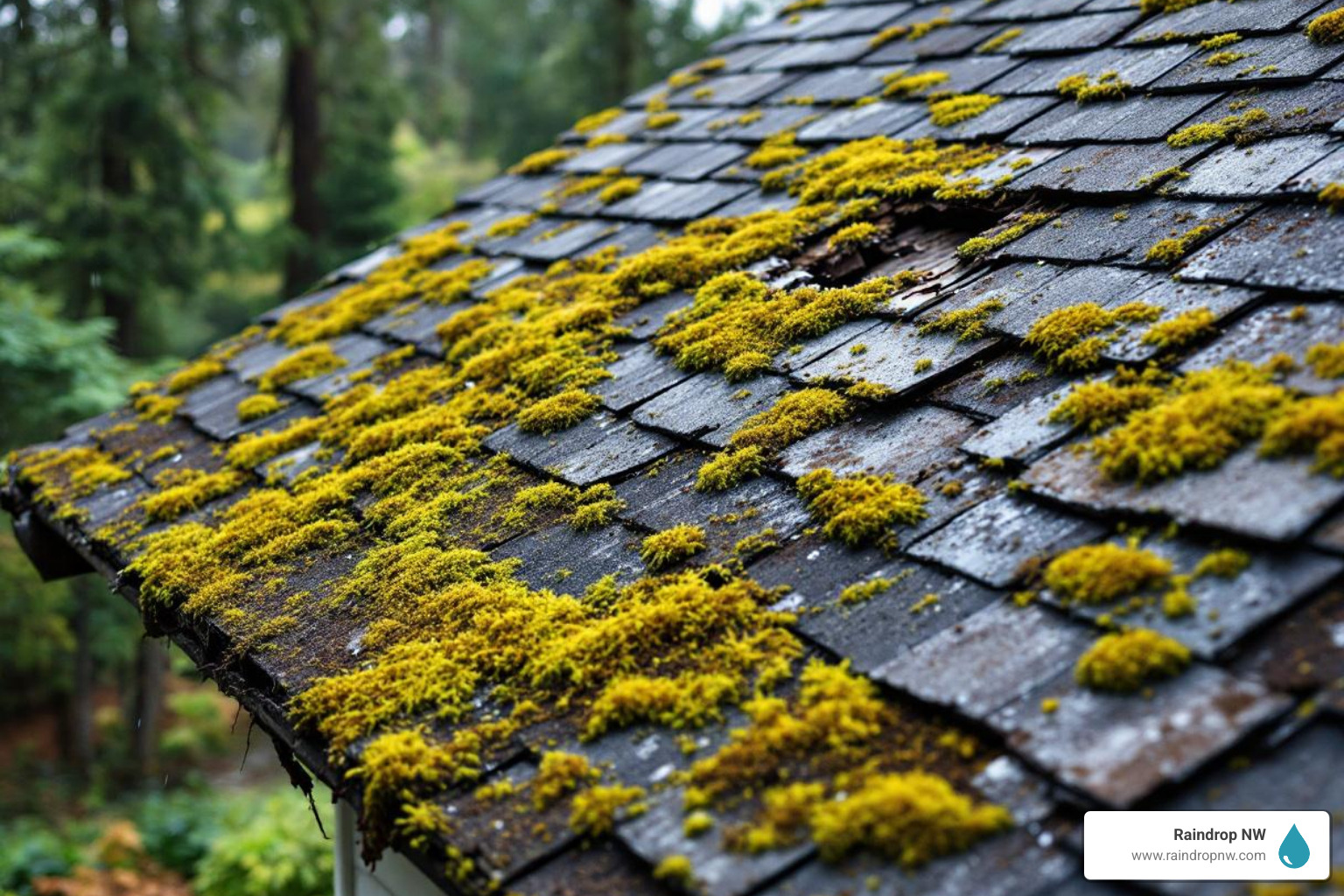
One of the most prominent issues we face is prolific moss and algae growth. Moss thrives in our damp, shady conditions, especially on the north-facing slopes of roofs. While it might look quaint at first, moss is a relentless adversary. It retains moisture, which can lead to granular loss on asphalt shingles, and its root-like structures can lift and separate shingles, creating direct pathways for water to seep underneath. This moisture can then lead to rot in the underlying decking and even compromise the structural integrity of your roof. Algae, appearing as dark streaks, also traps moisture and can accelerate the deterioration of roofing materials.

Beyond organic growth, our abundant trees, while beautiful, contribute to debris accumulation. Leaves, pine needles, and small branches frequently fall onto roofs and into gutters. If not regularly cleared, these can clog gutters and downspouts, causing water to back up and overflow. This backed-up water can then pool on the roof, saturate fascia boards, or even seep under the eaves and into your home’s interior, leading to leaks and costly damage. The constant moisture from clogged gutters also encourages even more moss growth along the roof edges.

Wind-driven rain is another factor. Unlike a gentle drizzle, strong winds can force rain horizontally or even upwards under shingles, especially if they are old, damaged, or improperly installed. This is particularly true during our winter storms, where gusts can combine with heavy downpours to find any weak point in your roof’s defense.

All these factors mean that a roof in Beaverton is under almost constant assault. What might be a minor issue in a drier climate can quickly escalate here. Regular maintenance and prompt repairs aren’t just good practice; they’re essential for protecting your home against the unique environmental pressures of our beautiful, but wet, corner of the world.

Common Signs Your Roof Needs Repair

Knowing what to look for can save you a lot of headache and expense down the line. We believe that homeowners in Beaverton should be empowered with the knowledge to spot the early warning signs that their roof needs attention. Here are the most common indicators that it’s time to call a professional for roof repair near me in Beaverton, OR:

  • Water Stains on Ceilings or Walls: This is perhaps the most obvious and alarming sign. Brown or yellowish stains, especially on upper-level ceilings or running down walls, are a clear indication that water is getting in. Even small stains can signal a persistent leak.
  • Dripping Water: If you see water actively dripping from your ceiling, especially during or after rainfall, it’s an emergency. This means the leak has progressed significantly and requires immediate attention to prevent further damage.
  • Sagging Roof Areas: A visible sag or dip in your roofline, or even an interior ceiling, points to serious structural issues, likely caused by prolonged water exposure leading to rot in the decking or rafters.
  • Missing or Damaged Shingles: After a storm, or simply due to age and wear, shingles can become dislodged, cracked, or broken. Missing shingles leave the underlayment exposed to the elements, making your roof vulnerable.
  • Curled or Cracked Shingles: Shingles that are curling at the edges or buckling in the middle, or those with visible cracks, are signs of age and sun damage. This means they are losing their effectiveness as a waterproof barrier.
  • Granules in Gutters: For asphalt shingle roofs, the tiny, sand-like granules on the surface protect the shingle from UV rays. If you find a significant amount of these granules in your gutters, it indicates that your shingles are deteriorating and losing their protective layer.
  • Mold or Mildew Smells: A damp, musty odor in your attic or upper floors, even without visible water, can be a sign of a hidden leak and subsequent mold growth within your roof structure or insulation.
  • Increased Energy Bills Due to Poor Insulation: If your heating or cooling bills suddenly spike without a change in usage, it could be that a leak has compromised your attic insulation, making your home less energy-efficient.
  • Moss or Algae Growth: As we discussed, moss and algae are prevalent in Beaverton. While a small amount might seem harmless, extensive growth, especially thick moss, can lift shingles and trap moisture, leading to deterioration and leaks.

The importance of early detection cannot be overstated. A small leak that might cost a few hundred dollars to fix can quickly turn into thousands of dollars in repairs if it leads to structural rot, extensive mold remediation, or damage to interior finishes. Don’t wait for a small problem to become a catastrophe.

More info about our Beaverton roof repair services.

Your Top 10 Checklist for Finding Quality Roof Repair Near Me in Beaverton, OR

When you’re searching for roof repair near me in Beaverton, OR, it’s crucial to choose a contractor who not only understands roofing but also understands your home and your community. Our checklist is designed to help you find a partner you can trust for the long term.

1. Proven Local Expertise for Roof Repair Near Me in Beaverton, OR

A truly local roofer understands the unique challenges your home faces. We know Beaverton’s climate isn’t just “rainy”; we know how that consistent rainfall, high humidity, and moss growth impact different roofing materials over time. Our familiarity with local building codes and permitting requirements means your repair will be done right, the first time, and up to city standards. As a company serving Washington County, we are proud of our long-term community presence. Our local reputation is built on years of reliable service to our neighbors, ensuring accountability and peace of mind.

2. Comprehensive Service Offerings

A reputable roofing company should offer a full suite of services to address any issue your roof might encounter. This includes expert leak repair, thorough storm damage restoration (which is unfortunately common here), precise shingle replacement, and meticulous flashing repair around chimneys, vents, and skylights. Beyond immediate repairs, we also provide gutter services to ensure proper drainage and offer roof maintenance programs designed to extend the life of your roof, preventing small issues from becoming big problems.

3. Proper Licensing and Insurance

This is non-negotiable. Always verify that any contractor you consider is fully licensed, bonded, and insured in Oregon. This protects you, the homeowner, from liability in case of accidents on your property. It also ensures that the workers are protected and that the company is operating legally and responsibly. We are proud to be fully licensed, bonded, and insured, providing you with complete peace of mind.

4. A Transparent Inspection Process

A thorough roof inspection is the first critical step in any repair. We believe in transparency. Our process involves a detailed examination of your roof’s exterior, as well as an attic examination to identify any underlying issues like rotten sheeting, damaged flashing, or ventilation problems. We provide honest assessments, clearly explaining what we find and what repairs are truly necessary, ensuring you understand the scope of work before we begin.

5. Quality Materials and Craftsmanship

The longevity of your repair depends not only on the skill of the installers but also on the quality of the materials used. We prioritize durable materials that are suited for Beaverton’s climate, such as architectural shingles with algae resistance, metal roofing options for superior longevity, and high-quality composite materials. Our certified installation techniques ensure that every repair is done to the highest standards, backed by strong workmanship warranties.

6. A Clear Repair vs. Replacement Philosophy

It’s a common question: “Do I need a repair or a full replacement?” A trustworthy contractor will provide honest advice on the scope of your repair. We’ll help you understand when a repair is sufficient for localized damage, a few missing shingles, or minor leaks in one area, especially if your roof is under 15-20 years old. Conversely, we’ll clearly explain when a full replacement is necessary due to widespread damage, old age, or multiple persistent leaks, always protecting your homeowner investment and avoiding unnecessary upsells.

7. Strong Customer Testimonials and Reputation

When choosing a contractor, always look for strong customer testimonials and a solid reputation within the community. Here’s what to look for in reviews:

  • Professionalism: Did the crew act professionally and respectfully?
  • Efficiency: Was the work completed in a timely manner?
  • Quality: Are customers satisfied with the durability and appearance of the repair?
  • Communication: Was the contractor responsive and clear in their explanations?
  • Cleanup: Was the job site left clean and tidy?

Verified reviews and positive homeowner feedback, along with high ratings and word-of-mouth recommendations, are invaluable indicators of a company’s reliability and commitment to customer satisfaction. We are proud of our consistently high ratings and the positive feedback from our Beaverton neighbors.

8. Emergency Services for Roof Repair Near Me in Beaverton, OR

Roofing emergencies don’t wait for convenient times. A sudden leak during a heavy downpour can cause significant damage very quickly. A reliable roofing contractor should offer 24/7 response availability for urgent situations. Quick action for leaks and storm damage mitigation can protect your property from further damage, minimize disruption, and provide immediate peace of mind. We understand the urgency of these situations and are prepared to respond when you need us most.

9. Commitment to Safety and Cleanup

A professional roofing operation prioritizes safety—for their crew and for your property. This includes strict job site safety protocols to prevent accidents. Equally important is a meticulous approach to cleanup. We ensure thorough debris removal, protecting your landscaping and property from falling materials or nails. A final inspection and walkthrough with you ensures that the job is complete to your satisfaction and that your property is left spotless.

10. Excellent Communication and Professionalism

From your initial inquiry to the final handshake, clear communication and professionalism are paramount. This means providing clear proposals that detail the scope of work, materials, timelines, and warranty information. We take the time to answer all your questions, provide regular project updates, and offer flexible scheduling to minimize inconvenience. Our crew is always respectful, courteous, and committed to delivering an exceptional customer experience.

The Long-Term Consequences of Neglecting Roof Repairs

It’s easy to put off a small roof repair, especially if the leak seems minor or only appears during the heaviest rains. However, neglecting roof repairs, even seemingly insignificant ones, can lead to a cascade of costly and damaging long-term consequences for your Beaverton home. The benefits of addressing roof leaks and damage promptly in Beaverton far outweigh the risks of delay.

Here’s what can happen if you let those minor issues linger:

  • Structural Damage: Water that seeps through a compromised roof doesn’t stop at the attic. It can rot the wooden sheathing, rafters, and even the wall studs, weakening the very bones of your home. This structural damage can be incredibly expensive and complex to repair, potentially requiring extensive carpentry work.
  • Compromised Insulation: Wet insulation loses its effectiveness. When insulation becomes waterlogged, it compacts and can no longer trap air efficiently, leading to significant heat loss in winter and heat gain in summer. This means your HVAC system has to work harder, resulting in higher energy bills and a less comfortable home.
  • Interior Water Damage: Beyond structural issues, leaks can wreak havoc on your home’s interior. Water stains on ceilings and walls are just the beginning. It can damage drywall, plaster, paint, flooring, and even furniture. The cost to repair these interior finishes often far exceeds the cost of the initial roof repair.
  • Mold and Mildew Growth: Our humid Beaverton climate is a perfect breeding ground for mold and mildew when moisture is introduced indoors. Hidden leaks create dark, damp environments within walls and attics, allowing mold to flourish. Mold not only causes unpleasant odors and further damage to building materials but can also lead to significant health hazards, especially for those with allergies or respiratory conditions.
  • Decreased Property Value: A damaged roof, or one with visible signs of neglect, will significantly deter potential buyers and lower your home’s market value. Even if repairs are made, the history of extensive water damage could be a red flag during a home inspection.
  • More Expensive Future Repairs: A small, localized leak can quickly expand into a much larger problem. What might have been a simple patch job can turn into a section of roof replacement, or even a full replacement, if the surrounding materials become too damaged. Addressing the issue early almost always saves you money in the long run.

The message is clear: a quick repair today helps you avoid bigger headaches down the road. In Beaverton, where rain is a constant companion, acting fast saves money and protects the safety and value of your home.

Frequently Asked Questions about Beaverton Roof Repair

What roofing materials are best for Beaverton’s climate?

Beaverton’s unique climate, with its consistent rainfall and humidity, demands roofing materials that are durable and moisture-resistant. Based on our experience, we often recommend:

  • Architectural Shingles with Algae Resistance: These are a popular choice due to their aesthetic appeal and improved durability compared to traditional 3-tab shingles. Crucially, many architectural shingles are treated with copper granules that inhibit algae growth, a must-have feature in our damp environment.
  • Metal Roofing for Longevity: Metal roofs, such as standing seam or corrugated panels, offer exceptional durability and can last 50 years or more. They are highly resistant to moss, mildew, and fire, and their smooth surface sheds water and snow efficiently.
  • Composite Materials with Moss-Resistant Properties: Some advanced composite shingles are specifically engineered to resist moss and algae growth, providing another excellent option for homeowners looking for long-term performance and low maintenance.
  • Importance of Durable, Waterproof Underlayment: Regardless of the top layer, a high-quality, synthetic underlayment beneath your shingles is vital. It provides an extra layer of waterproofing protection, especially against wind-driven rain that can sneak under shingles.

The best material for your home will also depend on your home’s style, your budget, and specific site conditions (e.g., amount of tree cover). We can help you choose the ideal solution during our consultation.

When is a roof repair sufficient vs. needing a full replacement?

This is one of the most common questions we get, and it’s a critical decision that impacts both your budget and your home’s long-term protection.

Roof repair is often sufficient when:

  • Localized Damage: The problem is confined to a small area, such as a few missing or damaged shingles, a single section of flashing, or a minor penetration issue.
  • Minor Leaks in One Area: If you have a single, isolated leak that can be traced to a specific point of failure, a targeted repair can often resolve the issue.
  • Roof is Under 15-20 Years Old: For asphalt shingle roofs, if your roof is relatively young and has otherwise been well-maintained, repairs are usually the more economical choice.
  • Storm Damage to a Healthy Roof: If a healthy, newer roof sustains damage from a fallen branch or high winds, repairing the affected section is typically the appropriate course of action.

A full roof replacement is necessary when:

  • Widespread Damage: If large sections of your roof show signs of severe deterioration, such as extensive granule loss, widespread cracking, or multiple areas of missing shingles.
  • Old Age: Most asphalt shingle roofs last 20-25 years. If your roof is nearing or exceeding this lifespan, even small repairs might be a temporary fix for an aging system that is nearing the end of its functional life.
  • Multiple Persistent Leaks: If you’re experiencing leaks in several different areas, it often indicates systemic failure of the roofing material or underlayment, making repairs less effective and more frequent.
  • Structural Issues: If a professional inspection reveals significant rot in the decking or rafters, a full replacement is usually required to address the underlying structural integrity.

Our goal is always to provide an honest assessment and recommend the most cost-effective and long-lasting solution for your specific situation.

Why is a professional roof inspection so important?

A professional roof inspection is arguably the single most important preventative measure you can take for your Beaverton home. Here’s why it’s crucial:

  • Identifies Hidden Damage: Many roof problems, especially in their early stages, aren’t visible from the ground. Professional inspectors are trained to spot subtle signs of wear, compromised flashing, granular loss, or small areas of moss that could become major issues. We also examine your attic for signs of leaks or ventilation problems.
  • Catches Problems Early: By identifying issues before they escalate, you can address them with minor repairs rather than costly replacements. Think of it like a dental check-up for your house – preventing cavities before they become root canals.
  • Assesses Remaining Roof Life: An inspection can give you a clear picture of your roof’s current condition and an estimate of its remaining lifespan. This information is invaluable for planning future home improvement projects and budgeting.
  • Prevents Small Issues from Becoming Major Expenses: As we’ve discussed, a small leak can lead to structural rot, mold, and extensive interior damage. A professional inspection can pinpoint that tiny leak before it causes a catastrophic failure.
  • Provides Peace of Mind for Real Estate Transactions: If you’re buying or selling a home in Beaverton, a professional roof inspection is often a requirement or a highly recommended step. For buyers, it makes them aware of the roof’s remaining life expectancy, replacement value, and potential issues. For sellers, a proper inspection can help close on a home quicker and provide peace of mind by addressing any concerns upfront.

In a climate like Beaverton’s, regular professional inspections are your best defense against unexpected and expensive roof repairs.

Conclusion

Living in Beaverton means embracing our beautiful, rainy environment, but it also means being proactive about your home’s defense system: your roof. The consistent rainfall, high humidity, and prevalent moss growth present unique challenges that demand vigilance and timely action. Neglecting even minor roof issues can lead to a cascade of costly problems, from structural damage and mold to significantly decreased property value.

Finding a reliable, local partner for roof repair near me in Beaverton, OR is paramount. Our 10-point checklist is designed to empower you with the knowledge to find a contractor who is truly committed to long-term service and accountability. At Raindrop NW, we believe in honest assessments, quality craftsmanship, and building lasting relationships with our neighbors.

Don’t let a small leak turn into a big headache. Protect your home, your investment, and your peace of mind by scheduling a professional assessment today. For a truly local, independently owned company committed to accountability and quality craftsmanship, consider Raindrop NW.

Learn more about our Beaverton roof repair services.

https://www.raindropnw.com/wp-content/uploads/2026/04/4dd4b370f0d951a1d067e03100bf338d3407cb57.jpg 1024 1536 SEO Stats https://www.raindropnw.com/wp-content/uploads/2024/05/logo-raindrop-space-300x92.png SEO Stats2026-04-16 09:23:512026-04-16 09:23:51Top 10 Roof Repair Services in Beaverton, OR: A Local’s Guide

How to Find a Roof Replacement Company in Beaverton Without Getting Soaked

Roofing

Your Quick Guide to Roof Replacement in Beaverton, OR

If you need roof replacement in Beaverton, OR, here is what you need to know right away:

  • Signs you need a replacement: shingles older than 20–25 years, curling or missing shingles, moss growth, sagging, interior leaks, or granule loss
  • How long it takes: most residential replacements are done in 1–3 days
  • Best materials for Beaverton’s wet climate: algae-resistant architectural shingles, metal roofing, or composite materials built for Pacific Northwest moisture
  • What to look for in a contractor: licensed, bonded, and insured in Oregon; offers workmanship warranty; locally owned and accountable
  • Permits: yes, permits are typically required in Washington County — a reputable contractor handles this for you

Beaverton sits in the heart of the Tualatin Valley, where rain falls for roughly nine months of the year. That kind of sustained moisture is hard on roofs. It accelerates moss growth, wears down granules, and quietly shortens the lifespan of materials that might last decades in a drier climate. For homeowners here, a roof is not just an aesthetic feature — it is a frontline defense against the Pacific Northwest’s relentless wet seasons. Choosing the right contractor for that replacement is one of the most consequential home decisions you will make.

I’m Torrey Yungeberg, owner of Raindrop Roofing NW and a lifelong Oregonian with deep roots in the trades, and I’ve seen what separates a roof replacement in Beaverton, OR that holds up for decades from one that fails within a few years. Let me walk you through exactly what you need to know before you hire anyone.

Infographic showing the lifecycle of a Pacific Northwest roof from installation to replacement warning signs - roof

Recognizing the Signs You Need a Roof Replacement in Beaverton, OR

In April 2026, many Beaverton homeowners are looking at roofs installed in the early 2000s. Because our region experiences heavy annual rainfall over three-quarters of the year, roofs here age differently than they do in the desert or the Midwest. You have to be a bit of a “roof detective” to spot the trouble before it becomes a flooded living room.

The Warning Signs

  • The 20-Year Mark: Most asphalt roofs in the Tualatin Valley last between 20 and 25 years. If your home was built or last reroofed around 2005, you are firmly in the “replacement zone.”
  • Moss and Algae Growth: While a little green might look “Pacific Northwest chic,” heavy moss traps moisture against the shingles, causing the edges to lift and the wood underneath to rot.
  • Curling or Buckling: When shingles start to turn upward or lose their flat profile, they are no longer shedding water effectively. This is often a sign of poor attic ventilation or simple old age.
  • Granule Loss: Check your gutters. If they look like they’re filled with heavy sand or coffee grounds, your shingles have lost their UV protection and are becoming brittle.
  • Interior Clues: Dark streaks on your ceiling, damp insulation in the attic, or “daylight” peeking through the roof boards are emergency signals.
  • Sagging Roofline: This is a serious structural warning. It often indicates that the decking (the wood under the shingles) has been saturated and is losing its integrity.
  • Wildlife Intrusion: Raccoons and squirrels are experts at finding soft, rotted spots in a roof to create a cozy (and destructive) home.

If you are seeing these signs, it’s time to move from “patching” to planning a full roof replacement in beaverton, or.

Navigating the Professional Roof Replacement Process

A professional roof replacement is a major construction project, but when handled correctly, it should feel like a well-oiled machine. We believe in a “system” approach rather than just nailing down new shingles.

The process typically follows these steps:

  1. Initial Inspection: We don’t just look at the shingles. We check the flashing around chimneys, the condition of the gutters, and the state of the attic ventilation.
  2. Material Selection: This is where you choose the look and durability level of your new roof.
  3. The Tear-Off: We remove every single old shingle. Some contractors might suggest “roofing over” the old layer, but in our wet climate, that’s a recipe for disaster (more on that later).
  4. Decking Evaluation: Once the old roof is off, we inspect the plywood. If there is rot or soft spots, we replace the wood to ensure a solid foundation.
  5. Underlayment and Waterproofing: We install high-quality, breathable underlayment and specialized “ice and water shields” in the valleys—the areas where the most water flows.
  6. Flashing and Shingles: New metal flashing is installed around vents and chimneys, followed by the shingles.
  7. Final Cleanup: We perform a thorough sweep of the property, including a magnetic nail sweep to ensure your driveway and lawn are safe for tires and paws.

More info about residential roofing services

Typical Timeline for Roof Replacement in Beaverton, OR

Most residential roof replacement in beaverton, or projects take between 1 and 3 days. While we prefer scheduling during the dry summer months for peak efficiency, professional crews in Washington County are equipped to work year-round. We use protective measures like heavy-duty tarping to ensure your home stays dry even if a surprise April shower rolls through during the tear-off.

Best Materials for a Roof Replacement in Beaverton, OR

Choosing the right material is about more than just color; it’s about moisture management.

Material Type Lifespan in PNW Best Feature
Architectural Shingles 25-40 Years High wind resistance & algae-resistant granules.
Metal Roofing 50+ Years Exceptional moisture control & minimal maintenance.
Composite/Synthetic 40-50 Years Mimics slate or wood shake but won’t rot or grow moss.

For most Beaverton homes, we recommend architectural shingles (like those from Malarkey). These are thicker than traditional “3-tab” shingles and feature granules that resist the dark algae streaks common in the Tualatin Valley. They provide the “stunning curb appeal” homeowners want while standing up to 110-mph winds.

Essential Considerations for Your Beaverton Roofing Project

Before the first nail is driven, there are a few “behind-the-scenes” factors that determine the success of your project.

Attic Ventilation: This is the most overlooked part of a roof. Without proper airflow, heat and moisture build up in your attic, “cooking” your shingles from the inside out and potentially causing mold. A professional replacement should always include an evaluation of your intake and exhaust vents.

Building Codes and Permits: Beaverton and Washington County have specific requirements for roofing. A reputable contractor will handle the permit process for you, ensuring the work is inspected and meets all U.S. building codes.

Insurance and Storm Damage: If your replacement is the result of a sudden storm or fallen tree, the insurance process can be daunting. We recommend working with a contractor who can provide detailed photo documentation and meet with your insurance adjuster to ensure all damage is accounted for.

Financing Options: We know a roof is a significant investment. Many homeowners utilize flexible payment plans or 0% interest financing to make the project manageable without compromising on the quality of materials.

More info about residential roofing services

How to Choose a Reliable Local Roofing Contractor

The “Northwest Choice” for a roofer should always be someone who understands our specific weather. Here is how to vet your options:

  1. Verify Licensing: Ensure they are licensed, bonded, and insured in the state of Oregon. You can check this on the CCB (Construction Contractors Board) website.
  2. Ask About the Crew: Are the installers trained professionals or temporary day laborers? Expert installation is just as important as the shingles themselves.
  3. Warranties: Look for a “double-layer” of protection: a manufacturer warranty on the materials and a workmanship warranty from the contractor.
  4. Local Accountability: In recent years, many local companies have been bought out by out-of-state investment firms. We believe there is a massive advantage to working with a truly local, independently owned company. When you have a question or a follow-up, you want to talk to someone who lives in the same community, not a call center in another state.

Homeowner Preparation: You can help the process by moving cars out of the driveway, clearing loose items (like potted plants or patio furniture) away from the house, and keeping pets inside during the noisy tear-off phase.

Frequently Asked Questions

Do I need to be home during the installation?

While it isn’t strictly necessary for you to be home, we recommend being available via phone. Occasionally, once we tear off the old shingles, we might find hidden rot in the decking that needs to be addressed. Quick communication helps keep the project on schedule.

How does Beaverton’s rain affect the schedule?

We are used to the rain! We monitor the forecast closely. If heavy rain is predicted, we may shift the start date by a day or two. For minor drizzles, we work in sections, only uncovering what we can recover and dry-in quickly.

What is the difference between a tear-off and a roof-over?

A “roof-over” involves nailing new shingles directly over the old ones. While it might save a bit of money upfront, we strongly advise against it. A tear-off allows us to inspect the decking for rot, replace old flashing, and ensure the new roof doesn’t trap old moisture. Most local building codes also limit the number of layers a roof can have.

Conclusion

A roof replacement in beaverton, or is more than just a home improvement project—it’s an investment in your family’s safety and your home’s longevity. By choosing the right materials and a contractor who understands the unique demands of the Tualatin Valley climate, you can rest easy knowing your home is protected for the next 25 to 50 years.

At Raindrop NW, we pride ourselves on being a truly local, independently owned company. We don’t answer to out-of-state investors; we answer to you, our neighbors in Beaverton, Hillsboro, and the surrounding Portland Metro area. We are committed to long-term accountability and craftsmanship that stands up to the toughest Oregon winters.

Protect your home with a professional roof replacement

https://www.raindropnw.com/wp-content/uploads/2026/04/73cb5d0b74769095673cccf5ef4de57c90474ada.jpg 1024 1536 SEO Stats https://www.raindropnw.com/wp-content/uploads/2024/05/logo-raindrop-space-300x92.png SEO Stats2026-04-15 10:47:212026-04-15 10:47:21How to Find a Roof Replacement Company in Beaverton Without Getting Soaked

Don’t Panic! Your Guide to Emergency Roof Repair in Aloha

Roofing

What to Do When You Need Emergency Roof Repair in Aloha, OR

Emergency roof repair in Aloha, OR is something no homeowner wants to face — but when a storm rolls in off the Pacific Northwest and water starts dripping through your ceiling, you need answers fast. Aloha’s wet, windy climate means roof damage can go from minor to serious in a matter of hours. The good news? Knowing exactly what to do in the first moments of a roofing crisis can protect your home and your wallet.

If you have an active roof emergency right now, here’s what to do immediately:

  1. Stay safe – Do not climb on a wet or damaged roof
  2. Protect your interior – Place buckets and move furniture away from the leak
  3. Document the damage – Take photos from the ground or through windows
  4. Call a licensed local roofer – Look for 24/7 emergency response in Aloha
  5. Contact your insurance company – Report the damage as soon as possible

This guide will walk you through every step — from the moment you spot a leak to getting your roof fully restored.

I’m Torrey Yungeberg, owner of Raindrop Roofing NW and a lifelong Oregon trades professional with deep roots in the communities we serve — including helping Aloha homeowners navigate emergency roof repair in Aloha, OR after sudden storms and unexpected damage. With years of hands-on experience and a seat at the table with the Associated Roofing Contractors of Oregon, I’ve seen what works when a roofing crisis hits, and I’m here to walk you through it.

Immediate steps infographic for emergency roof leak response in Aloha OR - emergency roof repair in aloha, or infographic

Identifying an Emergency Roof Repair Situation in Aloha, OR

How do you know if that drip in the attic is a “fix it next week” problem or a “call right now” crisis? In the Tualatin Valley, the line between a minor leak and a structural emergency is often thinner than a cedar shake.

A true emergency is any situation that threatens the structural integrity of your home or the safety of the people inside. In Aloha, this often manifests as compromised structural integrity—where the roof line looks saggy or uneven—or severe storm damage that leaves a literal hole in your defense against the elements. If a Douglas fir branch has punched through your shingles, or if a high-wind event has stripped away large sections of your roofing material, you are in the “emergency” zone.

Other signs include:

  • Missing or severely damaged shingles: If you can see the underlayment or wood decking, water is already winning the battle.
  • Water stains on ceilings or walls: This indicates that water has already bypassed your roof, saturated your insulation, and is now affecting your living space.
  • Fallen trees or heavy debris: Even if there isn’t a visible hole, the weight and impact can crack rafters or shift the roof deck.

If you are seeing these signs, you can learn more about how we handle these situations by visiting our page on Aloha’s rapid response emergency roof remodel services you can trust.

When to Call for Immediate Help

You should never hesitate to call for professional help if you experience active, “running” leaks during a rainstorm. If the water is coming in faster than a towel can soak it up, the damage to your drywall and electrical systems is escalating by the minute. Furthermore, if you see daylight through your attic or notice your roof deck sagging, the safety of your home is compromised. These aren’t just repairs; they are rescues.

Immediate Steps to Take During a Roofing Crisis

When the rain is pouring and the ceiling is dripping, adrenaline kicks in. Your first instinct might be to grab a ladder, but stop right there. Safety is the absolute priority. Never step onto a roof during a storm or when it is wet; the risk of a fall is significantly higher than the risk of water damage.

Instead, focus on interior protection. Move furniture, electronics, and valuables out of the splash zone. If a leak is causing a “bubble” in your ceiling paint, carefully poke a small hole in the center with a screwdriver to drain the water into a bucket. This prevents the weight of the water from causing a large section of the ceiling to collapse.

Documentation is your next most important task. From the safety of the ground, take clear photos and videos of the damage. Capture the fallen branch, the missing shingles, and the interior leaks. This documentation is vital for insurance purposes later. For those nearby in Washington County, you might also find our guide to emergency repairs in the Beaverton area helpful for understanding regional damage patterns.

Securing Your Property Before Help Arrives

While you wait for a professional crew to arrive, you can take a few safe steps:

  1. Relocate furniture: Clear the area entirely to prevent mold growth in fabrics.
  2. Electrical safety: If water is leaking near light fixtures or outlets, turn off the power to those circuits at the breaker box.
  3. Contain the mess: Use heavy-duty plastic bins rather than small buckets if the leak is substantial.

Emergency Contact List for Aloha Residents:

  • Raindrop NW (Local Emergency Dispatch): 877-787-2812
  • Non-Emergency Fire/Police (Aloha/Washington County): 503-629-0111
  • PGE (Downed Power Lines): 503-464-7777

How Local Professionals Manage Urgent Damage

When you call for emergency roof repair in Aloha, OR, a professional team doesn’t just show up with a hammer; they show up with a strategy. The goal of an emergency visit is “stabilization.” This means stopping the water intrusion immediately so that permanent repairs can be planned once the weather clears.

Many local providers offer 24/7 dispatch because storms don’t follow a 9-to-5 schedule. When a crew arrives, they often use professional-grade moisture scans to see where water has traveled behind your walls. This helps identify hidden damage that might lead to mold if left untreated. You can explore our specialty emergency roofing services to see the specific tools we use for these high-stakes situations.

Rapid Response and Tarping for Emergency Roof Repair in Aloha, OR

The most common emergency “fix” is professional tarping. This isn’t your hardware-store blue tarp held down by bricks. Professional roofers use heavy-duty, UV-resistant tarps secured with wooden “furring strips” to create a weather-tight seal. This temporary stabilization can protect your home for weeks if necessary, giving you time to navigate insurance claims without worrying about the next rain cloud.

Professional Inspections for Emergency Roof Repair in Aloha, OR

Once the immediate threat is neutralized, a comprehensive assessment is required. This involves a structural evaluation to ensure the “bones” of your roof—the rafters and trusses—haven’t been cracked or shifted. We provide local Aloha service information to help you understand the specific building codes and requirements for our area during these inspections.

Why Aloha’s Climate Makes Rapid Response Critical

Aloha isn’t just “rainy”; it’s “persistently damp.” In the Pacific Northwest, a small roof leak isn’t just a nuisance—it’s an invitation for mold and structural rot. Because our humidity levels remain high throughout the winter and spring, wet insulation and wood rarely dry out on their own.

When wind-driven debris or heavy rains hit, the water can be forced upward under shingles or behind flashing. If you don’t respond rapidly, that water can saturate your attic insulation, rendering it useless and creating a breeding ground for mold within 24 to 48 hours. If the damage is extensive, you may need to look into residential roof replacement options to fully restore your home’s envelope.

Protecting Your Home from Secondary Water Damage

Secondary damage is often more expensive than the roof repair itself. This includes:

  • Drywall failure: Saturated drywall loses its structural integrity and can crumble or grow black mold.
  • Foundation issues: If your gutters are damaged during a storm, water can pool at your foundation, leading to basement leaks or soil shifting.
  • Insulation saturation: Once fiberglass or cellulose insulation gets soaked, it often needs to be replaced to prevent odors and mold.

For business owners in the area, we also offer a commercial roof restoration guide in Aloha to help protect inventory and structural assets from these same risks.

Navigating Insurance and Long-Term Restoration

Once the tarp is on and the house is dry, the focus shifts to permanent restoration. This is where the documentation you took earlier becomes a lifesaver. Most homeowner insurance policies cover “sudden and accidental” damage, such as a tree falling or wind tearing off shingles.

We often work directly with adjusters to ensure they see the full extent of the damage, including the hidden moisture we found during our initial scan. It’s also a good time to check other parts of your exterior. Storms that damage roofs often damage other structures, so you may need to consider repairing damaged balconies and decks at the same time.

Transitioning from Temporary Fixes to Permanent Solutions

A permanent repair for emergency roof repair in Aloha, OR involves more than just slapping on a few new shingles. It requires:

  • Shingle matching: Ensuring the new materials match the age and color of your existing roof for curb appeal.
  • Flashing repair: Replacing the metal transitions around chimneys and vents, which are common leak points.
  • Skylight resealing: Checking the seals on any skylights, as the vibration from a storm can often break older, brittle seals.

If your outdoor living spaces were also affected, we provide same-day balcony and deck services to get your entire property back in order quickly.

Preventing Future Roofing Emergencies in the Tualatin Valley

The best emergency is the one that never happens. In Aloha, “proactive” is the name of the game. Because we deal with heavy moss growth and frequent wind, a roof that isn’t maintained is a roof that is waiting to fail.

Annual inspections are your first line of defense. A professional can spot “granule loss” in your gutters—a sign that your shingles are reaching the end of their life—or identify loose flashing before the next windstorm rips it away. We’ve put together a guide on how to master roof maintenance in Aloha to help you stay ahead of the curve.

Strengthening Your Roof Against Oregon Storms

When it does come time for a repair or replacement, consider upgrading to impact-resistant materials. Modern shingles are designed to withstand higher wind speeds and heavier impacts than those installed twenty years ago. Additionally, ensuring your attic has balanced ventilation can prevent ice dams in the winter and heat rot in the summer. For a complete look at protecting your home’s exterior, check out our ultimate Aloha balcony and patio guide.

Frequently Asked Questions about Aloha Roofing Emergencies

How quickly can a roofer respond to an emergency in Aloha?

In most cases, a local crew can be on-site within 60 to 90 minutes of your call. Because we are based right here in the area, we don’t have to fight through hours of Portland traffic to reach Aloha neighborhoods like Hazeldale or the areas near TV Highway.

Does homeowner insurance typically cover emergency tarping?

Yes. In fact, most insurance policies require the homeowner to take “reasonable steps” to prevent further damage after a loss. Professional tarping is considered a necessary step to mitigate damage, and the cost is typically reimbursable as part of your claim.

Can emergency roof repair in aloha, or be performed during active rain?

We can perform “stabilization” during the rain, which includes tarping and applying specialized sealants designed to work in wet conditions. However, permanent repairs like shingle replacement or hot-mopping usually require a dry window to ensure the materials bond correctly and don’t trap moisture inside your roof system.

Conclusion

At Raindrop NW, we understand that a roof emergency is more than just a repair job—it’s about restoring your peace of mind. As a local, independently owned company, we’re committed to serving Aloha homeowners with fast, reliable support when unexpected roof damage happens.

Whether you’re dealing with a fallen branch, a mysterious ceiling stain, or major storm damage, we are here to provide the rapid, dependable service you need to protect your home. Don’t let a small leak turn into a major disaster. Contact your local Aloha roofing experts today for an inspection or emergency assistance, and let’s keep your home dry, safe, and sound.

https://www.raindropnw.com/wp-content/uploads/2026/04/785eefcdf2b4989d88135606252b85a557bd49a3.jpg 1024 1536 SEO Stats https://www.raindropnw.com/wp-content/uploads/2024/05/logo-raindrop-space-300x92.png SEO Stats2026-04-15 10:45:352026-04-15 10:45:35Don’t Panic! Your Guide to Emergency Roof Repair in Aloha

Finding the Best Roof Certification Services in Hillsboro, OR: A Comprehensive Guide

Roofing

Understanding the Value of Roof Certifications in Hillsboro, OR

For homeowners in Hillsboro, OR, ensuring the long-term health and reliability of your roof is paramount. With unpredictable weather and the desire for lasting quality, understanding roof certifications in Hillsboro, OR is more important than ever. Many homeowners worry about whether their roof will truly protect their biggest investment, especially with the region’s unpredictable weather. A roof certification offers a clear, expert opinion on your roof’s condition, providing peace of mind and guarding against future surprises. It helps you make informed decisions about repairs, maintenance, or potential home sales, ensuring your home remains safe and secure for years to come.

For comprehensive roof care, visit our main roofing page, or contact us today to get started.

A roof certification is a vital document for any Hillsboro homeowner. Here’s what you need to know:

  • What it is: A professional, written assessment from a licensed roofing contractor. It states that your roof is free of defects and in good working condition.
  • Its purpose: It confirms your roof’s current state and estimates its remaining lifespan, typically valid for one to five years.
  • Why you need it: Often required for real estate transactions (buying or selling homes), by lenders, or for insurance policies. It also provides essential peace of mind.
  • Who provides it: Only licensed roofing contractors or qualified inspectors can issue an official roof certification.

As Torrey Yungeberg, owner of Raindrop Roofing NW, I’ve seen the importance of reliable roof certifications in Hillsboro, OR for homeowners seeking accountability and quality. Our family-owned business prides itself on delivering honest, expert assessments that homeowners can trust.

Infographic explaining the key benefits of a roof certification: peace of mind, informed decision-making for real estate, and proactive maintenance for cost savings - roof certifications in hillsboro, or

Understanding Roof Certifications: What Hillsboro Homeowners Need to Know

When we talk about a roof certification, we’re discussing much more than just a quick glance at your shingles. It’s a professional assessment that carefully details your roof’s current condition, estimates its remaining lifespan, and even assesses its financial value. For homeowners in Hillsboro, OR, a roof certification isn’t just a piece of paper; it’s a vital tool that offers true peace of mind, knowing that one of your home’s most critical components is sound. It’s about ensuring the structural integrity of your property and protecting your investment, whether you’re planning to stay put or preparing for a move.

What is a Roof Certification?

Simply put, a roof certification is a written, professional opinion provided by a licensed roofing contractor. This document attests that, as of the inspection date, your roof is free of significant defects and is in good working condition. It typically includes an estimated lifespan for the roof, often ranging from one to five years. This isn’t just a casual observation; it’s a thorough evaluation by an experienced professional who understands the nuances of roofing systems and the specific challenges faced by homes in areas like Hillsboro, OR. Think of it as a health check-up for your roof, giving you a clear picture of its current state and future prospects.

Why You Might Need a Roof Certification

There are several compelling reasons why a homeowner in Hillsboro, OR, might need a roof certification. Often, these certifications become crucial during significant life events or financial transactions:

  1. Real Estate Transactions: This is perhaps the most common reason. If you’re buying or selling a home, a roof certification can be a game-changer. For buyers, it offers assurance about the condition of a major component of their potential new home, helping to prevent unexpected repair bills down the line. For sellers, a certification can serve as a powerful negotiation tool, making your property more attractive and potentially justifying a higher asking price. It demonstrates that your home has been well-maintained and that you’ve been proactive in addressing potential issues.
  2. Lender Requirements: Many mortgage lenders, especially for older homes or certain types of loans, require a roof certification to ensure the property is a sound investment. They want to know the roof has a certain number of years of life left to protect their asset.
  3. Insurance Policies: Similarly, insurance companies may request a roof certification before providing coverage or renewing a policy, particularly in areas prone to specific weather events. This helps them assess risk accurately.
  4. Proactive Maintenance and Peace of Mind: Even if not required, obtaining a roof certification is a smart move for any homeowner. It’s a proactive maintenance step that allows us to identify minor issues before they escalate into major, costly repairs. Catching problems like improper ventilation, small leaks, or moss growth early can prevent them from escalating into major repairs, extending your roof’s lifespan. It provides invaluable peace of mind, knowing your home is reliably protected.

Roof Certification vs. Roof Warranty

It’s easy to confuse a roof certification with a roof warranty, but they serve different purposes. Understanding the distinction is key for homeowners in Hillsboro, OR.

Feature Roof Certification Roof Warranty
Purpose Snapshot of current roof condition and estimated lifespan. Protection against future defects in materials or workmanship.
Coverage Assesses existing condition, identifies current issues. Covers repair or replacement if specific failures occur.
Provider Licensed roofing contractor or inspector. Manufacturer (for materials) or contractor (for workmanship).
Validity Typically 1-5 years, based on current condition. Varies widely, from 5 years to lifetime, depending on type.
Focus Current integrity, suitability for sale/financing. Future performance and protection against specified flaws.
Transferability Often transferable, especially for real estate. May or may not be transferable, check terms carefully.

A roof certification is a professional assessment that verifies the roof’s current integrity and estimated remaining life. It essentially states, “This is the condition of your roof right now.” It does not automatically guarantee against future leaks or issues, though an ideal certification will include such provisions. A roof warranty, on the other hand, is a guarantee from the manufacturer of the roofing materials or the contractor who installed the roof. It promises to cover specific defects or failures that might arise after the installation or purchase, for a set period.

For instance, a certification might say your roof has five years of life left. A warranty on a new roof might cover manufacturing defects for 25 years. They are complementary, but distinct. When we provide a roof certification, we are giving you an expert opinion on the present state of your roof, which is invaluable for informed decision-making.

The Complete Process for Roof Certifications in Hillsboro, OR

Undertaking a roof certification process with us is a comprehensive and transparent experience designed to give you a clear, honest picture of your roof’s health. The process typically involves three main components: a thorough inspection, a detailed report of our findings, and an estimate of your roof’s remaining lifespan. We believe in taking the time to do things right, ensuring no stone is left unturned – or rather, no shingle is left uninspected!

Key Components of a Certification Inspection

When we perform a roof certification inspection, we go beyond a simple visual check. Our certified professionals conduct a methodical evaluation, both inside and out, to assess every critical aspect of your roofing system.

Our inspection includes:

  • Exterior Assessment: This involves a detailed examination of the roof’s surface, including the condition of shingles, metal, tile, or low-slope roofing materials. We look for signs of wear, damage (such as heat cracking, hail damage, or wind damage), granule loss, and manufacturer defects. We carefully check flashings around chimneys, vents, and skylights to ensure they are intact and properly sealed, as these are common areas for water intrusion. We also evaluate the gutter system, ensuring it’s clear and properly directing water away from your home.
  • Interior Evaluation: We inspect the attic space for any signs of water stains, damp insulation, mold growth, or daylight penetration, which can indicate current or past leaks. We also assess the structural integrity of the roof deck and look for proper attic ventilation, as inadequate ventilation can lead to a host of problems, including premature roof aging and higher energy costs.
  • Specifics for Hillsboro Homes: Given Hillsboro’s climate, we pay close attention to issues like moss and algae growth, which can trap moisture and degrade shingles. We also check for any damage that might be exacerbated by fluctuating temperatures and heavy rainfall. We even look at the condition and protection offered by pipe boots and their estimated lifespan.

We use our deep experience with various roof types and a detailed inspection checklist to identify both current issues and potential problems, providing you with a projected life expectancy for your roof.

What Happens if a Roof Fails Certification?

It’s a common question, and we understand the concern. If, after our thorough inspection, your roof does not meet the standards for certification, it doesn’t necessarily mean disaster. It simply means we’ve identified issues that need attention.

Here’s what typically happens:

  1. Repair Recommendations: We will provide a detailed report outlining the specific problems and recommending the necessary repairs to bring your roof up to certification standards. This could involve anything from replacing damaged shingles, sealing flashings, or addressing ventilation issues.
  2. Replacement Suggestion: In more extreme cases, if the roof has extensive damage, we might suggest that a full roof replacement is the better long-term solution. Sometimes, a roof is simply at the end of its life, and patching it up wouldn’t be a wise investment.
  3. Honest Recommendations: We’ll discuss the implications of the findings with you, helping you understand the benefits of repairs versus replacement. Our goal is always to provide honest, expert advice that protects your investment.
  4. Validation After Repairs: The good news is that if repairs are needed, the certification is typically validated once those repairs are completed to our professional standards. We’re a one-stop shop that can handle certifications and any necessary roof repair or replacement, ensuring a seamless process.

The important thing is that a failed certification isn’t the end of the road; it’s an opportunity to address issues proactively and secure your home’s future.

Information Included in a Certification Report

Our detailed roof certification report is designed to be comprehensive, clear, and actionable. It’s more than just a pass/fail stamp; it’s a valuable document that provides you with all the information you need about your roof.

A typical report from us will include:

  • Annotated Photographs: We include digital photos of key findings, highlighting specific areas of concern or successful repairs. A picture is worth a thousand words, especially when explaining a curled shingle!
  • Roof Age Estimation: An expert assessment of your roof’s current age.
  • Service Life Projection: Our estimate of the remaining life expectancy of your roof, which is crucial for real estate transactions and long-term planning.
  • Prioritized Repair List: If any issues are identified, we provide a list of recommended repairs, often prioritized by urgency, along with detailed explanations.
  • Structural Integrity Notes: Observations on the overall structural health of your roof system, including any signs of rot or underlying damage.
  • Ventilation Assessment: Details on your attic ventilation system and any recommendations for improvement.

We ensure that our reports are thorough, translating any technical jargon into clear, actionable insights so you can make informed decisions.

Navigating Local Factors for Your Certification

When it comes to roof certifications in Hillsboro, OR, local knowledge is not just a bonus—it’s essential. The unique environmental conditions of our region, combined with local building practices, mean that a one-size-fits-all approach simply won’t cut it. Our expertise in the Hillsboro area allows us to provide assessments that are truly relevant and reliable.

Who is Qualified to Perform Roof Certifications in Hillsboro, OR?

Only licensed roofing contractors or certified inspectors are truly qualified to perform a roof certification. This is a task that requires specialized expertise and a thorough understanding of local building practices. We pride ourselves on having certified roof inspectors with extensive local knowledge. Our team understands the specific challenges that homes in Hillsboro face.

When choosing a professional for your roof certification, look for:

  • Licensing and Insurance: Ensure the contractor is fully licensed, bonded, and insured. This protects you and ensures they meet professional standards.
  • Experience and Expertise: Seek out professionals with a long track record and deep understanding of various roofing materials and systems. We have over 21 years of industry experience, much of it right here in the Pacific Northwest.
  • Local Knowledge: A company familiar with Hillsboro’s climate and common issues will provide a more accurate and relevant assessment. We live and work in these communities, giving us an intimate understanding of local conditions.
  • Reputation: Check reviews and seek referrals from trusted homeowners. We are committed to long-term service and accountability, ensuring you receive an honest, expert assessment.

How Hillsboro’s Climate Impacts Certification Findings

Hillsboro, OR, boasts a beautiful landscape, but its climate presents specific challenges for roofing systems that directly impact our certification findings. We experience:

  • PNW Rainfall: Our heavy, consistent rainfall means roofs are constantly exposed to moisture. This can lead to issues like water penetration, wood rot, and the acceleration of shingle degradation. We inspect for proper drainage and waterproofing.
  • Moss and Algae Growth: The damp, cool conditions are a perfect breeding ground for moss and algae. This “unwelcomed guest” not only looks unsightly but also retains moisture, lifts shingles, and accelerates roof degradation. Our certifications often highlight the extent of moss growth and recommend appropriate maintenance.
  • Wind-Driven Storms: Periodic wind-driven storms can dislodge shingles, damage flashing, and stress the entire roofing system. We carefully check for loose or missing components that may have been impacted by high winds.
  • Temperature Swings: The fluctuation between cool, damp winters and hot summer afternoons can cause roofing materials to expand and contract, leading to cracking, curling, and premature aging of shingles.
  • UV Exposure: Even with our cloudy days, UV rays contribute to material breakdown over time, leading to granule loss on asphalt shingles.
  • Moisture Retention: Combined, these factors increase the risk of moisture retention, which can lead to structural damage if not properly addressed.

Our certifications take these local climate factors into account, providing a realistic assessment of your roof’s condition and expected performance in the Hillsboro environment.

How Long is a Typical Roof Certification Valid For?

The validity period for a roof certification typically ranges from one to five years. Several factors influence this duration:

  • Roof’s Current Condition: A newer roof in excellent condition will likely receive a longer certification period (e.g., 5 years) compared to an older roof with some wear, which might only qualify for a 1- or 2-year certification.
  • Material Type: Different roofing materials have different expected lifespans and durability. A metal roof might inherently offer a longer potential certification than an older asphalt shingle roof.
  • Age of Roof: A roof nearing the end of its projected lifespan will naturally receive a shorter certification period.
  • Contractor Discretion: The certified professional conducting the inspection will use their expertise to determine the appropriate validity period based on their findings and industry standards.

For real estate transactions, lenders often require a roof certification that guarantees at least 3-5 years of remaining roof life. We aim to provide the most accurate and realistic projection possible, ensuring you have reliable information for your needs.

The Role of Roof Certifications in Hillsboro Real Estate

In the busy real estate market of Hillsboro, OR, a roof certification can be a quiet powerhouse. It’s a document that speaks volumes about a property’s condition, influencing everything from buyer confidence to the speed of a transaction. For us, providing roof certifications in Hillsboro, OR that are trustworthy and thorough is about empowering both sides of a real estate deal with clarity and peace of mind.

Benefits for Home Buyers and Sellers

A roof certification offers significant advantages for both buyers and sellers in the Hillsboro real estate market:

For Home Sellers:

  • Enhancing Marketability: A certified, well-maintained roof can be a strong selling point, enhancing your home’s marketability and appeal to potential buyers.
  • Faster Closing: By proactively addressing roof concerns, you can avoid last-minute delays or renegotiations that often arise during the inspection phase. This leads to a smoother, faster closing process.
  • Avoiding Surprises: A certification helps identify and address issues before they become deal-breakers, preventing you from losing buyers over unexpected roof problems.
  • Increased Buyer Confidence: Providing a certification upfront demonstrates transparency and assures potential buyers that they won’t be inheriting major roof problems.

For Home Buyers:

  • Negotiation Power: If the certification identifies necessary repairs, you have clear documentation to support your negotiations or request that the seller complete repairs before closing.
  • Avoiding Surprises: A certification protects you from unforeseen and significant roof repairs shortly after moving in. You gain peace of mind with at least 5 years of worry-free roofing.
  • Informed Decision-Making: You’ll have a clear understanding of the roof’s remaining life expectancy and any potential maintenance needs, allowing you to budget confidently for the future.
  • Lender and Insurance Compliance: The certification often satisfies requirements from lenders and insurance companies, streamlining your financing and coverage process.

A roof certification acts as a valuable asset, helping to create a win-win situation for all parties involved in a real estate transaction.

Transferability to a New Owner

The transferability of a roof certification is a key feature, particularly relevant in real estate transactions. An ideal roof certification should be transferable to a new owner if the home is sold before the certification coverage period ends. This is a significant benefit for both sellers, who can use it as a selling point, and buyers, who can inherit the peace of mind and protection it offers.

When considering transferability, we advise looking for:

  • Clear Certification Terms: Ensure the certification document explicitly states its transferability. We make sure our certifications are clear on this point.
  • New Owner Documentation: Typically, a simple process, such as notifying us of the change in ownership within a specified timeframe, is all that’s needed to transfer the certification.
  • Real Estate Transaction Clauses: Your real estate agent may include clauses in the purchase agreement to ensure the roof certification is transferred and accepted by all parties.

Our goal is to make the process as seamless as possible, understanding that a transferable certification adds significant value and reduces friction during a home sale in Hillsboro, OR.

Frequently Asked Questions about Roof Certifications in Hillsboro, OR

We know you’ve got questions, and we’re here to provide clear, straightforward answers about roof certifications in Hillsboro, OR.

What should a homeowner look for in an ideal roof certification warranty?

When we talk about an “ideal” roof certification, we’re really looking for a document that offers robust protection and clarity. An ideal roof certification should function much like a warranty against future roof leaks within its validity period. This means that if a leak occurs in an area covered by the certification, the certifying company would be responsible for addressing it. Crucially, it should offer comprehensive coverage for repairs without a predefined limit on the scope of work needed to fix an issue. Finally, for homeowners considering selling their property, an ideal certification should be transferable to a new owner. This adds significant value to the home and provides peace of mind for both seller and buyer. Always read the fine print to understand all inclusions, exclusions, and conditions.

Are there specific local regulations for roof certifications in Hillsboro?

While the state of Oregon does not have a statewide mandate specifically requiring roof certifications for all home sales or transactions, they are a common and often essential practice, especially in a market like Hillsboro. Many lenders and insurance companies will request or even require a roof certification before approving a loan or policy. This means that while no specific city ordinance in Hillsboro might force you to get one, market demands effectively make them necessary. During our inspection, we always assess your roof’s adherence to local building codes, ensuring that any repairs or the roof’s current condition align with Hillsboro’s standards. This ensures that even without a direct regulation, your roof is up to par for safety and quality.

What are the main benefits of getting a roof certification even if it’s not required?

Even if no one is explicitly asking for a roof certification, there are profound benefits for homeowners in Hillsboro. The primary advantages are proactive maintenance and invaluable peace of mind. A certification acts as an early warning system, allowing us to identify minor issues—like a small crack, a loose shingle, or the beginnings of moss growth—before they evolve into major, structural problems. By catching these issues early, you can often address them with simple repairs, significantly extending your roof’s lifespan and preventing the need for more extensive work down the road. It provides a clear, professional understanding of your home’s most critical protective layer, ensuring it’s reliable and strong. This proactive approach not only protects your investment but also gives you confidence in your home’s ability to weather the Pacific Northwest climate.

Conclusion

Navigating roofing can sometimes feel like trying to understand a foreign language, but when it comes to roof certifications in Hillsboro, OR, we’re here to make it simple and clear. We believe in empowering homeowners with the knowledge and honest assessments they need to protect their most significant investment. Our commitment to local, independently owned service means we prioritize long-term accountability over quick transactions, ensuring you receive a trustworthy and expert opinion every time.

Whether you’re selling your home, buying a new one, or simply seeking peace of mind through proactive maintenance, a roof certification is an invaluable tool. It helps you make informed decisions, avoid costly surprises, and ensures your home remains safe and secure for years to come. Don’t let the unpredictable Hillsboro weather catch you off guard; let us help you understand and certify your roof’s condition.

For more information about our roof inspections and certifications services, please visit our service page. We’re here to help you every step of the way.

https://www.raindropnw.com/wp-content/uploads/2026/04/e1bbc084d9b32dc76626a966ae09f4ec5ae581dc.jpg 1024 1536 SEO Stats https://www.raindropnw.com/wp-content/uploads/2024/05/logo-raindrop-space-300x92.png SEO Stats2026-04-15 01:47:592026-04-15 01:47:59Finding the Best Roof Certification Services in Hillsboro, OR: A Comprehensive Guide

Rain, Rain, Go Away: How to Score a Same Day Roof Remodel in Portland

Roofing

When You Need Same Day Roof Remodels in Portland, OR: What You Should Know First

Same day roof remodels in Portland, OR are a real option for many homeowners — but knowing what qualifies, who to call, and what to expect can make the difference between a quick fix and a costly mistake.

Here’s a fast answer if you need it now:

What can realistically be done in one day?

  • Emergency leak repairs and tarping
  • Partial shingle replacement on smaller roof sections
  • Storm damage repairs (wind, debris, hail impact)
  • Flat roof membrane patching or restoration
  • Full roof replacements on smaller homes with the right crew size and materials

Most residential roof replacements in the Portland area are completed in 1 to 3 days, with smaller or less complex jobs finishing in a single day — especially when asphalt shingles or TPO membranes are involved.

Portland’s famously rainy climate adds a real layer of complexity to fast-turnaround roofing. The city averages over 140 rainy days per year, which means timing, materials, and contractor experience all matter more here than in drier parts of the country. A same-day project that goes wrong in the middle of a November downpour isn’t just inconvenient — it can lead to serious water damage inside your home.

That’s exactly why choosing a local, accountable contractor isn’t just a preference. It’s a form of protection.

I’m Torrey Yungeberg, owner of Raindrop Roofing NW, a family-owned business based right here in Boring, Oregon — and I’ve spent years helping Portland-area homeowners navigate same day roof remodels in Portland, OR with honesty and craftsmanship at every step. Whether you’re dealing with an urgent storm situation or simply want to understand your options before things get worse, this guide will walk you through everything you need to know.

Infographic showing 24-hour roof remodel timeline steps from inspection to completion in Portland OR - same day roof

Same day roof remodels in portland, or terminology:

  • best roof remodels in portland, or
  • emergency roof remodels in portland, or
  • roof remodels in portland, or

What Qualifies as Same Day Roof Remodels in Portland, OR?

When we talk about same day roof remodels in portland, or, we aren’t always talking about a complete “tear-off and replace” of a massive 4,000-square-foot estate. In the roofing world, a “remodel” can range from a significant aesthetic and functional upgrade to an urgent structural intervention.

In Portland, a same-day project usually falls into one of three categories:

  1. Emergency Leak Mitigation: This is the most common “same-day” service. If a storm rolls through the Willamette Valley and leaves you with water dripping into your kitchen, we consider a rapid response—including tarping and immediate shingle replacement—a critical remodel to save the home’s interior.
  2. Partial Replacements: Sometimes, only one slope of a roof is failing or damaged. Because the square footage is limited, a professional crew can often strip the old materials and install a brand-new section in a single shift.
  3. Shingle Overlays (Where Appropriate): While not always the best long-term solution, adding a new layer of shingles over an existing single layer can sometimes be completed in a day, providing an instant facelift and renewed water protection.

For more details on how these urgent situations are handled, check out our emergency roof remodels portland or guide or learn about urgent roof needs navigating same day replacement services in portland or.

Identifying Projects for Same Day Roof Remodels in Portland, OR

Not every roof is a candidate for a 24-hour turnaround. We evaluate several factors to see if we can hit that one-day goal:

  • Roof Size: A standard ranch-style home or a smaller bungalow in neighborhoods like Eastmoreland or Westmoreland is much more likely to be finished in a day than a multi-story home with complex peaks.
  • Damage Type: Surface-level wind damage or missing shingles are quick fixes. However, if the underlying plywood (the deck) is rotted from years of PNW moisture, that structural repair adds time.
  • Material Selection: Some materials are simply “faster” to install. Standard asphalt shingles are the speed kings of the industry.
  • Structural Integrity: We always perform a quick but thorough inspection—often taking just 15-20 minutes—to ensure the “bones” of the roof can handle a rapid install without compromising residential roofing standards.

Best Materials for Rapid Installation

If speed is your priority, the material you choose is the biggest lever you can pull. In our local climate, we look for materials that balance durability with ease of application:

  • Asphalt Shingles: These are the gold standard for same day roof remodels in portland, or. They are easy to trim, nail down quickly, and are designed for the high-wind and heavy-rain environments we face.
  • Synthetic Slate: While traditional slate takes weeks of meticulous labor, modern synthetic composites offer the same beautiful look but install much like a standard shingle.
  • TPO Membranes: For those with flat sections or flat decks in portland or, TPO is a fantastic option. It can be rolled out and heat-welded or glued relatively quickly, providing an instant waterproof seal.

Navigating Portland’s Climate for Quick Turnaround Projects

In Portland, the weather isn’t just a conversation starter; it’s the primary boss of every roofing schedule. Attempting same day roof remodels in portland, or during a January atmospheric river is a recipe for disaster.

We generally categorize the year into “windows of opportunity”:

Season Feasibility for Same-Day Remodels Primary Strategy
Summer (July-Sept) High Full replacements; best for sealant curing.
Shoulder (May-June, Oct) Moderate Watch the 48-hour forecast; partial remodels.
Wet Season (Nov-April) Low Emergency repairs; tarping; leak mitigation.

For a deeper dive into how we plan these projects around the clouds, see our roof replacement portland or guide.

Weather Impact on Same Day Roof Remodels in Portland, OR

The biggest challenge in a rapid remodel is moisture. If we tear off a roof and it starts pouring, we have a problem. That’s why we use high-quality moisture barriers and synthetic underlayments that can provide temporary protection even if a surprise shower hits.

Furthermore, sealants and adhesives need specific temperature ranges to “cure” or bond properly. If it’s too cold or too wet, that “same-day” roof might not actually seal until the next dry spell. Safety is also a major factor; high winds on a steep Portland roof are no joke, and we will never sacrifice the safety of our crew for a deadline. This is especially true when working on specialized structures, as noted in our emergency flat deck guide.

Handling Storm Damage and Immediate Needs

When a Douglas Fir limb decides to introduce itself to your living room, you don’t have three days to wait for a quote. Immediate needs require a specific protocol:

  1. Debris Removal: Clearing the roof safely so the damage can be assessed.
  2. Assessment: Determining if the impact damaged the rafters or just the decking.
  3. Dry-In: Using heavy-duty tarping or “ice and water” shields to stop the leak immediately.
  4. Insurance Prep: We document everything with photos to make sure your claim is handled correctly from the start.

You can find more on this in our emergency roof replacement in portland or guide.

The Step-by-Step Guide to Preparing for a One-Day Project

A successful one-day remodel is 70% preparation. When our team arrives, we move like a pit crew, and we need the “track” to be clear. Here is how you can help us hit that one-day goal:

  • Clear the Driveway: We need space for our trucks and, more importantly, a debris trailer.
  • Protect the Greens: Move any potted plants and be aware that some dust or small debris might fall near flower beds. We use specialized tarps to protect your landscaping.
  • Attic Access: If we are doing a full remodel, we may need to inspect the underside of the decking to ensure there’s no hidden rot.
  • Pet Safety: Roofing is loud. The constant hammering can stress out dogs and cats, so it’s often best to have them stay with a friend or in a quiet room with some music playing.

Following a portlands new roof installation a step by step journey to home protection helps set realistic expectations for the day.

Permits and Local Building Codes

Whether you are in Multnomah, Clackamas, or Washington County, local building codes are non-negotiable. For same day roof remodels in portland, or, we handle the heavy lifting regarding paperwork.

In many cases, simple “like-for-like” shingle replacements don’t require a lengthy permit review, allowing us to start almost immediately. However, if we are changing the roof’s structure or adding significant weight, we ensure all local locations/portland-or requirements are met so you don’t face fines down the road.

Choosing a Reliable Local Contractor

The “same-day” promise is often used by “storm chasers”—out-of-state companies that roll into town after a big windstorm, do quick work, and vanish. To ensure your remodel actually lasts 30 years instead of 30 days, look for:

  • Independent Ownership: Truly local companies (like us!) have a reputation to maintain in the community. We aren’t owned by a distant investment firm; we live where we work.
  • Workmanship History: Ask for local references in your specific neighborhood, whether that’s Lake Oswego, Beaverton, or Hillsboro.
  • Accountability: If a leak happens a year later, will they answer the phone?

For more tips, read dont get ripped off how to pick the top rated new roof installer in portland.

Risks and Benefits of Accelerated Roofing Services

Speed is a major benefit, but it shouldn’t come at the cost of quality. When done right, the benefits of same day roof remodels in portland, or are significant:

  • Immediate Protection: You stop the damage before it spreads to your insulation, drywall, and electrical systems.
  • Reduced Disruption: Your life returns to normal in 24 hours rather than having a construction site in your yard for a week.
  • Quality Control: A large, focused crew working on one project often maintains higher focus than a small crew spread over several days.

However, the risks of “rushing” include poor ventilation (which leads to mold) or improper flashing around chimneys. That’s why we always back our rapid services with a robust workmanship warranty. You can learn more in our roof remodels portland or guide.

Post-Installation Maintenance and Insurance

Once the crew leaves and your roof looks brand new, the job isn’t quite over. We recommend a quick follow-up:

  1. Gutter Check: Even with the best cleanup, some granules or small bits of debris can end up in the gutters.
  2. Documentation: Keep your final invoice and any “before and after” photos for your insurance provider.
  3. Warranty Registration: We help you ensure your shingles are registered with the manufacturer for their lifetime protection.

If your remodel included outdoor living spaces, see our balconies service portland guide for maintenance tips.

Long-Term Durability of Rapid Remodels

A roof installed in a day should last just as long as one installed in three. The key is the “unseen” details:

  • Ventilation: Ensuring your attic can breathe so heat doesn’t cook the shingles from the inside out.
  • Flashing: The metal “armor” around vents and chimneys must be perfectly seated.
  • Annual Inspections: Even the best roof remodels in portland or benefit from a quick check-up once a year to clear moss and debris.

Frequently Asked Questions about Rapid Roofing

Can a full roof replacement really be done in one day?

Yes, for many standard residential homes. By utilizing a larger, factory-trained crew and efficient materials like asphalt shingles, a project that would take a DIYer a week can be completed by professionals in 8 to 10 hours. The square footage and the “pitch” (steepness) of the roof are the deciding factors.

How do I handle insurance claims for emergency storm damage?

First, document everything with photos. Second, contact a local contractor to provide an emergency “dry-in” (tarping) to prevent further damage—most policies require you to take reasonable steps to mitigate damage. We often meet with insurance adjusters on-site to ensure they see the full extent of the impact.

What follow-up maintenance is required after a quick remodel?

Keep your gutters clear! In Portland, pine needles and maple seeds can clog gutters quickly, leading to water backing up under your new shingles. We also recommend a moss-prevention treatment every couple of years to combat our damp, shaded environment.

Conclusion

At Raindrop NW, we know that your roof is more than just shingles and nails—it’s the shield that protects your family and your biggest investment. Whether you need same day roof remodels in portland, or because of an urgent leak or you’re just looking to upgrade your home’s curb appeal before the next rainy season hits, we are here to help.

As a truly local, independently owned company, we pride ourselves on long-term accountability. We aren’t going anywhere, and we treat every roof as if it were over our own heads. From Gresham to Beaverton and everywhere in between, we are committed to keeping the Pacific Northwest dry, one home at a time.

Secure your Portland home today by reaching out for a consultation. Let’s make sure that when the rain comes back, you’re ready for it.

https://www.raindropnw.com/wp-content/uploads/2026/04/pexels-photo-19809664.jpeg 625 940 SEO Stats https://www.raindropnw.com/wp-content/uploads/2024/05/logo-raindrop-space-300x92.png SEO Stats2026-04-15 01:45:532026-04-15 01:45:53Rain, Rain, Go Away: How to Score a Same Day Roof Remodel in Portland

Portland Roof Certifications: A 5-Year Guarantee for Your Peace of Mind

Roofing

Why Roof Certifications Matter for Portland Homeowners

Roof certifications in portland, or provide a professional, written guarantee that your roof is in good condition and will remain serviceable for a specific period—typically between one and five years. When you’re buying or selling a home in the Portland area, a roof certification gives buyers peace of mind, helps sellers close deals faster, and often satisfies lender requirements for mortgages. It’s different from a simple inspection (which just identifies issues) and different from a manufacturer’s warranty (which covers product defects). A certification is a contractor’s official statement about your roof’s current health and expected lifespan.

Quick Answer: What is a Roof Certification?

  • Definition: A written document from a licensed roofing contractor confirming your roof is defect-free and estimating its remaining lifespan (usually 3-5 years)
  • Purpose: Required by many lenders for real estate transactions; provides assurance to buyers and sellers
  • What’s Covered: Shingles, flashing, gutters, roof structure, attic ventilation, and weather-related wear
  • Duration: Valid for 1-5 years depending on roof condition and package selected
  • Cost: Varies by provider and certification length
  • Timeline: Most inspections completed within 1-2 business days

Whether you’re preparing to list your home, negotiating a purchase, or simply want to understand your roof’s condition before Portland’s wet winter arrives, a roof certification answers the question every homeowner and buyer wants answered: “How much life does this roof have left?” For buyers, it means you won’t face surprise repair bills right after closing. For sellers, it means you can market your home with confidence and avoid last-minute deal complications over roof concerns.

Learn more about roofing services in Portland, OR or schedule your professional roof inspection today.

I’m Torrey Yungeberg, owner of Raindrop Roofing NW, and I’ve spent years helping Portland-area homeowners steer roof certifications in portland, or for real estate transactions and peace of mind. Our family-owned business has built a reputation across Oregon and Southwest Washington for honest assessments and quality workmanship that protects what matters most to you.

Infographic explaining the difference between a roof inspection, roof certification, and roof warranty. - roof certifications in portland, or infographic pillar-3-steps

The Crucial Role of Roof Certifications in Portland, OR Real Estate

In the dynamic real estate market of Portland, OR, a roof certification has become an invaluable asset for both buyers and sellers. It’s more than just a piece of paper; it’s a statement of confidence, a tool for negotiation, and a shield against unexpected headaches. For sellers, presenting a certified roof can significantly increase a property’s value and appeal, giving potential buyers immediate confidence in the home’s condition. It signals that you’ve taken proactive steps to ensure the structural integrity of your home, potentially leading to faster sales and even higher selling prices.

For buyers, a roof certification offers unparalleled peace of mind. Imagine purchasing your dream home only to find a major roof issue a few months later. A certification helps prevent this by providing a professional assessment of the roof’s longevity, ensuring you’re not inheriting a costly problem. This becomes particularly vital when dealing with lender requirements and insurance assessments, which often hinge on the roof’s expected lifespan.

Why Lenders and Buyers Value a Certified Roof

Lenders, ever cautious about their investments, typically require assurance that a home’s roof has a remaining life of at least three to five years. This isn’t just a suggestion; it’s often a mandatory condition for securing a mortgage. A roof certification in Portland, OR directly addresses this need, providing the necessary documentation to satisfy these requirements and keep the loan process moving smoothly. This financial security protects everyone involved, ensuring that the property maintains its value and that unexpected repairs won’t burden new homeowners immediately.

Beyond lenders, buyers themselves place immense value on a certified roof. It eliminates a significant unknown, allowing them to proceed with their purchase with increased confidence. Knowing the roof’s estimated lifespan and replacement value helps them budget for the future and can serve as a powerful negotiation tool during the buying process. When we provide a certification, we’re not just inspecting a roof; we’re helping to build trust and facilitate a smoother closing process for all parties in Portland, OR and surrounding areas.

The Risks of Skipping a Roof Certification

Choosing to forgo a roof certification, especially in a competitive market like Portland, can expose both sellers and buyers to significant risks. For sellers, it might mean deal delays or, worse, lost sales if unexpected roof issues surface during a buyer’s general home inspection. Imagine having a deal fall through at the last minute because of a roof concern that could have been addressed proactively. A lack of certification can also lead to post-sale disputes, where new homeowners find problems they believe should have been disclosed, creating tension and legal complications. Hidden repair costs can quickly escalate, turning a seemingly good deal into a financial nightmare for the uninformed buyer. Without a professional assessment, the property’s valuation might be inaccurate, and potential insurance complications could arise if the roof’s condition isn’t properly documented.

What a Professional Roof Certification Covers

When we conduct a professional roof certification, we leave no shingle unturned (figuratively, of course!). Our comprehensive inspection goes far beyond a cursory glance, delving into every critical component of your roofing system. We understand that a roof is a complex system, and its longevity depends on the health of each part.

Our inspection components typically include:

  • Shingle Condition: We carefully examine shingles for signs of wear, such as curling, cracking, missing pieces, or significant granule loss—all common indicators of an aging roof.
  • Flashing Integrity: Flashing around chimneys, vents, skylights, and valleys is crucial for preventing leaks. We ensure it’s properly installed, sealed, and free from damage.
  • Gutter System: While not strictly part of the roof itself, properly functioning gutters and downspouts are essential for directing water away from your home. We check their alignment, security, and ensure they’re clear of debris.
  • Roof Structure: We look for any signs of sagging, unevenness, or other structural issues that could indicate underlying problems.
  • Attic Ventilation: A well-ventilated attic is vital for the roof’s health. Poor ventilation can lead to mold, reduced roof lifespan, higher energy costs, and even strain on your HVAC system. We assess the attic space for adequate airflow and signs of moisture.
  • Moss and Debris: In Portland’s damp climate, moss accumulation and debris buildup are common. These can trap moisture, accelerate deterioration, and compromise the roof’s integrity. We identify and note any such issues.

Our goal is to provide a detailed, accurate assessment that gives a true picture of your roof’s current condition and its expected service life.

The Process for Obtaining a Roof Certification in Portland, OR

Obtaining a roof certification in Portland, OR with us is a straightforward and efficient process designed to meet your needs, especially if you’re navigating a real estate transaction.

  1. Scheduling the Inspection: Simply give us a call or fill out our online form. We pride ourselves on urgency, especially for pending home sales, and aim to complete roof inspections within two business days of your request.
  2. On-Site Evaluation: Our certified professionals will conduct a thorough, on-roof and, if necessary, attic assessment. We even use video documentation to ensure transparency and provide you with a clear visual record of our findings. This detailed examination typically takes 1-2 hours.
  3. Detailed Report Generation: Following the inspection, we compile a comprehensive report. This document includes a detailed assessment of the roof’s condition, identifies any issues or damages, estimates the roof’s expected life expectancy, and provides clear recommendations for any necessary repairs or maintenance. For urgent real estate transactions, same-day report delivery is often available.
  4. Pass/Fail Criteria: Based on our inspection, your roof will either “pass” or “fail” for certification. If it passes, you’ll receive your official roof certification, often accompanied by a five-year warranty, along with an expert estimate of its service life.
  5. Next Steps for Homeowners: If your roof doesn’t meet the certification standards, our report will clearly detail the issues and outline the steps required to bring it to a passing condition. Should repairs be needed for certification, we can often begin the work as soon as the next business day, upon your approval and depending on time and material availability. Our team will follow up to discuss your concerns and options, ensuring you’re fully informed every step of the way.

Understanding the Difference: Certification vs. Roof Warranty

It’s easy to confuse a roof certification with a roof warranty, but they serve distinct purposes. Think of it this way: a certification is a snapshot of your roof’s current health and a prediction of its future, while a warranty is a promise about the product or workmanship.

Feature Roof Certification Manufacturer’s Roof Warranty
Coverage Professional opinion on current condition & longevity Guarantee against product defects or installation issues
Duration Typically 1-5 years (based on inspection) Varies widely, often 10-50 years (product dependent)
Purpose Real estate transactions, peace of mind, lender requirement Protects homeowner from material/workmanship flaws
Transferability Often transferable to new owners May be non-transferable or have limited transfer options
Focus Roof’s overall health and expected lifespan Specific materials or contractor’s work

A roof certification in Portland, OR is a professional opinion, a written statement from a licensed contractor that your roof is defect-free and in good working order for a specified period. An ideal certification should act as a warranty against future roof leaks within its validity period. It should also be transferable to new owners, adding significant value if you sell your home before the certification expires.

A manufacturer’s roof warranty, on the other hand, is a product guarantee. It comes directly from the company that made your roofing materials (e.g., shingles) and covers defects in those materials. Similarly, a contractor’s warranty typically covers the quality of the installation. While both are valuable, a certification provides a broader, real-time assessment of the entire roofing system’s functional integrity.

Navigating Portland’s Climate and Oregon’s Roofing Standards

Living in the Portland metropolitan area means our roofs face unique challenges that roofs in drier climates simply don’t. Our beautiful region, encompassing areas like Gresham, Lake Oswego, West Linn, and Vancouver, experiences an average of 42 inches of annual rainfall. This consistent moisture, combined with periods of intense sun, creates a perfect storm for roof wear and tear.

One of the most persistent issues we encounter is moss growth. That lush green carpet on your roof might look charming, but it’s a silent killer for your shingles. Moss accumulates and traps moisture against the roofing material, accelerating its deterioration and compromising its integrity. Similarly, debris buildup from our abundant trees can have the same damaging effect. These local climate conditions heavily influence the need for, and findings of, a roof certification. What might be a minor issue elsewhere can become a major problem quickly here.

When it comes to roofing standards, we adhere strictly to both industry best practices and local regulations. The Oregon Residential Specialty Code sets clear specifications for how roof coverings must be installed and maintained. We also operate under the guidelines of the Oregon Construction Contractors Board, ensuring that all our work meets professional standards and that our team is licensed and qualified. While Oregon doesn’t mandate roof certifications, we follow these rigorous standards during our inspections to provide a truly meaningful certification.

Key Differences: Roof Inspection vs. Roof Certification

While often used interchangeably, a roof inspection and a roof certification are distinct services with different outcomes. Understanding this difference is crucial for homeowners in areas like Tigard, Hillsboro, and Beaverton.

A roof inspection is primarily an assessment. It’s a comprehensive evaluation by a qualified professional to identify any existing or potential issues with your roofing system. We examine shingles, flashing, gutters, vents, and the underlying structure. The outcome is typically a detailed report outlining our findings, complete with photos and recommendations for repairs. It gives you a general overview of your roof’s condition.

A roof certification, however, takes that inspection a step further. It’s not just an assessment; it’s a professional guarantee. After a thorough inspection, if the roof meets certain criteria, we issue an official document that certifies the roof’s current condition and states that it will remain serviceable for a specific period, usually between one to five years. This document is often required for real estate transactions and provides a lifespan statement, offering a layer of assurance that a standard inspection alone does not.

To put it simply: an inspection tells you what’s wrong (or right) with your roof right now. A certification tells you it’s good to go for the next few years. You can learn more about our comprehensive Roof Inspections and Certifications services.

What Happens if a Roof Fails Inspection?

Finding that your roof “fails” an inspection for certification can feel like a setback, but it’s actually an opportunity to address issues before they become catastrophic. If our detailed inspection reveals problems that prevent us from issuing a certification, we’ll provide you with a comprehensive report. This report won’t just say “fail”; it will carefully detail every issue found, from minor repairs to more significant concerns.

Crucially, the report will include recommended repairs. We’ll explain exactly what needs to be done to bring your roof up to certification standards. These recommendations might range from simple fixes like replacing a few damaged shingles or cleaning out gutters, to more involved work such as repairing flashing or improving attic ventilation. As homeowners, you’ll then have clear options: proceed with the recommended repairs, or explore other solutions.

The good news is that failing an initial inspection doesn’t mean your roof is a lost cause. Often, once the necessary repairs are completed, we can re-inspect the roof and issue the certification. This path to certification ensures that any underlying problems are resolved, protecting your investment and providing the peace of mind you sought in the first place. In cases of severe damage, Emergency Roof Replacement in Portland, OR might be recommended, but we always prioritize cost-effective and practical solutions first.

Frequently Asked Questions about Portland Roof Certifications

We understand that roof certifications can sometimes feel a bit like navigating a maze. To help clarify things, here are some of the most common questions we receive from homeowners in the Portland metro area.

How long is a roof certification valid?

The validity period for a roof certification in Portland, OR typically ranges from one to five years. The exact duration often depends on several factors:

  • Roof condition factor: A newer roof in excellent condition will naturally qualify for a longer certification period (e.g., five years) compared to an older roof with minor wear, which might receive a shorter certification (e.g., one to three years).
  • Certification package options: Our certifications are typically valid for two to five years, depending on the roof’s condition and the specific package chosen. For homeowners seeking long-term assurance, we often provide five-year certifications, keeping a clear record of the roof’s condition.

The certification guarantees the roof’s serviceable life for that specific period, offering peace of mind for buyers and sellers alike.

Is a roof certification required to sell a home in Oregon?

While the state of Oregon itself does not explicitly require a roof certification for a home sale, it has become an increasingly common and often necessary part of real estate transactions in Portland and surrounding communities like Lake Oswego, Tualatin, and Sherwood.

Here’s why:

  • Lender mandates: Many lenders, especially for conventional, FHA, or VA loans, will require a roof certification to ensure the property’s roof has an adequate remaining lifespan (typically 3-5 years). Without it, your loan approval could be delayed or denied.
  • Buyer requests: Savvy buyers, particularly in a competitive market, often request a roof certification as part of their due diligence. It provides them with assurance about their significant investment and helps prevent unexpected expenses after closing.
  • Best practices for sellers: For sellers, obtaining a roof certification proactively is one of the smartest moves you can make. It demonstrates that the property has been well-maintained, increases its marketability, can help justify your asking price, and significantly reduces the chances of last-minute negotiation surprises or deal fall-throughs.

So, while not a state law, a roof certification is a powerful tool that can make or break a real estate deal in our region.

How often should a roof be inspected in Portland’s climate?

Given Portland’s unique climate, with its heavy rainfall and fluctuating temperatures, we strongly recommend that homeowners have their roofs inspected at least once a year. This annual recommendation is a proactive maintenance step that can save you significant money and stress in the long run.

Here’s why regular inspections are so important here:

  • Pre-winter check: An inspection before the wet, stormy winter season is crucial. It helps us identify and address any minor issues that could turn into major leaks or damage during heavy rains.
  • Post-storm assessment: After any major weather events, such as heavy winds or prolonged downpours, a quick assessment is a good idea to check for damage to shingles, flashing, or gutters.
  • Proactive maintenance: Regular inspections allow for the early detection of issues like moss growth, debris buildup, or minor shingle damage. Catching these problems when they’re small prevents them from escalating into costly repairs.
  • Preventing costly damage: A small leak can quickly lead to extensive water damage, mold growth, and structural issues. Proactive inspections help you avoid these headaches and maintain the integrity of your home.

Think of it as a regular check-up for your home’s most important defense against the elements.

Conclusion: Secure Your Investment with a Trusted Local Expert

Navigating the complexities of homeownership and real estate transactions in the Portland metro area can be challenging, but ensuring the health of your roof doesn’t have to be. A professional roof certification in Portland, OR is a powerful tool that offers invaluable benefits: it provides peace of mind, facilitates smoother real estate deals, and offers essential protection against our region’s unique weather challenges. From the relentless rain to the pervasive moss, our roofs work hard, and a certification acknowledges their vital role.

As a truly local, independently owned company, Raindrop NW is committed to long-term service and accountability right here in our community, from Sandy to Vancouver, and everywhere in between. We’re not just providing a service; we’re building relationships and protecting your most valuable asset.

Whether you’re selling your home, buying a new one, or simply want to ensure your roof is ready for whatever Portland’s weather throws its way, our team is here to help. Our services include residential and commercial Roof Certifications designed to give you clarity and confidence.

Contact us for your professional roof inspection and certification today and take the first step towards securing your investment and gaining true peace of mind.

https://www.raindropnw.com/wp-content/uploads/2026/04/photo-1715657588702-6daf450dcd81.jpeg 720 1080 SEO Stats https://www.raindropnw.com/wp-content/uploads/2024/05/logo-raindrop-space-300x92.png SEO Stats2026-04-15 01:43:542026-04-15 01:43:54Portland Roof Certifications: A 5-Year Guarantee for Your Peace of Mind

The Ultimate Beaverton Roof Certification Handbook: Companies, Contractors, and Warranties

Roofing

Your Guide to Roof Certifications in Beaverton

Roof certifications in beaverton, or are professional assessments that confirm your roof’s current condition and estimated remaining lifespan. If you’re buying or selling a home in Beaverton, you’ll likely encounter this requirement from lenders, insurance providers, or real estate agents.

Quick Overview:

  • What it is: A written professional opinion from a licensed roofing contractor about your roof’s condition
  • Validity period: Typically 1-5 years
  • Common requirement: Lenders usually require 3-5 years of remaining roof life for real estate transactions
  • What’s assessed: Shingles, flashing, ventilation, structural integrity, water damage, and overall durability
  • Who issues it: Licensed, bonded, and insured roofing contractors with field experience
  • Key difference: A certification is a snapshot of current condition, while a warranty covers future defects

Beaverton’s climate presents unique challenges for roofs. From the relentless rain that saturates neighborhoods like Five Oaks to the moss-breeding shade that blankets properties off Murrayhill Parkway, your roof faces constant stress. Add in the wind gusts that roll off Cooper Mountain, and you understand why a thorough roof assessment matters here. A roof certification gives you concrete information about your roof’s ability to handle these conditions for years to come.

For buyers, a certification provides peace of mind about one of your home’s most critical systems. For sellers, it can speed up the closing process and prevent last-minute surprises that derail deals. Either way, understanding roof certifications in beaverton, or helps you make informed decisions about your property.

I’m Torrey Yungeberg, owner of Raindrop Roofing NW, and I’ve spent years helping Oregon homeowners steer roof certifications in beaverton, or for real estate transactions and long-term planning. My team brings hands-on installation and repair experience to every inspection, ensuring you get honest, expert advice rooted in practical knowledge.

infographic showing roof certification process including inspection steps, validity period of 1-5 years, common issues checked like shingles flashing and ventilation, benefits for buyers and sellers, and lender requirements of 3-5 years remaining life - roof certifications in beaverton, or

Why a Roof Certification is Crucial in Beaverton

Beaverton’s unique climate makes a roof certification an invaluable asset for any homeowner. Our region is known for its relentless rain, which can lead to pervasive moss growth and potential water damage if your roof isn’t in top shape. The shade from our abundant trees, especially in areas like Murrayhill Parkway, creates ideal conditions for moss and algae to thrive, trapping moisture and accelerating deterioration. Furthermore, the strong wind gusts that often roll off Cooper Mountain can wreak havoc on shingles and other roofing components.

A roof certification provides a professional assessment of your roof’s ability to withstand these local challenges, ensuring it can protect your home for years to come. This proactive step helps maintain your home’s value and provides critical documentation for various stakeholders. For homeowners in Beaverton, understanding the condition of your roof is paramount, and a certification offers that clarity. It’s a key part of responsible Residential Roofing Beaverton OR management.

Insurance providers also find roof certifications helpful. A detailed report on your roof’s condition allows them to more accurately assess risk and, in some cases, can even influence your premiums. By proving your roof is in good standing, you’re demonstrating a commitment to maintaining your property, which can be beneficial when dealing with your insurance company.

The Role in Real Estate Transactions

One of the most common reasons homeowners seek roof certifications in beaverton, or is for real estate transactions. When you’re buying or selling a home, the roof is a major component that often comes under scrutiny.

  • Lender Requirements: Most lenders, especially for mortgages like FHA or VA loans, require a roof certification. They typically want assurance that the roof has at least 3-5 years of remaining useful life. This protects their investment by minimizing the risk of costly repairs or replacement shortly after the sale. If a roof doesn’t meet this minimum lifespan, the lender might require repairs or even a full replacement before approving the loan.
  • Buyer Confidence: For home buyers, a roof certification offers immense peace of mind. It means a qualified professional has inspected the roof and deemed it sound for a specified period. This helps alleviate concerns about unexpected, expensive repairs down the line, making the home a more attractive purchase. Imagine buying a home only to find a major roof issue a few months later – a certification helps avoid that unpleasant surprise.
  • Seller Advantage: If you’re selling your home, providing a roof certification upfront can be a significant advantage. It demonstrates transparency and proactive maintenance, which can build buyer confidence and set your property apart. Sellers often find that a certification leads to a smoother, faster closing process with less drama. It helps avoid lost sales due to unresolved roof issues and provides you with a clear understanding of any work needed to pass buyer inspections. It also serves as a valuable negotiation tool, giving you leverage by showing the roof’s present and replacement value. It’s truly an asset for navigating the sale. If you’re looking for Find Me The Best Roofing Contractors In Beaverton OR to help with this, we’re here to assist.

Roof Certification vs. Roof Warranty

It’s easy to confuse a roof certification with a roof warranty, but they serve distinct purposes. Understanding the difference is crucial for both homeowners and those involved in real estate.

A roof certification is essentially a snapshot in time. It’s a professional opinion from a licensed roofing contractor that, following a thorough inspection, the roof is currently defect-free and in working condition, expected to last for a specified period (typically 1-5 years). It’s most commonly used in real estate transactions to assure lenders and buyers about the roof’s immediate future. It focuses on the roof’s existing condition and its projected lifespan.

A roof warranty, on the other hand, covers future defects or failures in materials or workmanship. Warranties typically come from the manufacturer of the roofing materials or the contractor who installed the roof. They often have longer terms, sometimes 20, 30, or even 50 years, and specify what types of issues are covered (e.g., material defects, leaks due to faulty installation).

Here’s a comparison to clarify:

Feature Roof Certification Roof Warranty
Purpose Assesses current condition & estimated lifespan Covers future defects & workmanship
Issued By Licensed roofing contractor after inspection Manufacturer or installing contractor
Validity Typically 1-5 years Longer term, often 10-50+ years
Focus “Is the roof good now and for the next few years?” “Will the roof perform over its lifespan?”
Transferability Often transferable for real estate transactions Varies, some are transferable, some are not
Coverage Confirms no current major issues, predicts longevity Guarantees against specific failures or leaks

While a certification confirms a roof’s current integrity, it doesn’t automatically act as a leak warranty. Due to a lack of set standards, certifications can sometimes have limitations, exclusions, or dollar caps that might leave a homeowner responsible for leaks. An ideal roof certification, especially one we provide, would function as a warranty against future leaks, have no dollar limitation clause for repairs, and be transferable to a new owner if the home is sold within the certification period. This provides comprehensive protection and clarity.

The Process for Obtaining Roof Certifications in Beaverton, OR

Obtaining a roof certification is a straightforward process when you work with experienced professionals. Our goal is to make it as simple and transparent as possible for homeowners in Beaverton.

The journey begins with scheduling a comprehensive inspection. We’ll send out our team of highly trained and experienced inspectors, who bring years of hands-on installation and repair knowledge to every assessment. Unlike sales-driven representatives, our team members have been in the field, installing, repairing, and maintaining roofs, giving them a deep practical understanding of roofing systems.

During the inspection, we conduct a thorough on-roof assessment, carefully examining every visible component. This is often complemented by an attic inspection, which can reveal hidden issues like mold growth, inadequate ventilation, or structural concerns that aren’t apparent from the exterior. We use a detailed checklist to ensure nothing is overlooked, and we even videotape our inspections for complete transparency and documentation. This meticulous approach is part of our standard Roof Inspection Beaverton OR service.

Following the inspection, we compile a detailed report outlining all our findings. This report will include digital photos of any identified issues, recommendations for necessary repairs or total replacement, and a projected roof life expectancy. If the roof meets the criteria for certification—typically having 3-5 years of remaining life and no significant issues—we will then issue the official roof certification letter. If repairs are needed to bring it up to certification standards, we’ll provide a clear path forward.

What a Professional Inspection Covers

A professional roof inspection for certification is incredibly comprehensive. Our experts carefully examine every aspect of your roofing system to ensure its integrity and longevity. Here’s a list of what our inspections typically cover:

  • Shingle Condition: We check for missing, cracked, curling, blistering, or otherwise damaged shingles. We also look for excessive granule loss, which indicates the shingles are nearing the end of their lifespan.
  • Flashing Integrity: Flashings are crucial components that prevent water leaks around penetrations like chimneys, skylights, vents, and wall junctions. We inspect them for proper installation, damage, or deterioration. For example, issues with Chimney Flashing Repair Beaverton OR are a common finding.
  • Pipe Boots: These rubber or metal collars seal around vent pipes. We ensure they are adequately protecting pipes and preventing leaks, as they are a common point of failure.
  • Gutter System: While not strictly part of the roof deck, a functional gutter system is vital for directing water away from your home’s foundation and preventing water backup onto the roof. We check for clogs, damage, and proper drainage.
  • Ventilation Adequacy: Proper attic ventilation is critical. Poor ventilation can lead to mold, mildew, a shorter roof lifespan, higher energy costs, and strain on your HVAC system. We assess your roof’s ventilation system to ensure it’s functioning correctly.
  • Structural Integrity: We look for signs of a sagging roof deck, which could indicate underlying structural damage requiring immediate attention.
  • Signs of Rot or Water Damage: Both on the roof and in the attic, we search for any evidence of rot, water stains, or mold, which point to existing or past leaks.
  • Moss and Algae Growth: In Beaverton’s damp climate, moss and algae are common. We assess their extent, as they can trap moisture and damage roofing materials over time.
  • Weather-Related Wear: We evaluate damage from heavy rainfall, wind, and freeze-thaw cycles, all common occurrences in our region.

Common Issues That Can Prevent Certification

While many roofs can pass certification with minor repairs, certain issues might prevent a roof from getting certified until they are addressed. These are some of the common problems we encounter during inspections for roof certifications in beaverton, or:

  • Missing or Damaged Shingles: Significant areas of missing, cracked, or severely curled shingles expose the underlayment to the elements, making the roof vulnerable to leaks.
  • Active Leaks: Any evidence of active water intrusion, such as water stains in the attic or on ceilings, will prevent certification until the leak source is identified and repaired. Addressing a Roof Repair In Beaverton OR Guide is often the first step.
  • Extensive Moss or Algae: While some moss is typical in Beaverton, excessive, thick growth can lift shingles, trap moisture, and cause significant deterioration.
  • Poor Ventilation: Inadequate attic ventilation can lead to a host of problems, including moisture buildup, premature aging of roofing materials, and increased energy bills.
  • Sagging Roof Deck: A visible sag in the roofline indicates structural issues that compromise the roof’s integrity and will require immediate attention.
  • Defective Flashing: Compromised or improperly installed flashing around chimneys, vents, or skylights is a primary cause of leaks and will need to be repaired or replaced.
  • Granule Loss: While some granule loss is normal as a roof ages, excessive loss, especially in combination with other issues, means the asphalt layer is exposed and the shingles are losing their protective qualities. This often indicates the roof is nearing the end of its useful life.

If any of these issues are found, we’ll provide a detailed report outlining the problems and the necessary steps to bring your roof to a passing condition. Our goal is to help you achieve certification, whether through minor repairs or, if necessary, a more extensive solution.

Understanding Your Roof Certification Report

Once our inspection is complete and your roof meets the necessary criteria, you’ll receive a detailed roof certification report. This document is much more than just a piece of paper; it’s a professional declaration of your roof’s health and a valuable asset for your property.

The report will clearly state the validity period of the certification, which typically ranges from one to five years. For instance, some certifications might offer a five-year guarantee against issues, providing long-term assurance. Crucially, it will also specify the remaining life expectancy of your roof, which, as we’ve discussed, is often required to be 3-5 years by lenders for real estate transactions.

Should any minor issues be identified that require attention but don’t prevent certification, the report will detail these necessary repairs and recommendations for Roof Maintenance Beaverton OR to extend your roof’s life. A key feature to look for in a certification is its transferability to a new owner. An ideal certification should be transferable, ensuring that if you sell your home before the certification period ends, the new owners benefit from the same assurance.

Who Can Issue a Roof Certification?

Not just anyone can issue a legitimate roof certification. It requires the expertise and official backing of a qualified professional. A roof certification must be issued by a licensed roofing contractor who possesses the necessary qualifications and experience. This includes being properly licensed by the state (e.g., holding a CCB license in Oregon), bonded, and insured.

The best contractors for issuing certifications are those with extensive field experience, having spent years performing both installation and repair knowledge. This hands-on experience gives them a practical understanding of how different roofing systems perform, how they age, and what potential issues to look for. Our team at Raindrop NW prides itself on this depth of experience. We bring our deep understanding of roofing to every inspection, ensuring a thorough and accurate assessment for your Roofing Contractor Beaverton needs.

What to Look For in the Agreement

When reviewing a roof certification agreement or report, understand its contents and limitations. Not all certifications are created equal, and asking the right questions upfront can save you headaches later.

Here are key elements to scrutinize:

  • Scope of Work: Clearly understand what the inspection covered and what the certification guarantees. Did it include the attic? Were all roofing components examined?
  • No Dollar Limitation Clause: Ideally, a certification should include a “no dollar limitation clause.” This means that if an issue covered by the certification arises, the cost of repair or replacement isn’t capped, protecting you from unexpected expenses.
  • Transferability Clause: If you’re a seller, ensure the certification is transferable to the new owner. If you’re a buyer, confirm that the certification you’re receiving will indeed transfer to you. This is crucial for maintaining its value in a real estate transaction.
  • Exclusions: Pay close attention to any stated exclusions. What types of damage or situations are not covered by the certification? This could include acts of nature, structural shifts, or damage caused by other trades.
  • Warranty Details: While a certification isn’t a warranty, some companies, like ours, might offer a warranty in conjunction with the certification. Understand the specifics of this warranty, including its duration and what it covers. For instance, our Commercial Roofing Certifications often come with robust warranty backing.

It’s always a good idea to ask many questions before getting a certification done and to read the fine print. This ensures you have a clear understanding of what you’re receiving and what protections it offers.

Frequently Asked Questions about Roof Certifications

We often get asked various questions about roof certifications in beaverton, or. Here are some of the most common ones, along with our expert answers:

How long is a roof certification valid for?

The typical validity period for a roof certification ranges from one to five years. This duration is often determined by the current condition of the roof, its age, and the specific requirements of the party requesting the certification. For instance, lenders in real estate transactions commonly require a roof to have at least 3-5 years of remaining useful life for a certification to be accepted. The professional opinion of the inspecting contractor will also play a role in determining the certified lifespan.

What happens if a roof fails the inspection?

If your roof doesn’t meet the standards for certification during our initial inspection, don’t despair! We won’t just leave you in the lurch. Instead, we’ll provide you with a detailed report outlining the specific issues that caused the failure determination. This report will include clear explanations, often with digital photos, and outline the necessary repairs required to bring the roof up to a certifiable condition. You then have the option to complete these repairs. Once the work is done, we can conduct a re-inspection to verify that all issues have been addressed, and then issue the certification. Our aim is always to help you achieve certification, guiding you through the process, whether it’s through a Best Roof Repair Beaverton OR Guide or a full roof replacement if necessary.

Can I get a certification for any type of roof?

Yes, generally, you can get a certification for virtually any type of residential or commercial roof, provided it meets the necessary condition requirements. Our inspections are custom to look for current issues and potential problems with various roof types. This includes:

  • Asphalt Shingle Roofing Beaverton OR
  • Metal Roofing Beaverton OR
  • Tile Roofing
  • Cedar Shake Roofing Beaverton OR
  • Flat Roofs (including TPO, Modified Bitumen, EPDM Rubber Roofing)

Our team has deep experience with all these materials and understands the specific wear patterns and common issues associated with each. Regardless of your roof type, we apply our detailed inspection process to evaluate its projected life and identify any weak points.

Secure Your Beaverton Property with a Professional Roof Assessment

Understanding and obtaining roof certifications in beaverton, or is a smart move for any homeowner. Whether you’re navigating a real estate transaction, seeking assurance for insurance purposes, or simply want to proactively protect your investment, a professional roof assessment provides invaluable peace of mind.

Beaverton’s climate demands a robust and well-maintained roof. Our local expertise means we understand the specific challenges your home faces—from persistent rain and moss to wind gusts—and how to accurately assess your roof’s ability to stand up to them. We believe in providing honest, expert advice rooted in years of hands-on experience installing, repairing, and maintaining roofs right here in Oregon.

Don’t let roof concerns become a source of stress or derail your plans. Take a proactive approach to your home’s most vital protective layer.

Ready to gain clarity and confidence about your roof’s condition? Schedule your comprehensive roof inspection in Beaverton, OR with us today. We’re here to ensure your Beaverton property is secure, well-maintained, and ready for whatever the Pacific Northwest weather brings!

https://www.raindropnw.com/wp-content/uploads/2026/04/26a908a542017f6bc2d51ec1b5b58317bf63519b.jpg 1024 1536 SEO Stats https://www.raindropnw.com/wp-content/uploads/2024/05/logo-raindrop-space-300x92.png SEO Stats2026-04-15 01:42:122026-04-15 01:42:12The Ultimate Beaverton Roof Certification Handbook: Companies, Contractors, and Warranties
Page 1 of 9123›»
Search Search
  • Modern Single EntryJuly 15, 2015 - 3:48 pm
  • Classic Single EntryJuly 15, 2015 - 3:48 pm
  • Classic Single Entry #2July 15, 2015 - 3:46 pm
  • MacBook PRO & SSDJuly 15, 2015 - 3:41 pm

Categories

  • Chimneys
  • Gutter Cleaning
  • Gutter Maintenance
  • Gutters
  • Low Slope Roofing
  • News
  • Personal
  • Residential Roofing
  • Roof Inspections
  • Roof Leak Repair
  • Roof Maintenance
  • Roof Replacement
  • Roofing
  • Roofing Services
  • Shingle Roofing

CLICK FOR A FREE ESTIMATE

CLICK NOW

Phone: (503)526-3887
Email:
info@raindropnw.com

Mon–Fri: 9:00am – 5:00pm
8305 SW Cirrus Dr.
Beaverton, OR 97008

Raindrop Roofing NW LLC BBB Business Review

 
Previous Previous Previous Next Next Next

©2026 Copyright - RAINDROP ROOFING NW | PORTLAND, OR
  • Link to X
  • Link to Instagram
  • Link to Youtube
  • Link to Facebook
  • Link to WhatsApp
Scroll to top Scroll to top Scroll to top