
How to Find a Roof Replacement Company in Beaverton Without Getting Soaked
Your Quick Guide to Roof Replacement in Beaverton, OR
If you need roof replacement in Beaverton, OR, here is what you need to know right away:
- Signs you need a replacement: shingles older than 20–25 years, curling or missing shingles, moss growth, sagging, interior leaks, or granule loss
- How long it takes: most residential replacements are done in 1–3 days
- Best materials for Beaverton’s wet climate: algae-resistant architectural shingles, metal roofing, or composite materials built for Pacific Northwest moisture
- What to look for in a contractor: licensed, bonded, and insured in Oregon; offers workmanship warranty; locally owned and accountable
- Permits: yes, permits are typically required in Washington County — a reputable contractor handles this for you
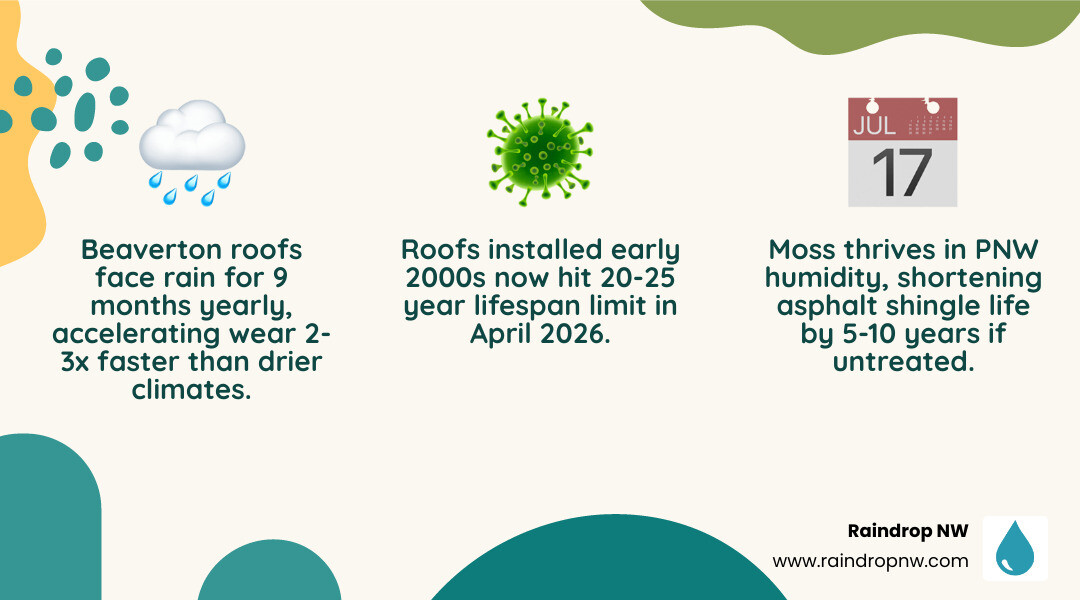
Beaverton sits in the heart of the Tualatin Valley, where rain falls for roughly nine months of the year. That kind of sustained moisture is hard on roofs. It accelerates moss growth, wears down granules, and quietly shortens the lifespan of materials that might last decades in a drier climate. For homeowners here, a roof is not just an aesthetic feature — it is a frontline defense against the Pacific Northwest’s relentless wet seasons. Choosing the right contractor for that replacement is one of the most consequential home decisions you will make.
I’m Torrey Yungeberg, owner of Raindrop Roofing NW and a lifelong Oregonian with deep roots in the trades, and I’ve seen what separates a roof replacement in Beaverton, OR that holds up for decades from one that fails within a few years. Let me walk you through exactly what you need to know before you hire anyone.
Recognizing the Signs You Need a Roof Replacement in Beaverton, OR
In April 2026, many Beaverton homeowners are looking at roofs installed in the early 2000s. Because our region experiences heavy annual rainfall over three-quarters of the year, roofs here age differently than they do in the desert or the Midwest. You have to be a bit of a “roof detective” to spot the trouble before it becomes a flooded living room.
The Warning Signs
- The 20-Year Mark: Most asphalt roofs in the Tualatin Valley last between 20 and 25 years. If your home was built or last reroofed around 2005, you are firmly in the “replacement zone.”
- Moss and Algae Growth: While a little green might look “Pacific Northwest chic,” heavy moss traps moisture against the shingles, causing the edges to lift and the wood underneath to rot.
- Curling or Buckling: When shingles start to turn upward or lose their flat profile, they are no longer shedding water effectively. This is often a sign of poor attic ventilation or simple old age.
- Granule Loss: Check your gutters. If they look like they’re filled with heavy sand or coffee grounds, your shingles have lost their UV protection and are becoming brittle.
- Interior Clues: Dark streaks on your ceiling, damp insulation in the attic, or “daylight” peeking through the roof boards are emergency signals.
- Sagging Roofline: This is a serious structural warning. It often indicates that the decking (the wood under the shingles) has been saturated and is losing its integrity.
- Wildlife Intrusion: Raccoons and squirrels are experts at finding soft, rotted spots in a roof to create a cozy (and destructive) home.
If you are seeing these signs, it’s time to move from “patching” to planning a full roof replacement in beaverton, or.
Navigating the Professional Roof Replacement Process
A professional roof replacement is a major construction project, but when handled correctly, it should feel like a well-oiled machine. We believe in a “system” approach rather than just nailing down new shingles.
The process typically follows these steps:
- Initial Inspection: We don’t just look at the shingles. We check the flashing around chimneys, the condition of the gutters, and the state of the attic ventilation.
- Material Selection: This is where you choose the look and durability level of your new roof.
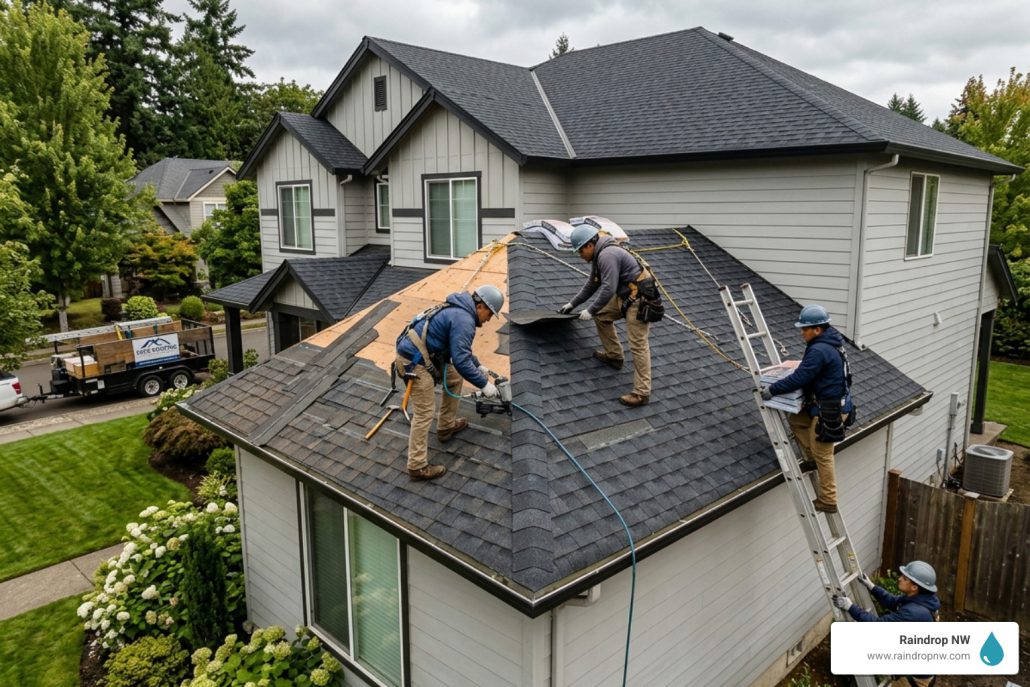
- The Tear-Off: We remove every single old shingle. Some contractors might suggest “roofing over” the old layer, but in our wet climate, that’s a recipe for disaster (more on that later).
- Decking Evaluation: Once the old roof is off, we inspect the plywood. If there is rot or soft spots, we replace the wood to ensure a solid foundation.
- Underlayment and Waterproofing: We install high-quality, breathable underlayment and specialized “ice and water shields” in the valleys—the areas where the most water flows.
- Flashing and Shingles: New metal flashing is installed around vents and chimneys, followed by the shingles.
- Final Cleanup: We perform a thorough sweep of the property, including a magnetic nail sweep to ensure your driveway and lawn are safe for tires and paws.
More info about residential roofing services
Typical Timeline for Roof Replacement in Beaverton, OR
Most residential roof replacement in beaverton, or projects take between 1 and 3 days. While we prefer scheduling during the dry summer months for peak efficiency, professional crews in Washington County are equipped to work year-round. We use protective measures like heavy-duty tarping to ensure your home stays dry even if a surprise April shower rolls through during the tear-off.
Best Materials for a Roof Replacement in Beaverton, OR
Choosing the right material is about more than just color; it’s about moisture management.
| Material Type | Lifespan in PNW | Best Feature |
|---|---|---|
| Architectural Shingles | 25-40 Years | High wind resistance & algae-resistant granules. |
| Metal Roofing | 50+ Years | Exceptional moisture control & minimal maintenance. |
| Composite/Synthetic | 40-50 Years | Mimics slate or wood shake but won’t rot or grow moss. |
For most Beaverton homes, we recommend architectural shingles (like those from Malarkey). These are thicker than traditional “3-tab” shingles and feature granules that resist the dark algae streaks common in the Tualatin Valley. They provide the “stunning curb appeal” homeowners want while standing up to 110-mph winds.
Essential Considerations for Your Beaverton Roofing Project
Before the first nail is driven, there are a few “behind-the-scenes” factors that determine the success of your project.
Attic Ventilation: This is the most overlooked part of a roof. Without proper airflow, heat and moisture build up in your attic, “cooking” your shingles from the inside out and potentially causing mold. A professional replacement should always include an evaluation of your intake and exhaust vents.
Building Codes and Permits: Beaverton and Washington County have specific requirements for roofing. A reputable contractor will handle the permit process for you, ensuring the work is inspected and meets all U.S. building codes.
Insurance and Storm Damage: If your replacement is the result of a sudden storm or fallen tree, the insurance process can be daunting. We recommend working with a contractor who can provide detailed photo documentation and meet with your insurance adjuster to ensure all damage is accounted for.
Financing Options: We know a roof is a significant investment. Many homeowners utilize flexible payment plans or 0% interest financing to make the project manageable without compromising on the quality of materials.
More info about residential roofing services
How to Choose a Reliable Local Roofing Contractor
The “Northwest Choice” for a roofer should always be someone who understands our specific weather. Here is how to vet your options:
- Verify Licensing: Ensure they are licensed, bonded, and insured in the state of Oregon. You can check this on the CCB (Construction Contractors Board) website.
- Ask About the Crew: Are the installers trained professionals or temporary day laborers? Expert installation is just as important as the shingles themselves.
- Warranties: Look for a “double-layer” of protection: a manufacturer warranty on the materials and a workmanship warranty from the contractor.
- Local Accountability: In recent years, many local companies have been bought out by out-of-state investment firms. We believe there is a massive advantage to working with a truly local, independently owned company. When you have a question or a follow-up, you want to talk to someone who lives in the same community, not a call center in another state.
Homeowner Preparation: You can help the process by moving cars out of the driveway, clearing loose items (like potted plants or patio furniture) away from the house, and keeping pets inside during the noisy tear-off phase.
Frequently Asked Questions
Do I need to be home during the installation?
While it isn’t strictly necessary for you to be home, we recommend being available via phone. Occasionally, once we tear off the old shingles, we might find hidden rot in the decking that needs to be addressed. Quick communication helps keep the project on schedule.
How does Beaverton’s rain affect the schedule?
We are used to the rain! We monitor the forecast closely. If heavy rain is predicted, we may shift the start date by a day or two. For minor drizzles, we work in sections, only uncovering what we can recover and dry-in quickly.
What is the difference between a tear-off and a roof-over?
A “roof-over” involves nailing new shingles directly over the old ones. While it might save a bit of money upfront, we strongly advise against it. A tear-off allows us to inspect the decking for rot, replace old flashing, and ensure the new roof doesn’t trap old moisture. Most local building codes also limit the number of layers a roof can have.
Conclusion
A roof replacement in beaverton, or is more than just a home improvement project—it’s an investment in your family’s safety and your home’s longevity. By choosing the right materials and a contractor who understands the unique demands of the Tualatin Valley climate, you can rest easy knowing your home is protected for the next 25 to 50 years.
At Raindrop NW, we pride ourselves on being a truly local, independently owned company. We don’t answer to out-of-state investors; we answer to you, our neighbors in Beaverton, Hillsboro, and the surrounding Portland Metro area. We are committed to long-term accountability and craftsmanship that stands up to the toughest Oregon winters.




Leave a Reply
Want to join the discussion?Feel free to contribute!