
Why Your Attic Needs More Insulation Before Winter Hits
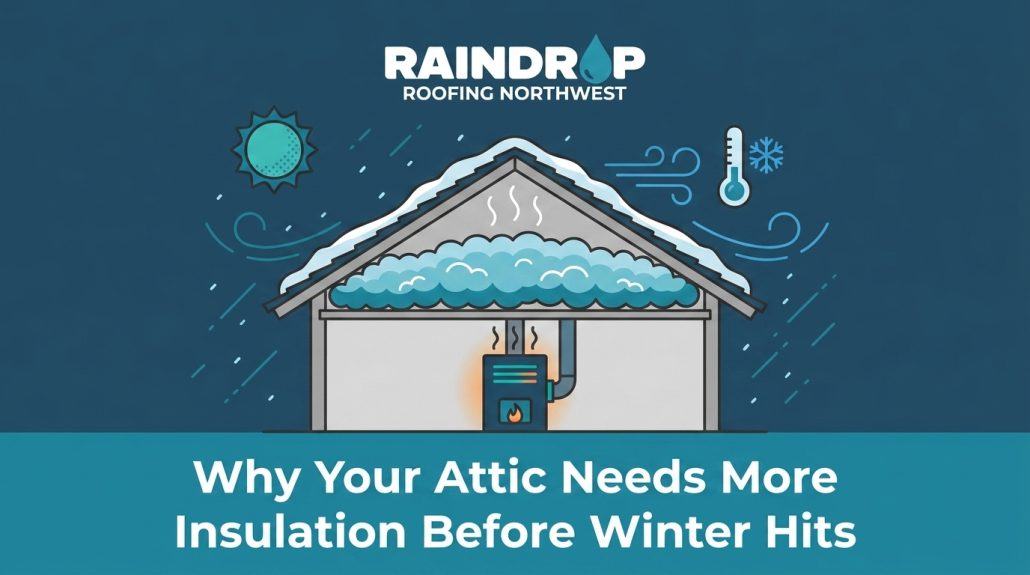
The Hidden Threat Above Your Ceiling as Freezing Temperatures Approach
With the September pre-fall transition underway, our team at Raindrop Roofing Northwest wants you to understand exactly why your attic needs more insulation before winter hits. When the leaves start turning and the morning air grows crisp, most homeowners immediately look at the exterior of their house. You might check your gutters, sweep away debris, or glance up at your shingles to make sure nothing looks out of place. However, in our experience, the most severe threat to your roof during the colder months rarely starts on the outside. It begins directly above your ceiling.
There is a common misconception that preparing a house for freezing temperatures is entirely about exterior durability. While strong shingles and clear gutters are important, we frequently see that the real catalyst for severe winter roof damage is escaping indoor heat. When the warmth from your living space rises and bleeds into a poorly insulated attic, it disrupts the natural temperature balance of your entire home. This unnatural warming sets off a chain reaction that can destroy roofing materials, compromise structural integrity, and lead to significant water damage.
Addressing these underlying systemic issues early is the key to long-term protection. By pairing better roof ventilation with adequate thermal barriers, you stop the problem at its source. If you suspect your home is losing heat and compromising your roof deck, scheduling professional roof repair in Beaverton during the September pre-fall transition ensures your home is secure before the first major freeze arrives.
Viewing Your Roof and Attic as One Complete System
To truly protect a home in Beaverton and the greater Pacific Northwest, our roofing crews often remind homeowners that you have to stop looking at your roof and your attic as separate entities. In the construction and roofing industries, we refer to the “building envelope.” This envelope is the physical separator between the conditioned interior of your home and the unconditioned outdoor environment. Your attic acts as a crucial buffer zone within this envelope.
Protecting the outside of your home requires maintaining a completely stable environment on the inside. Insulation acts as your primary thermal barrier. Its job is to keep the conditioned, heated air inside your living spaces where you want it, while keeping it out of the attic where it can cause harm. When our team walks you through the anatomy of a PNW roof system, it becomes clear how these components rely on each other to function properly.
The Relationship Between Your Roof Components:
| System Component | Primary Function | What Happens When It Fails |
|---|---|---|
| Attic Insulation | Traps heat inside the living space and keeps the attic cold. | Heat escapes upward, warming the roof deck and melting snow prematurely. |
| Roof Ventilation | Flushes out residual heat and moisture from the attic space. | Condensation builds up, causing mold growth and wood rot on the rafters. |
| Roof Deck & Underlayment | Provides the structural base and secondary water barrier. | Water from ice dams backs up under shingles, soaking the wood and causing leaks. |
| Exterior Shingles | Sheds bulk water and protects against wind and debris. | Shingles lift, crack, or lose granules, exposing the vulnerable deck underneath. |
When insulation is thin, degraded, or missing entirely, the entire system falls out of balance. A healthy roof in the winter is a cold roof. If your attic is warm enough to melt snow on the shingles above it, your thermal barrier is failing, and your building envelope is compromised.
The Mechanics of Heat Loss and Ice Dam Formation
The most destructive consequence of a warm attic during the winter is the formation of ice dams. To understand why homeowners should be concerned about ice dams, you have to look at the physical mechanics of the freeze-thaw cycle. This cycle is particularly aggressive during the September pre-fall transition and into the winter, when temperatures constantly fluctuate above and below freezing.
The region’s specific wet, cold freeze-thaw cycles make ice dams incredibly destructive to eaves, gutters, and roofing materials. Our local crews frequently see the aftermath of this cycle. Here is exactly how an under-insulated attic creates this hidden threat:
- Heat Rises: Because hot air is less dense than cold air, the heat generated by your furnace naturally moves upward. If your ceiling lacks sufficient insulation, that heat easily penetrates the barrier and enters the attic.
- The Roof Deck Warms: The trapped heat warms the underside of the wooden roof deck. Instead of remaining at the same freezing temperature as the outside air, the upper sections of your roof become artificially warm.
- Snow and Frost Melt: Any accumulated snow, frost, or ice on the upper portion of the roof begins to melt from the bottom up. This water flows down the slope of the roof toward the gutters.
- The Refreeze: Because the eaves (the edges of the roof that overhang the house) do not have a warm attic directly beneath them, they remain freezing cold. When the melted water reaches these freezing eaves, it rapidly turns back into solid ice.
- The Dam Forms: As this process repeats day after day, a thick ridge of ice builds up along the edge of the roof. This is the ice dam.
- Water Backs Up: Subsequent snowmelt now has nowhere to go. The ice dam blocks the water from reaching the gutter, forcing it to pool on the roof and eventually back up underneath the shingles, leaking directly into your home.
By upgrading your insulation before the severe weather arrives, you stop the first step of this cycle. If the heat never reaches the roof deck, the snow melts naturally and evenly from the sun, flowing safely into your gutters.

What We Uncover During Pre-Fall Roof Inspections
During our pre-fall roof inspections in Beaverton and the greater Pacific Northwest, the Raindrop Roofing Northwest team consistently finds that what looks like simple exterior wear and tear is actually a symptom of poor attic insulation. We evaluate the roof holistically, knowing that identifying these problems early prevents catastrophic failures when the heavy winter rains and freezes begin.
Evaluating older roofs often reveals hidden vulnerabilities. It is incredibly common for us to find minor leaks, compromised flashing, or premature shingle degradation that stems directly from systemic temperature imbalances. When a roof deck is subjected to constant, unnatural heating and cooling cycles from an under-insulated attic, the roofing materials expand and contract at accelerated rates. Over time, this breaks down the seals around vents, chimneys, and valleys.
For example, during a recent fall inspection for a local homeowner who had just purchased a house with a 14-year-old roof, our crew uncovered a minor leak alongside compromised flashing and gutter issues. Because we caught it during the pre-fall transition, we were able to respond quickly, repair the leak, and address the caulking before the winter weather could turn a minor vulnerability into a major indoor leak. Taking a proactive approach means addressing both the exterior wear and the interior insulation gaps simultaneously, ensuring the entire system is ready for the cold.
Warning Signs That Your Attic Lacks Sufficient Insulation
You do not have to wait for an ice dam to form to know that your attic needs attention. There are several clear indicators that your home is struggling to retain heat. Recognizing these symptoms during the September pre-fall transition allows you to act before the heavy, persistent rain typical of the region exacerbates moisture issues in poorly insulated spaces.
One local homeowner reached out to us last fall knowing their roof needed repair before the heavy rains started. By having our professionals address the structural wear and underlying insulation issues on schedule, they avoided severe winter complications. If you want to stay ahead of the weather, watch for these common warning signs we see in the field.
Interior Temperature Fluctuations
The most immediate signs of poor insulation are felt right in your living room. If your thermal barrier is weak, your heating system has to work overtime.
- Uneven heating between floors: If your upstairs bedrooms are significantly colder than your main floor, or if certain rooms feel drafty despite closed windows, heat is likely escaping through the ceiling.
- Furnace running constantly: If your heating system rarely shuts off just to maintain a baseline comfort level, it is fighting a losing battle against heat loss.
- Cold ceilings and walls: On a chilly day, touch your ceiling. If it feels noticeably cold to the touch, the insulation above it is not doing its job.
Exterior Moisture and Wear
What happens inside the attic eventually shows up on the outside of the house. Moisture management is a massive part of roof health in the Pacific Northwest.
- Dampness or moss growth near the roofline: Escaping heat carries moisture. When that warm, moist air hits the cold roof deck, it creates condensation, encouraging moss and algae growth on the exterior shingles.
- Premature deterioration near the eaves: If the shingles at the bottom edge of your roof look significantly more weathered, curled, or cracked than the rest of the roof, freeze-thaw cycles and ice dams are likely the culprit.
- Historical signs of large icicles: If you remember massive icicles hanging from your gutters last winter, that is not a sign of a winter wonderland—it is a glaring red flag that you have an active ice dam problem caused by poor insulation.
The Crucial Balance: Insulation and Roof Ventilation
A major mistake we see many homeowners make is assuming that simply packing the attic with as much insulation as possible will solve all their winter problems. However, adding insulation alone isn’t enough; it must be perfectly paired with proper airflow. A healthy winter roof in Beaverton and the greater Pacific Northwest requires a cold attic environment, and you achieve that through a balance of thermal blocking and ventilation.
The EPA strongly recommends comprehensive air sealing in conjunction with insulation upgrades. This means sealing the small gaps around light fixtures, plumbing stacks, and attic hatches before laying down new insulation. Once the floor of the attic is sealed and insulated, the space above it needs to breathe.
- Intake Ventilation: Fresh, cold outdoor air must be able to enter the attic space, typically through soffit vents located under the eaves. A very common DIY mistake is accidentally covering these soffit vents when rolling out new insulation, which completely chokes the roof’s ability to breathe.
- Exhaust Ventilation: As the cold air enters the lower part of the attic, it sweeps upward, picking up any residual heat or moisture that managed to bypass the insulation. This air then exits through exhaust vents located at or near the ridge of the roof.
- Baffles and Air Chutes: To prevent insulation from blocking the soffit vents, specialized baffles must be installed. These create a clear channel for air to flow up from the eaves and into the main attic space.
When intake and exhaust ventilation work alongside proper insulation, they continually flush out residual heat and moisture. This ensures the roof deck remains at the same temperature as the outside air, completely eliminating the conditions that cause snowmelt and ice dams. Note: When planning these upgrades, keep in mind that generally applicable federal tax credits or utility incentive programs may apply to qualifying energy-efficiency improvements. We always advise our clients to verify current programs with their local utility provider or a tax professional.
Frequently Asked Questions About Winter Roof Prep
How does attic insulation prevent ice dams?
Attic insulation prevents ice dams by trapping heat inside your living space so it cannot warm the roof deck. When the roof deck stays cold, snow melts naturally from the sun rather than artificially from underneath, preventing the water from refreezing at the eaves.
Why is my roof getting ice dams in the winter?
Your roof is getting ice dams because warm air is escaping into your attic and heating the upper sections of your roof. This melts the snow, which runs down to the colder, unheated overhangs and freezes into a solid barrier of ice.
How do I know if I need more attic insulation before winter?
You likely need more insulation if your home feels drafty, your upstairs rooms are difficult to keep warm, or if you notice your furnace running constantly. Historical signs, like huge icicles on your gutters last winter, also strongly indicate a lack of adequate insulation.
What happens to my roof if I don’t have enough attic insulation in winter?
Without enough insulation, your roof is highly susceptible to severe moisture damage and structural wear. The resulting freeze-thaw cycles cause shingles to lift and crack, while ice dams can force water underneath the underlayment and rot the wooden roof deck.
Does a new roof need new attic insulation?
A new roof does not automatically include new attic insulation, but upgrading both simultaneously is highly recommended. Putting a brand-new roof over a poorly insulated and improperly ventilated attic will quickly subject the new materials to the same damaging heat and moisture cycles that ruined the old roof.
Can poor insulation cause my roof shingles to fail early?
Yes, poor insulation is a leading cause of premature shingle failure in Beaverton and the greater Pacific Northwest. The constant, unnatural expanding and contracting caused by a heated roof deck breaks down the adhesive seals and accelerates granule loss on the shingles.
Take Action Before the First Freeze Hits
The window for preventative maintenance closes quickly as temperatures drop during the September pre-fall transition. Waiting until you see icicles forming on your gutters or water stains appearing on your ceiling means the damage is already underway. Protecting your home requires looking past the surface and treating your roof and attic as a single, unified system.
Our team at Raindrop Roofing Northwest highly encourages homeowners to have their attic and roof system evaluated holistically before the severe weather arrives. By identifying thermal leaks and ventilation blockages now, you can secure your building envelope and keep the cold where it belongs. If you are ready to ensure your home is fully protected against the coming winter, explore your options for professional roof repair in Beaverton and schedule a comprehensive evaluation today.




Trackbacks & Pingbacks
[…] home’s interior heat. We review this barrier to ensure it is adequate. If you are wondering why your attic needs more insulation before winter hits, it is because poor insulation forces your heating system to work harder and dramatically increases […]
Leave a Reply
Want to join the discussion?Feel free to contribute!