When Balconies Serve Double Duty: Understanding Emergency Exits in Beaverton
Emergency balconies in Beaverton, OR aren’t a separate category of structure—they’re your standard balconies that must meet strict building codes to function safely as emergency exits when needed. If you’re wondering whether your balcony is safe for emergency use, here’s what matters most:
Quick Safety Checklist:
- Egress Access: Window or door must have a sill no higher than 44 inches above the floor
- Opening Size: Minimum 20 inches wide, 24 inches high, and 5.7 square feet of clear opening
- No Tools Required: Must open from inside without keys or special effort
- Structural Integrity: Railings, deck surface, and supports must be sound and stable
- Clear Path: No obstructions blocking access or exit from the balcony
Most Beaverton homeowners think of their balcony as a place to enjoy morning coffee or watch the sunset. But during a fire or other emergency, that same space becomes a critical escape route. In February 2024, Tualatin Valley Fire & Rescue responded to a Beaverton apartment fire where two people were rescued from a second-floor balcony—a stark reminder that balconies serve dual purposes: outdoor living space and emergency egress point.
The reality is that your balcony’s safety depends on two things: meeting Beaverton’s building codes and maintaining structural integrity over time. Many homeowners don’t realize that water damage, rot, or failing connections can turn a safe balcony into a dangerous liability. This is especially concerning when you consider that the same structural elements keeping your balcony stable for everyday use must also support the weight and stress of an emergency evacuation.
I’m Torrey Yungeberg, owner of Raindrop Roofing NW, and I’ve spent years helping Beaverton families protect their homes from water damage—including the critical waterproofing systems that keep balconies structurally sound. Understanding emergency balconies in Beaverton, OR means knowing both the code requirements and the ongoing maintenance that ensures your balcony remains a safe haven when you need it most.
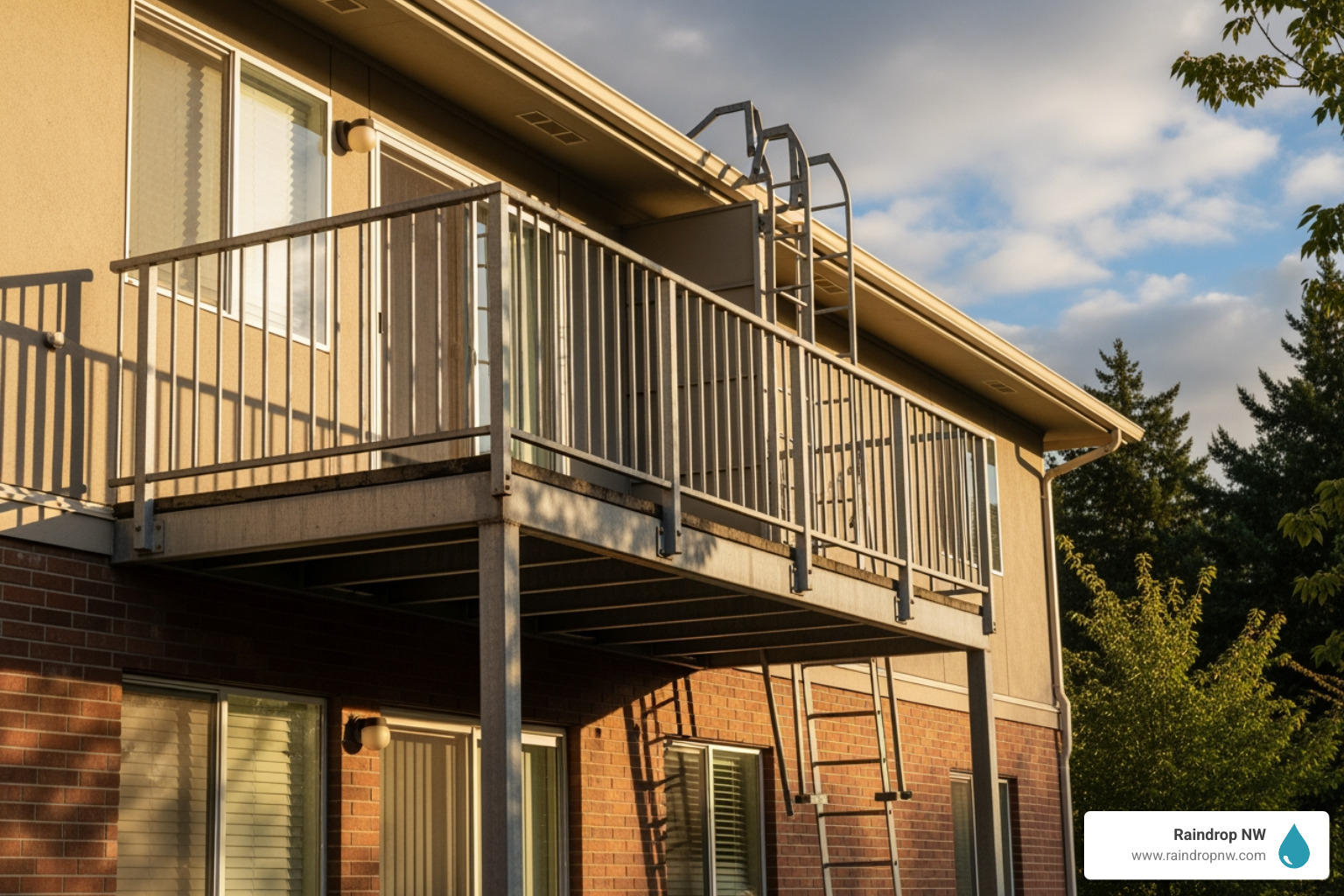
Glossary for emergency balconies in beaverton, or:
- balconies company in beaverton, or
- balconies contractor in beaverton, or
- professional balconies in beaverton, or
Understanding Beaverton’s Balcony and Egress Regulations
When we talk about emergency balconies in Beaverton, OR, we’re really talking about how standard balconies integrate with the broader safety regulations designed to protect residents. Beaverton’s building codes are not just a set of suggestions; they are mandates that ensure every structure, including your balcony, is safe and sound. These regulations are rooted in the Oregon Residential Specialty Code (ORSC) and are further detailed in local ordinances. Resident safety is paramount, and these codes address everything from structural integrity to the specific requirements for egress.
For instance, the Development Code of the City of Beaverton provides definitions that clarify how different parts of a building are measured and regulated. While this particular section might focus on “building footprint” calculations, it underscores that every component of a structure, including balconies, falls under a defined regulatory framework. This framework ensures that your balcony isn’t just an afterthought but a carefully considered element of your home’s safety profile.
Egress requirements are a critical part of these codes. These dictate how residents can safely exit a building in an emergency. For balconies, this often means ensuring that windows or doors leading to them meet specific criteria. Guardrail height is another crucial aspect, designed to prevent accidental falls. Imagine a moment of panic during a fire; a properly designed and maintained guardrail could be the difference between safety and severe injury. Structural integrity is the bedrock of all these elements—a balcony that can’t support its intended load, or worse, the dynamic load of people evacuating, is a hazard waiting to happen.
Window and door access to a balcony for emergency purposes must be clear and unhindered. This isn’t just about having a door; it’s about having one that functions perfectly under duress. We often see how general wear and tear can affect doors and windows, making them stick or difficult to open. In an emergency, every second counts, and a jammed egress point is a serious problem. Our goal, as responsible homeowners and service providers, is to ensure these critical access points remain in optimal condition, always ready to serve their dual purpose.
What Makes a Balcony a Viable Escape Route?
For a balcony to truly function as a viable escape route, the windows or doors leading to it must meet stringent egress window specifications. These aren’t arbitrary rules; they’re designed to ensure that people of various ages and abilities can quickly and safely exit.
The Oregon Residential Specialty Code (ORSC) outlines the following key requirements:
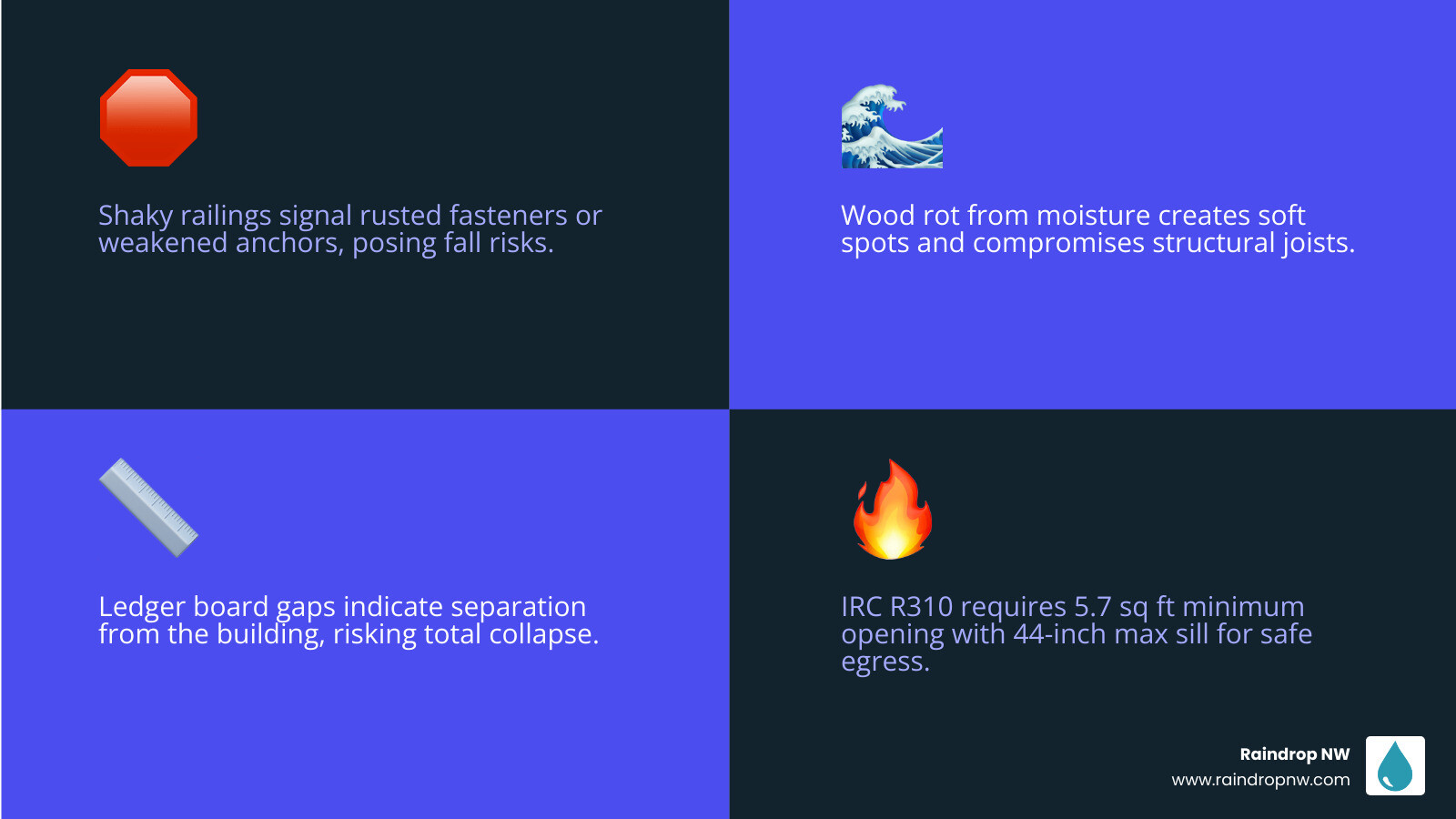
- Sill Height: The finished sill of an egress window cannot be higher than 44 inches above the finished floor. This is crucial because a sill that’s too high can be an impossible obstacle for children, the elderly, or someone with a temporary injury trying to escape.
- Clear Opening Area: The window must provide a minimum net clear opening of at least 5.7 square feet. This ensures there’s enough space for a person to pass through. For first-floor and basement egress windows where the bottom of the window well is not more than 44 inches below ground, a clear opening of five square feet is allowed.
- Dimensions: Beyond the total area, specific dimensions are required: a minimum width of 20 inches and a minimum height of 24 inches. This prevents openings that are too narrow or too short, even if they meet the total square footage.
- Lock Mechanism: Perhaps most importantly, egress windows must be openable from the inside without the use of a key or any special knowledge or effort. Imagine trying to find a key or decipher a complex lock while a fire alarm blares. The Beaverton Code for Windows (8.07.180) reinforces this, stating that all openable windows accessible from the outside, like balcony windows, must be able to be opened and locked from the inside without special effort. This is a non-negotiable safety feature.
For bedrooms, specifically, Beaverton Code 8.07.290 mandates that every bedroom must have at least one emergency exit for escape or rescue, which can be an openable window or an exterior door. If a step is needed to reach the window, it also has specific requirements: not more than 12 inches higher than the floor and at least 20 inches wide and 12 inches deep. These details are designed to make escape as straightforward as possible.
Door requirements for balcony access are generally less complex than windows, as doors typically offer a larger, easier egress path. However, they still must be fully functional, open freely, and not be obstructed by debris or furniture.
Structural Safety: The Foundation of a Secure Balcony
Beyond just the access points, the structural integrity of the balcony itself is the absolute foundation of its ability to serve as an emergency exit. A beautiful balcony is nice, but a structurally sound one is essential. We often take for granted that our balconies are strong enough to hold us, our furniture, and our guests. But in an emergency, it might need to support even more weight, potentially under stressful conditions.
Load-bearing capacity is engineered into every balcony. This refers to the maximum weight the structure can safely hold. Over time, factors like water damage, shifting foundations, or improper modifications can compromise this capacity. That’s why regular assessments are so important.
Railing requirements are another critical safety feature. They’re not just for aesthetics; they are designed to prevent falls. Building codes specify minimum heights and load capacities for railings, ensuring they can withstand significant force. A loose or wobbly railing is a serious hazard, especially during an evacuation when people might lean on it for support.
Proper construction materials are crucial. In Beaverton, where we experience our fair share of rain, materials resistant to moisture and rot are vital. Wood, while beautiful, needs proper treatment and maintenance to prevent deterioration. Steel and concrete also require appropriate installation and protection against corrosion or cracking. The importance of professional installation cannot be overstated here. A balcony is not a DIY project for the inexperienced. It requires expert knowledge of structural engineering, material science, and local building codes to ensure it’s built to last and, more importantly, built to be safe.
Finally, weatherproofing plays an immense role in maintaining structural safety. Water is the silent enemy of many building materials. Penetrating moisture can lead to wood rot, rust in metal components, and deterioration of concrete. Effective Waterproofing Systems are essential for protecting the underlying structure of your balcony. Just like a roof, your balcony’s surface, whether it’s a Flat Decks Beaverton OR Ultimate Guide or a traditional slatted design, needs to shed water efficiently to prevent long-term damage. Without proper weatherproofing, even the strongest initial construction can be compromised over time, turning a safe haven into a potential hazard.
Is Your Balcony Ready for an Emergency? A Homeowner’s Safety Checklist
Ensuring your balcony is ready for an emergency means being proactive. It’s not enough for it to look good; it needs to be functionally sound and ready to serve as a critical escape route. We encourage every homeowner in Beaverton to perform a regular DIY safety check of their balcony. Think of it as a crucial home defense measure.
Here’s our list of essential balcony safety check items:
Step 1: Check Your Egress Window or Door
This is your primary access point to the balcony in an emergency.
- Sill Height Measurement: Use a tape measure to ensure the bottom of the window or door opening is no more than 44 inches from the floor. If it’s higher, consider if a permanently installed step (meeting Beaverton’s code dimensions: not more than 12 inches higher than the floor, at least 20 inches wide and 12 inches deep) is present and secure.
- Clear Opening Dimensions: Open the window or door fully. Measure the clear width and height. The minimums are 20 inches wide and 24 inches high, with a total clear opening of at least 5.7 square feet (or 5 square feet in specific ground-level scenarios).
- Ease of Operation: Can you open the window or door quickly and smoothly from the inside? Does it stick? Does it require excessive force? It should open without a hitch.
- No Special Tools Required: Confirm you don’t need a key, a special tool, or complex instructions to open it. It should be intuitive. As per Beaverton Code 8.07.290 for bedrooms, it must be openable from the inside without special knowledge or effort.
- Unobstructed Path: Is the path to the window or door clear of furniture, plants, or other items? In a panic, you don’t want to trip over anything.
Step 2: Assess the Balcony’s Structural Condition
This step focuses on the physical integrity of the balcony itself.
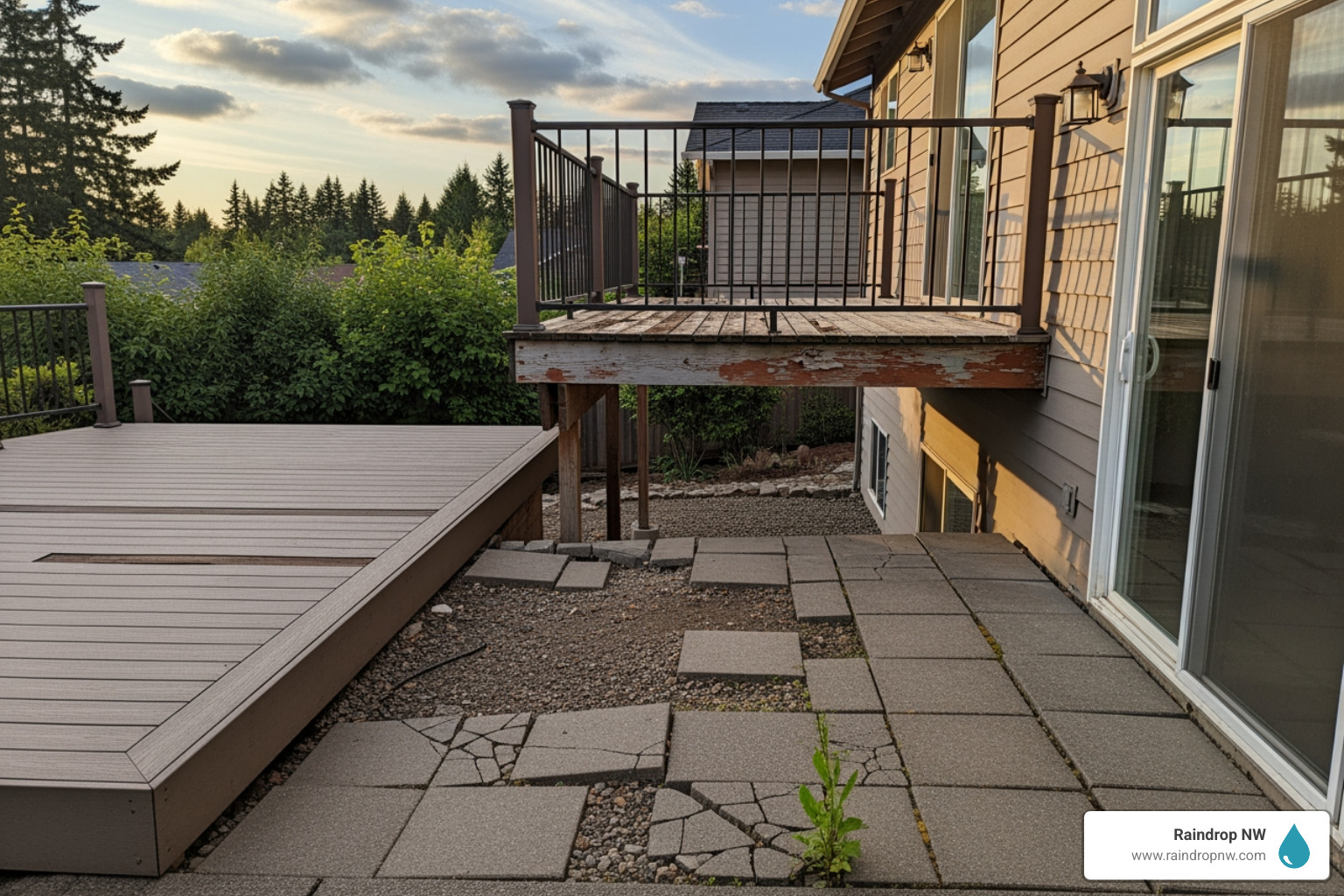
- Deck Surface Inspection: Walk across the deck surface. Do you feel any soft spots, excessive springiness, or hear creaking? Look for cracks, splinters, or areas where the material looks deteriorated. Pay close attention to areas where water might pool.
- Signs of Rot or Water Damage: Examine wooden components for dark spots, mold, mildew, or a spongy feel. For concrete, look for spalling (flaking or pitting), rust stains (indicating rebar corrosion), or cracks. These are tell-tale signs that water has penetrated the material. Our expertise in Waterproofing Systems tells us that these signs often point to underlying issues that need immediate attention.
- Railing Stability Test: Give the railings a good, firm shake. Do they feel loose or wobbly? Are there any missing or rusted fasteners? Are the balusters (vertical posts) securely attached? A railing should feel rock solid.
- Checking Support Posts and Connections: Visually inspect where the balcony attaches to your home and where any support posts meet the ground or other structural elements. Look for gaps, cracks, rust, or any signs of separation. These connection points are critical for the balcony’s stability. For more detailed information on maintaining your deck surface, our Flat Decks Beaverton OR Ultimate Guide offers valuable insights.
Step 3: Plan and Clear Your Escape Path
A safe balcony is only part of the equation; having a clear plan is the other.
- Removing Clutter: Your balcony is not a storage unit. Remove anything that could block your path or create a tripping hazard during an emergency. This includes excess furniture, planters, or stored items.
- No Heavy Storage: Avoid storing heavy items on your balcony, as this adds unnecessary stress to the structure and could exceed its load-bearing capacity, especially if it’s already compromised.
- Fire Escape Plan: Have a clear, rehearsed fire escape plan that includes your balcony as an option. Know where you would go once on the balcony.
- Family Communication: Ensure every member of your household knows the escape plan and understands how to access and use the balcony as an emergency exit. Regular drills can make a huge difference.
- Knowing What Is Below the Balcony: Assess the area directly below your balcony. Is it clear? Is there a safe landing spot? Are there any obstacles like sharp objects, fences, or other hazards? While Tualatin Valley Fire & Rescue are highly skilled at rescues, as seen in recent events where they’ve rescued individuals from second-story balconies, having a clear understanding of your immediate surroundings can aid in self-evacuation if necessary.
The Critical Role of Professional Maintenance for Emergency Balconies in Beaverton, OR
Just like your roof, your emergency balconies in Beaverton, OR require professional, proactive maintenance. Waiting until you see significant damage or, worse, experience a structural failure, is a reactive approach that can put lives at risk. At Raindrop NW, we understand that a balcony is more than just an outdoor space; it’s an extension of your home’s structural integrity and safety system.
Proactive maintenance involves regular inspections by trained professionals who can spot subtle signs of distress before they escalate into major problems. This is especially important in the Pacific Northwest, where constant moisture can accelerate deterioration. Preventing structural failure is our main objective. This includes identifying issues like:
- Sagging Deck: A clear sign that the support structure is failing or has been compromised.
- Cracks in Masonry: Can indicate foundational movement or water penetration leading to freeze-thaw damage.
- Water Stains: Often the first visible sign of a leak or compromised waterproofing, which can lead to rot and structural weakness over time.
These seemingly small issues can have significant implications for your balcony’s load-bearing capacity and its ability to function safely, especially as an emergency exit.
Why Waterproofing is Your Balcony’s Best Defense
Waterproofing is not just an added amenity; it’s a fundamental necessity for any balcony, particularly in our wet Beaverton climate. It’s your balcony’s best defense against the elements and the primary method for preserving its structural integrity over time.
Here’s why effective waterproofing is so vital:
- Preventing Wood Rot: For wooden balconies, water is the enemy. Constant exposure to moisture, especially in areas where water can pool or seep into joints, creates the perfect breeding ground for rot. Once rot sets in, it silently weakens the wood, compromising its strength and making the balcony unsafe.
- Protecting Concrete: Even concrete balconies aren’t immune. While concrete itself is durable, it’s porous. Water can seep into microscopic cracks, and if it reaches the steel rebar inside, it can cause corrosion. This rust expands, cracking the concrete further and severely weakening the structure.
- Sealing Surfaces: Professional waterproofing involves applying specialized membranes or coatings that create an impermeable barrier on the balcony surface. This prevents water from penetrating the deck and reaching the underlying structural components.
- Importance of Proper Flashing: Flashing—the thin material, often metal, installed at joints and edges—is critical for directing water away from vulnerable areas, especially where the balcony meets the main structure of your home. Improper or deteriorated flashing is a common cause of leaks and water damage.
- Extending Lifespan: By effectively keeping water out, waterproofing significantly extends the lifespan of your balcony. It protects your investment and, more importantly, ensures that your balcony remains a safe and reliable component of your home’s emergency preparedness plan. Our Waterproofing Systems: Roof Waterproofing Beaverton OR expertise extends to balconies, ensuring a comprehensive protective barrier.
When to Call for an Emergency Balcony Inspection
Knowing when to call for a professional inspection can prevent a minor issue from becoming a major emergency. While regular maintenance is key, certain situations warrant immediate attention. If you observe any of the following, don’t delay:
- Visible Damage After a Storm: High winds, heavy rain, or ice can stress a balcony. If you see new cracks, loose railings, or displaced components after severe weather, it’s time for an inspection.
- Noticeable Sagging or Separation: Any visible sagging of the deck surface or a noticeable gap where the balcony attaches to your house is a critical sign of structural failure. This requires urgent professional assessment.
- Loose Railings: As discussed, loose railings are a significant safety hazard. If they wobble or feel unstable, have them inspected immediately.
- Crumbling Concrete: If you see concrete flaking, crumbling, or exposing rebar, it indicates severe deterioration and a compromised structure.
- Unusual Noises: Strange creaking, groaning, or cracking sounds when using the balcony are red flags that should not be ignored.
Just as you wouldn’t ignore a major roof leak, you shouldn’t overlook these signs on your balcony. Our team is equipped to provide a professional assessment, drawing on our experience with Emergency Roof Repair Beaverton OR Guide to address urgent structural concerns. Catching these issues early can save you from costly repairs down the line and, more importantly, keep your family safe.
Frequently Asked Questions about Balcony Safety
What should I do if I see cracks or damage on my balcony?
If you observe any significant cracks, sagging, or damage to your balcony, the first and most crucial step is to stop using it immediately. Do not allow anyone to access the balcony. If possible and safe to do so, cordon off the area to prevent accidental use. Next, if you live in an apartment complex or a property managed by an HOA, report the damage to your property manager or association immediately. For homeowners, contact a professional contractor specializing in balcony repair and waterproofing for an urgent inspection. Ignoring such signs can lead to further deterioration and potentially dangerous structural failure.
Are there specific rules for emergency balconies in Beaverton, OR?
There isn’t a separate category or set of rules specifically for “emergency balconies” in Beaverton, OR. Instead, the general building codes and regulations for all balconies are designed to ensure they can function safely, including during emergencies. This means that any standard balcony, especially one accessible from a bedroom, must inherently meet the requirements that would allow it to serve as an egress point.
These requirements are embedded in the broader building codes, such as those governing structural integrity, guardrail heights, and the specifications for windows and doors that lead to them. Access points, particularly windows from sleeping areas, must meet strict egress requirements concerning sill height, clear opening dimensions, and ease of operation without special tools. The Beaverton, OR Development Code and related administrative rules integrate safety into standard construction practices, ensuring that safety is not an afterthought but a core component of design and build.
Can I add a fire escape ladder to my balcony?
Adding a fire escape ladder to your balcony is an option, but it comes with considerations. Portable fire escape ladders are generally allowed as they are not permanently attached to the structure. However, if you’re considering a permanent, fixed fire escape ladder system, it typically requires permits and must comply with city codes.
Any permanent alteration to your home’s exterior or structure, including the installation of a fixed ladder, falls under the purview of Beaverton’s Building Division. According to the Building Division Administrative Rules B70-1090, permits are required for additions, alterations, or repairs. This ensures that the installation is safe, meets structural requirements, and doesn’t inadvertently create new hazards or compromise the existing structural integrity of your balcony or home. We recommend consulting with a professional and checking with the City of Beaverton’s planning and building departments before undertaking such a project to ensure full compliance.
Conclusion: Ensuring Your Beaverton Balcony is a Safe Haven, Not a Hazard
As we’ve explored, your emergency balconies in Beaverton, OR play a dual role: a cherished outdoor living space and a vital emergency exit. The key to ensuring it fulfills both roles safely lies in understanding local codes and committing to proactive maintenance.
We’ve walked through the essential safety checks, from verifying your egress window’s dimensions and operability to carefully assessing your balcony’s structural condition for signs of rot, damage, or instability. We’ve also highlighted the critical importance of a clear escape path and a well-communicated family emergency plan.
The unseen enemy of many balconies is water, making professional waterproofing an indispensable defense. Regular, proactive maintenance by local experts like us at Raindrop NW can identify and address potential issues before they compromise your balcony’s safety and structural integrity. Don’t wait for visible sagging, loose railings, or crumbling concrete to call for an inspection. Reactive repairs are often more costly and always more stressful than preventative care.
Your home is your sanctuary, and every part of it, including your balcony, should contribute to your family’s safety and peace of mind. For a comprehensive inspection and professional waterproofing of your balcony or deck surface, explore our waterproof deck surfaces services. We’re a truly local, independently owned company committed to long-term service and accountability right here in Beaverton and the surrounding areas, ready to help you ensure your balcony remains a safe haven for years to come.