
Can Crows Damage Your Roof? Identifying Hidden Pre-Winter Vulnerabilities
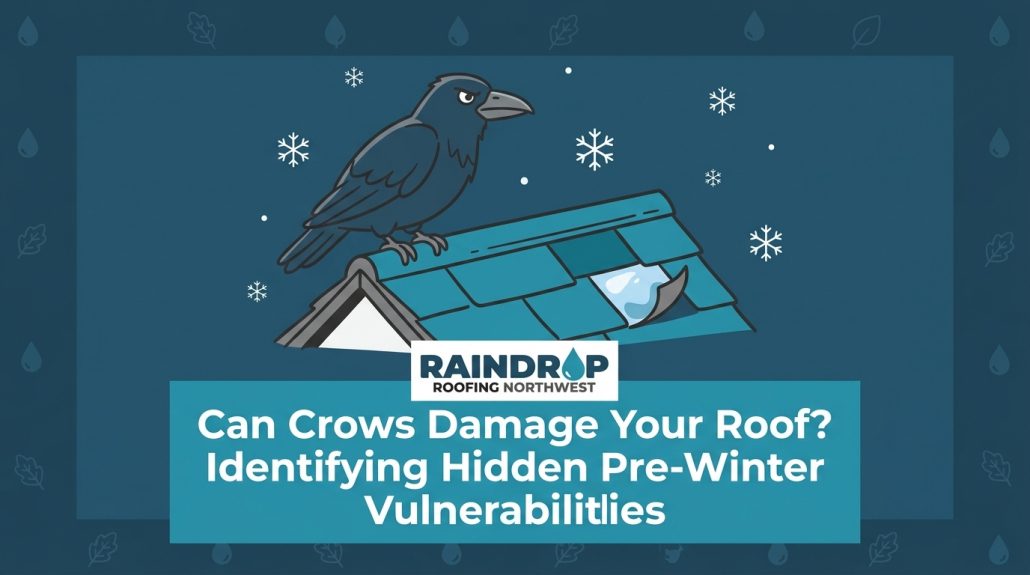
Are Crows Causing Unseen Roof Damage Before the Winter Rains?
Are you currently working through your seasonal home maintenance checklist, only to wonder if your home is truly prepared for the months ahead? For many homeowners in Beaverton, OR, and the greater Pacific Northwest, fall preparation usually means clearing pine needles from gutters and raking leaves. However, at Raindrop Roofing Northwest, we often remind our customers that one of the most critical steps is identifying hidden vulnerabilities on your roof before the continuous winter rains begin. Homeowners often overlook the unexpected impact local wildlife can have on roofing materials, assuming that standard wear and tear is the only threat.
Need immediate assistance or looking for a comprehensive evaluation? Learn more about roof repair in Beaverton, or reach out for emergency roof repair if you have already spotted an active leak.
Identifying these hidden vulnerabilities early is a critical part of clearing fall debris and preparing for the wet season. Wildlife, particularly foraging birds, can create micro-damage that is nearly invisible from the ground but devastating once the heavy rains arrive. A proper pre-winter assessment helps determine if your roof is secure for the upcoming precipitation or if professional intervention is necessary to prevent water intrusion. By understanding what to look for, you can make an informed decision about the safety and integrity of your home.
The Link Between Roof Moss and Foraging Crows
Crows are highly intelligent, opportunistic foragers that actively seek out insects, grubs, and larvae hidden underneath roof moss. In the Pacific Northwest, the damp climate and frequent shade support heavy roof moss growth, which acts as a primary food source attractant for local bird populations. When crows land on your home, they are not usually trying to eat the shingles; they are hunting for the buffet living inside the organic buildup.
The Ecological Cycle on Your Roof
The act of tearing up moss patches leaves the underlying shingles exposed to the elements. Crows will use their strong beaks to flip over heavy chunks of moss, aggressively scratching and pulling at the surface. Heavy debris and moss buildup create the perfect environment for this destructive foraging behavior. As the moss thickens, it holds more moisture, attracting more insects, which in turn attracts more birds.
Our crew at Raindrop Roofing Northwest recently saw the consequences of this cycle firsthand during a fall inspection. A Beaverton home, built in the late 1950s, had developed heavy moss damage that ultimately led to moisture intrusion under the eaves due to continuous heavy rain conditions. After a complete assessment, our team efficiently replaced the roof and upgraded the old metal vents to composite covers. This proactive action resolved the moisture damage and eliminated the loud rain noise that had been bothering the household.
| Roof Condition | Wildlife Attraction Level | Primary Risk Factor |
|---|---|---|
| Clean, Debris-Free Shingles | Low | Standard age-related UV exposure |
| Light Algae or Pine Needles | Moderate | Gutter clogs and slow water shedding |
| Heavy, Established Moss | High | Insect breeding and aggressive crow foraging |

How Bird Pecking Degrades Roofing Materials
The physical damage caused by birds goes far beyond simply moving moss around. Pecking activity dislodges the protective granules on asphalt shingles, exposing the underlying asphalt layer to UV degradation. These granules are your roof’s first line of defense against the sun and weather. When they are stripped away by sharp beaks and claws, the asphalt dries out, becomes brittle, and eventually cracks.
Incorporating asphalt shingle roofing maintenance into your mid-fall / October pre-winter prep is essential because birds may also pull at loose flashing around vents, chimneys, and skylights. Crows are naturally curious and will tug at anything that looks loose or shiny. Over time, this micro-damage weakens the overall integrity of the roofing system, compromising the watertight seals that keep your home dry.
Common types of physical degradation we see include:
- Granule loss: Bare, black patches on shingles where the protective colored granules have been scraped away.
- Lifted edges: Shingles that have been pulled upward, breaking the adhesive seal that holds them flat against the roof deck.
- Damaged flashing: Metal strips around vents and chimneys that have been bent, pecked, or pulled away from the caulking.
- Punctures: Small holes in older, brittle shingles caused by repeated pecking in a concentrated area.
During a routine pre-winter maintenance check, our roofing specialists uncovered missing shingles, extensive moss growth, and missing flashing on another local property—prime indicators of both age and animal activity. A prompt professional inspection provided a clear path forward, leading to efficient repairs that secured the shingles, removed the moss, and prevented major leaks during subsequent windstorms.
Why Minor Bird Damage Accelerates During Continuous Rainfall
What might look like a few missing granules in October can turn into a severe structural issue by December. Small areas of granule loss or lifted flashing allow water to seep underneath the shingles. In our years of servicing roofs across Beaverton, OR, and the Pacific Northwest, we’ve seen how the heavy, continuous rainfall season starting in November turns minor vulnerabilities into rapid moisture penetration points.
The Freeze and Thaw Threat
Continuous freeze and thaw cycles expand these small vulnerabilities into significant entry points for moisture. When water seeps into a small crack or under a lifted shingle and the temperature drops below freezing overnight, that water expands. This expansion acts like a pry bar, lifting the shingle further or widening the crack. When the ice melts the next day, the water flows deeper into the newly enlarged space.
What starts as a minor surface issue quickly evolves into wood rot and interior leaks if left unaddressed. The constant dampness of the Beaverton OR / Pacific Northwest winter means that once water gets past the underlayment, the wood decking rarely has a chance to dry out. This persistent moisture leads to mold growth, sagging roof decks, and eventually, water dripping through your ceiling.
Conducting a Safe Ground-Level Visual Inspection
You do not need to climb a ladder to spot the early warning signs of wildlife activity. In fact, we always advise homeowners to prioritize safety and conduct their mid-fall / October pre-winter prep from the ground. Walking on a mossy, damp roof is extremely dangerous and can inadvertently cause more damage to brittle shingles.
Here is how to safely assess your property for signs of identifying animal roof damage:
- Equip yourself with binoculars: Stand across the street or at the far edge of your yard with a good pair of binoculars. This angle provides a clear view of the slopes and ridgelines.
- Look for scattered moss on the ground: If you see chunks of green moss lying on your driveway, patio, or lawn, it is a strong indicator that crows or squirrels are actively tearing it off the roof.
- Scan for missing shingle granules: Use the binoculars to look for dark, shiny, or bare patches on the shingles. These spots indicate where the protective coating has been scraped away.
- Inspect the flashing: Note any areas around chimneys, skylights, and plumbing vents where the metal flashing appears bent, lifted, or separated from the roof surface.
- Check the gutters: Look for an excessive accumulation of granules washing out of your downspouts, which can indicate accelerated wear from animal activity.
Evaluating When to Call a Local Roofing Professional
While a ground-level visual check is a great starting point, there is a distinct threshold where professional assessment is required. If your visual inspections reveal missing granules, disturbed moss, or lifted flashing, a wait-and-see approach is no longer viable. Addressing these issues before the wet season ensures the roofing system remains watertight.
A licensed professional can distinguish between standard age-related wear and active wildlife damage. This distinction is crucial because it dictates the type of repair needed. As a seasoned Beaverton, OR roofing contractor, our team at Raindrop Roofing Northwest understands exactly how regional wildlife interacts with specific roofing materials and moss buildup. We know that a patch of missing granules on a shaded, north-facing slope is likely crow damage related to moss, whereas uniform granule loss across a south-facing slope might just be UV degradation.
| Observation | Recommended Action |
|---|---|
| A few chunks of moss on the lawn after a windy day | Monitor the situation; schedule a standard cleaning if moss is heavy. |
| Visible bare spots on shingles or bent metal flashing | Call a professional immediately for a targeted repair assessment. |
| Water stains on the ceiling or moisture in the attic | Request emergency repair services to mitigate interior damage. |
Frequently Asked Questions About Crows and Roof Damage
Why are crows pecking at my roof?
Crows are usually hunting for insects and larvae hidden beneath patches of moss or algae on the roof surface. They are highly intelligent foragers and know that the damp environment created by moss is a perfect breeding ground for bugs. As they dig for their meal, their strong beaks and claws inadvertently tear at the roofing materials beneath.
Can birds cause a roof leak?
Yes, by dislodging protective asphalt granules and pulling up loose flashing, birds can create entry points for water. Once the asphalt is exposed to the sun, it dries out and cracks. When continuous winter rains hit these compromised areas, water easily seeps past the underlayment and into the wooden structure of your home, eventually causing an interior leak.
What are the signs of bird damage on a roof?
Signs include scattered moss on the ground, bare spots on asphalt shingles, and bent or missing metal flashing. You might also notice an excessive amount of shingle granules washing out of your downspouts. If you hear scratching or pecking noises during your mid-fall / October pre-winter prep, it is a strong indicator of active wildlife on your property.
How do I keep crows off my roof?
Keeping the roof clean of moss and debris removes their primary food source, making the roof less attractive to foraging birds. At Raindrop Roofing Northwest, we find that regular seasonal maintenance, including gentle moss treatment and clearing gutters, is the most effective deterrent. Without a reliable source of insects, crows will quickly move on to a more hospitable environment.
Does missing flashing indicate wildlife activity?
While severe wind can cause flashing issues, birds and other wildlife frequently pull at loose edges, accelerating the damage. Crows are attracted to shiny objects and will often tug at loose nails or lifting metal. If you notice flashing that looks bent upward or pulled away from the chimney, it is highly likely that an animal has been interacting with it.
Secure Your Home Against Wildlife and Winter Weather
Understanding fall roofing vulnerabilities is the first step in protecting your home from the harsh realities of a Pacific Northwest winter. Do not wait for a leak to confirm wildlife damage. By taking action during your mid-fall / October pre-winter prep, you can stop minor issues from evolving into major structural rot. Schedule a professional assessment with Raindrop Roofing Northwest today to ensure your roof is ready for the wet season, and gain the peace of mind that comes with a clear, region-specific explanation of your home’s condition. If you suspect active water intrusion, reach out for emergency roof repair immediately.




Leave a Reply
Want to join the discussion?Feel free to contribute!