
Tear-Off vs. Overlay: Why We Refuse to Roof Over Existing Shingles
The Myth of the ‘Quick Fix’ Roof Overlay
Adding a second layer of shingles over your old roof does not actually save you money—it simply creates a ticking time bomb for your home’s structural integrity. Here at Raindrop Roofing Northwest, when homeowners ask us to explain the debate between a tear-off vs. overlay: why we refuse to roof over existing shingles always comes down to protecting what lies beneath the surface. In our years of servicing local homes, we frequently encounter the misconception that nailing a fresh layer of asphalt over a failing roof is a smart, budget-friendly shortcut. The reality our crews see in the field is far more complicated, and often far more destructive.
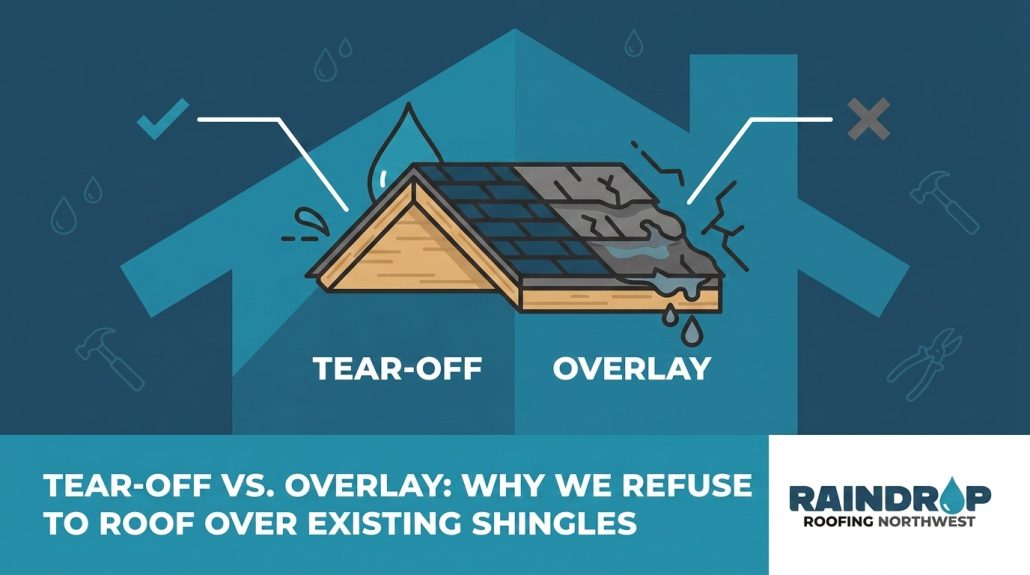
To understand why, we first have to define the core difference between the two methods. A full tear-off involves removing every single layer of old roofing material right down to the bare wooden decking. An overlay, on the other hand, involves sweeping off the loose debris from the old roof, perhaps rolling out a thin base sheet, and driving long nails through the brand-new shingles, through the old shingles, and hopefully into the wood below.
While an overlay might look identical to a brand-new roof from the street, our team knows it often conceals dangerous structural rot. In the Beaverton and Portland metro area, where our weather fluctuates dramatically and summer heatwaves put massive strain on your home’s cooling envelope, trapping old materials under new ones is a recipe for disaster. Quality professional roofing services prioritize your home’s long-term structural integrity over quick fixes. A roof is a complete, breathing system, and treating it like a simple cosmetic upgrade leaves your most valuable asset vulnerable to hidden decay.
Comparing the Methods: Tear-Off vs. Overlay Side-by-Side
Before exploring the specific environmental risks that affect local homes, it helps to look at exactly what happens during each type of roofing project. While national building codes sometimes permit up to two layers of roofing, standard national advice is often dangerous when applied to the specific weather patterns of the Pacific Northwest. What works in a dry, arid climate will rapidly destroy a home in our region, especially when intense summer heat bakes trapped humidity into the attic space.
Based on what our crews encounter on a daily basis, here is a clear, objective look at how the two methods compare:
| Roofing Method | The Installation Process | Deck Inspection | Long-Term Consequences |
|---|---|---|---|
| Full Tear-Off | Complete removal of all existing shingles and underlayment down to the bare wood. Installation of modern, breathable synthetic underlayment and new shingles. | 100% visibility. Every sheet of plywood is inspected for soft spots, delamination, and rot. Damaged wood is replaced before waterproofing begins. | Maximizes the lifespan of the new shingles. Ensures the roof deck is structurally sound and capable of holding nails during severe windstorms. |
| Roof Overlay | Sweeping the existing roof, placing a base sheet over the old, uneven shingles, and nailing a new layer of asphalt directly on top of the old system. | Zero visibility. The old shingles block all access to the wood decking. Contractors are forced to guess the condition of the structural foundation. | Traps existing moisture, adds thousands of pounds of dead weight, accelerates heat degradation, and severely shortens the life of the new materials. |
The immediate visual results of an overlay can be deceiving. The day the crew leaves, the roof looks brand new. However, the uneven surface of the old shingles prevents the new layer from sealing properly. Furthermore, best practices in our climate strongly advise against even a second layer, because you are essentially locking a deteriorating, moisture-soaked sponge against your home’s wooden framing.
The Pacific Northwest Moisture Trap
The interaction between our regional climate and layered roofing materials creates a specific phenomenon our roofing experts call the moisture trap. Local homes are uniquely susceptible to hidden moisture retention, and understanding this cycle explains exactly why overlays fail so quickly in our region.
The Problem: Year-Round Ambient Humidity
Throughout the year in the Beaverton and Portland metro area, an aging roof system absorbs ambient humidity. Even if you do not have an active leak dripping into your living room, old asphalt shingles become porous over time. The felt underlayment beneath them absorbs condensation. Our crews consistently find that by the time a roof is ready to be replaced, that bottom layer is often damp, brittle, and holding onto years of trapped moisture.
The Cause: Sealing Damp Materials
When a contractor performs an overlay, they take that old, damp roofing system and tightly seal it beneath a brand-new, waterproof layer of asphalt and synthetic underlayment. The mechanics of trapped moisture are simple: water always seeks a way out. Because the new top layer is highly water-resistant, the humidity trapped in the old shingles cannot evaporate upward into the atmosphere.
The Solution: Allowing the Deck to Breathe
With nowhere else to go, that trapped moisture moves downward, directly into the underlying plywood or OSB roof deck. This leads directly to the degradation of the wood, causing it to warp, rot, and lose its structural integrity. In contrast, our tear-off process completely removes this damp layer. It allows the bare deck to breathe, dry out, and be properly waterproofed with modern, breathable underlayment that protects your home while allowing internal condensation to escape.
How July Peak Heat Bakes Trapped Moisture into Your Decking
While ambient humidity introduces the moisture, the intense summer heatwaves are what accelerate the destruction. The seasonal danger of extreme summer temperatures turns a slightly damp roof deck into a rapidly rotting structural liability and a major drain on your home’s energy efficiency.
The thermal mass problem: Asphalt shingles are designed to absorb and retain heat. When you install a second layer of shingles, you are doubling the thermal mass on top of your home. Two layers of black or dark gray asphalt hold significantly more heat than a single layer, and they hold onto that heat much later into the evening. We often see this forcing HVAC systems to work overtime, drastically reducing cooling performance under load.
The baking effect: During intense summer weather, the surface temperature of a roof can easily exceed 150 degrees Fahrenheit. Our team constantly sees July peak heat baking trapped moisture directly into the plywood decking. The water trapped between the old and new shingles turns into hot vapor. This vapor pushes down into the wood fibers, essentially steam-cooking the plywood day after day while negatively impacting your indoor air quality (IAQ).
Accelerated degradation: This extreme temperature fluctuation does not just destroy the wood; it degrades the new shingles from the inside out. The excessive heat causes the oils in the new asphalt to dry out prematurely, leading to blistering, curling, and cracking. What was supposed to be a cost-saving measure severely reduces the lifespan of the new roof, turning a perceived savings into a massive future liability.
Exposing Hidden Rot: Why Inspecting the Plywood is Non-Negotiable
You cannot accurately diagnose the health of a roof deck by walking on it, and you certainly cannot see the full picture by shining a flashlight around your attic. Insulation, ductwork, and structural framing block your view of the decking from the inside. In our professional experience, the only way to know if your home’s foundation is secure is to take the old shingles off.
This past summer, a local homeowner reached out to Raindrop Roofing Northwest because they needed a rapid roof replacement. We helped them choose the right plan that included a full tear-off to verify their decking. Because our crew did not take shortcuts and had full visibility of the structure, we efficiently installed the new roof system in just a day and a half, ensuring the home was completely protected and optimized for summer cooling.
Here is why exposing the roof deck is a non-negotiable step in a proper replacement:
- Identifying soft spots: Walking on a roof might reveal major structural failures, but minor delamination (where the layers of plywood begin to separate) is invisible under old shingles. A tear-off exposes these weakened boards immediately.
- Replacing compromised flashing: The metal flashing around your chimney, skylights, and vent pipes is the most critical part of your waterproofing system. You cannot properly replace or inspect step flashing if you are simply nailing over the old materials.
- Securing the foundation: Roofing nails must penetrate solid wood to hold your shingles in place during high winds. If you nail into rotted wood, the next major storm will easily rip the new shingles right off your home.
- Updating the underlayment: Building science has evolved. Removing the old roof allows us to install modern ice and water shields in the valleys and along the eaves, providing a level of protection that older roofs simply do not have.
Weight Stress, Ventilation Flaws, and Voided Warranties
Beyond the severe risk of hidden rot, layering shingles introduces a host of secondary problems that affect the entire home. These hidden costs make an overlay a financially risky decision that extends far beyond the roof itself.
Added structural weight: Roofing materials are heavy. A single square (100 square feet) of architectural asphalt shingles weighs roughly 200 to 250 pounds. For an average-sized home, a second layer of shingles adds thousands of pounds of dead weight to the structure. This constant, heavy load stresses the home’s framing, potentially causing rafters to sag and drywall to crack inside your living spaces.
Ventilation failures: Proper airflow is required to keep a roof healthy. Multiple layers complicate this airflow, which is especially problematic for older subdivision roof replacements where the original intake and exhaust ventilation may already be inadequate. When you add a second layer, you change the thickness of the roof deck, making it incredibly difficult to properly install ridge vents and edge baffles. Poor ventilation traps attic heat, which further cooks the shingles, degrades your IAQ, and drives up your summer cooling costs. (Note: Upgrading to a properly ventilated, energy-efficient roofing system may even help you qualify for local utility incentives or generic energy rebates for improving your home’s cooling envelope; we always recommend verifying current programs with your utility provider or a tax professional.)
Voided material warranties: Most major asphalt shingle manufacturers require their products to be installed over a clean, smooth, properly prepared roof deck. If you install brand-new premium shingles over an existing layer, the manufacturer will typically reduce or completely void their material warranties. They know that the uneven surface prevents the shingles from sealing properly, and they know the trapped heat will cause premature failure. If those shingles fail in five years, you will be paying out of pocket for an entire replacement.

Our Ethical Stance: Why We Refuse to Perform Roof Overlays
For our team at Raindrop Roofing Northwest, refusing to perform overlays is not an upsell tactic—it is a strict adherence to quality and safety standards. The roofing industry is often plagued by a race to the bottom, where some contractors offer the cheapest possible price by cutting vital corners. We firmly believe that installing a beautiful new roof over a failing, rotting foundation is a massive disservice to a homeowner’s investment.
Refusing subpar, band-aid overlay jobs is our strict commitment to long-term quality. We live and work in this community, and our reputation is built on protecting local homes from hidden structural hazards. When we put our name on a roofing project, we need to know that the deck is solid, the ventilation is flowing properly, and the materials will perform exactly as the manufacturer intended.
A full tear-off provides true long-term value. It gives you a fully warrantied system, a secure structural foundation, and the confidence that your home can efficiently manage intense summer heat. We would rather walk away from a job than compromise the safety and energy efficiency of your home just to offer a slightly lower initial bid.
Frequently Asked Questions About Roof Replacement Methods
Is it a bad idea to roof over existing shingles?
Yes, especially in our climate, as it traps moisture, hides rot, and voids warranties. An overlay prevents our contractors from inspecting the wooden roof deck for water damage or structural weakness. Over time, the trapped moisture and excess summer heat will severely reduce the lifespan of the new shingles, costing you more money in premature replacement.
Why do roofers prefer tear offs?
Tear-offs allow our crews to inspect and repair the underlying decking, ensuring a safe, warrantied installation. By removing the old materials, we can fix soft spots, update critical flashing, and install modern, breathable underlayment. This process guarantees that the new shingles have a solid, flat foundation to adhere to, which is required for high wind resistance.
Does a roof overlay void the warranty?
In most cases, yes. Major manufacturers will not fully warranty shingles installed over an existing layer due to heat retention and uneven surfaces. Because the new shingles cannot lay perfectly flat, they are highly susceptible to wind blow-off and uneven wear, prompting manufacturers to void their guarantees when installation guidelines are ignored.
How long does a roof overlay last compared to a tear off?
An overlay typically fails much faster—often years or even decades sooner—because trapped heat and moisture degrade the materials from the inside. While a high-quality architectural shingle installed via a tear-off can last for decades, that exact same shingle might start curling and blistering in less than half that time if baked over an old roof during peak summer heat.
Can you inspect roof decking without a tear-off?
No. While attic inspections can reveal severe, active leaks, the true condition of the plywood across the entire roof plane can only be seen once the old shingles are removed. Insulation, framing, and tight attic spaces make it impossible for even experienced roofers to identify minor delamination or widespread soft spots from the inside of the house.
Protect Your Home’s Structure with a Proper Roof Replacement
Understanding the severe structural risks of trapped moisture, voided warranties, and hidden rot makes the necessity of a full tear-off undeniable. Your roof is the primary shield protecting your family, your belongings, and the structural framing of your home. Do not settle for a quick fix that only looks good from the street while silently deteriorating from the inside out and driving up your AC bills.
If you are noticing signs of wear, curling shingles, or moss buildup, it is time to get a professional assessment of your entire roofing system. We encourage you to schedule a roof replacement estimate with the Raindrop Roofing Northwest team to get an honest, thorough evaluation of your roof deck. We will walk you through exactly what your home needs to stay protected and energy-efficient for decades to come.




Trackbacks & Pingbacks
[…] masks underlying rot and compromises the structural integrity of the new system, which is exactly why we refuse to roof over existing shingles. A complete tear-off ensures the new materials are anchored to a solid, healthy foundation, […]
Leave a Reply
Want to join the discussion?Feel free to contribute!