
The Complete Guide to How Roof Age Affects Your Insurance Claim
How Does the Age of My Roof Affect My Insurance Claim in Beaverton?
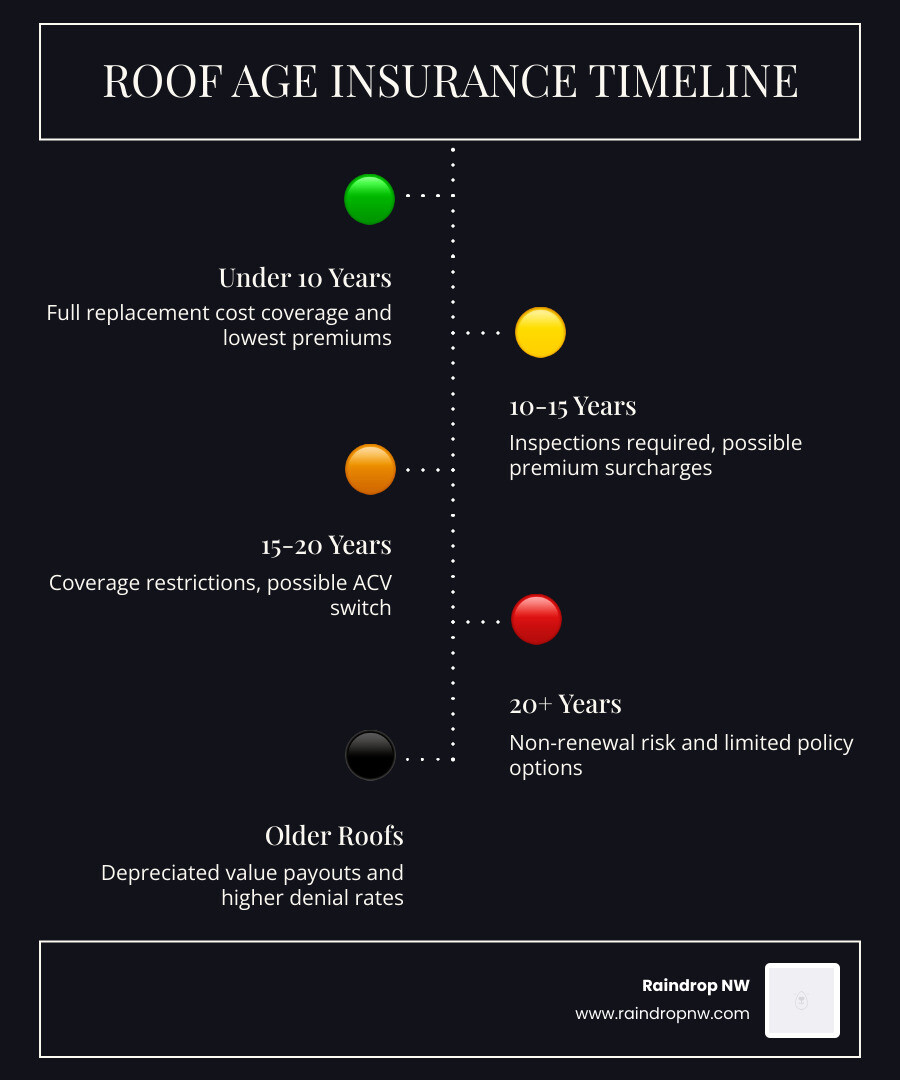
How roof age affects your insurance claim comes down to one core issue: the older your roof, the less your insurer may pay — and in some cases, the less willing they may be to cover it at all. Here’s a quick breakdown of what to expect:
Roof Age and Insurance Impact at a Glance:
| Roof Age | Typical Insurance Outcome |
|---|---|
| Under 10 years | Full replacement cost coverage, lowest premiums |
| 10-15 years | Inspections required, possible premium surcharges |
| 15-20 years | Coverage restrictions, possible switch to actual cash value (ACV) |
| 20+ years | Non-renewal risk, limited options, ACV-only or denial |
Most homeowners don’t think much about their roof’s age — until a storm rolls through and the insurance check comes back far lower than expected. That gap between the cost of a full replacement and what your insurer actually pays can be substantial. It’s not a glitch in the system. It’s how the system is designed.
Insurance companies use your roof’s age as a direct measure of risk. Older roofs are statistically more likely to fail, leak, or sustain damage in a storm. So as your roof ages past certain milestones — typically 10, 15, and 20 years — your insurer may raise your premiums, require a professional inspection, reduce your payout to the depreciated value of your roof, or decline to renew your policy altogether.
For homeowners in Beaverton and across the Portland metro, where wet winters, wind events, and moss growth can accelerate wear, understanding these thresholds before something goes wrong is genuinely important.
I’m Torrey Yungeberg, owner of Raindrop Roofing NW, and after years of working alongside Oregon homeowners navigating roof damage and insurance claims, I’ve seen how roof age affects your insurance claim outcome — often in ways families didn’t see coming. In the sections ahead, I’ll walk you through exactly what insurers look at, where the coverage gaps appear, and what you can do right now to protect yourself.
How Roof Age Affects Your Insurance Claim

When storm winds tear through Portland or a heavy snow and ice event hits Beaverton, your immediate instinct is to look up at your roof and worry about leaks. If you see missing shingles or sagging areas, your next step is usually to file a claim. However, the age of your roof acts as a filter through which your insurance provider views the entire event.
Insurers do not look at a 3-year-old roof and a 20-year-old roof the same way, even if both suffered damage during the exact same storm. For a newer roof, the insurance company assumes the structure was in peak condition and failed solely due to the extreme weather. For an older roof, they will scrutinize whether the damage was caused by the storm or if the roof simply failed because it had reached the end of its natural lifespan.
Understanding this distinction is key to knowing How to File a Roof Damage Insurance Claim successfully. If an adjuster determines that normal wear and tear, rot, or lack of maintenance allowed the storm to cause damage, they may deny the claim entirely. Insurance is designed to cover sudden, accidental damage—not the predictable deterioration of an aging home asset.
The RCV vs. ACV Depreciation Gap
The single most expensive surprise for homeowners during a claim is the difference between Replacement Cost Value (RCV) and Actual Cash Value (ACV).
- Replacement Cost Value (RCV): This coverage pays to replace your damaged roof with brand-new, equivalent materials at today’s market prices, minus your deductible. The age of your roof does not reduce your final payout.
- Actual Cash Value (ACV): This coverage pays for what your roof was worth at the moment it was damaged. The insurer calculates the cost of a new roof and then subtracts depreciation based on how old your roof is and how much of its useful life has been used up.
This gap can leave you with massive out-of-pocket expenses. If you are wondering, Does Insurance Cover Roof Replacement? the answer depends heavily on which of these two coverage types is active on your policy when you file.
Understanding how roof age affects your insurance claim under RCV policies
If you have an RCV policy, your insurer will still calculate depreciation initially, but they handle the payout in a two-step process.
First, they send you an initial check based on the ACV (the depreciated value of the roof). This allows you to get the project started. Once the work is completed by a licensed roofing contractor and a final invoice is submitted, the insurance company releases the remaining funds—known as recoverable depreciation.
Even with an RCV policy, how roof age affects your insurance claim is still relevant. If your roof is past a certain age threshold (often 15 years for standard architectural shingles), your insurer may have quietly converted your policy from RCV to ACV at your last renewal. Many homeowners do not notice this change on their policy declarations page until they file a claim and discover they cannot recover the depreciation.
How roof age affects your insurance claim under ACV policies
Under an ACV policy, depreciation is non-recoverable. The insurer calculates the straight-line depreciation of your roof and cuts you a single check for that depreciated amount, minus your deductible.
Let’s look at how this depreciation curve impacts your wallet over time, assuming a standard deductible is applied:
- At 5 Years Old (approx. 18% depreciation): The insurer covers the vast majority of the replacement value, leaving you with a relatively small out-of-pocket responsibility beyond your deductible.
- At 10 Years Old (approx. 36% depreciation): The depreciated value drops, meaning your insurance payout decreases and your out-of-pocket share increases.
- At 15 Years Old (approx. 55% depreciation): The insurance payout covers less than half of the replacement value, shifting the majority of the financial responsibility to you.
- At 20 Years Old (approx. 73% depreciation): The insurance payout is minimal, leaving you to cover almost the entire replacement value out of pocket.
As you can see, as the roof ages, the financial burden of a storm-related replacement shifts almost entirely onto you.
Key Age Thresholds and Material Factors That Trigger Insurance Changes
In the insurance world, your roof’s age isn’t just a number—it is a series of risk milestones. As your roof crosses these thresholds, insurers adjust their underwriting guidelines to protect themselves from high-probability claims.
| Roof Material | Expected Lifespan | Insurer Scrutiny Begins | ACV Switch Risk | Non-Renewal Risk |
|---|---|---|---|---|
| 3-Tab Asphalt Shingles | 15–20 Years | Year 8 | Years 13–16 | Years 18–22 |
| Architectural Shingles | 25–30 Years | Years 10–12 | Years 18–22 | Years 22–28 |
| Metal Roofing | 40–70 Years | Year 20 | Years 30–35 | Year 40+ |
| Slate & Clay Tile | 50–100+ Years | Year 30 | Years 35–40 | Year 50+ |
| Wood Shakes | 20–40 Years | Year 10 | Years 15–20 | Year 20+ (High fire risk) |
Under 10 Years: The Safe Zone
If your roof is under 10 years old, you are in the insurance “safe zone.” Insurers view these roofs as low-risk. You will enjoy the lowest premium rates, full RCV coverage, and a very low likelihood of being asked for a professional roof inspection during policy renewals. Claims filed on roofs in this age bracket are typically processed quickly with minimal pushback regarding wear and tear.
10 to 15 Years: Scrutiny and Inspections Begin
Once your roof hits double digits, insurers start paying closer attention. In the Pacific Northwest, ten years of damp weather, wind, and heavy tree canopy coverage can lead to moss buildup and minor shingle lifting.
During renewals in this window, your insurer may require a professional roof inspection to verify that the structure is still sound. They may also apply premium surcharges or increase your wind and hail deductibles. To keep your coverage intact, it is wise to know How Often Should You Have Your Roof Inspected? so you can catch minor issues before an insurance inspector flags them.
15 to 20 Years: Coverage Restrictions and ACV Switches
This is the most critical threshold for standard asphalt shingle roofs. Between 15 and 20 years, standard architectural shingles are nearing the end of their peak performance life.
During this window, many insurance carriers will automatically switch your roof coverage from RCV to ACV. They may also exclude certain types of cosmetic damage or refuse to cover roof leaks altogether, attributing them to wear and tear. If your roof is in this age range, you face a major decision: Should I Repair or Replace My Roof? Proactively replacing your roof at this stage can prevent you from being locked into a highly restrictive policy.
20+ Years: Non-Renewal and Denial Risks
Once an asphalt roof passes the 20-year mark, it becomes a major liability in the eyes of underwriters. Many standard insurance carriers will outright refuse to renew your homeowners policy unless the roof is completely replaced.
If your policy is non-renewed due to roof age, you may have only 30 to 60 days to find new coverage. This often forces homeowners to turn to surplus lines carriers or state-sponsored high-risk insurance pools, which offer significantly less coverage for much higher premiums.
Material Lifespans and Insurer Preferences
Insurers evaluate roof age relative to the expected lifespan of the material, not just calendar years:
- Asphalt Shingles: The most common material, but also the most scrutinized. Standard 3-tab shingles are viewed unfavorably after 12–15 years, while high-quality architectural shingles are usually trusted up to 20 years.
- Metal Roofing: Highly favored by insurers. Because metal roofs are fire-resistant and shed water and snow easily, insurers often extend full coverage terms for 30 to 40 years before requiring inspections.
- Slate and Tile: These materials can last a century. Insurers appreciate their durability and fire resistance, though they do look closely at the underlying underlayment, which typically wears out faster than the slate or tile itself.
- Wood Shakes: Viewed with extreme caution. Wood shakes carry high fire risks and are prone to rot and moss in the damp climate of Western Oregon and Southwest Washington. Some insurers will not cover wood roofs at all without expensive fire-retardant treatments.
Roof Shape and Wind Mitigation
The design of your roof also influences how insurers calculate risk and premium rates.
- Hip Roofs: Sloped on all four sides, hip roofs perform exceptionally well in high winds. Insurers view them favorably because wind flows over them easily, reducing the risk of shingles blowing off.
- Gable Roofs: Sloped on only two sides, gable roofs have flat end walls that can catch wind like a sail. They carry a slightly higher risk of wind damage.
- Flat Roofs: Common on modern homes and commercial buildings, flat roofs are prone to water ponding and require specialized low-slope membrane materials. Insurers scrutinize flat roofs closely for drainage issues and often charge higher premiums.
Proactive Steps to Protect Your Coverage and Lower Premiums
You do not have to wait for a storm or a non-renewal notice to take control of your roof insurance situation. By being proactive, you can protect your coverage, avoid unexpected out-of-pocket expenses, and even secure premium discounts.
First, regular maintenance is your best defense. Clearing moss, keeping gutters clean, and replacing damaged shingles promptly shows insurers that you are actively preventing neglect-related failures. Knowing How to Extend the Life of Your Roof is both a home maintenance necessity and an insurance safeguard.
Second, replacing an aging roof before your insurer forces your hand can save you money in the long run. A new roof can help lower your homeowners insurance premiums, especially if you upgrade to impact-resistant shingles or highly durable metal roofing. In fact, many homeowners realize a noticeable reduction in their annual premiums after a full replacement, as insurers reward the reduced risk of leaks and structural damage.
Essential Documentation for Homeowners
If you ever need to file a claim, having a well-organized paper trail is your greatest asset. Insurers are far less likely to argue about wear and tear if you can prove exactly how well you have cared for your roof.
We highly recommend keeping a physical and digital “Roof History Folder” containing:
- The Original Installation Invoice: Proves the exact year, materials used, and the contractor who performed the work.
- Permit Records: Demonstrates that the roof was installed to local building codes.
- Manufacturer Warranties: Verifies the rated lifespan of your shingles or metal panels.
- Repair Receipts: Shows a history of proactive maintenance.
- Annual Photo Evidence: Clear photos taken from the ground each year to prove the roof’s condition prior to any storm event.
Having this paperwork ready is a key part of understanding How Regular Inspections Catch Problems Early and protect your home’s insurability.
Frequently Asked Questions About Roof Age and Insurance
Can I get homeowners insurance with a 20-year-old roof?
Yes, but your options will be limited. Most standard, preferred insurance carriers will decline to write a new policy for a home with an asphalt shingle roof that is 20 years or older. To secure coverage, you may need to accept an Actual Cash Value (ACV) policy, agree to a higher wind/hail deductible, pass a strict professional inspection, or purchase a policy from a specialty high-risk insurer at a significantly higher premium rate.
Does a new roof lower homeowners insurance premiums?
Yes, in almost all cases. Installing a new roof reduces the insurer’s risk of water damage and structural claims. You can expect a premium discount, depending on your carrier and the materials you choose. Opting for wind-rated, fire-resistant, or impact-resistant materials (such as Class 4 asphalt shingles or metal roofing) will yield the highest potential savings.
Should I replace my roof before filing an insurance claim?
No. You should never tear off or permanently repair a damaged roof before filing a claim and allowing the insurance adjuster to inspect it. Doing so destroys the physical evidence needed to prove that storm damage occurred. You should take immediate, temporary steps to mitigate further damage—such as putting a tarp over a leak—but leave the damaged materials in place for the adjuster’s evaluation.
Conclusion
Understanding how roof age affects your insurance claim is essential for protecting your home and your financial peace of mind. As your roof crosses the 10, 15, and 20-year milestones, the risk of coverage drops, premium hikes, and expensive ACV claim payouts increases dramatically.
At Raindrop NW, we believe in helping our neighbors across Beaverton, Portland, Hillsboro, Tigard, and the surrounding communities navigate these complex decisions with honesty and clarity. We are a truly local, family-owned company with multi-generational roots in the community. We are committed to long-term service, certified craftsmanship, and genuine accountability, offering free inspections and estimates to help you make the best decision for your home.
Whether you need a professional inspection to satisfy your insurer, a proactive repair to extend your roof’s lifespan, or a complete replacement to restore your replacement cost coverage and lower your premiums, we are here to help.
Ready to find out where your roof stands? More info about residential roofing services is just a click away. Reach out to us today to schedule a comprehensive, transparent evaluation of your roof’s condition.




Leave a Reply
Want to join the discussion?Feel free to contribute!