
Why Calling a Dedicated Local Roofing Number Beats Lead-Gen Sites
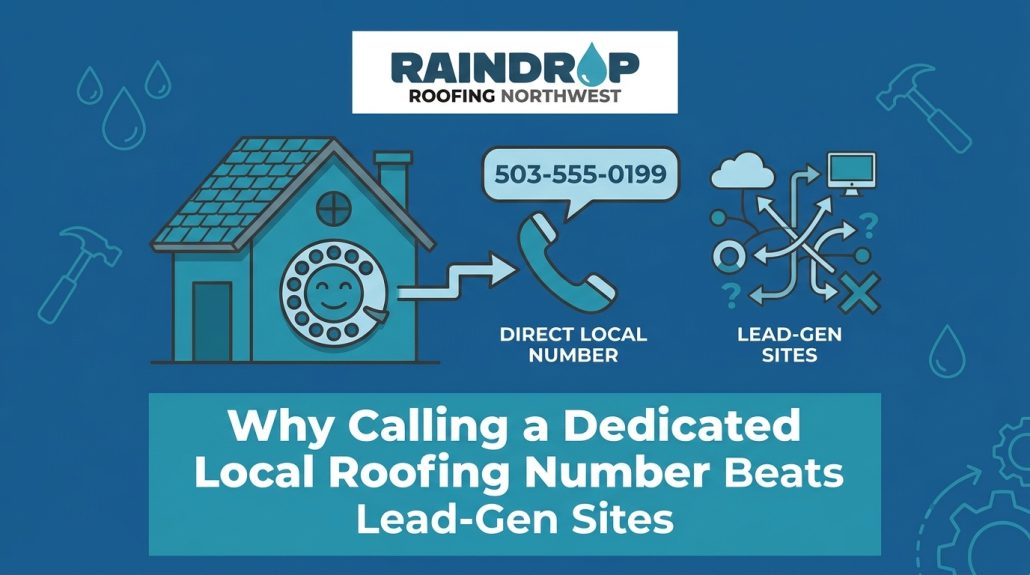
The Hidden Cost of ‘Get Multiple Quotes’ Forms Before Fall Storms
Your roof has a suspicious dark patch, the September pre-rain season is closing in, and you need a professional to look at it before the heavy downpours begin. You know that why calling a dedicated local roofing number beats lead-gen sites is a question of speed and reliability, yet the convenience of online “contractor matching” platforms is incredibly tempting. These websites promise to do the heavy lifting for you—just fill out one simple form, and they will “find you the best roofers in your area.” At Raindrop Roofing Northwest, we know that when you are balancing work, family, and home maintenance, handing off the research phase to a third party sounds like the perfect solution.
However, that single click initiates a complex background process that often works against your best interests. Instead of securing a spot on a local contractor’s schedule, you are actually submitting your personal contact information into a massive data marketplace. The dilemma you face is a critical one: do you submit your details to a national aggregator and wait for the phone to ring, or do you take five extra minutes to call a local dispatch desk directly? Understanding the mechanical differences between these two paths can save you from a flooded inbox, aggressive sales calls, and weeks of unnecessary delays right when you need roof prep the most.
If you are looking for reliable local roofing contractors in Beaverton, taking the direct route is the most effective way to protect your home. Let’s break down exactly how these systems work and why you should schedule a roof repair directly with the team doing the actual labor.
The Illusion of the “One-Stop Shop”
Most homeowners assume that contractor matching sites employ vetting teams who carefully review your specific roofing problem and hand-select the perfect local expert. The reality is far more automated. These platforms are essentially lead-generation engines. Their primary product is not roofing expertise; their primary product is your data. When you hit submit, your information is packaged and sold to multiple competing businesses simultaneously.
This structural difference is why direct communication always offers greater speed and accountability. A local roofing company’s dispatch desk is focused on logistics: routing trucks, managing crew schedules, and ensuring materials arrive on time. A lead-generation site is focused on distributing your phone number to as many paying contractors as their system allows. When the goal is protecting your home from impending weather, you need logistical support, not a marketing middleman.
What Happens When You Submit Your Information to a Contractor Matching Site?
To understand why a direct phone call yields better results, you have to look at the backend mechanics of national aggregators. A contractor matching site is a marketing company, not a home service provider. They do not own service trucks, they do not employ roofing crews, and they do not hold local contractor licenses. Their business model relies on capturing homeowner search traffic, collecting contact details, and monetizing that information as quickly as possible.
The Data Selling Process Explained
When you fill out an online form requesting multiple quotes for a roof repair in Beaverton and greater Washington County, your information embarks on a rapid journey. The aggregator’s software immediately categorizes your request by zip code and project type. It then broadcasts your “lead” to a network of contractors who have paid for access to that specific territory.
Here is what happens next:
- Simultaneous distribution: Your name, address, phone number, and email are sold to three, four, or even five different roofing companies at the exact same time.
- The race to contact: Because these contractors all paid for the same lead, they know they are competing against each other. The only way to win the job is to be the first one to reach you.
- Automated dialing: Many companies that rely heavily on purchased leads use automated dialing software. The moment your data hits their system, a computer starts calling your number.
The Privacy and Nuisance Implications
This business model inevitably leads to the “flooded phone” phenomenon. Within minutes of clicking submit, you may receive back-to-back phone calls, text messages, and emails from multiple companies. Because your personal data is now sitting in several different corporate databases, the follow-up sequences can last for weeks. If you do not answer the phone immediately, the automated systems will continue to dial you on a set schedule.
The privacy impact: You have effectively lost control over who holds your contact information. Even after you hire a roofer and complete your project, the other companies who purchased your data may continue to market their services to you. Opting out requires contacting each of those businesses individually, as the national aggregator no longer controls what the buyers do with your phone number.
The Solution: Bypassing the Middleman
The most effective way to avoid this chaotic communication loop is to bypass the aggregator entirely. By researching local roofing companies yourself and dialing their direct phone numbers, you retain complete control over your personal data. You decide exactly who gets your phone number, and you dictate the pace of the conversation. You are speaking to the people who will actually step foot on your property, rather than a data broker sitting in a remote office.

The Critical Scheduling Delays Caused by Third-Party Bidding
Beyond the frustration of a ringing phone, using a lead-generation site introduces severe operational delays into your roofing project. When you are staring down the barrel of seasonal weather changes, time is your most valuable asset. The longer it takes to get a qualified professional onto your roof, the higher the risk of interior water damage.
The Timeline of a Purchased Lead
When an aggregator sells your information, the receiving contractors still have to process that data internally. The lead drops into their customer relationship management (CRM) software. A sales manager has to review it, assign it to an estimator, and then the estimator has to find time between their current jobs to reach out to you. This administrative shuffle creates a built-in delay. It is very common to wait 24 to 48 hours just to initiate a meaningful conversation about your project.
Contrast this with the experience of calling a dedicated local dispatch. When you dial a local roofing company directly, you are connected to a team member whose sole job is managing the schedule. They can look at the dispatch board in real-time, confirm crew availability, and give you an immediate answer on when an estimator can arrive. There is no waiting for a sales manager to assign your file; you are instantly slotted into the operational workflow.
Weather Risks and Seasonal Transitions
During sudden Pacific Northwest fall rainstorms, the delay of an aggregator selling a lead can result in severe water damage before a contractor even calls you back. If your roof is compromised, a 48-hour administrative delay could mean the difference between a simple patch and a complex structural repair. If you need emergency roof repair, you simply cannot afford to wait for a third-party algorithm to match you with a bidder.
Waiting for a national site to match you can push your project back weeks during busy seasonal transitions. When fall weather hits, local roofing schedules fill up exponentially. The contractors who purchase leads are often the ones trying to fill gaps in their schedule, whereas established local companies are actively managing a tight calendar.
Real-world execution: We see this firsthand at Raindrop Roofing Northwest. Recently, a Beaverton homeowner reached out to our team during a period of heavy rainy fall weather needing a full roof replacement. Because they communicated directly with our local dispatch rather than waiting on a lead-gen site, the process moved rapidly. We delivered materials promptly, provided a dump trailer on-site, and our crew completed the job efficiently. The resulting roof looked amazing, and the site was cleaned up thoroughly—all because direct scheduling ensured materials were ordered and crews were deployed without middleman delays.
Single-Point Accountability vs. Fragmented Communication
When you are managing a major home improvement project, clear communication is just as important as quality craftsmanship. Navigating the logistics of a roof repair requires knowing exactly who is responsible for scheduling, who is managing the crew, and who to call if something goes wrong. This is where the structural differences between direct hiring and lead aggregators become glaringly obvious.
Defining Single-Point Accountability
Single-point accountability means you have one dedicated team managing your property from the first phone call to the final inspection. When you call a local Beaverton dispatch directly, they create a centralized file for your home. They maintain organized records of your property’s history, its specific weather exposure, and any unique structural needs you discuss. You have a direct line to a local team for immediate, accountable service without aggregator middlemen muddying the waters.
Consider the fragmented experience of using a matching site. If you receive calls from four different companies, you are suddenly managing four different conversations. You have to track which contractor promised what timeline, which estimator noticed a specific flashing issue, and which company offered a specific warranty. If a detail gets lost in the shuffle, the aggregator takes no responsibility—they merely sold the introduction.
The Operational Reality of Complex Repairs
Direct accountability leads to better follow-through on complex or weather-dependent repairs. When a single local company manages the entire scope of work, nothing falls through the cracks. They understand the difference between independent roofers and large regional contractors, and they apply that local focus to your home.
For example, during a routine inspection of a 14-year-old roof, our team discovered a minor leak. Because the homeowner was working directly with a dedicated local team like ours, the response was immediate. Our crew repaired the leak quickly and even addressed surrounding gutter and caulking issues at no extra charge. The leak was permanently stopped, the warranty was seamlessly transferred, and new skylights were installed flawlessly. This level of comprehensive, proactive service happens when a company takes full ownership of the project, rather than treating you as a purchased lead.
Comparing the Two Experiences
| Project Phase | Third-Party Aggregator Experience | Direct Local Dispatch Experience |
|---|---|---|
| Initial Contact | Information sold to multiple buyers; phone rings constantly. | One focused conversation with a dedicated scheduler. |
| Scheduling Speed | 24-48 hour delay while buyers process the purchased data. | Immediate capacity confirmation and calendar booking. |
| Accountability | Fragmented. Aggregator takes no responsibility for the actual work. | Single-point ownership from the first call to the final cleanup. |
| Property Records | Data scattered across multiple corporate CRMs. | Centralized, organized history of your home’s specific needs. |
Vetting Genuine Local Expertise Over Purchased Leads
If you have decided to bypass the lead-generation sites, the next step is ensuring you are actually calling a genuine local roofing company. Many national call centers use localized phone numbers to appear as though they are operating in your neighborhood. You need actionable ways to verify that the person answering the phone is sitting at a local dispatch desk, not in an out-of-state cubicle.
Identifying Red Flags and Green Flags
A generic national call center operates off a script. They are trained to collect your information and pass it along, much like the online forms do. A true local dispatch operates as the nerve center of a regional business. They understand the environment, the architecture, and the specific challenges of maintaining a home in your area.
Here is what to look for when you make that direct call:
- Red flag: Inability to answer local weather questions. If you mention the upcoming heavy Pacific Northwest rain and the representative responds with generic weather platitudes, you are likely speaking to a remote call center.
- Green flag: Familiarity with regional codes. A true local dispatcher will understand local building codes, permit requirements, and neighborhood-specific architectural styles.
- Red flag: Vague scheduling promises. Call centers cannot see the actual service trucks. If they say “someone will call you back to schedule,” you have not bypassed the middleman.
- Green flag: Real-time capacity checks. A local dispatcher will say, “Let me check the board. I have an estimator in your zip code on Tuesday afternoon.”
How to Find Direct Local Numbers
Contractors who rely heavily on purchased leads often differ operationally from established local businesses. A company that has spent years building a reputation in the community invests in a dedicated dispatch team to handle incoming calls efficiently.
To ensure you are reaching these established businesses, always look for the official company website. Do not click on the sponsored ads at the very top of a search engine that promise instant contractor matching or bundled quote generators. Scroll down to the organic search results, click through to the actual contractor’s website, and look for a local phone number in the header or footer. Taking this small extra step guarantees you are initiating a direct, accountable relationship.
Frequently Asked Questions
Why is my phone ringing so much after requesting a roofing quote online?
When you use a contractor matching site, your contact information is sold as a lead to multiple competing roofing companies simultaneously. Because these companies all paid for your data, they use automated dialing systems to race each other to reach you first. This business model guarantees a flooded phone as multiple sales teams try to secure your business.
What is the safest way to hire a local roofer?
The safest approach is to research local companies directly, read their independent reviews, and call their dedicated dispatch number found on their official website. This method protects your personal data from being sold and ensures you are dealing directly with the company that holds the licenses and insurance for the actual work.
How quickly can a local roofer respond to a leak?
A local roofing company with a dedicated dispatch desk can often confirm their availability and schedule an emergency visit during your very first phone call. Because they manage their own crews and trucks in real-time, they can route technicians efficiently, whereas third-party matching sites introduce administrative delays that can take days to resolve.
Are contractor matching sites safe to use for home repairs?
While they are generally legitimate businesses, they operate as data brokers rather than home service providers. Using them means sacrificing control over your personal contact information and accepting that your data will be distributed to multiple third parties, which can lead to ongoing privacy frustrations and aggressive marketing.
Does it take longer to call roofers directly compared to using a matching site?
No, calling a roofer directly is significantly faster. While filling out one online form feels quick, the backend process of selling your lead and waiting for contractors to review it creates a massive bottleneck. Calling a local dispatch desk cuts out the middleman and gets you on the production schedule immediately.
Secure Your Roof Before the Rain Starts
Protecting your home from the elements requires swift, decisive action, especially as the fall weather approaches. Relying on third-party aggregators only introduces unnecessary delays, fragmented communication, and a frustrating loss of privacy. By making a direct call to a dedicated local dispatch, you gain immediate scheduling clarity and single-point accountability for your entire project. If you are ready for a straightforward, professional assessment without the middleman hassle, take control of the process and schedule a roof repair directly with the local experts today.




Leave a Reply
Want to join the discussion?Feel free to contribute!