
Signs of Failing Roof Flashing: What We Find Behind Stucco
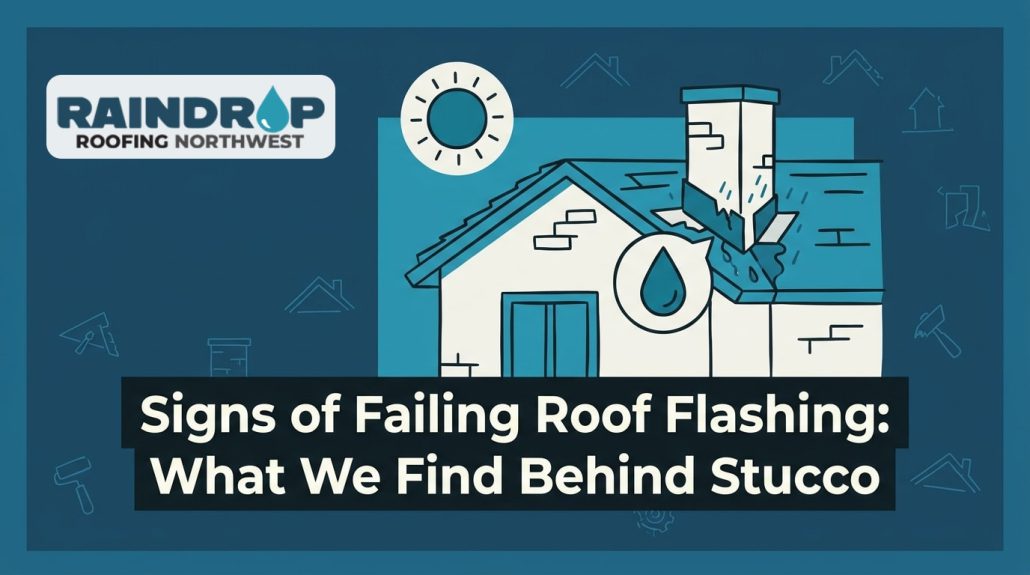
The Hidden Threat Where Your Roof Meets the Wall
You might not notice a problem during a light drizzle, but the signs of failing roof flashing often remain completely hidden until heavy rain forces water straight into your walls. This is especially true for homes with exterior cladding like stucco, which can easily mask the slow, destructive progress of moisture intrusion. When it comes to roof repair in Beaverton, addressing these hidden vulnerabilities is the single most important step you can take to protect your home’s structural integrity.
The Vulnerability of Roof Intersections
Take a walk around the outside of your home and look up at the roofline. You will likely see places where the sloped edge of your roof intersects directly with a vertical exterior wall. In the roofing and construction industries, these intersections are known to be the most vulnerable points on any building envelope. Because water naturally flows down the slope of your roof, it gathers speed and volume by the time it reaches these lower intersections.
When the metal flashing at these junctions is installed correctly and functioning properly, it acts as an impenetrable shield, catching that rushing water and directing it safely into your gutter system. However, when that flashing is compromised, missing, or improperly layered, it does the exact opposite. Instead of a shield, bad flashing acts as a funnel, channeling hundreds of gallons of roof runoff directly into the tiny gaps between your siding and your home’s framing.
The urgency of addressing these vulnerabilities cannot be overstated, especially as the November pre-winter heavy rains begin to fall. What starts as a minor flashing defect during the dry summer months quickly escalates into a major structural threat once the sustained Pacific Northwest winter rainfall sets in. Because water damage behind exterior cladding progresses entirely unseen from the outside, homeowners are often completely unaware that their wall assembly is rotting from the inside out until the damage is severe.
What Is Kickout Flashing and Why Does It Matter?
To understand why roof-to-wall intersections are so critical, it helps to understand the specific metal components designed to protect them. The two most important pieces of this puzzle are step flashing and kickout flashing. Step flashing consists of L-shaped pieces of metal woven into the shingles and layered up the side of the vertical wall. This ensures that water running down the wall is pushed back onto the shingles rather than slipping behind them.
The Role of the Kickout
Kickout flashing is the final, crucial piece of metal at the very bottom of that roof-to-wall intersection. It is angled outward—literally “kicking” the water away from the vertical wall and forcing it to drop cleanly into the gutter. Without kickout flashing, the water running down the roof simply continues its path straight down the exterior wall, pouring heavily over the siding.
Modern building codes explicitly mandate the use of kickout flashing where roof eaves intersect vertical walls. This requirement was established because building scientists realized that massive amounts of water were bypassing gutters entirely and soaking into exterior walls. If you are looking into flashing repair, ensuring that these kickout diverters are present and properly integrated is a foundational step.
The Stucco Complication
This missing component becomes a catastrophic issue for Beaverton OR stucco homes. Stucco is a highly porous material that absorbs and holds moisture. When kickout flashing is missing, the concentrated stream of roof runoff pours directly onto—and often behind—the stucco cladding. Because stucco creates a tight, rigid seal on the outside of the home, it effectively masks the absence or failure of the flashing underneath.
You might look at the side of your house and see perfectly intact siding, while the wood framing directly behind it is completely saturated. Important note: This section is strictly for educational purposes to help you understand your home’s exterior. Because flashing is woven intricately into the roofing system and the siding, homeowners should never attempt to lift shingles, pry back stucco, or perform DIY flashing inspections, as this can easily create new leaks and void existing warranties.
Early Visual Signs of Failing Roof Flashing
While the worst damage happens out of sight, there are observable warning signs that indicate your roof’s flashing system is compromised. Catching these symptoms early is the best way to prevent extensive wall rebuilds.
Look for these early signs of failing roof flashing:
- Rust and heavy corrosion: If you can see the metal step flashing or kickout flashing and it is covered in thick rust, the metal is degrading and losing its ability to repel water effectively.
- Dark water stains on exterior walls: Look closely at the stucco or siding directly below where a roof edge meets a wall. Dark streaks, bubbling exterior paint, or persistent damp patches that don’t dry out after a storm are major red flags.
- Dried, peeling, or missing caulking: While caulking should never be the primary defense against water, the sealants used around roof-to-wall intersections can dry out, crack, and pull away, leaving gaps for moisture to enter.
- Missing or damaged shingles near valleys: If the shingles bordering a roof valley or a vertical wall are cracked, curling, or entirely missing, the underlying flashing is left completely exposed to the elements.
- Interior ceiling and wall stains: The most obvious signs often appear inside. A faint brown water stain on a ceiling or a musty, damp smell in an attic space directly below a roof intersection means the flashing has already failed.
Real-World Weather Testing
When these symptoms are ignored, the resulting damage can escalate quickly during severe weather. For example, after noticing missing shingles and moss growth during a recent winter, one local homeowner needed immediate roof maintenance. A professional inspection revealed damaged flashing that was just beginning to allow moisture penetration. Once the roof and flashing were efficiently repaired, the system successfully withstood subsequent windstorms without missing a single shingle.
If you own one of the many Beaverton OR stucco homes in the area, you must be particularly vigilant. Walk your property after a heavy rain and pay close attention to how the water behaves at those critical roof-to-wall junctions.

How Water Travels Unseen Behind Stucco
Understanding the progression of water damage is essential for recognizing why flashing failures are so destructive. The journey of a single raindrop from your roof into your living room is rarely a straight line, which is why tracing the true source of a leak requires professional expertise.
The Problem: The Funnel Effect
When kickout flashing is missing or improperly installed, it creates a dangerous funnel effect. Instead of the roof runoff being directed into the gutter, it is channeled straight down the side of the house. If there is even the slightest gap between the roof deck, the wall sheathing, and the exterior cladding, that rushing water will find it. During the November pre-winter heavy rains, this means hundreds of gallons of water are being poured directly into the internal wall assembly over the course of a single storm.
The Cause: The Stucco Sponge
Once water gets behind exterior cladding, the material properties of the siding dictate what happens next. Stucco, in particular, acts like a sponge. It absorbs moisture and holds it tightly against the home’s wooden structural sheathing (the plywood or OSB boards that make up your walls). Because stucco is relatively impermeable from the outside, the trapped moisture has absolutely no way to evaporate or dry out.
Continuous, multi-day rain events in the Pacific Northwest overwhelm these compromised flashing points, giving the wall assembly zero chance to recover. The moisture sits against the wood day after day, week after week. If you are interested in how this moisture moves through a home’s upper levels, you can learn more about tracing water intrusion from failing roof valleys.
The Solution: Professional Remediation
The progression from damp wood sheathing to severe structural rot and toxic mold growth happens faster than most homeowners realize. By the time you see the stucco cracking or crumbling on the outside, the internal wooden studs may be entirely rotted through. The only solution is to intercept the water at the roofline by installing proper, code-compliant flashing before the wall assembly is compromised.
Surface Leaks vs. Hidden Structural Water Intrusion
Not all water issues on a home’s exterior carry the same level of threat. It is vital to differentiate between a simple, localized surface leak and catastrophic hidden structural water intrusion.
Understanding the Difference
A surface leak might be caused by a clogged gutter overflowing or a single loose piece of trim. While annoying, the water generally remains on the outside of the building envelope. Structural water intrusion, on the other hand, occurs when water actually breaches the building envelope—bypassing the weather-resistant barriers and entering the framing of the house. Flashing failures almost always result in structural intrusion.
| Characteristic | Surface Leak | Hidden Structural Intrusion |
|---|---|---|
| Primary Cause | Clogged gutters, loose exterior trim, minor caulking gaps. | Missing kickout flashing, failed step flashing, breached underlayment. |
| Water Path | Flows over the exterior surface of the siding or drips from eaves. | Travels behind exterior cladding directly into wood framing and insulation. |
| Drying Potential | High. Surfaces dry quickly once the rain stops and the sun comes out. | Zero. Moisture is trapped behind stucco or siding, leading to rapid rot. |
| Visual Evidence | Easily spotted from the ground (e.g., overflowing gutters). | Almost invisible until severe interior drywall damage or exterior rot appears. |
The Need for Forensic Inspection
Because hidden intrusion is so difficult to spot, visual inspections from the ground are completely insufficient for diagnosing stucco and flashing failures on Beaverton OR stucco homes. You cannot simply look at a wall and know if the framing behind it is wet.
This is where thorough, expert forensic roof inspections become invaluable. By utilizing specialized techniques to track moisture under eaves and behind cladding, professionals can uncover hidden water intrusion behind exterior siding before a catastrophic failure occurs. If you suspect an issue, it is highly recommended to have an expert locate hidden roofing leaks using proper diagnostic tools rather than guessing.
This exact difference often comes to light during real estate transactions. In one instance, a minor leak was discovered alongside some gutter and caulking issues during a pre-purchase home inspection. By responding quickly to repair the minor leak and address the gutters at no extra charge, the roof warranty was successfully transferred to the new owners. Catching these issues early is the difference between a simple repair and a massive reconstruction project.
Why Pre-Winter Flashing Inspections Are Critical
Timing is everything when it comes to exterior home maintenance in the Pacific Northwest. As the season turns, the window for easy, proactive repairs begins to close rapidly.
The Transition to Severe Weather
Late fall is universally recognized as the most important time to address flashing vulnerabilities. The transition from light fall showers to the heavy, continuous winter storms typical of the region means your roof is about to face its toughest test of the year. The November pre-winter heavy rains act as a massive stress test for every piece of flashing, caulking, and shingle on your home.
Flashing repairs must be completed before continuous winter weather makes exterior work difficult or dangerous. If you wait until a major storm is actively pouring water into your living room, you are no longer scheduling maintenance; you are dealing with a crisis. Proactive maintenance prevents these stressful situations and ensures you won’t need an emergency roof repair during the peak of storm season.
The Freeze-Thaw Threat
Additionally, as temperatures drop, any water that has already bypassed your failing flashing and soaked into your wall assembly becomes a freezing hazard. When trapped moisture freezes, it expands. This expansion forces building materials apart, widening the gaps in your exterior cladding and pulling flashing even further away from the wall. When the ice thaws, it leaves behind larger entry points for the next rainstorm, accelerating the cycle of destruction. Scheduling an evaluation at the very first sign of moisture damage is the only way to break this cycle.
Frequently Asked Questions About Roof Flashing
When homeowners start researching roof leaks, they often have the same critical questions. Here are clear, straightforward answers to the most common concerns regarding roof-to-wall intersections.
How do you know if your flashing is bad?
The most reliable indicators are visual warning signs around the metal components themselves. Look for heavy rust, missing or heavily cracked sealant, and dark water stains on the adjacent siding. Additionally, signs of moisture in the attic directly below roof intersections strongly suggest that the exterior flashing is no longer keeping water out.
What happens if roof flashing fails?
When flashing fails, water bypasses the roof’s primary protective layer and enters the home’s structure. This leads to hidden wood rot, toxic mold growth, and severe structural damage within the wall assemblies. Over time, the continuous moisture can compromise the structural integrity of the home’s framing, leading to incredibly extensive and invasive repairs.
How long does roof flashing last?
Under ideal conditions, high-quality metal flashing can last just as long as the roofing shingles themselves, often several decades. However, the caulking, sealants, and rubber boots associated with the flashing system often degrade much faster due to UV exposure and thermal expansion. Because of this, the flashing system requires periodic maintenance and resealing long before the metal itself rusts away.
Can you repair roof flashing without replacing the roof?
Yes, localized flashing repairs can often be performed without requiring a full roof replacement. A professional can carefully remove the surrounding shingles and siding to expose the damaged area, install new flashing, and integrate it seamlessly back into the existing roof system. This is only possible, however, if the underlying wood structure is still sound and hasn’t rotted away.
Why is kickout flashing specifically required for stucco homes?
Kickout flashing is essential for Beaverton OR stucco homes because stucco is highly susceptible to trapping moisture behind its rigid exterior. The kickout flashing directs high volumes of concentrated roof runoff away from the porous wall surface and into the gutter. Without it, the water pours behind the stucco, where it cannot dry, rapidly rotting the wood framing underneath.
Protect Your Home Before the Winter Storms Hit
The health of your home relies heavily on the small, often-overlooked details where different building materials meet. Catching the early signs of failing roof flashing is the single most effective way to prevent massive, unexpected structural repair bills. By understanding the critical role of kickout flashing and the destructive nature of hidden water intrusion, you can make informed decisions about your home’s maintenance.
As the November pre-winter heavy rains approach, you need clear, non-technical explanations and honest assessments from a trusted professional. Don’t wait for a water stain to appear on your living room ceiling. Encourage the longevity of your home by getting a professional assessment of your roof-to-wall intersections before the rainy season peaks, ensuring your property remains dry, safe, and structurally sound all winter long.




Leave a Reply
Want to join the discussion?Feel free to contribute!