
Can Crows Damage Your Roof? Hidden Vulnerabilities to Check Before Winter
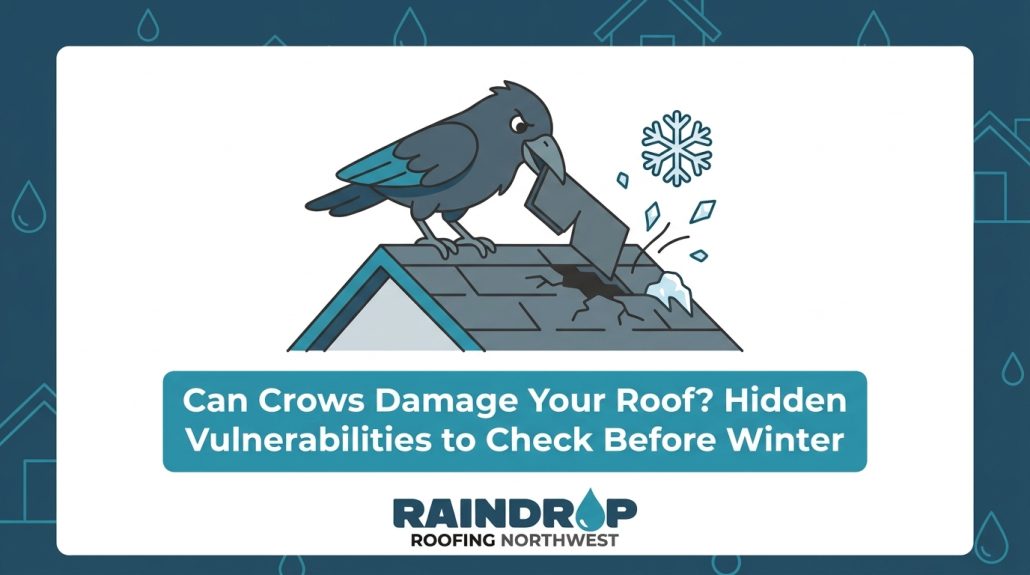
Are Crows Causing Hidden Leaks Above Your Head?
When evaluating home maintenance tips and troubleshooting for the upcoming colder months, property owners frequently focus on clearing gutters, testing the furnace, and sealing drafty windows. However, one of the most significant threats to your property might be flying right over your head. Homeowners often overlook birds as a source of serious property wear and tear, assuming that these winged visitors are harmless. In reality, crows and other local wildlife can create small, unnoticed vulnerabilities in roofing materials that compromise the entire structural envelope.
Identifying these hidden issues is a critical component of October pre-winter preparation. If these micro-punctures and missing granules are left unchecked before the heavy Pacific Northwest winter rains begin, a minor vulnerability can quickly evolve into severe water intrusion. Addressing minor bird-related wear early on prevents the need for major, disruptive interventions later in the season. For comprehensive roof repair in Beaverton, catching these wildlife-induced weaknesses before the first major storm is the most effective way to protect your investment.
The Direct Answer: Can Crows Actually Damage Your Roof?
The short answer is yes. Crows are highly intelligent, resourceful foragers that can cause extensive damage to residential roofing systems. They do not simply rest on the shingles; they actively interact with the materials, pecking at components, tearing at organic growth, and leaving behind highly destructive droppings. Understanding the specific mechanisms of this damage is crucial for homeowners in Beaverton OR and surrounding Pacific Northwest areas.
The Chemical Threat of Acidic Droppings
One of the most insidious forms of bird damage comes from their droppings. Bird waste contains concentrated uric acid, which typically carries a pH level between 3 and 4.5. When these highly acidic droppings accumulate on a roof, they begin to eat away at the petroleum-based asphalt materials. Over time, this chemical reaction accelerates the degradation of the shingles, causing them to become brittle, lose their protective oils, and eventually crack under the strain of temperature fluctuations.
Mechanical Damage from Foraging
Crows are opportunistic feeders that will go to great lengths to secure a meal. They frequently dislodge roofing components to reach insects hiding beneath the surface. Their strong beaks are perfectly designed for prying and pulling, allowing them to lift the edges of older shingles or tear away protective layers. This continuous mechanical stress weakens the adhesive bonds that hold the roofing system together.
Punctures in the Waterproofing Layer
Even minor pecking can have disastrous consequences. When crows peck at the surface of a roof, they can easily puncture the underlying waterproofing layers. These micro-punctures are often entirely invisible from the ground, yet they create direct pathways for moisture to bypass the home’s primary defenses and seep into the underlying wood decking.

Why Crows Target Roofs During Fall and Early Winter
The shift in seasonal weather patterns triggers specific behaviors in local wildlife. As dropping temperatures signal the approach of winter, insects begin seeking warmer environments and places to hibernate. The accumulation of autumn debris on residential roofs provides the perfect insulated shelter for these bugs, which in turn creates an irresistible buffet for foraging birds.
Fall foliage accumulating on shingles creates a rich environment for beetles, grubs, and spiders. Crows actively seek out these areas during the seasonal transition to stockpile food and build their energy reserves for the colder months. A roof covered in pine needles, leaves, and organic matter is essentially a dinner bell for the local crow population.
Clearing this debris is a critical step in preventing wildlife attraction. Proper October pre-winter preparation involves thoroughly sweeping the roof and clearing the gutters to remove the food sources that draw birds to the property in the first place. By eliminating the insects’ habitat, property owners naturally reduce the presence of foraging crows, thereby protecting the structural integrity of the home.
The Danger of Moss-Tearing and Shingle Granule Loss
The Problem: Moss accumulation is incredibly prevalent in wet climates. The heavy moisture of the region promotes rapid moss growth along the edges and between the tabs of roofing materials. This dense, damp greenery not only retains water against the roof deck but also harbors a massive population of bugs that crows love to eat.
The Cause: When crows land on a mossy roof to feed, they do not delicately pick the insects out. Instead, they aggressively tear at the moss with their claws and beaks. In doing so, they inadvertently rip up the protective ceramic granules embedded in the asphalt shingles. These granules are the roof’s primary defense against the elements, providing fire resistance and reflecting harmful ultraviolet rays.
The Solution: Loss of granules exposes the underlying asphalt directly to UV rays and continuous moisture, which drastically accelerates wear and tear. Without these granules, the roof’s primary waterproofing defense is severely compromised, leading to premature failure. In one recent case involving an older mid-century home during the fall season, heavy moss damage and subsequent wildlife activity led to significant moisture intrusion under the eaves. The situation required a complete roof replacement. The professional crew carefully removed all debris, replaced the compromised materials, and even upgraded loud metal vent covers to quieter alternatives, ensuring the home remained completely leak-free and peaceful despite heavy Portland-area rain. Addressing these issues early through professional asphalt shingle roofing repair is essential for homeowners in Beaverton OR and surrounding Pacific Northwest areas to halt the cycle of degradation.
Pecking at Rubber Seals and Flashing
Crows are notoriously attracted to shiny objects, and the exposed metal flashing around chimneys, skylights, and roof valleys often catches their eye. While they cannot easily destroy solid metal, their persistent pecking can loosen the fasteners and degrade the caulking that seals these critical joints. Once the sealant is compromised, the flashing can no longer effectively direct water away from the home’s most vulnerable intersections.
Rubber plumbing boots and vent seals are even more susceptible to mechanical damage. Crows frequently peck at these softer materials, tearing chunks of rubber away or creating deep gouges. This pecking creates micro-punctures that are completely invisible from the ground but allow water to seep directly into the attic space. Damaged flashing and torn rubber boots are among the leading causes of hidden leaks during windstorms and heavy rain.
The consequences of compromised seals are severe. In another instance, a flat roofing system experienced significant leaks after poor-quality sealing work left vulnerabilities exposed to the elements and local wildlife. Once a qualified professional addressed the flat roof with proper materials and excellent workmanship, the leaks were entirely resolved. Ensuring that all rubber components and metal flashings are fully intact is a mandatory phase of any October pre-winter preparation checklist.
The Compounding Threat: Bird Damage Meets Heavy Rain
A small puncture from a crow’s beak might seem completely insignificant during the dry, sunny days of late summer. A missing patch of granules or a slightly torn rubber boot rarely causes immediate issues when the weather is clear. However, roofing systems in this region must withstand intense, prolonged rainy seasons, meaning even a tiny seal puncture can result in catastrophic water intrusion once the weather turns.
When subjected to over 40 inches of annual rainfall, these small holes act as funnels, directing water straight into the underlayment and the wooden roof deck. Because the damage is often localized around vents or hidden beneath layers of shingles, the water intrusion can go unnoticed for months. Continuous moisture intrusion leads to hidden rot, structural decay, toxic mold blooms in the attic, and permanently damaged insulation.
Addressing these vulnerabilities early is the only way to ensure the home remains dry and secure. Homeowners in Beaverton OR and surrounding Pacific Northwest areas cannot afford to wait until a water stain appears on the living room ceiling. By the time water becomes visible inside the house, the structural damage within the attic is usually already extensive and costly to repair.
Identifying Animal Roof Damage vs. Normal Wear and Tear
Distinguishing between a naturally aging roof and one that is under active attack from local wildlife can be challenging for the untrained eye. Normal wear tends to follow predictable patterns, while animal damage is often erratic and localized. Recognizing these specific signs helps homeowners communicate effectively with professionals and take the appropriate preventative measures during October pre-winter preparation. For more detailed insights, reviewing a guide on identifying animal roof damage can be highly beneficial.
| Damage Type | Visual Indicators | Typical Location |
|---|---|---|
| Normal Wear and Tear | Even, uniform granule loss, generalized fading, naturally curling shingle edges, and slow moss accumulation over years. | Spread evenly across the entire surface, heavily influenced by sun exposure and roof pitch. |
| Bird & Crow Damage | Erratic scratching, missing chunks of moss with bare asphalt beneath, concentrated acidic white staining, and micro-punctures in rubber. | Concentrated around plumbing vents, chimneys, skylights, and areas with heavy debris accumulation. |
| Other Wildlife (Squirrels/Raccoons) | Chewed wooden fascia boards, heavily torn metal or plastic vent screens, and large entry holes forced through the decking. | Along the roofline, eaves, soffits, and directly at the attic ventilation points. |
Preventative Fall Maintenance vs. Reactive Fixes
Relying on DIY bird deterrents like plastic owls, reflective tape, or noise-makers rarely fixes the underlying vulnerability that has already been created. While these deterrents might temporarily scare crows away, they do absolutely nothing to repair the torn rubber boots, missing granules, or acidic degradation that the birds leave behind. A neutral, expert evaluation of the roofing system is necessary to spot these microscopic punctures before they cause major issues.
Preventative maintenance is significantly safer and vastly more effective than attempting emergency repairs in the middle of a winter storm. Leveraging Raindrop Roofing Northwest’s deep local experience with Pacific Northwest wildlife and weather provides homeowners with authoritative, region-specific advice on exactly how to fortify their homes. A trained eye knows exactly where crows tend to forage and which seals are most likely to fail under the stress of 40 inches of rain.
Only a licensed professional should navigate a steep, potentially slippery roof to assess this damage. Walking on a roof safely requires specialized footwear, safety harnesses, and a deep understanding of where it is safe to step without causing further harm to aging shingles. Homeowners in Beaverton OR and surrounding Pacific Northwest areas should always prioritize safety and rely on experts to handle the high-altitude inspections.
Frequently Asked Questions About Bird Damage to Roofs
Why do crows peck at roof shingles?
Crows primarily peck at roof shingles because they are actively foraging for insects that hide beneath moss, algae, and accumulated autumn debris. The rich organic matter on a neglected roof provides a steady food source. Additionally, crows may be attracted to the shiny ceramic granules embedded in the shingles, or they may be attempting to gather loose materials for nesting purposes.
Can birds ruin a roof completely?
Over time, untreated bird droppings and continuous pecking can severely degrade roofing materials to the point of failure. While a small flock of birds will not destroy a structurally sound roof overnight, the cumulative damage of acidic waste and mechanical tearing leads to significant leaks, wood rot, and compromised insulation. If left unaddressed for multiple seasons, bird damage can necessitate a premature roof replacement.
How do I protect my roof from bird damage?
The most effective way to protect your property is to keep the roof entirely clear of moss, leaves, and debris, which removes the birds’ primary food source. Regular sweeping and gutter cleaning make the environment far less hospitable to insects and the crows that hunt them. Furthermore, having a professional inspect and reseal any vulnerable metal flashing or rubber boots ensures that even if birds do land, they cannot easily puncture the waterproofing.
Are bird droppings bad for asphalt shingles?
Yes, bird droppings are highly detrimental to petroleum-based asphalt shingles. The high concentration of uric acid in the droppings actively eats away at the asphalt, accelerating its deterioration and causing the material to dry out and crack. Heavy accumulations of bird waste should always be professionally cleaned to neutralize the acid and preserve the intended lifespan of the roofing system.
What should I do if I suspect bird damage before winter?
If you notice excessive bird activity, acidic staining, or torn moss on your property, do not attempt to climb the roof yourself to investigate. The safest and most effective response is to schedule a professional fall maintenance inspection during your October pre-winter preparation. A licensed expert will safely identify any hidden punctures, replace compromised rubber boots, and seal the system before the seasonal rains begin.
Secure Your Home for the Season Ahead
Understanding seasonal roofing risks is the first and most crucial step in protecting your property from the elements. Don’t let hidden wildlife damage turn into a mid-winter crisis that threatens your drywall, insulation, and peace of mind. By taking proactive steps during the fall, homeowners in Beaverton OR and surrounding Pacific Northwest areas can ensure their property remains secure. Talk to an expert about evaluating your roof’s condition today, so you never find yourself in need of an emergency roof repair when the heavy storms finally arrive.




Leave a Reply
Want to join the discussion?Feel free to contribute!