
Roof Repair in Beaverton, OR: Spotting Hidden Moss and Storm Damage Before Winter Rains (Home Maintenance Tips and Troubleshooting)
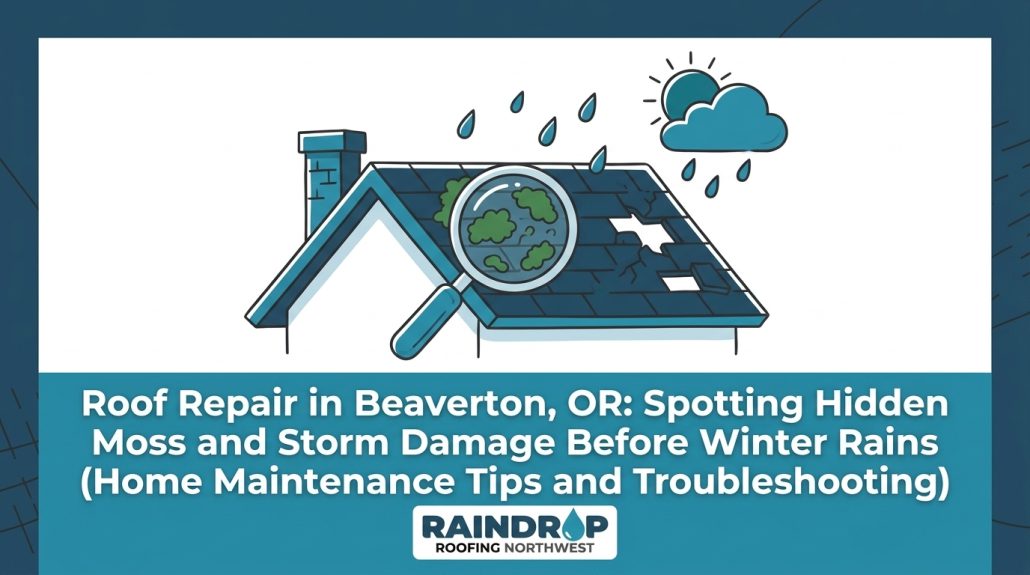
The Race Against Pacific Northwest Winter Rains
You clear the fallen leaves from your driveway and walkways, but the most severe threat to your property is accumulating right above your head. When searching for reliable home maintenance tips and troubleshooting, addressing hidden roof vulnerabilities must be your top priority during the October pre-winter rain season. Beaverton experiences a beautiful, mild early autumn, but that pleasant weather can create a false sense of security. Once the seasonal shift occurs, the region transitions rapidly into a relentless cycle of heavy, continuous winter precipitation.
Fallen autumn leaves do more than just clog your drainage systems. They create a damp, heavy blanket across your shingles that masks active, destructive moss growth and hides minor structural vulnerabilities from plain sight. The immediate decision point for every homeowner is clear: you must address these hidden threats right now while the weather is dry, rather than risking severe interior leaks when the atmospheric rivers finally arrive. If you are looking for professional roof repair in Beaverton, taking proactive steps today is far better than scrambling for emergency roof repair in the middle of a November downpour.
Why the Pre-Winter Window is Critical for Beaverton Homes
The problem: Beaverton’s beautiful canopy of mature Douglas firs and broadleaf maples drops an enormous volume of needles and leaves precisely as the weather begins to cool. This seasonal debris creates a perfect storm for roof vulnerabilities just as the persistent November-to-March rainy season begins.
The cause: According to historical National Weather Service climate data, the Portland and Beaverton areas experience a sharp transition in October. The weather shifts rapidly from dry, late-summer conditions to a continuous pattern of winter precipitation. During this brief October window, the heavy needle and broadleaf drop accumulates in your roof valleys and gutters. Because the air is cooling and the dew point is changing, this debris never fully dries out. It simply sits on your shingles, holding moisture against the roofing materials day after day.
The solution: The October pre-winter rain season is your only reliable window to clear this debris and assess the underlying materials. Waiting until the heavy atmospheric rivers start often turns minor maintenance into major structural repairs. When continuous rain hits a roof that is already burdened by wet leaves and blocked drainage, water has nowhere to go but under the shingles.
The Shift from Autumn Leaves to Atmospheric Rivers
Understanding the local climate timeline is crucial for protecting your property. In the Pacific Northwest, atmospheric rivers—narrow bands of concentrated moisture in the atmosphere—can dump several inches of rain over a single weekend. If your roofing system is already compromised by trapped moisture and organic debris, these intense weather events will rapidly exploit any weakness. A small gap in the flashing or a slightly lifted shingle might survive a light spring shower, but it will fail completely under the pressure of a winter atmospheric river.
How Wet Autumn Leaves Accelerate Hidden Moss Damage
The dampness of the Pacific Northwest climate creates an ideal environment for biological growth, and wet autumn leaves act as an accelerant for this process. Moss spores are naturally present in the air, but they require consistent moisture and shade to thrive. A thick layer of wet leaves provides both, creating a dark, damp blanket that accelerates moss growth on older roofs.
Moss acts exactly like a sponge on top of your house. It absorbs moisture from the damp air and morning dew, adding significant weight to the roof structure. As the moss colonies expand, their tiny root-like structures (rhizoids) dig into the asphalt shingles, loosening the protective granules. Over time, this hidden growth physically lifts the edges of the shingles, exposes the vulnerable underlayment, and traps moisture under the eaves during heavy rain.
The Hidden Biology of Roof Degradation
Because this damage happens underneath a layer of seasonal debris, most homeowners never notice the problem until water spots appear on their ceiling. We’ve seen how hidden moisture issues compound over time in Beaverton and the Pacific Northwest. One local homeowner experienced this firsthand when their flat roof developed severe leaks after a previous company’s poor workmanship left the surface vulnerable to pooling water and debris buildup. Once a professional crew repaired the flawed sections and restored proper drainage, the roof remained entirely leak-free, proving that proper water shedding is essential for long-term protection.
The Domino Effect of Clogged Gutters and Roof Valleys
The problem: Heavy seasonal debris does not just sit on the flat slopes of your roof; it naturally washes down into the valleys and gutters, choking your home’s primary drainage systems.
The cause: When gutters and roof valleys become choked with pine needles and leaves, the intended path of water is completely blocked. Instead of flowing safely down the downspouts and away from the foundation, the rainwater pools in the gutters. As the rain continues to fall, this standing water backs up under the roofline, saturating the fascia boards and the edge of the roof decking.
The solution: Clearing these blockages is your first line of defense against winter water intrusion. Ensuring that water can flow freely off the roof and away from the house prevents the cascading failures that lead to expensive interior damage.
Understanding the Path of Water
To better understand how minor blockages lead to major damage, consider how water behaves when it encounters an obstacle on your roof:
| Symptom on the Roof | Underlying Cause | Resulting Winter Damage |
|---|---|---|
| Overflowing Gutters | Downspouts choked with pine needles and leaves | Water backs up into fascia boards, causing wood rot and eventual interior leaks. |
| Debris Dams in Valleys | Leaves gathering in the natural creases of the roof | Water pools behind the debris, forcing moisture sideways under the shingles. |
| Sagging Gutter Lines | Excessive weight from wet debris and standing water | Gutters pull away from the home, allowing water to cascade directly down the siding. |
Safe, Ground-Level Home Maintenance Tips and Troubleshooting Checklist
Identifying potential vulnerabilities does not require you to put yourself in danger. You can perform a highly effective visual inspection of your property without ever leaving the ground. Implementing these safe, ground-level checks is one of the most important home maintenance tips and troubleshooting steps you can take before the winter season begins.

Signs of Trouble to Look For
When walking around your property in Beaverton and the Pacific Northwest, pay close attention to these specific visual cues:
- Granule accumulation at the base of downspouts: If you see a thick layer of coarse, sand-like material where your downspouts empty, your shingles are rapidly losing their protective coating.
- Visible green patches along the northern-facing slopes: The north side of your house receives the least sunlight, making it the prime breeding ground for destructive moss colonies.
- Curling or buckled shingles visible against the skyline: Stand in your yard and look up at the edge of the roof against the sky. If the profile looks wavy or curled, moisture has likely penetrated the materials.
A critical safety warning: Never climb onto a wet, leaf-covered roof to inspect it yourself, and never attempt to remove moss manually with a brush or pressure washer. DIY moss removal frequently strips the protective granules right off the asphalt, instantly ruining the shingles. For the best roof repair practices, always rely on trained professionals who have the proper safety equipment and specialized treatments to address the problem without causing further harm.
Assessing Windstorm Impact: Missing Shingles and Flashing
While continuous rain is the primary feature of a Pacific Northwest winter, the season is also punctuated by severe, high-velocity windstorms. Early seasonal windstorms can easily tear off aging, brittle shingles or dislodge vital metal flashing around chimneys, skylights, and vent pipes.
Once a piece of flashing is bent or a shingle is blown away, the structural integrity of the entire system is compromised. Wind-driven rain does not just fall straight down; it blows sideways, quickly exploiting these new openings and driving water directly into the attic space. Making immediate repairs is crucial to prevent a localized issue from becoming a whole-house disaster.
The Value of Local Climate Expertise
Working with a company like Raindrop Roofing Northwest means you benefit from deep local expertise regarding Beaverton’s specific wind patterns. Repairs are fortified to hold up against continuous Oregon storms, ensuring that replacement materials are secured to withstand the unique directional winds that sweep through the valley.
During a recent winter, one customer reached out after severe windstorms left their home with missing shingles, exposed flashing, and heavy moss buildup that threatened immediate leaks. A professional crew quickly arrived, replaced the torn shingles, fixed the missing metal flashing, and even removed an old, obsolete satellite dish, leaving the roof in excellent condition despite the ongoing storms. If you are wondering how far our Beaverton roofing crews travel for repairs, rest assured that local teams are positioned to respond quickly to wind damage across the community.
The Value of a Professional Pre-Winter Roof Inspection
While ground-level checks are an excellent starting point, they cannot replace the trained eye of an expert. A professional pre-winter roof inspection synthesizes all of these concerns, allowing trained technicians to safely navigate the surface and identify vulnerabilities that are completely invisible from the driveway.
Professionals know exactly how to walk on a roof without damaging the materials. They can physically feel for soft spots in the decking, identify micro-leaks around pipe boots, and spot hidden caulking failures that are guaranteed to fail during the October pre-winter rain season. Catching a minor leak or a failing seal during a routine inspection prevents catastrophic water damage and can significantly extend the life of an older roofing system.
Micro-Leaks and Hidden Caulking Failures
The caulking and sealants used around your vents and chimneys naturally degrade over time due to UV exposure and temperature fluctuations. When these seals dry out and crack, they create micro-leaks. These tiny gaps might not let in enough water to immediately stain your ceiling, but they allow slow, persistent moisture to rot the wood decking from the inside out.
Professional oversight also ensures that unexpected complications are handled safely and correctly. During a late Saturday roof installation this past summer, a roofing crew discovered an unseen water pipe that had been accidentally compromised beneath the decking. Because the crew was backed by strict professional protocols, they immediately dispatched a plumber to fix the pipe and ensured the entire roofing system was installed to current structural standards. This is the level of comprehensive care you receive when you hire reputable local roofing contractors.
Protect Your Home Before the Heavy Rains Hit
The transition from mild autumn weather to relentless winter rain happens quickly in Beaverton. You have a brief, critical window right now to clear away hidden moss, unclog your drainage systems, and secure any loose materials before the atmospheric rivers arrive. Implementing these home maintenance tips and troubleshooting strategies today will save you from emergency repairs tomorrow.
Do not wait until you see a water stain on your living room ceiling to take action. Schedule a professional pre-winter inspection while the weather still permits, and gain the peace of mind that comes from knowing your home is fully prepared, protected, and fortified against the Pacific Northwest climate.
Frequently Asked Questions
How do you treat moss on a roof in Oregon?
Treating moss requires specialized, non-abrasive chemical applications rather than forceful scraping. In Oregon, professionals apply environmentally safe treatments that kill the moss down to the root, allowing it to naturally weather away over time. Never use a pressure washer or a stiff wire brush, as this will aggressively strip the protective granules off your asphalt shingles and ruin the roof.
What happens if you don’t clean gutters before winter?
Failing to clean your gutters leads to severe water backup and structural rot. When winter rains hit clogged gutters, the water overflows and pools against the wooden fascia boards, eventually seeping into the roof decking and your home’s interior walls. Additionally, the extreme weight of wet debris and standing water can cause the entire gutter system to sag or tear completely away from the house.
How often should a roof be inspected in the Pacific Northwest?
Due to the intense moisture and heavy tree canopy, homes in the Pacific Northwest should be inspected at least once a year. The ideal time for this inspection is in the early fall, right before the continuous winter rains begin. An annual check ensures that moss growth, cracked sealants, and wind-damaged shingles are caught early before they can cause interior leaks.
How do you tell if your roof needs repair before winter?
Start by looking for visible signs of distress from the ground, such as curled shingles, missing materials, or heavy moss accumulation. Check the base of your downspouts for a thick buildup of shingle granules, which indicates the roofing material is degrading. If you notice sagging gutters, dark patches on the slopes, or uneven lines against the sky, it is time to call a professional for a thorough assessment.
Is roof moss bad in Oregon?
Yes, roof moss is highly destructive to homes in Oregon. Moss acts like a thick sponge, absorbing moisture from the damp climate and holding it directly against your roofing materials. As it grows, the moss lifts the edges of the shingles, breaking the waterproof seal and allowing rainwater to rot the underlying wood decking.
Can I inspect my roof for winter damage safely from the ground?
Yes, you can perform a highly effective preliminary inspection from your driveway or yard using a pair of binoculars. Look closely at the flashing around your chimney, check for missing or buckled shingles, and assess the straightness of your gutter lines. However, this ground-level visual check should complement—not replace—a comprehensive physical inspection performed by a licensed roofing professional.




Leave a Reply
Want to join the discussion?Feel free to contribute!