
Beginner’s Guide to How Ownership Affects Roofing Quality and Warranty
Why How Ownership Affects Roofing Quality and Warranty Matters More Than Most Homeowners Realize
Understanding how ownership affects roofing quality and warranty is one of the most financially important things you can do before buying, selling, or simply continuing to own a home in the Portland metro area. A roof is one of the most expensive systems on any property — and the warranty protecting it is only as strong as the ownership decisions made around it.
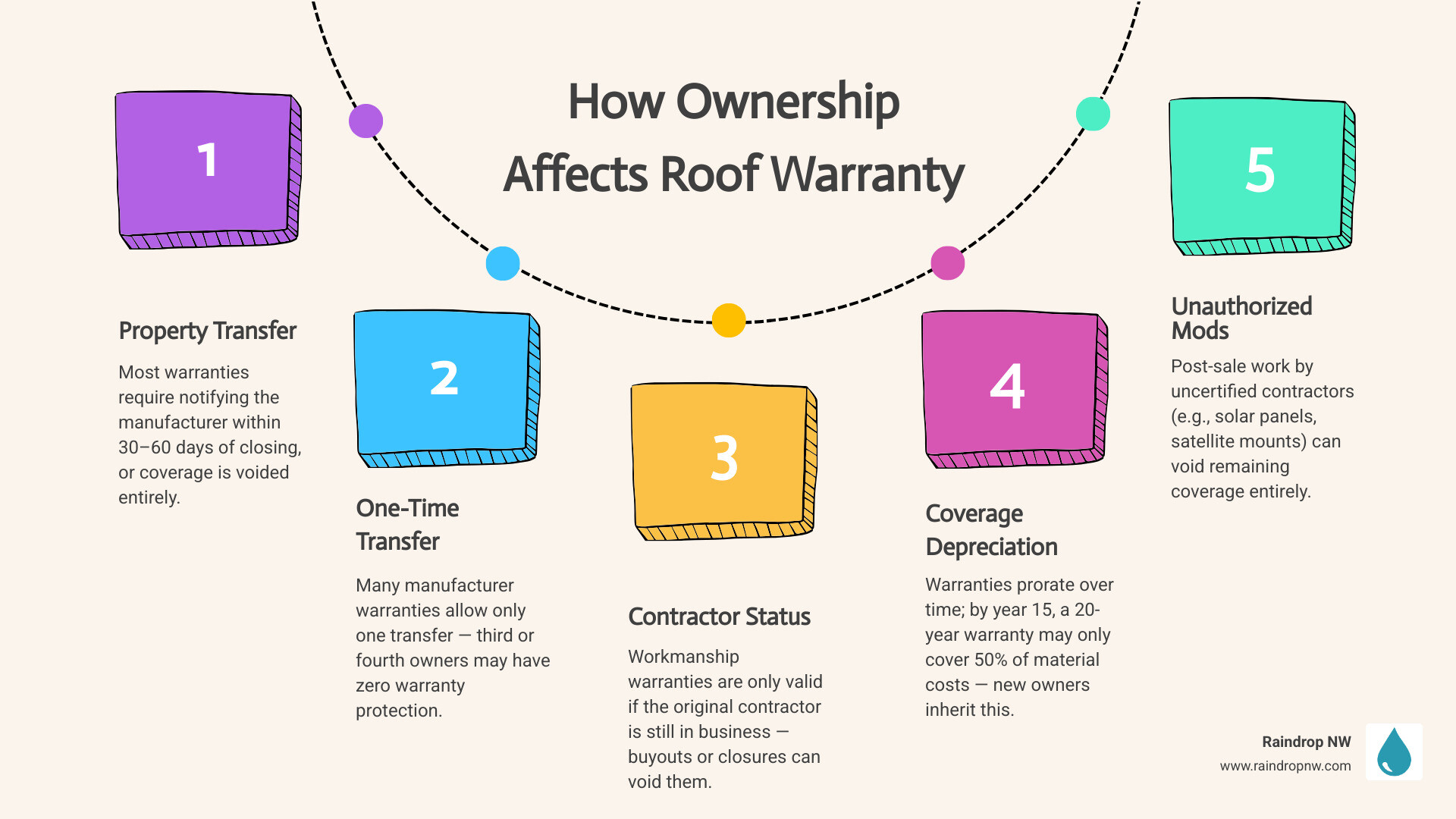
Here is a quick overview of the key ways ownership impacts your roof warranty:
- Property transfer deadlines: Most warranties require you to notify the manufacturer or contractor within 30 to 60 days of closing, or coverage is voided entirely.
- One-time transfer limits: Many manufacturer warranties only allow a single transfer — meaning a third or fourth owner may have no warranty protection at all.
- Contractor business continuity: A workmanship warranty is only valid if the contractor who issued it is still in business. If they were bought out or shut down, that warranty may be worthless.
- Maintenance documentation: Failing to keep inspection records after a property changes hands is one of the most common reasons warranty claims get denied.
- Coverage depreciation: Many warranties prorate over time, meaning a 20-year warranty may only cover 50% of material costs by year 15 — and new owners often inherit that reduced coverage without realizing it.
- Unauthorized modifications: Work done by uncertified contractors after a sale — like solar panel installations or satellite dish mounts — can void remaining coverage entirely.
Most people assume that buying a home with a “lifetime” roof warranty means they are fully protected. In reality, that warranty may already be partially prorated, non-transferable, or tied to a roofing contractor who no longer exists.
I’m Torrey Yungeberg, owner of Raindrop Roofing NW, and after years of helping Oregon homeowners navigate exactly these situations, I’ve seen how how ownership affects roofing quality and warranty can mean the difference between a protected investment and a costly surprise. In the sections below, I’ll walk you through everything you need to know to protect your coverage — whether you’ve just bought a home or you’re preparing to sell one.
Understanding How Ownership Affects Roofing Quality and Warranty

When a property changes hands, the legal relationship between the property owner, the roofing contractor, and the material manufacturer undergoes a significant transition. Many homeowners and commercial property managers view a roof warranty as an absolute, permanent shield tied directly to the physical shingles or membrane. In reality, a roof warranty is a legal contract that is highly sensitive to changes in property ownership.
Without proactive steps during a real estate transaction, a warranty that was once robust can instantly reset to zero coverage the moment the deed is transferred. This occurs because warranty agreements are structurally built with transfer clauses designed to limit the manufacturer’s long-term liability. Additionally, coverage depreciation schedules continue to run regardless of who holds the deed. If a previous owner neglected routine maintenance, the new owner inherits a compromised physical asset along with a legal contract that the manufacturer may already have grounds to void.
Real Estate Transactions: How Ownership Affects Roofing Quality and Warranty
In real estate transactions across the Portland metro area—from Beaverton to Lake Oswego—a transferable roof warranty can serve as a powerful marketing asset and a crucial point of leverage. For home sellers, being able to present a documented, fully transferable warranty provides prospective buyers with immense peace of mind, justifying a stronger asking price and smoothing out negotiations.
However, actually executing this transfer requires close attention to detail. Nearly every warranty provider enforces a strict deadline for transfer requests. In many cases, the new homeowner or the seller must submit the required paperwork, proof of purchase, and a transfer fee within 60 days of the property closing date. If this window is missed, the warranty is permanently voided, leaving the buyer completely unprotected against future material failures.
Commercial vs. Residential: How Ownership Affects Roofing Quality and Warranty
The management of roof warranties varies significantly depending on the ownership scenario:
- Single-Family Homes: These warranties typically focus on steep-slope asphalt shingles or metal roofing. While they often advertise “lifetime” coverage, this term is legally defined as the useful life of the product under the original owner. Upon transfer, the lifetime status usually transitions to a fixed-year prorated period.
- Commercial Portfolios and Multi-Family Buildings: Managing flat or low-slope commercial roofs (like TPO or EPDM membranes) involves highly technical, No Dollar Limit (NDL) system warranties. For facility managers overseeing multi-site portfolios in Tigard or Hillsboro, maintaining these warranties requires strict compliance with bi-annual professional inspections and meticulous maintenance logging.
- Rental Properties: Ownership transitions for investment properties can complicate warranty enforcement if tenants or uncertified handymen perform unauthorized modifications, such as mounting satellite dishes or running HVAC lines directly through the roofing membrane.
The Warranty Stack: Material, Workmanship, and System Coverage
A comprehensive roofing warranty is not a single, all-encompassing document. Instead, it is a stack of distinct coverages provided by different parties. Understanding the specific layers of this “warranty stack” is essential for determining who is financially responsible when a roof leak or material failure occurs.
| Warranty Type | Provider | Typical Duration | Coverage Scope | Impact of Ownership Transfer |
|---|---|---|---|---|
| Standard Material Warranty | Manufacturer | 20 to 50 Years | Covers factory defects in physical materials (cracking, delamination, premature granule loss). Excludes labor. | Usually transferable once; often transitions from non-prorated to prorated after year 10. |
| Contractor Workmanship Warranty | Installing Contractor | 2 to 10 Years | Covers installation errors (improper flashing, incorrect nail placement, poor ventilation cuts). | Rarely transfers to a new owner unless backed by a manufacturer system agreement. |
| System Warranty (NDL) | Manufacturer | 10 to 30 Years | Covers both materials and labor for the entire roofing assembly. Eliminates finger-pointing. | Highly transferable, but requires strict adherence to notification deadlines and inspection logs. |
Manufacturer Material Warranties vs. Contractor Workmanship Warranties
The divide between material and workmanship coverage is the source of many unresolved roofing disputes. A standard manufacturer warranty attaches strictly to the physical product. If your shingles delaminate or curl prematurely due to a factory defect, the manufacturer will cover the replacement materials. However, they will not pay for the expensive labor of tearing off the old roof and installing the new one unless you hold an enhanced system warranty.
Conversely, a workmanship warranty is issued directly by the contractor and covers installation errors, such as a missed flashing detail around a chimney or shingles blowing off due to incorrect nail placement. The real-world value of a workmanship warranty is entirely dependent on contractor longevity. If a roofing company goes out of business, restructures, or is acquired by an out-of-state firm, their workmanship guarantee instantly disappears.
This is why verifying credentials and asking the right questions is so critical. To ensure your roof is built to last, we recommend reading our guides on How Manufacturer Certifications Indicate Quality, reviewing the key Questions to Ask Before Hiring a Roofer, and learning How to Choose the Right Roofing Contractor.
The Role of System and No Dollar Limit (NDL) Warranties
A system warranty, often referred to in commercial roofing as a No Dollar Limit (NDL) warranty, represents the highest tier of roofing protection. To qualify for a system warranty, the entire roof assembly—including shingles or membrane, underlayment, starter strips, ridge caps, and ventilation components—must be from a single manufacturer and installed by a certified, top-tier contractor.
Because the manufacturer inspects and backs the entire system, these warranties cover both materials and labor. This structure completely eliminates the common “blame game” where a manufacturer claims a leak is due to poor installation, while the installer claims it is due to a material defect.
The Transfer Process: Deadlines, Documentation, and Pitfalls
Successfully transferring a roof warranty requires navigating a precise legal process. It is a common myth that roof warranties transfer automatically to a new homeowner along with the property deed. In reality, failing to submit the correct paperwork within the strict manufacturer-enforced notification window is one of the most common ways new owners lose their coverage.
Step-by-Step Guide to Transferring a Roof Warranty
To ensure you do not lose valuable coverage during a property transfer in the Portland metro area, follow this step-by-step process:
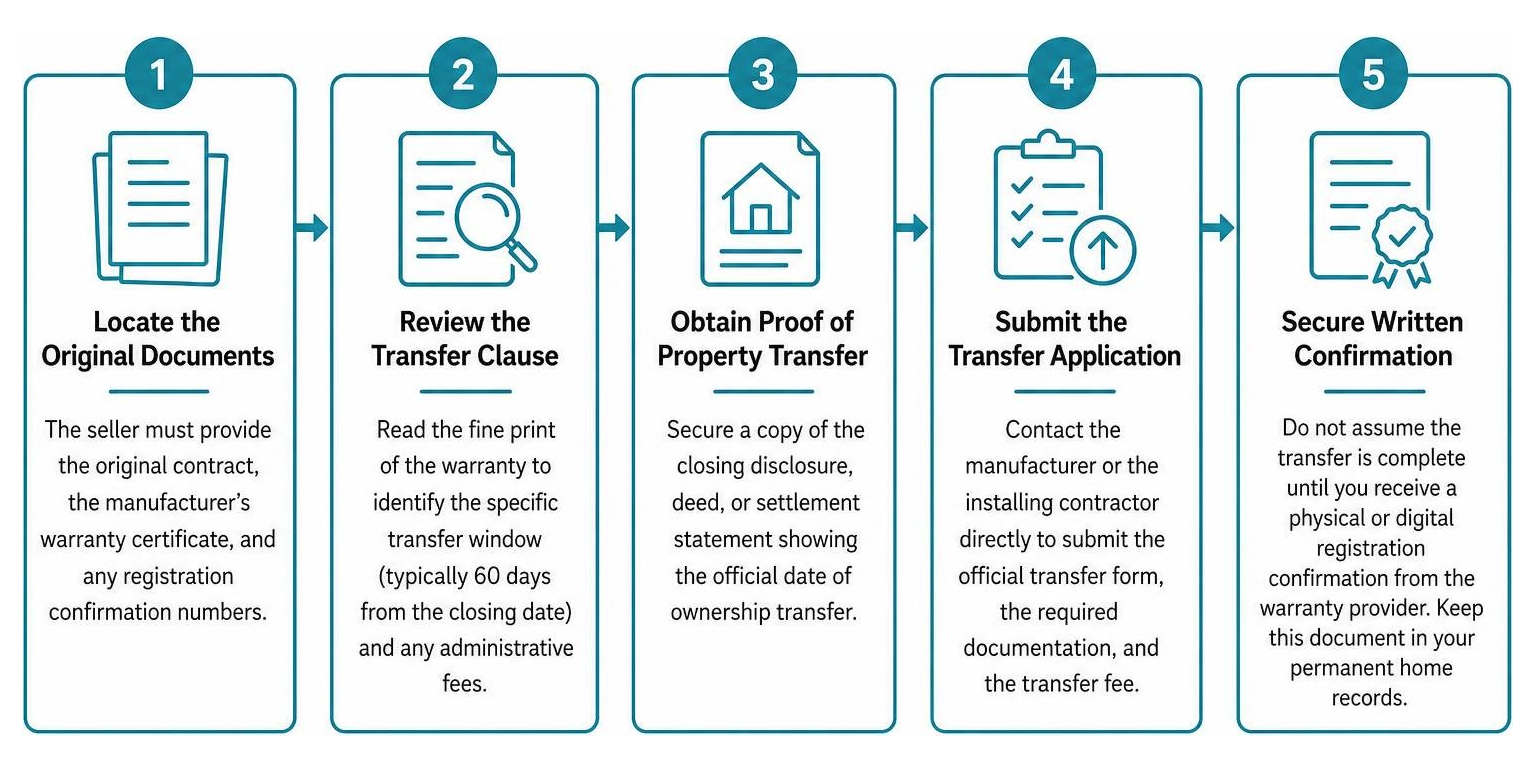
- Locate the Original Documents: The seller must provide the original contract, the manufacturer’s warranty certificate, and any registration confirmation numbers.
- Review the Transfer Clause: Read the fine print of the warranty to identify the specific transfer window (typically 60 days from the closing date) and any administrative fees.
- Obtain Proof of Property Transfer: Secure a copy of the closing disclosure, deed, or settlement statement showing the official date of ownership transfer.
- Submit the Transfer Application: Contact the manufacturer or the installing contractor directly to submit the official transfer form, the required documentation, and the transfer fee.
- Secure Written Confirmation: Do not assume the transfer is complete until you receive a physical or digital registration confirmation from the warranty provider. Keep this document in your permanent home records.
Common Exclusions That Void Coverage After Transfer
Even if a warranty is successfully transferred, new owners must remain vigilant to avoid actions that can void the agreement. In our damp Pacific Northwest climate—stretching from Beaverton to Vancouver, WA—biological contamination is a major concern. If a new owner allows thick moss, algae, or heavy pine needle debris to accumulate on the roof, the manufacturer can deny future claims, citing a standard “lack of maintenance” exclusion clause.
Other common exclusions that can instantly void a transferred warranty include:
- Ponding Water: Standing water on flat roofs that does not drain within 48 hours of rainfall.
- Unauthorized Modifications: Installing solar panels, satellite dishes, or skylights through uncertified third-party contractors who puncture the roofing system.
- Inadequate Attic Ventilation: Failing to maintain proper intake and exhaust ventilation, which traps extreme heat and moisture, accelerating shingle degradation.
How Contractor Business Ownership Impacts Your Warranty Value
The quality and long-term reliability of your roof warranty are deeply intertwined with the business structure and ownership of the contractor who installed it. Many homeowners do not realize that a workmanship warranty is only as stable as the business behind it. If the contracting company undergoes an ownership change, your financial protection could be at serious risk. To understand how local stability impacts your roof, read our detailed article on How Independent Ownership Protects Your Warranty.
The Risk of Corporate Buyouts and Private Equity in Roofing
In recent years, the roofing industry across the Portland-metro area has seen a massive influx of private equity firms and out-of-state corporate consolidators buying up local, family-owned roofing companies. When an independent roofing company is acquired by a corporate chain, the focus often shifts from community-minded service to rapid volume and profit margins.
More importantly for homeowners, these corporate buyouts frequently lead to the restructuring of past liabilities. If a corporate buyer purchases only the assets of a local roofer and dissolves the original business entity, past workmanship warranties can become completely orphaned and legally unenforceable. To see how these business models differ, explore our Local Independent Roofer vs Corporate Chain Comparison and learn what to look for when Choosing a Roofing Company That Won’t Sell Out.
Why Local, Independent Ownership Protects Your Investment
Choosing a truly local, independently owned roofing contractor with deep roots in the community is the single best way to protect your roofing investment. A local, family-owned business relies entirely on its regional reputation and community accountability. They are far more likely to honor workmanship guarantees and address minor post-installation issues quickly, without requiring complicated legal battles.
Furthermore, local independent roofers maintain consistent licensing and insurance histories with local boards, such as the Oregon Construction Contractors Board (CCB). To learn more about these benefits, check out our guide on the Benefits of Choosing a Truly Local Independent Roofer and see How Consistent Licensing Protects Past and Future Customers.
Proactive Steps for New Property Owners to Maximize Warranty Value
If you have recently purchased a home or commercial building in the Portland metro area, taking immediate, proactive steps is essential to preserve and maximize the value of your existing roof warranty.
Assessing Roof Condition and Warranty Status Post-Closing
Immediately after taking ownership of a property, you should conduct a thorough assessment of both the physical roof and its administrative records. Do not rely solely on a standard home buyer’s inspection, which often lacks the specialized depth needed to identify subtle roofing issues.
Instead, schedule a professional roof inspection with a certified, local contractor to evaluate the roof’s current condition, check for proper attic ventilation, and identify any immediate maintenance needs. To ensure you are working with a trustworthy professional, follow our guide on How to Verify a Roofer’s License and Insurance and consider booking our specialized roof inspections and certifications service.
Long-Term Maintenance and Record-Keeping Best Practices
To keep your manufacturer and workmanship warranties fully valid, you must establish a consistent routine of preventative care and meticulous record-keeping:
- Schedule Bi-Annual Inspections: Have your roof professionally inspected every spring and fall to catch minor issues before they escalate.
- Keep a Digital Maintenance Log: Maintain a secure folder containing digital copies of all inspection reports, before-and-after photos of repairs, and receipts for professional services.
- Perform Routine Cleans: Keep gutters clear of debris and address moss or algae growth promptly using manufacturer-approved cleaning methods. If your roof requires professional attention, rely on certified repairs and maintenance to preserve your warranty coverage.
Frequently Asked Questions about Roof Warranties
What happens if I miss the 60-day warranty transfer deadline?
If you miss the manufacturer’s or contractor’s specified transfer window (which is strictly enforced and typically ranges from 30 to 60 days post-closing), the warranty is permanently voided. The coverage cannot be reinstated, leaving the new homeowner entirely responsible for any future material or labor costs.
Does a transferable warranty cover storm damage or acts of God?
No. Roof warranties are designed to cover manufacturing defects and installation errors. They do not cover damage caused by external forces, severe weather, fallen trees, or windstorm events that exceed the shingle’s rated wind limit. These events must be resolved through your homeowners insurance policy.
Why do workmanship warranties depend on contractor longevity?
Because a workmanship warranty is a direct agreement between you and the installing contractor, it is only as strong as the contractor’s financial stability. If the roofing company goes out of business, closes down, or is dissolved following a corporate acquisition, there is no corporate entity left to honor the workmanship claims, leaving you without recourse.
Conclusion
Navigating how ownership affects roofing quality and warranty can feel like a complex puzzle, but taking the time to understand the details is one of the smartest ways to protect your home and your wallet. Whether you are buying a new home in Beaverton, selling a commercial property in Hillsboro, or planning a long-term remodel, keeping your roof warranty valid ensures your investment remains secure.
At Raindrop Roofing NW, we believe in transparency, craftsmanship, and community accountability. As a family-owned, truly independent roofing company serving the greater Portland metro area, we are committed to standing by our workmanship for the long haul—without the corporate red tape or orphaned warranties of out-of-state chains.
If you have questions about your current roof’s warranty, need to schedule a certified inspection, or are planning a replacement, we are here to help. Explore our comprehensive residential roofing services or contact us today to schedule a free, honest roof assessment.




Leave a Reply
Want to join the discussion?Feel free to contribute!