
The Ultimate Guide to How Material Choice Impacts Your Roof Cost
Why Understanding How Material Choice Impacts Your Roof Cost Can Save You Thousands
How material choice impacts your roof cost is one of the most important things to understand before you sign a single contract or approve a single quote. The material you choose doesn’t just change the line item for shingles — it shapes your labor costs, your installation timeline, your long-term maintenance budget, your insurance premiums, and even whether your home’s structure needs reinforcement before work can begin.
Here’s a quick look at how different roofing materials compare across the factors that matter most to homeowners:
| Material | Lifespan | Relative Upfront Cost | Key Consideration |
|---|---|---|---|
| 3-Tab Asphalt Shingles | 15-20 years | Lowest | Shortest lifespan; higher long-term replacement frequency |
| Architectural Asphalt Shingles | 25-30 years | Low-Moderate | Best balance of cost, durability, and curb appeal for most homes |
| Standing Seam Metal | 50-70 years | High | Strong energy efficiency and insurance discount potential |
| Cedar Shake | 20-30 years | Moderate | Requires regular maintenance; check local fire codes |
| Clay or Concrete Tile | 50-100 years | High | Heavy; may require structural reinforcement |
| Natural Slate | 75-150 years | Highest | Extremely long-lasting but demands expert installation and strong structure |
Each of these materials carries a different ripple effect through your entire project. A cheaper shingle doesn’t automatically mean a cheaper roof when you factor in tear-off scope, underlayment requirements, structural needs, and how often you’ll be back on the replacement cycle. On the flip side, a premium material isn’t always the right call if your home’s structure, your neighborhood’s resale expectations, or the Oregon climate don’t support it.
This guide is written specifically for homeowners in the Portland metro area and greater NW Oregon — where rain, moss, wind, and temperature swings all play a real role in how roofing materials perform over time.
I’m Torrey Yungeberg, owner of Raindrop Roofing NW and a lifelong Oregonian with years of hands-on experience watching how how material choice impacts your roof cost plays out on real homes across our region. My team and I see the consequences of these decisions — good and bad — on every project we take on.
How material choice impacts your roof cost from day one
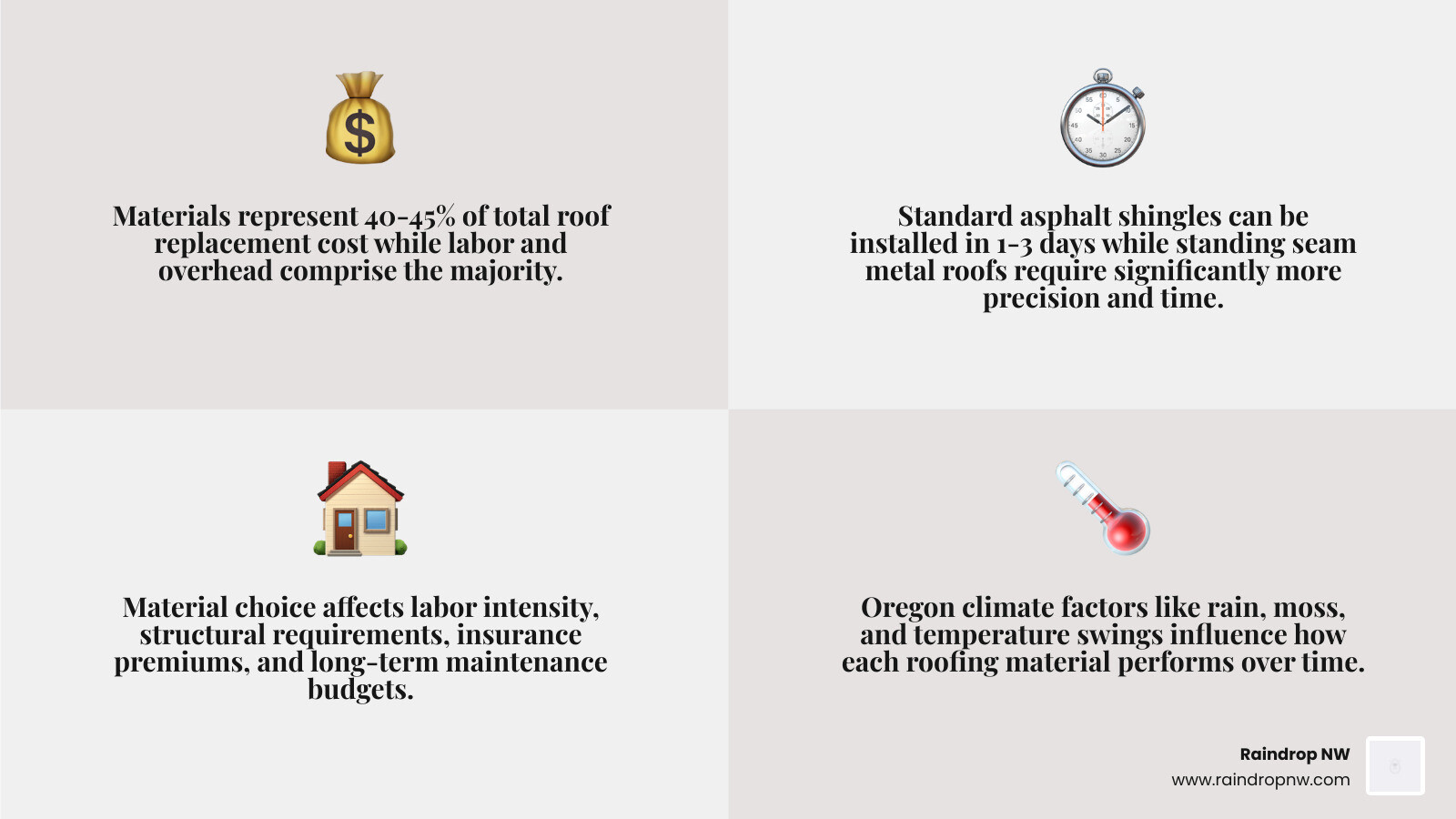
When we sit down with a homeowner in Beaverton or Lake Oswego, the conversation often starts with the price of the “shingle.” But the surface material is just the tip of the iceberg. In 2026, materials account for approximately 40% to 45% of the total roof replacement bill, while labor and overhead make up the rest.
The material you pick dictates the labor intensity. For example, standard asphalt shingles are designed for speed and efficiency. A skilled crew can often finish a standard-sized home in one to three days. However, if you choose a standing seam metal roof, the installation speed drops because of the precision required for crimping and securing panels. This extra time on the clock directly increases your labor bill.
Waste factor is another silent budget-killer. A simple gable roof has very little waste, but a complex roof with many valleys and dormers requires more cutting. Some materials, like slate or tile, have a higher waste factor because they are fragile and can break during transit or installation. If your roof has a steep pitch, the material choice becomes even more critical. Steeper roofs require specialized safety equipment, harnesses, and more cautious material handling, which adds to the total investment.
Why how material choice impacts your roof cost goes beyond the shingles
A roof is a complete system, not just a layer of waterproof paper. When you change the surface material, you often have to change everything underneath it. This includes:
- Underlayment: Premium materials often require high-performance synthetic underlayments or ice-and-water shields, especially in the damp Pacific Northwest.
- Flashing: If you’re investing in a 50-year metal roof, you shouldn’t reuse old, thin flashing. You’ll need high-quality, long-lasting metal flashing at every chimney and penetration.
- Ventilation: Different materials breathe differently. Upgrading to a premium material often triggers a need for a ventilation overhaul to meet modern building codes and ensure your warranty remains valid.
- Disposal and Permits: Heavier materials like tile or old cedar shakes cost more to haul away and dispose of. Additionally, local jurisdictions in areas like Tigard or Hillsboro may have specific permit requirements based on the material’s weight or fire rating.
For a deeper dive into these components, check out our Roof Replacement Cost Guide for Homeowners.
How heavier and specialty materials change labor and structure needs
One of the biggest “hidden” impacts on your budget happens when you switch from a lightweight material to a heavy one. Standard asphalt shingles weigh about 2 to 3 pounds per square foot. In contrast, clay or concrete tiles can weigh between 8 and 12 pounds, and natural slate can be even heavier.
If you are moving from asphalt to tile or slate, a structural review by an engineer is often mandatory. We’ve seen cases where homes require significant structural reinforcement—adding rafters or bracing—to support the massive weight of a premium stone or tile roof. This can add thousands to the project before the first tile is even laid. Staging these materials also requires specialized equipment, like heavy-duty cranes, rather than a simple shingle ladder hoist.
Comparing common roofing materials by value, lifespan, and upkeep
In May 2026, the roofing market is seeing prices trend 12% to 18% higher than just two years ago due to labor shortages and material shifts. This makes choosing the right material for your long-term goals more important than ever.
| Material | Lifespan | Maintenance | Curb Appeal |
|---|---|---|---|
| Asphalt | 20-30 Years | Low | Moderate |
| Metal | 40-70 Years | Very Low | High/Modern |
| Cedar | 20-30 Years | High | Very High/Natural |
| Tile | 50-100 Years | Moderate | High/Classic |
| Slate | 75-150 Years | Low | Exceptional |
How material choice impacts your roof cost with asphalt shingles
Asphalt remains the most popular choice in the Portland metro area for a reason: it’s versatile. However, not all asphalt is created equal.
- 3-Tab Shingles: These are the basic, flat shingles. They are the most affordable upfront but have the shortest lifespan (15-20 years) and the lowest wind resistance.
- Architectural Shingles: Also known as dimensional shingles, these are the standard for most NW Oregon homes. They offer a 25-30 year lifespan and much better wind ratings (up to 130 mph).
- Designer/Premium Shingles: These mimic the look of slate or wood shakes. They are thicker, heavier, and offer the best “curb appeal” ROI.
Deciding between these options often comes down to how long you plan to stay in your home. We explore this in detail in our Architectural vs Designer Shingle Comparison and our guide on How Shingle Grade Affects Lifespan and Appearance. If you’re looking for the best performance in our rainy climate, you might want to look at Premium Shingle Options for Pacific Northwest Homes or specifically our services for Asphalt Shingle Roofing Replacement in Savannah Oaks OR.
How material choice impacts your roof cost with metal, cedar, tile, and slate
If you’re looking beyond asphalt, you’re entering “lifetime” roofing.
Metal Roofing: Standing seam metal is a favorite in places like West Linn and Lake Oswego. It’s incredibly durable and can reduce cooling costs by 10% to 25%. While the upfront cost is higher, it often lasts 50 to 70 years. You can learn more about this in our Ultimate Metal Roofing First Addition OR guide or see why we’re considered a Best Metal Roofing Company in Raleigh Hills OR.
Cedar Roofing: Nothing beats the natural beauty of cedar, but it requires commitment. In our humid climate, cedar needs regular cleaning to prevent moss and rot. We provide specialized Cedar Roofing Installation in First Addition OR and are a Best Cedar Roofing Company in Savannah Oaks OR.
Tile and Slate: These are the heavyweights of the industry. Natural slate is the longest-lasting material, sometimes surviving 150 years. Clay and concrete tiles are also incredibly durable but require a home that can handle their weight.
Choosing the right roofing material for your climate and home style
In the Pacific Northwest, we don’t have to worry about the same hailstorms as the Midwest, but we deal with relentless moisture and the occasional heavy snow load. How material choice impacts your roof cost is often a reflection of how well that material handles our specific local “flavor” of weather.
Best material traits for hail-prone, hot/humid, and cold/snowy climates
- Moisture and Moss: In humid or rainy areas like Portland and Gresham, algae-resistant shingles are a must. These shingles have copper granules that prevent the “black streaks” caused by algae.
- Snow Loads: If you live in higher elevation areas like Sandy or Boring, snow shedding is a factor. Metal roofs excel here because snow slides off easily, preventing the weight from stressing your rafters.
- Heat: In the summer, reflective “cool roofs” or metal roofing with reflective coatings can significantly lower your attic temperature.
- Impact Resistance: While we don’t get massive hail often, falling branches are a reality. Class 4 impact-resistant shingles can sometimes qualify you for insurance premium discounts of 10% to 35%.
Matching material to architecture, resale goals, and neighborhood expectations
Your roof is roughly 40% of your home’s exterior visual. A quality roof replacement can provide a return on investment (ROI) of 60% to 70% when selling.
If you live in a neighborhood with strict HOA rules, like some parts of Tualatin or Sherwood, your material choice might be limited. However, matching the material to the architecture is key. A modern home looks fantastic with standing seam metal, while a traditional Craftsman or Tudor home might look best with thick, designer asphalt shingles or natural cedar.
The hidden project variables homeowners often miss
When we perform a free inspection, we’re looking for the things that don’t show up on a standard “per square” estimate. These variables can fluctuate wildly depending on the material you choose.
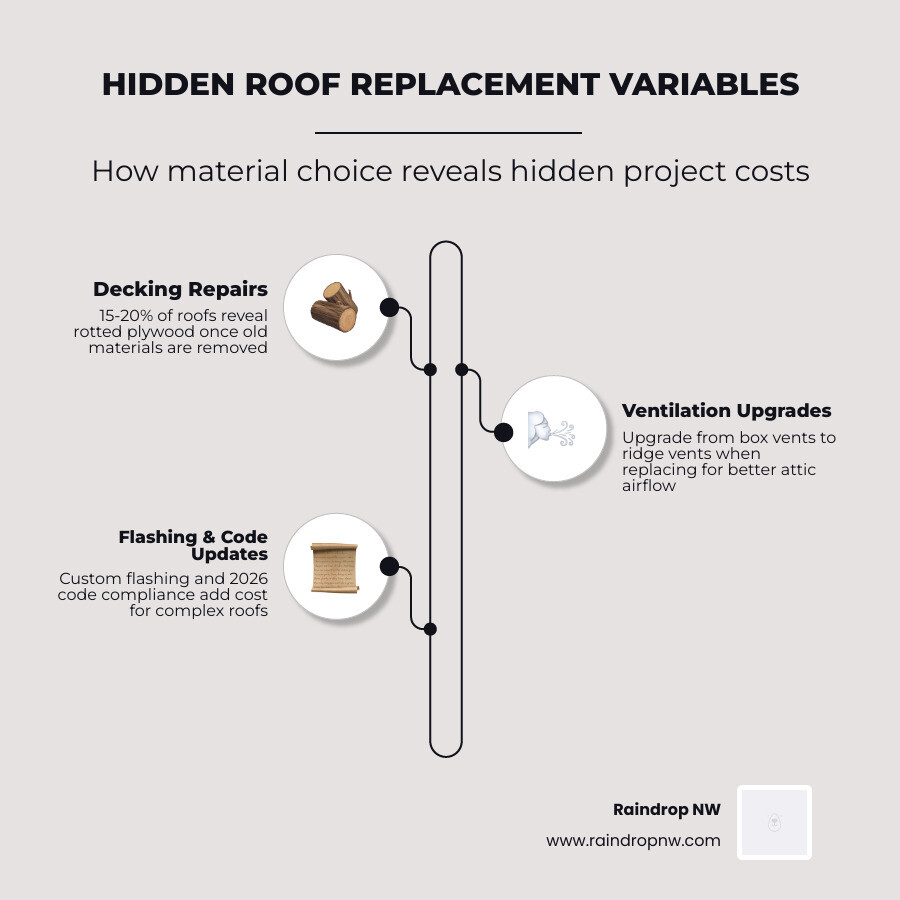
- Decking Repairs: Once the old roof is torn off, we often find rotted plywood. This is discovered in about 15-20% of projects.
- Ventilation Upgrades: Many older homes in Damascus or Oregon City have “choked” attics. Upgrading your material is the perfect time to switch from old box vents to a more efficient ridge vent system.
- Flashing and Chimneys: If you have a complex roof with multiple chimneys, skylights, or dormers, the cost of custom flashing will increase.
- Code Updates: Building codes change. Your new roof must meet 2026 standards, which might mean adding more fasteners or different types of drip edges that weren’t required 20 years ago.
How roof size, pitch, and access interact with material selection
Roofers price jobs by the “square,” which is a 100-square-foot area. But a 2,000-square-foot home doesn’t just need 20 squares of material.
- Pitch Multiplier: A steep roof has more surface area than a flat one for the same floor plan. A steep 12:12 pitch can require 30% more material than a shallow roof.
- Complexity: Every valley, dormer, and turret adds labor and waste.
- Access: If our trucks can’t get close to the house because of a long, narrow driveway or low-hanging trees, we have to move material by hand. This “labor carry” is a factor in the final quote.
Warranty, insurance, and energy efficiency factors to compare before you decide
Before you make your final choice, consider these three “long-term” money factors:
- Warranties: There’s a difference between a workmanship warranty (from us) and a manufacturer warranty (from the shingle maker). Premium materials often come with longer, non-prorated warranties.
- Insurance Discounts: Ask your agent if a Class 4 shingle or a metal roof will lower your premiums. In many cases, the savings over 10 years can pay for the material upgrade.
- Energy Efficiency: Reflective metal roofs or ENERGY STAR-rated shingles can save you $200-$600 annually on energy bills.
Questions to ask before choosing a material:
- Is my roof structure strong enough for this weight?
- Does this material qualify for an insurance discount?
- What is the “true annual cost” (Price divided by Lifespan)?
- How does this material handle moss and algae in the PNW?
Frequently Asked Questions about how material choice impacts your roof cost
Which roofing material is usually the most cost-effective long term?
While 3-tab shingles are the cheapest today, architectural shingles are usually the most cost-effective for the average homeowner because they last much longer for a small price increase. However, if you plan on staying in your home for 40+ years, metal roofing actually has a lower “cost per year” because you won’t have to replace it again.
Do premium roofing materials always add better resale value?
Usually, yes. A metal or designer shingle roof is a huge selling point. However, you don’t want to “over-improve” for your neighborhood. If every house on your block has standard asphalt, you might not get a 100% return on a slate roof. It’s all about balance and neighborhood fit.
What hidden issues are more common with heavier or premium materials?
Structural sagging is the biggest one. If we put heavy tile on a roof that wasn’t designed for it, the ridge line can bow. Additionally, premium materials often require custom-fabricated flashing that general contractors might not have the tools to create, which is why choosing a specialist is so important.
Conclusion
At the end of the day, how material choice impacts your roof cost is about more than just the price of the bundles at the store. It’s about the labor, the structural integrity of your home, and how much you’ll spend on maintenance over the next three decades.
In the Portland metro area, we face unique challenges like heavy rain and moss growth. Choosing a material that can stand up to the NW Oregon climate while fitting your budget is a balancing act. Whether you’re in Beaverton, Camas, or Oregon City, we’re here to help you navigate these choices with transparency and local expertise.
We believe in doing things right the first time. As a truly local, independently owned company, we aren’t answering to out-of-state investors—we’re answering to you, our neighbors.
If you’re ready to see exactly how these material choices will look on your specific home, we’d love to help. More info about residential roofing services is just a click away, or you can reach out to us for a free, no-pressure inspection to get your project started on the right foot.



Leave a Reply
Want to join the discussion?Feel free to contribute!