
What to Look for in a Roofing Company Before You Sign
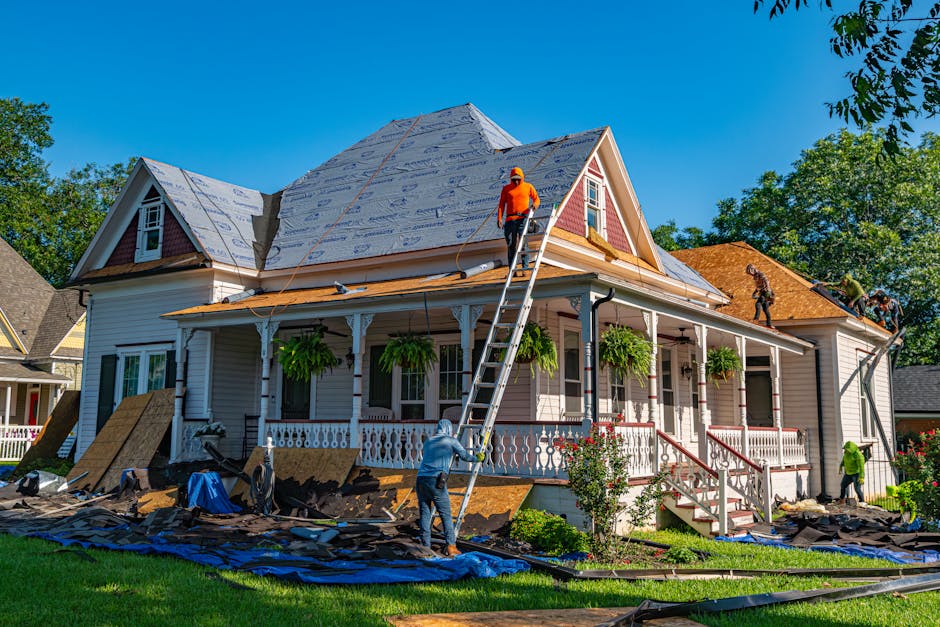
Why Knowing How to Choose the Right Roofing Contractor Could Be the Most Important Decision You Make for Your Home
Knowing how to choose the right roofing contractor can mean the difference between a roof that protects your family for decades and one that fails within a few years — taking your warranty and your money with it. With an estimated 98,980 roofing businesses operating across the U.S., and only a fraction of them meeting basic professional standards, the choice is anything but simple.
Here in the Portland metro and greater NW Oregon, homeowners face an added layer of concern: roofing companies are increasingly being bought out by investment firms, leaving customers with little local accountability when something goes wrong. For a project this significant, you deserve a contractor who will still be answering your calls five years from now.
Before you dive into the full guide, here’s a quick overview of what to look for:
- Verify credentials — valid Oregon license, general liability insurance, and workers’ compensation
- Check local reputation — Google reviews, BBB record, and direct references from recent clients
- Get at least three written estimates — compare scope, materials, warranties, and payment terms
- Ask the right questions — about subcontractors, permits, property protection, and project timelines
- Review the contract carefully — look for lien waivers, cleanup details, and warranty documentation
- Watch for red flags — pressure sales tactics, cash-only requests, no physical address, or unsolicited door knocking
- Prioritize long-term support — choose a contractor who offers transferable warranties and ongoing maintenance
I’m Torrey Yungeberg, owner of Raindrop Roofing NW and a multi-generational roofing professional with deep roots in the Beaverton community — and I’ve made it my mission to help homeowners understand exactly how to choose the right roofing contractor so they never have to learn the hard way. In this guide, I’ll walk you through every step of the process, from vetting credentials to reviewing your final contract.
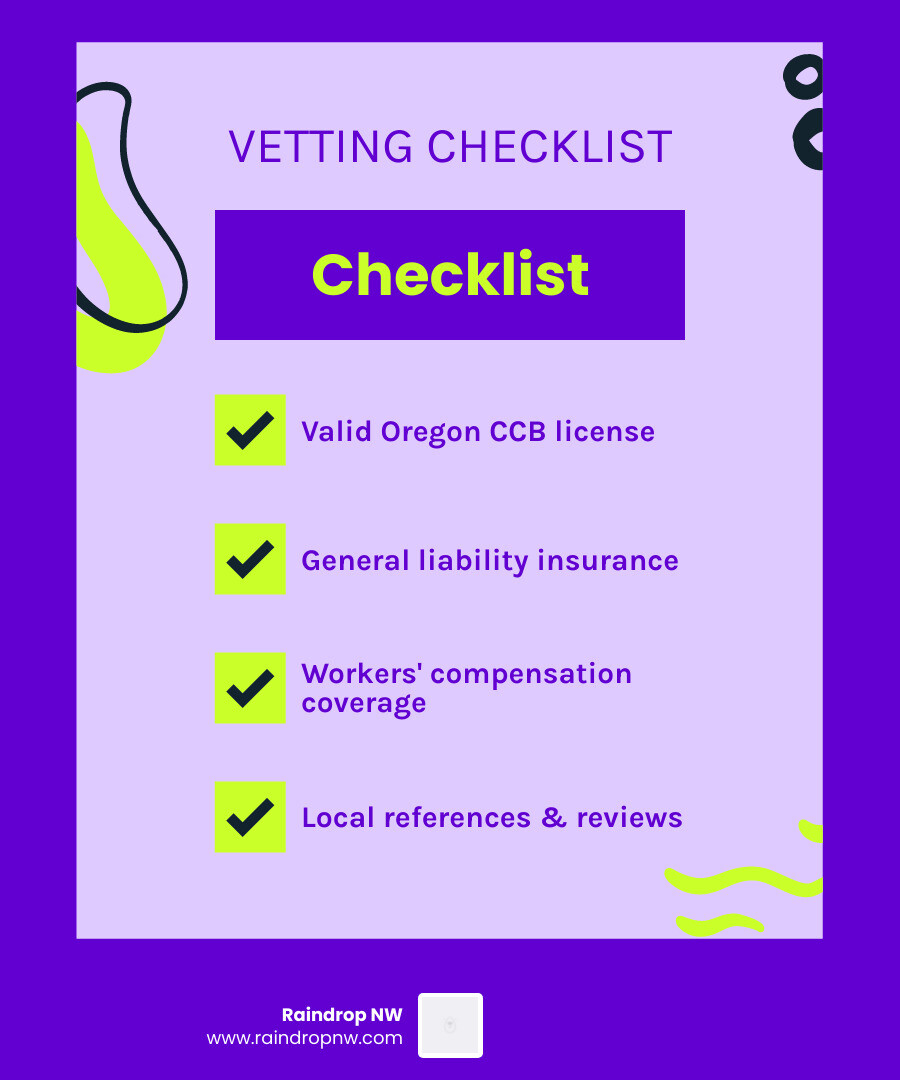
Essential Credentials for Every Roofing Professional

When you begin your search, the first filter should always be legal and professional legitimacy. It doesn’t matter how friendly a contractor seems over coffee; if they lack the proper paperwork, you are the one taking the risk. In Oregon, the Construction Contractors Board (CCB) regulates our industry, and verifying a license is your first line of defense.
State Licensing and Local Registration
In Oregon, every roofing contractor must have an active CCB license. This isn’t just a formality—it ensures the business has a bond and insurance to protect you. You can easily check a company’s status on the Oregon CCB website. If they aren’t listed, or their license is expired, stop the conversation immediately. Beyond the state level, reputable firms should have a local business registration in cities like Portland, Hillsboro, or Beaverton.
Insurance: General Liability and Workers’ Compensation
This is where many homeowners accidentally put their property at risk. You must verify two types of insurance:
- General Liability: This covers damage to your home. If a ladder falls and smashes a window or a heavy rainstorm hits while the roof is open, this insurance pays for the repairs.
- Workers’ Compensation: Roofing is dangerous work. If a worker is injured on your property and the contractor doesn’t have workers’ comp, you could be held liable for their medical bills.
Always ask for a Certificate of Insurance (COI) sent directly from the insurance agency to you. A photocopy provided by a contractor could be outdated or canceled.
Professional Affiliations and Certifications
While only 21 states require specific roofing licenses, professional excellence is often signaled by voluntary memberships. For example, less than 10% of U.S. roofing contractors are members of the National Roofing Contractors Association (NRCA). Membership indicates a commitment to high industry standards and ongoing education.
Furthermore, look for manufacturer certifications. Companies that are “Master Elite” or “Preferred” by major shingle brands have undergone rigorous training. These certifications often allow the contractor to offer enhanced warranties that uncertified installers simply cannot provide. For more on what these professional standards look like during a visit, see our page on roof inspections and certifications.
How to Choose the Right Roofing Contractor Through Strategic Interviews
Once you have a shortlist of credentialed pros, it’s time to sit down and talk. Think of this as a job interview where you are the boss. The way a contractor communicates during the consultation is a direct preview of how they will handle your project.
Local Experience and Portland-Metro Expertise
The NW Oregon climate is unique. We deal with persistent rain, moss growth, and occasional windstorms that can cause over $1 billion in regional losses. A contractor from out of state might not understand the specific flashing requirements needed for our damp environment. Ask how long they have been operating under their current name in the Portland-Metro area. Longevity in the local community is a strong indicator of accountability.
Subcontractor Policies and Project Management
Many large roofing firms act as “middle-men,” selling the job and then hiring a crew of subcontractors they’ve never met to do the work. This can lead to a lack of supervision and quality control. We believe it is vital to ask: “Who will be on my roof, and who is the dedicated project manager?” Knowing you have a consistent point of contact ensures that our residential roofing services meet the high standards you expect.
Property Protection and Attic Ventilation
A roof isn’t just about shingles; it’s a system. A professional roofer will always inspect your attic to check for adequate ventilation. Without proper airflow, your new roof will bake from the inside out, leading to mold and premature failure. Additionally, ask how they plan to protect your landscaping, gutters, and driveway from falling debris. A quality team uses specialized tarps and equipment to ensure your home looks better when they leave than when they arrived.
Key Questions for Your Potential Roofer
To help you narrow it down, here are the “must-ask” questions:
- Business Longevity: How many years have you been in business in Oregon?
- Local References: Can you provide 10 references from projects completed in the last year? (And actually call a few!)
- Safety Protocols: What fall-arrest equipment will your crew use to comply with OSHA?
- Material Recommendations: Why are you recommending this specific shingle for my roof’s pitch?
- Disposal Plans: Is the cost of the dumpster and debris removal included in the bid?
If you are planning a full replacement, these questions become even more critical. You can learn more about the specifics of new replacement roofs to better prepare for these interviews.
How to Choose the Right Roofing Contractor by Spotting Red Flags
Over 75% of homeowners report feeling stressed when hiring contractors, often because they sense something is “off” but can’t put their finger on it. Watch out for these warning signs:
- Storm Chasers: These are out-of-state companies that show up after a hail or wind event. They often lack a permanent local address and disappear once the “easy” insurance money is collected.
- Pressure Sales: If a “special price” is only available if you sign right this second, walk away.
- Cash-Only Deals: This is a major red flag for lack of a paper trail and usually means no warranty support.
- Missing Written Contracts: Never allow work to begin based on a handshake or a vague one-page “estimate.”
Evaluating Bids and Understanding Your Roofing Contract
Comparing bids is one of the most confusing parts of learning how to choose the right roofing contractor. You might receive three quotes that vary by thousands of dollars. The key is to look past the bottom-line number and analyze the scope of work.
| Feature | Comprehensive Professional Bid | Vague/Risky Bid |
|---|---|---|
| Scope of Work | Detailed line items (tear-off, flashing, venting) | “Replace roof” |
| Material Specs | Specific brands, weights, and underlayment types | “Standard shingles” |
| Payment Schedule | Deposit, progress, and final payment | Large upfront cash payment |
| Cleanup | Daily magnet sweeps and debris removal included | Not mentioned |
| Lien Waiver | Provided upon final payment | Not mentioned |
Scope of Work and Material Specifications
A professional bid should specify exactly what is being installed. This includes the type of underlayment (synthetic is preferred over felt), the specific brand of shingles, and the replacement of all pipe jacks and vents. If one bid is significantly lower, they might be planning to reuse old, rusty flashing or skip the starter shingles. For a better understanding of the components involved, check our guide on roof types and products.
Payment Schedules and Lien Waivers
Never pay the full amount upfront. A standard schedule involves a small deposit to get on the calendar, a payment when materials arrive, and a final payment only after the job is finished and inspected. Most importantly, insist on a lien waiver. This legal document protects you if the contractor fails to pay their material suppliers. Without it, a supplier could technically place a lien on your home even if you paid your roofer in full.
The Critical Role of Warranties and Post-Project Steps
A roof is a long-term investment, and the “after-care” is just as important as the installation. Once the shingles are nailed down, your relationship with the contractor shouldn’t end.
Manufacturer vs. Workmanship Warranties
There are two types of protection you need:
- Manufacturer Warranty: This covers defects in the shingles themselves (e.g., they start shedding granules prematurely). These can last 20 to 50 years.
- Workmanship Warranty: This is provided by the contractor and covers installation errors (e.g., a leak because a valley wasn’t flashed correctly). A reputable local contractor should offer at least 5 to 10 years of workmanship coverage.
Final Inspections and Documentation
Before you hand over that final check, perform a walkthrough. Are the gutters clear of debris? Is the yard free of nails? Did they install the ridge vents as promised? You should also receive a packet containing your permit sign-off, warranty registration, and a receipt. Keeping these in your owner resources file is essential for future home sales. Regular repairs and maintenance can also extend the life of these warranties.
How to Choose the Right Roofing Contractor for Long-Term Support
In the Portland area, we see many “fly-by-night” operations that change names every few years to avoid warranty claims. When choosing, look for:
- Transferable Warranties: This adds significant value if you decide to sell your home.
- Local Accountability: A physical office in Beaverton or Portland means you know where to find them.
- Multi-Generational Service: A company with deep family roots is more likely to value their community reputation over a quick profit.
Frequently Asked Questions about Selecting a Roofer
How many estimates should I get for my roof?
We recommend getting at least three detailed, written estimates. This gives you a solid baseline for what the project should cost in the current Oregon market. It also allows you to compare the professionalism and knowledge of different estimators. If two bids are similar and one is an extreme outlier, you’ll know to ask more questions.
Why is the lowest bid often a risky choice?
The “cheapest” bid is often the most expensive in the long run. A low price usually means the contractor is cutting corners—perhaps by using uninsured labor, skipping the permit process, or using “seconds” (defective materials). Since the average roof repair costs $1,152 and a full replacement can be a major investment, saving a few hundred dollars now isn’t worth a $20,000 failure three years from now.
Do I need a permit for my roofing project in Oregon?
Yes. In almost every jurisdiction in the Portland metro area, a permit is required for a roof replacement. This ensures that a city inspector verifies the work meets local building codes. A reputable contractor will always handle the permit process for you; if they ask you to pull the permit as a “homeowner,” it’s often because they aren’t properly licensed or insured.
Conclusion
Choosing the right partner for your home isn’t just about finding someone who can swing a hammer; it’s about finding a team that values your home as much as you do. At Raindrop NW, we take pride in being a truly local, family-owned business. We aren’t managed by an out-of-state investment firm—we are members of the Beaverton community, and our multi-generational craftsmanship is built on a foundation of honesty and transparency.
If you’re ready to experience a different kind of roofing service—one focused on long-term reliability and clear communication—we invite you to learn more about our residential roofing options. Let’s protect your home together, the right way, the first time.




Trackbacks & Pingbacks
[…] compiled a comprehensive library of resources to help you hire with confidence. Start by reading How to Choose the Right Roofing Contractor, Questions to Ask Before Hiring a Roofer, and Red Flags When Hiring a Roofing […]
Leave a Reply
Want to join the discussion?Feel free to contribute!