
Don’t Wait for the Drip to Spot These Commercial Roof Warning Signs
Why Knowing the Signs Your Commercial Roof Needs Attention Can Save You Thousands
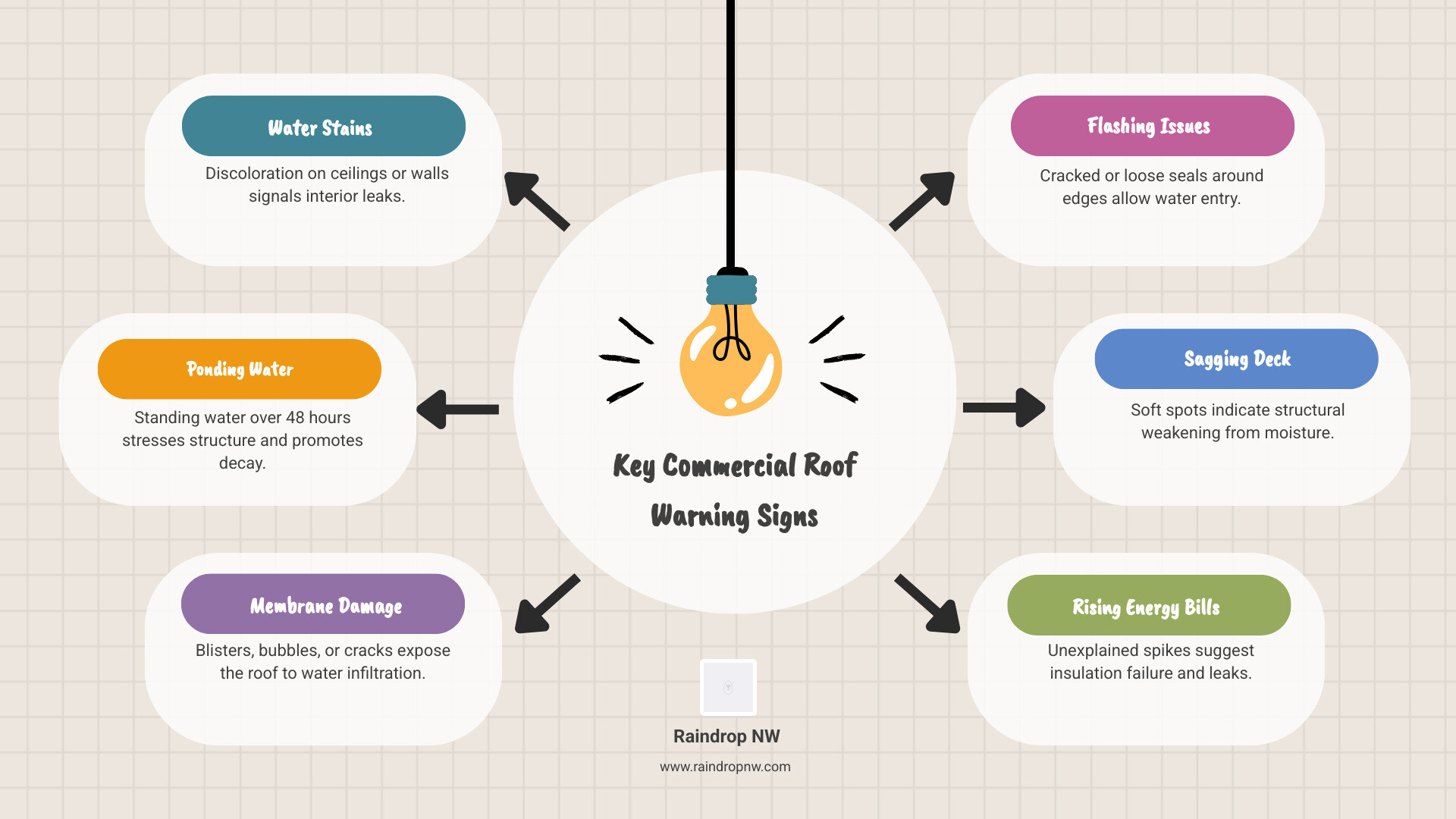
Signs your commercial roof needs attention include the following:
- Water stains or discoloration on interior ceilings or walls
- Ponding water that remains on the roof surface for more than 48 hours after rain
- Blisters, bubbles, or cracks in the roofing membrane
- Damaged, loose, or corroded flashing around penetrations and edges
- Sagging or soft spots on the roof deck
- Musty odors or visible mold growth inside the building
- Rising energy bills without another clear explanation
- Recurring leaks, even after previous repairs
- Visible surface erosion, granule loss, or alligatoring
- A roof that is approaching or past its expected service life
Most commercial roofs don’t fail all at once. They send signals first — often for months before a single drop of water ever hits your floor. The trouble is, those signals are easy to miss when your roof is out of sight and out of mind. By the time a ceiling stain shows up or your energy bills spike, the underlying problem has usually been building for a while. For commercial property owners in Oregon and Southwest Washington, catching these warning signs early is the difference between a manageable repair and a costly, disruptive failure.
I’m Torrey Yungeberg, owner of Raindrop Roofing NW, and after years of inspecting and restoring commercial roofs across the region, I’ve seen how the signs your commercial roof needs attention are almost always visible long before the damage becomes serious. Let’s walk through exactly what to look for so you can stay ahead of the problem.
Visible Exterior Signs Your Commercial Roof Needs Attention
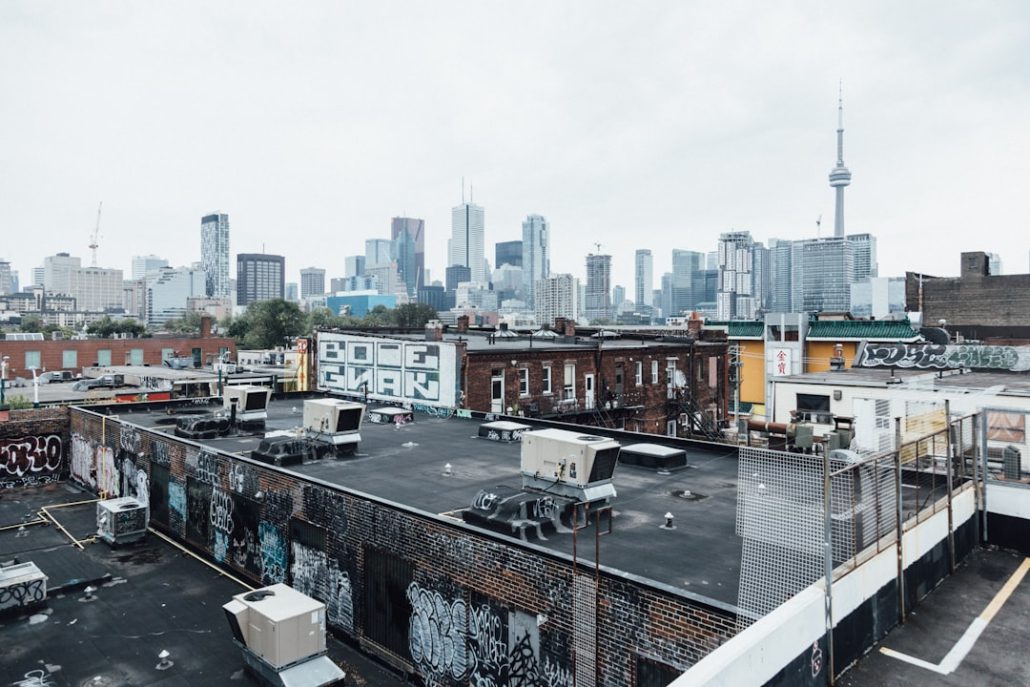
When we step onto a roof for a commercial roofing assessment, we aren’t just looking for holes. We are looking for the story the roof is telling us about its structural health. Most commercial buildings use flat or low-slope designs, which means they face unique challenges compared to residential homes.
One of the most immediate visual red flags is damage to the flashing. Flashing consists of the metal strips or sealants used to bridge the gap between the roof membrane and various penetrations—like HVAC units, vents, chimneys, or the building’s perimeter edges. If these seals are cracked, rusted, or pulling away, water has a direct highway into your building’s skeleton.
We also pay close attention to the drainage components. Scuppers and gutters are the unsung heroes of a commercial roof. If scuppers are blocked by debris or if gutters are sagging, water cannot leave the roof. This leads to surface erosion and “alligatoring”—a pattern of small cracks that look like reptile skin—which indicates that the protective top layer of your roof is drying out and failing due to UV exposure and standing water.

Identifying Membrane Deterioration and Cracks
The “skin” of your building—the roofing membrane—is its primary defense. Whether your building uses TPO (Thermoplastic Polyolefin), EPDM (Ethylene Propylene Diene Terpolymer), or Modified Bitumen, the membrane must remain flexible and intact.
Common membrane failure types include:
- Seam Separation: This is where the sheets of roofing material meet. Over time, heat and cold cause these materials to expand and contract. If the adhesive or heat-weld fails, the seams “pop,” creating an opening.
- Punctures: These often happen during routine maintenance of HVAC equipment. A dropped tool or a heavy foot can easily pierce an aging membrane.
- UV Damage: Constant sun exposure eventually makes membranes brittle. Once the material loses its elasticity, it begins to crack under the stress of temperature changes.
- Alligatoring: On asphalt-based roofs, this cracking pattern shows that the bitumen has lost its oils and can no longer repel water effectively.
Why Ponding Water is a Major Sign Your Commercial Roof Needs Attention
In the roofing industry, we live by the “48-hour rule.” If you see standing water on your roof more than two days after the last rainfall, you have a “ponding” problem. This isn’t just an aesthetic issue; it’s a structural threat.
Water is incredibly heavy—about 62.4 pounds per cubic foot. When water accumulates in one spot because of a compressed insulation board or a structural dip, it creates a “bowl” effect. The weight of the water causes the roof to sag further, which catches even more water. This cycle of structural weight can eventually lead to deck stress or even a collapse. Furthermore, standing water acts like a magnifying glass for UV rays, accelerating the deterioration of the membrane underneath and encouraging algae growth, which further eats away at the roof’s surface.
Interior Red Flags and Structural Warnings
Sometimes the most obvious signs your commercial roof needs attention aren’t on the roof at all—they are inside your workspace. If you notice bubbling paint on the walls or ceiling, that is often trapped water trying to find a way out.
Water stains are the classic “drip” scenario, but water rarely travels in a straight line. Because of the way commercial buildings are constructed, a leak might enter the roof on the north side but travel along a support beam or through fiberglass insulation before finally dripping onto a desk on the south side. If you see a stain, the insulation in that area is likely already “damp,” meaning it has lost its ability to keep your building warm or cool.
Structural failure is the ultimate nightmare. If you notice uneven roof lines from the ground or sagging areas in the ceiling inside, the roof deck itself may be compromised. This happens when persistent leaks rot the wood or rust the metal decking that supports the entire roofing system. For more information on how we identify these deep-seated issues, you can explore our roof inspections and certifications page.
How Odors and Mold Signal Your Commercial Roof Needs Attention
If your employees are complaining about a musty smell or if you’ve noticed an uptick in respiratory issues or “sick building syndrome,” your roof might be the culprit. Mold and mildew thrive in the dark, damp spaces between your roof membrane and your interior ceiling.
Hidden leaks can saturate the insulation and the “plenum” space (the area used for air circulation). Once moisture is trapped, it becomes a breeding ground for mold. This isn’t just a maintenance issue; it’s a health risk. Mold spores in the HVAC system can degrade air quality throughout the entire facility. If you smell mildew, don’t just buy an air freshener—check the roof.
Performance, Age, and Repair History
A roof’s performance isn’t just about keeping water out; it’s about keeping energy in. Have you noticed your energy bills creeping up? When roof insulation gets wet, its “R-value” (resistance to heat flow) plummets. This forces your HVAC system to work significantly harder to maintain temperatures, leading to higher costs and more frequent equipment repairs.
Age is another critical factor. While some materials like metal can last 40 years, most flat roof systems have a much shorter prime. Here is a general comparison of common commercial material lifespans:
| Material Type | Average Lifespan (Years) |
|---|---|
| TPO / PVC | 15 – 25 |
| EPDM (Rubber) | 20 – 30 |
| Modified Bitumen | 15 – 20 |
| Metal Roofing | 30 – 45+ |
| Built-Up Roofing (BUR) | 20 – 30 |
The year 2025 was particularly brutal for infrastructure. In the first six months of 2025 alone, the United States experienced 14 separate billion-dollar weather and climate disasters, totaling over $101.4 billion in damage. Many of these events involved high winds and heavy rain that accelerated the aging process of roofs in our region. If your roof was already 15 years old before the recent storm seasons, it is likely entering a high-risk phase.
If you find yourself calling for repairs and maintenance more than twice a year for the same leak, your roof is trying to tell you that it has reached the end of its life. Patching a systemic failure is like putting a band-aid on a broken leg. At a certain point, a new roof replacement becomes the more financially sound decision.
Frequently Asked Questions about Commercial Roof Damage
How often should I schedule a professional inspection?
We recommend a professional inspection at least twice a year—once in the spring and once in the fall. This allows us to clear out winter debris before the summer heat and prepare the drainage systems for the heavy Pacific Northwest rains. You should also schedule a check-up after any major weather event. Keeping detailed maintenance records isn’t just good for your building’s health; it’s often a requirement to keep your manufacturer’s warranty valid.
What causes roof blisters and bubbles?
Blisters usually occur when moisture or air gets trapped between the layers of the roofing membrane or between the membrane and the insulation. As the sun heats the roof, that trapped pocket expands, creating a bubble. If you step on these, they can pop, creating an immediate leak. They are often a sign of poor initial installation or “thermal cycling,” where the roof expands and contracts so much that the adhesive bond begins to fail.
How do weather events in 2025 affect my roof’s current condition?
The extreme weather patterns we saw in 2025—including high-wind events and record-breaking rainfall—have put unprecedented cumulative stress on commercial structures. Wind uplift can loosen the fasteners holding your roof down, while heavy hail can create “hidden fractures” in the membrane. These fractures might not leak today, but as they go through freeze-thaw cycles, they expand until they become major problems.
Conclusion: Trust a Local Partner for Your Commercial Roof
Your commercial roof is a massive investment, and it deserves more than a “patch and forget” approach. At Raindrop NW, we take pride in being a truly local, independently owned company based in Beaverton. Unlike many roofing firms that have been bought out by out-of-state investment groups, we live and work in the same communities we serve—from Portland and Hillsboro to Tigard and Vancouver.
We believe in long-term accountability. When we inspect your roof, we aren’t just looking for a quick sale; we’re looking to build a relationship that keeps your business protected for the next twenty years. Don’t wait for the ceiling to start dripping to take action. If you’ve noticed any of the signs your commercial roof needs attention, reach out to us today.
Get a professional commercial roofing inspection from the team that knows Oregon and Washington roofing best.




Leave a Reply
Want to join the discussion?Feel free to contribute!