
Don’t Let Your Foundation Sink Without a Gutter System

Why Gutter Systems and Why They Matter for Your Roof Is the Question Every Oregon Homeowner Should Be Asking
Gutter systems and why they matter for your roof comes down to one simple idea: without a way to move water off and away from your home, that water will find somewhere to go — and it won’t be somewhere you want it.
Here is a quick answer if you need it now:
Gutter systems protect your home by:
- Channeling rainwater away from your roof’s edge, fascia, and shingles to prevent rot and decay
- Directing water away from your foundation to prevent cracking, settling, and basement flooding
- Reducing soil erosion and protecting your landscaping from runoff damage
- Preventing mold growth inside your walls and crawl spaces
- Stopping ice dams from forming along your roofline in cold weather
- Preserving your siding, windows, and exterior trim from water staining and deterioration
Most homeowners don’t think about their gutters until something goes wrong. By then, a small, inexpensive fix has often turned into a major structural repair. As one industry observation puts it: water doesn’t knock politely — it finds every weakness and exploits it. On an average-size roof, just one inch of rain sends roughly 1,900 gallons of water rushing toward your eaves. Without a functioning gutter system in place, all of that water hits your foundation, soaks into your soil, and works its way into your home’s structure over time.
In the Pacific Northwest, where rain is a near-constant companion, this isn’t a hypothetical risk. It’s a year-round reality.
I’m Torrey Yungeberg, owner of Raindrop Roofing NW and a roofing professional with years of hands-on experience helping Oregon and Southwest Washington homeowners understand exactly how gutter systems and why they matter for your roof connects directly to the long-term health of their entire home. In the sections below, I’ll walk you through everything you need to know — from gutter types and materials to maintenance schedules and when it’s time to replace.
The Primary Purpose of Gutter Systems and Why They Matter for Your Roof

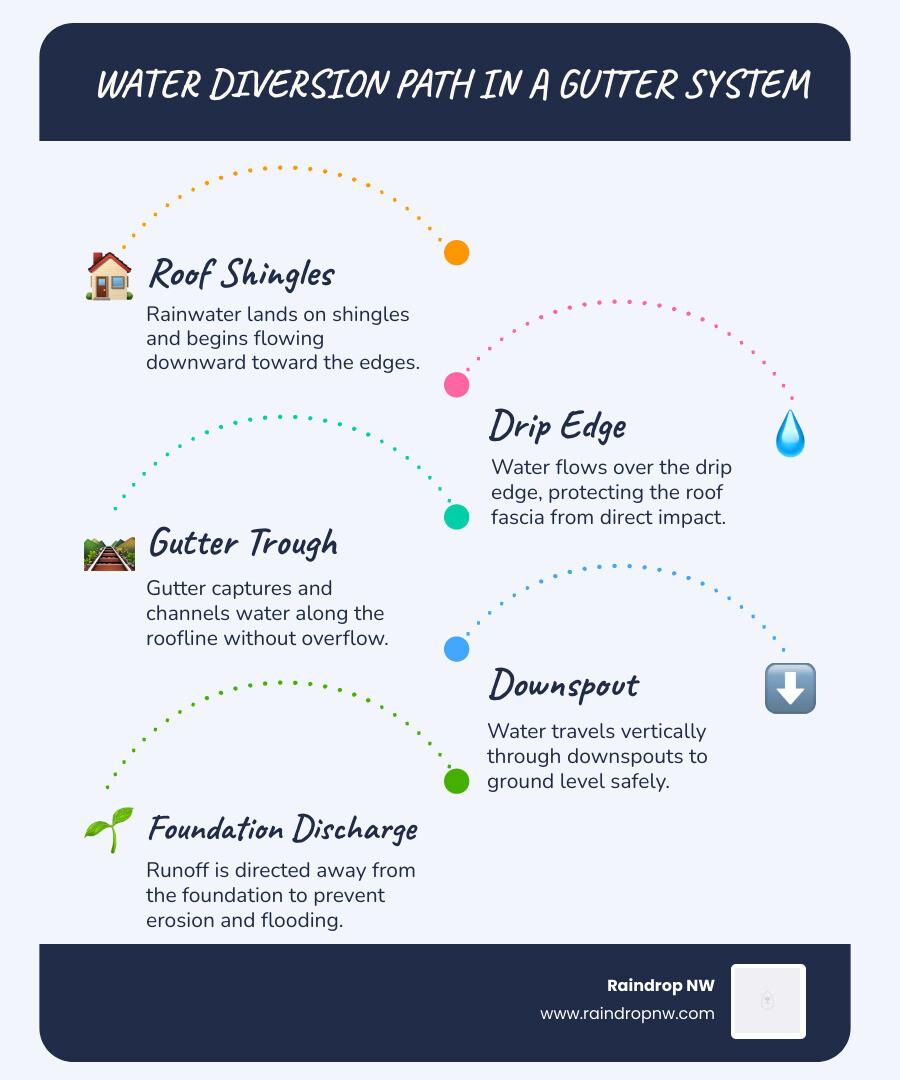
When we talk about residential roofing, we often focus on the shingles. While the shingles are your first line of defense, the gutter system is the hydraulic mechanism that ensures that defense doesn’t fail. The primary purpose of a gutter is simple: controlled management of water.
When rain hits your roof, it gathers momentum. Without gutters, this water cascades off the eaves in a heavy sheet, landing directly at the base of your home. This creates several critical issues:
- Foundation Protection: Constant water pooling at the base of your home saturates the soil. In the Beaverton and Portland area, our clay-heavy soils expand and contract. This movement causes foundation cracking, settling, and structural shifting.
- Basement and Crawl Space Flooding: If water isn’t directed away, it will eventually find its way through porous concrete or small cracks, leading to wet basements and damp crawl spaces.
- Siding and Trim Preservation: Falling water splashes back up, carrying dirt and microorganisms that cause siding rot, paint peeling, and staining.
- Landscape Defense: A heavy “waterfall” from your roof can wash away expensive mulch, drown plants, and create unsightly trenches in your lawn.
- Mold Mitigation: Moisture trapped near the home’s exterior or under the roofline is a breeding ground for mold and mildew, which can eventually migrate into your interior walls.
Why gutter systems and why they matter for your roof in dry climates
It is a common misconception that homes in dry climates don’t need gutters. Even in places like Phoenix, which only sees about 7.22 inches of annual rain, a typical 1,800-square-foot roof still sheds over 8,000 gallons of water a year. Because rainfall in dry climates often comes in intense bursts or flash floods, the volume of water hitting the foundation all at once can be even more damaging than a steady drizzle.
In regions like Colorado’s Front Range, an average home (1,800 sq ft) sheds over 16,000 gallons of water annually. During extreme events, such as the 11.85 inches of rain recorded in 24 hours at Fort Carson, a single roof can discharge over 13,000 gallons in one day. This reinforces why we emphasize roof inspections and certifications to ensure your drainage system can handle these “once-in-a-century” storms that seem to be happening more frequently in April 2026.
Protecting the roof deck and fascia
Gutters do more than protect the ground; they protect the roof itself. When gutters are clogged or missing, water can “back up” under the shingles. This leads to:
- Shingle Rot: Prolonged moisture exposure softens shingle tabs and erodes granules.
- Fascia Board Decay: The fascia is the wooden board your gutters are mounted to. If water overflows or leaks behind the gutter, the fascia will rot, eventually losing the strength to hold the gutters at all.
- Drip Edge Integration: A proper gutter system works with the drip edge—a metal flashing installed under the first row of shingles—to ensure water falls into the trough and not behind it.
- Ice Dam Mitigation: In our colder months, clogged gutters contribute to ice dams. Trapped water freezes, expands, and lifts shingles, allowing melted water to leak directly into your attic. For these reasons, regular repairs and maintenance are non-negotiable for a long-lasting roof.
Comparing Gutter Types and Materials for the Pacific Northwest
Choosing the right material is vital for our unique climate. We need systems that can handle heavy moss growth, pine needles, and consistent moisture without rusting out.
| Gutter Profile | Best Use Case | Pros | Cons |
|---|---|---|---|
| K-Style | Modern Homes | High water capacity; mimics crown molding | Harder to clean; corners can catch debris |
| Half-Round | Historic/European | Excellent water flow; easy to clean | Lower capacity than K-style; more expensive |
| Box Gutters | Commercial/Large Residential | Maximum volume; industrial strength | Often requires professional integration into roofline |
When looking at roof types and products, you must also consider the material:
- Aluminum: The industry standard. It’s lightweight, rust-proof, and comes in many colors. In 2026, it remains the most popular choice for Oregon homes.
- Copper: The “50-year gutter.” It develops a beautiful green patina over time and is incredibly durable, though it requires a higher initial investment.
- Zinc: Similar to copper, it is long-lasting and self-healing regarding scratches, making it a favorite for high-end custom homes.
- Steel: Very strong and great for heavy snow loads, but it must be galvanized or stainless to prevent rust in our wet climate.
- Vinyl: A budget-friendly option, but prone to becoming brittle in the sun and cracking in the cold. We generally recommend more durable metal options for long-term protection.
The benefits of seamless gutter systems and why they matter for your roof
In the past, gutters were sold in 10-foot sections and “snapped” together. Every one of those joints was a potential leak point. Today, we recommend seamless gutters for almost every project.
Seamless gutters are custom-extruded on-site using a specialized machine to the exact length of your roofline. Because they lack seams, they have much higher structural integrity and are far less likely to leak. They also look much cleaner, providing better curb appeal. When we install new and replacement roofs, we almost always suggest upgrading to a seamless system to ensure the new roof is supported by the best possible drainage.
Sizing and slope for maximum efficiency
A gutter that isn’t sloped correctly is just a very long, narrow birdbath. To function, gutters must have a slight “pitch” toward the downspouts. The standard rule is approximately 1/16 to 1/8 inch of fall for every foot of gutter run.
Sizing is equally important. A standard 5-inch gutter is sufficient for many homes, but for large, steep roofs or commercial roofing applications, 6-inch or even 7-inch troughs may be necessary to prevent overflow during heavy downpours.
How Gutters Integrate with Your Entire Roofing System
Your gutter system isn’t just the trough; it’s a series of components working in harmony.
- Hidden Hangers: These are internal brackets that clip into the gutter and screw into the fascia. They are stronger than old-fashioned “spike and ferrule” systems and are invisible from the ground.
- Outlets and Elbows: These transition the water from the horizontal gutter to the vertical downspout.
- Scuppers: Common on flat roofs, these are openings in the parapet wall that allow water to drain into a conductor head.
- Secondary Overflow Drains: Essential for flat roofs to prevent “ponding.” Just one inch of standing water on a 1,000-square-foot roof weighs about 5,200 pounds—an “undesigned load” that can cause structural collapse. This is why waterproof deck surfaces and proper drainage are critical for flat-roofed homes.
Managing downspout discharge
The job isn’t done when the water reaches the bottom of the downspout. If the water discharges right at the corner of the house, you’ve just moved the problem three feet down. We recommend that downspouts extend at least 3 to 5 feet away from the foundation. Using splash blocks or underground drainage pipes ensures the water is moved to a safe location where it won’t cause soil shifting or foundation saturation. Our residential roofing services always include an assessment of where that water is actually going.
Maintenance, Gutter Guards, and Signs of Failure
In Beaverton and Portland, the “twice a year” rule is the gold standard. You should clean your gutters in the Spring (after trees finish dropping tassels and seeds) and in the Fall (after the leaves have dropped).
Signs your gutters are failing include:
- Sagging: This usually means the hangers have pulled loose or the gutters are filled with heavy, wet debris.
- Rust Spots or Peeling Paint: Signs that the metal is degrading or water is constantly overflowing.
- Granule Accumulation: If you see a lot of “sand” in your gutters, your shingles are reaching the end of their life.
- Water Stains on Siding: A clear indicator that your gutters are overflowing or leaking from the back.
Gutter Guards: Are they worth it?
Gutter guards, especially micro-mesh technology, can significantly reduce the frequency of cleanings. They allow water in while keeping leaves and pine needles out. However, no system is “maintenance-free.” You still need to inspect them periodically to ensure moss isn’t growing over the mesh or that fine silt hasn’t built up inside.
When to replace gutters with your roof
If your gutters are over 15 years old, it is almost always best to replace them at the same time you get a new roof. This allows us to inspect the fascia boards, install a new drip edge properly, and ensure the entire water management system is under the same warranty. Plus, if you’ve suffered storm damage, we can help with roofing financing and insurance documentation to cover the entire system at once.
Frequently Asked Questions about Gutter Systems
How often should I clean my gutters in the Pacific Northwest?
At a minimum, twice per year. However, if your home is tucked into a wooded area with Douglas Firs or Maples, you may need to check them quarterly. Storms can also dump large amounts of debris in a single afternoon, so a quick post-storm check is always a good idea. Check out our owner resources for more maintenance tips.
Do gutter guards really prevent all clogs?
They prevent most clogs caused by large debris like leaves and twigs. They do not prevent the buildup of fine silt or the growth of algae and moss. Think of them as “maintenance reducers” rather than “maintenance eliminators.”
Are gutters necessary for flat roofs?
Absolutely. Flat roofs aren’t actually flat; they have a slight pitch. They rely on scupper boxes and interior drains to move massive amounts of water. Without them, the weight of ponding water can lead to leaks or even roof failure. We provide specialized commercial roofing estimates and inspections to handle these complex drainage needs.
Conclusion
At Raindrop NW, we’ve seen what happens when gutters are ignored. We are a truly local, Beaverton-based company. We aren’t an out-of-state firm looking for a quick sale; we live in this community and want to make sure your home stands strong for decades.
Gutter systems and why they matter for your roof is about more than just rain—it’s about protecting your biggest investment. Whether you need a simple repair, a cleaning, or a full system upgrade, we are here to provide the accountability and long-term service you deserve.
Don’t wait for the next atmospheric river to find out your gutters aren’t up to the task. Schedule your new roof replacement or gutter inspection today and let us help you keep your foundation on solid ground.




Leave a Reply
Want to join the discussion?Feel free to contribute!