
Don’t Get Nailed by High Prices: Are Luxury Shingles Worth It?
Are Designer Shingles Worth the Extra Cost? Here’s the Short Answer
Are designer shingles worth the extra cost is one of the most common questions Oregon homeowners ask when facing a roof replacement — and the honest answer is: it depends on your situation, but for most long-term homeowners, yes.
Here’s a quick breakdown to help you decide:
| Your Situation | Worth It? |
|---|---|
| You plan to stay in your home 15+ years | Yes |
| You live in a storm, wind, or hail-prone area | Yes |
| You want a 40-50 year roof with a lifetime warranty | Yes |
| You’re on a tight budget or selling soon | Probably not |
| You own a rental property | Likely no |
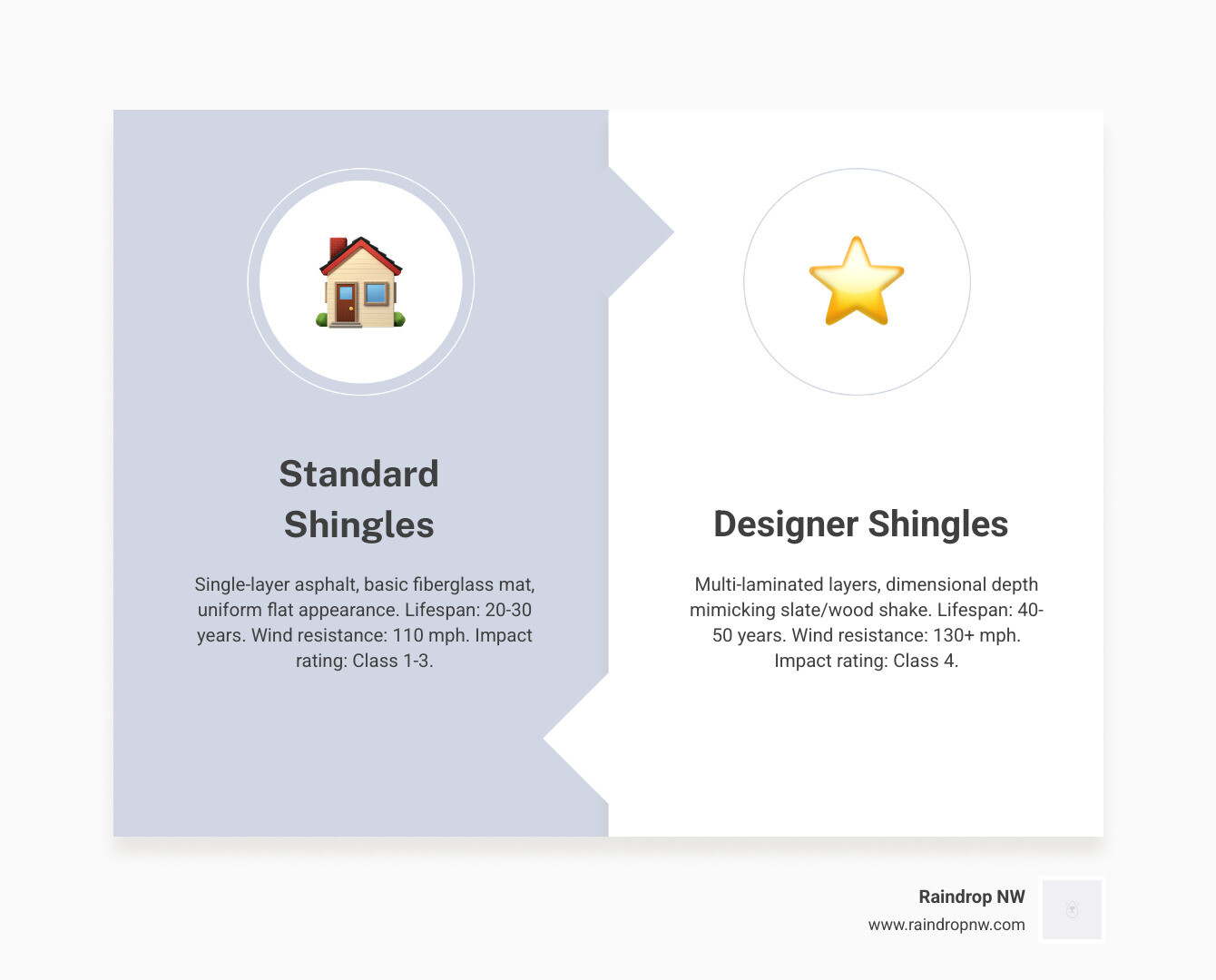
Designer shingles are premium asphalt shingles engineered with multiple laminated layers to mimic the look of natural slate or wood shake. They’re thicker, heavier, and built to outlast standard architectural shingles by decades — often backed by 50-year non-prorated warranties when installed as a complete roof system by a certified contractor. They also carry Class 4 impact ratings and wind resistance up to 130 mph or more, making them a genuinely different product — not just a marketing upgrade.
That said, the higher upfront investment isn’t the right call for every homeowner. The smarter question isn’t just “what do they cost?” — it’s “what’s the cost per year of protection, and does that match how long I’m staying and what my home needs?”
In the sections below, we’ll walk you through exactly how designer shingles are made, how they perform in real weather conditions, what warranties actually cover, and when the math genuinely works in your favor.
I’m Torrey Yungeberg, owner of Raindrop Roofing NW and a longtime member of the Associated Roofing Contractors of Oregon and Southwest Washington — and helping homeowners figure out are designer shingles worth the extra cost is exactly the kind of decision I’ve guided families through for years. Let’s get into it.
Defining Luxury: What Are Designer Shingles?
In roofing, “designer” or “luxury” shingles represent the absolute top tier of asphalt technology. While most of us are familiar with the flat, rectangular 3-tab shingles of the past, designer shingles are a different beast entirely. They are engineered to provide a high-end, three-dimensional look that was once only possible with incredibly expensive natural materials.
At their core, designer shingles use a heavy-duty fiberglass mat as a base. This mat is then saturated with high-grade asphalt and coated with mineral granules. What sets them apart is the “laminated” or multi-layered construction. Instead of a single flat layer, these shingles feature two or more layers of material bonded together. This creates a staggered, dimensional depth that adds significant character to a roofline.
The primary goal of these shingles is mimicry. They are designed to replicate:
- Slate: They capture the chiseled edges and varied colors of real stone.
- Wood Shake: They provide the thick, rugged texture of hand-split cedar shakes without the high maintenance or fire risk.
- Tile: Some specialized lines even mimic the curves of Mediterranean clay tiles.
By using asphalt to achieve these looks, homeowners get the “million-dollar” aesthetic at a fraction of the cost of real slate or wood. You can explore more about these specific roof types and products to see how they might fit your home’s architecture.
Comparing Standard vs. Designer Shingles
If you were to hold a standard architectural shingle in one hand and a designer shingle in the other, you would immediately feel the difference. Designer shingles are significantly heavier—sometimes weighing 50% to 100% more per square than standard options. This material weight translates directly to durability.
Visually, the difference is just as striking. Standard architectural shingles have a uniform “dragon-tooth” pattern. Designer shingles, however, utilize dramatic shadow lines and varied shapes to break up the visual monotony. On a large, steep-pitched roof, this extra texture transforms the roof from a functional necessity into a genuine architectural feature.
The Performance Advantage: Are Designer Shingles Worth the Extra Cost?
When we ask if are designer shingles worth the extra cost, we have to look past the pretty colors and focus on the “bones” of the product. In the Pacific Northwest, our roofs face a constant barrage of rain, wind, and the occasional winter storm. Designer shingles are built to handle these extremes with ease.
One of the most significant advantages is wind resistance. While basic shingles might be rated for 60 or 70 mph, most designer lines carry a 130 mph wind warranty. This is hurricane-force protection, ensuring that even during our nastiest autumn windstorms, your shingles stay exactly where they belong.
Superior Durability in Severe Weather
For many homeowners in the Portland and Beaverton areas, the peace of mind provided by a Class 4 impact rating is a major selling point. This rating means the shingles have been tested to withstand the impact of large hail or flying storm debris without cracking. While we don’t get Texas-sized hail every day, the extra thickness of a designer shingle serves as a robust moisture barrier that standard shingles simply can’t match.
If you are looking for more details on how these materials hold up, our residential roofing services page covers the full spectrum of protection we provide.
Enhanced Protection Against the Elements
Beyond wind and impact, designer shingles often come standard with advanced algae-resistant granules. In our damp climate, “black streaks” (actually a type of algae called Gloeocapsa magma) can quickly ruin a roof’s curb appeal. Designer shingles use copper-infused granules to prevent this growth for 25 years or more.
Additionally, these shingles offer superior UV protection and thermal stability. Because they are thicker, they are less prone to the “freeze-thaw” damage that can cause thinner shingles to crack when water gets into small crevices and expands.
Maximizing Your Investment: Lifespan and Warranties
The most compelling argument for the “worth” of a designer shingle is its lifespan. While a standard architectural shingle might realistically last 20 to 25 years in our climate, a designer shingle is a 40 to 50-year product.
When you calculate the “annualized value,” the math often favors the premium product. If a roof lasts twice as long but doesn’t cost twice as much to install, you are actually saving money over the long term by avoiding a second full replacement cycle, including the labor and tear-off costs associated with it.
Why Designer Shingles Are Worth the Extra Cost for Longevity
Think of it this way: a roof that lasts 50 years costs you significantly less per year of protection than a roof that needs to be replaced in 20. Furthermore, designer shingles often come with “lifetime” warranties that are non-prorated for the first several decades. This means the manufacturer will cover the full cost of labor and materials if the product fails, rather than just a small percentage based on the age of the roof.
To keep these high-performance roofs in top shape, we always recommend routine roof repairs and maintenance to clear debris and ensure the drainage systems are working correctly.
Understanding Manufacturer Warranty Requirements
To qualify for these elite 50-year non-prorated warranties, manufacturers usually require a “complete roof system.” This means you can’t just slap designer shingles over old underlayment. You must use the manufacturer’s specific:
- Starter shingles
- Ice and water shields
- Synthetic underlayment
- Hip and ridge caps
- Proper attic ventilation
Without meeting these strict ventilation and installation standards, even the most expensive shingle in the world won’t reach its full potential.
Strategic Home Upgrades and Energy Efficiency
In April 2026, energy efficiency is more than just a buzzword—it’s a financial necessity. Many designer shingles now incorporate “cool roof” technology. These shingles use specially engineered granules that reflect a higher percentage of the sun’s infrared radiation.
By reflecting heat rather than absorbing it into your attic, these shingles reduce the “thermal load” on your home. This means your HVAC system doesn’t have to work nearly as hard during our increasingly hot Oregon summers, leading to lower utility bills and less wear and tear on your cooling equipment.
Is the Investment in Designer Shingles Worth the Extra Cost for Resale?
If you plan to sell your home in the next decade, are designer shingles worth the extra cost? Real estate experts often say yes. A designer roof acts as a powerful signal to potential buyers that the home has been meticulously maintained. It boosts “curb appeal” instantly, often helping a home sell faster and for a higher price. In upscale neighborhoods in Lake Oswego or West Linn, a designer roof might even be the “standard” expected by buyers.
You can learn more about how we verify the quality of these installations through our roof inspections and certifications.
Energy Savings and Environmental Impact
Beyond the personal savings, there is an environmental benefit. Longer-lasting shingles mean fewer roofs end up in landfills over the course of a century. Additionally, the solar reflectance of cool-roof designer shingles helps mitigate the “urban heat island” effect, making our communities slightly cooler and more comfortable.
Frequently Asked Questions about Designer Shingles

How long do designer shingles typically last compared to standard options?
In the Pacific Northwest, you can expect designer shingles to last between 40 and 50 years with proper maintenance. Standard architectural shingles typically last 20 to 25 years, while basic 3-tab shingles may only last 15 to 18 years before losing their structural integrity.
Can any roofing contractor install luxury shingles?
Technically, yes, but it is not recommended. Designer shingles are heavier and require specific nailing techniques and accessory products to meet warranty standards. It is always best to choose an independently owned local contractor who is certified by the manufacturer to ensure the “complete system” is installed correctly.
Do designer shingles provide better performance in high-wind areas?
Absolutely. Because they are multi-layered and heavier, they have a much higher “blow-off” resistance. Most carry a 130 mph wind rating, which is nearly double the rating of entry-level shingles. This makes them ideal for homes in more exposed areas or those prone to severe seasonal storms.
Conclusion
At Raindrop NW, we understand that a new roof is one of the biggest investments you’ll ever make in your home. Whether you are in Beaverton, Tigard, or Hillsboro, our goal is to provide you with honest advice based on your specific needs.
We take pride in being a truly local, independently owned company. Unlike many of our competitors who have been bought out by out-of-state investment firms, we live in the communities we serve. Our commitment is to long-term accountability and service—we’ll be here to stand behind our work for the next 50 years.
If you’re ready to see how a premium roof can transform your home’s look and protection, schedule your new roof replacement today. We’ll help you crunch the numbers and decide once and for all: are designer shingles worth the extra cost for your family?




Leave a Reply
Want to join the discussion?Feel free to contribute!