
What Happens to the Old Shingles When You Tear Off My Roof?
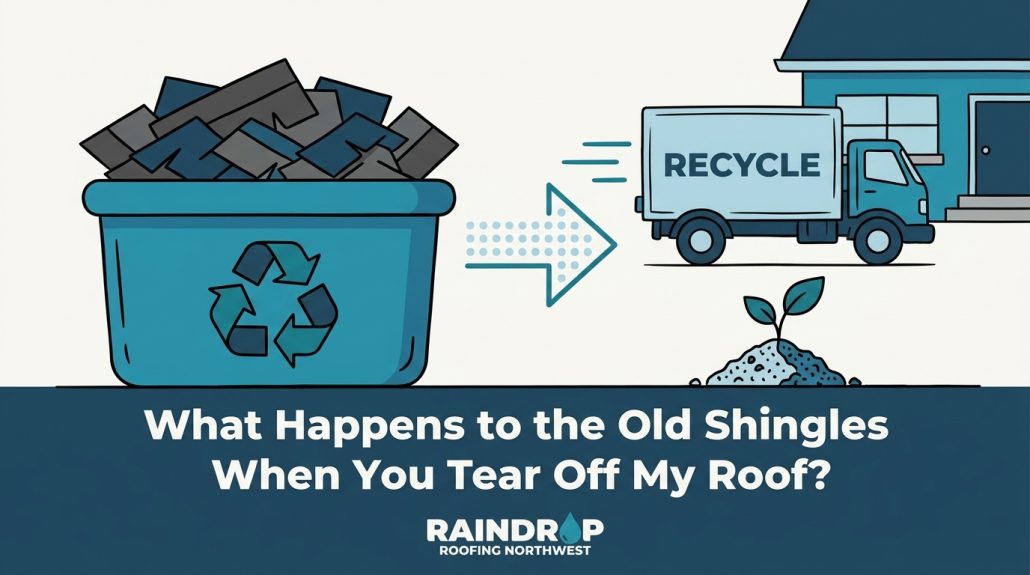
Where Does the Debris Go After a Roof Tear-Off?
If you are preparing for a major exterior upgrade, you might be asking: what happens to the old shingles when you tear off my roof? At Raindrop Roofing Northwest, we know firsthand that when thousands of pounds of old roofing come down, that massive amount of debris has to go somewhere. Managing this waste is a significant logistical challenge for any roofing project, especially during September’s early fall roof replacements as we rush to prep homes before the heavy Beaverton rainy season sets in. You want your property to remain safe and clean, but you also want to avoid contributing to local landfill overflow with tons of discarded asphalt.
This creates an important decision point for homeowners. Choosing a contractor is not just about the quality of the installation; in our experience, it is also about selecting a team that prioritizes environmental impact and responsible waste management. A clean, organized tear-off process is a critical part of the job that protects your landscaping, your driveway, and the local ecosystem.
Understanding how our crews handle this debris helps you fully appreciate the benefits of a full roof replacement. By working with a team that values sustainability, you can feel confident in your choice of roof replacement services in the Portland area, knowing that responsible disposal is built directly into our daily process.
Understanding the Weight and Volume of Roofing Waste
To truly grasp why specialized waste management is necessary, you have to look at the physical volume of waste generated when stripping an existing roof down to the bare wooden decking. Asphalt shingles are incredibly dense. They are manufactured using a heavy fiberglass mat, coated in thick asphalt, and topped with crushed stone granules to resist UV rays and weather damage. When our team multiplies that dense material across the entire square footage of a Beaverton home, the sheer scale of the debris becomes staggering.
On a typical job, we remove 2 to 3 tons of asphalt waste per average residential roof. That is the equivalent weight of a large SUV or a mid-sized pickup truck sitting on top of your house. Nationally, asphalt shingles make up a significant percentage of construction and demolition (C&D) waste, which presents a massive logistical challenge for contractors and local municipalities alike.
The Hidden Weight of Multiple Layers
A pattern we see often is homes with multiple layers of older roofing. In the past, it was common practice to install a new layer of shingles directly over the old one to save time. When we finally perform a complete tear-off, all of those accumulated layers must come down at once.
| Roofing Layers Removed | Estimated Debris Weight | Logistical Impact |
|---|---|---|
| One Layer (Standard) | 2 to 3 Tons | Requires standard dump trailers and routine disposal routing. |
| Two Layers | 4 to 6 Tons | Requires multiple trailer loads or larger roll-off bins. |
| Three Layers (Historical) | 6 to 9 Tons | Significant structural weight removal; extended cleanup time required. |
Moving this much weight off a residential property safely requires heavy-duty equipment, precise staging, and a highly organized crew. You cannot simply toss this volume of dense, nail-filled debris onto the lawn and deal with it later. It requires the systematic approach our roofers use to ensure the property remains undamaged while the project moves forward.
On-Site Logistics: Dump Trailers and Property Cleanup
The immediate, on-site handling of old shingles is where a professional roofing operation truly stands apart. Protecting your property, your family, and your pets requires a strict chain of custody for the debris from the moment it leaves the roof line until it rolls out of your driveway.
Our standard property protection process includes:
- Staging the Dump Trailers: Before the first shingle is lifted, our crews carefully position rubber-tired dump trailers close to the roof edge. These specialized trailers are designed to catch debris directly as it falls, minimizing the amount of material that ever touches the ground.
- Deploying Protective Tarps: Heavy-duty tarps are draped over landscaping, delicate bushes, air conditioning units, and exterior siding. This creates a protective barrier against falling granules and stray debris.
- Systematic Section Removal: The tear-off does not happen all at once in a chaotic frenzy. Our crews work in controlled sections, stripping the shingles, underlayment, and fasteners, and immediately directing that waste into the staged trailers below.
- Continuous Magnetic Sweeps: A single roof contains thousands of roofing nails. Throughout the day, and again at the end of the project, our team uses powerful industrial magnets to sweep the lawn, driveway, and garden beds to capture hidden metal fasteners.
Efficiency in Action
Organized site cleanup keeps the project moving smoothly and protects the homeowner from unnecessary stress. Just last fall, we helped a local homeowner who needed a roof completed quickly to sell their parents’ home before the rainy season hit. Because our crew provided a detailed bid, quickly scheduled the work, and executed the tear-off with military precision, the roof replacement was completed efficiently. The property was left completely spotless, allowing the family to list the home without worrying about lingering construction debris.
If you are curious about the exact timeline of these logistical steps, understanding how long a standard residential roof tear-off takes can help you plan your week around the arrival and departure of our crew and equipment.
Racing the Rain: The Need for Rapid Debris Removal
In the Pacific Northwest, our roofing crews are always racing against the weather. The speed of the tear-off and the immediate removal of debris are directly connected to protecting your home’s exposed decking from sudden weather shifts. With Beaverton’s frequent and heavy rainfall, leaving a roof deck exposed for too long is simply not an option.
The problem: When old shingles are removed, the raw wooden decking of your home is exposed to the elements. A slow, disorganized tear-off that leaves piles of debris sitting on the roof or blocking the crew’s movement creates a dangerous window of vulnerability. If a sudden rainstorm rolls in while the roof is cluttered with unmanaged waste, water can quickly penetrate the wood, leading to interior leaks and structural damage.
The cause: Poor debris management slows down the entire installation process. If the crew has to stop and navigate around piles of old asphalt, they cannot quickly transition to the critical waterproofing phase.
The solution: Highly organized tear-offs are required to ensure the exposed roof deck is quickly waterproofed before the weather turns. As sections of the old roof are stripped and the debris is immediately pitched into our dump trailers, another part of the crew follows closely behind to inspect the wood and roll out new, high-performance synthetic underlayment. This coordinated dance ensures that your home is never left vulnerable to Beaverton’s sudden downpours. Efficient debris management is not just about cleanliness; it is actually a critical waterproofing strategy that keeps your home safe.
Diverting Waste from Local Landfills
Once our dump trailers are full and leave your property, the next phase of the debris lifecycle begins. Standard landfill dumping has long been the default for the construction industry, but we know that approach carries a heavy environmental toll. Dumping thousands of pounds of non-biodegradable asphalt into a standard landfill takes up massive amounts of space, and those materials can take centuries to break down.
Fortunately, regional governments in Beaverton OR and surrounding Washington County have established clear construction and demolition (C&D) recycling guidelines to combat this issue. The region emphasizes sustainability, encouraging builders and contractors to find alternative destinations for heavy materials.
Our Core Commitment to Sustainability
This is where contractor choice makes a massive difference. At Raindrop Roofing Northwest, we hold a deep commitment to sustainability by actively partnering with local recycling centers to divert asphalt waste. Rather than treating disposal as an afterthought or taking the path of least resistance to the nearest generic dump, we frame this eco-conscious approach as a core operational standard.
The benefits of local diversion include:
- Reducing Landfill Burden: Keeping tons of dense materials out of local waste facilities extends the lifespan of those landfills.
- Lowering Carbon Footprints: Recycling existing materials requires significantly less energy than manufacturing brand new petroleum-based products from scratch.
- Supporting Local Infrastructure: Specialized C&D facilities in the Portland Metro area are designed specifically to process these materials, creating local green jobs.
By prioritizing these local recycling partnerships, your roof replacement becomes a project that actually supports the environmental health of the Pacific Northwest.
The Second Life of an Asphalt Shingle: Road Paving and Repurposing
So, what exactly happens to all that material once our trucks reach the recycling facility? The process of transforming old, weathered roofing into usable building materials is a fascinating feat of industrial engineering. Here is a clear, step-by-step look at the recycling process and what your old shingles actually become.
- Collection and Sorting: The dump trailers arrive at a dedicated C&D recycling facility. The load is inspected and sorted to remove non-recyclable materials like wood rot, plastic packaging, or metal flashing that requires a different recycling stream.
- Magnetic Extraction: Before the shingles can be processed, all the old roofing nails must be removed. The material passes under heavy-duty, industrial magnets that pull out the steel fasteners, which are then sent to a scrap metal recycler.
- Industrial Grinding: The clean asphalt shingles are fed into massive grinders that shred and pulverize the dense fiberglass, asphalt, and stone granules into a fine, uniform aggregate.
- Creating RAS: This ground-up material is officially classified as Recycled Asphalt Shingles (RAS). It retains the high-quality petroleum properties of the original roofing material.
- Hot-Mix Integration: The RAS is transported to local asphalt plants, where it is carefully measured and mixed into hot-mix asphalt. The old petroleum base melts down and binds with new aggregate.
The end result is remarkable: the roof that protected your home for decades is repurposed into local road construction, paving materials, and pothole repairs. Your old shingles are literally paving the way for safer local streets.

Coordinating Debris Removal with Your Installation Schedule
Homeowners often ask our team if specialized recycling and waste management will slow down their project. However, responsible waste management does not delay your timeline when coordinated correctly. The arrival and departure of our dump trailers are carefully scheduled to minimize disruption to your daily life and keep your driveway accessible whenever possible.
Because the heavy sorting and grinding happen off-site at the recycling facility, our installation crew on your property can focus entirely on what they do best: building your new roof. The trucks haul the debris away, and the roofers continue installing the underlayment, flashing, and new shingles without missing a beat.
The Final Walkthrough
At the end of the job, a final property walkthrough ensures that every last piece of debris has been hauled away. Our crew performs a final magnetic sweep, removes all protective tarps, and verifies that your landscaping looks exactly as it did before the project began. Understanding the average timeline for a basic roof replacement helps set clear expectations for when the trucks will arrive, when the old roof will come down, and when the final cleanup will leave your home looking pristine.
Frequently Asked Questions About Roof Tear-Offs and Recycling
Can you recycle old roof shingles?
Yes, asphalt shingles are highly recyclable and do not have to end up in a landfill. However, they cannot be placed in standard residential recycling bins. They must be taken to specialized construction and demolition (C&D) facilities that are specifically equipped to accept and process heavy roofing materials.
What are old roof shingles used for?
Old shingles are ground down into a highly useful aggregate known as Recycled Asphalt Shingles (RAS). This material retains its strong petroleum properties and is primarily repurposed into hot-mix asphalt. Local municipalities then use this hot-mix for paving new roads, fixing potholes, and laying driveways.
Are asphalt shingles bad for the environment?
If dumped in a standard landfill, asphalt shingles are detrimental because they take centuries to break down and consume massive amounts of space. However, when properly recycled, their environmental impact is significantly reduced. Recycling them lowers the need for new petroleum extraction and keeps usable materials in the construction lifecycle.
How much does a tear-off roof weigh?
In our experience, an average residential roof removal generates roughly 2 to 3 tons of heavy debris. This weight comes from the dense fiberglass mats, heavy asphalt coatings, and stone granules. If your home has multiple layers of old roofing stacked on top of each other, this weight will increase substantially, requiring larger dump trailers.
How is roofing debris cleaned up during a replacement?
Professional crews use rubber-tired dump trailers, protective landscaping tarps, and heavy-duty magnetic nail sweepers to manage waste. Continuous cleanup happens throughout the day to keep the site safe. Instead of throwing debris on the ground, our crews strip the roof in sections and pitch the waste directly into the staged trailers.
Do all roofing contractors recycle old shingles?
No, many contractors still use standard landfills due to the convenience or the proximity of generic dumps. Specialized recycling requires a dedicated operational commitment. Homeowners who care about sustainability should specifically ask their roofer about their local recycling partnerships before signing a contract.
Partner with a Roofer Committed to Sustainable Practices
Knowing what happens to the old shingles when you tear off my roof provides valuable peace of mind. Keeping tons of dense asphalt out of the local landfill is a massive win for the environment, and it is a process that begins right in your own driveway. A clean, highly efficient tear-off protects your home from sudden fall weather changes, keeps your landscaping safe, and ensures that your old materials go on to pave local roads rather than sitting in a dump for centuries.
If you are planning an upcoming exterior project and want a clear, transparent explanation of how your property will be respected from start to finish, it is time to take the next step. Schedule an inspection with a team that values responsible waste management just as much as they value flawless installation.




Leave a Reply
Want to join the discussion?Feel free to contribute!