Out with the Old: Replacing Your First Addition’s Asphalt Shingle Roof

Why Your First Addition Home Deserves More Than a Quick Fix
Asphalt shingle roofing replacement in first addition or older neighborhoods is more than just slapping new shingles on top of old ones. If you’re seeing curling edges, bare spots, or mysterious water stains on your ceiling, your roof is signaling a problem.
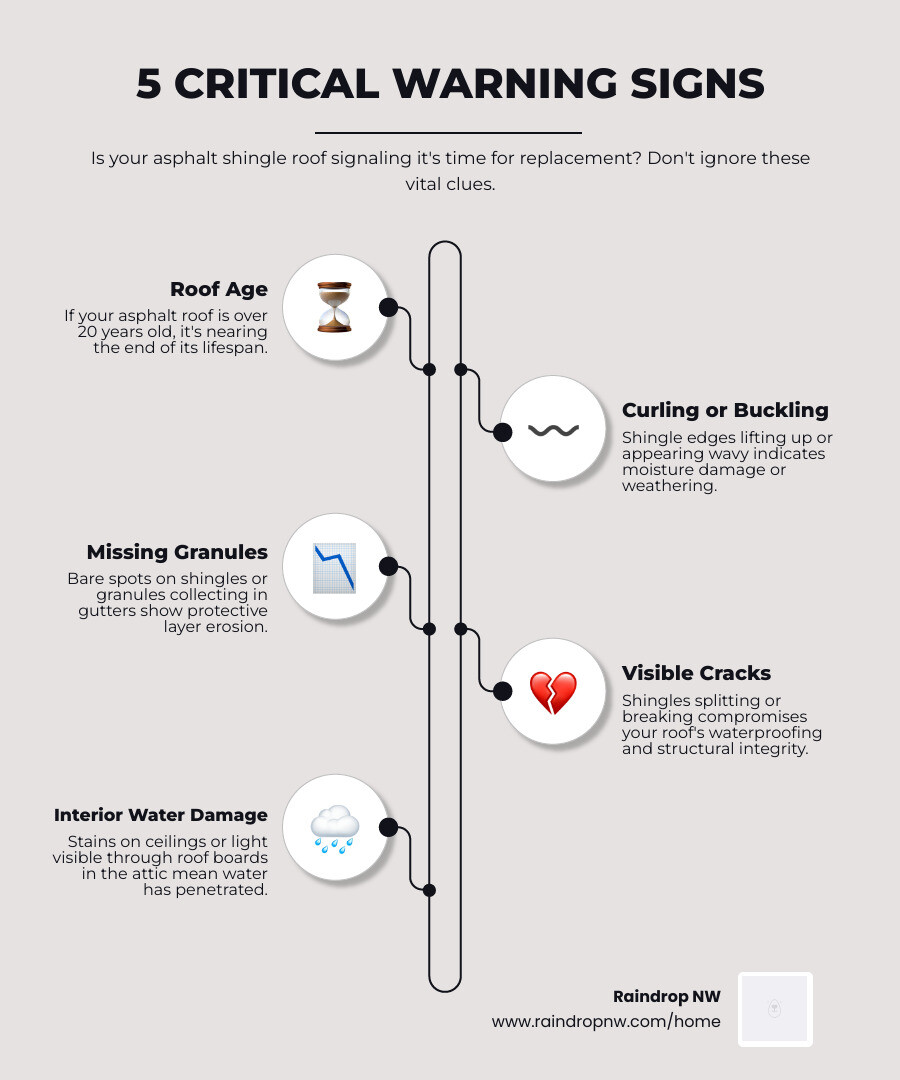
Key Signs Your Roof Needs Replacement:
- Age – Your asphalt roof is over 20 years old
- Curling or buckling shingles – Edges lift up or shingles appear wavy
- Missing granules – Bare spots on shingles or granules collecting in gutters
- Visible cracks – Shingles show splitting or breaking
- Interior water damage – Stains on ceilings or light visible through roof boards in the attic
The big decision homeowners face is whether to do a quick overlay (installing new shingles over old ones) or invest in a full tear-off replacement. An overlay might seem cheaper, but it typically only lasts around 16 years compared to 30 for a proper replacement. More importantly, it hides underlying problems like rotted decking that will become more expensive to fix later.
I’m Torrey Yungeberg, owner of Raindrop Roofing NW. I’ve guided many Oregon homeowners through asphalt shingle roofing replacement in first addition or historic neighborhoods. My experience has shown that shortcuts today become expensive problems tomorrow.
Is It Time for a New Roof? Assessing Your Current Asphalt Shingles
When your roof has a problem, it will show you. For homeowners in First Addition, Portland, Gresham, or Lake Oswego, learning to read these signals is the first step in protecting your investment.
Age is your first clue. Most asphalt roofs last 20 to 30 years, a lifespan affected by our Pacific Northwest weather and maintenance. If your roof is approaching 20 years, pay close attention. Visible signs like curling or cracked shingles, or entire shingles gone missing, are red flags. Granules in your gutters are another sign your roof’s protective layer is wearing away.
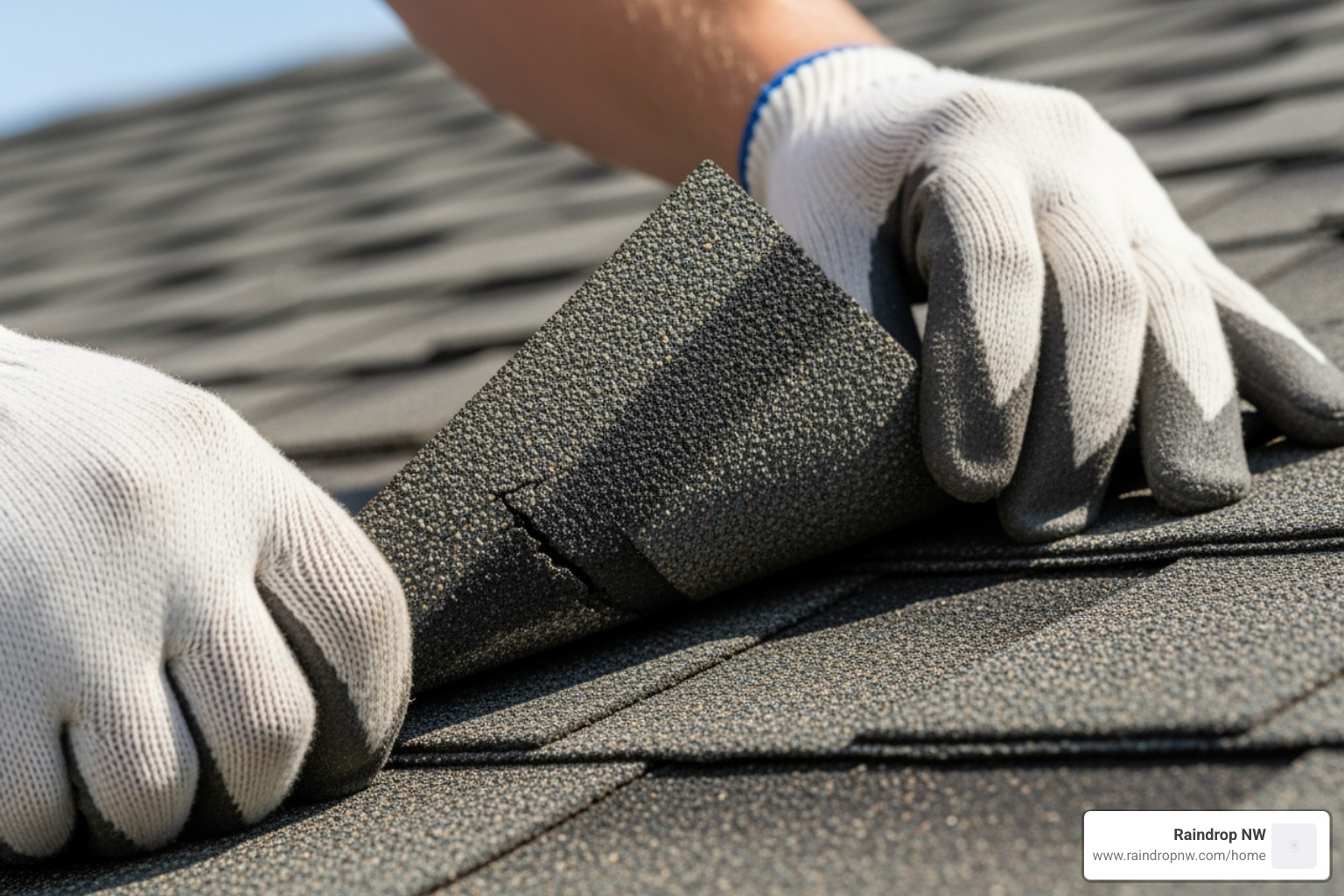
Your attic tells the real story. On a sunny day, use a flashlight to check for daylight through the roof boards or water stains on the wood. These signs mean water is already getting in, and the damage will only worsen. After a major storm, it’s wise to get a professional assessment, as hail and wind damage aren’t always visible from the ground but can compromise your roof. Ignoring these warnings allows small problems to become big ones. When dealing with asphalt shingle roofing replacement in first addition or older neighborhoods, getting ahead of these issues is the smartest move.
The Critical Role of the Roof Deck and Underlayment
Beneath your shingles, the roof deck and underlayment are the foundation of your roofing system. The deck, typically plywood or OSB sheathing, must be solid. During a full tear-off, we inspect this deck and often find hidden problems like rot or water damage. We identify soft, spongy wood that indicates rot, which must be replaced. You cannot install a new roof over a compromised deck.
The underlayment is your second line of defense against moisture. In Oregon’s damp climate, this barrier is critical. We also install a specialized ice and water shield in vulnerable areas like eaves and valleys to prevent water backups. An overlay prevents the inspection or replacement of these vital layers.
Flashing, the metal pieces around chimneys and vents, is another crucial component and a common source of leaks. During a full replacement, we inspect and replace all flashing to ensure a proper seal. With an overlay, we’re stuck with old flashing that may already be failing. This is why a complete tear-off is essential. We ensure these foundational elements are sound through our Repairs and Maintenance services and can also help with Waterproof Deck Surfaces.
Why a Professional Assessment Matters for Your First Addition Home
First Addition homes have unique character and construction that require an expert eye. We evaluate the structural integrity of the entire roofing system, looking for issues like dry rot or ventilation problems that a quick glance might miss.
We also understand that local building codes matter, especially in historic areas. Codes typically limit roofs to two shingle layers for fire safety and structural weight. We ensure your project meets all requirements, avoiding costly surprises. A professional assessment uncovers hidden issues, allowing you to make an informed decision.
As a truly local, independently owned company, we are accountable to our community. We know First Addition homes and provide customized solutions that respect their character while ensuring long-term protection. Your home deserves a qualified professional who understands its unique needs.
The Great Debate: Roof Overlay vs. Full Tear-Off Replacement
When your asphalt roof fails, you face a key decision: a quick overlay or a full tear-off replacement. The overlay seems appealing—it’s faster and costs less upfront. However, what looks like a shortcut today often leads to expensive problems tomorrow. An overlay is like painting over peeling walls; it looks better temporarily but doesn’t solve the underlying issue.
Understanding a Shingle-Over-Shingle Installation
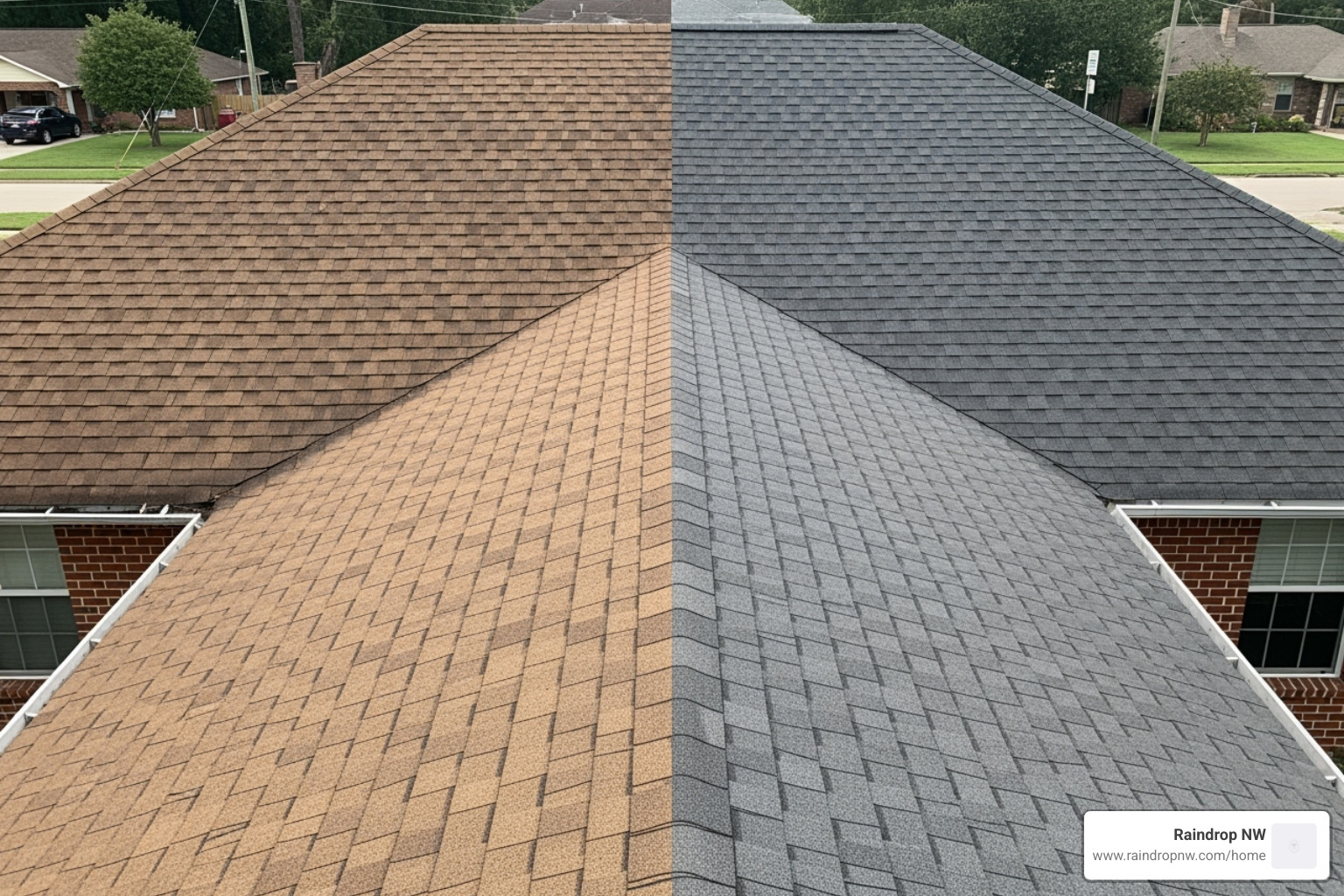
A shingle-over-shingle installation, or overlay, places new asphalt shingles directly on top of your existing ones. It’s faster and less expensive because it skips the labor-intensive tear-off process.
However, this approach is a temporary solution. The old shingles create an uneven surface, preventing the new layer from lying flat and sealing properly. This can trap water between the layers, leading to rot, mold, and accelerated deterioration. Our job is to protect your home for the long haul, not just apply a temporary fix.
The Hidden Risks of an Asphalt Shingle Overlay
The biggest risks of an overlay are the ones you can’t see. By installing new shingles over old ones, we’re building on a foundation that hasn’t been inspected.
The weight problem is a major concern. A second layer of shingles doubles the load on your roof’s structure, which can lead to sagging or structural damage, especially with the added weight of Oregon’s heavy snow.
Most importantly, we can’t inspect the deck. The deck is your roof’s structural foundation. With an overlay, we’re flying blind, potentially installing a new roof over rotted or water-damaged wood. This means the new roof is compromised from day one.
The lifespan difference is significant. A proper replacement lasts 20 to 30 years, while an overlay averages only 16. The uneven surface prevents new shingles from sealing correctly, compromising their water-shedding ability.
Manufacturer warranties are often voided if their product is installed over old shingles. They know this improper installation affects performance and leads to premature failure.
Building codes add another complication. Most jurisdictions limit roofs to two layers for fire safety and structural reasons. Adding a third layer is often illegal and can result in fines and forced removal.
If you plan to sell, an overlay can hurt your home’s resale value. Home inspectors often flag two-layer roofs, causing potential buyers to worry about hidden damage and future expenses.
An overlay can be more expensive in the long run. Premature failure means you’ll need a full tear-off sooner, forcing you to pay for two roofs in a shorter timeframe, plus repairs for any damage that worsened underneath.
| Feature | Roof Overlay (Shingle-Over-Shingle) | Full Tear-Off Replacement |
|---|---|---|
| Longevity | Average of 16 years | 20-30 years for quality asphalt shingles |
| Deck Inspection | Impossible—hides all underlying issues | Complete inspection and repair of the entire roof deck |
| Weight | Doubles the load on your roof structure | Maintains the original design load |
| Warranty | Often voids manufacturer warranties | Maintains full manufacturer warranty coverage |
| Long-Term Considerations | Higher risk of premature failure and hidden damage; may require full replacement sooner | Addresses all underlying problems; provides long-term protection and peace of mind |
For asphalt shingle roofing replacement in First Addition or other historic neighborhoods, these concerns are even more critical. As a truly local, independently owned company, we prioritize honest, long-term solutions for your home.
The Full Roof Replacement Process for Asphalt Shingle Roofing Replacement in First Addition, OR
A full roof replacement is the gold standard for protecting your home, especially in areas like First Addition, Sherwood, and Wilsonville. This comprehensive approach ensures every component is sound, providing long-term performance, peace of mind, and increased home value.
Our process for asphalt shingle roofing replacement in first addition or homes is meticulous. We protect your property and deliver a durable, beautiful roof designed to withstand the Pacific Northwest elements for decades.
Step 1: The Tear-Off and Deck Inspection
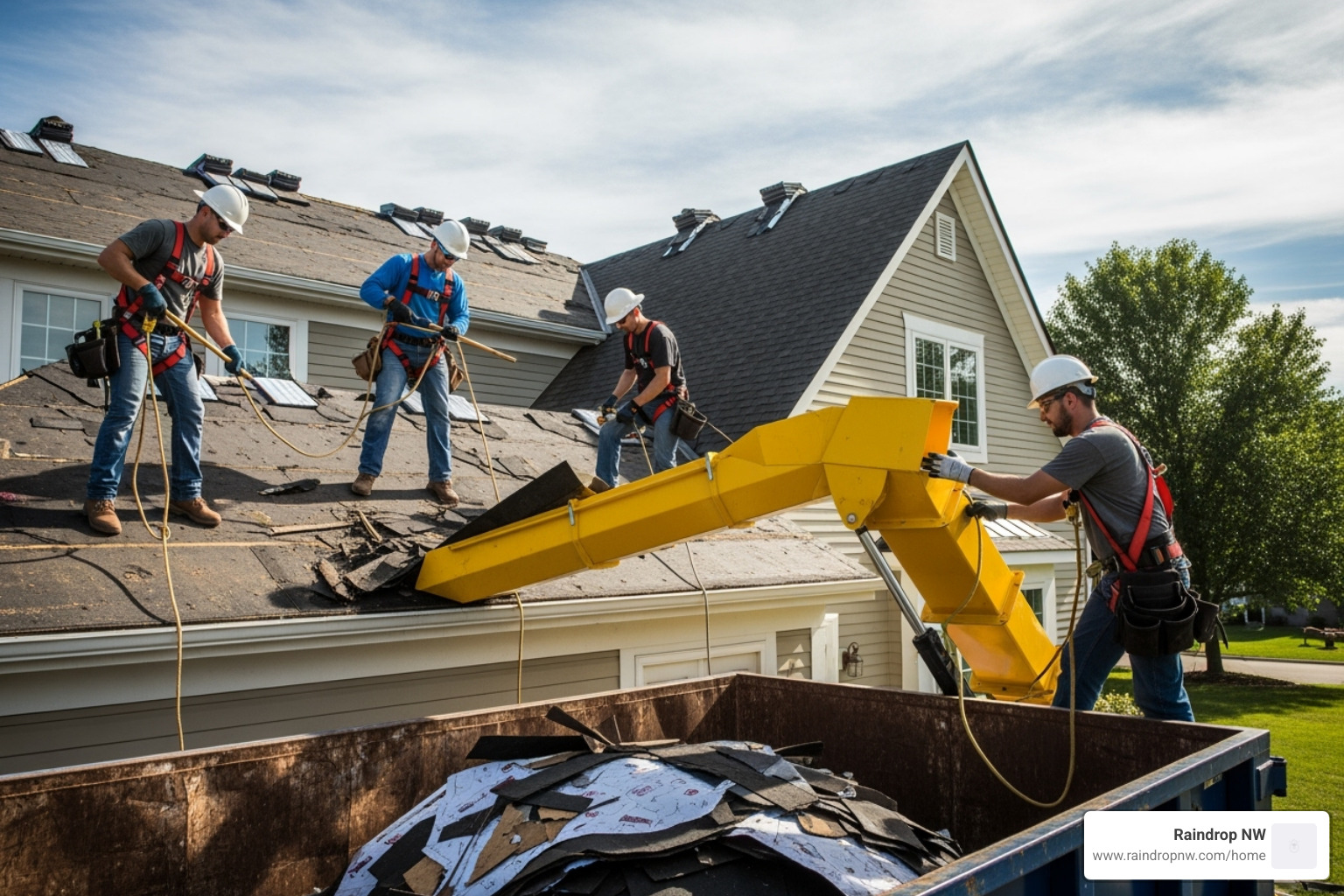
The process begins with a full tear-off, a critical step skipped in overlays. Our crew first protects your property by placing tarps to shield landscaping and setting up debris chutes leading to our dumpsters.
We then carefully remove all existing shingle layers, old underlayment, and flashing, leaving only the bare roof deck. This is where the value of a full replacement becomes clear. We conduct a thorough inspection of the deck, checking for water damage, rotten wood, mold, and structural weaknesses.
If we find compromised sections, we replace them with sturdy new sheathing. This is essential for ensuring your new roof has the solid foundation it needs to last. A new roof is only as strong as what’s beneath it. We also offer Repairs and Maintenance to keep your roof in top shape.
Step 2: Installing New Underlayment and Flashing
With a clean, solid deck, we install the vital protective layers that make your roof watertight. We start by rolling out high-quality underlayment across the entire deck, which acts as a crucial second line of defense against moisture.
Next, we install water and ice leak barriers in the most vulnerable areas, such as eaves and valleys. These self-adhering membranes create an impenetrable seal against water backups. A metal drip edge is installed along the roof’s perimeter to direct water away from your fascia.
Finally, we install all-new flashing around chimneys, skylights, and vents. This custom-fitted metal work creates watertight seals at the most common leak points. Unlike an overlay, a full replacement ensures every component is new and properly integrated. For more protection, explore our Waterproof Deck Surfaces options.
Step 3: Laying the New Asphalt Shingles
The final step is installing your chosen asphalt shingles. Our crews work with precision, adhering to manufacturer specifications and industry best practices.
Proper nailing techniques and shingle alignment are crucial for a watertight seal and a uniform, professional appearance. We then install ridge cap shingles along the peaks and hips for added protection at these high-exposure points.
After installation, we conduct a final inspection to ensure every detail meets our quality standards. We then perform a comprehensive cleanup, removing all debris and using magnetic rollers to find stray nails. We leave your property tidy, with a beautiful new roof that will protect your First Addition home for decades. Learn more on our New Replacement Roofs page.
Frequently Asked Questions about Asphalt Shingle Replacement
When considering a major project like asphalt shingle roofing replacement in first addition or other Portland Metro neighborhoods, questions are natural. Here are answers to some of the most common ones we hear.
How long does an asphalt shingle roof last in Oregon?
In Oregon’s climate, an asphalt shingle roof typically lasts 20 to 30 years. Several factors influence this lifespan.
Architectural shingles, with their thicker construction, generally outlast standard 3-tab shingles. Our damp weather can be tough on roofs, and moss and algae growth can shorten a roof’s life by lifting shingles and allowing water underneath. Regular maintenance is key to reaching that 30-year mark. If your roof is over 20 years old and showing wear, it’s time for a professional assessment.
Can you put architectural shingles over 3-tab shingles?
While technically possible, we strongly advise against installing architectural shingles over old 3-tab shingles.
Asphalt shingles require a flat surface to perform correctly. The different exposure sizes between the two shingle types create an uneven foundation. This causes the old shingle patterns to telegraph through, creating a bumpy look. More importantly, the uneven surface prevents a proper seal, making the roof vulnerable to wind and water. This type of installation will almost certainly void the manufacturer’s warranty on your new shingles. A full tear-off ensures your new roof has the proper foundation to perform as intended.
How many layers of shingles are allowed on a roof?
In Oregon, building codes limit residential roofs to a maximum of two layers of asphalt shingles. These regulations exist for two primary reasons.
Fire safety is a major concern, as multiple layers can trap heat and make it harder for firefighters to access the roof deck. The second issue is structural weight. A second layer doubles the load on your roof structure, which can lead to sagging or damage, especially with heavy snow.
While code may permit two layers, the best practice is always a single, properly installed layer. This allows for a thorough deck inspection and ensures the longest-lasting, most reliable roof for your home.
Protect Your Investment with a Professional Roof Replacement
Your roof is your home’s primary defense against the elements. When you choose a full asphalt shingle roofing replacement in first addition or surrounding areas like Gresham or West Linn, you’re making a strategic investment that protects your family and adds significant value to your property.
While a quick overlay is tempting, the long-term performance and peace of mind from a comprehensive tear-off and replacement are best. Investing in doing it right the first time provides decades of worry-free protection, not a temporary fix that could fail.
A quality roof replacement does more than keep out the rain; it increases your home’s resale value, improves energy efficiency, and boosts curb appeal. Most importantly, it provides the confidence that your family is safe and dry, no matter the weather.
As a truly local, independently owned company, Raindrop NW is committed to providing exceptional roofing solutions that last. We understand the unique character of homes in First Addition and throughout Oregon. Our meticulous process, from inspection to cleanup, reflects our dedication to quality craftsmanship. We’re not just selling you a roof; we’re building a long-term partnership to protect your home for decades.
Don’t let a failing roof put your home at risk. Your First Addition home deserves an expert assessment and quality craftsmanship. Let us show you the difference true expertise and local care can make.
Contact us for your residential roofing needs today, and we’ll ensure your home is protected for years to come. At Raindrop NW, your peace of mind is our priority.